Loreful
HomeDiscover
Search series, authors…⌘K
Loreful

Reading orders for SF/F series and shared universes — with your place kept in every one.

Explore

UniversesSeriesWorksAuthorsAtlas

Help

FAQAboutSite map

Account & legal

Sign inCreate accountPrivacyTerms

Data

Built on ISFDB, Wikipedia, Wikidata and Open Library. Curated reading orders carry their reasoning on the page; the rest follow publication order. Data sources & licenses

© Loreful · data: ISFDB · CC BY

More like Ralestone Luck

anchored on:our world

but

Mood

The mood the book leaves you in.

  • The reading experience is propelled by journeys, exploration, and physical risk; excitement and forward momentum dominate over dread or introspection.
  • Joy and loss are deliberately mixed; the resolution grants characters something real while taking something else away, leaving warmth and sorrow together.
  • The book demands work from the reader — dense prose, difficult structure, unfamiliar ideas, or morally uncomfortable material — as part of its intended effect.
  • Grim events, cruelty, or despair dominate the atmosphere, and the book does not soften them with comfort or comic relief.
  • The atmosphere is quietly unsettling — wrongness, unease, and the uncanny pervade the book without necessarily escalating into overt horror.
  • The book is built to move the reader; character feeling is foregrounded and major scenes aim at a strong emotional response.
  • Humor is a primary aim and the prose plays for laughs — comic situations, wit, or dialogue produce sustained comedy, not occasional levity.
  • The book insists that things can improve; effort and decency are shown to matter, and the arc bends toward better outcomes even through hardship.
  • The book teaches as it goes — real facts, history, science, or craft are conveyed in enough depth that learning is part of the reading experience.
  • The book is designed to uplift and motivate, presenting perseverance or achievement in a way that invites the reader to aspire or act.
  • The overall register is cheerful and easygoing; stakes are kept gentle and the book avoids dwelling on pain or dread.
  • Withheld information drives the experience; the book sustains enigmas and secrets the reader wants resolved, whatever its genre.
  • The book is contemplative and inward-looking, giving more weight to thought, memory, and meaning than to external events.
  • The book works as comfort reading — low tension, a soothing pace, and an atmosphere the reader can unwind in.
  • Grief, loss, or melancholy set the dominant register, and the book lets sorrow stand rather than resolving it into comfort.
  • Sustained suspense is the point; the book keeps the reader braced for what happens next through danger, pressure, or impending revelation.
  • Playful invention and charm define the register — fanciful conceits, light absurdity, and a narration that delights in its own oddity.

About

What the story runs on.

  • Stories in which extraterrestrial beings are central — as characters, cultures, or the object of the plot.
  • Stories structured as a quest — a journey undertaken to find, deliver, or destroy something of great import.
  • Stories in which staying alive against nature, catastrophe, or scarcity is the central problem.
  • Stories of lovers kept apart by law, family, faith, or station, where the obstacle to love is the plot.
  • Stories in which a friendship — its making, testing, or loss — is the emotional center.
  • Stories of growing up — a young protagonist crossing from childhood into adult knowledge and responsibility.
  • Stories about who a character truly is — self-discovery, doubled lives, and the search for a self.
  • Stories about mourning — living through the death of a loved one and what loss does to the survivors.
  • Stories in which a buried family truth — hidden parentage, crimes, or shames — surfaces and reorders the present.
  • Stories driven by maneuvering for power — factions, conspiracies, and statecraft conducted in shadow.
  • Stories in which war itself is the subject — combat, occupation, and what warfare does to soldiers and civilians.
  • Stories organized around investigating a killing — the case, the clues, and the pursuit of the killer, in any genre's clothing.

Shelf

Where it sits in the library.

    • Fiction built on magic or other supernatural elements that have no scientific explanation.
    • Secondary-world fantasy at large scale, where the fate of nations or the world turns on the protagonists' struggle.
    • Fantasy set in a recognizably modern city or contemporary world where the supernatural intrudes on everyday life.
    • Fantasy that blends in horror's atmosphere and imagery, keeping a fantastical frame around grim or frightening material.
    • Action-driven fantasy following warriors or rogues with personal stakes against sorcerous threats, rather than world-spanning conflicts.
    • Fantasy set in a real historical period or a close analogue of one, with magic woven into the era.
    • Fantasy in which protagonists cross from the ordinary world into another world through a portal or similar passage.
    • Fiction that retells or reworks a traditional fairy tale in a new form or setting.
    • Fantasy drawing directly on myths, legends, and folklore, retelling them or building on their figures and logic.
    • Fantasy of ghosts, vampires, shapeshifters, psychics, and similar phenomena, usually set in an otherwise ordinary world.
    • Fiction mixing science-fictional trappings with overtly magical or impossible elements in one setting.
    • Low-stakes fantasy emphasizing comfort, community, and everyday pleasures over conflict and peril.
    • Speculative fiction of pervasive moral ambiguity, violence, and cynicism that rejects heroic conventions — fantasy and SF alike.
      • Fiction that extrapolates from science and technology — future societies, space travel, or speculative inventions — within at least nominally natural laws.
      • Science fiction of interstellar scope — starships, galactic polities, and adventure across star systems.
      • Science fiction committed to scientific rigor, where technical plausibility constrains the story.
      • Science fiction centered on armed forces and warfare, told largely from a military point of view.
      • Science fiction of networked, corporate-dominated near futures, pairing high technology with social decay.
      • Science fiction styled on nineteenth-century steam-powered technology, often in a Victorian or pseudo-Victorian setting.
      • Fiction depicting an oppressive or catastrophic society, presented as a warning.
      • Fiction set after civilization's collapse, following survivors in the ruins of the old world.
      • Fiction in which characters move between past and future, and the mechanics or consequences of that travel drive the plot.
      • Fiction exploring a world where a historical event went differently and history diverged from ours.
      • Science fiction about humanity's first encounter and communication with an alien intelligence.
      • Science fiction in which extraterrestrial forces attack or occupy Earth and humanity resists.
      • Fiction whose primary aim is to frighten or unsettle the reader through dread, menace, or the monstrous.
      • Horror of vast, indifferent, incomprehensible entities before which humanity is insignificant, in the Lovecraft tradition.
      • Horror of decaying houses, buried family secrets, and oppressive atmosphere in the Gothic literary tradition.
      • Horror centered on hauntings and the returning dead.
      • Horror located in the mind — paranoia, obsession, and unreliable perception rather than external monsters.
      • Horror built around the reanimated dead and survival amid their outbreaks.
      • Horror defined by explicit, transgressive gore that refuses to cut away from violence.
      • Speculative fiction of the strange and uncanny that resists both natural explanation and standard genre categories.
      • Fiction organized around solving a crime or puzzle, typically following an investigator toward the identification of a culprit.
      • A puzzle-first mystery that lays out clues so the culprit's identity can be deduced before the reveal.
      • Crime fiction of moral ambiguity, fatalism, and hard-edged style, set among the corrupt and the doomed.
      • A mystery following the realistic routines of police work — forensics, interviews, and case-building.
      • A gentle mystery with an amateur sleuth, a small community, and violence kept off the page.
      • A mystery set in a past era, where the investigation works within that period's methods and society.
      • Fast-paced fiction driven by imminent danger, pursuit, or high-stakes conspiracy, built to sustain tension.
      • A thriller of espionage — agents, tradecraft, and intelligence services in conflict.
      • A thriller centered on lawyers and the courtroom, where litigation carries the suspense.
      • A thriller driven by detailed contemporary or near-future technology, often military or scientific.
      • A thriller whose tension comes from mental states and manipulation between characters rather than external action.
      • Fiction whose central plot is a romantic relationship and its development toward an emotionally satisfying resolution.
      • Romance in which one or both partners are supernatural beings, blending fantasy elements into the love story.
      • A fantasy-romance hybrid in which the romantic arc and the fantasy plot carry equal weight.
      • Romance set in a past era, with courtship shaped by the period's society and manners.
      • Romance set in the present day, without supernatural or historical elements.
      • Fiction set in a real past period, where the historical setting materially shapes characters and events.
        • General and literary fiction emphasizing prose style, character interiority, or formal ambition over genre plot conventions.
        • Fiction in a realistic world where magical events occur and are treated as ordinary, in the tradition of Latin American literature.
        • Fiction that ridicules people, institutions, or society in order to criticize them.
        • Fiction of dreamlike, irrational imagery and logic that breaks from realistic representation.
        • Fiction that plays with narrative convention through metafiction, fragmentation, and self-reference.
        • Fiction propelled by journeys, exploration, and physical peril, where action and survival carry the plot.
        • Adventure fiction of ships and seafaring — naval engagements, voyages, and life at sea.
        • Fiction of the American frontier West — gunmen, ranchers, and lawmen, typically in the late nineteenth century.
        • Fiction centered on soldiers, campaigns, and the experience of warfare, historical or imagined.
          • Fiction written primarily to amuse, using comedic situations, wit, or parody as its organizing principle.
            • Multi-generational fiction following a family or dynasty across decades, with inheritance and kinship as the through-line.
              • Fiction whose world runs on explicit game mechanics — levels, stats, and skills that characters can see and exploit.
                • Fiction about costumed or superpowered heroes and their conflicts with comparable villains.

                Practical

                How long a commitment, whether it stands alone, and whether it has finished.

                Tap a chip to ask for it · tap again to rule it out · once more to clear. Numbers show what would be left.

                • Cover of The Adventures of Dr. Caspian and Bronwen
                  The Adventures of Dr. Caspian and Bronwen

                  series · 4 books · 1976

                  completed

                  similar by+5 more

                • Cover of The Romancist and Novelist's Library
                  The Romancist and Novelist's Library

                  series · 16 books · 1764

                  similar by+2 more

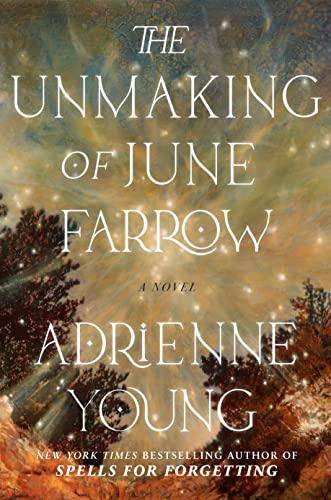
                • Cover of The Unmaking of June Farrow
                  The Unmaking of June Farrow

                  Adrienne Young · standalone novel · 2023

                  similar bymysteriouscursesour worldfamily secrets

                  In the small mountain town of Jasper, North Carolina, June Farrow is waiting for fate to find her. The Farrow women are known for their thriving flower farm—and the mysterious curse that has plagued their family line. The whole town remembers the madness that led to Susanna Farrow’s disappearance, leaving June to be raised by her grandmother and haunted by rumors. It’s been a year since June started seeing and hearing things that weren’t there. Faint wind chimes, a voice calling her name, and a mysterious door appearing out of nowhere—the signs of what June always knew was coming. But June is determined to end the curse once and for all, even if she must sacrifice finding love and having a family of her own. After her grandmother’s death, June discovers a series of cryptic clues regarding her mother’sdecades-old disappearance, except they only lead to more questions. But could the door she once assumed was a hallucination be the answer she’s been searching for? The next time it appears, June realizes she can touch it and walk past the threshold. And when she does, she embarks on a journey that will not only change both the past and the future, but also uncover the lingering mysteries of her small town and entangle her heart in an epic star-crossed love.

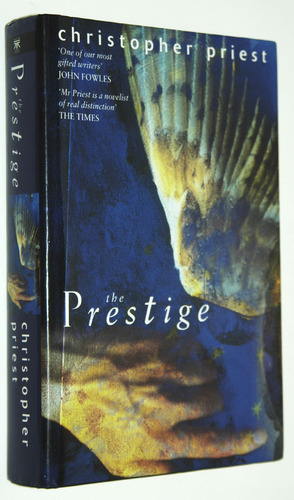
                • Cover of The Prestige
                  The Prestige

                  Christopher Priest · standalone novel · 1995

                  similar bymysteriousour world19th centuryfamily secrets

                  A magician called Borden (at least in private) writes his own version of his life as a magician. There's a lot of focus on a trick, where he seems to move across any width of stage in an instant, and on a feud with another magician, Angier. The account includes passages, where he can't decide what exactly to write, arguing with himself. 3 generations later a Borden (at least biologically) learns about his ancestor. He's also convinced, he somehow has a twin brother, who's happy about this development.

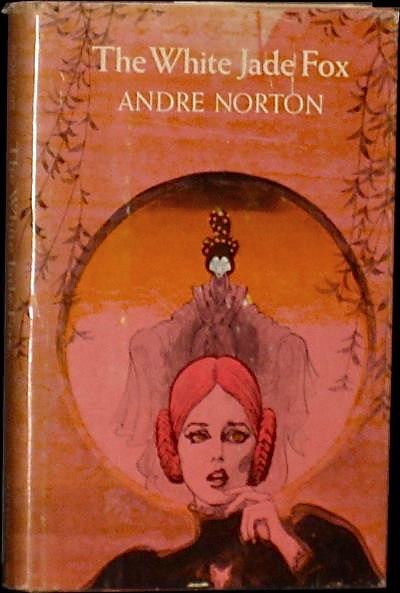
                • Cover of The White Jade Fox
                  The White Jade Fox

                  Andre Norton · standalone novel · 1975

                  similar byour worldfamily secrets+2 more

                  A gothic romance with fantasy elements, including I Ching.

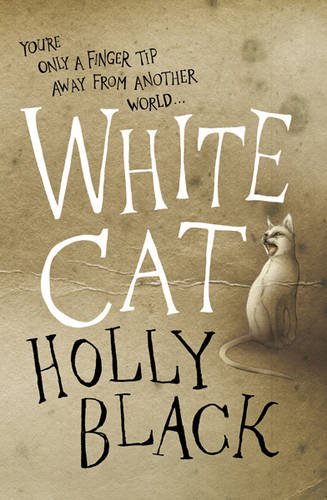
                • Cover of The Curse Workers
                  The Curse Workers

                  series · 3 books · 2010

                  similar bycursesour worldfamily secrets+1 more

                  Holly Black's Curse Workers trilogy is set in an alternate America where 'curse work' — magic that harms or transforms through touch — is illegal, enforced through gloves and Prohibition-era-style crime families. It follows Cassel Sharpe, the only non-worker in a family of con artists and workers, as he tries to stay out of his family's schemes despite his own hidden connection to their world. The series runs from White Cat through two further novels.

                • Cover of St. Leger Legacy
                  St. Leger Legacy

                  series · 3 books · 1998

                  similar bycurses19th century+2 more

                • Cover of The Mystery of Cloomber
                  The Mystery of Cloomber

                  Arthur Conan Doyle · standalone novel · 1889

                  similar bymysteriouscurses19th centuryfamily secrets

                  "What dark deed from the past put a lifelong curse on Major Heatherstone of Cloomber Hall? The master of detective fiction and creator of the Sherlock Holmes mysteries reveals his deep fascination with spiritualism and the paranormal in this gripping tale of mystery and the supernatural, set on the remote Scottish coast." — quoted from the product description that is found on the Dover edition's product page on Amazon.com.

                • Cover of The House of the Seven Gables
                  The House of the Seven Gables

                  Nathaniel Hawthorne · standalone novel · 1851

                  similar bycursesour world19th centuryfamily secrets

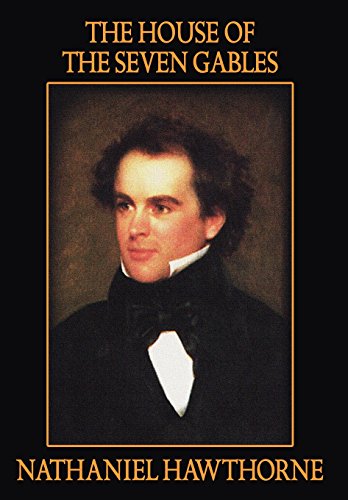
                  The House of the Seven Gables: A Romance is a Gothic novel written beginning in mid-1850 by American author Nathaniel Hawthorne and published in April 1851 by Ticknor and Fields of Boston. The novel follows a New England family and their ancestral home. In the book, Hawthorne explores themes of guilt, retribution, and atonement, and colors the tale with suggestions of the supernatural and witchcraft. The setting for the book was inspired by the Turner-Ingersoll Mansion, a gabled house in Salem, Massachusetts, belonging to Hawthorne's cousin Susanna Ingersoll, as well as ancestors of Hawthorne who had played a part in the Salem Witch Trials of 1692. The book was well received upon publication and has been adapted several times to film and television.

                • Cover of Dangerous
                  Dangerous

                  Monica Burns · standalone novel · 2009

                  similar bymysteriouscurses19th century+1 more

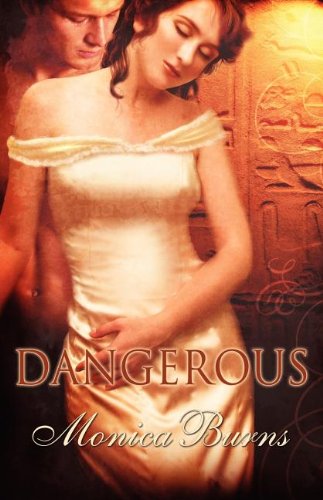
                  "His love could be the death of her. When Constance Athelson, Viscountess Westbury, hides her face to attend the Black Widows Ball, she never expected to find erotic passion in a masked stranger's arms. The torrent of lust isn't enough to drown out her dubious "gift" for seeing visions and talking to the dead. Terrified of being found out, she secures a position cataloguing archaeological artifacts for the Earl of Wyndham—where she encounters a ghost begging her to break a curse plaguing his family. Before his mysterious lover disappeared, Lucien Blakemore was tempted to throw caution aside. Yet he knows one taste of love will unleash the curse that drove his father and brother to murder their wives. When he returns home empty handed and empty hearted, he's shocked to discover his new assistant is the goddess who fled into the night. But could her presence be part of a murderous plot to unearth the location of a secret Egyptian tomb? The answer—or his doom—lies behind the desire shining in his seductress's eyes." – from this book's product page on Samhain's website as of 2016-11-06.

                • Cover of The Night Circus
                  The Night Circus

                  Erin Morgenstern · standalone novel · 2011

                  similar bymysteriousour world+1 more

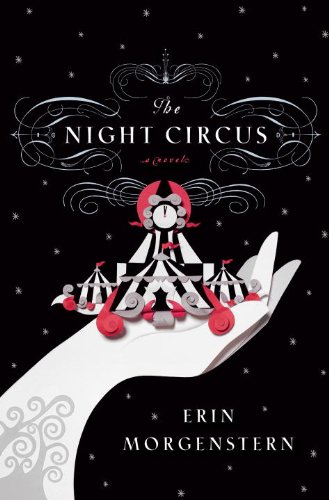
                  The Night Circus is a 2011 speculative fiction novel by Erin Morgenstern. It was originally written for the annual writing competition National Novel Writing Month (NaNoWriMo) over the span of three competitions. The novel has a nonlinear narrative written from multiple viewpoints.

                • Cover of Scarborough Fair
                  Scarborough Fair

                  series · 3 books · 2008

                  similar bycurses+2 more

                • Cover of The Dispossessed
                  The Dispossessed

                  series · 3 books · 2013

                  similar by19th century+3 more

                • Cover of The Turn of the Screw
                  The Turn of the Screw

                  series · 3 books · 1898

                  similar by19th century+1 more

                  Henry James's 1898 novella The Turn of the Screw follows a governess at an isolated English country house who becomes convinced that the two children in her care are being stalked by malevolent ghosts, narrated entirely through her own increasingly uncertain account. Its ambiguity over whether the haunting is real has made it one of the most discussed ghost stories in English literature and prompted later works built around it, including Michael Hastings's The Nightcomers, a 1971 prequel imagining events at the house before the governess's arrival. A stage adaptation of James's original text also exists.

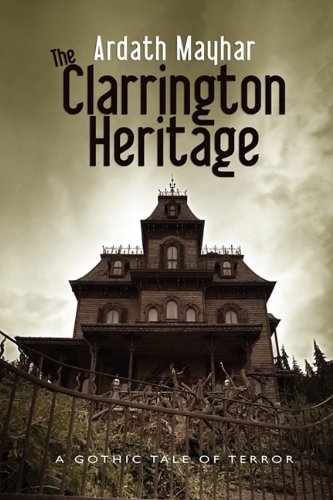
                • Cover of The Clarrington Heritage
                  The Clarrington Heritage

                  Ardath Mayhar · standalone novel · 2009

                  similar bymysteriousour worldfamily secrets+1 more

                  When Marise Dering marries Ben Clarrington and moves into the old mansion where the rest of the Clarringtons live, she's ordered to keep out of the closed-off sections of the third floor - but is not told why. It is only later that she learns the sinister family secrets ... but has she been told all of them? As the family members begin perishing in odd and horrifying circumstances, Marise must try to uncover all the secrets of the Clarrington heritage...

                • Cover of Invisibility
                  Invisibility

                  David Levithan & Andrea Cremer · standalone novel · 2013

                  similar bycursesour world+1 more

                  To break his curse of invisibility, a boy is helped by a girl, who is the only one who can see him.

                • Cover of Lewis Barnavelt
                  Lewis Barnavelt

                  series · 12 books · 1973

                  similar by+2 more

                  Lewis Barnavelt is a lonely orphan who moves in with his uncle Jonathan, an amateur wizard, in a rambling old house that turns out to hide a doomsday clock built into its walls by a previous, malevolent owner. John Bellairs introduced the character in The House with a Clock in Its Walls (1973), illustrated by Edward Gorey, and after Bellairs's death Brad Strickland continued the series from his notes and outlines for most of its later volumes. It blends gothic horror atmosphere with a gentler, more whimsical strain of children's fantasy.

                • Cover of Sally Lockhart
                  Sally Lockhart

                  series · 4 books · 1985

                  similar by19th century+3 more

                  Philip Pullman's Sally Lockhart quartet follows a resourceful, unconventional heroine navigating Victorian London - a sharpshooting, mathematically gifted young orphan who builds an improbable career as a financial consultant against the era's expectations for women. The Ruby in the Smoke opens with Sally investigating her father's death and a mysterious jewel; the following novels widen out into fraud, opium-trade crime, and international intrigue, tracking Sally's evolving relationships, including with the journalist Daniel Goldberg, across four Victorian-set mysteries.

                • Cover of The Watch Hill Trilogy
                  The Watch Hill Trilogy

                  series · 1 book · 2024

                  similar by+2 more

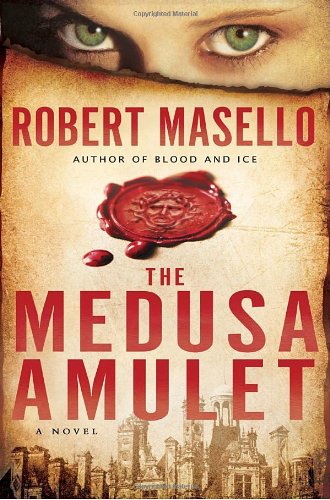
                • Cover of The Medusa Amulet
                  The Medusa Amulet

                  Robert Masello · standalone novel · 2011

                  similar bymysteriousour world+1 more

                  A secret history novel with supernatural elements.

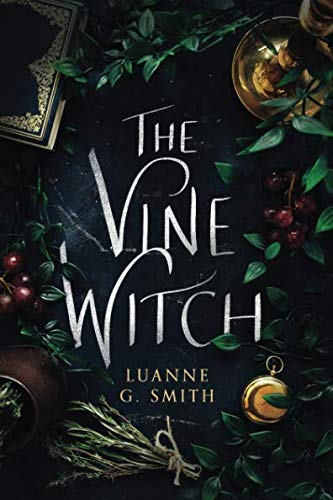
                • Cover of The Vine Witch
                  The Vine Witch

                  series · 3 books · 2019

                  similar by+3 more

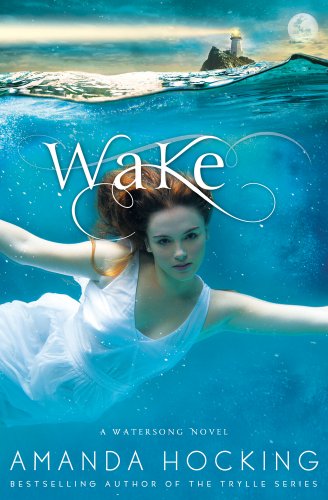
                • Cover of Watersong
                  Watersong

                  series · 5 books · 2012

                  similar byour world+1 more

                  The Watersong series by the bestselling young adult fantasy paranormal author Amanda Hocking consists of four books: Wake, Lullaby, Tidal and Elegy. Hocking, who previously had success as a self-published author, signed a book deal with St. Martin’s Press worth $2 million.

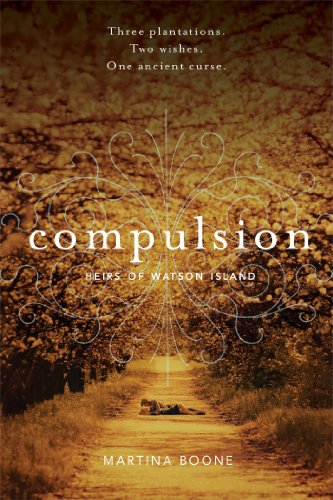
                • Cover of Heirs of Watson Island
                  Heirs of Watson Island

                  series · 3 books · 2014

                  similar bycursesour world+2 more

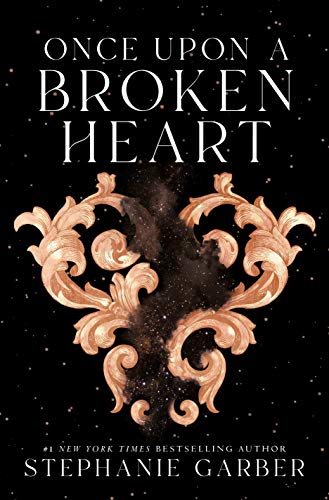
                • Cover of Once Upon a Broken Heart
                  Once Upon a Broken Heart

                  series · 4 books · 2021

                  similar bycurses+1 more

                  Stephanie Garber's romantasy series opens with Evangeline Fox striking a desperate bargain with the immortal Prince of Hearts, three kisses in exchange for his help stopping her true love's wedding to another woman, only to learn that bargaining with an immortal always costs more than expected. Once Upon a Broken Heart and its sequels follow the fallout of that bargain across a fairy-tale-inflected world of curses and dangerous magic.