Loreful
HomeDiscover
Search series, authors…⌘K
Loreful

Reading orders for SF/F series and shared universes — with your place kept in every one.

Explore

UniversesSeriesWorksAuthorsAtlas

Help

FAQAboutSite map

Account & legal

Sign inCreate accountPrivacyTerms

Data

Built on ISFDB, Wikipedia, Wikidata and Open Library. Curated reading orders carry their reasoning on the page; the rest follow publication order. Data sources & licenses

© Loreful · data: ISFDB · CC BY

More like Rapture

anchored on:fantasyangelsnorth americacontemporaryurban fantasyidentity+2 more

but

Mood

The mood the book leaves you in.

  • The reading experience is propelled by journeys, exploration, and physical risk; excitement and forward momentum dominate over dread or introspection.
  • Joy and loss are deliberately mixed; the resolution grants characters something real while taking something else away, leaving warmth and sorrow together.
  • The book demands work from the reader — dense prose, difficult structure, unfamiliar ideas, or morally uncomfortable material — as part of its intended effect.
  • Grim events, cruelty, or despair dominate the atmosphere, and the book does not soften them with comfort or comic relief.
  • The atmosphere is quietly unsettling — wrongness, unease, and the uncanny pervade the book without necessarily escalating into overt horror.
  • The book is built to move the reader; character feeling is foregrounded and major scenes aim at a strong emotional response.
  • Humor is a primary aim and the prose plays for laughs — comic situations, wit, or dialogue produce sustained comedy, not occasional levity.
  • The book insists that things can improve; effort and decency are shown to matter, and the arc bends toward better outcomes even through hardship.
  • The book teaches as it goes — real facts, history, science, or craft are conveyed in enough depth that learning is part of the reading experience.
  • The book is designed to uplift and motivate, presenting perseverance or achievement in a way that invites the reader to aspire or act.
  • The overall register is cheerful and easygoing; stakes are kept gentle and the book avoids dwelling on pain or dread.
  • Withheld information drives the experience; the book sustains enigmas and secrets the reader wants resolved, whatever its genre.
  • The book is contemplative and inward-looking, giving more weight to thought, memory, and meaning than to external events.
  • The book works as comfort reading — low tension, a soothing pace, and an atmosphere the reader can unwind in.
  • Grief, loss, or melancholy set the dominant register, and the book lets sorrow stand rather than resolving it into comfort.
  • Sustained suspense is the point; the book keeps the reader braced for what happens next through danger, pressure, or impending revelation.
  • Playful invention and charm define the register — fanciful conceits, light absurdity, and a narration that delights in its own oddity.

About

What the story runs on.

  • Stories in which extraterrestrial beings are central — as characters, cultures, or the object of the plot.
  • Stories structured as a quest — a journey undertaken to find, deliver, or destroy something of great import.
  • Stories in which staying alive against nature, catastrophe, or scarcity is the central problem.
  • Stories of lovers kept apart by law, family, faith, or station, where the obstacle to love is the plot.
  • Stories in which a friendship — its making, testing, or loss — is the emotional center.
  • Stories of growing up — a young protagonist crossing from childhood into adult knowledge and responsibility.
  • Stories about who a character truly is — self-discovery, doubled lives, and the search for a self.
  • Stories about mourning — living through the death of a loved one and what loss does to the survivors.
  • Stories in which a buried family truth — hidden parentage, crimes, or shames — surfaces and reorders the present.
  • Stories driven by maneuvering for power — factions, conspiracies, and statecraft conducted in shadow.
  • Stories in which war itself is the subject — combat, occupation, and what warfare does to soldiers and civilians.
  • Stories organized around investigating a killing — the case, the clues, and the pursuit of the killer, in any genre's clothing.

Shelf

Where it sits in the library.

    • Fiction built on magic or other supernatural elements that have no scientific explanation.
    • Secondary-world fantasy at large scale, where the fate of nations or the world turns on the protagonists' struggle.
    • Fantasy set in a recognizably modern city or contemporary world where the supernatural intrudes on everyday life.
    • Fantasy that blends in horror's atmosphere and imagery, keeping a fantastical frame around grim or frightening material.
    • Action-driven fantasy following warriors or rogues with personal stakes against sorcerous threats, rather than world-spanning conflicts.
    • Fantasy set in a real historical period or a close analogue of one, with magic woven into the era.
    • Fantasy in which protagonists cross from the ordinary world into another world through a portal or similar passage.
    • Fiction that retells or reworks a traditional fairy tale in a new form or setting.
    • Fantasy drawing directly on myths, legends, and folklore, retelling them or building on their figures and logic.
    • Fantasy of ghosts, vampires, shapeshifters, psychics, and similar phenomena, usually set in an otherwise ordinary world.
    • Fiction mixing science-fictional trappings with overtly magical or impossible elements in one setting.
    • Low-stakes fantasy emphasizing comfort, community, and everyday pleasures over conflict and peril.
    • Speculative fiction of pervasive moral ambiguity, violence, and cynicism that rejects heroic conventions — fantasy and SF alike.
      • Fiction that extrapolates from science and technology — future societies, space travel, or speculative inventions — within at least nominally natural laws.
      • Science fiction of interstellar scope — starships, galactic polities, and adventure across star systems.
      • Science fiction committed to scientific rigor, where technical plausibility constrains the story.
      • Science fiction centered on armed forces and warfare, told largely from a military point of view.
      • Science fiction of networked, corporate-dominated near futures, pairing high technology with social decay.
      • Science fiction styled on nineteenth-century steam-powered technology, often in a Victorian or pseudo-Victorian setting.
      • Fiction depicting an oppressive or catastrophic society, presented as a warning.
      • Fiction set after civilization's collapse, following survivors in the ruins of the old world.
      • Fiction in which characters move between past and future, and the mechanics or consequences of that travel drive the plot.
      • Fiction exploring a world where a historical event went differently and history diverged from ours.
      • Science fiction about humanity's first encounter and communication with an alien intelligence.
      • Science fiction in which extraterrestrial forces attack or occupy Earth and humanity resists.
      • Fiction whose primary aim is to frighten or unsettle the reader through dread, menace, or the monstrous.
      • Horror of vast, indifferent, incomprehensible entities before which humanity is insignificant, in the Lovecraft tradition.
      • Horror of decaying houses, buried family secrets, and oppressive atmosphere in the Gothic literary tradition.
      • Horror centered on hauntings and the returning dead.
      • Horror located in the mind — paranoia, obsession, and unreliable perception rather than external monsters.
      • Horror built around the reanimated dead and survival amid their outbreaks.
      • Horror defined by explicit, transgressive gore that refuses to cut away from violence.
      • Speculative fiction of the strange and uncanny that resists both natural explanation and standard genre categories.
      • Fiction organized around solving a crime or puzzle, typically following an investigator toward the identification of a culprit.
      • A puzzle-first mystery that lays out clues so the culprit's identity can be deduced before the reveal.
      • Crime fiction of moral ambiguity, fatalism, and hard-edged style, set among the corrupt and the doomed.
      • A mystery following the realistic routines of police work — forensics, interviews, and case-building.
      • A gentle mystery with an amateur sleuth, a small community, and violence kept off the page.
      • A mystery set in a past era, where the investigation works within that period's methods and society.
      • Fast-paced fiction driven by imminent danger, pursuit, or high-stakes conspiracy, built to sustain tension.
      • A thriller of espionage — agents, tradecraft, and intelligence services in conflict.
      • A thriller centered on lawyers and the courtroom, where litigation carries the suspense.
      • A thriller driven by detailed contemporary or near-future technology, often military or scientific.
      • A thriller whose tension comes from mental states and manipulation between characters rather than external action.
      • Fiction whose central plot is a romantic relationship and its development toward an emotionally satisfying resolution.
      • Romance in which one or both partners are supernatural beings, blending fantasy elements into the love story.
      • A fantasy-romance hybrid in which the romantic arc and the fantasy plot carry equal weight.
      • Romance set in a past era, with courtship shaped by the period's society and manners.
      • Romance set in the present day, without supernatural or historical elements.
      • Fiction set in a real past period, where the historical setting materially shapes characters and events.
        • General and literary fiction emphasizing prose style, character interiority, or formal ambition over genre plot conventions.
        • Fiction in a realistic world where magical events occur and are treated as ordinary, in the tradition of Latin American literature.
        • Fiction that ridicules people, institutions, or society in order to criticize them.
        • Fiction of dreamlike, irrational imagery and logic that breaks from realistic representation.
        • Fiction that plays with narrative convention through metafiction, fragmentation, and self-reference.
        • Fiction propelled by journeys, exploration, and physical peril, where action and survival carry the plot.
        • Adventure fiction of ships and seafaring — naval engagements, voyages, and life at sea.
        • Fiction of the American frontier West — gunmen, ranchers, and lawmen, typically in the late nineteenth century.
        • Fiction centered on soldiers, campaigns, and the experience of warfare, historical or imagined.
          • Fiction written primarily to amuse, using comedic situations, wit, or parody as its organizing principle.
            • Multi-generational fiction following a family or dynasty across decades, with inheritance and kinship as the through-line.
              • Fiction whose world runs on explicit game mechanics — levels, stats, and skills that characters can see and exploit.
                • Fiction about costumed or superpowered heroes and their conflicts with comparable villains.

                Practical

                How long a commitment, whether it stands alone, and whether it has finished.

                Tap a chip to ask for it · tap again to rule it out · once more to clear. Numbers show what would be left.

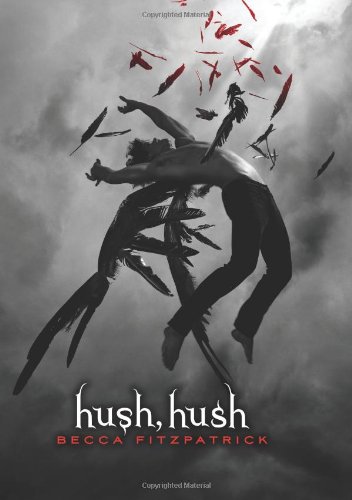
                • Cover of Hush, Hush
                  Hush, Hush

                  series · 5 books · 2009

                  similar byemotionalcontemporaryangelsidentitynorth america+1 more

                  The Hush, Hush quartet is a series of four novels by Becca Fitzpatrick that follow teenager Nora Grey as she falls in love with the fallen angel Patch and discovers her own angelic heritage. The first book in the series, Hush, Hush, was released on October 13, 2009 through Simon & Schuster, with the final novel in the series, Finale, releasing on October 23, 2012. The series was initially promoted as a trilogy, with later announcements stating that the series would comprise four books.

                • Cover of Flowers for Algernon
                  Flowers for Algernon

                  Daniel Keyes · standalone novel · 1966

                  similar byemotionalcontemporaryidentitynorth americascience fiction

                  A man with a low IQ becomes the subject of an experimental medical procedure which raises his IQ well over genius level.

                • Cover of The Midnight World
                  The Midnight World

                  series · 2 books · 2020

                  similar byemotionalcontemporaryidentityfantasy+1 more

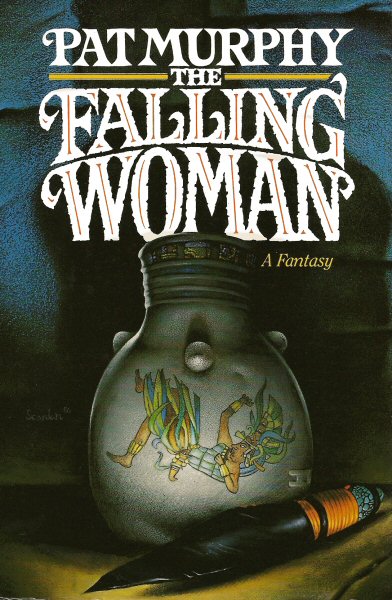
                • Cover of The Falling Woman
                  The Falling Woman

                  Pat Murphy · standalone novel · 1986

                  similar bycontemporaryfantasyidentitynorth americareflectivemadness+1 more

                  The Falling Woman is a 1986 contemporary psychological fantasy novel by Pat Murphy. The book won the Nebula Award for Best Novel in 1987.

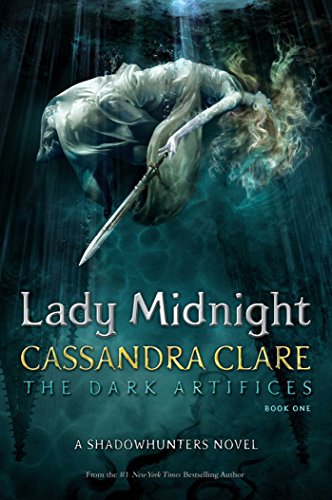
                • Cover of The Dark Artifices
                  The Dark Artifices

                  series · 4 books · 2016

                  part of The Mortal Instruments

                  similar byemotionalcontemporarynorth americaurban fantasyfantasybig city

                  The Dark Artifices is a trilogy written by Cassandra Clare. The series is chronologically the fourth series in The Shadowhunter Chronicles and a sequel to The Mortal Instruments. It is set in Los Angeles. The series consists of three books: Lady Midnight, Lord of Shadows and Queen of Air and Darkness, in that particular order. Centered around the protagonist, Emma Carstairs, the series follows her journey as a Shadowhunter at the Los Angeles Institute, and her life with her best-friend and parabatai, Julian Blackthorn, and his family. The series is about a sacred bond of "parabatai", two bonded Shadowhunters, and it is more valuable than any bond in this world. This bond makes the two more powerful and strong, but there is only one drawback - it is forbidden to fall in love with your parabatai. It so happens that Emma and Julian, two parabatai, have fallen in love. The Dark Artifices is a trilogy about their struggle against their enemies and how the two protagonists deal with their forbidden love and the resulting consequences. The series is told from the point-of-view of the various different characters in the story.

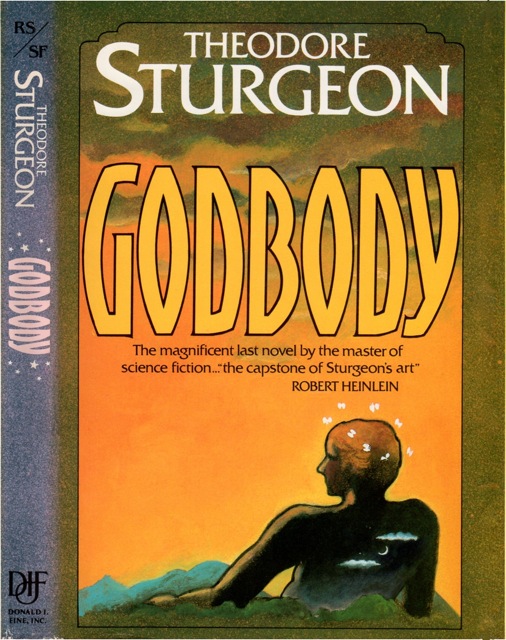
                • Cover of Godbody
                  Godbody

                  Theodore Sturgeon · standalone novel · 1986

                  similar byemotionalcontemporaryidentityreflectivescience fiction+2 more

                  Godbody is a science fiction novel by American writer Theodore Sturgeon, published posthumously in 1986. A foreword, "Agape and Eros: The Art of Theodore Sturgeon", was contributed by Robert A. Heinlein and an afterword was contributed by Stephen R. Donaldson.

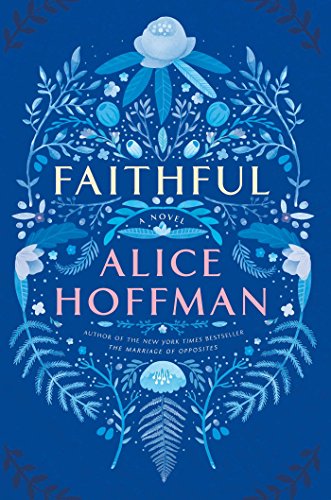
                • Cover of Faithful
                  Faithful

                  Alice Hoffman · standalone novel · 2016

                  similar byemotionalcontemporaryidentitynorth americareflectivebig city+1 more

                  Growing up on Long Island, Shelby Richmond is an ordinary girl until one night an extraordinary tragedy changes her fate. Her best friend's future is destroyed in an accident, while Shelby walks away with the burden of guilt. What happens when a life is turned inside out? When love is something so distant it may as well be a star in the sky? Faithful is the story of a survivor, filled with emotion--from dark suffering to true happiness--a moving portrait of a young woman finding her way in the modern world. A fan of Chinese food, dogs, bookstores, and men she should stay away from, Shelby has to fight her way back to her own future. In New York City she finds a circle of lost and found souls--including an angel who's been watching over her ever since that fateful icy night.

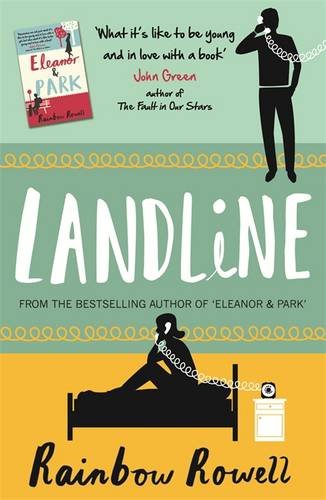
                • Cover of Landline
                  Landline

                  Rainbow Rowell · standalone novel · 2014

                  similar byemotionalcontemporaryidentitynorth americareflectivescience fiction

                  Landline is a 2014 American sci-fi novel by Rainbow Rowell. It tells the story of 37-year-old Georgie McCool who discovers that she is able to call her husband's 22-year-old self through his landline. Rowell stated that aspects from the novel are loosely based on her own life such as the fact that Georgie is incredibly career-driven while her husband is a stay-at-home dad. The character of Georgie McCool was named after the song Georgy Girl and the village of McCool Junction.

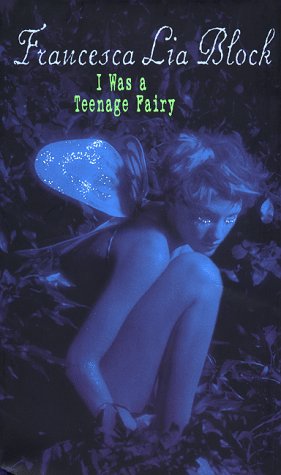
                • Cover of I Was a Teenage Fairy
                  I Was a Teenage Fairy

                  Francesca Lia Block · standalone novel · 1998

                  similar byemotionalcontemporaryidentitynorth americafantasyurban fantasybig city

                  Maybe Mab was real. Maybe not. Maybe Mab was the fury. Maybe she was the courage. Maybe later on she was the sex...A tiny fairy winging her way through the jasmine-scented L.A. night. A little girl caught in a grown-up glitz-and-glitter world of superstars and supermodels. A too beautiful boy with a secret he can never share...From the author of Weetzie Bat comes a magical, mesmerizing tale of transformation. This is the story of Barbie Marks, who dreams of being the one behind the Cyclops eye of the camera, not the voiceless one in front of it; who longs to run away to New York City where she can be herself, not some barley flesh-and-blood version of the plastic doll she was named after. It is the story of Griffin Tyler, whose androgynous beauty hides the dark pain he holds inside. And finally it is the story of Mab, a pinkie-sized, magenta-haired, straight-talking fairy, who may or may not be real but who helps Barbie and Griffin uncover the strength beneath the pain, and who teaches that love--like a sparkling web of light spinning around our bodies and our souls--is what can heal even the deepest scars.

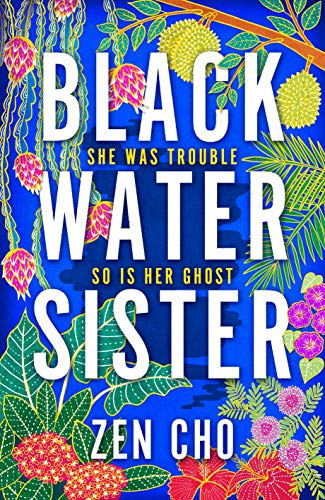
                • Cover of Black Water Sister
                  Black Water Sister

                  Zen Cho · standalone novel · 2021

                  similar byemotionalcontemporaryfantasyidentityurban fantasybig city

                  Black Water Sister is a 2021 fantasy novel by Zen Cho. It focuses on Jessamyn Teoh, a closeted lesbian who moves from the United States to her birth country of Malaysia. In Malaysia, she meets the ghost of her deceased grandmother and becomes involved in a conflict related to a local deity. The book received critical praise, and was nominated for the 2022 Ignyte Award, Locus Award for Best Novel, and World Fantasy Award.

                • Cover of The Dreaming Jewels
                  The Dreaming Jewels

                  Theodore Sturgeon · standalone novel · 1950

                  similar byemotionalcontemporaryidentityscience fiction+1 more

                  The Dreaming Jewels (1950), also known as The Synthetic Man, is a science fiction novel by American writer Theodore Sturgeon. It was his first published novel.

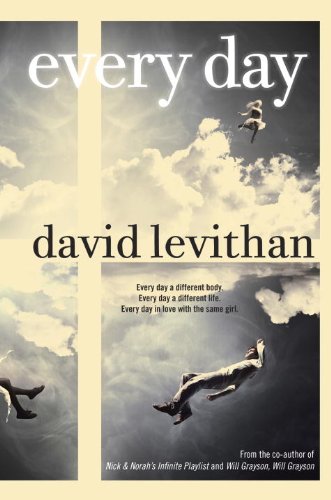
                • Cover of Every Day
                  Every Day

                  series · 3 books · 2012

                  similar byemotionalcontemporaryidentityfantasyreflective

                  David Levithan's Every Day follows A, a consciousness with no fixed body who wakes each morning inside a different person's life, and who falls for a girl named Rhiannon despite the impossibility of ever staying in one body to be with her. The story continues from other perspectives in Another Day and, years later, Someday.

                • Cover of Dying Inside
                  Dying Inside

                  Robert Silverberg · standalone novel · 1972

                  similar bycontemporaryidentitynorth americareflectivebig cityscience fiction

                  Dying Inside is a 1972 science fiction novel by American writer Robert Silverberg. It was first serialized in Galaxy in 1972 and published in book form by Charles Scribner's Sons later that year. The novel follows David Selig, a middle-aged telepath in contemporary New York City, as the mind-reading ability that has shaped his life begins to disappear.

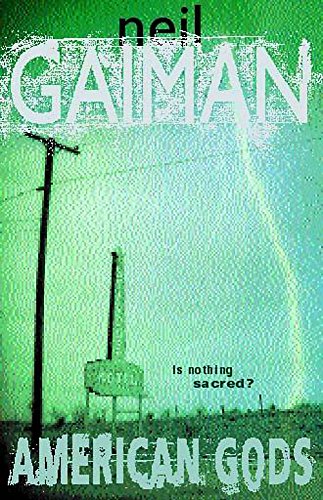
                • Cover of American Gods
                  American Gods

                  series · 10 books · 1999

                  similar bycontemporaryfantasy+4 more

                  Neil Gaiman's American Gods (2001) follows Shadow Moon, an ex-convict who takes a job as bodyguard to a mysterious drifter who is secretly the Norse god Odin, and is drawn into a brewing conflict between the old immigrant gods of myth and the new gods of media, technology, and modern American life. Gaiman's 2005 novel Anansi Boys is set in the same mythological world and shares the trickster god Mr. Nancy, but follows a different protagonist and story, making it a loose companion rather than a direct sequel.

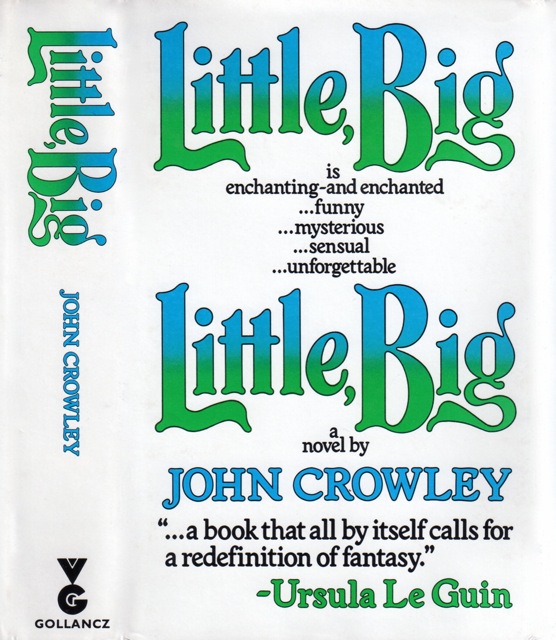
                • Cover of Little, Big
                  Little, Big

                  John Crowley · standalone novel · 1981

                  similar bycontemporaryfantasyreflectiveurban fantasynorth america+1 more

                  Little, Big: or, The Fairies' Parliament is a contemporary fantasy novel by John Crowley, published in 1981. It won the World Fantasy Award in 1982.

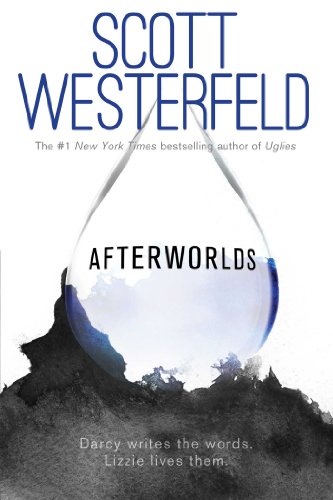
                • Cover of Afterworlds
                  Afterworlds

                  Scott Westerfeld · standalone novel · 2014

                  similar byemotionalcontemporaryidentitynorth americareflectivebig city

                  Alternates between a realistic story of a young author writing a "young adult Hindu paranormal romance" novel in New York City and chapters from that novel.

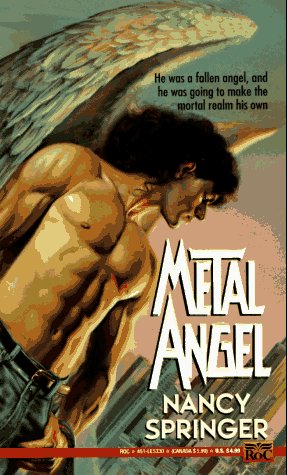
                • Cover of Metal Angel
                  Metal Angel

                  Nancy Springer · standalone novel · 1994

                  similar bycontemporaryangelsfantasyidentityurban fantasynorth americabig city

                  From the back cover of the Roc first edition: Heaven's Rebel - He had given birth to himself on a dark night in L.A., tired of being an angel, longing to experience all that the mortal world had to give. His body was the epitome of male beauty, a human form made to succeed. Yet one thing Volos had forgotten in his act of self-creation was the wings. The wings set him apart from true mortals. But in L.A. being different was a way of life, and if you picked the right career it could become an asset rather than a liability. And for Volos, only one career would do: rock star. He had the voice, the charisma - and of course, the wings. And he was ready to soar to the heights of the music world. But not even an angel can get to the top without making enemies. And the leader of the enemies who banded against Volos could give even an immortal something to fear...

                • Cover of The Wood Wife
                  The Wood Wife

                  Terri Windling · standalone novel · 1996

                  similar bycontemporaryfantasyidentitynorth americareflectiveurban fantasy

                  Maggie leaves her life to pursue her dream when her mentor leaves her his estate and a mystery.

                • Cover of Weetzie Bat
                  Weetzie Bat

                  series · 7 books · 1989

                  similar bycontemporarynorth americabig cityurban fantasy+3 more

                  Dangerous Angels, also known as the Weetzie Bat series, is a young adult fiction series by Francesca Lia Block. The series consists of seven novels: Weetzie Bat, Witch Baby, Cherokee Bat and the Goat Guys, Missing Angel Juan, Baby Be-Bop, Necklace of Kisses and Pink Smog: Becoming Weetzie Bat. The books follow main character, Weetzie Bat and her friends and family members, who all live in Los Angeles.

                • Cover of Echo
                  Echo

                  Francesca Lia Block · standalone novel · 2001

                  similar byemotionalcontemporaryidentitynorth americareflectivebig city+1 more

                  Francesca Lia Block is an American writer of adult and young-adult literature. She is best known for writing the Weetzie Bat series, which she began while a student at UC Berkeley.

                • Cover of Light from Uncommon Stars
                  Light from Uncommon Stars

                  Ryka Aoki · standalone novel · 2021

                  similar byemotionalcontemporarynorth americaurban fantasyfantasybig cityscience fiction

                  Shizuka Satomi made a deal with the devil: to escape damnation, she must entice seven other violin prodigies to trade their souls for success. She has already delivered six. When Katrina Nguyen, a young transgender runaway, catches Shizuka's ear with her wild talent, Shizuka can almost feel the curse lifting. She's found her final candidate. But in a donut shop off a bustling highway in the San Gabriel Valley, Shizuka meets Lan Tran, retired starship captain, interstellar refugee, and mother of four. Shizuka doesn't have time for crushes or coffee dates, what with her very soul on the line, but Lan's kind smile and eyes like stars might just redefine a soul's worth. (taken from the OCLC entry for the first edition's first printing)

                • Cover of The Martian Child
                  The Martian Child

                  David Gerrold · standalone novel · 2002

                  similar byemotionalcontemporaryidentitynorth americareflective

                  A Novel About A Single Father Adopting A Son

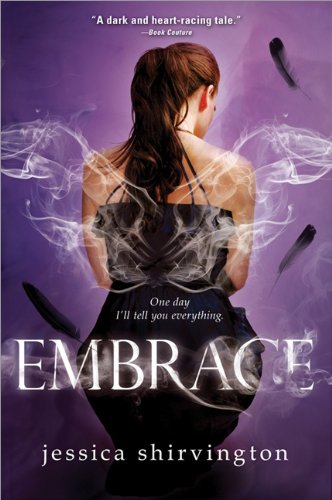
                • Cover of Embrace / The Violet Eden Chapters
                  Embrace / The Violet Eden Chapters

                  series · 5 books · 2010

                  similar byemotionalcontemporaryangelsfantasy+1 more

                • Cover of The Land of Laughs
                  The Land of Laughs

                  Jonathan Carroll · standalone novel · 1980

                  similar bycontemporaryfantasyidentitynorth america+2 more

                  WorldCat: Schoolteacher Thomas Abbey, unsure son of a film star, doesn't know who he is or what he wants--in life, in love, or in his relationship with the strange and intense Saxony Gardner. What he knows is that in his whole life nothing has touched him so deeply as the novels of Marshall France, a reclusive author of fabulous children's tales who died at forty-four. Now Thomas and Saxony have come to France's hometown, the dreamy Midwestern town of Galen, Missouri, to write France's biography. Warned in advance that France's family may oppose them, they're surprised to find France's daughter warmly welcoming instead. But slowly they begin to see that something fantastic and horrible is happening. The magic of Marshall France has extended far beyond the printed page...leaving them with a terrifying task to undertake.