More like Reached
anchored on:science fictiondystopiarebellion and revolutionfar futuretenseyoung adult+4 more
but
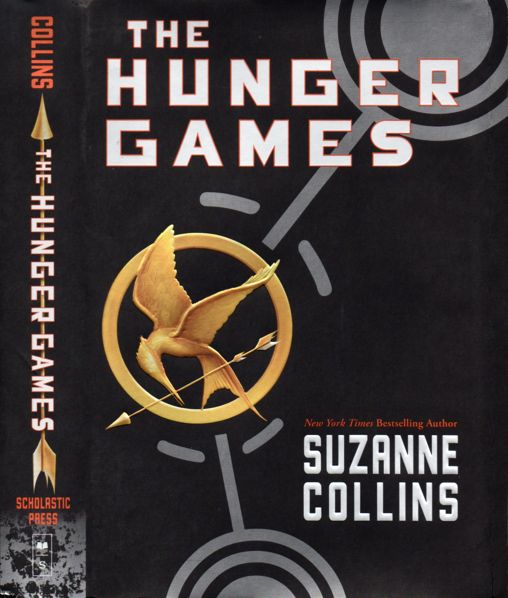
- The Hunger Games
series3 books2008
part of The Hunger Games Universe
similar bytensefar futurescience fictiondystopiarebellion and revolutionyoung adult+1 more
The Hunger Games is a series of young adult dystopian novels written by American author Suzanne Collins. The series consists of a trilogy that follows teenage protagonist Katniss Everdeen, as well as two prequels. The Hunger Games universe is a dystopia set in Panem, a post-apocalyptic North American country consisting of the wealthy Capitol and 12 districts in varying states of poverty. As punishment for rebellion, the Capitol hosts an annual battle royale competition called The Hunger Games. Each of the 12 districts must send two children between the ages of 12 and 18 to participate, and the last surviving child is dubbed the victor.
- The Hunger Games Universe
universe5 books2008
Start hereThe Hunger Games · Start here
similar byfar futuretensedystopiascience fictionyoung adultrebellion and revolution+1 more
Panem, they call it now — a nation raised on the drowned bones of North America, a glittering Capitol ringed by twelve districts it once starved into obedience. Every year the Capitol collects its debt in children: two tributes from each district, drawn by lottery, dropped into an engineered arena, and made to kill one another on live television while the whole country is required to watch. This is the Hunger Games — entertainment, punishment, and government at once. Suzanne Collins tells it in a compact, unified body of work. The founding trilogy — The Hunger Games, Catching Fire, and Mockingjay — follows Katniss Everdeen, a girl from the coal-mining District 12 who volunteers in her sister's place and becomes something the Capitol never scripted. Two prequels reach back into the same machinery: The Ballad of Songbirds and Snakes traces a young Coriolanus Snow long before he is President, and Sunrise on the Reaping returns to District 12 a generation ahead of Katniss. Begin with the trilogy, in order — it is Katniss's voice, close and present-tense, that makes Panem breathe, and the prequels land hardest once you know how her story ends. Beneath the spectacle sits one steady, uncomfortable question: who profits when we agree to look away.
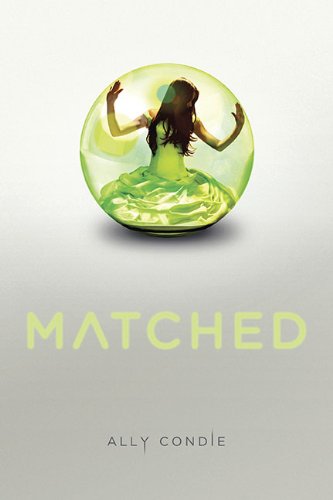
- Matched
series3 books2010
similar bytensedystopiascience fictionfar futureyoung adultrebellion and revolutionmultiple pov+3 more
Ally Condie's dystopian trilogy follows Cassia, a teenager in a rigidly controlled Society that assigns citizens' spouses, careers, and even manner of death, after a glitch shows her a second face at her own Matching ceremony. Across Matched, Crossed, and Reached, her quiet doubt about the Society's choices grows into open resistance against the system that shaped her whole life.
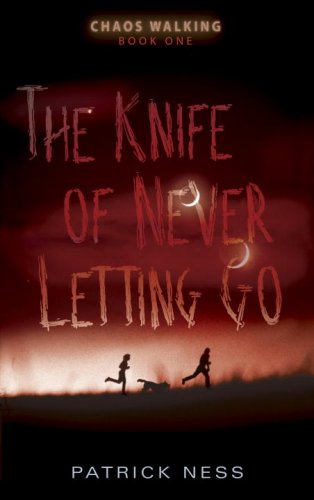
- Chaos Walking
series5 books2008
similar bytensefar futurescience fictiondystopiayoung adult+3 more
Chaos Walking is a young adult science fiction series written by American-British novelist Patrick Ness. It is set in a dystopian world where all living creatures can hear each other's thoughts in a stream of images, words, and sounds called Noise. The series is named after a line in the first book: "The Noise is a man unfiltered, and without a filter, a man is just chaos walking." The series consists of a trilogy of novels and three short stories.
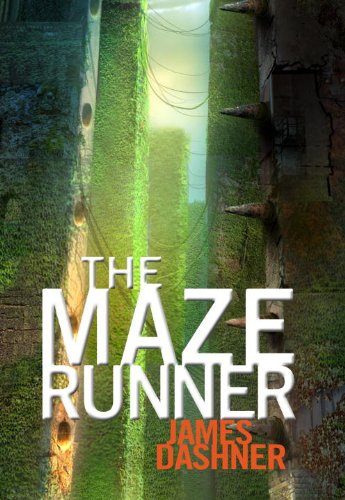
- Maze Runner
series11 books2009
similar bytensescience fictiondystopiayoung adult+3 more
The Maze Runner is a series of young adult dystopian science fiction novels written by American author James Dashner. The series consists of the trilogy The Maze Runner (2009), The Scorch Trials (2010) and The Death Cure (2011), as well as two prequel novels, The Kill Order (2012) and The Fever Code (2016). A novella titled Crank Palace (2020) and a companion book titled The Maze Runner Files (2013) have also been released. A sequel trilogy in the series titled The Maze Cutter takes place 73 years following the events of The Death Cure and consists of the novels The Maze Cutter (2022), The Godhead Complex (2023), and The Infinite Glade (2025).
- When the Sleeper Wakes
H. G. Wellsstandalone novel1899
similar byfar futuretensescience fictiondystopiarebellion and revolution
Graham, an insomniac Englishman in 1890s London, takes a course of sleep-inducing drugs and falls into a coma that lasts two centuries. He wakes in the year 2100 to find his investments have compounded, through a ruling body called the White Council, into effective ownership of most of the world's wealth and power, making him, on paper, humanity's master, and in practice, its prisoner, held under guard while the Council governs in his name. A rebel faction led by a man named Ostrog frees him, hoping to use his symbolic authority to spark an uprising against the Council. An early H. G. Wells dystopia about inherited power and manufactured consent.
- The Chrysalids
John Wyndhamstandalone novel1955
similar byfar futuretensescience fictioncoming of age+1 more
The Chrysalids is a science fiction novel by British writer John Wyndham, first published in 1955 by Michael Joseph. It is the least typical of Wyndham's major novels, but regarded by some as his best. An early manuscript version was entitled Time for a Change.
- This Perfect Day
Ira Levinstandalone novel1970
similar byfar futuretensescience fictiondystopiarebellion and revolution
This Perfect Day is a science fiction novel by American writer Ira Levin, about a technocratic dystopia. Levin won a Prometheus Award in 1992 for this novel. This Perfect Day is one of two Levin novels yet to be adapted to film.
- Tunnel in the Sky
Robert A. Heinleinstandalone novel1955
similar byfar futuretensescience fictionyoung adultcoming of age
As the final test of a survivalist/explorer class, teenagers are dumped on an alien planet to use their skills while awaiting pickup. But something has gone wrong, and they find they are on their own.
- Shade's Children milieu
series2 books1997
similar bytensescience fictiondystopiayoung adultcoming of agerebellion and revolution+1 more
Shade's Children is set on an Earth where all adults vanished overnight fourteen years earlier, leaving children to be harvested at puberty by the machines that now run the world, unless they escape into hiding with Shade, a mysterious AI-like protector. Garth Nix's 1997 novel is a single, self-contained book rather than a series, though its bleak post-apocalyptic premise has drawn comparisons to his other work.
- Red Rising
series13 books2014
similar byfar futurescience fictiontensedystopiarebellion and revolution+1 more
Pierce Brown's Red Rising follows Darrow, a lowborn 'Red' miner on a colonized Mars who discovers his caste's suffering is a lie sustained by the ruling Gold elite, and infiltrates their ranks to destroy the system from within. The series expands from a single-protagonist revenge story into a sprawling multi-book war across the solar system, eventually following an ensemble cast beyond Darrow alone, and combines Roman-inspired factional politics with brutal, competition-driven action set pieces.
- Storm Thief
Chris Woodingstandalone novel2006
similar byfar futuretensescience fictiondystopiayoung adultrebellion and revolution
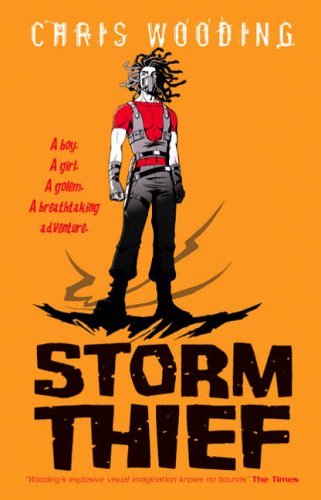
Storm Thief is a 2006 dystopian science-fiction novel written by Chris Wooding and published by Scholastic Books. It also has elements of the Gothic, tech-punk, and alternate history genres. It is set on a futuristic island-city known as Orokos, which is plagued by deadly "probability storms." It features a group of outcasts on the run, a mysterious artifact, a golem with a shadowed past, an underground resistance movement, a corrupt government, the downfall of two civilizations, and a seabird. The novel displays a number of literary themes, including fate, free will, and redemption. It received recognition as a 2007 Best Book for Young Adults from the American Library Association.
- Beyond This Horizon
Robert A. Heinleinstandalone novel1948
similar byfar futurescience fictiondystopiarebellion and revolution+1 more
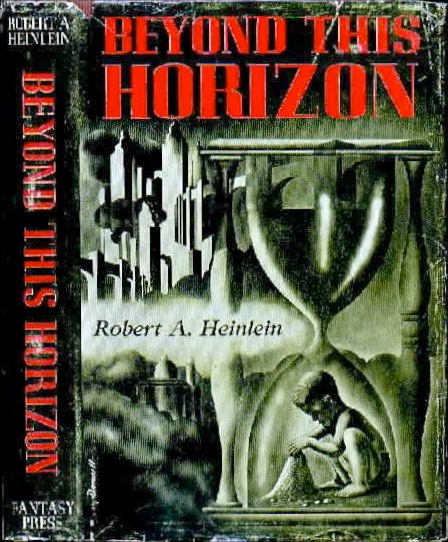
From the front flap of a 2001 Baen reprint: "Utopia has been achieved. For centuries, disease, hunger, poverty, and war have been things found only in the history tapes. And applied genetics has given men and women the bodies of athletes and a lifespan of over a century. They should all have been very happy... But Hamilton Felix is bored. And he is the culmination of a star line, each of his last thirty ancestors chosen for superior genes. Hamilton is, as far as genetics can produce one, the ultimate man. And this ultimate man can see no reason why the human race should survive, and has no intention of continuing the pointless comedy. However, Hamilton's life is about to become less boring. A secret cabal of revolutionaries who find utopia not just boring, but desperately in need of leaders who know just What Needs to be Done, are planning to revolt and put themselves in charge. Knowing of Hamilton's disenchantment with the modern world, they have recruited him to join their Glorious Revolution. Big mistake! The revolutionaries are about to find out that recruiting a superman was definitely not a good idea..."
- Our Friends from Frolix 8
Philip K. Dickstandalone novel1970
similar byfar futuretensescience fictiondystopiarebellion and revolution
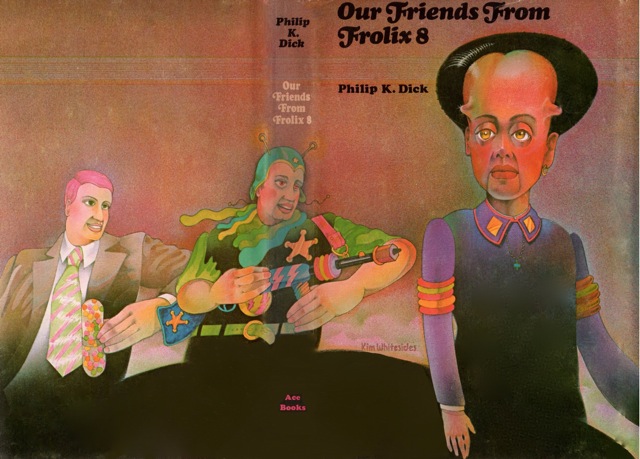
Our Friends from Frolix 8 is a science fiction novel by American writer Philip K. Dick. It was written from 1968 to 1969 and was published in 1970 by Ace Books. The novel is set in the 22nd century, when humanity is ruled by mutated humans, "New Men" and "Unusuals", while normal "Old Men" are discriminated against. The story follows Nick Appleton, a low-class Old Man worker who becomes a subversive to the system, and Willis Gram, the Unusual ruler of the Earth. Separately, resistance leader Thors Provoni has left the planet to find an ally to the Old Men, finally returning with an alien from far away in space. The novel is best known for a single scene where the characters discuss the dead body of God having been found in space.
- The Eyes of Heisenberg
Frank Herbertstandalone novel1966
similar bytensefar futurescience fictionrebellion and revolution
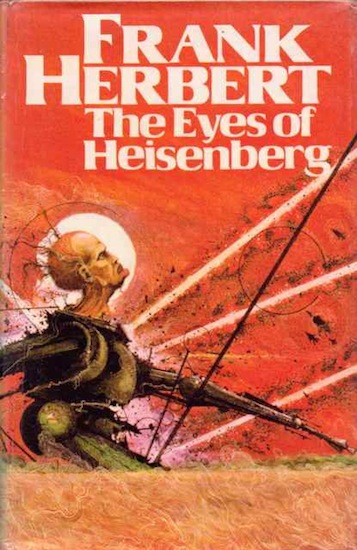
Tens of thousands of years in the future, Earth is ruled by the Optimen, a genetically engineered aristocracy that has made itself functionally immortal, while ordinary people, the Folk, live under strict reproductive control. When Harvey and Lizbeth Durant arrive to have their embryo genetically screened, the examining doctor finds something in the child no one has seen in a very long time: real potential for both fertility and life span, traits the Optimen have arrogated to themselves. Rather than destroy the embryo as policy demands, the doctor hesitates, setting off a chain of surveillance, suspicion and resistance. A tightly wound Frank Herbert thriller about genetic caste and rebellion.
- Books of Ember
series4 books2003
similar bytensescience fictionfar futuredystopia+3 more
Jeanne DuPrau's Books of Ember begins with The City of Ember (2003), in which two teenagers in a decaying underground city search for a way to the surface before its failing infrastructure kills everyone left behind. The post-apocalyptic quartet continues with The People of Sparks, following survivors after they reach the world above, and concludes with The Prophet of Yonwood and The Diamond of Darkhold.
- The 100
series4 books2013
similar byfar futuretensescience fictionyoung adult+3 more
The 100 is a series of young adult science fiction novels by Kass Morgan. The first book in the series, The 100, was published on September 3, 2013, by Little, Brown Books for Young Readers. Day 21, its sequel, was released on September 25, 2014, and Homecoming was released on February 26, 2015. A fourth novel, Rebellion, was released on December 6, 2016.
- The House of the Scorpion
series2 books2002
similar bytensescience fictiondystopiayoung adultcoming of age+1 more
Matt is a clone of El Patron, the ancient drug lord who rules Opium, a narco-state carved out of the border between the U.S. and a future Mexico, created and raised solely to supply spare organs for the man he was copied from. Nancy Farmer's The House of the Scorpion follows Matt's growing awareness of what he is and what's expected of him, and his fight to be treated as human once El Patron dies. The sequel, The Lord of Opium, picks up with Matt unexpectedly left in charge of the whole corrupt nation.
- Eden (Joey Graceffa)
series3 books2016
similar bytensescience fictiondystopiafar futurerebellion and revolutionyoung adult+1 more
- Anomaly (Krista McGee)
series3 books2013
similar byfar futuredystopiascience fictiontenseyoung adultcoming of age+2 more
Anomaly is a 2013 dystopian science-fiction Christian trilogy by Krista McGee, published through Thomas Nelson. The first book in the series, Anomaly, was published on July 9, 2013. The series's second entry, Luminary, was published on January 7, 2014. A third entry, Revolution was published in July 2014. The series follows a seventeen-year-old girl living in a post-apocalyptic society that punishes the expression of emotion.
- Starchild
series3 books1964
completed
similar bytensefar futurescience fictiondystopia+1 more
The Starchild Trilogy is a series of three science fiction novels written by Frederik Pohl and Jack Williamson. In the future depicted in this series, mankind is ruled by a brutal totalitarian government known as the Plan of Man, enforced by a computerized surveillance state.
- Colsec
series3 books1984
completed
similar byfar futuretensescience fictionyoung adultrebellion and revolution+2 more
- Unwind Dystology
series5 books2007
similar bytensescience fictiondystopiayoung adultrebellion and revolution+2 more
Neal Shusterman's Unwind Dystology opens in a United States reshaped by the resolution to a war over reproductive rights: parents can retroactively have a teenager "unwound," their body disassembled for transplant on the premise that nothing technically dies since every part lives on in someone else. The first novel follows three teens fleeing that fate, and the sequels widen the same dystopia's cast and consequences across a four-book arc plus companion material. It is grim speculative fiction built to ask hard bioethical questions rather than offer comfort.
- Dayworld
series5 books1971
similar byfar futuretensescience fictiondystopia+1 more
Dayworld is a trilogy of science fiction novels by Philip José Farmer, inspired by his own short story "The Sliced-Crosswise Only-On-Tuesday World". They are set in a dystopian future in which people are allowed to live only one day of the week. For the rest of the six days, they are "stoned", kept in a kind of suspended animation. The novels focus on a man, Jeff Caird, who is a daybreaker: someone who lives more than one day a week. As the series progresses, the main character seems to be suffering from dissociative identity disorder. The novels comprising the trilogy are:Dayworld (1985) Dayworld Rebel (1987) Dayworld Breakup (1990)