More like Reader Abduction
anchored on:science fictionromanceparanormal romance
but
- Hitchhiker's Guide to the Galaxy
series16 books1979
part of The Hitchhiker's Guide to the Galaxy Universe
similar byfar futurefunnyscience fiction+2 more
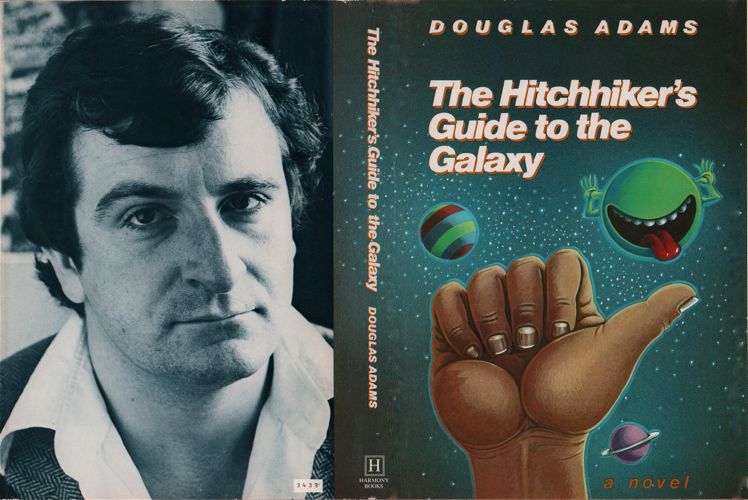
The Hitchhiker's Guide to the Galaxy is a comedy science fiction franchise created by Douglas Adams. Originally a radio sitcom broadcast over two series on BBC Radio 4 between 1978 and 1980, it was soon adapted to other formats, including both novels and comic books, a 1981 BBC television series, a 1984 text adventure game, stage shows and a 2005 feature film.
- Hoka
series33 books1951
completed
similar byother star systemsaliensfar futurefunnyscience fiction
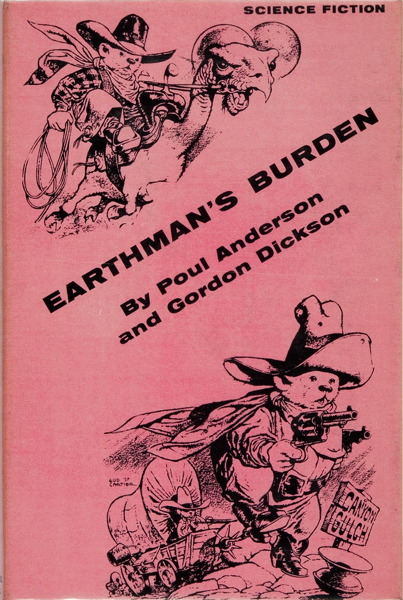
Poul Anderson and Gordon R. Dickson's Hoka stories follow the Hokas, a teddy-bear-like alien race who enthusiastically role-play human genres and history, to comic effect. Beginning with the linked collection Earthman's Burden (1957) and its sequel Hoka!, the stories and the novel Star Prince Charlie were later gathered into omnibus editions such as Hoka! Hoka! Hoka! and The Sound & the Furry.
- Pip & Flinx
series18 books1972
part of Humanx Commonwealth
similar byother star systemsaliensfar futurescience fiction
The Pip & Flinx novels follow Flinx, a young man with an unusual, mysterious origin, and his ever-present animal companion Pip, across Alan Dean Foster's Humanx Commonwealth setting. Beginning with The Tar-Aiym Krang (1972) — chronologically the second entry, since Foster later filled in Flinx's earlier life — the series grew to fifteen novels published between 1972 and 2017, mixing planetary adventure with a slowly unfolding personal mystery.
- Planet Nerak / Nerakian Quest
series4 books2007
similar byother star systemsaliensfunnyscience fictionromance+2 more
- LySanTer (Future Fantasy Romance)
series3 books1990
completed
similar byother star systemsfar futureromance+5 more
- Doorways in the Sand
Roger Zelaznystandalone novel1976
similar byother star systemsaliensfar futurefunnyscience fiction
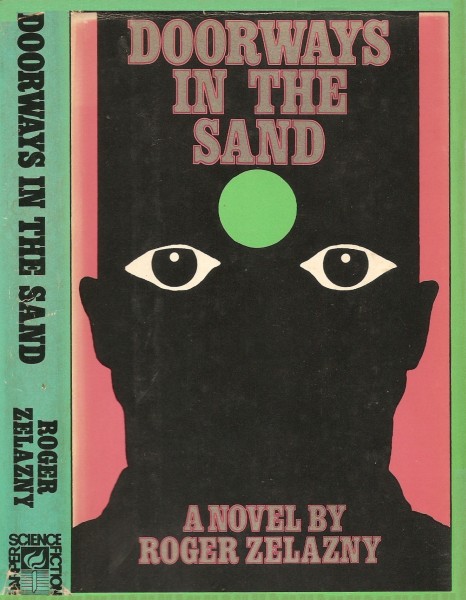
Doorways in the Sand is a science fiction novel by American writer Roger Zelazny. Featuring both detective fiction and comic elements, it was originally published in serial form in the magazine Analog Science Fiction and Science Fact; the hardcover edition was first published in 1976 and the paperback in 1977. Zelazny wrote the whole story in one draft, with no rewrites, and it subsequently became one of his five favorites among his own work. Doorways in the Sand was nominated for the Nebula and Hugo awards.
- Phule's Company
series6 books1990
similar byfar futurefunnyscience fiction+2 more
Phule's Company is a series of comic military science fiction novels by Robert Asprin, beginning with Phule's Company and ending with Phule's Errand.
- Mindswap
Robert Sheckleystandalone novel1966
similar byother star systemsaliensfar futurefunnyscience fiction
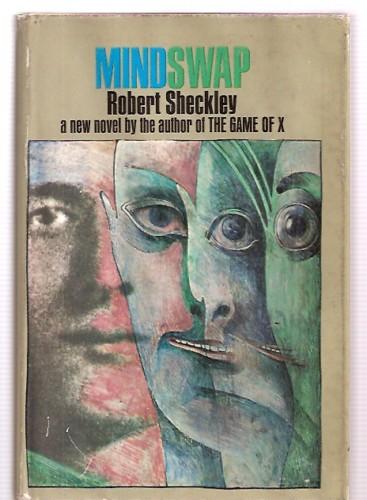
"In the future, interstellar travel to alien worlds will be too expensive for most ordinary people. It certainly is for Marvin, a college student who wants to take a really good vacation. And so he signs up for what he can afford, a mindswap, in which a persons consciousness is swapped into the body of an alien lifeform. But Marvin is unlucky, and finds himself in the body of an interstellar criminal, a body that he has to vacate fast. But that criminal consciousness has stolen Marvins earthly body, and Marvin has to find a body on the black market. Travel from world to world with Marvin, each one crazier than the last, as he keeps finding far-from-ideal bodies in awful situations, just to stay alive"--Cover p. [4].
- Wasp
Eric Frank Russellstandalone novel1957
similar byother star systemsfar futurefunnyscience fiction+1 more
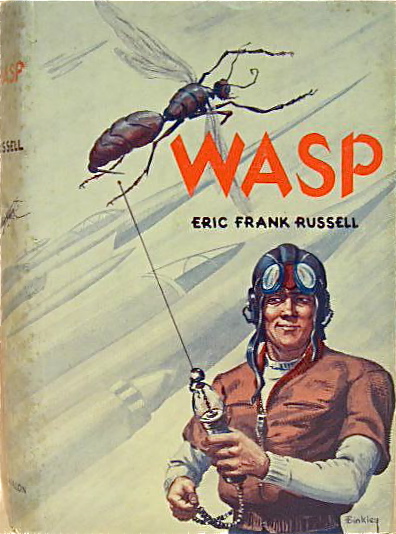
Wasp is a 1957 science fiction novel by English author Eric Frank Russell. Terry Pratchett stated that he "can't imagine a funnier terrorists' handbook." Wasp is often considered Russell's best novel.
- Hainish
series33 books1964
completed
similar byother star systemsfar futurescience fiction+1 more
The Hainish Cycle consists of a number of science fiction novels and stories by Ursula K. Le Guin. The cycle is set in a future history that features civilizations of human beings on planets orbiting a number of nearby stars, including Terra ("Earth"); these humans are contacting each other for the first time and establishing diplomatic relations, as well as setting up a confederacy under the guidance of the oldest of the human worlds, the peaceful planet Hain. In this history, human beings did not evolve on Earth, but they were instead the result of interstellar colonies planted by Hain in the distant past, after which interstellar travel ceased for an extended period. Some of the human races have new genetic traits, a result of ancient Hainish experiments in genetic engineering; this includes people who can dream while awake, and a world of hermaphroditic people who only enter active sexuality once per month, not knowing which sex will manifest in them. In keeping with Le Guin's narrative approach, she uses varied social and environmental settings to explore the anthropological and sociological outcomes of human evolution in those environments. The author often discounted the characterization of a so-called "Hainish Cycle".
- Retief
series61 books1960
similar byfar futurescience fiction+3 more
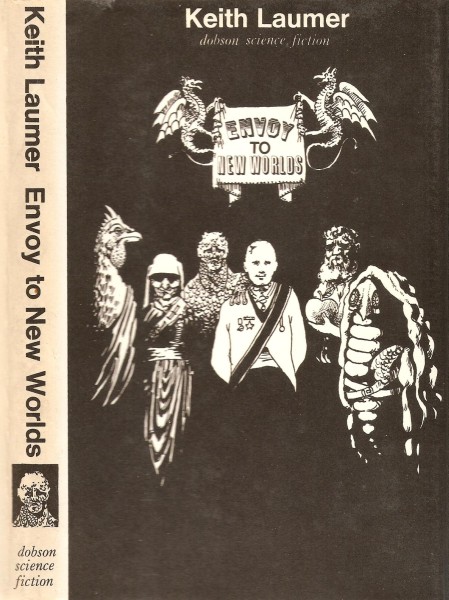
Retief follows Jame Retief, a wry, capable diplomat in the Terran Corps Diplomatique who solves interstellar crises through unorthodox action while his blustering, status-obsessed superiors busy themselves with protocol. Keith Laumer's satirical space-opera stories, mostly standalone adventures unified by the character and his bureaucratic universe, ran from the 1960s into the 1980s; later entries continuing under Laumer's name were completed by William H. Keith Jr. after his death. The books favor comic diplomatic farce over a continuous plot arc, so they read well in almost any order.
- The Stainless Steel Rat
series21 books1957
completed
similar byfar futurefunnyscience fiction+1 more
James Bolivar diGriz, alias "Slippery Jim" and "The Stainless Steel Rat", is a fictional character and a series of comic science fiction novels written by Harry Harrison.
- Viagens Interplanetarias
series23 books1949
completed
similar byother star systemsaliensfar futurescience fiction
The Viagens Interplanetarias series is a sequence of science fiction stories by L. Sprague de Camp, begun in the late 1940s and written under the influence of contemporary space opera and sword and planet stories, particularly Edgar Rice Burroughs's Martian novels. Set in the future in the 21st and 22nd centuries, the series is named for the quasi-public Terran agency portrayed as monopolizing interstellar travel, the Brazilian-dominated Viagens Interplanetarias. It is also known as the Krishna series, as the majority of the stories belong to a sequence set on a fictional planet of that name. While de Camp started out as a science fiction writer and his early reputation was based on his short stories in the genre, the Viagens tales represent his only extended science fiction series.
- Thousand Worlds
series24 books1971
similar byother star systemsfar futurescience fiction+1 more
George R.R. Martin's Thousand Worlds is a loose future-history setting he used for several of his 1970s-80s stories and novels, encompassing human interstellar colonization and encounters with older, stranger civilizations. Dying of the Light, A Song for Lya and the novella Nightflyers are among its best-known entries, sharing background rather than continuing characters or plot.
- Ender Wiggin
series14 books1977
part of Ender's Game Universe
similar byother star systemsaliensfar futurescience fiction
Orson Scott Card's Ender's Game (1985, expanded from his 1977 novella) follows child prodigy Andrew "Ender" Wiggin as he is recruited into a military training program built to prepare Earth's defenses for an anticipated third war against an insectoid alien species known as the Formics. The saga continues years later through Speaker for the Dead and Xenocide, following an older Ender as he confronts the moral weight of his role in that earlier conflict, and concludes the core arc in Children of the Mind, with Ender in Exile filling in the years between the first two books. Set within the wider Ender's Game universe, the series shifts from military coming-of-age story to slower, more philosophical science fiction as it progresses.
- Ringworld
series5 books1970
part of Known Space
similar byother star systemsaliensfar futurescience fiction
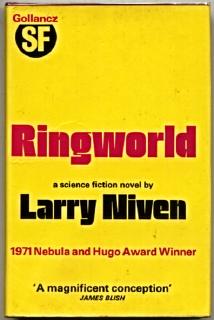
The Ringworld series is a series of science fiction novels written by American author Larry Niven. It is part of his Known Space series of stories. Its backdrop is the Ringworld, a giant artifact 3 million times the surface area of Earth circling a star. The series is composed of four standalone science fiction novels, the original award-winning book and its three sequels:1970: Ringworld 1979: The Ringworld Engineers 1996: The Ringworld Throne 2004: Ringworld's Children
- Star Smashers of the Galaxy Rangers
Harry Harrisonstandalone novel1973
similar byother star systemsfar futurefunnyscience fiction+1 more
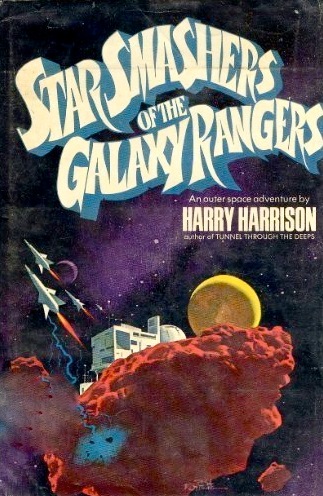
Star Smashers of the Galaxy Rangers is a 1973 comic science fiction novel by American writer Harry Harrison. It is a parody of the space opera genre and in particular, the Lensman and Skylark series of E. E. "Doc" Smith. The main characters are homages to Tom Swift Jr. and his buddy, Bud Barclay. It also includes a homage to Larry Niven's Ringworld (1970).