More like Realtime
anchored on:science fictionnorth americanear futuremystery & detectivepolitical intrigueclass conflict+2 more
but
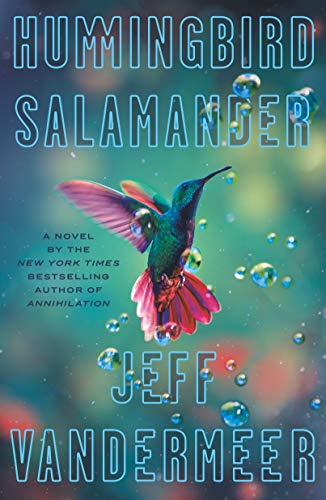
- Hummingbird Salamander
Jeff VanderMeerstandalone novel2021
similar bytensenorth americanear futurescience fictionmystery & detectivemurder investigation+1 more
Hummingbird Salamander is a 2021 novel by American author Jeff VanderMeer. It is set in a near-future dystopia affected by climate change, and narrated by a corporate security consultant, "Jane Smith," who is drawn into a mystery incited by her receipt of a taxidermied hummingbird from an extinct species.
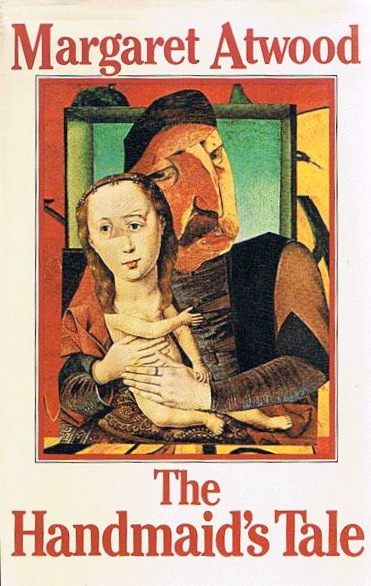
- The Handmaid's Tale
series3 books1985
similar bytensenorth americanear futurescience fictiondark+1 more
The Handmaid's Tale is Margaret Atwood's 1985 novel set in Gilead, a totalitarian theocracy that has overthrown the United States and forces fertile women into reproductive servitude as Handmaids; it is narrated by one such woman, Offred. Atwood returned to the world in her 2019 sequel The Testaments, set fifteen years later and narrated by three women, including the regime's Aunt Lydia. Together the two novels move from Gilead's grip on power toward the first cracks in it.
- Make Room! Make Room!
Harry Harrisonstandalone novel1966
similar bytensenear futurescience fictionnorth americaclass conflictdark+1 more
Make Room! Make Room! is a 1966 science fiction novel written by Harry Harrison exploring the consequences of both unchecked population growth on society and the hoarding of resources by a wealthy minority. It was originally serialized in Impulse magazine.
- The Water Knife
Paolo Bacigalupistandalone novel2015
similar bytensenorth americanear futurescience fictionclass conflictdark+1 more
The Water Knife is a 2015 science fiction novel by Paolo Bacigalupi. It is Bacigalupi's sixth novel, and is based on his short story, The Tamarisk Hunter, first published in the news magazine High Country News. It takes place in the near future, where drought brought on by climate change has devastated the Southwestern United States.
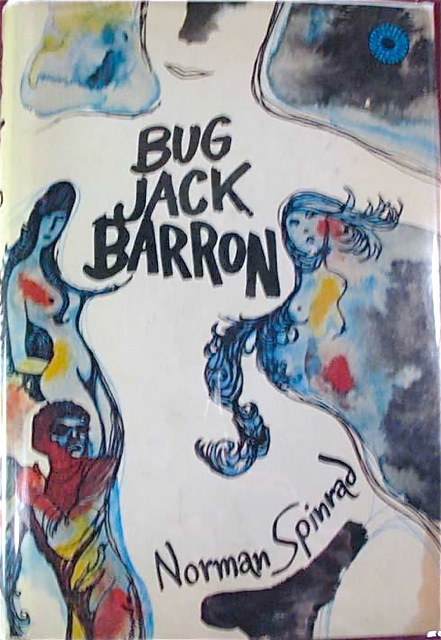
- Bug Jack Barron
Norman Spinradstandalone novel1969
similar bytensenorth americanear futurescience fictionpolitical intrigue+1 more
Bug Jack Barron is a 1969 science fiction novel by American writer Norman Spinrad, first serialized in the New Worlds magazine under the editorship of Michael Moorcock. It was nominated for the 1970 Hugo Award. The novel is notable for its lyrical style and unique use of cut-up phrases. In this regard, Spinrad has cited the influence of Beat writers William S. Burroughs, Allen Ginsberg, and Jack Kerouac.
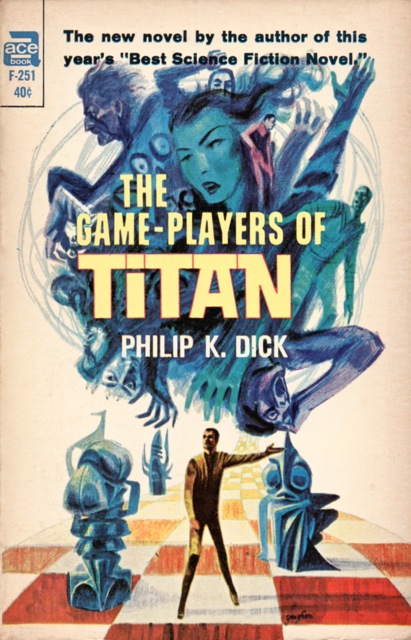
- The Game-Players of Titan
Philip K. Dickstandalone novel1963
similar bynorth americanear futurescience fictionmystery & detectivemurder investigationdark+1 more
In a depopulated, mostly sterile America, land, marriages and social standing are all wagered on Bluff, a high-stakes game administered by the vugs, gelatinous, gambling-obsessed aliens from Titan who rule Earth without ever quite occupying it. Pete Garden's bipolar disorder threatens his standing among the game's players even as his new wife becomes pregnant, a near-miraculous event in this exhausted world, and his attraction to a telepath complicates things further. When a fellow player turns up dead, Pete finds himself a suspect in a mystery tangled up with induced amnesia and vug politics he barely understands. Philip K. Dick's 1963 novel.
- Space Merchants
series2 books1953
completed
similar bynear futurescience fictionclass conflictdark+3 more
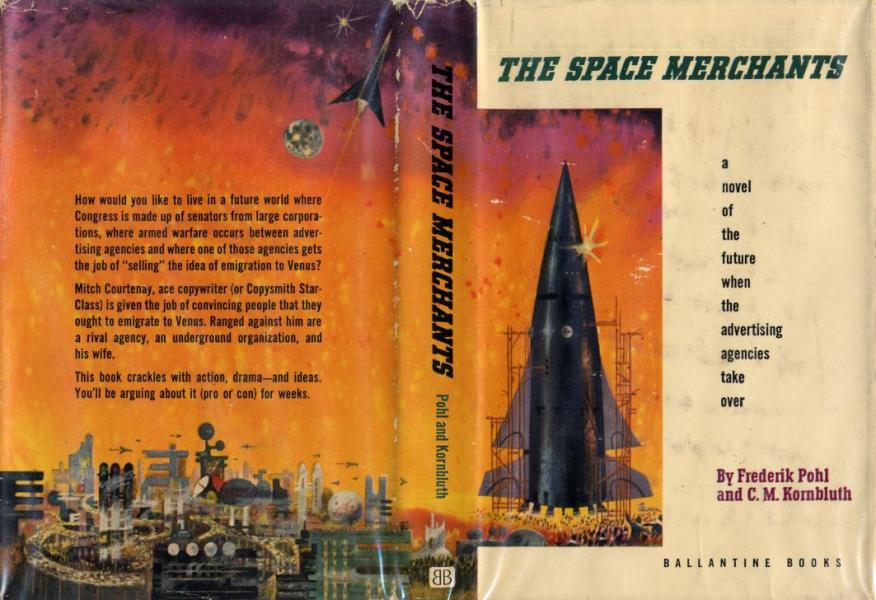
The Space Merchants (1953) is a satirical science fiction novel by Frederik Pohl and C. M. Kornbluth that follows an advertising executive navigating a future where aggressive consumer capitalism has swallowed politics and daily life. The authors reunited three decades later for a direct sequel, The Merchants' War (1984), returning to the same satirical world. Together the two books form a compact bookend pair rather than an ongoing series.
- The Thousandth Floor
series3 books2016
similar bytensenorth americanear futurescience fictionclass conflict+2 more
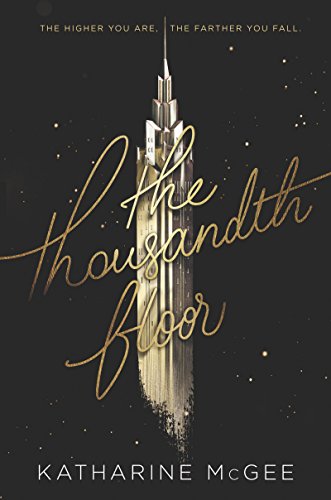
Katharine McGee's trilogy imagines Manhattan in 2118 as a single thousand-story tower housing every stratum of society, following five teenagers whose ambitions collide as they climb toward, or fall from, its highest floors. Across The Thousandth Floor, The Dazzling Heights, and The Towering Sky, addiction, surveillance, genetic privilege, and family betrayal play out as soap-opera drama in a meticulously built near-future setting.
- The Big Sheep
series2 books2016
similar bytensenorth americanear futurescience fictionmystery & detectivepolitical intriguemurder investigation
- The World Jones Made
Philip K. Dickstandalone novel1956
similar bytensenear futurescience fictionnorth americapolitical intriguedark
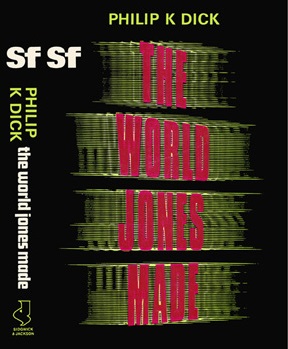
The World Jones Made is a 1956 science fiction novel by American writer Philip K. Dick, examining notions of precognition, humanity, and politics. It was first published by Ace Books as one half of Ace Double D-150, bound dos-à-dos with Agent of the Unknown by Margaret St. Clair.The story takes place after a nuclear war in which society is dominated by relativism, which rejects absolute truths and preaches tolerance as the highest principle. The mutant Floyd Jones, who can see into the future, plans to overthrow the system and colonise space. The story ends with the defeat of Jones, whose plans fail despite his ability to see the future due to the immutability of fate.
- Oath of Fealty
Larry Niven & Jerry Pournellestandalone novel1981
similar bytensenorth americanear futurescience fictionclass conflict
Oath of Fealty is a 1981 novel by American writers Larry Niven and Jerry Pournelle, published originally by Phantasia Press, then by Timescape Books, with numerous reprints. Set in the near future, it involves an arcology, a large inhabited structure, called Todos Santos, which rises above a crime-ridden Los Angeles, California, but has little beyond casual contact with the city. The novel popularized the phrase "think of it as evolution in action", which occurs elsewhere in Niven's books. The novel anticipated the building of the Los Angeles subway. It was included in David Pringle's book Science Fiction: The 100 Best Novels.
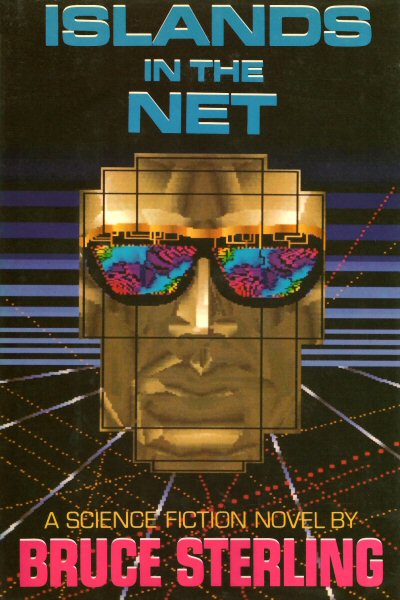
- Islands in the Net
Bruce Sterlingstandalone novel1988
similar bytensenear futurescience fictionpolitical intrigueclass conflict+1 more
Islands in the Net is a 1988 science fiction novel by American writer Bruce Sterling. It won the John W. Campbell Memorial Award for Best Science Fiction Novel in 1989, and was nominated for both the Hugo and Locus Awards that same year. It offers a view of an early 21st century world, apparently peaceful, with delocalised, networking corporations. The protagonist, swept up in events beyond her control, finds herself in places that are off the net, from a datahaven in Grenada, to a Singapore under terrorist attack, to the poorest and most disaster-struck parts of Africa.
- The Running Man
Stephen Kingstandalone novel1982
similar bytensenorth americanear futurescience fictiondark+1 more
The Running Man is a dystopian thriller novel by American writer Stephen King, first published under the pseudonym Richard Bachman in 1982 as a paperback original. It was collected in 1985 in the omnibus The Bachman Books. The novel is set in a dystopian United States during the year 2025, in which the nation's economy is in ruins and world violence is rising. The story follows protagonist Ben Richards as he participates in the reality show The Running Man, in which contestants win money by evading a team of hitmen sent to kill them.
- Directive 51 / Daybreak
series3 books2010
similar bytensenorth americanear futurescience fictionpolitical intriguedark
Directive 51 opens John Barnes's near-future thriller trilogy with government analyst Heather O'Grainn as anti-technology extremists unleash a nanotech plague called Daybreak that destroys petroleum-based materials, rubber, and electrical systems worldwide. The resulting collapse triggers mass death, a crisis over presidential succession, and mysterious Moon-launched fusion strikes on Washington and Chicago, while a shadowy neofeudalist movement moves into the vacuum. Daybreak Zero and The Last President carry the same unraveling-civilization story through the rest of the trilogy.
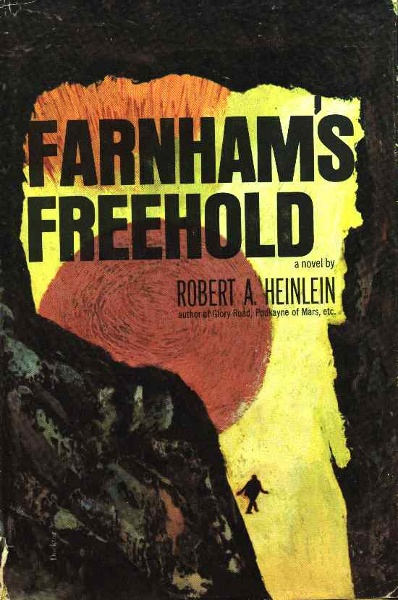
- Farnham's Freehold
Robert A. Heinleinstandalone novel1964
similar bytensenear futurescience fictionnorth america+1 more
Farnham's Freehold is a science fiction novel by American writer Robert A. Heinlein. A serialized version, edited by Frederik Pohl, appeared in Worlds of If magazine. The complete version was published in novel form by G. P. Putnam later in 1964.
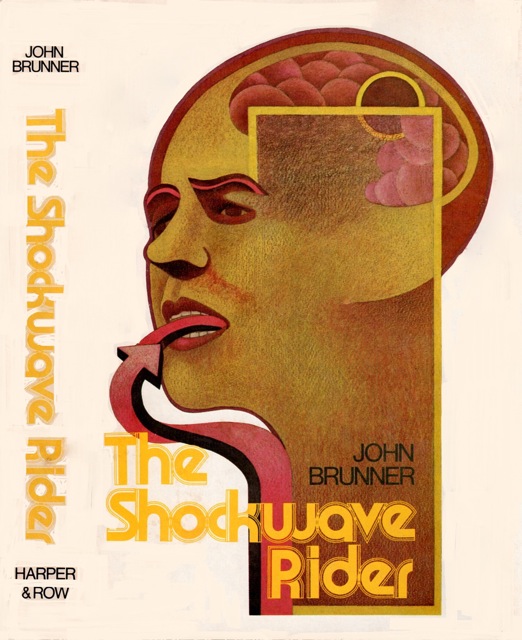
- The Shockwave Rider
John Brunnerstandalone novel1975
similar bytensenorth americanear futurescience fictiondark
The Shockwave Rider is a science fiction novel by John Brunner, originally published in 1975. It is notable for its hero's use of computer hacking skills to escape pursuit in a dystopian future, and for the coining of the word "worm" to describe a program that propagates itself through a computer network. It also introduces the concept of a Delphi pool, perhaps derived from the RAND Corporation's Delphi method – a prediction market on world events which bears close resemblance to DARPA's controversial and cancelled Policy Analysis Market.
- Gun, with Occasional Music
Jonathan Lethemstandalone novel1994
similar bytensenorth americanear futurescience fictionmystery & detectivemurder investigation
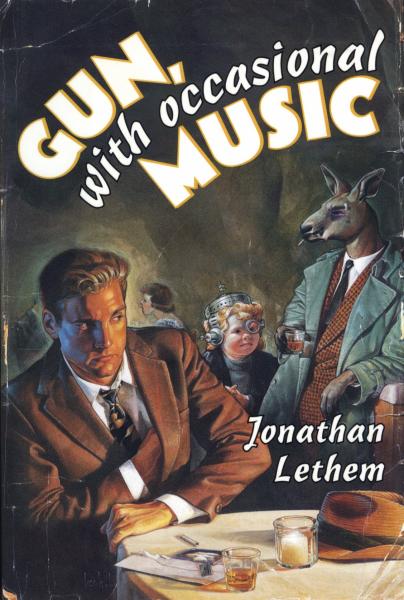
Conrad Metcalf has problems. He has a monkey on his back, a rabbit in his waiting room and a trigger-happy kangaroo on his tail. (Maybe evolution therapy is not such a good idea.) He's been shadowing Celeste, the wife of an affluent Oakland urologist. Maybe falling in love a little with her at the same time. When the doctor turns up dead, Metcalf finds himself caught in a crossfire between the boys from the Inquisitor's Office and gangsters who operate out of the back room of the Fickle Muse. (adapted from the blurb accompanying the first edition)
- Friday
Robert A. Heinleinstandalone novel1982
similar bytensenorth americanear futurescience fiction+1 more
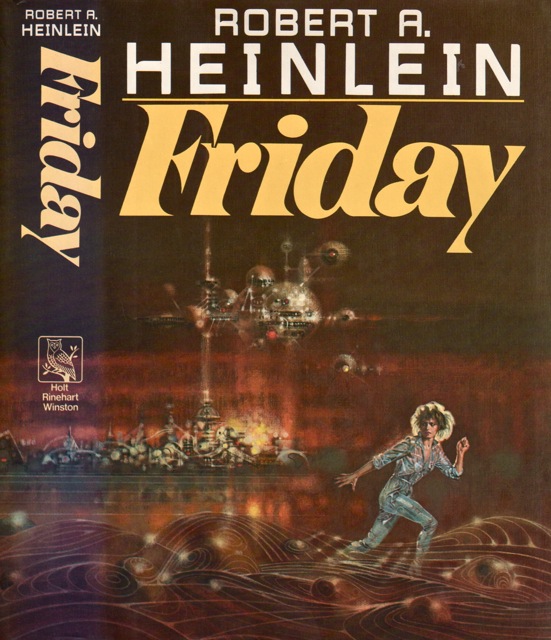
Friday is a 1982 science fiction novel by American writer Robert A. Heinlein. It is the story of a female "artificial person", the eponymous Friday, genetically engineered to be stronger, faster, smarter, and generally better than normal humans. Artificial humans are widely resented, and much of the story deals with Friday's struggle both against prejudice and to conceal her enhanced attributes from other humans. The story is set in a Balkanized 21st century, in which the nations of the North American continent have been split up into a number of smaller states.
- Lock In
series3 books2014
similar bynear futurenorth americascience fictiontensemurder investigation+1 more
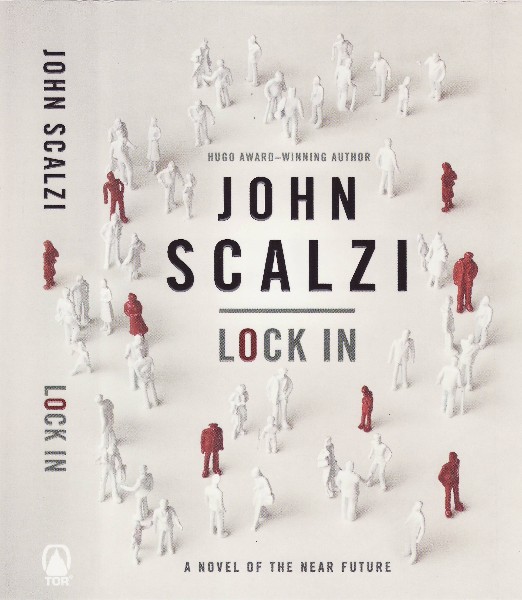
Lock In imagines a near-future pandemic that leaves a fraction of survivors fully conscious but completely paralyzed, able to interact with the world only through robotic surrogates or by borrowing the bodies of rare people whose brains can host another person's consciousness. John Scalzi's series follows a rookie FBI agent investigating crimes that exploit this new class of disability and technology, across the novels Lock In and Head On plus the interstitial oral history Unlocked. It's science-fiction police procedural more than space opera.
- Empire (Orson Scott Card)
series2 books2006
similar bytensenorth americanear futurescience fictionpolitical intrigue+1 more
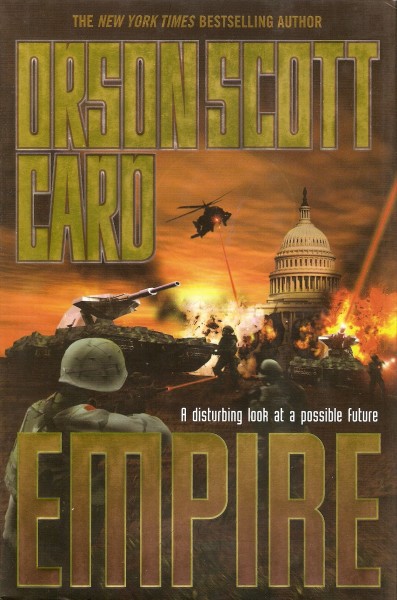
The Empire Duet is a two-book series written by Orson Scott Card under license from Chair Entertainment, beginning with Empire in 2006. The sequel Hidden Empire was released December 22, 2009.
- Golden State
Ben H. Wintersstandalone novel2019
similar bytensenear futurescience fictionnorth americapolitical intrigue+2 more
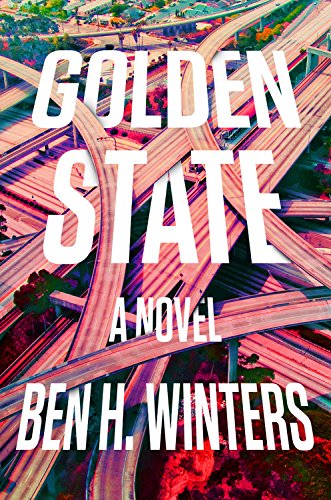
A veteran of the Speculative Service in an alternate-world California where the law and truth are valued above all else uses his rare authority to question the facts when truth enforcement is manipulated for corrupt purposes. "In a strange alternate society that values law and truth above all else, Laszlo Ratesic is a nineteen-year veteran of the Speculative Service. He lives in the Golden State, a nation standing where California once did, a place where like-minded Americans retreated after the erosion of truth and the spread of lies made public life and governance impossible. In the Golden State, knowingly contradicting the truth is the greatest crime--and stopping those crimes is Laz's job. In its service, he is one of the few individuals permitted to harbor untruths, to 'speculate' on what might have happened. But the Golden State is less a paradise than its name might suggest. To monitor, verify, and enforce the truth requires a veritable panopticon of surveillance and recording. And when those in control of the facts twist them for nefarious means, the Speculators are the only ones with the power to fight back." -- Amazon.
- Player Piano
Kurt Vonnegut & Jr.standalone novel1952
similar bynorth americanear futurescience fictionclass conflictdark
In the near future, when cybernetic automation has effectively separated people into two castes, the "engineers and managers", and the remainder of the population who can find work only in "recycling and reclamation" or the largely useless military, an underground movement arises with the intention of rolling back those changes and giving the masses the dignity of owning their own, productive, work once more.
- Termination Shock
Neal Stephensonstandalone novel2021
similar bytensenear futurescience fictionnorth americapolitical intrigue+1 more
Termination Shock is a science fiction novel by American writer Neal Stephenson, published in 2021. The book is set in a near-future when climate change has significantly altered human society and follows the attempts of a solar geoengineering scheme. The novel focuses on the geopolitical and social consequences of the rogue fix for climate change, themes common in the growing climate fiction genre.
- Company Town
Madeline Ashbystandalone novel2016
similar bytensenear futurescience fictionnorth americamystery & detectivemurder investigationdark+1 more
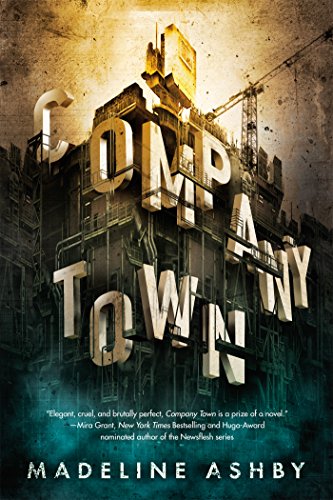
**2017 Winner of the Sunburst Award Society's Copper Cylinder Adult Award 2017 Canada Reads Finalist 2017 Locus Award Finalist for Science Fiction Novel Category 2017 Sunburst Award Finalist for Adult Fiction 2017 Aurora Awards Finalist for Best Novell** New Arcadia is a city-sized oil rig off the coast of the Canadian Maritimes, now owned by one very wealthy, powerful, byzantine family: Lynch Ltd. Hwa is of the few people in her community (which constitutes the whole rig) to forgo bio-engineered enhancements. As such, she’s the last truly organic person left on the rig–making her doubly an outsider, as well as a neglected daughter and bodyguard extraordinaire. Still, her expertise in the arts of self-defense and her record as a fighter mean that her services are yet in high demand. When the youngest Lynch needs training and protection, the family turns to Hwa. But can even she protect against increasingly intense death threats seemingly coming from another timeline? Meanwhile, a series of interconnected murders threatens the city’s stability and heightens the unease of a rig turning over. All signs point to a nearly invisible serial killer, but all of the murders seem to lead right back to Hwa’s front door. Company Town has never been the safest place to be–but now, the danger is personal. A brilliant, twisted mystery, as one woman must evaluate saving the people of a town that can’t be saved, or saving herself.