More like Redemption
anchored on:science fictionvirtual realityvirtual worldnear futurecyberpunkartificial intelligence+3 more
but
- Sprawl Trilogy
series10 books1981
similar bynear futuretensescience fictioncyberpunkdarkartificial intelligencevirtual reality
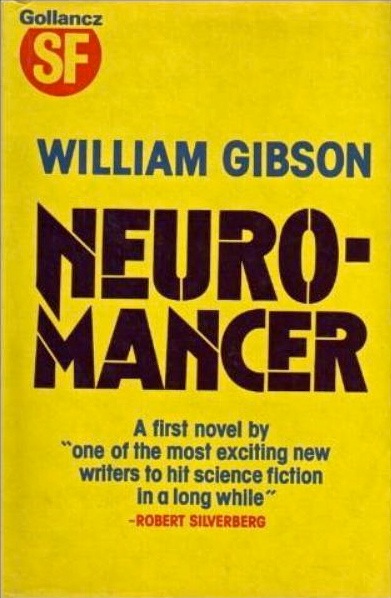
The Sprawl Trilogy is William Gibson's foundational cyberpunk sequence: Neuromancer (1984), in which hacker Case is drawn into a high-stakes heist alongside an artificial intelligence and a damaged ex-soldier, followed by Count Zero (1986) and Mona Lisa Overdrive (1988), which widen the same near-future world of corporate power and networked cyberspace to new characters. Johnny Mnemonic, an early short story set in the same fictional milieu, predates the novels and introduces the courier Molly Millions before her role in the trilogy. Together these works established much of cyberpunk's visual and thematic vocabulary.
- Otherland
series6 books1996
similar bytensevirtual worldnear futurescience fictioncyberpunkvirtual realityartificial intelligence
Otherland is a science fiction tetralogy by American writer Tad Williams, published between 1996 and 2001. The story is set on Earth near the end of the 21st century, probably between 2082 and 2089, in a world where technology has advanced somewhat beyond the present. The most notable advancement is the widespread availability of full-immersion virtual reality installations, which allow people from all walks of life to access an online world, called simply the Net. Tad Williams weaves an intricate plot spanning four thick volumes, and creates a picture of a future society where virtual worlds are fully integrated into everyday life.
- Ready Player One
series3 books2011
similar byvirtual worldnear futurescience fictioncyberpunkvirtual reality+1 more
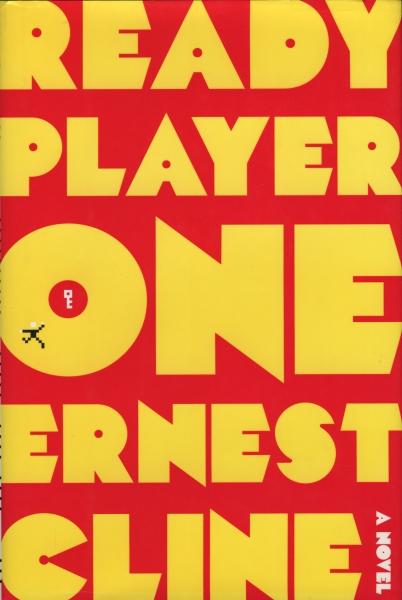
Ernest Cline's Ready Player One (2011) is set in a near-future dystopia where much of humanity escapes into the OASIS, a vast virtual-reality universe, and follows teenager Wade Watts as he chases an Easter egg hidden by the OASIS's late creator in a puzzle-based hunt worth a fortune. The 2020 sequel, Ready Player Two, picks up after Wade has gained control of the OASIS and follows him and his friends into a new quest built around a brain-computer interface the creator left behind.
- Snow Crash
Neal Stephensonstandalone novel1992
similar bytensenear futurescience fictioncyberpunkvirtual reality+1 more
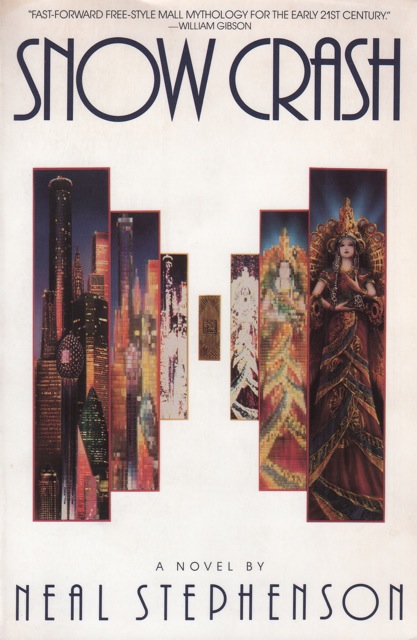
Snow Crash is a 1992 science fiction novel by Neal Stephenson. Like many of Stephenson's novels, its themes include history, linguistics, anthropology, archaeology, religion, computer science, politics, cryptography, memetics, and philosophy.
- Halting State
series2 books2007
similar bytensenear futurescience fictioncyberpunkartificial intelligence+2 more
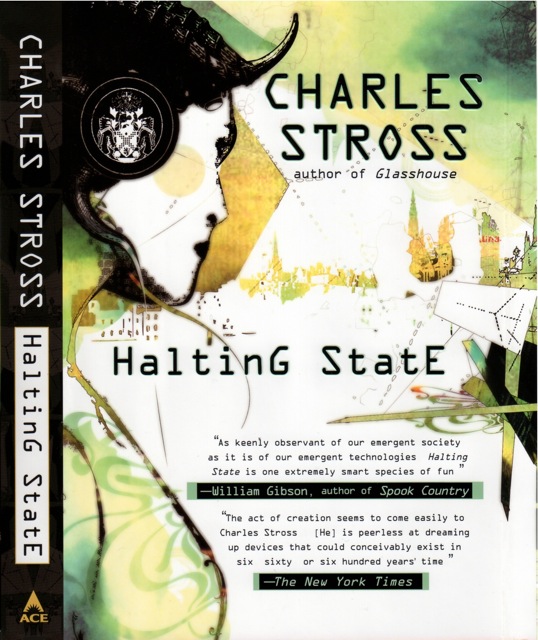
Charles Stross's Halting State opens as a near-future police procedural: a bank robbery inside a massively multiplayer online game turns out to mask a much larger cybercrime, investigated through shifting narrators using augmented-reality glasses and always-on networks. Its loose sequel, Rule 34, follows an Edinburgh police officer investigating a string of deaths linked by nothing but an obscure internet meme, in the same near-future Scotland. Both are standalone technothrillers connected by setting and tone rather than a continuing plot.
- The Mortality Doctrine
series4 books2013
similar bytensevirtual worldnear futurescience fictioncyberpunkvirtual realityartificial intelligence
The Eye of Minds opens James Dashner's Mortality Doctrine trilogy in a near-future where a teenage gamer is recruited to help stop a rogue hacker named Kaine who threatens mass destruction from inside the virtual world he haunts. Dashner has said he didn't intend the series as dystopian in the way of his Maze Runner books, though he saw it sharing their tone and spirit. The trilogy continues with The Rule of Thoughts and The Game of Lives.
- Blade Runner Universe
series6 books1968
similar bynear futurescience fictioncyberpunkdark+2 more
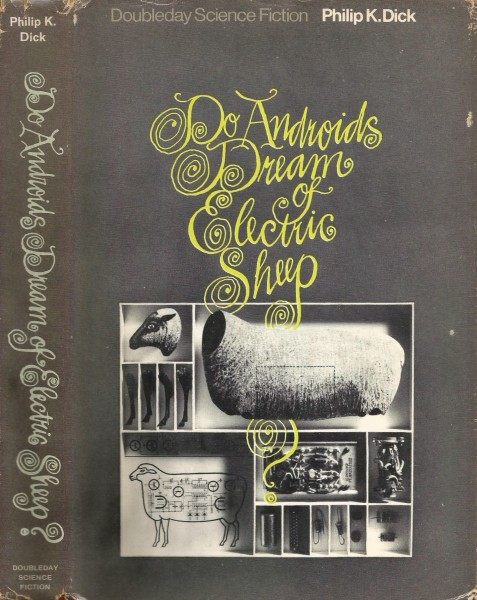
Philip K. Dick's 1968 novel Do Androids Dream of Electric Sheep? follows bounty hunter Rick Deckard as he tracks escaped androids through an irradiated, near-abandoned San Francisco, using the hunt to probe questions of empathy and what separates human from machine. The novel became the basis for Ridley Scott's 1982 film Blade Runner, and Marvel Comics later published an illustrated adaptation of that film. Together the two trace the story's path from prose original to screen and comic-page adaptation.
- Bug Jack Barron
Norman Spinradstandalone novel1969
similar bytensenear futurescience fictioncyberpunk+2 more
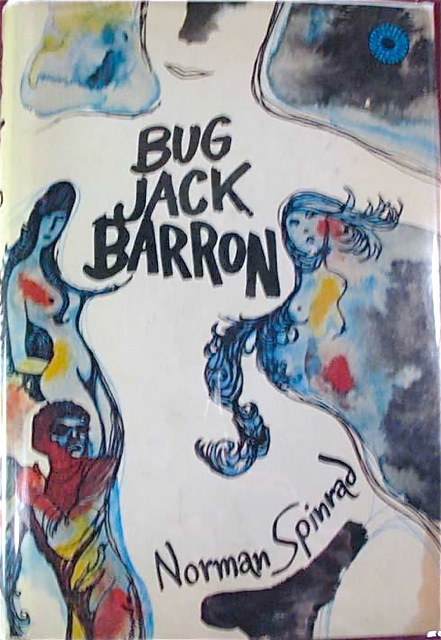
Bug Jack Barron is a 1969 science fiction novel by American writer Norman Spinrad, first serialized in the New Worlds magazine under the editorship of Michael Moorcock. It was nominated for the 1970 Hugo Award. The novel is notable for its lyrical style and unique use of cut-up phrases. In this regard, Spinrad has cited the influence of Beat writers William S. Burroughs, Allen Ginsberg, and Jack Kerouac.
- The Shockwave Rider
John Brunnerstandalone novel1975
similar bytensenear futurescience fictioncyberpunkdark
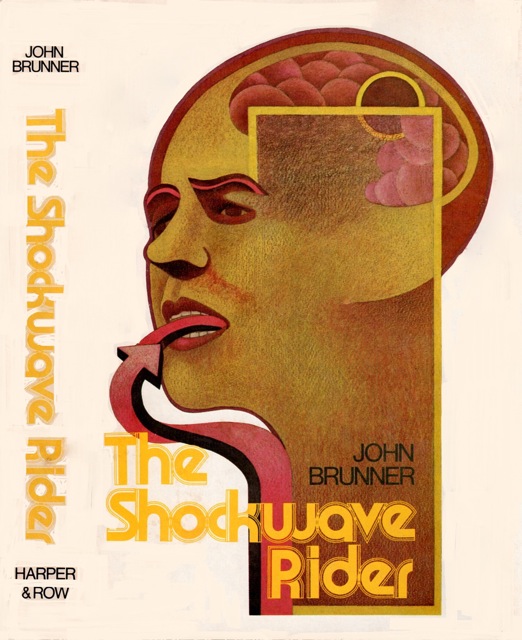
The Shockwave Rider is a science fiction novel by John Brunner, originally published in 1975. It is notable for its hero's use of computer hacking skills to escape pursuit in a dystopian future, and for the coining of the word "worm" to describe a program that propagates itself through a computer network. It also introduces the concept of a Delphi pool, perhaps derived from the RAND Corporation's Delphi method – a prediction market on world events which bears close resemblance to DARPA's controversial and cancelled Policy Analysis Market.
- Hardwired
series3 books1986
similar bytensenear futurescience fictioncyberpunk+3 more
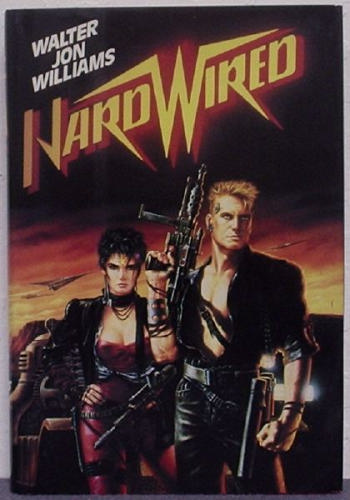
Walter Jon Williams' Hardwired (1986) is an early and influential cyberpunk novel. Voice of the Whirlwind, published three years later, is a loosely connected follow-up set in the same future, sharing its technological and political backdrop with a different cast of characters.
- Last Reality
series3 books2017
similar bytensenear futurescience fictionvirtual worldvirtual reality+3 more
- Bridge Trilogy
series4 books1990
similar bynear futurescience fictioncyberpunk+4 more
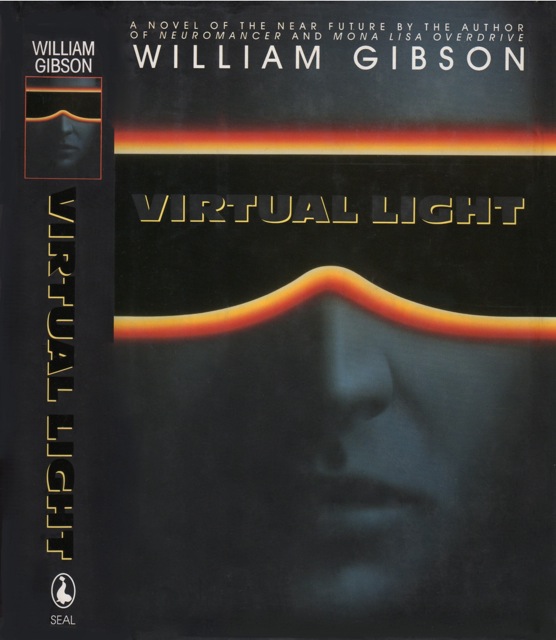
The Bridge trilogy is a series of novels by William Gibson, his second after the successful Sprawl trilogy. The trilogy comprises the novels Virtual Light (1993), Idoru (1996) and All Tomorrow's Parties (1999). A short story, "Skinner's Room", was originally composed for Visionary San Francisco, a 1990 museum exhibition exploring the future of San Francisco.
- Fairyland
Paul J. McAuleystandalone novel1995
similar bytensenear futurescience fictioncyberpunkdarkartificial intelligencegenetic engineering
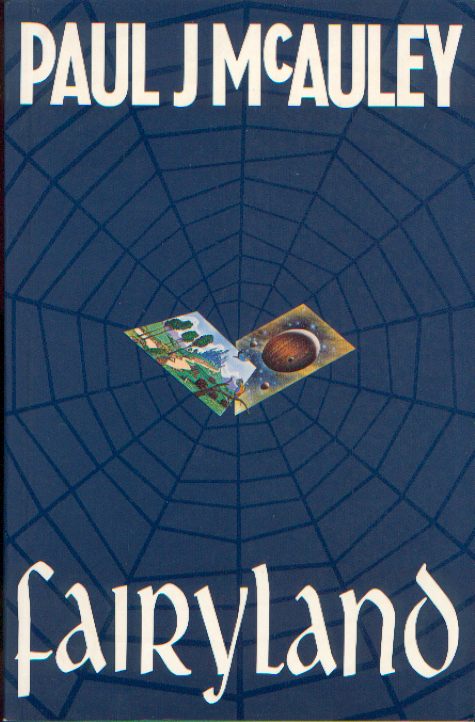
In a near-future Europe, gene-hacker Alex Sharkey has created a new life form: fairies - genetically-altered dolls with human intelligence. As the fairies develop their own societies, it become apparent that one group has sinister intentions, and Sharkey must try and put an end to their plans.
- Skylar Cruz
series3 books2016
similar bytensevirtual worldnear futurescience fictionvirtual reality+2 more
- The Night Mayor
Kim Newmanstandalone novel1989
similar byvirtual worldnear futurescience fictioncyberpunkdarkvirtual reality
Welcome to the City made from a dream. But this isn't any dream; it is the dark and haunting nightmare of a killer. It is the near future and old-fashioned movies, or "flatties", have been replaced by Dreams, virtual reality scenarios written by professional Dreamers. When infamous criminal Truro Daine escapes imprisonment, he flees into the City, an artificial world of his own creation, where he rules as the all-powerful Night Mayor.
- Avatar Chronicles
series3 books2004
similar byvirtual worldnear futurescience fictionvirtual reality+2 more
- BZRK
series3 books2012
similar bytensenear futurescience fictioncyberpunk+3 more
BZRK is a book series written by Michael Grant. The series consists of four books: BZRK, BZRK II: Reloaded, BZRK III: Apocalypse and BZRK: Origins. The series follows the interaction between two warring factions. On one side Charles and Benjamin Armstrong, owners of the Armstrong Fancy Gifts Corporation have a goal to turn the world into their version of utopia. The only people who can stop them are a group of teenagers with the codename BZRK. In 2011, Grant's BZRK had a multimedia online debut with gaming, apps and social media tie-ins beginning six months before the book's publication.
- Coldwire
series1 book2025
similar bytensevirtual worldnear futurescience fictioncyberpunkdarkvirtual reality
- Autonomous
Annalee Newitzstandalone novel2017
similar bytensenear futurescience fictioncyberpunkartificial intelligence+2 more
Autonomous is a 2017 science fiction novel by Annalee Newitz. It is Newitz's debut novel and was published by Tor Books on September 19, 2017. Set in a near future Earth, the book describes a world where both humans and intelligent robots can be owned as property. The events of the novel follow Jack, a "drug pirate" who manufactures illegal versions of patented drugs, and Paladin, a combat robot who is owned by the law enforcement agency searching for Jack after one of the drugs she reverse-engineered turns out to have dangerous side effects.
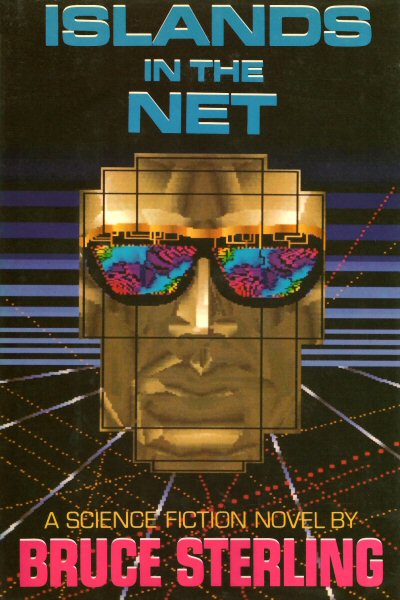
- Islands in the Net
Bruce Sterlingstandalone novel1988
similar bytensenear futurescience fictioncyberpunk+1 more
Islands in the Net is a 1988 science fiction novel by American writer Bruce Sterling. It won the John W. Campbell Memorial Award for Best Science Fiction Novel in 1989, and was nominated for both the Hugo and Locus Awards that same year. It offers a view of an early 21st century world, apparently peaceful, with delocalised, networking corporations. The protagonist, swept up in events beyond her control, finds herself in places that are off the net, from a datahaven in Grenada, to a Singapore under terrorist attack, to the poorest and most disaster-struck parts of Africa.
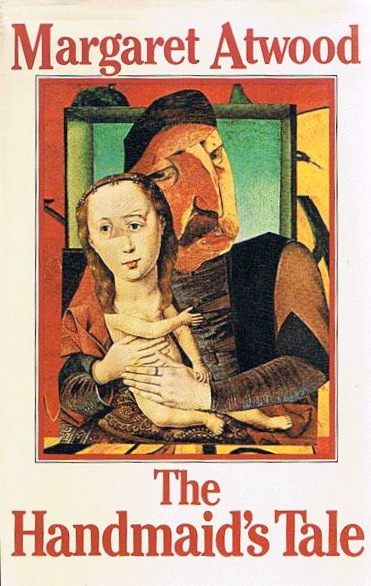
- The Handmaid's Tale
series3 books1985
similar bytensenear futurescience fictiondark+1 more
The Handmaid's Tale is Margaret Atwood's 1985 novel set in Gilead, a totalitarian theocracy that has overthrown the United States and forces fertile women into reproductive servitude as Handmaids; it is narrated by one such woman, Offred. Atwood returned to the world in her 2019 sequel The Testaments, set fifteen years later and narrated by three women, including the regime's Aunt Lydia. Together the two novels move from Gilead's grip on power toward the first cracks in it.
- Nexus 5
series3 books2012
similar bytensenear futurescience fictiondarkartificial intelligence+2 more
Nexus opens Ramez Naam's postcyberpunk trilogy in 2040 with scientist Kaden Lane, who works on Nexus, an experimental nano-drug that lets human minds be networked and reprogrammed, and finds himself caught between government and corporate interests once the technology's implications become clear. The trilogy continues through Crux and Apex, following the same central conflict over who controls the technology. Nexus tied for Best Novel at the 2014 Prometheus Awards and Apex won the 2015 Philip K. Dick Award.
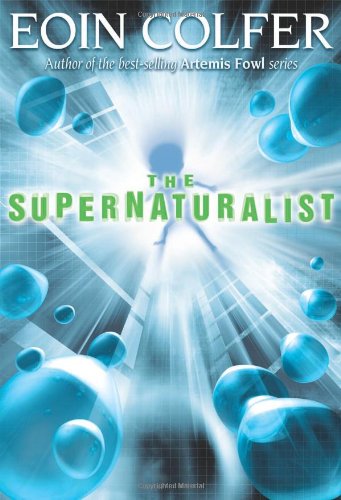
- The Supernaturalist
Eoin Colferstandalone novel2004
similar bytensenear futurescience fictioncyberpunkdark
The Supernaturalist is a science fiction cyberpunk novel by Irish author Eoin Colfer. The book was influenced by film noir and other predecessors of the cyberpunk science fiction movement. Colfer has outlined plans for a sequel, Avernus.
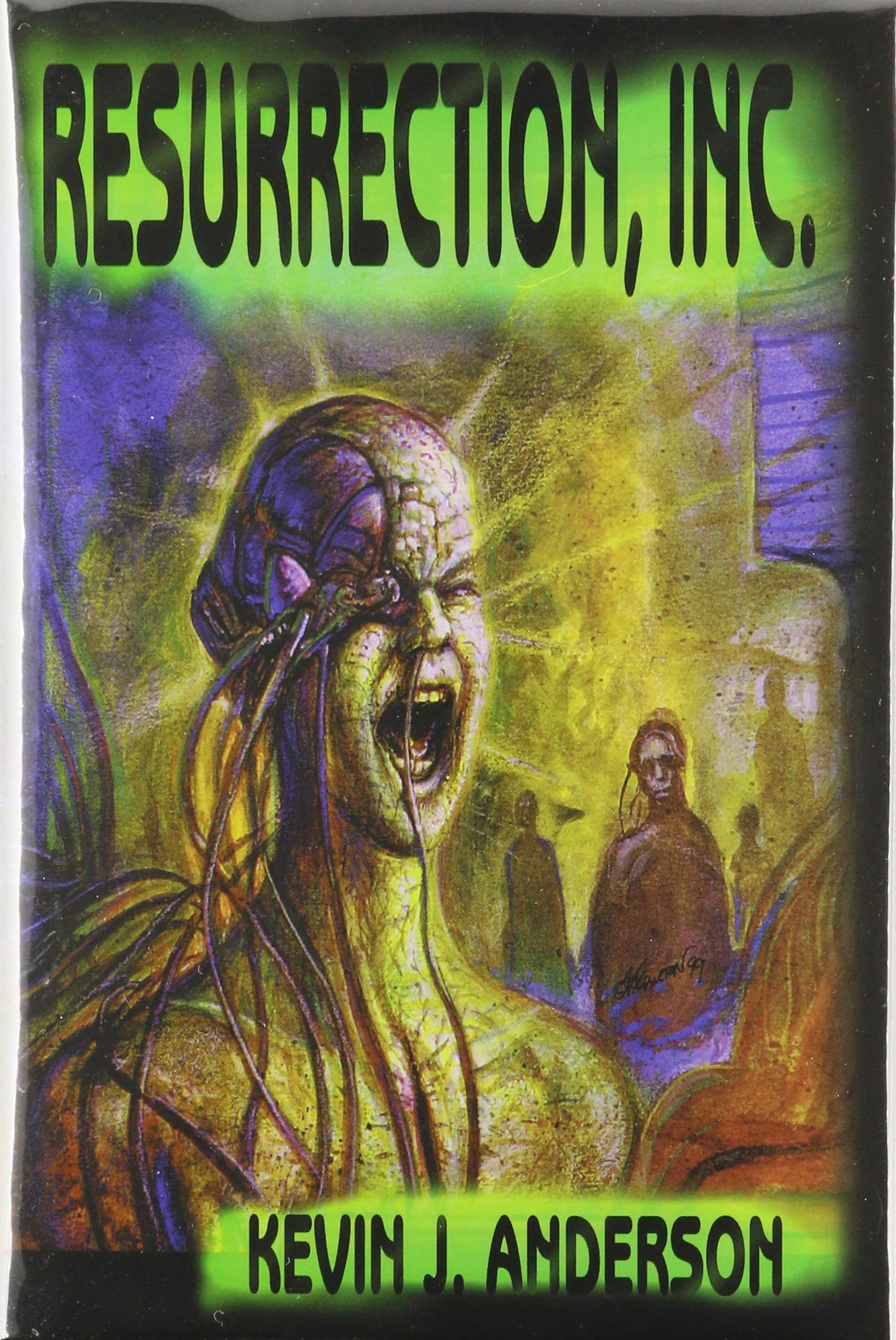
- Resurrection, Inc.
Kevin J. Andersonstandalone novel1988
similar bytensenear futurescience fictioncyberpunkdark+1 more
It is the future--and the dead walk the streets, resurrected by technology to become servants to the living. Resurrection, Inc. found a profitable way to do it: a microprocessor brain, a synthetic heart, artificial blood--and anyone with money could buy a Servant with no mind of its own, trained to obey any command. But for every Servant created a living worker was out of a job, and suddenly the profits of Resurrection, Inc. became everyone else's loss. Some take to rioting in the streets, their rampages ruthlessly ended by heavily armed Enforcers, eager for the kill. Others join the ever-growing cult of Neo-Satanism, seeking Heaven in the depths of Hell. Only one man tries to save the world. His name is Danal, and he is the last hope of the living. He is dead, but he remembers everything.