More like Reflected Light
but
- The Prestige
Christopher Prieststandalone novel1995
similar byepistolary+1 more
A magician called Borden (at least in private) writes his own version of his life as a magician. There's a lot of focus on a trick, where he seems to move across any width of stage in an instant, and on a feud with another magician, Angier. The account includes passages, where he can't decide what exactly to write, arguing with himself. 3 generations later a Borden (at least biologically) learns about his ancestor. He's also convinced, he somehow has a twin brother, who's happy about this development.
- His Dark Materials
series8 books1995
part of His Dark Materials Universe
similar by+1 more
His Dark Materials is a trilogy of fantasy novels by Philip Pullman consisting of Northern Lights, The Subtle Knife (1997), and The Amber Spyglass (2000). It follows the coming of age of two children, Lyra Belacqua and Will Parry, as they wander through a series of parallel universes. The novels have won a number of awards, including the Carnegie Medal in 1995 for Northern Lights and the 2001 Whitbread Book of the Year for The Amber Spyglass. In 2003, the trilogy was ranked third on the BBC's The Big Read poll.
- The Difference Engine
William Gibson & Bruce Sterlingstandalone novel1990
similar bysteampunk
The computer age arrives a century early with Babbage's perfection of his 'analytical engine'. The industrial revolution is accelerated by the development of steam-driven cybernetic 'Engines'. An advanced Great Britain prepares to better the world's lot. An example of the 'steampunk' sub-genre of the cyberpunk movement.
- The Anubis Gates
series3 books1983
similar by+1 more
The Anubis Gates is a single time-travel fantasy novel by Tim Powers, following a present-day academic who takes part in a time-travel experiment and ends up stranded in early nineteenth-century London. It won the Philip K. Dick Award in 1983 and the Science Fiction Chronicle Award the following year.
- The Diamond Age
Neal Stephensonstandalone novel1995
similar bysteampunk
The Diamond Age: Or, A Young Lady's Illustrated Primer is a science fiction novel by Neal Stephenson. It is to some extent a Bildungsroman or coming-of-age story, focused on a young girl named Nell, set in a future world in which nanotechnology affects all aspects of life. The novel deals with themes of education, social class, ethnicity, and the nature of artificial intelligence. The Diamond Age was first published in 1995 by Bantam Books, as a Bantam Spectra hardcover edition. In 1996, it won both the Hugo and Locus Awards, and was shortlisted for the Nebula and other awards.
- New Crobuzon
series4 books2000
similar by+1 more
The New Crobuzon books are three standalone novels by China Miéville set in and around New Crobuzon, a vast, corrupt industrial city in his invented world of Bas-Lag where magic, biopunk technology, and several sentient species coexist. Perdido Street Station follows a renegade scientist and his lover after an experiment unleashes something monstrous on the city, while The Scar and Iron Council return to the same setting with different casts and only loose continuity between books.
- Hungry City Chronicles / Mortal Engines
series5 books2001
part of Mortal Engines Universe
similar bysteampunk
The Mortal Engines Quartet, also known as the Predator Cities Quartet, is a series of epic young adult science fiction novels by the English novelist and illustrator Philip Reeve. He began the first volume of the series, Mortal Engines, in the 1980s, and it was published in 2001. Reeve then published three further novels, Predator's Gold (2003), Infernal Devices (2005), and A Darkling Plain (2006).
- Oswald Bastable
series5 books1971
part of Moorcock's Multiverse
similar bysteampunk
Oswald Bastable follows an Edwardian-era British soldier flung into a series of alternate futures where the First World War never happened, opening with The Warlord of the Air (1971). Across the trilogy he drifts between rival empires and airship wars, an early and influential example of what would later be called steampunk. Michael Moorcock's A Nomad of the Time Streams trilogy sits within his wider multiverse of linked worlds and recurring avatars of the Eternal Champion.
- The Iron Dragon's Daughter
series3 books1993
similar by+1 more
The Iron Dragon's Daughter follows Jane, a human changeling enslaved in a factory that builds part-mechanical, part-magical dragons used as war machines, in a Faerie that runs on industrial-age technology as much as spellcraft. Michael Swanwick wrote it as a deliberately recursive, spiral narrative rather than a straight line, and returned to the same colliding fantasy-industrial world, though not the same plot, in The Dragons of Babel and The Iron Dragon's Mother. The three books share a setting and sensibility more than a continuing story.
- The Leviathan Trilogy
series3 books2009
similar bysteampunk
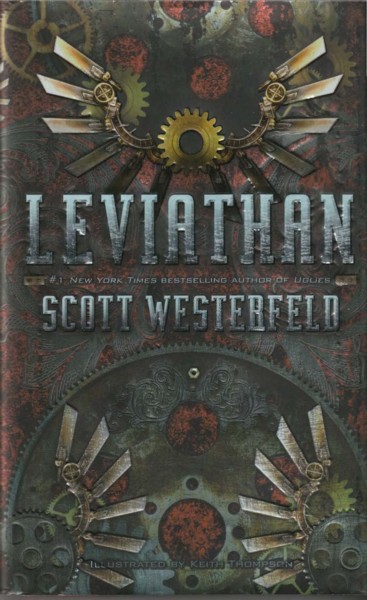
Set in an alternate First World War, Leviathan splits the belligerents into Clankers, who fight with mechanical walkers, and Darwinists, who fight with fabricated living creatures built from spliced DNA. Scott Westerfeld follows a British girl disguised as a boy to serve on a living airship and the exiled heir to the Austro-Hungarian throne as their paths collide, continuing across Behemoth and Goliath. Keith Thompson's illustrations are integral to all three books, alternating text chapters with illustrated sequences.
- The Twenty-One Balloons
William Pène du Boisstandalone novel1947
similar by+1 more
The Twenty-One Balloons is a novel by William Pène du Bois, published in 1947 by the Viking Press and awarded the Newbery Medal for excellence in American children's literature in 1948. The story is about a retired schoolteacher whose ill-fated balloon trip leads him to discover Krakatoa, an island full of great wealth and fantastic inventions. The events and ideas are based both on scientific fact and imagination, and the descriptions are accompanied by illustrations by du Bois.
- Railsea
China Miévillestandalone novel2012
similar bysteampunk
Railsea is a young adult novel written and illustrated by English writer China Miéville, and published in May 2012. Miéville described the novel as "weird fiction", io9 labelled its mix of fantasy and steampunk elements as "salvagepunk" and the story has been seen as an "affectionate parody" of Herman Melville's classic 1851 novel Moby-Dick, also drawing on Robert Louis Stevenson's adventure novels Treasure Island and Kidnapped.
- The Cinder Spires
series3 books2015
similar bysteampunk
Jim Butcher's Cinder Spires series opens with The Aeronaut's Windlass (2015), a steampunk fantasy set among tower-dwelling city-states where airships duel with etheric weapons and intelligent cats share the world with humans. Continuing with Warriorborn and The Olympian Affair, it marks a departure in setting from Butcher's contemporary-fantasy Dresden Files while keeping his fast-paced adventure style.
- Clockwork Angels
series5 books2012
similar bysteampunk
Clockwork Angels began as the concept behind Rush's 2012 album of the same name, which drummer and lyricist Neil Peart expanded into a full steampunk fantasy novel together with author Kevin J. Anderson. The pair continued the story across a graphic-novel adaptation, Clockwork Lives, and Clockwork Destiny.
- Newbury & Hobbes Investigations
series23 books2008
similar bysteampunk
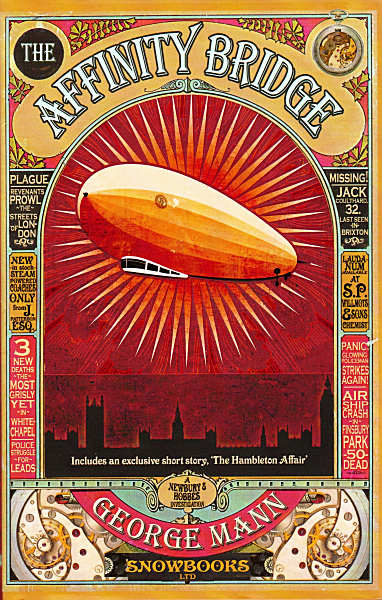
George Mann's steampunk series follows Sir Maurice Newbury, an occult investigator working for the crown in an alternate, more mechanized Victorian Britain, and his assistant Veronica Hobbes, as they take on cases blending supernatural threats with the era's mechanical marvels. The Affinity Bridge, the opening novel, entangles them with a crashed automaton airship and a spreading plague of the reanimated; later books deepen Newbury's struggle with addiction and Veronica's search for her institutionalized sister. It combines detective procedural with alternate-history steampunk London.
- George Dower / Infernal Devices
series3 books1987
similar bysteampunk
K. W. Jeter's trilogy, whose 1987 original helped coin the term 'steampunk,' follows clockmaker George Dower as he's dragged into escalating Victorian conspiracies involving mechanical devices, secret societies, and inventions that shouldn't work but do. Infernal Devices, Fiendish Schemes, and Grim Expectations mix dark comedy with the gears-and-brass aesthetic the series helped establish before it had a name.
- Mortal Engines Prequels
series3 books2009
part of Mortal Engines Universe
similar bysteampunk
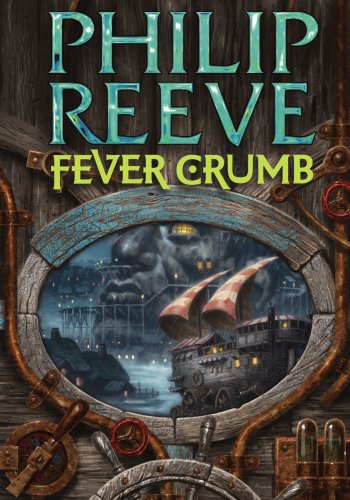
The Fever Crumb series is the title of a series of novels written by British author, Philip Reeve, and is the prequel series to his Mortal Engines Quartet. The series consists of three books: Fever Crumb (2009), A Web of Air (2010), and Scrivener's Moon (2011). The books follow a young woman known as Fever Crumb, and her adventures set around the time of the creation of the first traction cities that become prevalent in the Mortal Engines series. While Reeve stated in 2011 that he had always envisaged a quartet for the series, assuring readers of a fourth installment, by 2020 he said that "too much time has passed", making it difficult to revisit the series, and that he did not intend to finish and publish a fourth book.
- Larklight Trilogy
series3 books2006
similar bysteampunk
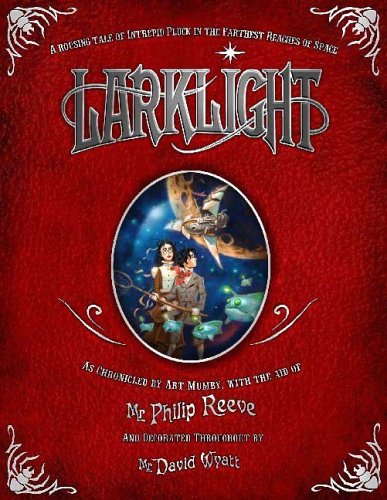
The Larklight trilogy is a trilogy of middle grade novels by Philip Reeve, entitled Larklight, Starcross, and Mothstorm. These books are all illustrated by David Wyatt.
- The Haunting of Alaizabel Cray
Chris Woodingstandalone novel2001
similar bysteampunk
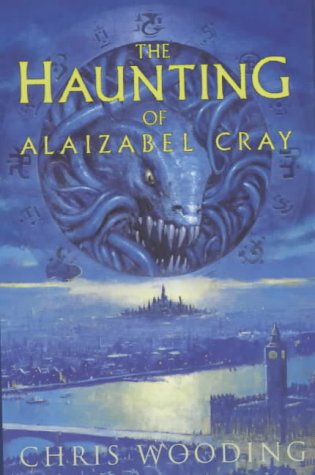
The Haunting Of Alaizabel Cray (2004) is a Gothic steampunk horror/alternate history novel by Chris Wooding about a young man and an amnesiac girl fighting a cult in an alternate Victorian era London.