Loreful
HomeDiscover
Search series, authors…⌘K
Loreful

Reading orders for SF/F series and shared universes — with your place kept in every one.

Explore

UniversesSeriesWorksAuthorsAtlas

Help

FAQAboutSite map

Account & legal

Sign inCreate accountPrivacyTerms

Data

Built on ISFDB, Wikipedia, Wikidata and Open Library. Curated reading orders carry their reasoning on the page; the rest follow publication order. Data sources & licenses

© Loreful · data: ISFDB · CC BY

More like Relationships

but

Mood

The mood the book leaves you in.

  • The reading experience is propelled by journeys, exploration, and physical risk; excitement and forward momentum dominate over dread or introspection.
  • Joy and loss are deliberately mixed; the resolution grants characters something real while taking something else away, leaving warmth and sorrow together.
  • The book demands work from the reader — dense prose, difficult structure, unfamiliar ideas, or morally uncomfortable material — as part of its intended effect.
  • Grim events, cruelty, or despair dominate the atmosphere, and the book does not soften them with comfort or comic relief.
  • The atmosphere is quietly unsettling — wrongness, unease, and the uncanny pervade the book without necessarily escalating into overt horror.
  • The book is built to move the reader; character feeling is foregrounded and major scenes aim at a strong emotional response.
  • Humor is a primary aim and the prose plays for laughs — comic situations, wit, or dialogue produce sustained comedy, not occasional levity.
  • The book insists that things can improve; effort and decency are shown to matter, and the arc bends toward better outcomes even through hardship.
  • The book teaches as it goes — real facts, history, science, or craft are conveyed in enough depth that learning is part of the reading experience.
  • The book is designed to uplift and motivate, presenting perseverance or achievement in a way that invites the reader to aspire or act.
  • The overall register is cheerful and easygoing; stakes are kept gentle and the book avoids dwelling on pain or dread.
  • Withheld information drives the experience; the book sustains enigmas and secrets the reader wants resolved, whatever its genre.
  • The book is contemplative and inward-looking, giving more weight to thought, memory, and meaning than to external events.
  • The book works as comfort reading — low tension, a soothing pace, and an atmosphere the reader can unwind in.
  • Grief, loss, or melancholy set the dominant register, and the book lets sorrow stand rather than resolving it into comfort.
  • Sustained suspense is the point; the book keeps the reader braced for what happens next through danger, pressure, or impending revelation.
  • Playful invention and charm define the register — fanciful conceits, light absurdity, and a narration that delights in its own oddity.

About

What the story runs on.

  • Stories centered on witches and the practice of witchcraft — covens, hedge magic, familiars, and the witch's place in her community.
  • Stories centered on wizards, mages, and other learned practitioners of magic as protagonists or masters.
  • Stories in which gods and deities act as characters — walking the world, meddling in mortal lives, or dying.
  • Stories structured as a quest — a journey undertaken to find, deliver, or destroy something of great import.
  • Stories in which staying alive against nature, catastrophe, or scarcity is the central problem.
  • Stories of lovers kept apart by law, family, faith, or station, where the obstacle to love is the plot.
  • Stories in which a friendship — its making, testing, or loss — is the emotional center.
  • Stories of growing up — a young protagonist crossing from childhood into adult knowledge and responsibility.
  • Stories about who a character truly is — self-discovery, doubled lives, and the search for a self.
  • Stories in which a buried family truth — hidden parentage, crimes, or shames — surfaces and reorders the present.
  • Stories driven by maneuvering for power — factions, conspiracies, and statecraft conducted in shadow.
  • Stories in which war itself is the subject — combat, occupation, and what warfare does to soldiers and civilians.

Shelf

Where it sits in the library.

    • Fiction built on magic or other supernatural elements that have no scientific explanation.
    • Secondary-world fantasy at large scale, where the fate of nations or the world turns on the protagonists' struggle.
    • Fantasy set in a recognizably modern city or contemporary world where the supernatural intrudes on everyday life.
    • Fantasy that blends in horror's atmosphere and imagery, keeping a fantastical frame around grim or frightening material.
    • Action-driven fantasy following warriors or rogues with personal stakes against sorcerous threats, rather than world-spanning conflicts.
    • Fantasy set in a real historical period or a close analogue of one, with magic woven into the era.
    • Fantasy in which protagonists cross from the ordinary world into another world through a portal or similar passage.
    • Fiction that retells or reworks a traditional fairy tale in a new form or setting.
    • Fantasy drawing directly on myths, legends, and folklore, retelling them or building on their figures and logic.
    • Fantasy of ghosts, vampires, shapeshifters, psychics, and similar phenomena, usually set in an otherwise ordinary world.
    • Fiction mixing science-fictional trappings with overtly magical or impossible elements in one setting.
    • Low-stakes fantasy emphasizing comfort, community, and everyday pleasures over conflict and peril.
    • Speculative fiction of pervasive moral ambiguity, violence, and cynicism that rejects heroic conventions — fantasy and SF alike.
      • Fiction that extrapolates from science and technology — future societies, space travel, or speculative inventions — within at least nominally natural laws.
      • Science fiction of interstellar scope — starships, galactic polities, and adventure across star systems.
      • Science fiction committed to scientific rigor, where technical plausibility constrains the story.
      • Science fiction centered on armed forces and warfare, told largely from a military point of view.
      • Science fiction of networked, corporate-dominated near futures, pairing high technology with social decay.
      • Science fiction styled on nineteenth-century steam-powered technology, often in a Victorian or pseudo-Victorian setting.
      • Fiction depicting an oppressive or catastrophic society, presented as a warning.
      • Fiction set after civilization's collapse, following survivors in the ruins of the old world.
      • Fiction in which characters move between past and future, and the mechanics or consequences of that travel drive the plot.
      • Fiction exploring a world where a historical event went differently and history diverged from ours.
      • Science fiction about humanity's first encounter and communication with an alien intelligence.
      • Science fiction in which extraterrestrial forces attack or occupy Earth and humanity resists.
      • Fiction whose primary aim is to frighten or unsettle the reader through dread, menace, or the monstrous.
      • Horror of vast, indifferent, incomprehensible entities before which humanity is insignificant, in the Lovecraft tradition.
      • Horror of decaying houses, buried family secrets, and oppressive atmosphere in the Gothic literary tradition.
      • Horror centered on hauntings and the returning dead.
      • Horror located in the mind — paranoia, obsession, and unreliable perception rather than external monsters.
      • Horror built around the reanimated dead and survival amid their outbreaks.
      • Horror defined by explicit, transgressive gore that refuses to cut away from violence.
      • Speculative fiction of the strange and uncanny that resists both natural explanation and standard genre categories.
      • Fiction organized around solving a crime or puzzle, typically following an investigator toward the identification of a culprit.
      • A puzzle-first mystery that lays out clues so the culprit's identity can be deduced before the reveal.
      • Crime fiction of moral ambiguity, fatalism, and hard-edged style, set among the corrupt and the doomed.
      • A mystery following the realistic routines of police work — forensics, interviews, and case-building.
      • A gentle mystery with an amateur sleuth, a small community, and violence kept off the page.
      • A mystery set in a past era, where the investigation works within that period's methods and society.
      • Fast-paced fiction driven by imminent danger, pursuit, or high-stakes conspiracy, built to sustain tension.
      • A thriller of espionage — agents, tradecraft, and intelligence services in conflict.
      • A thriller driven by detailed contemporary or near-future technology, often military or scientific.
      • A thriller whose tension comes from mental states and manipulation between characters rather than external action.
      • Fiction whose central plot is a romantic relationship and its development toward an emotionally satisfying resolution.
      • Romance in which one or both partners are supernatural beings, blending fantasy elements into the love story.
      • A fantasy-romance hybrid in which the romantic arc and the fantasy plot carry equal weight.
      • Romance set in a past era, with courtship shaped by the period's society and manners.
      • Romance set in the present day, without supernatural or historical elements.
      • Fiction set in a real past period, where the historical setting materially shapes characters and events.
        • General and literary fiction emphasizing prose style, character interiority, or formal ambition over genre plot conventions.
        • Fiction in a realistic world where magical events occur and are treated as ordinary, in the tradition of Latin American literature.
        • Fiction that ridicules people, institutions, or society in order to criticize them.
        • Fiction of dreamlike, irrational imagery and logic that breaks from realistic representation.
        • Fiction that plays with narrative convention through metafiction, fragmentation, and self-reference.
        • Fiction propelled by journeys, exploration, and physical peril, where action and survival carry the plot.
        • Adventure fiction of ships and seafaring — naval engagements, voyages, and life at sea.
        • Fiction of the American frontier West — gunmen, ranchers, and lawmen, typically in the late nineteenth century.
        • Fiction centered on soldiers, campaigns, and the experience of warfare, historical or imagined.
          • Fiction written primarily to amuse, using comedic situations, wit, or parody as its organizing principle.
            • Multi-generational fiction following a family or dynasty across decades, with inheritance and kinship as the through-line.
              • Fiction whose world runs on explicit game mechanics — levels, stats, and skills that characters can see and exploit.
                • Fiction about costumed or superpowered heroes and their conflicts with comparable villains.

                Practical

                How long a commitment, whether it stands alone, and whether it has finished.

                Tap a chip to ask for it · tap again to rule it out · once more to clear. Numbers show what would be left.

                • Cover of The House on the Borderland
                  The House on the Borderland

                  William Hope Hodgson · standalone novel · 1908

                  similar by+2 more

                  The House on the Borderland (1908) is a supernatural horror novel by British fantasist William Hope Hodgson. The novel is a hallucinatory account of a recluse's stay at a remote house, and his experiences of supernatural creatures and otherworldly dimensions.

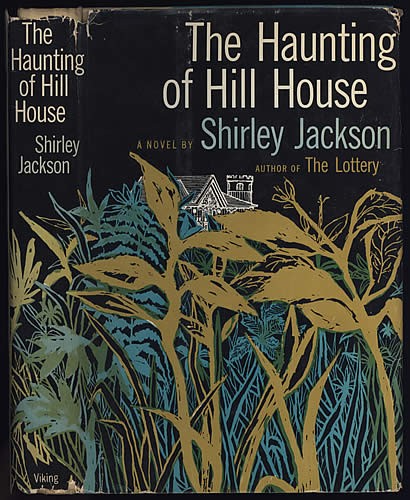
                • Cover of The Haunting of Hill House
                  The Haunting of Hill House

                  Shirley Jackson · standalone novel · 1959

                  similar by+2 more

                  The Haunting of Hill House is a 1959 gothic horror novel by American author Shirley Jackson. It was a finalist for the National Book Award and has been made into two feature films, a play, and is the basis of a Netflix series.

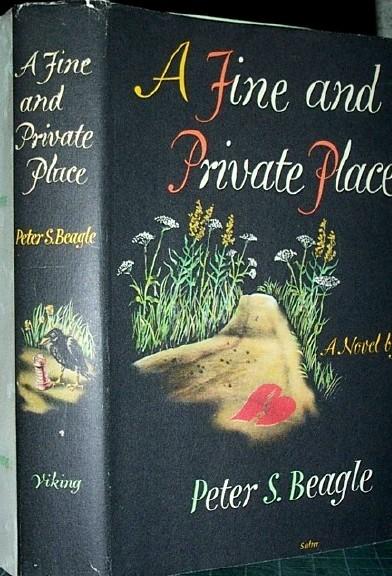
                • Cover of A Fine and Private Place
                  A Fine and Private Place

                  Peter S. Beagle · standalone novel · 1960

                  similar bylonelinessfantasy

                  A Fine and Private Place is a fantasy novel by American writer Peter S. Beagle, the first of his major fantasies. It was first published in hardcover by Viking Press on May 23, 1960, followed by a trade paperback from Delta the same year. Frederick Muller Ltd. published the first United Kingdom hardcover in 1960, and a regular paperback followed from Corgi in 1963. The first U.S. mass market paperback publication was by Ballantine Books in 1969. The Ballantine edition was reprinted numerous times through 1988. More recently it has appeared in trade paperback editions from Souvenir Press (1997), Roc (1999), and Tachyon Publications (2007). The work has also appeared with other works by Beagle in the omnibus collections The Fantasy Worlds of Peter S. Beagle (1978) and The Last Unicorn / A Fine and Private Place (1991). It has also been translated into Japanese, German, Russian, Czech, Hungarian, Portuguese, Korean, Spanish, Italian, and Romanian.

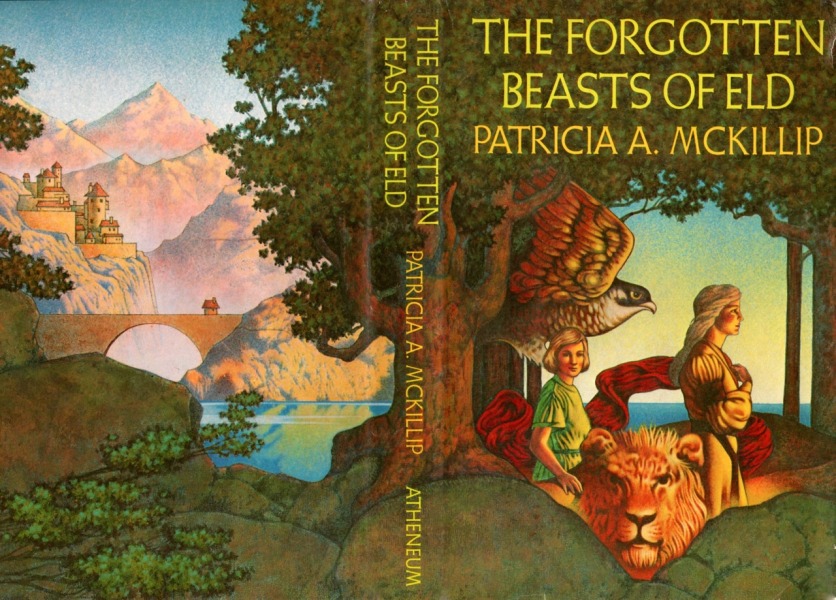
                • Cover of The Forgotten Beasts of Eld
                  The Forgotten Beasts of Eld

                  Patricia A. McKillip · standalone novel · 1974

                  similar bylonelinessfantasy

                  The Forgotten Beasts of Eld is a fantasy novel by American writer Patricia A. McKillip, and illustrators Peter Schaumann in 1974, and Alicia Austin in 1981, first published by Atheneum Publishers in 1974, and by Magic Carpet Books in 1996. It is the winner of the 1975 World Fantasy Award for Best Novel. The book centers on Sybel, a woman previously cut off from the rest of the world of Eldwold, as she learns to live and love in the world outside of the one she once knew.

                • Cover of Piranesi
                  Piranesi

                  Susanna Clarke · standalone novel · 2020

                  similar bylonelinessfantasy

                  A man lives in a huge isolated labyrinthine building partially submerged in an ocean, together with another man and 13 skeletons, which is the only world he recalls.

                • Cover of The Haunted Woman
                  The Haunted Woman

                  David Lindsay · standalone novel · 1922

                  similar byfantasy+1 more

                  The Haunted Woman is a dark, metaphysical fantasy novel by British writer David Lindsay. It was first published, somewhat cut, as a serial in The Daily News in 1921. It was first published in book form by Methuen & Co. Ltd., London, in 1922. The work supposedly marked Lindsay's attempt to write a more "commercial" novel after the initial failure of his first work, A Voyage to Arcturus (1920), though he began it before that work was published. It was reissued by Gollancz in 1947. It was republished by the Newcastle Publishing Company as the fourth volume of the Newcastle Forgotten Fantasy Library in March, 1975; the Newcastle edition was the first American edition. Later editions were issued by Borgo Press (1980), Canongate Books (1987), Wildside Press (2003), and Tartarus Press (2004).

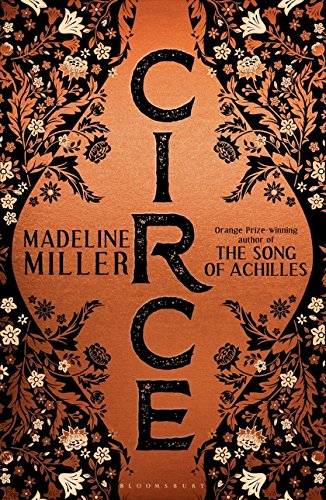
                • Cover of Circe
                  Circe

                  Madeline Miller · standalone novel · 2018

                  similar byfantasy+1 more

                  Circe is a 2018 mythic fantasy novel by American writer Madeline Miller. Set during the Greek Heroic Age, it is an original reimagining of various Greek myths, most notably the Odyssey, as told from the perspective of the witch Circe. While drawing on characters and episodes from ancient myths, the novel invents or substantially reinterprets many aspects of Circe's biography, including Circe's encounters with mythological figures such as Hermes, the Minotaur, Jason, and Medea and ultimately, her romance with Odysseus and his son Telemachus.

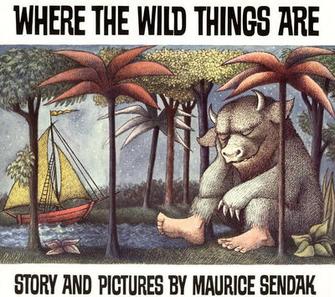
                • Cover of Where the Wild Things Are
                  Where the Wild Things Are

                  series · 2 books · 1963

                  similar bylonelinessfantasy

                  The Wild Things (2009) is Dave Eggers's novel adaptation of his own screenplay for the Where the Wild Things Are film, itself based on Maurice Sendak's classic 1963 picture book about a boy named Max who sails to an island of monstrous creatures. Eggers expands Sendak's brief story into a full novel while keeping its outline intact.

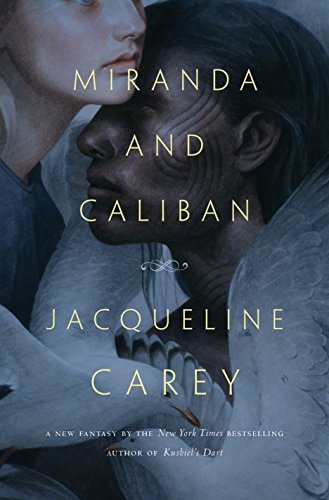
                • Cover of Miranda and Caliban
                  Miranda and Caliban

                  Jacqueline Carey · standalone novel · 2017

                  similar byfantasy+1 more

                  "A lovely girl grows up in isolation where her father, a powerful magus, has spirited them to in order to keep them safe. We all know the tale of Prospero's quest for revenge, but what of Miranda? Or Caliban, the so--called savage Prospero chained to his will? In this incredible retelling of the fantastical tale, Jacqueline Carey shows readers the other side of the coin--the dutiful and tenderhearted Miranda, who loves her father but is terribly lonely. And Caliban, the strange and feral boy Prospero has bewitched to serve him. The two find solace and companionship in each other as Prospero weaves his magic and dreams of revenge. Always under Prospero-s jealous eye, Miranda and Caliban battle the dark, unknowable forces that bind them to the island even as the pangs of adolescence create a new awareness of each other and their doomed relationship. Miranda and Caliban is bestselling fantasy author Jacqueline Carey's gorgeous retelling of The Tempest. With hypnotic prose and a wild imagination, Carey explores the themes of twisted love and unchecked power that lie at the heart of Shakespeare's masterpiece, while serving up a fresh take on the play's iconic characters."--

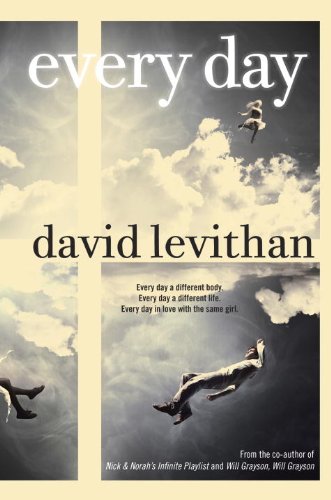
                • Cover of Every Day
                  Every Day

                  series · 3 books · 2012

                  similar byfantasy+1 more

                  David Levithan's Every Day follows A, a consciousness with no fixed body who wakes each morning inside a different person's life, and who falls for a girl named Rhiannon despite the impossibility of ever staying in one body to be with her. The story continues from other perspectives in Another Day and, years later, Someday.

                • Cover of The Magic City
                  The Magic City

                  E. Nesbit · standalone novel · 1910

                  similar bylonelinessfantasy

                  Publisher's description: An extremely unhappy 10-year-old magically escapes into a city he has built out of books, chessmen, candlesticks, and other household items.

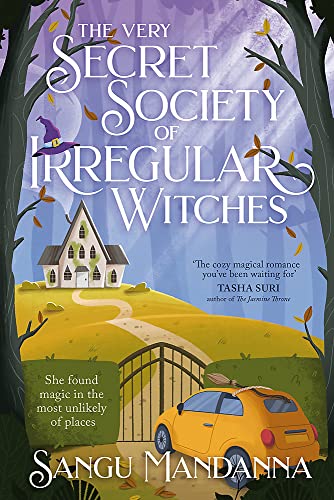
                • Cover of The Very Secret Society of Irregular Witches
                  The Very Secret Society of Irregular Witches

                  Sangu Mandanna · standalone novel · 2022

                  similar byfantasy+1 more

                  The Very Secret Society of Irregular Witches is a 2022 cozy fantasy and romance novel, and the adult debut from author Sangu Mandanna.

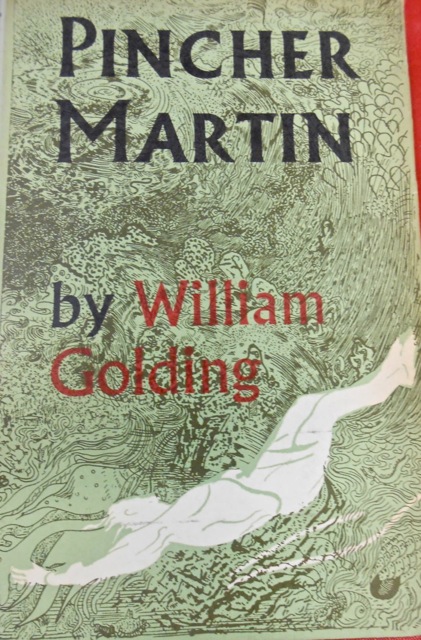
                • Cover of Pincher Martin
                  Pincher Martin

                  William Golding · standalone novel · 1956

                  similar by+2 more

                  Pincher Martin is a novel by British writer William Golding, first published in 1956. It is Golding's third novel, following The Inheritors and his debut Lord of the Flies. It is one of Golding's best-known novels, noted for being existential and minimalistic in setting.

                • Cover of The Abandoned
                  The Abandoned

                  Paul Gallico · standalone novel · 1950

                  similar by+2 more

                • Cover of The Crane Wife
                  The Crane Wife

                  Patrick Ness · standalone novel · 2013

                  similar bylonelinessfantasy

                  George Duncan is an American living and working in London. He is divorced, the owner of a small print shop, and lonelier than he realizes. One night he is woken by an extraordinary sound coming from his garden. Impossibly, a great white crane has tumbled to earth, shot through its wing by a giant arrow. Unexpectedly moved, George pulls out the arrow and frees the crane, and from the moment he watches it fly off, his life is transformed. Before he knows it, he meets and falls in love with the enigmatic Kumiko, an artist who changes the lives of everyone around her, including Amanda, George's angry--and very funny--daughter, her adorable French son, and George himself.

                • Cover of The Siren
                  The Siren

                  Kiera Cass · standalone novel · 2009

                  similar bylonelinessfantasy

                  "You must never do anything that might expose our secret. This means that, in general, you cannot form close bonds with humans. You can speak to us, and you can always commune with the Ocean, but you are deadly to humans. You are, essentially, a weapon. A very beautiful weapon. I won't lie to you, it can be a lonely existence, but once you are done, you get to live. All you have to give, for now, is obedience and time..." The same speech has been given hundreds of times to hundreds of beautiful girls who enter the sisterhood of sirens. Kahlen has lived by these rules for years now, patiently waiting for the life she can call her own. But when Akinli, a human, enters her world, she can't bring herself to live by the rules anymore. Suddenly the life she's been waiting for doesn't seem nearly as important as the one she's living now.

                • Cover of The Witches of Worm
                  The Witches of Worm

                  Zilpha Keatley Snyder · standalone novel · 1972

                  similar bylonelinessfantasy

                  A lonely twelve-year-old is convinced that the cat she finds is possessed by a witch and is responsible for her own strange behavior.

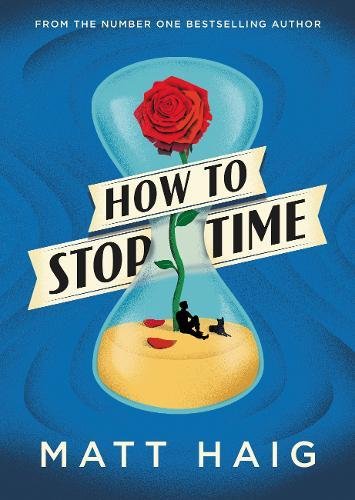
                • Cover of How to Stop Time
                  How to Stop Time

                  Matt Haig · standalone novel · 2017

                  similar bylonelinessfantasy

                  How to Stop Time is a historical fantasy novel by English writer Matt Haig, published in July 2017.

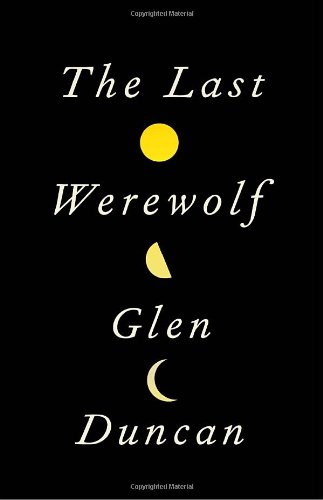
                • Cover of The Last Werewolf
                  The Last Werewolf

                  series · 3 books · 2011

                  similar by+2 more

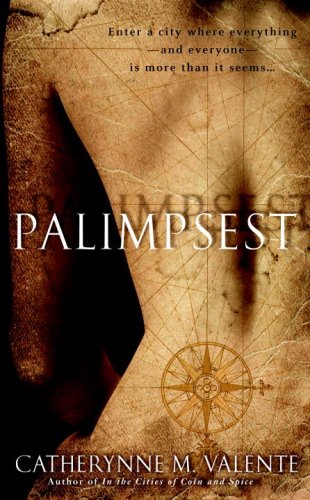
                • Cover of Palimpsest
                  Palimpsest

                  Catherynne M. Valente · standalone novel · 2009

                  similar bylonelinessfantasy

                  Palimpsest is a novel by Catherynne M. Valente, published in March 2009. It follows four separate characters as they discover and explore a mysterious city accessed only at night.

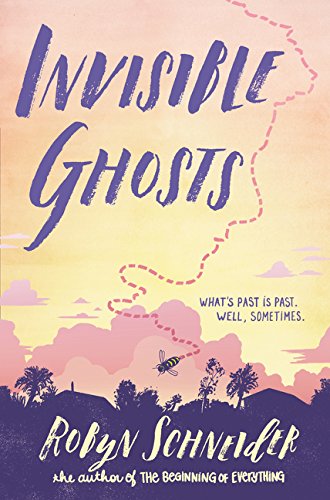
                • Cover of Invisible Ghosts
                  Invisible Ghosts

                  Robyn Schneider · standalone novel · 2018

                  similar by+2 more

                  Rose Asher believes in ghosts. She should, since she has one for a best friend: Logan, her annoying, Netflix-addicted brother, who is forever stuck at fifteen. But Rose is growing up, and when an old friend moves back to Laguna Canyon and appears in her drama class, things get complicated. Jamie Aldridge is charming, confident, and a painful reminder of the life Rose has been missing out on since her brother's death. She watches as Jamie easily rejoins their former friends--a group of magnificently silly theater nerds--while she struggles to choose between the boy who makes her feel alive and the brother she isn't ready to lose.

                • Cover of The Love Child
                  The Love Child

                  Edith Olivier · standalone novel · 1927

                  similar bylonelinessfantasy

                  Amazon: At thirty-two, her mother dead, Agatha Bodenham finds herself quite alone. She summons back to life the only friend she ever knew, Clarissa, the dream companion of her childhood. At first Clarissa comes by night, and then by day, gathering substance in the warmth of Agatha's obsessive love until it seems that others too can see her. See, but not touch, for Agatha has made her love child for herself alone. No man may approach her elfin creation of perfect beauty. If he does, the love which summoned her can spirit her away

                • Cover of Gormenghast
                  Gormenghast

                  series · 6 books · 1946

                  completed

                  similar byfantasy

                  Gormenghast is a fantasy series by British author Mervyn Peake, about the inhabitants of Castle Gormenghast, a sprawling, decaying, Gothic structure. Originally conceived as a single on-going novel, the series was ended by Peake's death and comprises three novels: Titus Groan (1946), Gormenghast (1950) and Titus Alone (1959); and a novella, Boy in Darkness (1956). Peake was writing a fourth novel, Titus Awakes, at the time of his death in 1968. The book was completed by Peake's widow Maeve Gilmore in the 1970s, but was not published until 2011 after it was discovered by their family.

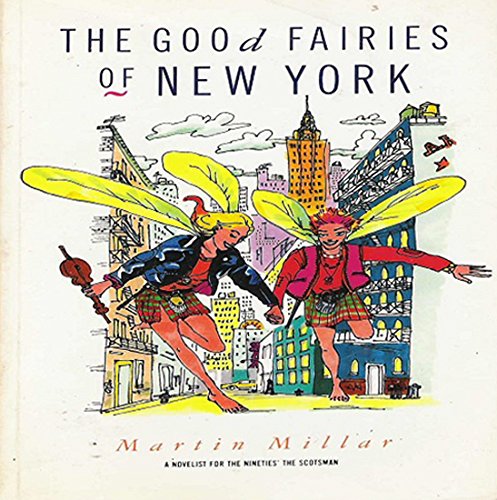
                • Cover of The Good Fairies of New York
                  The Good Fairies of New York

                  Martin Millar · standalone novel · 1992

                  similar by+2 more

                  Finding themselves in the very unusual world of Manhattan, a pair of Scottish thimble fairies apply their folk wisdom to assist a pair of down-and-out humans, including Kerry, who struggles with a colostomy bag, and Dinnie, who exhibits anti-social behaviors.