Loreful
HomeDiscover
Search series, authors…⌘K
Loreful

Reading orders for SF/F series and shared universes — with your place kept in every one.

Explore

UniversesSeriesWorksAuthorsAtlas

Help

FAQAboutSite map

Account & legal

Sign inCreate accountPrivacyTerms

Data

Built on ISFDB, Wikipedia, Wikidata and Open Library. Curated reading orders carry their reasoning on the page; the rest follow publication order. Data sources & licenses

© Loreful · data: ISFDB · CC BY

More like Requiem

anchored on:science fictionfar futurespace operaspace

but

Mood

The mood the book leaves you in.

  • The reading experience is propelled by journeys, exploration, and physical risk; excitement and forward momentum dominate over dread or introspection.
  • Joy and loss are deliberately mixed; the resolution grants characters something real while taking something else away, leaving warmth and sorrow together.
  • The book demands work from the reader — dense prose, difficult structure, unfamiliar ideas, or morally uncomfortable material — as part of its intended effect.
  • Grim events, cruelty, or despair dominate the atmosphere, and the book does not soften them with comfort or comic relief.
  • The atmosphere is quietly unsettling — wrongness, unease, and the uncanny pervade the book without necessarily escalating into overt horror.
  • The book is built to move the reader; character feeling is foregrounded and major scenes aim at a strong emotional response.
  • Humor is a primary aim and the prose plays for laughs — comic situations, wit, or dialogue produce sustained comedy, not occasional levity.
  • The book insists that things can improve; effort and decency are shown to matter, and the arc bends toward better outcomes even through hardship.
  • The book teaches as it goes — real facts, history, science, or craft are conveyed in enough depth that learning is part of the reading experience.
  • The book is designed to uplift and motivate, presenting perseverance or achievement in a way that invites the reader to aspire or act.
  • The overall register is cheerful and easygoing; stakes are kept gentle and the book avoids dwelling on pain or dread.
  • Withheld information drives the experience; the book sustains enigmas and secrets the reader wants resolved, whatever its genre.
  • The book is contemplative and inward-looking, giving more weight to thought, memory, and meaning than to external events.
  • The book works as comfort reading — low tension, a soothing pace, and an atmosphere the reader can unwind in.
  • Grief, loss, or melancholy set the dominant register, and the book lets sorrow stand rather than resolving it into comfort.
  • Sustained suspense is the point; the book keeps the reader braced for what happens next through danger, pressure, or impending revelation.
  • Playful invention and charm define the register — fanciful conceits, light absurdity, and a narration that delights in its own oddity.

About

What the story runs on.

  • Stories in which extraterrestrial beings are central — as characters, cultures, or the object of the plot.
  • Stories about venturing into space to explore — survey missions, astronauts, and the frontier of the unknown beyond Earth.
  • Stories about minds with paranormal abilities — telepathy, telekinesis, precognition, empathy — and how societies handle those who have them.
  • Stories in which staying alive against nature, catastrophe, or scarcity is the central problem.
  • Stories of lovers kept apart by law, family, faith, or station, where the obstacle to love is the plot.
  • Stories of growing up — a young protagonist crossing from childhood into adult knowledge and responsibility.
  • Stories about who a character truly is — self-discovery, doubled lives, and the search for a self.
  • Stories about mourning — living through the death of a loved one and what loss does to the survivors.
  • Stories in which a buried family truth — hidden parentage, crimes, or shames — surfaces and reorders the present.
  • Stories driven by maneuvering for power — factions, conspiracies, and statecraft conducted in shadow.
  • Stories in which war itself is the subject — combat, occupation, and what warfare does to soldiers and civilians.
  • Stories organized around investigating a killing — the case, the clues, and the pursuit of the killer, in any genre's clothing.

Shelf

Where it sits in the library.

    • Fiction built on magic or other supernatural elements that have no scientific explanation.
    • Secondary-world fantasy at large scale, where the fate of nations or the world turns on the protagonists' struggle.
    • Fantasy set in a recognizably modern city or contemporary world where the supernatural intrudes on everyday life.
    • Fantasy that blends in horror's atmosphere and imagery, keeping a fantastical frame around grim or frightening material.
    • Action-driven fantasy following warriors or rogues with personal stakes against sorcerous threats, rather than world-spanning conflicts.
    • Fantasy set in a real historical period or a close analogue of one, with magic woven into the era.
    • Fantasy in which protagonists cross from the ordinary world into another world through a portal or similar passage.
    • Fiction that retells or reworks a traditional fairy tale in a new form or setting.
    • Fantasy drawing directly on myths, legends, and folklore, retelling them or building on their figures and logic.
    • Fantasy of ghosts, vampires, shapeshifters, psychics, and similar phenomena, usually set in an otherwise ordinary world.
    • Fiction mixing science-fictional trappings with overtly magical or impossible elements in one setting.
    • Low-stakes fantasy emphasizing comfort, community, and everyday pleasures over conflict and peril.
    • Speculative fiction of pervasive moral ambiguity, violence, and cynicism that rejects heroic conventions — fantasy and SF alike.
      • Fiction that extrapolates from science and technology — future societies, space travel, or speculative inventions — within at least nominally natural laws.
      • Science fiction of interstellar scope — starships, galactic polities, and adventure across star systems.
      • Science fiction committed to scientific rigor, where technical plausibility constrains the story.
      • Science fiction centered on armed forces and warfare, told largely from a military point of view.
      • Science fiction of networked, corporate-dominated near futures, pairing high technology with social decay.
      • Science fiction styled on nineteenth-century steam-powered technology, often in a Victorian or pseudo-Victorian setting.
      • Fiction depicting an oppressive or catastrophic society, presented as a warning.
      • Fiction set after civilization's collapse, following survivors in the ruins of the old world.
      • Fiction in which characters move between past and future, and the mechanics or consequences of that travel drive the plot.
      • Fiction exploring a world where a historical event went differently and history diverged from ours.
      • Science fiction about humanity's first encounter and communication with an alien intelligence.
      • Science fiction in which extraterrestrial forces attack or occupy Earth and humanity resists.
      • Fiction whose primary aim is to frighten or unsettle the reader through dread, menace, or the monstrous.
      • Horror of vast, indifferent, incomprehensible entities before which humanity is insignificant, in the Lovecraft tradition.
      • Horror of decaying houses, buried family secrets, and oppressive atmosphere in the Gothic literary tradition.
      • Horror centered on hauntings and the returning dead.
      • Horror located in the mind — paranoia, obsession, and unreliable perception rather than external monsters.
      • Horror built around the reanimated dead and survival amid their outbreaks.
      • Horror defined by explicit, transgressive gore that refuses to cut away from violence.
      • Speculative fiction of the strange and uncanny that resists both natural explanation and standard genre categories.
      • Fiction organized around solving a crime or puzzle, typically following an investigator toward the identification of a culprit.
      • A puzzle-first mystery that lays out clues so the culprit's identity can be deduced before the reveal.
      • Crime fiction of moral ambiguity, fatalism, and hard-edged style, set among the corrupt and the doomed.
      • A mystery following the realistic routines of police work — forensics, interviews, and case-building.
      • A gentle mystery with an amateur sleuth, a small community, and violence kept off the page.
      • A mystery set in a past era, where the investigation works within that period's methods and society.
      • Fast-paced fiction driven by imminent danger, pursuit, or high-stakes conspiracy, built to sustain tension.
      • A thriller of espionage — agents, tradecraft, and intelligence services in conflict.
      • A thriller centered on lawyers and the courtroom, where litigation carries the suspense.
      • A thriller driven by detailed contemporary or near-future technology, often military or scientific.
      • A thriller whose tension comes from mental states and manipulation between characters rather than external action.
      • Fiction whose central plot is a romantic relationship and its development toward an emotionally satisfying resolution.
      • Romance in which one or both partners are supernatural beings, blending fantasy elements into the love story.
      • A fantasy-romance hybrid in which the romantic arc and the fantasy plot carry equal weight.
      • Romance set in a past era, with courtship shaped by the period's society and manners.
      • Romance set in the present day, without supernatural or historical elements.
      • Fiction set in a real past period, where the historical setting materially shapes characters and events.
        • General and literary fiction emphasizing prose style, character interiority, or formal ambition over genre plot conventions.
        • Fiction in a realistic world where magical events occur and are treated as ordinary, in the tradition of Latin American literature.
        • Fiction that ridicules people, institutions, or society in order to criticize them.
        • Fiction of dreamlike, irrational imagery and logic that breaks from realistic representation.
        • Fiction that plays with narrative convention through metafiction, fragmentation, and self-reference.
        • Fiction propelled by journeys, exploration, and physical peril, where action and survival carry the plot.
        • Adventure fiction of ships and seafaring — naval engagements, voyages, and life at sea.
        • Fiction of the American frontier West — gunmen, ranchers, and lawmen, typically in the late nineteenth century.
        • Fiction centered on soldiers, campaigns, and the experience of warfare, historical or imagined.
          • Fiction written primarily to amuse, using comedic situations, wit, or parody as its organizing principle.
            • Multi-generational fiction following a family or dynasty across decades, with inheritance and kinship as the through-line.
              • Fiction whose world runs on explicit game mechanics — levels, stats, and skills that characters can see and exploit.
                • Fiction about costumed or superpowered heroes and their conflicts with comparable villains.

                Practical

                How long a commitment, whether it stands alone, and whether it has finished.

                Tap a chip to ask for it · tap again to rule it out · once more to clear. Numbers show what would be left.

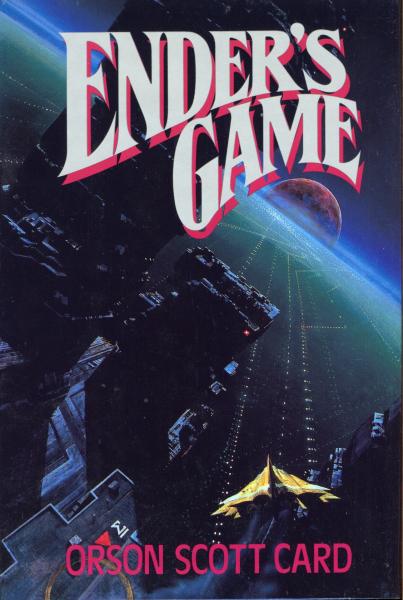
                • Cover of Ender Wiggin
                  Ender Wiggin

                  series · 14 books · 1977

                  part of Ender's Game Universe

                  similar byfar futurescience fiction+3 more

                  Orson Scott Card's Ender's Game (1985, expanded from his 1977 novella) follows child prodigy Andrew "Ender" Wiggin as he is recruited into a military training program built to prepare Earth's defenses for an anticipated third war against an insectoid alien species known as the Formics. The saga continues years later through Speaker for the Dead and Xenocide, following an older Ender as he confronts the moral weight of his role in that earlier conflict, and concludes the core arc in Children of the Mind, with Ender in Exile filling in the years between the first two books. Set within the wider Ender's Game universe, the series shifts from military coming-of-age story to slower, more philosophical science fiction as it progresses.

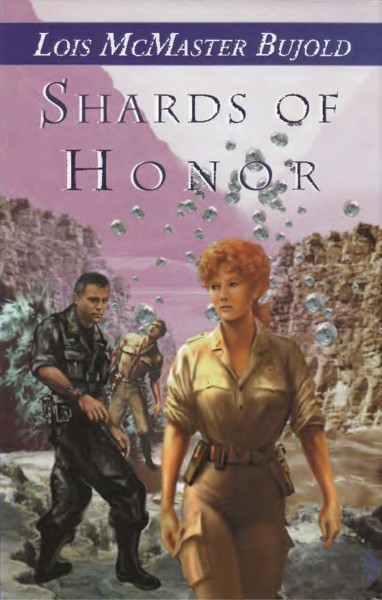
                • Cover of Vorkosigan
                  Vorkosigan

                  universe · 27 books · 1986

                  Start hereShards of Honor · Chronological start

                  similar byfar futurescience fictionspace opera+1 more

                  On Barrayar they will tell you that a man is measured by his forebears and the straightness of his spine — which is a difficulty for Miles Vorkosigan, born brittle-boned and half-height into the highest military caste of a planet that not long ago left such infants on the hillside to die. Beyond his backwater lies the wormhole nexus: a scatter of human worlds strung along unstable jump-routes, where a blood-and-honor warrior aristocracy, a coolly egalitarian utopia, and a hundred lesser polities trade, spy, and go to war. Miles cannot pass the physicals. So he builds himself a fleet, a false name, and a career out of sheer talky brilliance and a constitutional refusal to sit still. Lois McMaster Bujold has spent decades on this future, and it reads as one long life more than a franchise. It opens a generation early with Miles's mother, Cordelia — a level-headed survey captain from Beta Colony who marries into Barrayaran politics — before handing the saga to Miles himself, from teenage con-artist admiral to Imperial troubleshooter, and eventually to the next generation. Around that spine stand companion novels set elsewhere in the nexus: Falling Free, among the engineered zero-gee "quaddies"; Ethan of Athos; and the later books. Many volumes are gathered into omnibuses; several have taken Hugo Awards. The pleasure is voice and heart more than hardware — comedies of intrigue that turn, without warning, into hard questions about disability, ambition, biology as destiny, and what honor costs the people who keep it. Newcomers have two clean doors: Shards of Honor (paired with Barrayar as Cordelia's Honor) for the chronological start, or The Warrior's Apprentice to meet Miles at full velocity.

                • Cover of Dock Five Universe
                  Dock Five Universe

                  series · 4 books · 2002

                  similar byfar futurespacescience fictionspace opera

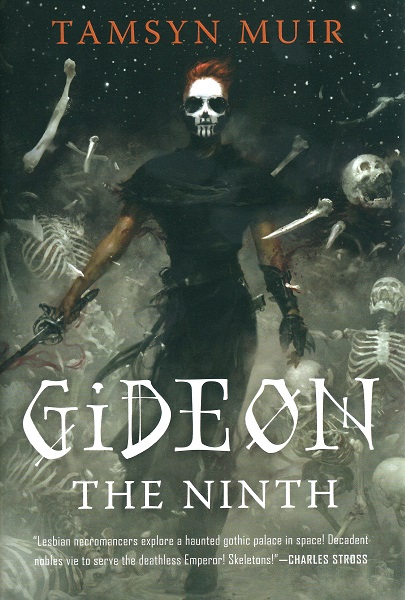
                • Cover of The Locked Tomb
                  The Locked Tomb

                  series · 6 books · 2019

                  similar byspacefar future+3 more

                  Tamsyn Muir's Gideon the Ninth follows Gideon Nav, an indentured swordswoman raised among nuns and skeletons in the Ninth House, who is drafted into a deadly imperial trial by Harrowhark, the necromancer she can't stand. Competing against heirs from the Emperor's other necromantic Houses, the two must survive a decaying, secret-filled fortress where old powers are best left undisturbed. Harrow the Ninth and Nona the Ninth continue the Locked Tomb series.

                • Cover of Heechee
                  Heechee

                  series · 19 books · 1972

                  completed

                  similar byfar futurespacescience fictionspace opera

                  The Heechee Saga, also known as the Gateway series, is a series of science fiction novels and short stories by Frederik Pohl. The Heechee are an advanced alien race that visited the Solar System hundreds of millennia ago and then mysteriously disappeared. They left behind bases containing artifacts, including working starships, which are discovered and exploited by humanity.

                • Cover of The Giver
                  The Giver

                  series · 5 books · 1993

                  similar byfar futurescience fiction

                  The Giver Quartet is a series of four books about a dystopian world by American author Lois Lowry, which consists of The Giver (1993), Gathering Blue (2000), Messenger (2004), and Son (2012). The first book won the 1994 Newbery Medal and has sold more than 50 million copies. The story takes place at an unknown point of time within the future. Each book has a different protagonist but is set in the same futuristic era.

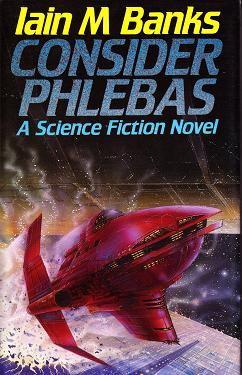
                • Cover of Culture
                  Culture

                  series · 15 books · 1987

                  completed

                  part of The Culture

                  similar byfar futurescience fictionspace opera+1 more

                  The Culture series is a science fiction series written by Scottish author Iain M. Banks and released from 1987 until 2012. The stories centre on The Culture, a utopian, post-scarcity space society of humanoid aliens and advanced superintelligent artificial intelligences living in artificial habitats spread across the Milky Way galaxy. The main themes of the series are the dilemmas that an idealistic, more-advanced civilization faces in dealing with smaller, less-advanced civilizations that do not share its ideals, and whose behaviour it sometimes finds barbaric. In some of the stories, action takes place mainly in non-Culture environments, and the leading characters are often on the fringes of the Culture, sometimes acting as agents of the Culture in its plans to civilize the galaxy. Each novel is a self-contained story with new characters, although reference is occasionally made to the events of previous novels.

                • Cover of Tower and the Hive
                  Tower and the Hive

                  series · 7 books · 1959

                  completed

                  part of The Talents

                  similar byspacefar futurescience fictionspace opera

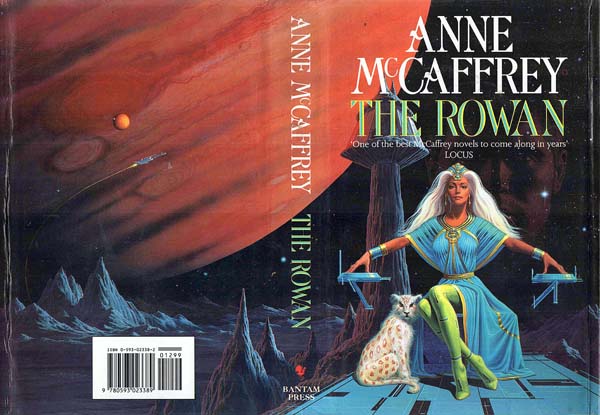
                  The Tower and the Hive series opens with The Rowan (1990), following an isolated but powerful telepath who is drawn out of her loneliness by a psychic call for help from a distant Talent facing an alien threat. Anne McCaffrey continued the story across four more novels, Damia, Damia's Children, Lyon's Pride, and the concluding The Tower and the Hive (1999), following later generations of a telepathic family staffing the Prime Towers that give a starfaring human civilization instant communication. The series is set later in the same Talents universe as McCaffrey's earlier Pegasus books.

                • Cover of Flowers for Algernon
                  Flowers for Algernon

                  Daniel Keyes · standalone novel · 1966

                  similar byemotionalscience fiction+1 more

                  A man with a low IQ becomes the subject of an experimental medical procedure which raises his IQ well over genius level.

                • Cover of Oxford Time Travel
                  Oxford Time Travel

                  series · 6 books · 1982

                  similar byscience fictiontime travel+1 more

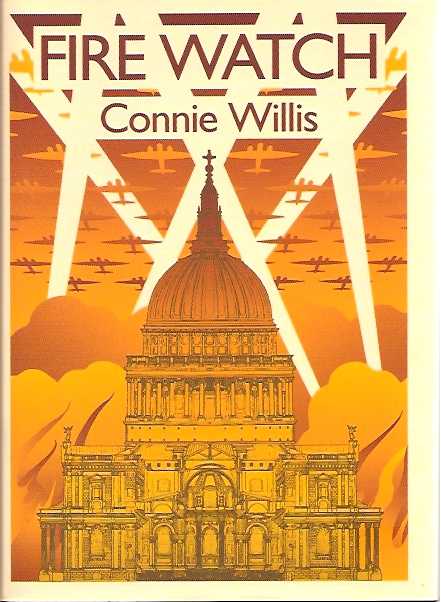
                  Connie Willis's Oxford Time Travel novels are set at a near-future Oxford University where historians travel into the past as observers, constrained by a version of history that resists any change large enough to alter real events. Doomsday Book sends a medieval historian to what should be 1320 but turns out to be the Black Death year of 1348, intercut with a present-day epidemic at Oxford; To Say Nothing of the Dog returns to the same time-travel program for a lighter, Victorian-set story with different characters. The two novels share their setting and rules rather than a directly continuing plot.

                • Cover of Sensitive Souls
                  Sensitive Souls

                  series · 1 book · 2023

                  similar bygrief and lossemotionalfar futurespacescience fictionspace opera

                • Cover of Universe of Xuya
                  Universe of Xuya

                  series · 39 books · 2007

                  similar byfar futurescience fiction+2 more

                • K
                  Kairos

                  series · 11 books · 1962

                  completed

                  similar byscience fiction+2 more

                  The Time Quintet is a science fantasy series of five young adult novels written by American author Madeleine L'Engle and made up of A Wrinkle in Time (1962), A Wind in the Door (1973), A Swiftly Tilting Planet (1978), Many Waters (1986), and An Acceptable Time (1989).

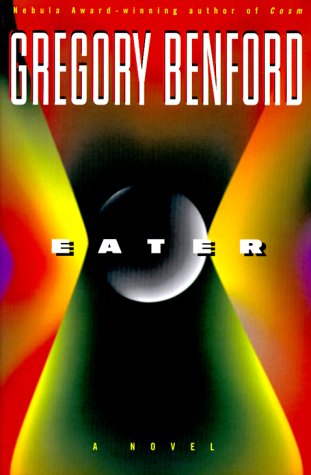
                • Cover of Eater
                  Eater

                  Gregory Benford · standalone novel · 2000

                  similar bygrief and lossspacescience fiction+1 more

                  From the flaps of the Eos first edition: "Dr. Benjamin Knowlton heads the High Energy Astrophysics Center, a prestigious research facility devoted to the interpretation of astronomical data. He stands at the apex of his profession, respected by his peers and involved in research with the potential to revolutionize our understanding of the universe. But Benjamin has no cause to celebrate. His beloved wife and colleague, Channing, an ex-astronaut turned astronomer, is dying of cancer. She has only a few months to live. Then an anomalous signal from a remote probe alerts Banjamin to the presence of a wandering black hole beyond the orbit of Pluto. Though its trajectory will take it through the solar system, the singularity poses no threat to Earth-on the contrary, it may hold answers to the most fundamental questions of physics. But when an encoded message is received from the black hole, excitement turns to astonishment and apprehension. The thing is alive, intelligent, its mind residing in powerfully fluctuating fields of electromagnetic energies that radiate outward from its infinitely dense core. And it wants a closer look at Earth... and its inhabitants. The entity - dubbed the Eater for its habit of devouring everything in its path - proves eager to share its vast knowledge, accumulated in the course of explorations that began long before life arose on Earth. In exchange, it seeks to learn about human art, culture, and science. The world is charmed by the seemingly beneficent alien. Even Channing is infused with fresh strength and purpose. But gradually a terrifying truth about the singularity emerges - a truth almost too awful to comprehend. Now, as the world waits, Channing volunteers to undertake a desperate gamble: a one-to-one confrontation with the Eater."

                • Cover of The Time Traveler's Wife
                  The Time Traveler's Wife

                  Audrey Niffenegger · standalone novel · 2003

                  similar bygrief and lossemotionalscience fictiontime travel

                  The Time Traveler's Wife is the debut novel by American author Audrey Niffenegger, published in 2003. It is a love story about Henry, a man with a genetic disorder that causes him to time travel unpredictably, and about Clare, his wife, an artist who has to cope with his frequent absences. Niffenegger, who was frustrated with love when she began the novel, wrote the story as a metaphor for her failed relationships. The tale's central relationship came to Niffenegger suddenly and subsequently supplied the novel's title. The novel has been classified as both science fiction and romance.

                • Cover of A Different Light
                  A Different Light

                  Elizabeth A. Lynn · standalone novel · 1978

                  similar byemotionalfar futurespacescience fictionspace opera

                  Jimson had twenty years to live. Or one. Twenty if he stayed in space-normal, where his disease could be treated. One year if he followed the Starcaptain into the Hype - the "not-space" that trip was the only way to the stars, where jeweled voyagers sailed the light-centuries in color-shifting ships; humankind's outriders, star-burned lovers to a Universe heavy with stars... This is the story of that year. (from the back cover of the first edition)

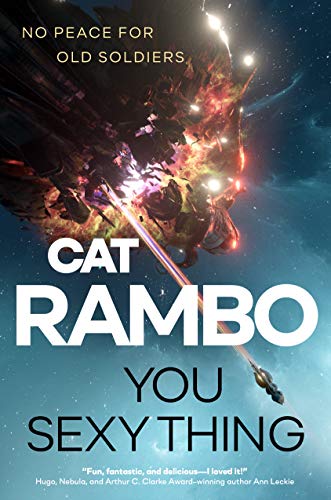
                • Cover of You Sexy Thing / The Disco Space Opera
                  You Sexy Thing / The Disco Space Opera

                  series · 3 books · 2021

                  similar byfar futurespacescience fictionspace opera

                • Cover of Honor Harrington
                  Honor Harrington

                  series · 14 books · 1993

                  part of Honorverse

                  similar byfar futurespacescience fictionspace opera

                  David Weber's Honor Harrington novels follow the title character's rise through the Manticoran navy in the 'Honorverse,' a space-opera setting built around Age-of-Sail-style naval combat, interstellar politics and a decades-long war between rival star nations. Beginning with On Basilisk Station, the core series runs to fourteen books, alongside spin-off subseries, prequels and shared-world anthologies also set in the Honorverse. It's one of the longest-running modern military science fiction series, published by Baen.

                • Cover of The League
                  The League

                  series · 15 books · 1994

                  similar byfar futurespacescience fictionspace opera

                  Sherrilyn Kenyon's The League opens with Born of Night, a science-fiction romance centered on an assassin protagonist, continuing across more than a dozen further 'Born of...' novels.

                • Cover of Second Starfaring Age
                  Second Starfaring Age

                  series · 2 books · 1983

                  similar byfar futurespacescience fictionspace opera+1 more

                • Cover of Anna Nestor-Sigrid / The Aighors
                  Anna Nestor-Sigrid / The Aighors

                  series · 4 books · 1975

                  completed

                  similar byfar futurescience fictionspace+2 more

                  Beyond Heaven's River follows Yoshio Kawashita, a soldier abducted mid-battle during World War II and stranded by unknown aliens on a distant world he can never leave, whose only tie back to meaning is Anna Nestor, a ruthless interstellar power broker who first treats him as a curiosity before the two are forced to confront who took him and why. Greg Bear wrote it as a standalone 1980 novel rather than the start of a series.

                • Cover of Major Ariane Kedros
                  Major Ariane Kedros

                  series · 3 books · 2008

                  similar byfar futurespacescience fictionspace opera+1 more

                • Cover of Winter's Orbit
                  Winter's Orbit

                  series · 2 books · 2021

                  similar byfar futurespacescience fictionspace opera

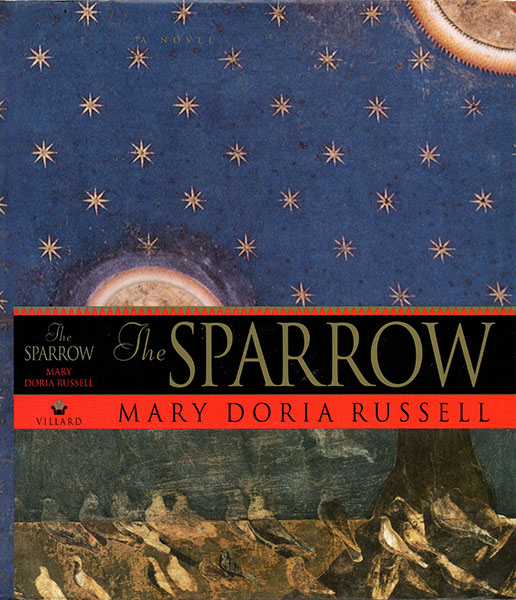
                • Cover of Sparrow
                  Sparrow

                  series · 2 books · 1996

                  similar bygrief and lossemotionalscience fiction

                  Mary Doria Russell's The Sparrow (1996) follows a Jesuit-led mission to the planet Rakhat after radio signals from Alpha Centauri reveal it hosts intelligent life, alternating between the expedition and the traumatized return of its sole survivor, Father Emilio Sandoz, as he tries to explain what happened. The sequel Children of God (1998) follows Sandoz back to Rakhat and continues working out the theological and political fallout of first contact between humans and the planet's two native species.