Loreful
HomeDiscover
Search series, authors…⌘K
Loreful

Reading orders for SF/F series and shared universes — with your place kept in every one.

Explore

UniversesSeriesWorksAuthorsAtlas

Help

FAQAboutSite map

Account & legal

Sign inCreate accountPrivacyTerms

Data

Built on ISFDB, Wikipedia, Wikidata and Open Library. Curated reading orders carry their reasoning on the page; the rest follow publication order. Data sources & licenses

© Loreful · data: ISFDB · CC BY

More like Resister

but

Mood

The mood the book leaves you in.

  • The reading experience is propelled by journeys, exploration, and physical risk; excitement and forward momentum dominate over dread or introspection.
  • Joy and loss are deliberately mixed; the resolution grants characters something real while taking something else away, leaving warmth and sorrow together.
  • The book demands work from the reader — dense prose, difficult structure, unfamiliar ideas, or morally uncomfortable material — as part of its intended effect.
  • Grim events, cruelty, or despair dominate the atmosphere, and the book does not soften them with comfort or comic relief.
  • The atmosphere is quietly unsettling — wrongness, unease, and the uncanny pervade the book without necessarily escalating into overt horror.
  • The book is built to move the reader; character feeling is foregrounded and major scenes aim at a strong emotional response.
  • Humor is a primary aim and the prose plays for laughs — comic situations, wit, or dialogue produce sustained comedy, not occasional levity.
  • The book insists that things can improve; effort and decency are shown to matter, and the arc bends toward better outcomes even through hardship.
  • The book teaches as it goes — real facts, history, science, or craft are conveyed in enough depth that learning is part of the reading experience.
  • The overall register is cheerful and easygoing; stakes are kept gentle and the book avoids dwelling on pain or dread.
  • Withheld information drives the experience; the book sustains enigmas and secrets the reader wants resolved, whatever its genre.
  • The book is contemplative and inward-looking, giving more weight to thought, memory, and meaning than to external events.
  • Grief, loss, or melancholy set the dominant register, and the book lets sorrow stand rather than resolving it into comfort.
  • Sustained suspense is the point; the book keeps the reader braced for what happens next through danger, pressure, or impending revelation.
  • Playful invention and charm define the register — fanciful conceits, light absurdity, and a narration that delights in its own oddity.

About

What the story runs on.

  • Stories centered on vampires — blood-drinking undead — whether as predators, love interests, or protagonists.
  • Stories in which demons or devils — infernal beings, their bargains, possessions, and hierarchies — drive the plot.
  • Stories about the raised or restless dead — necromancers and their arts, liches, skeletons, and revenants.
  • Stories driven by a curse laid on a person, family, or place, and the struggle to live under it or break it.
  • Stories in which staying alive against nature, catastrophe, or scarcity is the central problem.
  • Stories in which a friendship — its making, testing, or loss — is the emotional center.
  • Stories of growing up — a young protagonist crossing from childhood into adult knowledge and responsibility.
  • Stories about who a character truly is — self-discovery, doubled lives, and the search for a self.
  • Stories about mental unraveling — descent into madness, delusion, and minds at war with themselves.
  • Stories about mourning — living through the death of a loved one and what loss does to the survivors.
  • Stories in which a buried family truth — hidden parentage, crimes, or shames — surfaces and reorders the present.
  • Stories organized around investigating a killing — the case, the clues, and the pursuit of the killer, in any genre's clothing.

Shelf

Where it sits in the library.

    • Fiction built on magic or other supernatural elements that have no scientific explanation.
    • Secondary-world fantasy at large scale, where the fate of nations or the world turns on the protagonists' struggle.
    • Fantasy set in a recognizably modern city or contemporary world where the supernatural intrudes on everyday life.
    • Fantasy that blends in horror's atmosphere and imagery, keeping a fantastical frame around grim or frightening material.
    • Action-driven fantasy following warriors or rogues with personal stakes against sorcerous threats, rather than world-spanning conflicts.
    • Fantasy set in a real historical period or a close analogue of one, with magic woven into the era.
    • Fantasy in which protagonists cross from the ordinary world into another world through a portal or similar passage.
    • Fiction that retells or reworks a traditional fairy tale in a new form or setting.
    • Fantasy drawing directly on myths, legends, and folklore, retelling them or building on their figures and logic.
    • Fantasy of ghosts, vampires, shapeshifters, psychics, and similar phenomena, usually set in an otherwise ordinary world.
    • Fiction mixing science-fictional trappings with overtly magical or impossible elements in one setting.
    • Low-stakes fantasy emphasizing comfort, community, and everyday pleasures over conflict and peril.
    • Speculative fiction of pervasive moral ambiguity, violence, and cynicism that rejects heroic conventions — fantasy and SF alike.
      • Fiction that extrapolates from science and technology — future societies, space travel, or speculative inventions — within at least nominally natural laws.
      • Science fiction of interstellar scope — starships, galactic polities, and adventure across star systems.
      • Science fiction committed to scientific rigor, where technical plausibility constrains the story.
      • Science fiction centered on armed forces and warfare, told largely from a military point of view.
      • Science fiction of networked, corporate-dominated near futures, pairing high technology with social decay.
      • Science fiction styled on nineteenth-century steam-powered technology, often in a Victorian or pseudo-Victorian setting.
      • Fiction depicting an oppressive or catastrophic society, presented as a warning.
      • Fiction set after civilization's collapse, following survivors in the ruins of the old world.
      • Fiction in which characters move between past and future, and the mechanics or consequences of that travel drive the plot.
      • Fiction exploring a world where a historical event went differently and history diverged from ours.
      • Science fiction about humanity's first encounter and communication with an alien intelligence.
      • Science fiction in which extraterrestrial forces attack or occupy Earth and humanity resists.
      • Fiction whose primary aim is to frighten or unsettle the reader through dread, menace, or the monstrous.
      • Horror of vast, indifferent, incomprehensible entities before which humanity is insignificant, in the Lovecraft tradition.
      • Horror of decaying houses, buried family secrets, and oppressive atmosphere in the Gothic literary tradition.
      • Horror centered on hauntings and the returning dead.
      • Horror located in the mind — paranoia, obsession, and unreliable perception rather than external monsters.
      • Horror built around the reanimated dead and survival amid their outbreaks.
      • Horror defined by explicit, transgressive gore that refuses to cut away from violence.
      • Speculative fiction of the strange and uncanny that resists both natural explanation and standard genre categories.
      • Fiction organized around solving a crime or puzzle, typically following an investigator toward the identification of a culprit.
      • A puzzle-first mystery that lays out clues so the culprit's identity can be deduced before the reveal.
      • Crime fiction of moral ambiguity, fatalism, and hard-edged style, set among the corrupt and the doomed.
      • A mystery following the realistic routines of police work — forensics, interviews, and case-building.
      • A gentle mystery with an amateur sleuth, a small community, and violence kept off the page.
      • A mystery set in a past era, where the investigation works within that period's methods and society.
      • Fast-paced fiction driven by imminent danger, pursuit, or high-stakes conspiracy, built to sustain tension.
      • A thriller of espionage — agents, tradecraft, and intelligence services in conflict.
      • A thriller centered on lawyers and the courtroom, where litigation carries the suspense.
      • A thriller driven by detailed contemporary or near-future technology, often military or scientific.
      • A thriller whose tension comes from mental states and manipulation between characters rather than external action.
      • Fiction whose central plot is a romantic relationship and its development toward an emotionally satisfying resolution.
      • Romance in which one or both partners are supernatural beings, blending fantasy elements into the love story.
      • A fantasy-romance hybrid in which the romantic arc and the fantasy plot carry equal weight.
      • Romance set in a past era, with courtship shaped by the period's society and manners.
      • Romance set in the present day, without supernatural or historical elements.
      • Fiction set in a real past period, where the historical setting materially shapes characters and events.
        • General and literary fiction emphasizing prose style, character interiority, or formal ambition over genre plot conventions.
        • Fiction in a realistic world where magical events occur and are treated as ordinary, in the tradition of Latin American literature.
        • Fiction that ridicules people, institutions, or society in order to criticize them.
        • Fiction of dreamlike, irrational imagery and logic that breaks from realistic representation.
        • Fiction that plays with narrative convention through metafiction, fragmentation, and self-reference.
        • Fiction propelled by journeys, exploration, and physical peril, where action and survival carry the plot.
        • Adventure fiction of ships and seafaring — naval engagements, voyages, and life at sea.
        • Fiction of the American frontier West — gunmen, ranchers, and lawmen, typically in the late nineteenth century.
        • Fiction centered on soldiers, campaigns, and the experience of warfare, historical or imagined.
          • Fiction written primarily to amuse, using comedic situations, wit, or parody as its organizing principle.
            • Multi-generational fiction following a family or dynasty across decades, with inheritance and kinship as the through-line.
              • Fiction whose world runs on explicit game mechanics — levels, stats, and skills that characters can see and exploit.
                • Fiction about costumed or superpowered heroes and their conflicts with comparable villains.

                Practical

                How long a commitment, whether it stands alone, and whether it has finished.

                Tap a chip to ask for it · tap again to rule it out · once more to clear. Numbers show what would be left.

                • Cover of The Green Man
                  The Green Man

                  Kingsley Amis · standalone novel · 1969

                  similar byhorror+1 more

                  The Green Man is a 1969 novel by British author Kingsley Amis. A Times Literary Supplement reviewer described The Green Man as "three genres of novel in one": ghost story, moral fable, and comic novel. The novel reflects Amis's willingness to experiment with genre novels while displaying many of the characteristics of his conventional novels, both in superficial aspects such as fogeyishness and problems with alcohol, and in more substantive aspects such as a self-reflective observation of human cruelty and selfishness in everyday relations.

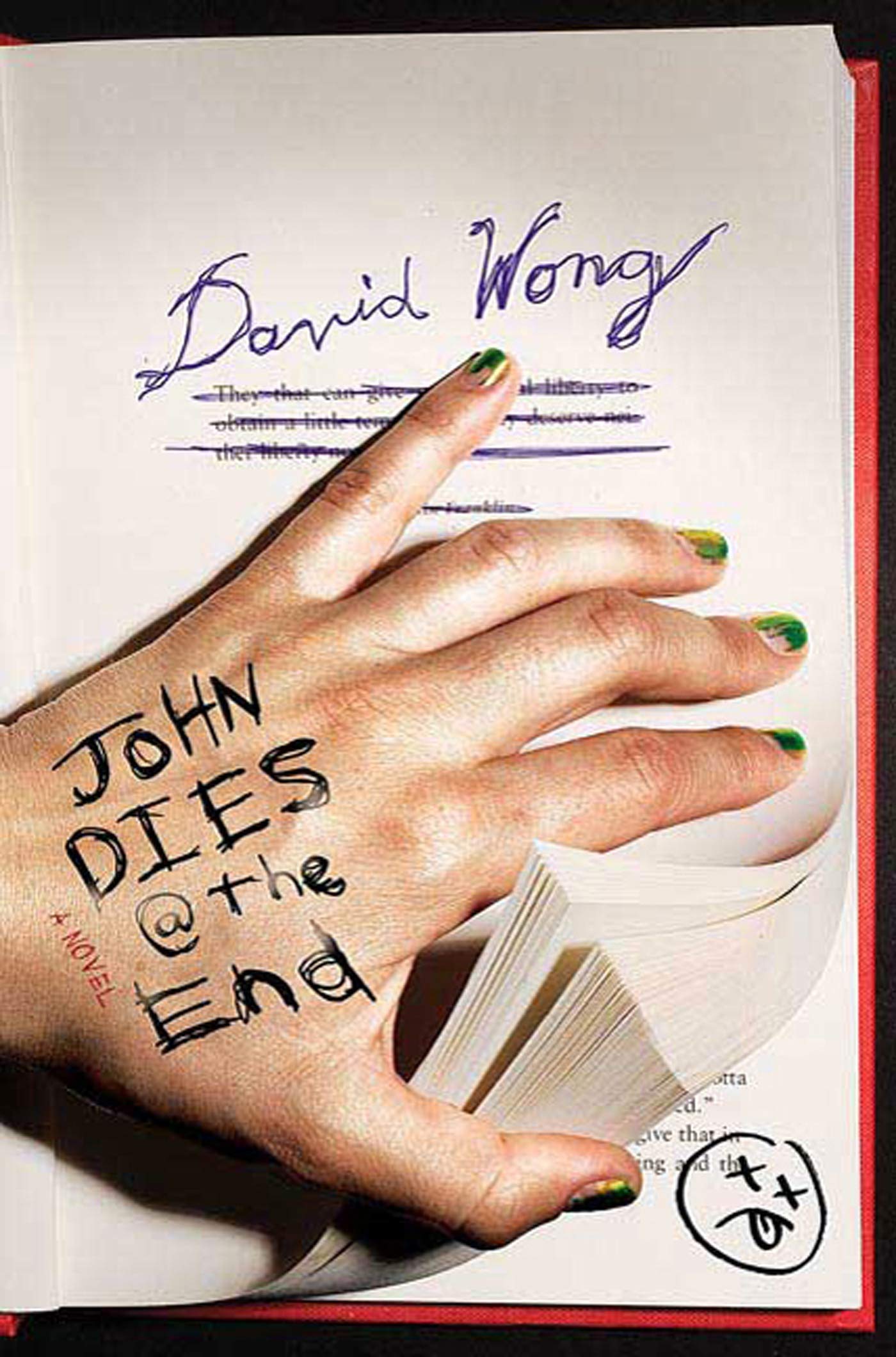
                • Cover of John and Dave
                  John and Dave

                  series · 4 books · 2007

                  similar byhorrorhumor

                  Jason Pargin, writing as David Wong, began the John Dies at the End series as a free horror-comedy webserial in 2001 before print publication turned it into a franchise. The Lovecraftian adventures of narrator John and his friend Dave continue across This Book Is Full of Spiders, What the Hell Did I Just Read, and If This Book Exists, You're in the Wrong Universe, and the original novel was adapted into a 2012 film.

                • Cover of Johannes Cabal
                  Johannes Cabal

                  series · 9 books · 2004

                  similar by+2 more

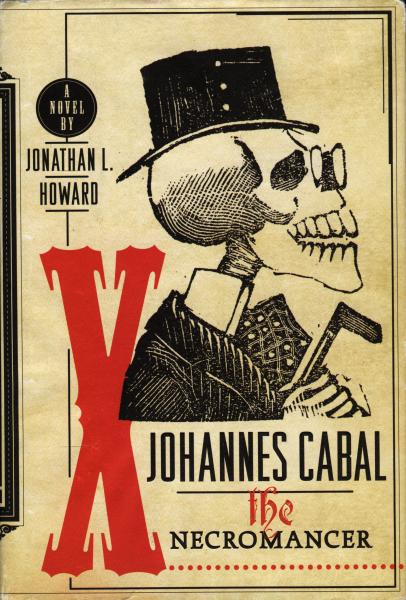
                  Johannes Cabal the Necromancer follows an amoral necromancer who sold his soul years earlier and must now win it back from Satan through a wager, journeying through a demonic travelling carnival to collect the hundred souls required. Jonathan L. Howard's series follows Cabal's increasingly strange and darkly comic misadventures across further novels, including Johannes Cabal the Detective and The Fear Institute.

                • Cover of Pine Cove
                  Pine Cove

                  series · 3 books · 1992

                  similar byhumor+1 more

                  Pine Cove gathers three loosely connected comic novels — Practical Demonkeeping, The Lust Lizard of Melancholy Cove, The Stupidest Angel — that Christopher Moore set in the same fictional small town on the California coast, recycling some of the same eccentric residents even as each book follows its own standalone plot (the first centers on a drifter's demon and the reluctant wizard trying to control it). It's part of the larger shared world Moore uses across most of his comic novels, rather than a continuing story arc.

                • Cover of Fires of Eden
                  Fires of Eden

                  Dan Simmons · standalone novel · 1994

                  similar byhorror+1 more

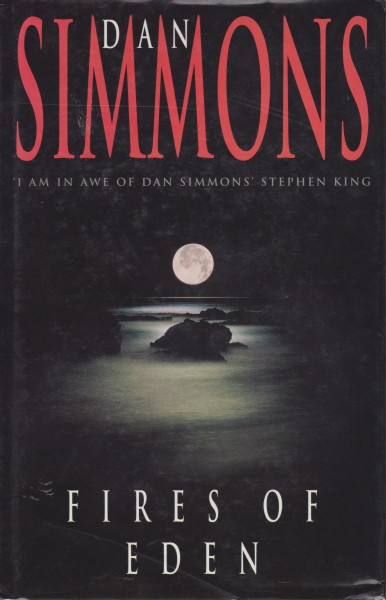
                  A comedy/horror novel, set near the Mauna Loa volcano of Hawaii, structured along two main threads of action. The first thread, set in the present at the coastal resort of Mauna Pele, follows Eleanor Perry during a series of disappearances and killings involving guests of the resort. The second thread, set in 1866 and consisting of journal entries, follows the exploits of the author Samuel Clemens during his visit to the same location. Best described as mythological horror.

                • Cover of Zombie Novels
                  Zombie Novels

                  series · 2 books · 2011

                  similar by+2 more

                • Cover of Secret Santa
                  Secret Santa

                  Andrew Shaffer · standalone novel · 2020

                  similar by+2 more

                • Cover of Wiley and Grampa's Creature Features
                  Wiley and Grampa's Creature Features

                  series · 10 books · 2006

                  similar byhumor+1 more

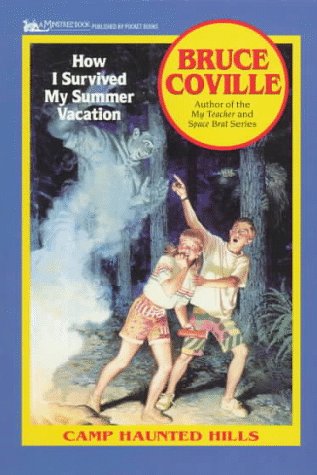
                • Cover of Camp Haunted Hills
                  Camp Haunted Hills

                  series · 3 books · 1988

                  similar by+2 more

                • Cover of The Z Word
                  The Z Word

                  Lindsay King-Miller · standalone novel · 2024

                  similar byhorrorhumor

                  "Packed with action, humor, sex, and big gay feelings, The Z Word is the queer Zombieland you didn't know you needed. Chaotic bisexual Wendy is trying to find her place in the queer community of San Lazaro, Arizona, after a bad breakup—which is particularly difficult because her ex is hooking up with some of her friends. And when the people around them start turning into violent, terrifying mindless husks, well, that makes things harder. Especially since the infection seems to be spreading. Now, Wendy and her friends and frenemies—drag queen Logan, silver fox Beau, sword lesbian Aurelia and her wife Sam, mysterious pizza delivery stoner Sunshine, and, oh yeah, Wendy's ex-girlfriend Leah—have to team up to stay alive, save Pride, and track the zombie outbreak to its shocking source. Hopefully without killing each other first. The Z Word is a propulsive, funny, emotional horror debut about a found family coming together to fight corporate greed, political corruption, gay drama, and zombies." (author's website)

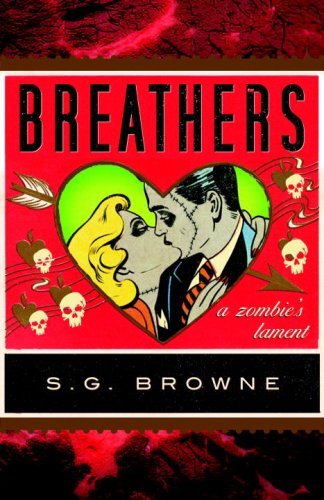
                • Cover of Breathers
                  Breathers

                  series · 2 books · 2009

                  similar byhorrorhumor

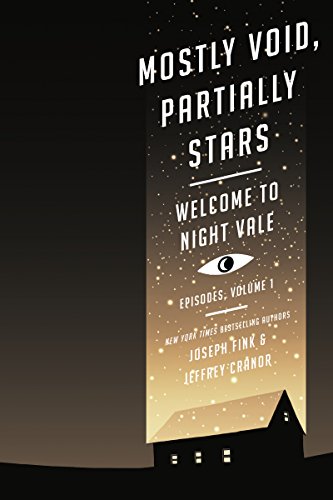
                • Cover of Welcome to Night Vale Episodes
                  Welcome to Night Vale Episodes

                  series · 4 books · 2016

                  part of Welcome to Night Vale Universe

                  similar by+2 more

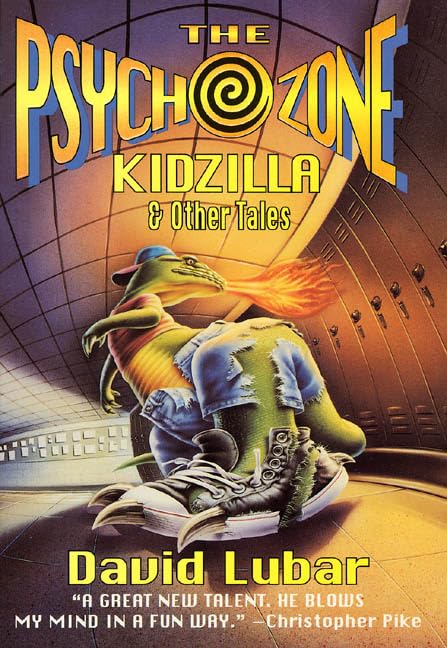
                • Cover of The Psychozone
                  The Psychozone

                  series · 10 books · 1997

                  similar byhorrorhumor

                • Cover of Andrew Mayhem
                  Andrew Mayhem

                  series · 10 books · 2003

                  similar by+2 more

                • Cover of Svetz
                  Svetz

                  series · 9 books · 1969

                  similar by+1 more

                  Larry Niven's Svetz stories follow Hanville Svetz, a dimension-traveling agent sent to retrieve unusual specimens and creatures, with titles like The Flight of the Horse (1971) and Leviathan! built around individual retrieval missions gone strange. The separate tales were later gathered together with new material into the novel Rainbow Mars (1999).

                • Cover of Blood Lite
                  Blood Lite

                  series · 3 books · 2008

                  similar byhorrorhumor

                • Cover of Cool Thing Series
                  Cool Thing Series

                  series · 3 books · 2020

                  similar byhorror+1 more

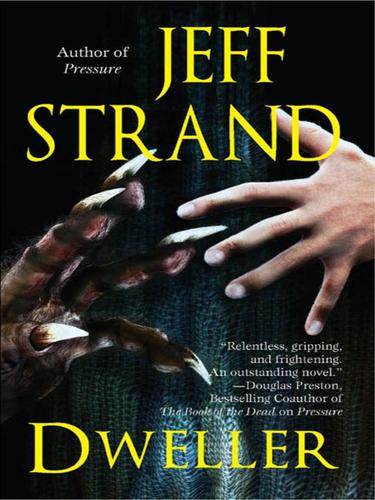
                • Cover of Dweller
                  Dweller

                  Jeff Strand · standalone novel · 2010

                  similar byhorrorhumor

                  Jeff Strand is an American writer, known for his works of comedy horror.

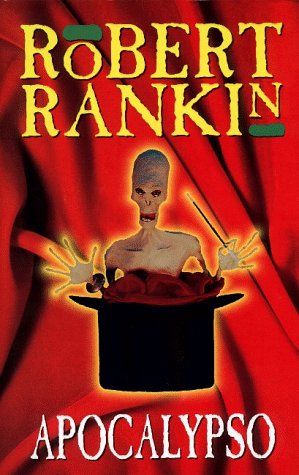
                • Cover of Apocalypso
                  Apocalypso

                  Robert Rankin · standalone novel · 1998

                  similar byhumor+1 more

                  Apocalypso is a novel by the British author Robert Rankin.

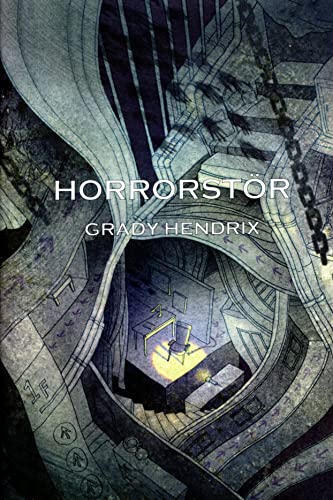
                • Cover of Horrorstör
                  Horrorstör

                  Grady Hendrix · standalone novel · 2011

                  similar byhorrorhumor

                  Horrorstör is a 2014 horror comedy novel that was written by Grady Hendrix and illustrated by Michael Rogalski. The novel was released in paperback on September 23, 2014 through Quirk Books and is set in ORSK, an IKEA-esque store that has been experiencing supernatural phenomena. The audiobook release was narrated by Tai Sammons and Bronson Pinchot. The book's events take place largely over the course of one night in ORSK and the story is accompanied by illustrations of ORSK products, which grow more sinister as the book progresses.

                • Cover of Zombie Bake-Off
                  Zombie Bake-Off

                  Stephen Graham Jones · standalone novel · 2012

                  similar byhorrorhumor

                  Zombie Bake-Off is a 2012 horror comedy novel by Stephen Graham Jones. The novel tells the story of a zombie outbreak at a local coliseum, which is hosting both a cooking festival and a professional wrestling event.

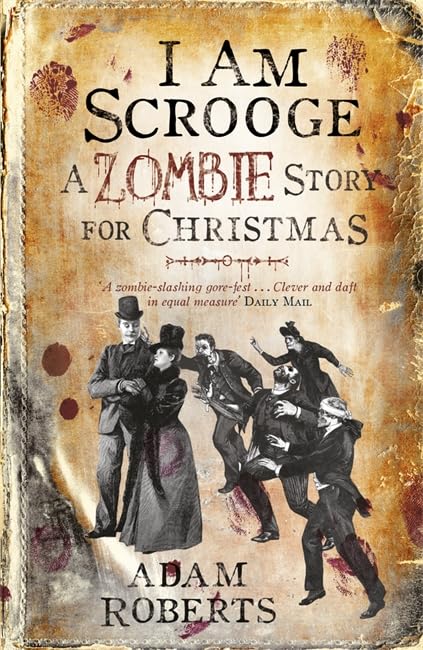
                • Cover of I Am Scrooge: A Zombie Story for Christmas
                  I Am Scrooge: A Zombie Story for Christmas

                  Adam Roberts · standalone novel · 2009

                  similar byhorrorhumor

                  Marley was dead. Again. The legendary Ebenezeer Scrooge sits in his house counting money. The boards that he has nailed up over the doors and the windows shudder and shake under the blows from the endless zombie hordes that crowd the streets hungering for his flesh and his miserly braaaaiiiiiinns! Just how did the happiest day of the year slip into a welter of blood, innards and shambling, ravenous undead on the snowy streets of old London town? Will the ghosts of Christmas Past, Present and Future be able to stop the world from drowning under a top-hatted and crinolined zombie horde? Was Tiny Tim's illness something infinitely more sinister than mere rickets and consumption? Can Scrooge be persuaded to go back to his evil ways, travel back to Christmas past and destroy the brain stem of the tiny, irritatingly cheery Patient Zero? It's the Dickensian Zombie Apocalypse - God Bless us, one and all!

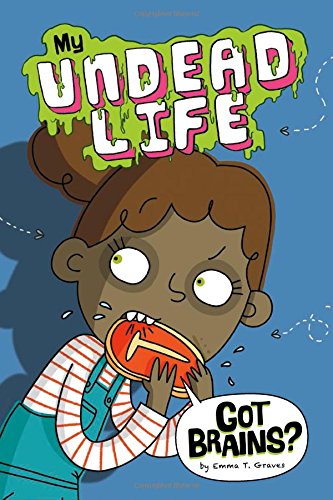
                • Cover of My Undead Life
                  My Undead Life

                  series · 4 books · 2018

                  similar by+2 more

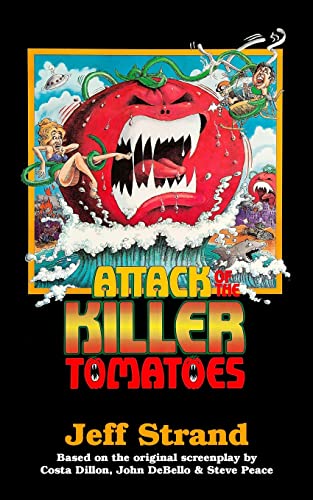
                • Cover of Attack of the Killer Tomatoes
                  Attack of the Killer Tomatoes

                  Jeff Strand · standalone novel · 2023

                  similar byhorrorhumor