Loreful
HomeDiscover
Search series, authors…⌘K
Loreful

Reading orders for SF/F series and shared universes — with your place kept in every one.

Explore

UniversesSeriesWorksAuthorsAtlas

Help

FAQAboutSite map

Account & legal

Sign inCreate accountPrivacyTerms

Data

Built on ISFDB, Wikipedia, Wikidata and Open Library. Curated reading orders carry their reasoning on the page; the rest follow publication order. Data sources & licenses

© Loreful · data: ISFDB · CC BY

More like Resonant

but

Mood

The mood the book leaves you in.

  • The reading experience is propelled by journeys, exploration, and physical risk; excitement and forward momentum dominate over dread or introspection.
  • Joy and loss are deliberately mixed; the resolution grants characters something real while taking something else away, leaving warmth and sorrow together.
  • The book demands work from the reader — dense prose, difficult structure, unfamiliar ideas, or morally uncomfortable material — as part of its intended effect.
  • Grim events, cruelty, or despair dominate the atmosphere, and the book does not soften them with comfort or comic relief.
  • The atmosphere is quietly unsettling — wrongness, unease, and the uncanny pervade the book without necessarily escalating into overt horror.
  • The book is built to move the reader; character feeling is foregrounded and major scenes aim at a strong emotional response.
  • Humor is a primary aim and the prose plays for laughs — comic situations, wit, or dialogue produce sustained comedy, not occasional levity.
  • The book insists that things can improve; effort and decency are shown to matter, and the arc bends toward better outcomes even through hardship.
  • The book teaches as it goes — real facts, history, science, or craft are conveyed in enough depth that learning is part of the reading experience.
  • The overall register is cheerful and easygoing; stakes are kept gentle and the book avoids dwelling on pain or dread.
  • Withheld information drives the experience; the book sustains enigmas and secrets the reader wants resolved, whatever its genre.
  • The book is contemplative and inward-looking, giving more weight to thought, memory, and meaning than to external events.
  • Grief, loss, or melancholy set the dominant register, and the book lets sorrow stand rather than resolving it into comfort.
  • Sustained suspense is the point; the book keeps the reader braced for what happens next through danger, pressure, or impending revelation.
  • Playful invention and charm define the register — fanciful conceits, light absurdity, and a narration that delights in its own oddity.

About

What the story runs on.

  • Stories in which extraterrestrial beings are central — as characters, cultures, or the object of the plot.
  • Stories centered on vampires — blood-drinking undead — whether as predators, love interests, or protagonists.
  • Stories centered on werewolves and the curse or gift of transformation into a wolf.
  • Stories in which staying alive against nature, catastrophe, or scarcity is the central problem.
  • Stories of lovers kept apart by law, family, faith, or station, where the obstacle to love is the plot.
  • Stories of growing up — a young protagonist crossing from childhood into adult knowledge and responsibility.
  • Stories about who a character truly is — self-discovery, doubled lives, and the search for a self.
  • Stories driven by maneuvering for power — factions, conspiracies, and statecraft conducted in shadow.
  • Stories in which war itself is the subject — combat, occupation, and what warfare does to soldiers and civilians.
  • Stories in which epidemic disease drives events — outbreaks, quarantines, and societies under contagion.
  • Stories about environmental breakdown — climate change, extinction, and civilization set against a failing biosphere.
  • Stories organized around investigating a killing — the case, the clues, and the pursuit of the killer, in any genre's clothing.

Shelf

Where it sits in the library.

    • Fiction built on magic or other supernatural elements that have no scientific explanation.
    • Secondary-world fantasy at large scale, where the fate of nations or the world turns on the protagonists' struggle.
    • Fantasy set in a recognizably modern city or contemporary world where the supernatural intrudes on everyday life.
    • Fantasy that blends in horror's atmosphere and imagery, keeping a fantastical frame around grim or frightening material.
    • Action-driven fantasy following warriors or rogues with personal stakes against sorcerous threats, rather than world-spanning conflicts.
    • Fantasy set in a real historical period or a close analogue of one, with magic woven into the era.
    • Fantasy in which protagonists cross from the ordinary world into another world through a portal or similar passage.
    • Fiction that retells or reworks a traditional fairy tale in a new form or setting.
    • Fantasy drawing directly on myths, legends, and folklore, retelling them or building on their figures and logic.
    • Fantasy of ghosts, vampires, shapeshifters, psychics, and similar phenomena, usually set in an otherwise ordinary world.
    • Fiction mixing science-fictional trappings with overtly magical or impossible elements in one setting.
    • Low-stakes fantasy emphasizing comfort, community, and everyday pleasures over conflict and peril.
    • Speculative fiction of pervasive moral ambiguity, violence, and cynicism that rejects heroic conventions — fantasy and SF alike.
      • Fiction that extrapolates from science and technology — future societies, space travel, or speculative inventions — within at least nominally natural laws.
      • Science fiction of interstellar scope — starships, galactic polities, and adventure across star systems.
      • Science fiction committed to scientific rigor, where technical plausibility constrains the story.
      • Science fiction centered on armed forces and warfare, told largely from a military point of view.
      • Science fiction of networked, corporate-dominated near futures, pairing high technology with social decay.
      • Science fiction styled on nineteenth-century steam-powered technology, often in a Victorian or pseudo-Victorian setting.
      • Fiction depicting an oppressive or catastrophic society, presented as a warning.
      • Fiction set after civilization's collapse, following survivors in the ruins of the old world.
      • Fiction in which characters move between past and future, and the mechanics or consequences of that travel drive the plot.
      • Fiction exploring a world where a historical event went differently and history diverged from ours.
      • Science fiction about humanity's first encounter and communication with an alien intelligence.
      • Science fiction in which extraterrestrial forces attack or occupy Earth and humanity resists.
      • Fiction whose primary aim is to frighten or unsettle the reader through dread, menace, or the monstrous.
      • Horror of vast, indifferent, incomprehensible entities before which humanity is insignificant, in the Lovecraft tradition.
      • Horror of decaying houses, buried family secrets, and oppressive atmosphere in the Gothic literary tradition.
      • Horror centered on hauntings and the returning dead.
      • Horror located in the mind — paranoia, obsession, and unreliable perception rather than external monsters.
      • Horror built around the reanimated dead and survival amid their outbreaks.
      • Horror defined by explicit, transgressive gore that refuses to cut away from violence.
      • Speculative fiction of the strange and uncanny that resists both natural explanation and standard genre categories.
      • Fiction organized around solving a crime or puzzle, typically following an investigator toward the identification of a culprit.
      • A puzzle-first mystery that lays out clues so the culprit's identity can be deduced before the reveal.
      • Crime fiction of moral ambiguity, fatalism, and hard-edged style, set among the corrupt and the doomed.
      • A mystery following the realistic routines of police work — forensics, interviews, and case-building.
      • A gentle mystery with an amateur sleuth, a small community, and violence kept off the page.
      • A mystery set in a past era, where the investigation works within that period's methods and society.
      • Fast-paced fiction driven by imminent danger, pursuit, or high-stakes conspiracy, built to sustain tension.
      • A thriller of espionage — agents, tradecraft, and intelligence services in conflict.
      • A thriller driven by detailed contemporary or near-future technology, often military or scientific.
      • A thriller whose tension comes from mental states and manipulation between characters rather than external action.
      • Fiction whose central plot is a romantic relationship and its development toward an emotionally satisfying resolution.
      • Romance in which one or both partners are supernatural beings, blending fantasy elements into the love story.
      • A fantasy-romance hybrid in which the romantic arc and the fantasy plot carry equal weight.
      • Romance set in a past era, with courtship shaped by the period's society and manners.
      • Romance set in the present day, without supernatural or historical elements.
      • Fiction set in a real past period, where the historical setting materially shapes characters and events.
        • General and literary fiction emphasizing prose style, character interiority, or formal ambition over genre plot conventions.
        • Fiction in a realistic world where magical events occur and are treated as ordinary, in the tradition of Latin American literature.
        • Fiction that ridicules people, institutions, or society in order to criticize them.
        • Fiction that plays with narrative convention through metafiction, fragmentation, and self-reference.
        • Fiction propelled by journeys, exploration, and physical peril, where action and survival carry the plot.
        • Fiction of the American frontier West — gunmen, ranchers, and lawmen, typically in the late nineteenth century.
        • Fiction centered on soldiers, campaigns, and the experience of warfare, historical or imagined.
          • Fiction written primarily to amuse, using comedic situations, wit, or parody as its organizing principle.
            • Fiction whose world runs on explicit game mechanics — levels, stats, and skills that characters can see and exploit.
              • Fiction about costumed or superpowered heroes and their conflicts with comparable villains.

              Practical

              How long a commitment, whether it stands alone, and whether it has finished.

              Tap a chip to ask for it · tap again to rule it out · once more to clear. Numbers show what would be left.

              • Cover of I Am Legend
                I Am Legend

                Richard Matheson · standalone novel · 1954

                similar byvampirespost-apocalyptic

                The last human survivor of the vampire epidemic has to maintain his defences against their onslaught, while attempting to research the cause and possibly solution to the plague. Robert Neville is the last living man on Earth... but he is not alone. Every other man, woman and child on the planet has become a vampire, and they are hungry for Neville's blood. By day he is the hunter, stalking the undead through the ruins of civilization. By night, he barricades himself in his home and prays for the dawn. How long can a man survive like this?

              • Cover of The Passage
                The Passage

                series · 3 books · 2010

                similar byvampirespost-apocalyptic

                The Passage is a novel series by Justin Cronin. There are three published books in the series. The film rights were acquired by Fox Entertainment Group in 2007 for adaptation into a film trilogy, but after 12 years of development and planning, it was changed to a television series, which premiered in January 2019 and was canceled after the first season.

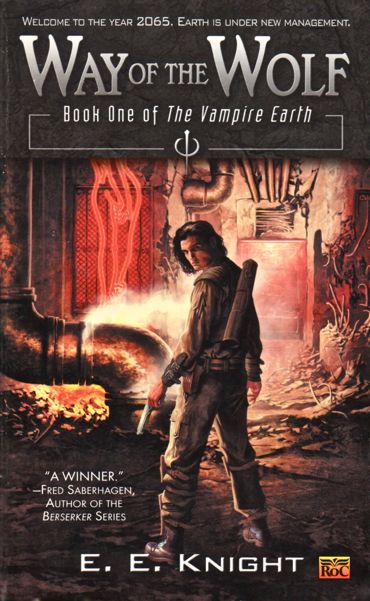
              • Cover of The Vampire Earth
                The Vampire Earth

                series · 12 books · 2003

                similar byvampirespost-apocalyptic

                Vampire Earth is a series of science fiction/dark fantasy novels by American writer E. E. Knight.

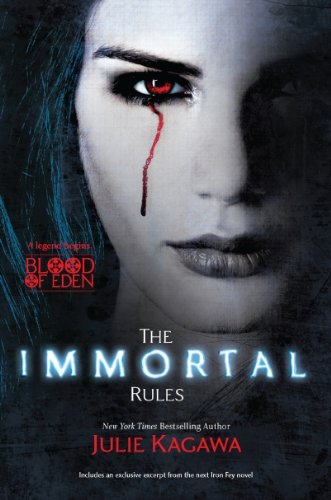
              • Cover of Blood of Eden
                Blood of Eden

                series · 4 books · 2012

                similar byvampirespost-apocalyptic

                The Blood of Eden is a young adult fantasy novel series by Julie Kagawa. The first book in the series, The Immortal Rules was published on April 24, 2012 through Harlequin Teen. The series follows the character of Allison Sekemoto, a teenage vampire that is trying to survive in a world where vampires exist and rule over much of the population.

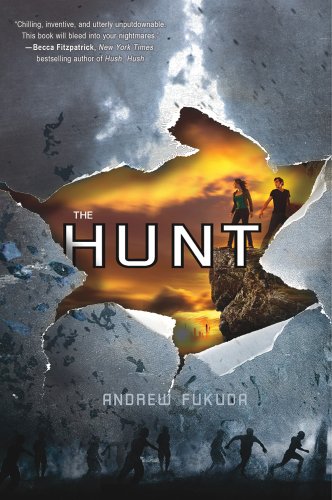
              • Cover of The Hunt (Andrew Fukuda)
                The Hunt (Andrew Fukuda)

                series · 3 books · 2011

                similar by+2 more

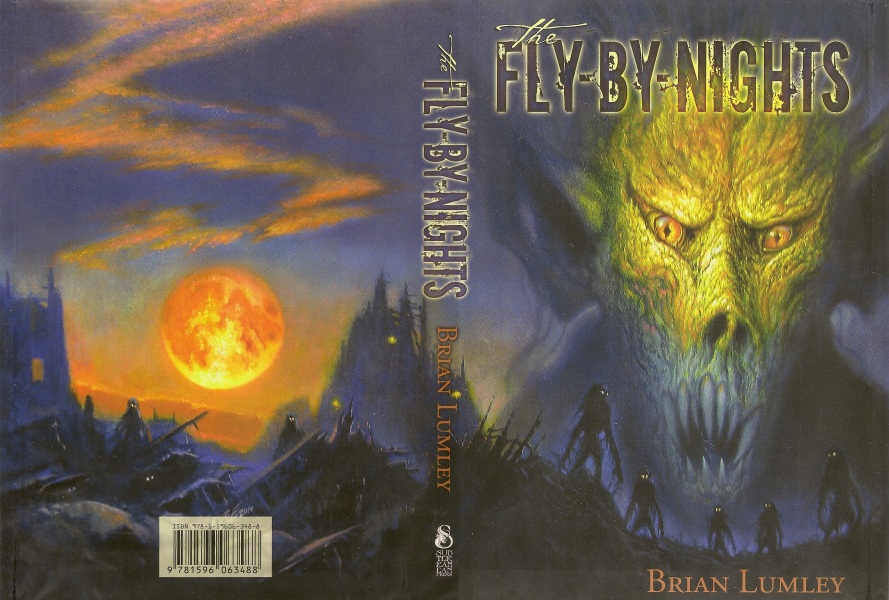
              • Cover of The Fly-by-Nights
                The Fly-by-Nights

                Brian Lumley · standalone novel · 2011

                similar byvampirespost-apocalyptic

                150 years ago the world ended. Bombs fell, winter came, and the survivors fled underground in search of safety. Now they struggle to preserve what's left -- sleeping by day, and battling fearsome vampiric fly-by-nights after sunset.

              • Cover of The Farm
                The Farm

                series · 3 books · 2012

                similar by+2 more

              • Cover of Nevermore (Sherrilyn Kenyon)
                Nevermore (Sherrilyn Kenyon)

                series · 2 books · 2002

                similar by+2 more

              • Cover of Dracula
                Dracula

                universe · 144 books · 1897

                Start hereDracula · Start here

                similar by+1 more

                "Come freely. Go safely. And leave something of the happiness you bring" — so the Count greets his guest at the threshold of the Carpathians, and the great door shuts behind. Bram Stoker's Dracula (1897) is the wellspring of the modern vampire: the account of a centuries-old Transylvanian nobleman who quits his crumbling castle for the crowded lodging-houses of London, and the handful of ordinary people — a young solicitor, a doctor of the mad, a professor of stranger learning — who must piece together what he is before he makes the whole city his fold. It is told wholly in fragments: journal entries, letters, telegrams, ships' logs, phonograph cylinders, each hand recording only its own sliver of the dark. Around that single novel a whole crypt of continuations has grown, raised by many writers across a century. Fred Saberhagen's Dracula Sequence hands the Count the microphone, retelling the old events from his own wry, aggrieved lips and following him into later intrigues. Robert Lory's brisk 1970s Dracula Horror Series revives him as a reluctant weapon turned against fouler things; Peter Tremayne's trilogy reaches back along his bloodline; and further sequels, a Quincey Morris spin-off, and Dracula's Children carry the shadow onward. This is a loose shared world built upon a public-domain figure, not one governed continuity — each author remakes him as villain, antihero, or sympathetic narrator. Begin, always, with Stoker's original; the letters and the mounting dread stand entirely on their own. From there follow whichever door tempts you — Saberhagen's The Dracula Tape for the monster's own confession, Lory or Tremayne for tales that never glance back at the Borgo Pass again.

              • Cover of The Hallowed Ones
                The Hallowed Ones

                series · 2 books · 2012

                similar byvampires+1 more

              • Cover of Midnight Mass
                Midnight Mass

                F. Paul Wilson · standalone novel · 2004

                similar byvampirespost-apocalyptic

                "How can mortal men defeat an immortal and seemingly invincible enemy?" "Vampires have always existed in secret in Central Europe, not just as legends and imaginary menaces but as predators that feed on human blood. In F. Paul Wilson's famous novel The Keep, vampires aided the Nazis in Europe. But with the fall of Communism and the turmoil throughout the continent, they took bold steps to begin to emerge publicly, to take over governments, and to enslave increasing portions of the world population." "Now they control all of Europe, India, the Far East, and the major cities in North and South America. It seems that nothing can stand in their way and that humanity will become cattle for the harvesting, the source of the blood of life. The vampires enlist "cowboys," humans who help them herd other humans in return for the promise of the bite of eternal life - someday. The vampires only grudgingly share their power and expand their limited numbers only when necessary." "The story opens when the vampire forces come to a small town in coastal New Jersey to finish pacifying the rural area. The local bishop has sold out. Joe, a disgraced priest accused of abuse, hides out and drinks, waiting for the end, until he is galvanized into action by a rabbi; his own niece, who has fled the collapse of New York, and a nun who has become a killer of the cowboys and the vampires. Together, they fortify an abandoned church and defy the conquering swarm. A surprising success shows them a ray of hope for humanity's survival, but an overwhelming challenge stands in their way - the new vampire King of New York."--Jacket.

              • Cover of Horror Writers of America Present...
                Horror Writers of America Present...

                series · 2 books · 1991

                similar by+2 more

              • Cover of Out of the Night
                Out of the Night

                Trish Milburn · standalone novel · 2013

                similar byvampirespost-apocalyptic

                "Since the death of her fiancé, it is Olivia DaCosta who continues his good work feeding the homeless. Every day is a lone struggle to keep her diner open, more than two years after the plague that devastated the human population. Now, amid the chaos, a vampire race has begun stalking the survivors. Because of her rare blood type, Olivia has learned to avoid vampire contact--until she meets one she can't resist. After Campbell Raines saves her life, it's clear there's no ignoring their potentially fatal attraction. In the arms of this haunted yet captivating cop, Olivia will discover that vampires can love just as passionately as they kill."-- P. [4] of cover.

              • Cover of Toe Tags
                Toe Tags

                series · 2 books · 2009

                similar by+2 more

              • Cover of Vampire Apocalypse (Keith Adam Luethke)
                Vampire Apocalypse (Keith Adam Luethke)

                series · 7 books · 2010

                similar by+2 more

              • Cover of Jerusalem's Lot
                Jerusalem's Lot

                series · 3 books · 1975

                similar byvampires

                Stephen King's 1975 novel 'Salem's Lot follows writer Ben Mears as he returns to his childhood town of Jerusalem's Lot, Maine, only to discover that its residents are being turned into vampires by a newly arrived stranger. It transplants Gothic vampire horror into a small New England community, tracking that community's collapse under a supernatural siege. It is a single, self-contained novel.

              • Cover of The Blood Armageddon
                The Blood Armageddon

                series · 2 books · 2019

                similar by+2 more

              • Cover of New World Trilogy
                New World Trilogy

                series · 3 books · 1980

                similar by+1 more

              • Cover of The Vampire Chronicles
                The Vampire Chronicles

                series · 15 books · 1976

                completed

                similar byvampires

                The Vampire Chronicles is a series of Gothic vampire novels and a media franchise, created by American author Anne Rice, that revolves around the fictional character Lestat de Lioncourt, a French nobleman turned into a vampire in the 18th century.

              • Cover of Bod Owens
                Bod Owens

                series · 3 books · 2007

                similar by+1 more

                The Graveyard Book follows Nobody "Bod" Owens, a toddler who escapes the murder of his family and is raised among the ghosts of an old English graveyard, absorbing their otherworldly customs while a threat from his past waits beyond the gates. Neil Gaiman's 2008 novel won both the Newbery and Carnegie Medals, and illustrator P. Craig Russell later adapted it into a two-volume graphic novel. Bod's story spans the original novel and that graphic-novel retelling rather than continuing in a prose sequel.

              • Cover of Afterage
                Afterage

                Yvonne Navarro · standalone novel · 1993

                similar by+1 more

              • AM
                Age of Madness

                series · 11 books · 2018

                part of The Kurtherian Gambit

              • Cover of Anita Blake
                Anita Blake

                series · 42 books · 1993

                similar byvampires

                Anita Blake: Vampire Hunter is a series of urban fantasy novels, short stories, and comic books by Laurell K. Hamilton. The books have sold more than six million copies; many have made The New York Times Best Seller list.

              • Cover of All Souls
                All Souls

                series · 5 books · 2011

                similar byvampires

                A Discovery of Witches is a 2011 historical-fantasy novel and the debut novel by American scholar Deborah Harkness. It follows Diana Bishop, a history of science professor at Yale University, as she embraces her magical blood after finding a long-thought-lost manuscript and engages in a forbidden romance with a charming vampire, Matthew Clairmont.