Loreful
HomeDiscover
Search series, authors…⌘K
Loreful

Reading orders for SF/F series and shared universes — with your place kept in every one.

Explore

UniversesSeriesWorksAuthorsAtlas

Help

FAQAboutSite map

Account & legal

Sign inCreate accountPrivacyTerms

Data

Built on ISFDB, Wikipedia, Wikidata and Open Library. Curated reading orders carry their reasoning on the page; the rest follow publication order. Data sources & licenses

© Loreful · data: ISFDB · CC BY

More like Resting Deep

but

Mood

The mood the book leaves you in.

  • The reading experience is propelled by journeys, exploration, and physical risk; excitement and forward momentum dominate over dread or introspection.
  • Joy and loss are deliberately mixed; the resolution grants characters something real while taking something else away, leaving warmth and sorrow together.
  • The book demands work from the reader — dense prose, difficult structure, unfamiliar ideas, or morally uncomfortable material — as part of its intended effect.
  • Grim events, cruelty, or despair dominate the atmosphere, and the book does not soften them with comfort or comic relief.
  • The atmosphere is quietly unsettling — wrongness, unease, and the uncanny pervade the book without necessarily escalating into overt horror.
  • The book is built to move the reader; character feeling is foregrounded and major scenes aim at a strong emotional response.
  • Humor is a primary aim and the prose plays for laughs — comic situations, wit, or dialogue produce sustained comedy, not occasional levity.
  • The book insists that things can improve; effort and decency are shown to matter, and the arc bends toward better outcomes even through hardship.
  • The book teaches as it goes — real facts, history, science, or craft are conveyed in enough depth that learning is part of the reading experience.
  • The overall register is cheerful and easygoing; stakes are kept gentle and the book avoids dwelling on pain or dread.
  • Withheld information drives the experience; the book sustains enigmas and secrets the reader wants resolved, whatever its genre.
  • The book is contemplative and inward-looking, giving more weight to thought, memory, and meaning than to external events.
  • The book works as comfort reading — low tension, a soothing pace, and an atmosphere the reader can unwind in.
  • Grief, loss, or melancholy set the dominant register, and the book lets sorrow stand rather than resolving it into comfort.
  • Sustained suspense is the point; the book keeps the reader braced for what happens next through danger, pressure, or impending revelation.
  • Playful invention and charm define the register — fanciful conceits, light absurdity, and a narration that delights in its own oddity.

About

What the story runs on.

  • Stories centered on vampires — blood-drinking undead — whether as predators, love interests, or protagonists.
  • Stories about the raised or restless dead — necromancers and their arts, liches, skeletons, and revenants.
  • Stories driven by a curse laid on a person, family, or place, and the struggle to live under it or break it.
  • Stories structured as a quest — a journey undertaken to find, deliver, or destroy something of great import.
  • Stories in which staying alive against nature, catastrophe, or scarcity is the central problem.
  • Stories in which a friendship — its making, testing, or loss — is the emotional center.
  • Stories of growing up — a young protagonist crossing from childhood into adult knowledge and responsibility.
  • Stories about who a character truly is — self-discovery, doubled lives, and the search for a self.
  • Stories about mental unraveling — descent into madness, delusion, and minds at war with themselves.
  • Stories about mourning — living through the death of a loved one and what loss does to the survivors.
  • Stories in which a buried family truth — hidden parentage, crimes, or shames — surfaces and reorders the present.
  • Stories organized around investigating a killing — the case, the clues, and the pursuit of the killer, in any genre's clothing.

Shelf

Where it sits in the library.

    • Fiction built on magic or other supernatural elements that have no scientific explanation.
    • Secondary-world fantasy at large scale, where the fate of nations or the world turns on the protagonists' struggle.
    • Fantasy set in a recognizably modern city or contemporary world where the supernatural intrudes on everyday life.
    • Fantasy that blends in horror's atmosphere and imagery, keeping a fantastical frame around grim or frightening material.
    • Action-driven fantasy following warriors or rogues with personal stakes against sorcerous threats, rather than world-spanning conflicts.
    • Fantasy set in a real historical period or a close analogue of one, with magic woven into the era.
    • Fantasy in which protagonists cross from the ordinary world into another world through a portal or similar passage.
    • Fiction that retells or reworks a traditional fairy tale in a new form or setting.
    • Fantasy drawing directly on myths, legends, and folklore, retelling them or building on their figures and logic.
    • Fantasy of ghosts, vampires, shapeshifters, psychics, and similar phenomena, usually set in an otherwise ordinary world.
    • Fiction mixing science-fictional trappings with overtly magical or impossible elements in one setting.
    • Low-stakes fantasy emphasizing comfort, community, and everyday pleasures over conflict and peril.
    • Speculative fiction of pervasive moral ambiguity, violence, and cynicism that rejects heroic conventions — fantasy and SF alike.
      • Fiction that extrapolates from science and technology — future societies, space travel, or speculative inventions — within at least nominally natural laws.
      • Science fiction of interstellar scope — starships, galactic polities, and adventure across star systems.
      • Science fiction committed to scientific rigor, where technical plausibility constrains the story.
      • Science fiction centered on armed forces and warfare, told largely from a military point of view.
      • Science fiction of networked, corporate-dominated near futures, pairing high technology with social decay.
      • Science fiction styled on nineteenth-century steam-powered technology, often in a Victorian or pseudo-Victorian setting.
      • Fiction depicting an oppressive or catastrophic society, presented as a warning.
      • Fiction set after civilization's collapse, following survivors in the ruins of the old world.
      • Fiction in which characters move between past and future, and the mechanics or consequences of that travel drive the plot.
      • Fiction exploring a world where a historical event went differently and history diverged from ours.
      • Science fiction about humanity's first encounter and communication with an alien intelligence.
      • Science fiction in which extraterrestrial forces attack or occupy Earth and humanity resists.
      • Fiction whose primary aim is to frighten or unsettle the reader through dread, menace, or the monstrous.
      • Horror of vast, indifferent, incomprehensible entities before which humanity is insignificant, in the Lovecraft tradition.
      • Horror of decaying houses, buried family secrets, and oppressive atmosphere in the Gothic literary tradition.
      • Horror centered on hauntings and the returning dead.
      • Horror located in the mind — paranoia, obsession, and unreliable perception rather than external monsters.
      • Horror built around the reanimated dead and survival amid their outbreaks.
      • Horror defined by explicit, transgressive gore that refuses to cut away from violence.
      • Speculative fiction of the strange and uncanny that resists both natural explanation and standard genre categories.
      • Fiction organized around solving a crime or puzzle, typically following an investigator toward the identification of a culprit.
      • A puzzle-first mystery that lays out clues so the culprit's identity can be deduced before the reveal.
      • Crime fiction of moral ambiguity, fatalism, and hard-edged style, set among the corrupt and the doomed.
      • A mystery following the realistic routines of police work — forensics, interviews, and case-building.
      • A gentle mystery with an amateur sleuth, a small community, and violence kept off the page.
      • A mystery set in a past era, where the investigation works within that period's methods and society.
      • Fast-paced fiction driven by imminent danger, pursuit, or high-stakes conspiracy, built to sustain tension.
      • A thriller of espionage — agents, tradecraft, and intelligence services in conflict.
      • A thriller centered on lawyers and the courtroom, where litigation carries the suspense.
      • A thriller driven by detailed contemporary or near-future technology, often military or scientific.
      • A thriller whose tension comes from mental states and manipulation between characters rather than external action.
      • Fiction whose central plot is a romantic relationship and its development toward an emotionally satisfying resolution.
      • Romance in which one or both partners are supernatural beings, blending fantasy elements into the love story.
      • A fantasy-romance hybrid in which the romantic arc and the fantasy plot carry equal weight.
      • Romance set in a past era, with courtship shaped by the period's society and manners.
      • Romance set in the present day, without supernatural or historical elements.
      • Fiction set in a real past period, where the historical setting materially shapes characters and events.
        • General and literary fiction emphasizing prose style, character interiority, or formal ambition over genre plot conventions.
        • Fiction in a realistic world where magical events occur and are treated as ordinary, in the tradition of Latin American literature.
        • Fiction that ridicules people, institutions, or society in order to criticize them.
        • Fiction that plays with narrative convention through metafiction, fragmentation, and self-reference.
        • Fiction propelled by journeys, exploration, and physical peril, where action and survival carry the plot.
        • Adventure fiction of ships and seafaring — naval engagements, voyages, and life at sea.
        • Fiction of the American frontier West — gunmen, ranchers, and lawmen, typically in the late nineteenth century.
        • Fiction centered on soldiers, campaigns, and the experience of warfare, historical or imagined.
          • Fiction written primarily to amuse, using comedic situations, wit, or parody as its organizing principle.
            • Multi-generational fiction following a family or dynasty across decades, with inheritance and kinship as the through-line.
              • Fiction whose world runs on explicit game mechanics — levels, stats, and skills that characters can see and exploit.
                • Fiction about costumed or superpowered heroes and their conflicts with comparable villains.

                Practical

                How long a commitment, whether it stands alone, and whether it has finished.

                Tap a chip to ask for it · tap again to rule it out · once more to clear. Numbers show what would be left.

                • Cover of The Ocean at the End of the Lane
                  The Ocean at the End of the Lane

                  Neil Gaiman · standalone novel · 2013

                  similar by+2 more

                  A seven year old farm boy becomes friends with an eleven year old neighbor girl, who he discovers is ancient and powerful and intervenes when a nonhuman entity attempts to make a home in earthly reality.

                • Cover of The Ghost Pirates
                  The Ghost Pirates

                  William Hope Hodgson · standalone novel · 1909

                  similar byhorrorat sea

                  Jessop signs on to the sailing ship Mortzestus despite whispers about her reputation, and it isn't long before he understands why: strange shapes and stranger sounds begin plaguing the vessel, growing bolder and more frequent by the day. Some of the crew write it off as superstition or overwork, but Jessop, the story's sole survivor, recounting events after the fact, comes to suspect something worse than ghosts: a kind of presence that shares the ship's physical space from another dimension entirely, and is slowly forcing its way through. William Hope Hodgson's nautical horror novel builds dread less through incident than through mounting, unresolved wrongness.

                • Cover of Fevre Dream
                  Fevre Dream

                  George R. R. Martin · standalone novel · 1982

                  similar byhorrorat sea

                  Fevre Dream is a 1982 vampire novel written by American author George R. R. Martin. It is set on the antebellum Mississippi River, beginning in 1857, and has been described by critics and Martin himself as "Bram Stoker meets Mark Twain". About writing the novel, Martin said that "It was strongly influenced by the time I spent in Dubuque, Iowa, where river steamboats were once built".

                • Cover of The Terror
                  The Terror

                  Dan Simmons · standalone novel · 2007

                  similar byhorrorat sea

                  The Terror is a 2007 novel by American author Dan Simmons. It is a fictionalized account of Captain Sir John Franklin's lost expedition, on HMS Erebus and HMS Terror, to the Arctic, in 1845–1848, to locate the Northwest Passage. In the novel, while Franklin and his crew are plagued by starvation and illness, and forced to contend with mutiny and cannibalism, they are stalked across the bleak Arctic landscape by a monster.

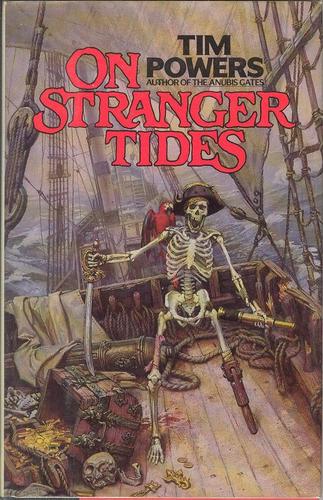
                • Cover of On Stranger Tides
                  On Stranger Tides

                  Tim Powers · standalone novel · 1987

                  similar byat sea+1 more

                  On Stranger Tides is a 1987 historical fantasy supernatural novel by American writer Tim Powers. It was nominated for the World Fantasy Award for Best Novel, and placed second in the annual Locus poll for best fantasy novel.

                • Cover of The Collected Fiction of William Hope Hodgson
                  The Collected Fiction of William Hope Hodgson

                  series · 6 books · 1907

                  completed

                  similar byhorrorat sea

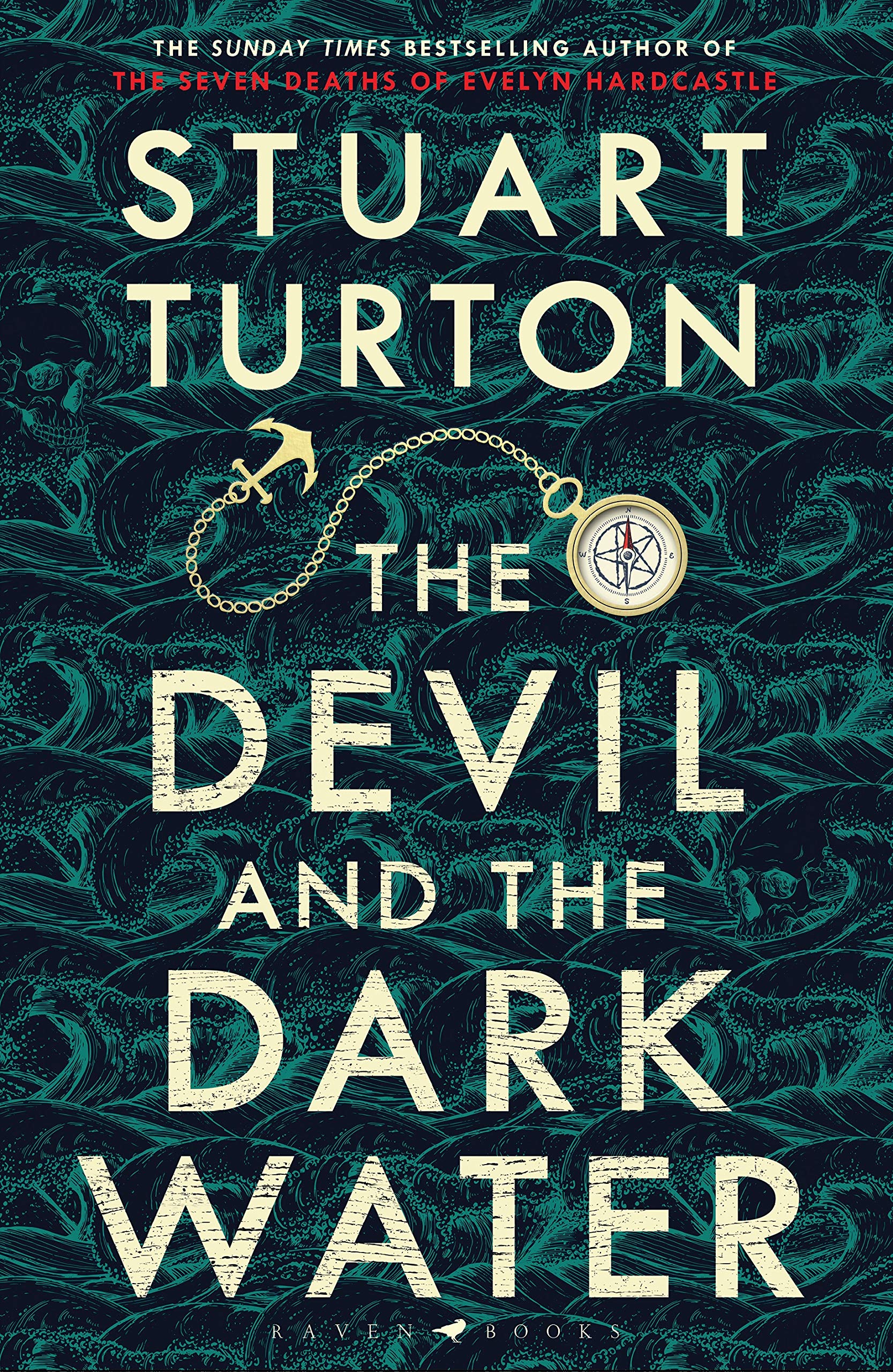
                • Cover of The Devil and the Dark Water
                  The Devil and the Dark Water

                  Stuart Turton · standalone novel · 2020

                  similar byhorrorat sea

                  The Devil and the Dark Water is a 2020 genre-bending novel by Stuart Turton, combining elements of historical fiction, murder mystery, and horror. Set in 1634, it features a detective trying to solve a series of inexplicable crimes aboard an East Indiaman ship.

                • ML
                  Meg / Loch Universe

                  series · 11 books · 1997

                  similar by+2 more

                • Cover of Pym
                  Pym

                  series · 5 books · 1838

                  similar byat sea+1 more

                  Edgar Allan Poe's The Narrative of Arthur Gordon Pym of Nantucket (1838), his only complete novel, sends a young stowaway through shipwreck, mutiny, and cannibalism toward an increasingly strange voyage to the South Pole that breaks off on a mysterious, unexplained image. Jules Verne wrote an unauthorized 1897 sequel, An Antarctic Mystery, resolving Poe's cliffhanger in more rationalist terms, while Mat Johnson's 2011 novel Pym uses Poe's original as the springboard for a satirical modern story about race.

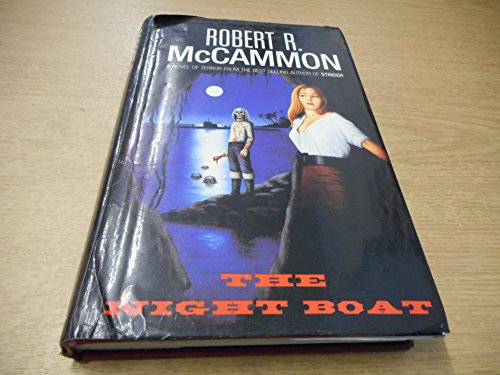
                • Cover of The Night Boat
                  The Night Boat

                  Robert R. McCammon · standalone novel · 1980

                  similar byhorror+1 more

                  WorldCat: The story begins with a vividly written prologue in which a German U-boat--sometimes known as an "Iron Coffin"--Attacks an unsuspecting merchant vessel, and is itself attacked by a pair of Allied sub chasers. The action then shifts to the present day and to the idyllic Caribbean island of Coquina, where life is about to change in unimaginable ways. David Moore, a young man with a tragic and haunted past, is skin-diving in the waters off Coquina, searching for the salvageable remnants of shipwrecks. He accidentally detonates a long-unexploded depth charge, uncovering and releasing a submarine that has lain beneath those waters, virtually intact, for decades. The battered vessel that rises to the surface contains a bizarre and terrifying cargo that will transform a once peaceful island into a landscape of unrelenting nightmare. The Night Boat is a story of cannibalism, ancient voodoo curses, and shambling, undead entities filled with a bottomless rage and an equally bottomless hunger. But it is also the story of a past that refuses to die, that lies in wait just beneath the surface of the unsuspecting present.

                • Cover of The Deep
                  The Deep

                  Alma Katsu · standalone novel · 2020

                  similar byhorrorat sea

                  The Deep is a 2020 historical fiction horror novel written by Alma Katsu. It was published in the United Kingdom through Bantam Press and in the United States through G. P. Putnam's Sons.

                • Cover of Dracula
                  Dracula

                  universe · 144 books · 1897

                  Start hereDracula · Start here

                  similar byhorror

                  "Come freely. Go safely. And leave something of the happiness you bring" — so the Count greets his guest at the threshold of the Carpathians, and the great door shuts behind. Bram Stoker's Dracula (1897) is the wellspring of the modern vampire: the account of a centuries-old Transylvanian nobleman who quits his crumbling castle for the crowded lodging-houses of London, and the handful of ordinary people — a young solicitor, a doctor of the mad, a professor of stranger learning — who must piece together what he is before he makes the whole city his fold. It is told wholly in fragments: journal entries, letters, telegrams, ships' logs, phonograph cylinders, each hand recording only its own sliver of the dark. Around that single novel a whole crypt of continuations has grown, raised by many writers across a century. Fred Saberhagen's Dracula Sequence hands the Count the microphone, retelling the old events from his own wry, aggrieved lips and following him into later intrigues. Robert Lory's brisk 1970s Dracula Horror Series revives him as a reluctant weapon turned against fouler things; Peter Tremayne's trilogy reaches back along his bloodline; and further sequels, a Quincey Morris spin-off, and Dracula's Children carry the shadow onward. This is a loose shared world built upon a public-domain figure, not one governed continuity — each author remakes him as villain, antihero, or sympathetic narrator. Begin, always, with Stoker's original; the letters and the mounting dread stand entirely on their own. From there follow whichever door tempts you — Saberhagen's The Dracula Tape for the monster's own confession, Lory or Tremayne for tales that never glance back at the Borgo Pass again.

                • Cover of Dead Sea
                  Dead Sea

                  series · 3 books · 2007

                  similar byhorrorat sea

                • Cover of Spider Legs
                  Spider Legs

                  Piers Anthony & Clifford A. Pickover · standalone novel · 1998

                  similar byhorrorat sea

                  SpiderLegs tells us for thousands of years, mankind has simultaneously trusted in the sea's provibial generosity, and used it as a dumping ground, trusting that in its vastness his garbage will be swallowed up and forgotten. But that was never really true, and now, in an age when the overcrowded Earth swarms with hungry inhabitants whose waste chokes with even the sea, whose greedy demands overtax its seemingly endless bounty, strange things are born in the ocean's deeps-strange things that the ocean throws back upon the land.

                • Cover of Horror Lurks Beneath
                  Horror Lurks Beneath

                  series · 3 books · 2021

                  similar byhorror+1 more

                • Cover of White Shark
                  White Shark

                  Peter Benchley · standalone novel · 1994

                  similar byat sea+1 more

                  White Shark is a 1994 novel by author Peter Benchley, famous for Jaws, The Island, Beast, and The Deep. White Shark is similar to Jaws but does not feature a shark, let alone a white shark, despite what the title suggests; the phrase is the codename of a weapon. To avoid confusion and to capitalize on the miniseries adaptation, the book was republished as Creature in 1997.

                • NM
                  Nat McPherson Universe

                  series · 4 books · 2017

                  similar byhorror+1 more

                • Cover of Jaws
                  Jaws

                  series · 3 books · 1974

                  completed

                  similar byhorror+1 more

                • Cover of Blood Cruise
                  Blood Cruise

                  Jake Bible · standalone novel · 2015

                  similar byhorrorat sea

                • Cover of Tooth and Claw
                  Tooth and Claw

                  Michael Cole · standalone novel · 2023

                  similar by+2 more

                • Cover of Coffins
                  Coffins

                  Rodman Philbrick · standalone novel · 2002

                  similar by+2 more

                  After his father, notorious sea captain Cash Coffin, locks himself in his room in the belief that a dark secret from his past has come back to destroy his family, Jebediah Coffin seeks the aid of his friend, Dr. Davis Bentwood.

                • Cover of Deadlock
                  Deadlock

                  Tim Curran · standalone novel · 2014

                  similar byhorrorat sea

                  "Charlie Petty is a man known for having ice water in his veins. He never backs down and is never shaken but unfortunately stirred up into the wrong crowd. As a degenerate gambler, his luck has run out and his debt has now come due. Charlie is offered a chance to clear his tab: simply stay alone on a ship overnight to prove to its owner and potential crew that it's not cursed nor haunted. Never mind the ship's history of suicide, violence, mutiny and murder. Or how the ship's past crews have gone missing or insane. The fact that no one has set foot on deck in darkness for years doesn't phase Charlie one bit. It sounds like easy money to bust up a superstition or two. Charlie thinks his luck is returning. Little does he know it's about to run out completely." – quoted from this books product page on Amazon.com as of 2015-05-21.

                • Cover of Dead on the Water: Abandon Ship
                  Dead on the Water: Abandon Ship

                  R. W. K. Clark · standalone novel · 2016

                  similar byhorrorat sea

                  "A stray dog foraging for food winds up dining on some genetically altered rats, and the meal changes him for the worse. A family's young daughter, little Ariana, is suddenly nipped by the infected dog, and, soon, she is on board a cruise ship and out to sea." ― paraphrased from this book's product page on Amazon.com website as of 2019-02-08.

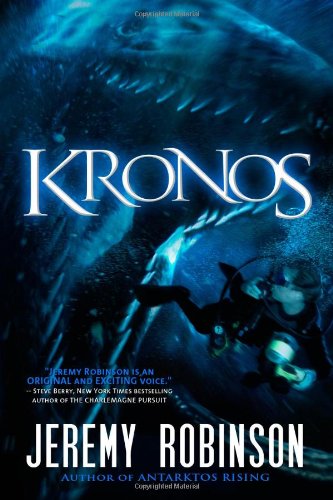
                • Cover of Kronos
                  Kronos

                  Jeremy Robinson · standalone novel · 2009

                  similar byat sea+1 more

                  "Two years after his wife's death, oceanographer and former navy SEAL, Atticus Young, attempts to reconcile with his rebellious daughter, Giona, by taking her on the scuba dive of a lifetime--swimming with a pod of peaceful humpback whales in the Gulf of Maine. But the beauty of the sea belies a terror from the deep--a horrific creature as immense as it is ancient. There is no blood, no scream, no fight. Giona is swallowed whole by the massive jaws. Atticus' inconsolable grief turns to an unquenchable thirst for revenge. Drawn by the spectacle, Trevor Manfred, a ruthless billionaire, approaches Atticus with a proposition: Trevor will make available all the advanced technology of his heavily armed mega-yacht, the Titan, to aid Atticus in his death-quest. In return, Trevor is to receive the beast's corpse as the ultimate hunting trophy ..."--Page 4 of cover.