More like Restoree
anchored on:science fictiontransported to another worldother star systemsscience fantasysurvivaladventurous+1 more
but
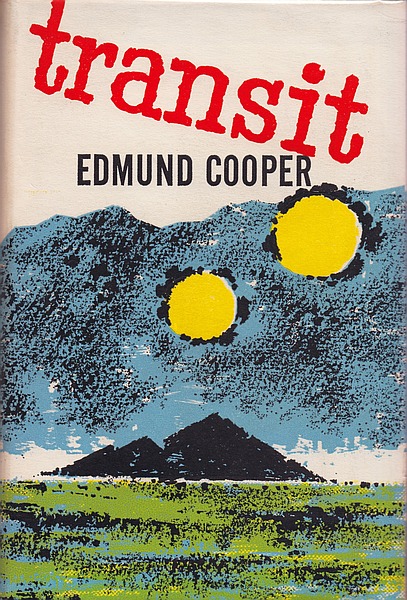
- Transit
Edmund Cooperstandalone novel1964
similar bytransported to another worldadventuroustensescience fictionsurvivalidentity
Transit... to another world. As a human being - an Earthman - Richard Avery was not particularly successful. He was mediocre as a teacher, and a failure as an artist. The rewards of Earth had passed him by. Still... Earth was home. It was where he belonged, where he could at least go his way unnoticed. Until that afternoon in Kensington Gardens, and that gleaming, hypnotic crystal that transported him - instantaneously - to a new and alien world. He was not alone, at least. There were three other Earth people marooned with him, all without a hint of the location or reason. And four more oddly assorted individuals would have been hard to imagine... Together, they faced sudden, savage onslaughts from an unknown foe. Together, they faced a fantastic implacable environment. And alone, they faced themselves - for to win, or even to survive, they had to re-discover what it meant to be human... (from the back cover of the Lancer first American edition)
- Tunnel in the Sky
Robert A. Heinleinstandalone novel1955
similar byother star systemsadventuroustensescience fictionsurvival
As the final test of a survivalist/explorer class, teenagers are dumped on an alien planet to use their skills while awaiting pickup. But something has gone wrong, and they find they are on their own.
- Arena
Karen Hancockstandalone novel2002
similar byother star systemsadventuroustensescience fictiontransported to another worldsurvival
A journey she did not choose will test her courage and change her life forever. Transported surreptitiously to a terrifying alien world, with limited resources and only a few cryptic words to guide her, Callie Hayes finds herself engulfed in a perilous battle for freedom, and for her very life. She must unravel the mysteries that shroud her only route of escape or risk succumbing to the deadly deception of the Arena. - Publisher.
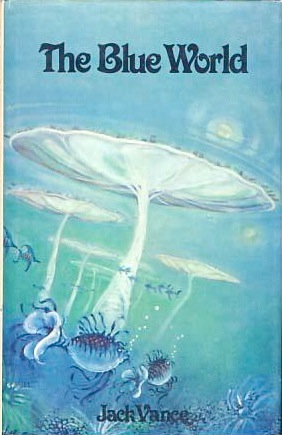
- The Blue World
Jack Vancestandalone novel1966
similar byother star systemsadventurousscience fictionsurvival
The Blue World is a science fiction adventure novel by American writer Jack Vance. The novel is based on Vance's earlier novella The Kragen, which appeared in the July 1964 edition of Fantastic.
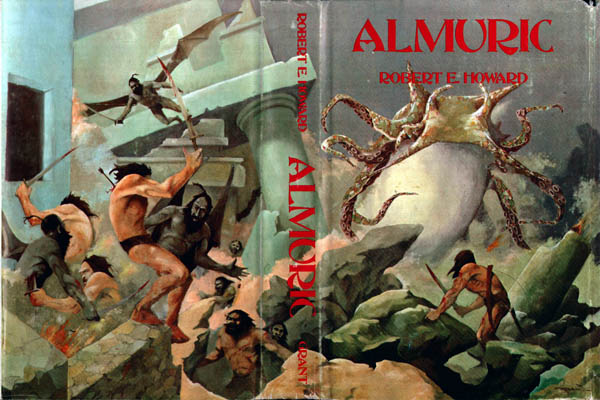
- Almuric
series1 book1964
similar bytransported to another worldadventuroussurvivalfantasy+1 more
Published posthumously in 1964, Robert E. Howard's Almuric is a single planetary-romance novel rather than an ongoing series: Earthman Esau Cairn is transported to the savage world of Almuric, where he fights beast-men and wins the love of Altha, in a story indebted to Edgar Rice Burroughs' Barsoom books.
- Deathworld
series4 books1960
completed
similar byother star systemsadventurousscience fictionsurvival+1 more
Deathworld is the name of a series of science fiction novels by American writer Harry Harrison, including the books Deathworld, Deathworld 2 and Deathworld 3, plus the short story "The Mothballed Spaceship". The central hero is a gambler who becomes involved with colonists of an extremely hostile planet.
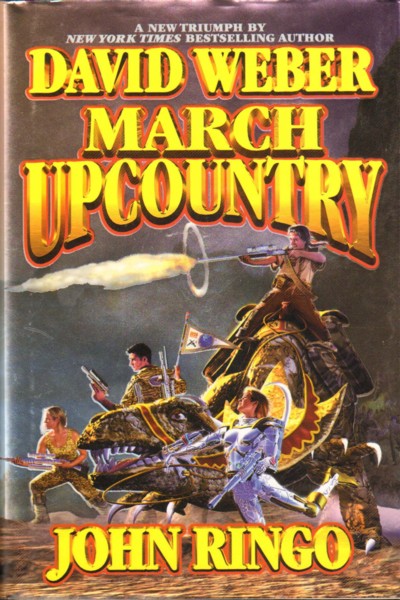
- Empire of Man
series4 books2001
similar byother star systemsadventuroustensescience fictionsurvival
The Empire of Man is a series of science fiction books by David Weber and John Ringo published by Baen Books. It combines elements of space opera and military science fiction.
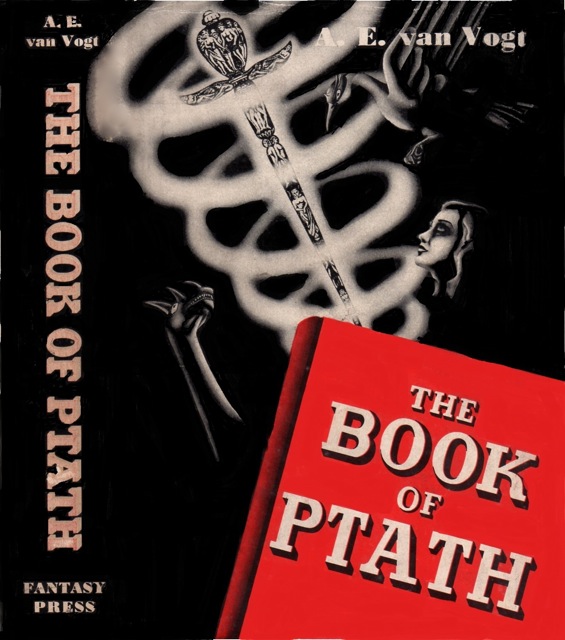
- The Book of Ptath
A. E. van Vogtstandalone novel1947
similar byadventurousscience fictionsurvivalscience fantasy+3 more
Ptath, a very powerful god, is throwing by his deadly rival, the goddess Ineznia, on Earth, around 200,000,000 AD, in the form of a mortal, where he has to face numerous dangers to survive.
- The Lost Regiment
series9 books1990
similar bytensescience fictionadventuroussurvival+1 more
William R. Forstchen's Lost Regiment series begins with Rally Cry, in which a Civil War Union regiment is swept onto a distant world where humans transplanted from many eras and cultures are farmed as food by an alien race. Arriving with nineteenth-century gunpowder weapons and organized tactics, the regiment's survivors fight to build a defensible nation and turn the war back on their captors, a conflict that escalates across nine novels of technology, politics, and generations.
- The Stars My Destination
Alfred Besterstandalone novel1956
similar byadventurousother star systemsscience fictionsurvivalidentity
When a passing spaceship refuses to rescue the lone survivor from the drifting wreck of another ship, he dedicates his life to discovering who made that decision and exacting his revenge, in the process altering human history and his own character.
- Have Space Suit - Will Travel
Robert A. Heinleinstandalone novel1958
similar byadventuroustensescience fictionsurvival+1 more
From the back cover of the Del Rey 9th printing: "Skyjacked - Everything happened at once. One minute Kip Russell was walking about in his own backyard, testing out an old space suit and dreaming about going to the moon - and the next he was out cold and the captive of an insidious space pirate. The whole thing seemed like a very bad dream until he discovered he wasn't the only prisoner on board. Then the reality of the situation became inescapable. He - along with the daughter of a world-renowned scientist and a beautiful creature from an alien planet - had been skyjacked by a monstrous extraterrestrial and they were on their way to the Moon... a journey toward a fate worse than death!"
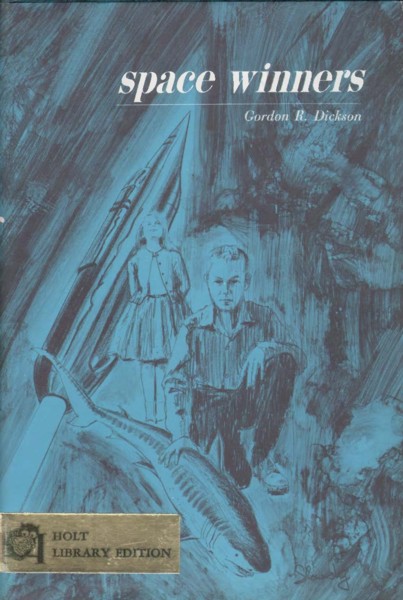
- Space Winners
Gordon R. Dicksonstandalone novel1965
similar byother star systemsadventuroustensescience fictionsurvival
They were humanity's hope - the first young people selected to leave Earth for study in the Galactic Federation. But something went wrong in deep space. Terribly wrong. Suddenly Jim Rawlins, Ellen Bouvier, Curt Harrington, and the squirrel-like Alien philosopher Peep were castaways, stranded on the Quarantined World of Quebahr - with no training, and little hope of rescue. Between them and the Federation's emergency beacon were primitive Mauregs, aggressive Walats, lizard-like Noifs - plus danger, conspiracy, and the mystery of an impending high-tech war on a backward, peaceful planet. Without warning, the future of two worlds - Earth and Quebahr - depended on three young humans' ability to adopt and survive.
- Wolfling
Gordon R. Dicksonstandalone novel1969
similar byother star systemsadventuroustensescience fiction+1 more
From the flaps of the Baen/SFBC edition: "Is Earth merely the lost colony of a superior race? - She was well over six feet tall, and beautiful in a sculpted, abstract way. She had skin the color of white onyx, and her eyes... her eyes were large and feline - a startling lemon yellow in color. She was the Princess Afuan, one of the High-born, and she had chosen the Earthman Kim Keil to return to the Throne World with her - for she had decided that his performance in the bull-ring might amuse the Emperor. She didn't know that Jim was a bull-fighter only by virtue of six months' intensive training, nor that the bull was programmed - his behavior following and impressively fierce but unswerving pattern. Jim was just another wolfling to Afuan - a lesser being from a backward colony world. Jim, however, was keenly aware that he was playing a role, one which might prove to be extremely dangerous. Up until 10 years earlier, when their first ship had reached Alpha Centauri, the people of Earth hadn't even known that the vast Empire of human-occupied worlds existed. The discovery had been a profound shock. Had we evolved independently? Or were we merely descendants of the Empire's first space pioneers - a lost colony found at last, perhaps with devastating consequences? That's what Jim Keil had to find out. Chosen from among numerous highly qualified candidates - an anthropologist trained, mentally and physically, beyond the limits of his profession - it was his mission to observe the Throne World and the High-born... to determine whether or not they posed a threat to Earth. One thing was apparent from the start. The High-born were superior beings - physically taller and stronger than other humans, endowed with faster reflexes, superior mental capacity... and extraordinary technological resources. Their contempt for the new wolfling in their midst was open, their intrigues complex. An enormous gulf separated the people of the Throne World from Earthlings. But that gulf was not so wide that Jim couldn't recognize an enemy when he met one. Clearly, if he remained merely a passive observer of the High-born, he'd never survive among them."
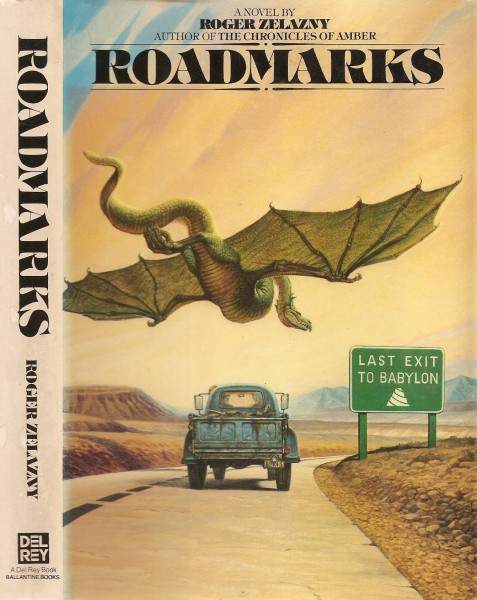
- Roadmarks
Roger Zelaznystandalone novel1979
similar byadventurousscience fantasyscience fiction+2 more
Roadmarks is a science fantasy novel by American author Roger Zelazny, written during the late 1970s and published in 1979.
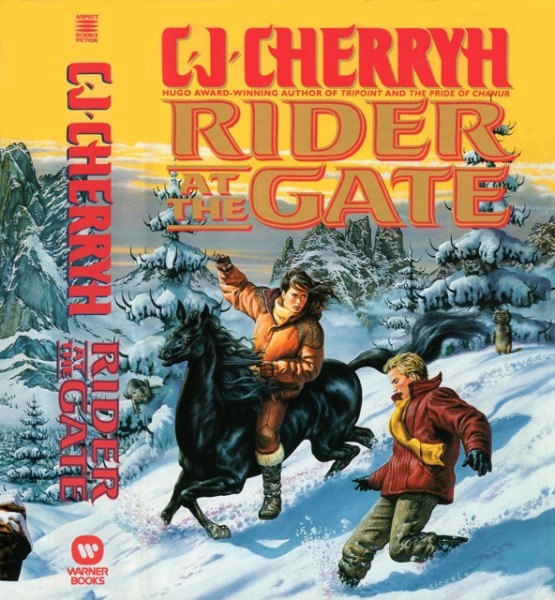
- Rider at the Gate
C. J. Cherryhstandalone novel1995
similar byother star systemsadventuroustensescience fictionsurvival
Rider at the Gate is a science fiction novel by American writer C. J. Cherryh, first published by Warner Books in August 1995. It is the first of a series of two novels written by Cherryh and is set in the author's Finisterre universe. The second book in the series, Cloud's Rider, was published in September 1996. The series is about the descendants of lost colonists stranded many generations ago on the hostile planet of Finisterre.
- Barsoom
series53 books1917
similar byadventurousscience fictionscience fantasy+1 more
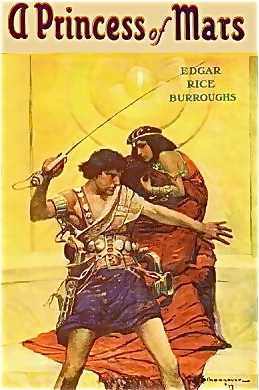
Barsoom is a fictional representation of the planet Mars created by American pulp fiction author Edgar Rice Burroughs. The first Barsoom tale was serialized as Under the Moons of Mars in pulp magazine The All-Story from February to July 1912 and published compiled as a novel as A Princess of Mars in 1917. It features John Carter, a late-19th-century American Confederate veteran who is mysteriously transported from Earth to the dying world of Mars where he meets and romances the beautiful Martian princess Dejah Thoris. Ten sequels followed over the next three decades, further extending his vision of Barsoom and adding other characters.
- West of the Sun
Edgar Pangbornstandalone novel1953
similar byother star systemsadventurousscience fictionsurvival+1 more
From the back cover of the Dell first paperback printing: "After eleven years in space the Argo landed... West of the Sun ... on the dangerous planet Lucifer. The crew faced and untamed world of huge carnivorous birds with wolverine heads and flashing black teeth; furred, ten-foot tall men; red-skinned man-eating pygmies. They fought for mere survival but - their duty was to colonize and populate the planet - four men and only two women."
- Catteni Sequence
series5 books1970
completed
similar byother star systemsadventurousscience fiction+2 more
The Catteni series is a tetralogy of science fiction novels by American writer Anne McCaffrey. In this universe, humans are slaves of aliens, the humanoid Catteni. Woven through all four of the books are details of the relationship between Kristin Bjornsen, a former slave, and Zainal, a renegade Catteni.
- Chanur
series7 books1982
part of Alliance-Union Universe
similar byother star systemsadventuroustensescience fiction
The Chanur novels are a series of five science fiction novels, forming three separate stories, written by American author C. J. Cherryh and published by DAW Books between 1982 and 1992. The first novel in the series is The Pride of Chanur (1982), which was nominated for both the Hugo and Locus Awards in 1983. The Pride of Chanur, originally a stand-alone story, was followed by the Chanur's Venture trilogy, Chanur's Venture (1984), which was shortlisted for a Locus Award in 1985; The Kif Strike Back (1985) and Chanur's Homecoming (1986). These were followed by a later sequel, Chanur's Legacy (1992). The five novels were also published in two omnibus editions: the first three in The Chanur Saga in 2000 and the next two in Chanur's Endgame in 2007.
- Prison Planet
William C. Dietzstandalone novel1989
similar byother star systemsadventuroustensescience fictionsurvival
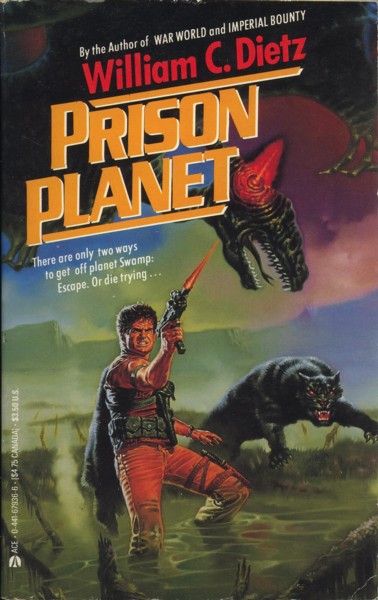
Convicted of a crime he did not commit, Jonathan Renn is sentenced to life in the Swamp, a prison planet death row in a distant galaxy. Renn only has two choices, escape the Swamp or die in the process. Defending himself from attacks by deadly, native monster and his fellow convicts, Renn is obsessed with escaping the planet and getting his revenge on the people who set him up. Marla Marie Mendez is even more down on her luck. Trapped inside a cybernetic dog and dropped defenseless into the Swamp, Marla can only rely on Renn and her claws to save her from the unfriendly elements. They must find a way out of the Swamp and quick before their life sentence is cut short.
- Dwellers in the Mirage
A. Merrittstandalone novel1932
similar bytransported to another worldadventurousidentityfantasy
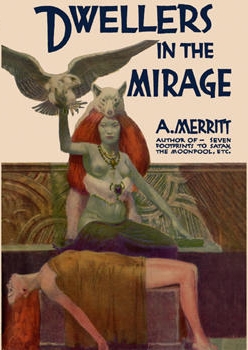
From the back cover of the Avon 1976 printing: Angry warrior, modern man - Leif Langdon was suddenly ripped from the 20th century and plunged into the ancient world of The Mirage. But his entrance into this awesome land awakened the slumbering Dwayanu, who in this strange incarnation was also Lief. This, two-men-in-one battle with the beautiful witch-woman Lur and the ethereal beauty Evalie for the glory of the Mirage.
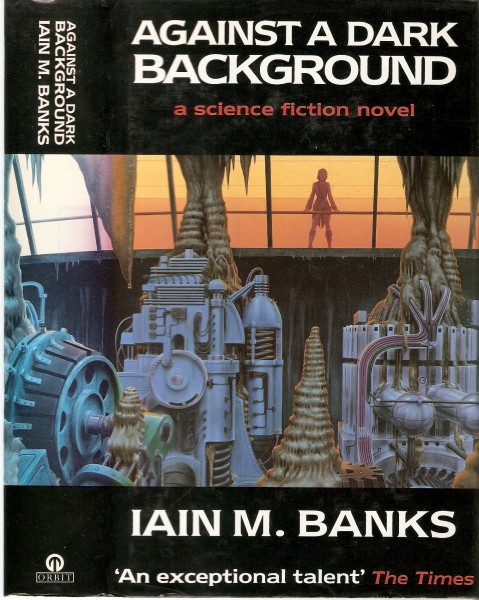
- Against a Dark Background
Iain M. Banksstandalone novel1993
similar byother star systemsadventuroustensescience fiction
The daughter of an impoverished noble house and her squad of soldiers become thieves of antiquities; long after their retirement and separation she must assemble them again in order to find and steal the most powerful weapon ever created, or pay with her life.
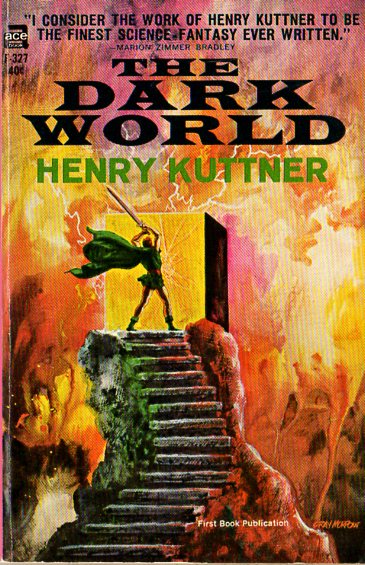
- The Dark World
Henry Kuttnerstandalone novel1965
similar byadventuroustransported to another worldscience fantasyfantasy+1 more
The Dark World is a science fantasy novel credited to Henry Kuttner, although his wife C. L. Moore may have been an uncredited collaborator, or possibly even the author. The novel was first published in the July 1946 issue of Startling Stories, then reprinted in the Winter 1954 issue of Fantastic Story Magazine. Its first book edition was issued by Ace in 1965, followed by a British edition by Mayflower Books in 1966. A French translation appeared in 1972. The novel was reprinted in full in Issue #5 of Amberzine in 1992, and also collected in a 1997 paperback omnibus, The Startling Worlds of Henry Kuttner. Roger Zelazny, author of The Chronicles of Amber, credits this book as being one of his primary influences during his youth.