More like Ribofunk
anchored on:science fictiongenetic engineeringnorth americanear futurecyberpunkdark+1 more
but
- Blood Music
Greg Bearstandalone novel1985
similar bydarkgenetic engineeringnear futurescience fictioncyberpunknorth america+1 more
Blood Music is a 1985 science fiction novel by American writer Greg Bear. It is an expanded version of a short story of the same title, originally published in the June 1983 issue of Analog and the winner of both the 1983 Nebula and 1984 Hugo awards for Best Novelette. The novel won the 1986 Prix Apollo Award, given to the best science fiction novel published in France during the preceding year, under the title La Musique du sang.
- Sprawl Trilogy
series10 books1981
similar bydarknear futurescience fictioncyberpunkartificial intelligencebig city
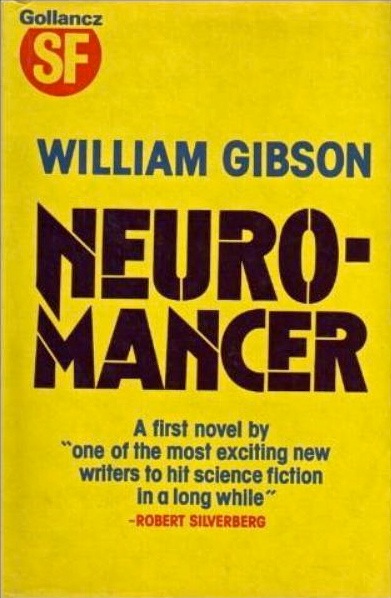
The Sprawl Trilogy is William Gibson's foundational cyberpunk sequence: Neuromancer (1984), in which hacker Case is drawn into a high-stakes heist alongside an artificial intelligence and a damaged ex-soldier, followed by Count Zero (1986) and Mona Lisa Overdrive (1988), which widen the same near-future world of corporate power and networked cyberspace to new characters. Johnny Mnemonic, an early short story set in the same fictional milieu, predates the novels and introduces the courier Molly Millions before her role in the trilogy. Together these works established much of cyberpunk's visual and thematic vocabulary.
- Blade Runner Universe
series6 books1968
similar bydarknear futurescience fictioncyberpunkbig city+1 more
Philip K. Dick's 1968 novel Do Androids Dream of Electric Sheep? follows bounty hunter Rick Deckard as he tracks escaped androids through an irradiated, near-abandoned San Francisco, using the hunt to probe questions of empathy and what separates human from machine. The novel became the basis for Ridley Scott's 1982 film Blade Runner, and Marvel Comics later published an illustrated adaptation of that film. Together the two trace the story's path from prose original to screen and comic-page adaptation.
- Player Piano
Kurt Vonnegut & Jr.standalone novel1952
similar bydarknear futurescience fictionnorth americaartificial intelligenceclass conflict
In the near future, when cybernetic automation has effectively separated people into two castes, the "engineers and managers", and the remainder of the population who can find work only in "recycling and reclamation" or the largely useless military, an underground movement arises with the intention of rolling back those changes and giving the masses the dignity of owning their own, productive, work once more.
- Stand on Zanzibar
John Brunnerstandalone novel1968
similar bydarknear futurescience fictiongenetic engineeringbig city+1 more
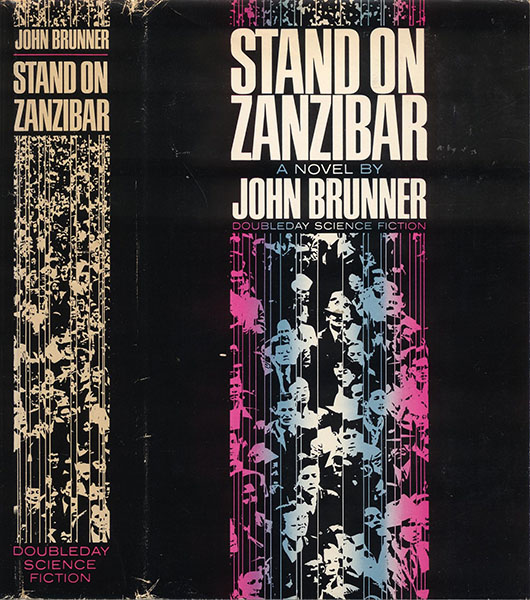
Stand on Zanzibar is a dystopian New Wave science fiction novel written by John Brunner and first in part published in New Worlds magazine in 1967 and in book form in 1968. The book won a Hugo Award for Best Novel at the 27th World Science Fiction Convention in 1969, as well as the 1969 BSFA Award and the 1973 Prix Tour-Apollo Award.
- Feed
M. T. Andersonstandalone novel2002
similar bydarknear futurescience fictionnorth americacyberpunk+2 more
Feed (2002) is a cyberpunk, satirical, dystopian, young-adult novel by M. T. Anderson, focusing on issues such as American hegemony, corporate power, consumerism, information technology, data mining, and environmental decline, with a sometimes sardonic, sometimes somber tone. From the first-person perspective of a teenaged boy, the book takes place in a near-futuristic American culture completely dominated by advertising and corporate exploitation, corresponding to the enormous popularity of internetworking brain implants called feeds.
- MaddAddam
series3 books2003
similar bydarkgenetic engineeringnear futurescience fictionnorth america+1 more
Margaret Atwood's MaddAddam trilogy (Oryx and Crake, The Year of the Flood, MaddAddam, 2003-2013) is set around a genetically engineered pandemic unleashed deliberately by the brilliant, disillusioned scientist Crake, who intends the deadly 'BlyssPluss' pill to wipe out humanity and clear the way for the gentler, engineered Crakers he has designed to replace it. Told from the perspectives of survivors including Crake's old friend Jimmy (now calling himself Snowman), the trilogy pieces together the pandemic's causes and its aftermath from multiple, overlapping vantage points.
- The Windup Universe
series3 books2005
similar bydarkgenetic engineeringnear futurescience fiction+2 more
- The Shockwave Rider
John Brunnerstandalone novel1975
similar bydarknear futurescience fictionnorth americacyberpunkbig city
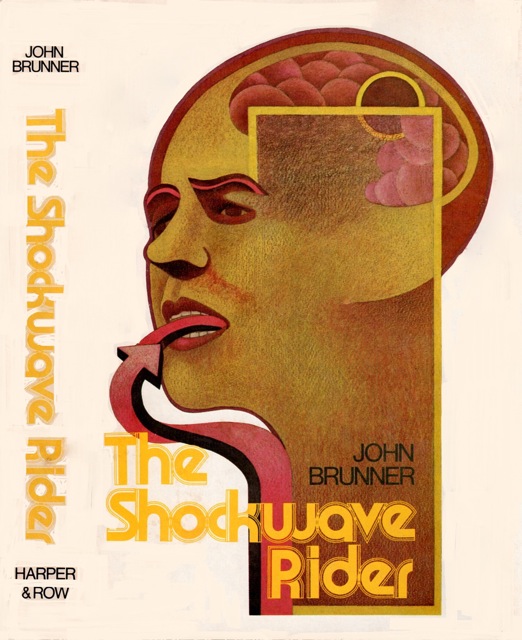
The Shockwave Rider is a science fiction novel by John Brunner, originally published in 1975. It is notable for its hero's use of computer hacking skills to escape pursuit in a dystopian future, and for the coining of the word "worm" to describe a program that propagates itself through a computer network. It also introduces the concept of a Delphi pool, perhaps derived from the RAND Corporation's Delphi method – a prediction market on world events which bears close resemblance to DARPA's controversial and cancelled Policy Analysis Market.
- Slow River
Nicola Griffithstandalone novel1995
similar bydarknear futurescience fictiongenetic engineeringcyberpunkclass conflictbig city
Slow River is a science fiction novel by British writer Nicola Griffith, first published in 1995. It won the Nebula Award for Best Novel and the Lambda Literary Award. The novel received critical praise for its writing and setting, while its use of multiple narrative modes was criticised.
- Fairyland
Paul J. McAuleystandalone novel1995
similar bydarkgenetic engineeringnear futurescience fictioncyberpunkartificial intelligence
In a near-future Europe, gene-hacker Alex Sharkey has created a new life form: fairies - genetically-altered dolls with human intelligence. As the fairies develop their own societies, it become apparent that one group has sinister intentions, and Sharkey must try and put an end to their plans.
- Make Room! Make Room!
Harry Harrisonstandalone novel1966
similar bydarknear futurescience fictionnorth americaclass conflictbig city
Make Room! Make Room! is a 1966 science fiction novel written by Harry Harrison exploring the consequences of both unchecked population growth on society and the hoarding of resources by a wealthy minority. It was originally serialized in Impulse magazine.
- Gladiator-at-Law
C. M. Kornbluth & Frederik Pohlstandalone novel1955
similar bydarknear futurescience fictionnorth americaclass conflictbig city
Gladiator-At-Law is a satirical science fiction novel by American writers Frederik Pohl and Cyril M. Kornbluth. It was first published in 1955 by Ballantine Books and republished in 1986 by Baen Books.
- Bridge Trilogy
series4 books1990
similar bynear futurescience fictioncyberpunknorth americabig city+2 more
The Bridge trilogy is a series of novels by William Gibson, his second after the successful Sprawl trilogy. The trilogy comprises the novels Virtual Light (1993), Idoru (1996) and All Tomorrow's Parties (1999). A short story, "Skinner's Room", was originally composed for Visionary San Francisco, a 1990 museum exhibition exploring the future of San Francisco.
- Earthseed
series7 books1993
similar bydarknear futurescience fictionnorth america
Octavia E. Butler's Earthseed novels, Parable of the Sower and Parable of the Talents, follow Lauren Olamina as she survives the collapse of a climate-ravaged, near-future United States and founds a belief system built on the idea that "God is Change." The two-book series was left unfinished at Butler's death; a planned third novel, Parable of the Trickster, was never completed. Later graphic-novel adaptations retell the same two stories rather than continuing the narrative.
- The Sheep Look Up
John Brunnerstandalone novel1972
similar bydarknear futurescience fictionnorth americabig city
The Sheep Look Up is a 1972 dystopian science fiction novel by British author John Brunner, dealing with the deterioration of the environment in the United States. It was nominated for the 1972 Nebula Award for Best Novel.
- Company Town
Madeline Ashbystandalone novel2016
similar bydarknear futurescience fictiongenetic engineeringcyberpunknorth americabig city+1 more
**2017 Winner of the Sunburst Award Society's Copper Cylinder Adult Award 2017 Canada Reads Finalist 2017 Locus Award Finalist for Science Fiction Novel Category 2017 Sunburst Award Finalist for Adult Fiction 2017 Aurora Awards Finalist for Best Novell** New Arcadia is a city-sized oil rig off the coast of the Canadian Maritimes, now owned by one very wealthy, powerful, byzantine family: Lynch Ltd. Hwa is of the few people in her community (which constitutes the whole rig) to forgo bio-engineered enhancements. As such, she’s the last truly organic person left on the rig–making her doubly an outsider, as well as a neglected daughter and bodyguard extraordinaire. Still, her expertise in the arts of self-defense and her record as a fighter mean that her services are yet in high demand. When the youngest Lynch needs training and protection, the family turns to Hwa. But can even she protect against increasingly intense death threats seemingly coming from another timeline? Meanwhile, a series of interconnected murders threatens the city’s stability and heightens the unease of a rig turning over. All signs point to a nearly invisible serial killer, but all of the murders seem to lead right back to Hwa’s front door. Company Town has never been the safest place to be–but now, the danger is personal. A brilliant, twisted mystery, as one woman must evaluate saving the people of a town that can’t be saved, or saving herself.
- Space Merchants
series2 books1953
completed
similar bydarknear futurescience fictionclass conflict+1 more
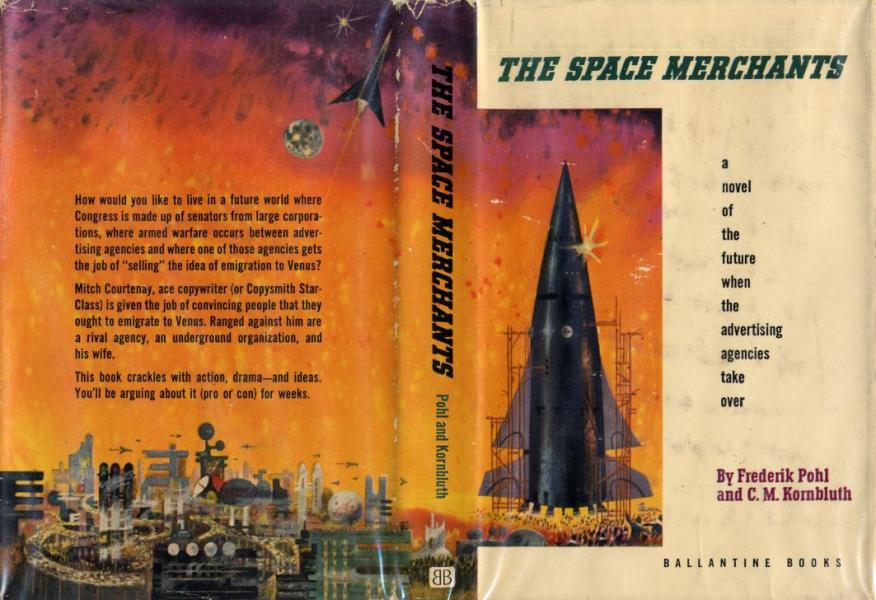
The Space Merchants (1953) is a satirical science fiction novel by Frederik Pohl and C. M. Kornbluth that follows an advertising executive navigating a future where aggressive consumer capitalism has swallowed politics and daily life. The authors reunited three decades later for a direct sequel, The Merchants' War (1984), returning to the same satirical world. Together the two books form a compact bookend pair rather than an ongoing series.
- Hardwired
series3 books1986
similar bynear futurescience fictioncyberpunk+5 more
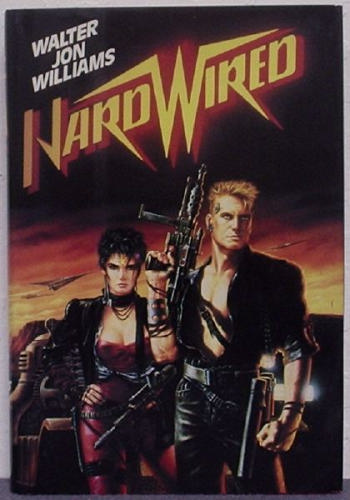
Walter Jon Williams' Hardwired (1986) is an early and influential cyberpunk novel. Voice of the Whirlwind, published three years later, is a loosely connected follow-up set in the same future, sharing its technological and political backdrop with a different cast of characters.
- The Handmaid's Tale
series3 books1985
similar bydarknear futurescience fictionnorth america
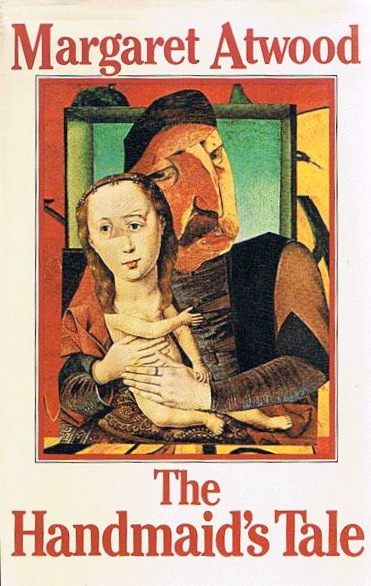
The Handmaid's Tale is Margaret Atwood's 1985 novel set in Gilead, a totalitarian theocracy that has overthrown the United States and forces fertile women into reproductive servitude as Handmaids; it is narrated by one such woman, Offred. Atwood returned to the world in her 2019 sequel The Testaments, set fifteen years later and narrated by three women, including the regime's Aunt Lydia. Together the two novels move from Gilead's grip on power toward the first cracks in it.
- Hugo Cornelius Toorop Universe
series1 book1999
similar bydarknear futurescience fictiongenetic engineeringcyberpunk+1 more
- The Supernaturalist
Eoin Colferstandalone novel2004
similar bydarknear futurescience fictioncyberpunkbig city+1 more
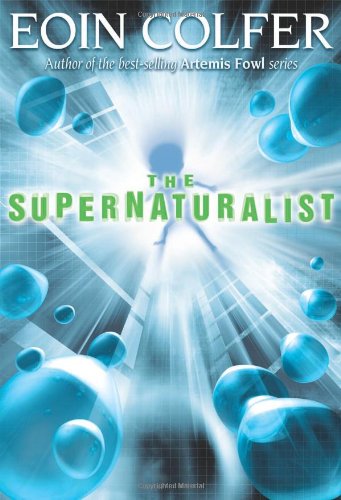
The Supernaturalist is a science fiction cyberpunk novel by Irish author Eoin Colfer. The book was influenced by film noir and other predecessors of the cyberpunk science fiction movement. Colfer has outlined plans for a sequel, Avernus.
- Immunity Index
Sue Burkestandalone novel2021
similar bydarkgenetic engineeringnear futurescience fictionnorth america+1 more
"Sue Burke, author of Semiosis and Interference, gives readers a new near-future, hard SF novel. Immunity Index blends Orphan Black with Contagion in a terrifying outbreak scenario. In a US facing growing food shortages, stark inequality, and a growing fascist government, three perfectly normal young women are about to find out that they share a great deal in common. Their creator, the gifted geneticist Peng, made them that way--before such things were outlawed. Rumors of a virus make their way through an unprotected population on the verge of rebellion, only to have it turn deadly. As the women fight to stay alive and help, Peng races to find a cure-- and the cover up behind the virus"--
- When She Woke
Hillary Jordanstandalone novel2011
similar bydarknear futurescience fictiongenetic engineeringnorth america
When She Woke is a science fiction novel by American author Hillary Jordan, published in October 2011. It has been translated into French, Spanish, Turkish, German, Portuguese and Chinese. The novel is a dystopian reimagining of Nathaniel Hawthorne's The Scarlet Letter, set in a future theocratic America where rather than being imprisoned and rehabilitated, criminals are punished by being "chromed" – having their skin color genetically altered to fit their crime – and released into the general population to survive as best they can.