More like Rip-Off!
anchored on:science fictionshort story cyclefantasyart and artistsbooks and readingnear future
but
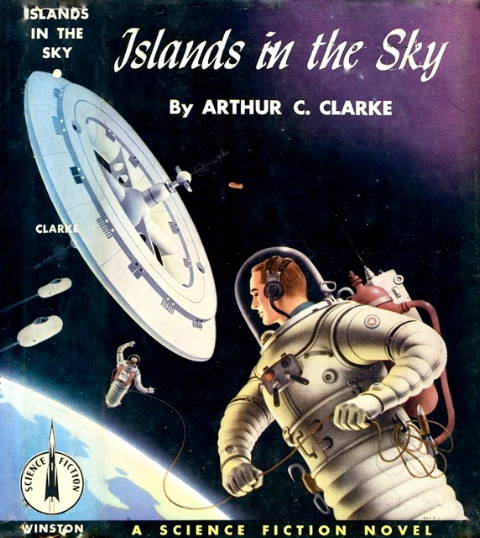
- Islands in the Sky
Arthur C. Clarkestandalone novel1952
similar byspacenear futurescience fictionspace exploration
Islands in the Sky is a 1952 science fiction novel by British writer Arthur C. Clarke. It is one of his earliest works. Clarke wrote the story as a travelogue of human settlement of cislunar space in the last half of the twenty-first century.
- Podkayne of Mars
Robert A. Heinleinstandalone novel1963
similar byspacenear futurescience fiction+1 more
From the back cover of the Baen 1995 edition: "Meet Podkayne Fries, a thoroughly modern Martian Ms. who thinks that Earth is not really fit for habitation and that humanity evolved in the now-exploded Fifth Planet. Poddy has one goal in life, to be the first female starship captain. She has her strategy all scoped out, and with her determination, looks and I.Q. she'll get there, never you doubt! But all work and no play would make Poddy a Dull Girl, so when a chance comes her way to travel to distant Earth via Venus with her elderly uncle, Poddy jumps at it, even if it does mean having her loathsome little brother along for the trip: Travel, Adventure, the chance to cuddle up (in a nice way) with real spaceship officers and ruthlessly pump their brains - she'll have it all. What Poddy doesn't know is that "Unca Tom" is more than her warmly supportive relative: he is also the Ambassador Plenipotentiary from Mars to the Three Planets Conference (travelling not quite incognito enough) and that certain people will stop at nothing to gain control of his vote - including kidnapping and doing terrible things to sweetly innocent Poddy Fries..."
- Have Space Suit - Will Travel
Robert A. Heinleinstandalone novel1958
similar byspacenear futurescience fictionspace exploration
From the back cover of the Del Rey 9th printing: "Skyjacked - Everything happened at once. One minute Kip Russell was walking about in his own backyard, testing out an old space suit and dreaming about going to the moon - and the next he was out cold and the captive of an insidious space pirate. The whole thing seemed like a very bad dream until he discovered he wasn't the only prisoner on board. Then the reality of the situation became inescapable. He - along with the daughter of a world-renowned scientist and a beautiful creature from an alien planet - had been skyjacked by a monstrous extraterrestrial and they were on their way to the Moon... a journey toward a fate worse than death!"
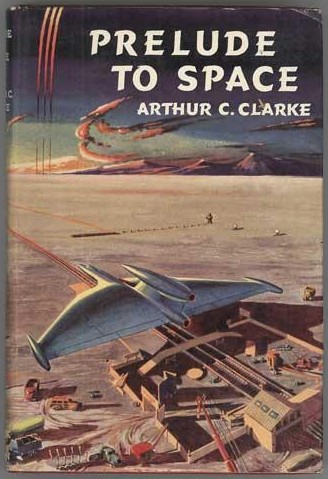
- Prelude to Space
Arthur C. Clarkestandalone novel1951
similar bynear futurescience fictionspace exploration+1 more
Prelude to Space is a science fiction novel written by British author Arthur C. Clarke in 1947. It appeared for the first time in 1951 as a paperback from World Editions Inc, as number three in its series of Galaxy novels. Sidgwick & Jackson published it in the UK in 1953, followed the next year by a United States hardcover edition from Gnome Press and a paperback from Ballantine Books.
- The Rolling Stones
Robert A. Heinleinstandalone novel1952
similar byspacenear futurescience fictionspace exploration
The Stone family, lunar-born, technically minded, and perpetually restless, buy a secondhand spaceship and set off from the Moon on a family tour of the solar system. Teenage twins Castor and Pollux have their own side hustle in mind, planning to buy up used bicycles on Mars and resell them at a markup, but a small furry souvenir picked up along the way, a Martian 'flat cat' bought for their little brother, turns out to have habits that could sink the whole trip's finances. Robert A. Heinlein's family adventure blends hard-edged space travel with comic domestic chaos.
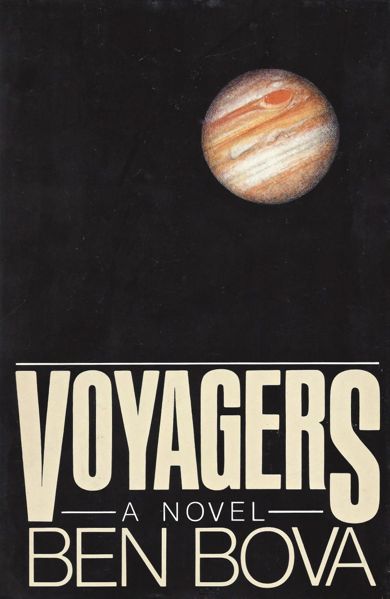
- Voyagers (Ben Bova)
series4 books1981
completed
similar bynear futurescience fiction+2 more
Ben Bova's Voyagers trilogy (Voyagers, 1981; Voyagers II: The Alien Within, 1982; Voyagers III: Star Brothers, 1990) is a space-opera romance built around first contact: a starship crewed by technologically advanced aliens approaches Earth, and the human response entangles politics, cross-species relationships, and advanced alien technology like biochips passed on to the human characters.
- Heart of the Comet
David Brin & Gregory Benfordstandalone novel1986
similar byspacenear futurescience fictionspace exploration
Heart of the Comet is a novel by David Brin and Gregory Benford about human space travel to Halley's Comet published in 1986. Its publication coincided with the comet's 1986 approach to the Earth.
- Manifold
series8 books1997
similar byspacescience fictionnear futurespace exploration
Manifold: Time, Manifold: Space, and Manifold: Origin follow overlapping characters through three mutually exclusive answers to the Fermi Paradox - why we appear to be alone in the universe - each book taking one answer seriously enough to build an entire future history around it. Stephen Baxter designed the trilogy to be read in any order, since it plays out across a multiverse rather than a single continuous timeline.
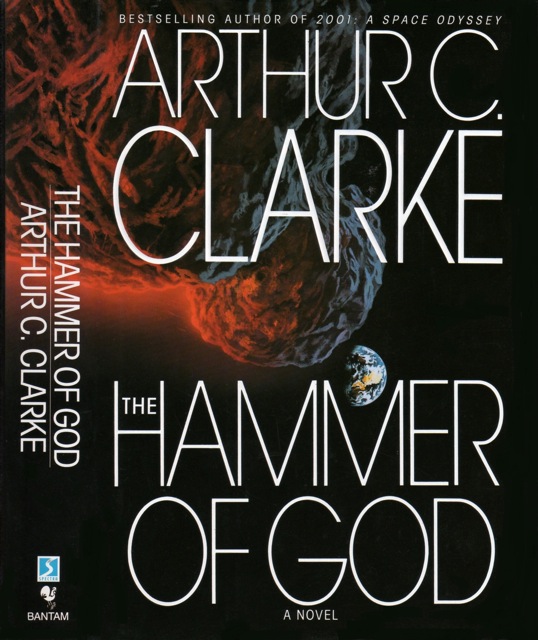
- The Hammer of God
Arthur C. Clarkestandalone novel1993
similar byspacenear futurescience fictionspace exploration
The Hammer of God is a science fiction novel by Arthur C. Clarke originally published in 1993. Set in the year 2109, it deals with the discovery of an asteroid to be on course to collide with Earth and depicts the mission for deflecting the asteroid by using fusion thermal rockets.
- Adventures of Viktor & Julia
series2 books1999
similar bynear futurescience fictionspace exploration+1 more
- Forge of God
series2 books1987
completed
similar byscience fiction+3 more
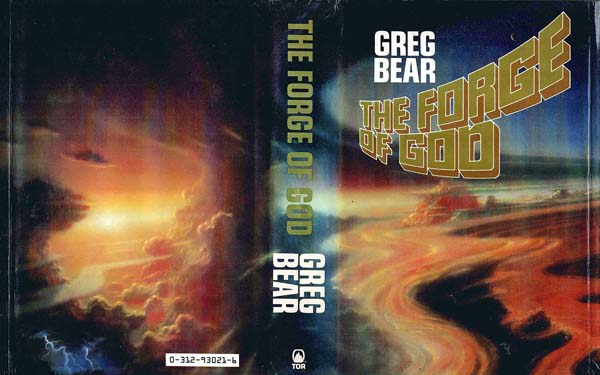
The Forge of God (1987) is Greg Bear's science fiction novel about Earth's discovery that it is the target of an incomprehensible, overwhelming alien attack, following scientists and ordinary people as they try to understand what is destroying the planet. Its 1992 sequel, Anvil of Stars, follows a group of young survivors sent on a mission of interstellar retaliation, continuing directly from the first book's ending.
- Stories of Other Worlds
series8 books1900
completed
similar byspacenear futurescience fictionspace exploration
- Thunder and Lightning
series4 books2003
completed
similar byspacenear futurescience fictionspace exploration
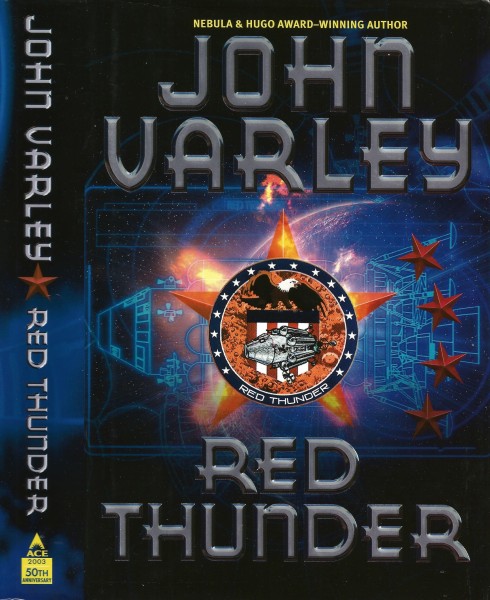
John Varley's Thunder and Lightning books follow the Broussard family across two generations as a backyard fusion-power breakthrough turns an eccentric Florida inventor's homemade spacecraft into the opening move of an independent human expansion to Mars and beyond. Red Thunder and Red Lightning follow the first generation's improvised trip to Mars; Rolling Thunder and Dark Lightning pick up decades later with their descendants.
- Gravity
Tess Gerritsenstandalone novel1999
similar byspacenear futurescience fictionspace exploration
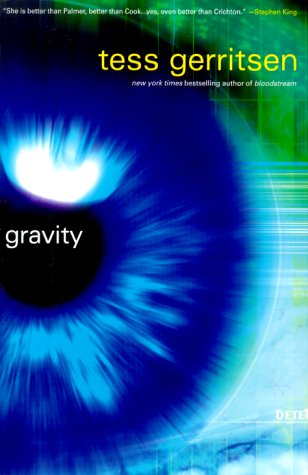
Medical thriller set aboard the International Space Station where astronauts are dying one by one from a mysterious disease. Dr Emma Watson is a research physician on a mission to study living organisms in space. But the mission aboard the space station turns into a nightmare.
- Fahrenheit 451
series2 books1951
completed
similar bynear futurescience fictionbooks and reading
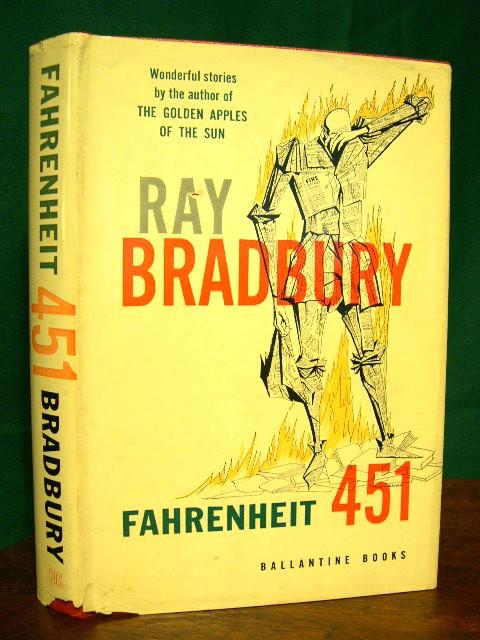
Fahrenheit 451 began life as "The Fireman," a novella Ray Bradbury published in 1951, which he then expanded into the full novel released in 1953 under its now-famous title. Set in a future where books are outlawed and firemen exist to burn them, it follows fireman Guy Montag as doubts about his job push him toward the very literature he's supposed to destroy. The novella and novel are one story's evolution rather than two separate books.
- Privateers
Ben Bovastandalone novel1985
similar byspacenear futurescience fictionspace exploration
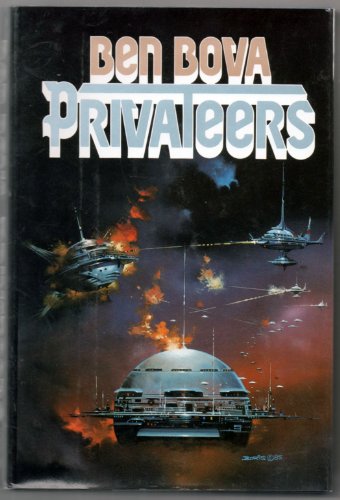
This latest of Grand Tour chronicles tells a brilliant tale of revenge, love, and freedom while also laying out a vision for the human future in Space. Setting itself up for a final confrontation between Soviet official Vasily Malik and American/Venezuelan industrialist Dan Randolph, this book reasonably describes how Third World Nations might take the lead in both liberty and space exploration as America withdraws from a world teeming with dictatorships.
- Here Comes the Sun
Tom Holtstandalone novel1993
similar byspacenear futurescience fictionspace exploration+1 more
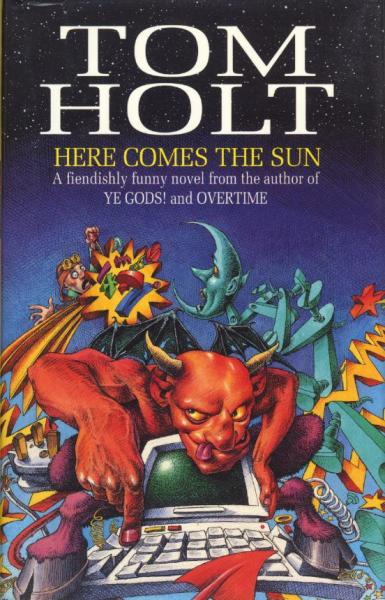
Here Comes the Sun is a 1993 science-fiction comedy novel by Tom Holt. The book was published in the UK by Orbit Books and is Holt's first comic science fiction novel.
- To the Stars (Leinster)
series3 books1953
completed
similar byscience fictionnear futurespace exploration+1 more
Murray Leinster's Joe Kenmore trilogy follows a master machinist's son through the Cold War-era race to build and defend America's first space station, then a rescue tug, and finally a lunar outpost, in three techno-thriller adventures blending realistic 1950s spaceflight speculation with sabotage plots. Space Platform (1953) introduces Kenmore amid attempts to sabotage the orbital station project; Space Tug and City on the Moon carry the same hardware-focused approach into orbit and onto the Moon.
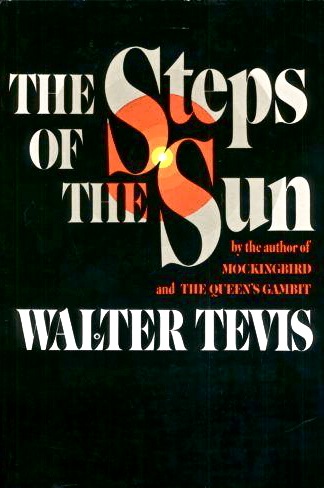
- The Steps of the Sun
Walter Tevisstandalone novel1983
similar byspacenear futurescience fictionspace exploration
The Steps of the Sun is a 1983 science fiction novel by the American author Walter Tevis. It is about a future energy crisis, and a world in which China has become the leading superpower.
- Earth
David Brinstandalone novel1990
similar bynear futurescience fiction+1 more
Earth is a 1990 science fiction novel by American writer David Brin. The book was nominated for the Hugo and Locus Awards in 1991.
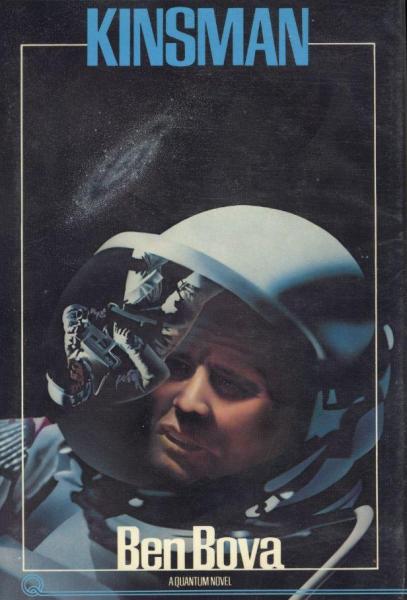
- Kinsman
series8 books1965
completed
similar byscience fictionnear future+2 more
Ben Bova's Kinsman novels follow Chester 'Chet' Kinsman, an American astronaut and later general, across a Cold War-shadowed career in space that spans from early orbital missions to lunar colonization and the militarization of space. The Kinsman Saga later combined and revised the earlier novels into a single continuous narrative. It was written and expanded across the late 1970s and 1980s.
- The Wailing Asteroid
Murray Leinsterstandalone novel1960
similar byspacenear futurescience fiction+1 more
The Wailing Asteroid is a science-fiction novel written by Murray Leinster and first published in 1960 by Avon Books. It presents the theme of the lone inventor who saves Earth from cosmic danger and introduces humanity to an unknown civilization. The novel was adapted for film by John Brunner as The Terrornauts in 1967.