Loreful
HomeDiscover
Search series, authors…⌘K
Loreful

Reading orders for SF/F series and shared universes — with your place kept in every one.

Explore

UniversesSeriesWorksAuthorsAtlas

Help

FAQAboutSite map

Account & legal

Sign inCreate accountPrivacyTerms

Data

Built on ISFDB, Wikipedia, Wikidata and Open Library. Curated reading orders carry their reasoning on the page; the rest follow publication order. Data sources & licenses

© Loreful · data: ISFDB · CC BY

More like Robber Barrons

but

Mood

The mood the book leaves you in.

  • The reading experience is propelled by journeys, exploration, and physical risk; excitement and forward momentum dominate over dread or introspection.
  • Joy and loss are deliberately mixed; the resolution grants characters something real while taking something else away, leaving warmth and sorrow together.
  • The book demands work from the reader — dense prose, difficult structure, unfamiliar ideas, or morally uncomfortable material — as part of its intended effect.
  • Grim events, cruelty, or despair dominate the atmosphere, and the book does not soften them with comfort or comic relief.
  • The atmosphere is quietly unsettling — wrongness, unease, and the uncanny pervade the book without necessarily escalating into overt horror.
  • The book is built to move the reader; character feeling is foregrounded and major scenes aim at a strong emotional response.
  • Humor is a primary aim and the prose plays for laughs — comic situations, wit, or dialogue produce sustained comedy, not occasional levity.
  • The book insists that things can improve; effort and decency are shown to matter, and the arc bends toward better outcomes even through hardship.
  • The book teaches as it goes — real facts, history, science, or craft are conveyed in enough depth that learning is part of the reading experience.
  • The book is designed to uplift and motivate, presenting perseverance or achievement in a way that invites the reader to aspire or act.
  • The overall register is cheerful and easygoing; stakes are kept gentle and the book avoids dwelling on pain or dread.
  • Withheld information drives the experience; the book sustains enigmas and secrets the reader wants resolved, whatever its genre.
  • The book is contemplative and inward-looking, giving more weight to thought, memory, and meaning than to external events.
  • The book works as comfort reading — low tension, a soothing pace, and an atmosphere the reader can unwind in.
  • Grief, loss, or melancholy set the dominant register, and the book lets sorrow stand rather than resolving it into comfort.
  • Sustained suspense is the point; the book keeps the reader braced for what happens next through danger, pressure, or impending revelation.
  • Playful invention and charm define the register — fanciful conceits, light absurdity, and a narration that delights in its own oddity.

About

What the story runs on.

  • Stories in which extraterrestrial beings are central — as characters, cultures, or the object of the plot.
  • Stories structured as a quest — a journey undertaken to find, deliver, or destroy something of great import.
  • Stories in which staying alive against nature, catastrophe, or scarcity is the central problem.
  • Stories of lovers kept apart by law, family, faith, or station, where the obstacle to love is the plot.
  • Stories in which a friendship — its making, testing, or loss — is the emotional center.
  • Stories of growing up — a young protagonist crossing from childhood into adult knowledge and responsibility.
  • Stories about who a character truly is — self-discovery, doubled lives, and the search for a self.
  • Stories about mourning — living through the death of a loved one and what loss does to the survivors.
  • Stories in which a buried family truth — hidden parentage, crimes, or shames — surfaces and reorders the present.
  • Stories driven by maneuvering for power — factions, conspiracies, and statecraft conducted in shadow.
  • Stories in which war itself is the subject — combat, occupation, and what warfare does to soldiers and civilians.
  • Stories organized around investigating a killing — the case, the clues, and the pursuit of the killer, in any genre's clothing.

Shelf

Where it sits in the library.

    • Fiction built on magic or other supernatural elements that have no scientific explanation.
    • Secondary-world fantasy at large scale, where the fate of nations or the world turns on the protagonists' struggle.
    • Fantasy set in a recognizably modern city or contemporary world where the supernatural intrudes on everyday life.
    • Fantasy that blends in horror's atmosphere and imagery, keeping a fantastical frame around grim or frightening material.
    • Action-driven fantasy following warriors or rogues with personal stakes against sorcerous threats, rather than world-spanning conflicts.
    • Fantasy set in a real historical period or a close analogue of one, with magic woven into the era.
    • Fantasy in which protagonists cross from the ordinary world into another world through a portal or similar passage.
    • Fiction that retells or reworks a traditional fairy tale in a new form or setting.
    • Fantasy drawing directly on myths, legends, and folklore, retelling them or building on their figures and logic.
    • Fantasy of ghosts, vampires, shapeshifters, psychics, and similar phenomena, usually set in an otherwise ordinary world.
    • Fiction mixing science-fictional trappings with overtly magical or impossible elements in one setting.
    • Low-stakes fantasy emphasizing comfort, community, and everyday pleasures over conflict and peril.
    • Speculative fiction of pervasive moral ambiguity, violence, and cynicism that rejects heroic conventions — fantasy and SF alike.
      • Fiction that extrapolates from science and technology — future societies, space travel, or speculative inventions — within at least nominally natural laws.
      • Science fiction of interstellar scope — starships, galactic polities, and adventure across star systems.
      • Science fiction committed to scientific rigor, where technical plausibility constrains the story.
      • Science fiction centered on armed forces and warfare, told largely from a military point of view.
      • Science fiction of networked, corporate-dominated near futures, pairing high technology with social decay.
      • Science fiction styled on nineteenth-century steam-powered technology, often in a Victorian or pseudo-Victorian setting.
      • Fiction depicting an oppressive or catastrophic society, presented as a warning.
      • Fiction set after civilization's collapse, following survivors in the ruins of the old world.
      • Fiction in which characters move between past and future, and the mechanics or consequences of that travel drive the plot.
      • Fiction exploring a world where a historical event went differently and history diverged from ours.
      • Science fiction about humanity's first encounter and communication with an alien intelligence.
      • Science fiction in which extraterrestrial forces attack or occupy Earth and humanity resists.
      • Fiction whose primary aim is to frighten or unsettle the reader through dread, menace, or the monstrous.
      • Horror of vast, indifferent, incomprehensible entities before which humanity is insignificant, in the Lovecraft tradition.
      • Horror of decaying houses, buried family secrets, and oppressive atmosphere in the Gothic literary tradition.
      • Horror centered on hauntings and the returning dead.
      • Horror located in the mind — paranoia, obsession, and unreliable perception rather than external monsters.
      • Horror built around the reanimated dead and survival amid their outbreaks.
      • Horror defined by explicit, transgressive gore that refuses to cut away from violence.
      • Speculative fiction of the strange and uncanny that resists both natural explanation and standard genre categories.
      • Fiction organized around solving a crime or puzzle, typically following an investigator toward the identification of a culprit.
      • A puzzle-first mystery that lays out clues so the culprit's identity can be deduced before the reveal.
      • Crime fiction of moral ambiguity, fatalism, and hard-edged style, set among the corrupt and the doomed.
      • A mystery following the realistic routines of police work — forensics, interviews, and case-building.
      • A gentle mystery with an amateur sleuth, a small community, and violence kept off the page.
      • A mystery set in a past era, where the investigation works within that period's methods and society.
      • Fast-paced fiction driven by imminent danger, pursuit, or high-stakes conspiracy, built to sustain tension.
      • A thriller of espionage — agents, tradecraft, and intelligence services in conflict.
      • A thriller centered on lawyers and the courtroom, where litigation carries the suspense.
      • A thriller driven by detailed contemporary or near-future technology, often military or scientific.
      • A thriller whose tension comes from mental states and manipulation between characters rather than external action.
      • Fiction whose central plot is a romantic relationship and its development toward an emotionally satisfying resolution.
      • Romance in which one or both partners are supernatural beings, blending fantasy elements into the love story.
      • A fantasy-romance hybrid in which the romantic arc and the fantasy plot carry equal weight.
      • Romance set in a past era, with courtship shaped by the period's society and manners.
      • Romance set in the present day, without supernatural or historical elements.
      • Fiction set in a real past period, where the historical setting materially shapes characters and events.
        • General and literary fiction emphasizing prose style, character interiority, or formal ambition over genre plot conventions.
        • Fiction in a realistic world where magical events occur and are treated as ordinary, in the tradition of Latin American literature.
        • Fiction that ridicules people, institutions, or society in order to criticize them.
        • Fiction of dreamlike, irrational imagery and logic that breaks from realistic representation.
        • Fiction that plays with narrative convention through metafiction, fragmentation, and self-reference.
        • Fiction propelled by journeys, exploration, and physical peril, where action and survival carry the plot.
        • Adventure fiction of ships and seafaring — naval engagements, voyages, and life at sea.
        • Fiction of the American frontier West — gunmen, ranchers, and lawmen, typically in the late nineteenth century.
        • Fiction centered on soldiers, campaigns, and the experience of warfare, historical or imagined.
          • Fiction written primarily to amuse, using comedic situations, wit, or parody as its organizing principle.
            • Multi-generational fiction following a family or dynasty across decades, with inheritance and kinship as the through-line.
              • Fiction whose world runs on explicit game mechanics — levels, stats, and skills that characters can see and exploit.
                • Fiction about costumed or superpowered heroes and their conflicts with comparable villains.

                Practical

                How long a commitment, whether it stands alone, and whether it has finished.

                Tap a chip to ask for it · tap again to rule it out · once more to clear. Numbers show what would be left.

                • Cover of The Collected Science Fiction and Fantasy of Jack London
                  The Collected Science Fiction and Fantasy of Jack London

                  series · 6 books · 1906

                  completed

                  similar byour world+2 more

                • K
                  Kairos

                  series · 11 books · 1962

                  completed

                  similar by+2 more

                  The Time Quintet is a science fantasy series of five young adult novels written by American author Madeleine L'Engle and made up of A Wrinkle in Time (1962), A Wind in the Door (1973), A Swiftly Tilting Planet (1978), Many Waters (1986), and An Acceptable Time (1989).

                • Cover of Herland
                  Herland

                  series · 2 books · 1915

                  completed

                  similar byliterary & generalreflective+1 more

                • Cover of Midnight Is a Place
                  Midnight Is a Place

                  Joan Aiken · standalone novel · 1974

                  similar byreflectiveour world19th century+2 more

                  In northern England in 1842, fourteen-year-old Lucas leads a lonely, monotonous existence in the house of his unpleasant guardian until the unexpected arrival of an unusual little girl presages a series of events that completely change his life.

                • Cover of City of Bells
                  City of Bells

                  series · 3 books · 1936

                  completed

                  similar byliterary & generalreflective+3 more

                • Cover of Jungle Book Universe
                  Jungle Book Universe

                  universe · 44 books · 1893

                  Start hereThe Jungle Book · Start here

                  similar by19th century+1 more

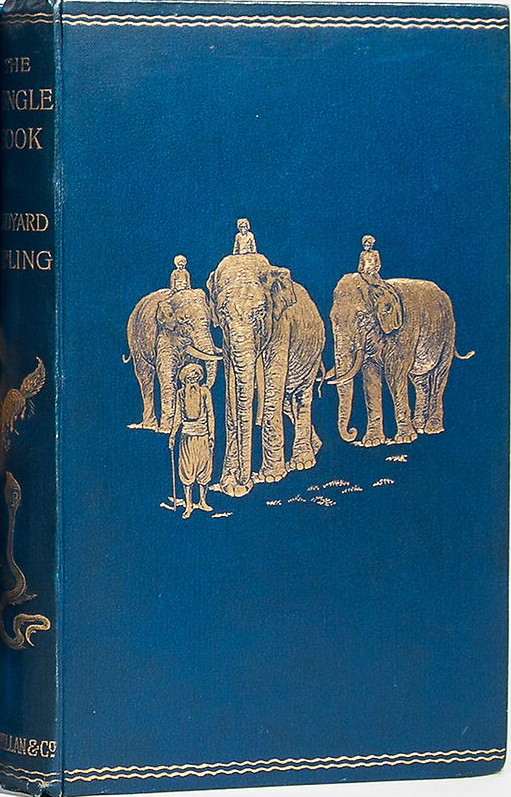
                  The Law of the Jungle is older than any animal reciting it, and a naked man-cub who wandered into a wolf den at dusk will have to learn every clause of it. Mowgli grows up between two peoples and belongs entirely to neither — the pack that took him in, Baloo who teaches him the words, Bagheera who bought his life with a bull, Kaa who is the most dangerous friend a boy ever had, and Shere Khan, who has been waiting since the first page. Rudyard Kipling wrote these as two books of stories, and the stories run well past Mowgli. Rikki-Tikki-Tavi fights cobras in a bungalow garden; a white seal searches the ocean for an island where men do not come; Toomai watches the elephants dance where nobody is meant to see them; and the beasts of the army explain, in Her Majesty's Servants, exactly why they obey. Verse runs between the tales, and the Jungle Books have been reissued, excerpted and adapted ever since. The voice is the whole point — biblical cadence, animal dignity, and a hard moral world in which the Law protects you precisely as far as you keep it. Read The Jungle Book first and take the Mowgli stories in their order within it; the rest stand alone and can be picked up in any mood. It is a children's book that never once talks down.

                • Cover of Ballad
                  Ballad

                  series · 11 books · 1991

                  similar by+2 more

                • Cover of Vianne Rocher / Chocolat
                  Vianne Rocher / Chocolat

                  series · 4 books · 1999

                  similar byliterary & general+3 more

                • Cover of A Modern Utopia
                  A Modern Utopia

                  H. G. Wells · standalone novel · 1905

                  similar byliterary & generalreflective+2 more

                  Two travelers, an unnamed narrator and his skeptical companion, find themselves transported to a parallel world: a planet identical to Earth in geography and even population, down to duplicates of everyone they know, but shaped by a different history. There they examine a global order run by a voluntary elite called the Samurai, who try to hold together progress and stability without the coercion Wells thought inevitable in the utopias that came before his. Framed less as a story than as a philosophical travelogue, it is Wells's own argument with the utopian tradition, tested through the world he invents to make it.

                • Cover of Alias Grace
                  Alias Grace

                  Margaret Atwood · standalone novel · 1996

                  similar byliterary & generalreflective19th century+1 more

                  Alias Grace is a historical fiction novel by Canadian writer Margaret Atwood. First published in 1996 by McClelland & Stewart, it won the Giller Prize and was shortlisted for the Booker Prize.

                • Cover of Fantastic Fiction of H. Rider Haggard
                  Fantastic Fiction of H. Rider Haggard

                  series · 8 books · 1895

                  completed

                  similar by+4 more

                • Cover of Ragtime
                  Ragtime

                  E. L. Doctorow · standalone novel · 1975

                  similar byliterary & generalreflectiveclass conflict+1 more

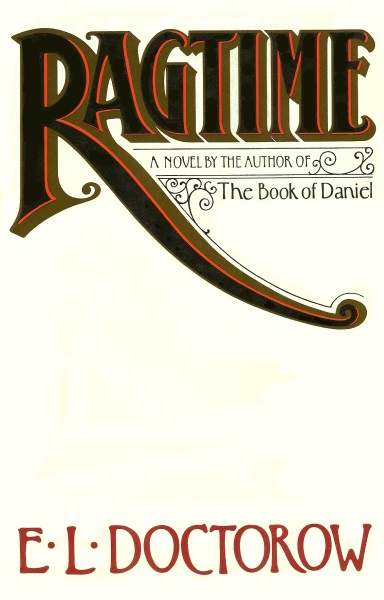
                  Ragtime is a 1975 historiographic metafiction novel by American author E. L. Doctorow. The novel mixes historical figures and fictional characters together in a sweeping narrative set in the New York City area from 1902 to 1915. With its layered storyline, Ragtime explores themes of racial injustice, class division, and the American Dream in American society.

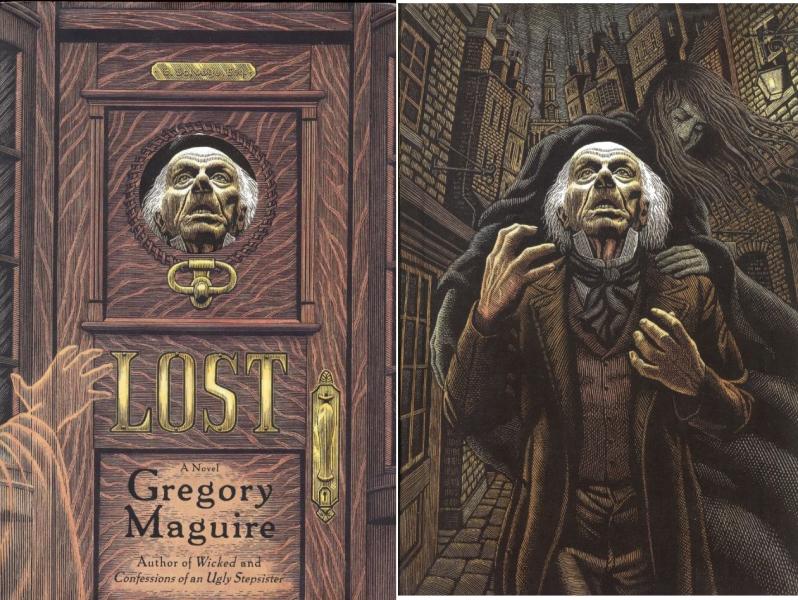
                • Cover of Lost
                  Lost

                  Gregory Maguire · standalone novel · 2001

                  similar byliterary & generalreflectivefamily secretsour world

                  Lost is a 2001 novel by American author Gregory Maguire. Unlike many of Maguire's other adult novels, Lost is set in the real world. The novel's concept is that the protagonist is a distant relative of the man who inspired Charles Dickens' character of Ebenezer Scrooge.

                • Cover of The Sorrows of Satan
                  The Sorrows of Satan

                  Marie Corelli · standalone novel · 1895

                  similar byliterary & generalour world19th century+1 more

                  The Sorrows of Satan is an 1895 Faustian novel by Marie Corelli. It is widely regarded as one of the world's first best-sellers – partly due to an upheaval in the system British libraries used to purchase their books, and partly due to its popular appeal. Roundly condemned by contemporary literary critics for Corelli's moralistic and prosaic style, it nonetheless had strong supporters, including Oscar Wilde and various members of royalty.

                • Cover of Answered Prayers
                  Answered Prayers

                  series · 6 books · 1987

                  similar by+2 more

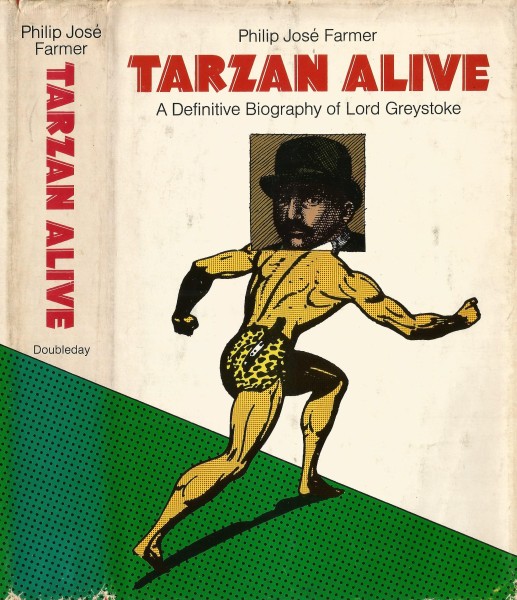
                • Cover of Wold Newton
                  Wold Newton

                  series · 21 books · 1972

                  similar byour world+2 more

                  The Wold Newton family is a literary concept derived from a form of crossover fiction developed by the American science fiction writer Philip José Farmer.

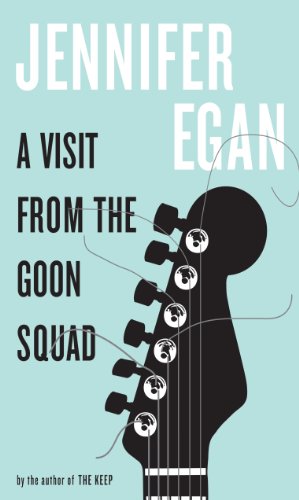
                • Cover of A Visit from the Goon Squad
                  A Visit from the Goon Squad

                  series · 2 books · 2010

                  similar byliterary & generalreflective+1 more

                  Jennifer Egan's A Visit from the Goon Squad follows a loosely connected group of characters orbiting the music industry across several decades, told through interlocking chapters that jump between narrators, timelines, and, in one chapter, a PowerPoint presentation. The Candy House returns to several of the same characters and their descendants a decade later, in a world reshaped by a technology that lets people access and share their memories. Egan links the two books through recurring characters more than a continuous plot.

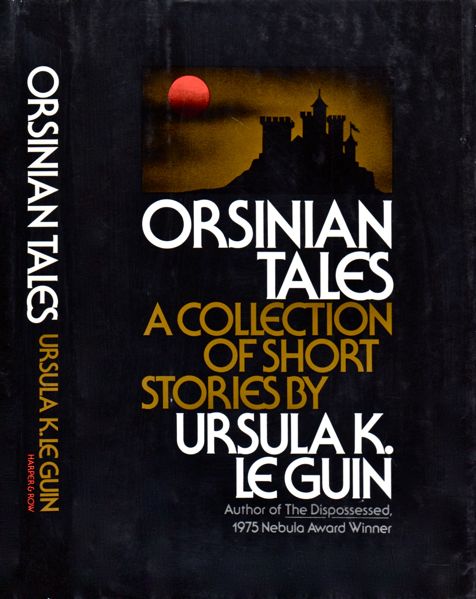
                • Cover of Orsinia
                  Orsinia

                  series · 16 books · 1961

                  completed

                  similar byliterary & generalreflective+1 more

                  Orsinia is Ursula K. Le Guin's invented Central European country, used as the setting for character-driven historical fiction rather than her more famous science fiction and fantasy: the linked short stories of Orsinian Tales and the novel Malafrena, set among failed 1820s revolutionaries. There's no ongoing plot connecting the pieces; Orsinia functions more as a shared place and history than a series with continuing characters.

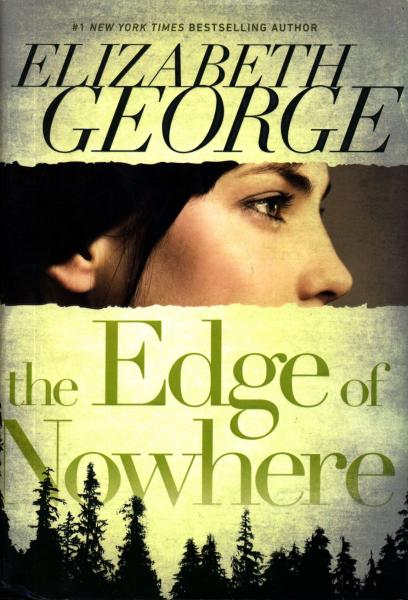
                • Cover of Becca King
                  Becca King

                  series · 4 books · 2012

                  similar by+2 more

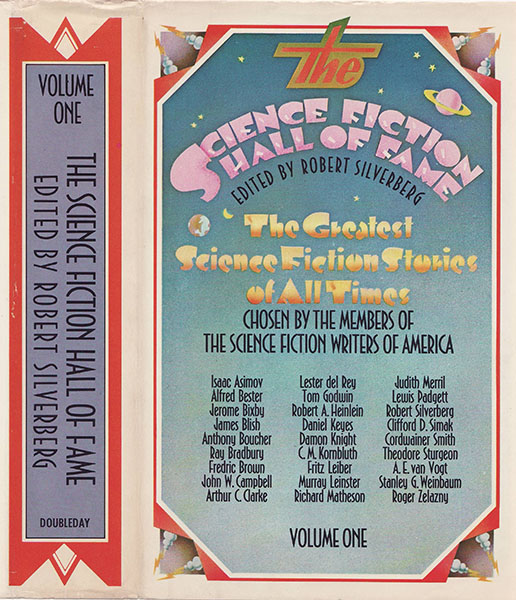
                • Cover of The Science Fiction Hall of Fame
                  The Science Fiction Hall of Fame

                  series · 11 books · 1895

                • Cover of The Elliott Family
                  The Elliott Family

                  series · 8 books · 1946

                  completed

                  similar byour world+1 more

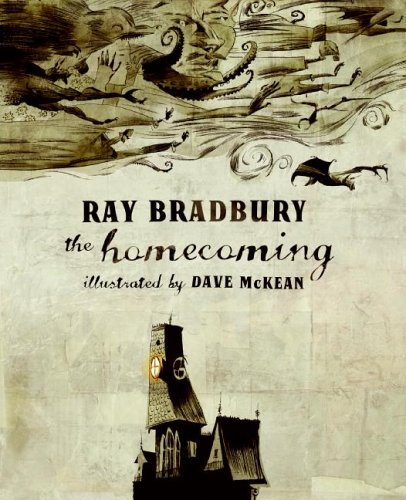
                  Ray Bradbury's From the Dust Returned gathers and expands short stories he wrote across five decades about the Elliotts, a large, ancient family of vampires, ghosts, and other gentle monsters gathered in a rambling Illinois house. Framed by new connecting chapters, it follows the family's mortal foundling, Timothy, as the household prepares for a once-a-century homecoming.

                • Cover of Fifth Child
                  Fifth Child

                  series · 2 books · 1988

                  completed

                  similar byliterary & general+3 more

                • Cover of The Book of Speculation
                  The Book of Speculation

                  series · 2 books · 2015

                  similar by+1 more

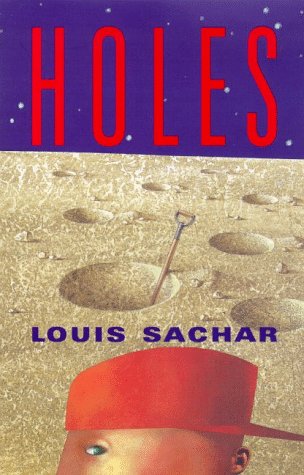
                • Cover of Holes
                  Holes

                  Louis Sachar · standalone novel · 1998

                  similar byliterary & generalreflectivefamily secretsour world

                  Holes is a 1998 middle grade novel written by Louis Sachar and first published by Farrar, Straus and Giroux. The book centers on Stanley Yelnats IV, a young boy who is sent to Camp Green Lake, a correctional boot camp in a desert in Texas, after being wrongfully convicted of theft. The plot explores the history of the area and how the actions of several characters in the past have affected Stanley's life in the present. These interconnecting stories touch on themes such as labor, boyhood and masculinity, friendship, meaning of names, illiteracy, elements of fairy tales, and racism.