More like Rollback
anchored on:science fictionimmortalityour worldnear futurehard science fictionfirst contact+3 more
but
- Stranger in a Strange Land
Robert A. Heinleinstandalone novel1961
similar byreflectivealiensnear futurescience fictionfirst contactnorth americaour world
Stranger in a Strange Land is a 1961 science fiction novel by the American author Robert A. Heinlein. It tells the story of Valentine Michael Smith, a human who comes to Earth in early adulthood after being born on the planet Mars and raised by Martians, and explores his interaction with and eventual transformation of Terran culture.
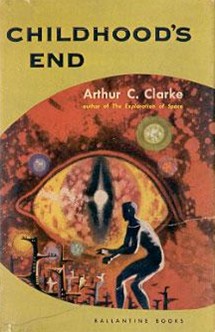
- Childhood's End
Arthur C. Clarkestandalone novel1953
similar byreflectivealiensnear futurescience fictionour worldfirst contact
Childhood's End is a 1953 science fiction novel by the British author Arthur C. Clarke. The story follows a peaceful alien invasion of Earth by mysterious Overlords, whose arrival begins decades of apparent utopia under indirect alien rule, at the cost of human identity and culture.
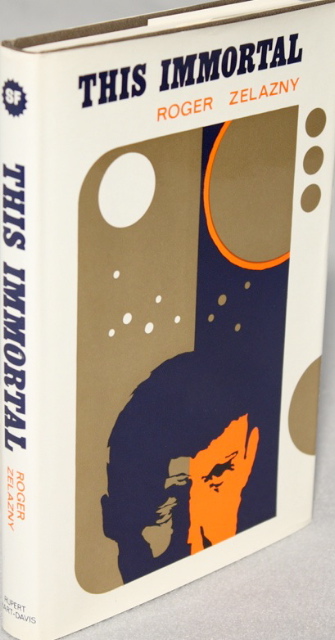
- This Immortal
series2 books1966
similar byimmortalityreflectivealiensscience fictionour world
This Immortal is a single science fiction novel by Roger Zelazny, expanded from his 1965 serial ...And Call Me Conrad. In a depopulated future Earth largely toured by an alien race, its long-lived, secretive protagonist Conrad Nomikos is assigned to guide and protect a visiting alien across the ruins of Greece and Egypt, uncovering old grudges and assassination plots along the way. The novel shared the 1966 Hugo Award for Best Novel with Frank Herbert's Dune.
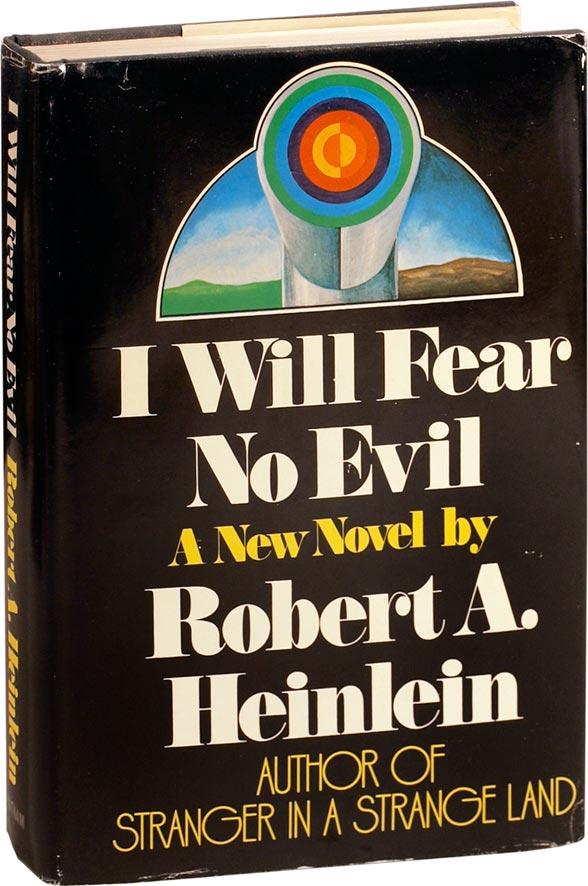
- I Will Fear No Evil
Robert A. Heinleinstandalone novel1970
similar byreflectivenear futureimmortalityscience fictionour world
I Will Fear No Evil is a science fiction novel by American writer Robert A. Heinlein, originally serialised in Galaxy and published in hardcover in 1970. The title is taken from Psalm 23:4.
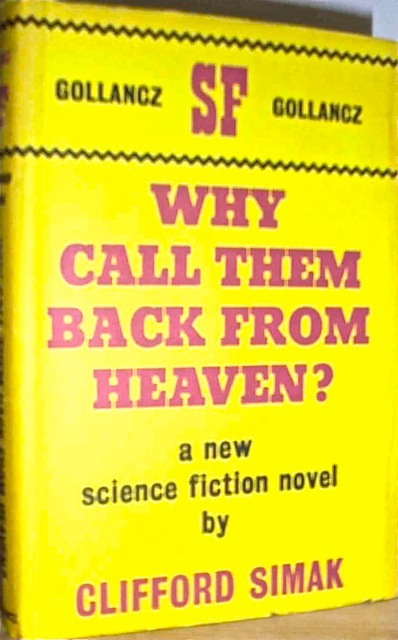
- Why Call Them Back from Heaven?
Clifford D. Simakstandalone novel1967
similar byimmortalityreflectivenear futurescience fictionour world
Why Call them Back From Heaven? is a 1967 science fiction novel by American writer Clifford D. Simak. It was the initial volume in the Ace Science Fiction Specials line.
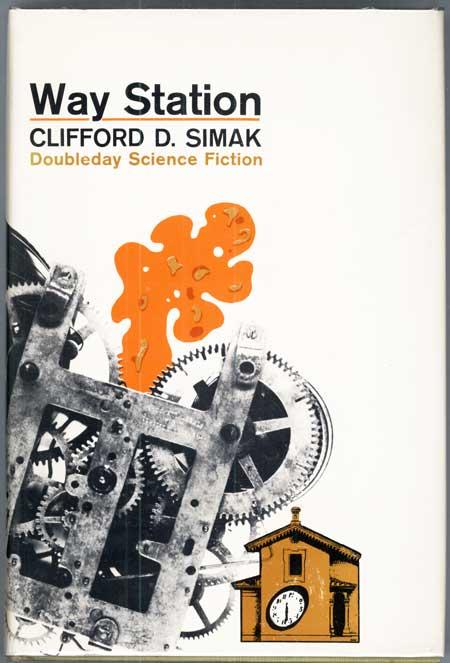
- Way Station
Clifford D. Simakstandalone novel1963
similar byreflectivealiensscience fictionfirst contactnorth america+1 more
The human operator of a transfer station for aliens traveling between planets, kept secret from the human race, deals with discovery by the US government and interplanetary political crisis, as well as his own emotional issues.
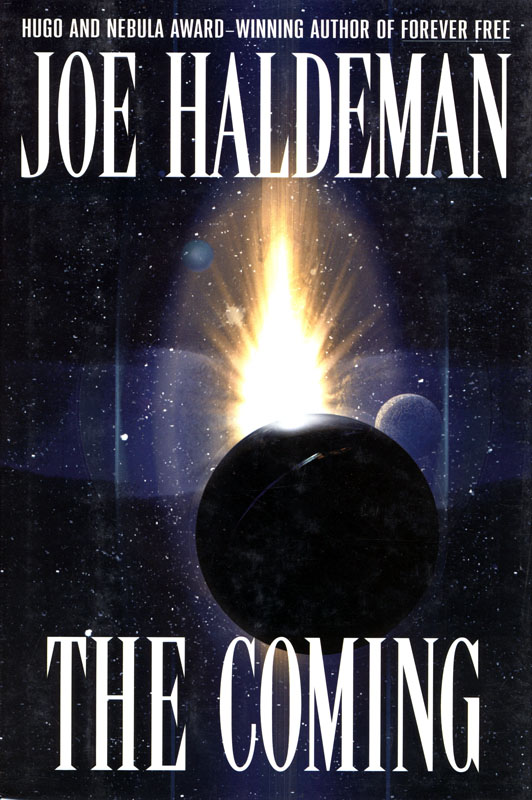
- The Coming
Joe Haldemanstandalone novel2000
similar bynear futurealiensscience fictionour worldfirst contactnorth america+2 more
An astronomy professor in Florida in a mid-21st century suffering from climate change and international hostilities detects an apparent interstellar vehicle headed directly for earth at near light speed but decelerating dramatically; it transmits the message "We're coming". The effect this discovery has on her, those close to her, and the surrounding circles of contacts is followed, as the impending event plays out on the larger stage of national and international affairs until it comes to an unpredictable ending. The dedication page says in part "The author gratefully acknowledges the influence of James Gunn's beautiful novel The Listeners, on this book."
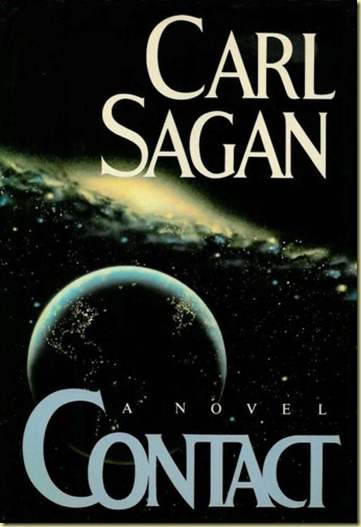
- Contact
Carl Saganstandalone novel1985
similar byreflectivealiensscience fictionfirst contacthard science fictionour world+1 more
From the front flap of the Simon and Schuster first edition: For centuries humanity has dreamed of life and intelligence beyond the Earth; for decades scientists have searched for it in every corner of the sky; for years Project Argus, a vast, sophisticated complex of radio telescopes, has listened for a signal indicating the existence, somewhere in the universe, of extraterrestrial intelligence. Then, one afternoon, the course of human history is changed, abruptly and forever. The Message, awaited for so long, its very possibility doubted by so many, arrives. Contact has been made. Life, intelligence, someone, something beyond Earth, 26 light-years away, in the vicinity of the star Vega, is calling, beaming across space a wholly unexpected message to say that we are not - have never been - alone. In Contact, Carl Sagan, whose Cosmos enthralled millions of readers and television viewers, has brilliantly employed the freedom of fiction to imagine the greatest adventure of all - humanity's first encounter with other intelligent beings. But the novel is not only about contact between humans and extraterrestrials; it is also about contact, down here on Earth, with each other and ourselves. At its center is a brilliant scientist, Eleanor Arroway, director of Project Argos, who is the first to realize that chapter one of human history is over. It is she who is instrumental in decoding the Message - and in persuading world leaders not to treat it as a threat - she who finds her own life changed by the immense challenge of responding to the Message; she who finally journeys out to experience, in circumstances at once profoundly religious and scientific, the most fateful encounter in human history.
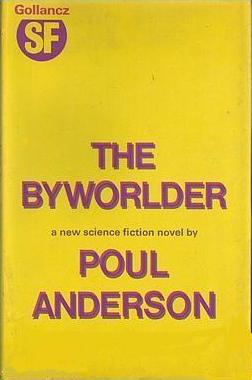
- The Byworlder
Poul Andersonstandalone novel1971
similar byreflectivenear futurealiensscience fictionour worldfirst contact
From the front flap of the Gregg Press edition: "In The Byworlder, Poul Anderson sings the praises of the byworlders, a counterculture people who try to do their own thing in a regimented, near-future society. One of the byworlders, Skip Wayburn (a sigaroon, or 21st-century version of a bohemian drifter, craftsman, musician, and artist) make an intuitive connection with the emissary aboard the first interstellar starship orbiting Earth, a breakthrough that has been eluding the best efforts of the scientific establishment for three years. Wayburn alone knows why the alien has come, but no one in the establishment will listen to the byworlder, despite his terrifying message. ... This first American hardcover edition includes a new introduction on The Byworlder by the author."
- The Listeners
series7 books1968
completed
similar byreflectivenear futurealiensscience fictionour worldfirst contact
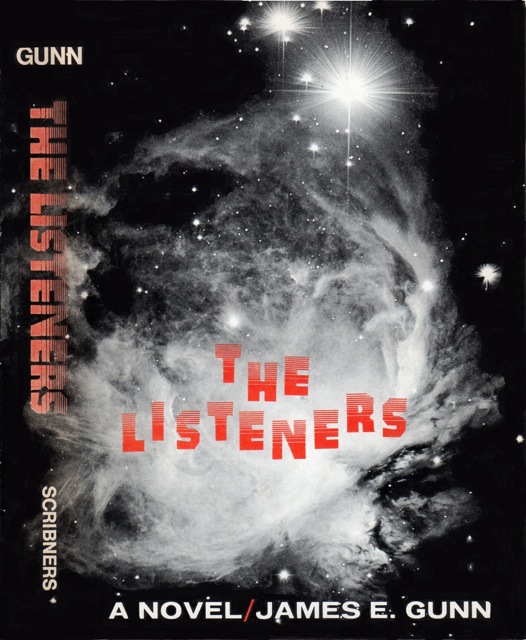
The Listeners is James E. Gunn's 1972 science fiction novel about a decades-spanning project searching for a signal from another civilization, and the toll that long, uncertain listening takes on the scientists and their families across generations. Structured as a linked sequence of episodes and documents rather than one continuous plot, it follows the project's staff more than any single hero. It stands as a single novel rather than a multi-book series.
- The Speed of Dark
Elizabeth Moonstandalone novel2002
similar byreflectivenear futurescience fictionour worldemotionalnorth america
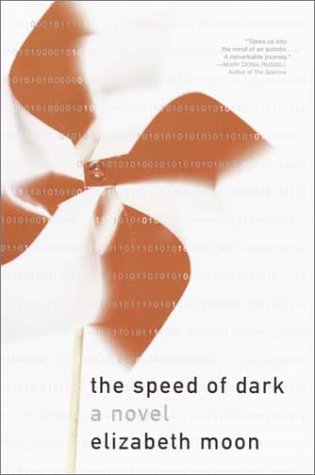
From the Penguin Random House website In the near future, disease will be a condition of the past. Most genetic defects will be removed at birth; the remaining during infancy. Lou Arrendale, a high-functioning autistic adult, is a member of the lost generation, born at the wrong time to reap the rewards of medical science. He lives a low-key, independent life. But then he is offered a chance to try a brand-new experimental "cure" for his condition. With this treatment Lou would think and act and be just like everyone else. But if he was suddenly free of autism, would he still be himself? Would he still love the same classical music — with its complications and resolutions? Would he still see the same colors and patterns in the world—shades and hues that others cannot see? Most important, would he still love Marjory, a woman who may never be able to reciprocate his feelings? Now Lou must decide if he should submit to a surgery that might completely change the way he views the world ... and the very essence of who he is.
- The Star Beast
Robert A. Heinleinstandalone novel1954
similar bynear futurealiensscience fictionour worldfirst contactnorth america
A talking alien pet has grown to the size of a small dinosaur. She repeatedly gets her teenage owner in trouble whenever she leaves the backyard, but he continues to care for her, as did his father and grandfather before him. When an alien delegation lands on Earth and demands custody, he fights to protect her.
- The Book of Strange New Things
Michel Faberstandalone novel2014
similar byreflectivenear futurealiensscience fictionemotionalfirst contact
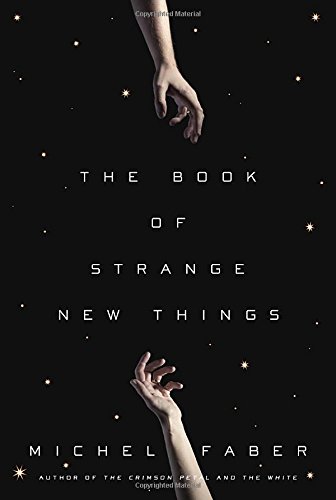
The Book of Strange New Things is a 2014 science fiction novel by Dutch-born author Michel Faber. The work was first published in the United Kingdom on October 6, 2014, and concerns an English pastor who is sent to the planet of Oasis to teach its reclusive native inhabitants about Christianity.
- Project Hail Mary
Andy Weirstandalone novel2021
similar bynear futurealiensscience fictionhard science fictionfirst contactour world
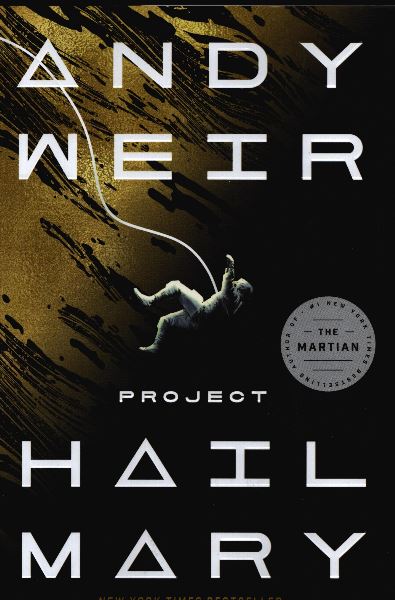
Project Hail Mary is a 2021 hard science fiction novel by American writer Andy Weir. It centers on science teacher and former biologist Ryland Grace, who wakes up aboard a spacecraft, afflicted with amnesia.
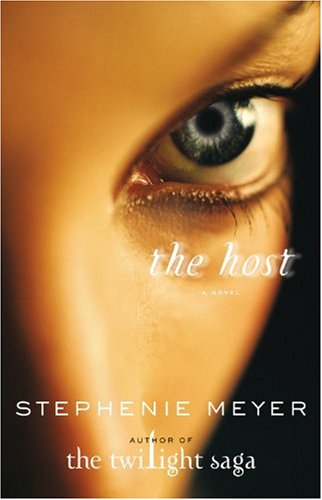
- The Host
Stephenie Meyerstandalone novel2008
similar bynear futurealiensscience fictionour worldemotionalnorth america
The earth has been invaded by a species that take over the minds of their human hosts while leaving their bodies intact, and most of humanity has succumbed. But Melanie Stryder refuses to fade away. Wanderer, the invading "soul" who has been given Melanie's body, knew about the challenges of living inside a human: the overwhelming emotions, the too vivid memories. But there was one difficulty Wanderer didn't expect: the former tenant of her body refusing to relinquish possession of her mind. Melanie fills Wanderer's thoughts with visions of the man Melanie loves--Jared, a human who still lives in hiding. Unable to separate herself from her body's desires, Wanderer yearns for a man she's never met. As outside forces make Wanderer and Melanie unwilling allies, they set off to search for the man they both love.--From publisher description.
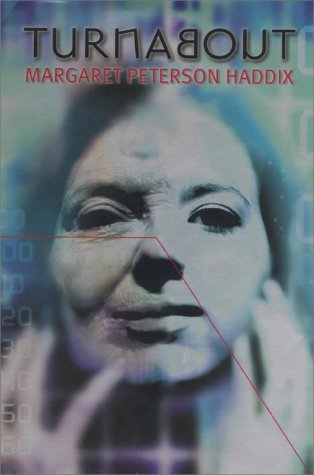
- Turnabout
Margaret Peterson Haddixstandalone novel2000
similar byreflectivenear futureimmortalityscience fictionour world+1 more
Turnabout is a novel by Margaret Peterson Haddix, set in the future. It was first published in 2000 by the Aladdin division of Simon & Schuster, Inc. The novel switches between 2002 and 2085 by chapter.
- The Man Who Fell to Earth
Walter Tevisstandalone novel1963
similar byreflectivealiensscience fictionour worldnorth america
The Man Who Fell to Earth is a 1963 science-fiction novel by American writer Walter Tevis. Published by Gold Medal Books as a paperback original, it was Tevis's second novel, following The Hustler. The novel follows Thomas Jerome Newton, an extraterrestrial from the drought-stricken planet Anthea, who comes to Earth hoping to build a spacecraft that can save the surviving members of his species.
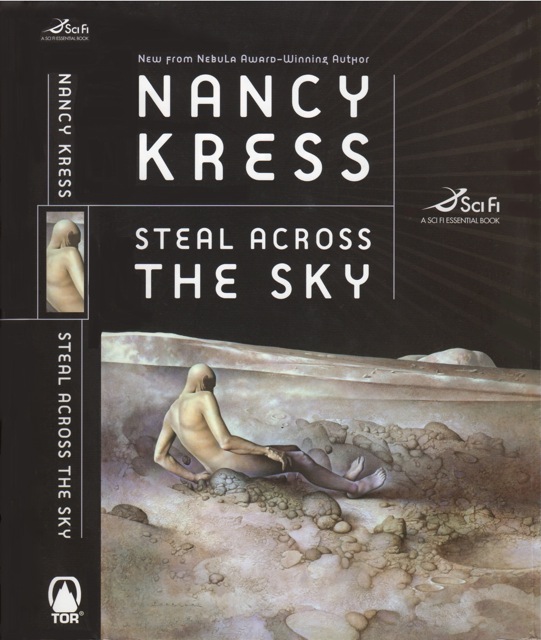
- Steal Across the Sky
Nancy Kressstandalone novel2009
similar byreflectivenear futurealiensscience fictionfirst contact+1 more
The aliens appeared one day, built a base on the moon, and put an ad on the internet. At first, everyone thought it was a joke. But it wasn't. This is the story of three volunteers who answered that ad, and what they found on Kular A and Kular B.
- Station Eleven
Emily St. John Mandelstandalone novel2014
similar byreflectivenear futurescience fictionour worldnorth america
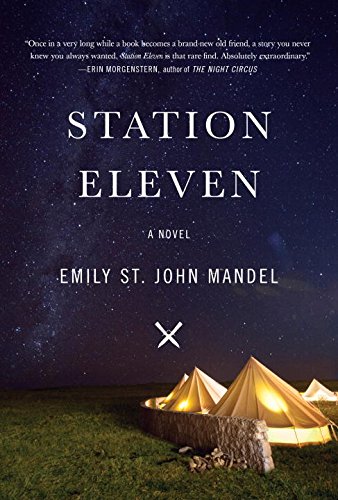
"Set in the days of civilization's collapse, Station Eleven tells the story of a Hollywood star, his would-be savior, and a nomadic group of actors roaming the scattered outposts of the Great Lakes region, risking everything for art and humanity. One snowy night a famous Hollywood actor slumps over and dies onstage during a production of King Lear. Hours later, the world as we know it begins to dissolve. Moving back and forth in time — from the actor's early days as a film star to fifteen years in the future, when a theater troupe known as the Traveling Symphony roams the wasteland of what remains — this suspenseful, elegiac, spellbinding novel charts the strange twists of fate that connect five people: the actor, the man who tried to save him, the actor's first wife, his oldest friend, and a young actress with the Traveling Symphony, caught in the crosshairs of a dangerous self-proclaimed prophet." (source: Goodreads.com)
- We Can Build You
Philip K. Dickstandalone novel1972
similar byreflectivenear futurescience fictionour worldnorth america
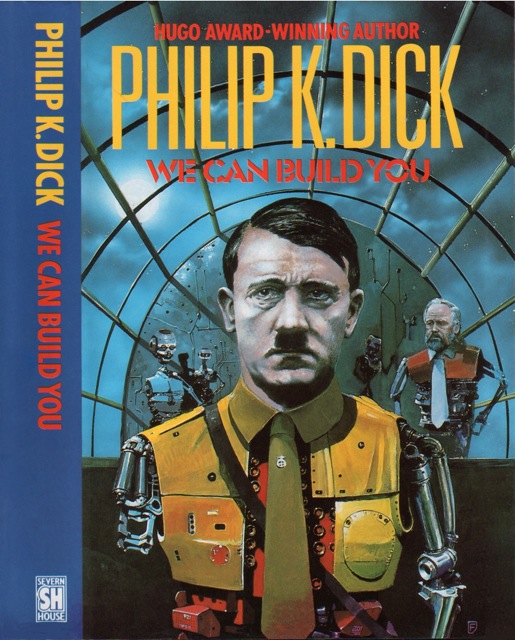
We Can Build You is a 1972 science fiction novel by American writer Philip K. Dick. Written in 1962 as The First in Our Family, it remained unpublished until appearing in serial form as A. Lincoln, Simulacrum in the November 1969 and January 1970 issues of Amazing Stories magazine, re-titled by editor Ted White. The novel was issued as a mass market paperback original by DAW Books in 1972, its final title provided by publisher Donald A. Wollheim. Its first hardcover edition was published in Italy in 1976, and Vintage issued a trade paperback in 1994.
- Void Star
Zachary Masonstandalone novel2017
similar byreflectivenear futureimmortalityscience fictionour worldnorth america
Void Star is a 2017 near-future science fiction novel by American writer Zachary Mason. It is his second novel, published after The Lost Books of the Odyssey. Set in a near-future San Francisco, the book explores themes of artificial intelligence, philosophy, linguistics and immortality.
- Eater
Gregory Benfordstandalone novel2000
similar bynear futurealiensscience fictionhard science fictionfirst contact+2 more
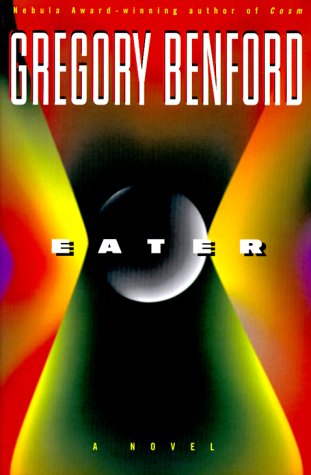
From the flaps of the Eos first edition: "Dr. Benjamin Knowlton heads the High Energy Astrophysics Center, a prestigious research facility devoted to the interpretation of astronomical data. He stands at the apex of his profession, respected by his peers and involved in research with the potential to revolutionize our understanding of the universe. But Benjamin has no cause to celebrate. His beloved wife and colleague, Channing, an ex-astronaut turned astronomer, is dying of cancer. She has only a few months to live. Then an anomalous signal from a remote probe alerts Banjamin to the presence of a wandering black hole beyond the orbit of Pluto. Though its trajectory will take it through the solar system, the singularity poses no threat to Earth-on the contrary, it may hold answers to the most fundamental questions of physics. But when an encoded message is received from the black hole, excitement turns to astonishment and apprehension. The thing is alive, intelligent, its mind residing in powerfully fluctuating fields of electromagnetic energies that radiate outward from its infinitely dense core. And it wants a closer look at Earth... and its inhabitants. The entity - dubbed the Eater for its habit of devouring everything in its path - proves eager to share its vast knowledge, accumulated in the course of explorations that began long before life arose on Earth. In exchange, it seeks to learn about human art, culture, and science. The world is charmed by the seemingly beneficent alien. Even Channing is infused with fresh strength and purpose. But gradually a terrifying truth about the singularity emerges - a truth almost too awful to comprehend. Now, as the world waits, Channing volunteers to undertake a desperate gamble: a one-to-one confrontation with the Eater."
- Time Is the Simplest Thing
Clifford D. Simakstandalone novel1961
similar byreflectivenear futurescience fictionour worldnorth america
Time Is the Simplest Thing is a science fiction novel by American writer Clifford D. Simak, first published in 1961. The story combines paranormal abilities with themes of space and time travel. The underlying theme is intolerance of ordinary people towards those with unusual abilities.
- The Hercules Text
Jack McDevittstandalone novel1986
similar byreflectivealiensscience fictionour worldfirst contactnorth america
The Hercules Text is a 1986 science fiction novel by American writer Jack McDevitt. It tells the story of a message of intelligent extraterrestrial origin received by SETI scientists. The Hercules Text was nominated for the Philip K. Dick Award in 1986.