Loreful
HomeDiscover
Search series, authors…⌘K
Loreful

Reading orders for SF/F series and shared universes — with your place kept in every one.

Explore

UniversesSeriesWorksAuthorsAtlas

Help

FAQAboutSite map

Account & legal

Sign inCreate accountPrivacyTerms

Data

Built on ISFDB, Wikipedia, Wikidata and Open Library. Curated reading orders carry their reasoning on the page; the rest follow publication order. Data sources & licenses

© Loreful · data: ISFDB · CC BY

More like Rolling Thunder

anchored on:thriller & suspenseour worldcontemporary

but

Mood

The mood the book leaves you in.

  • The reading experience is propelled by journeys, exploration, and physical risk; excitement and forward momentum dominate over dread or introspection.
  • Joy and loss are deliberately mixed; the resolution grants characters something real while taking something else away, leaving warmth and sorrow together.
  • The book demands work from the reader — dense prose, difficult structure, unfamiliar ideas, or morally uncomfortable material — as part of its intended effect.
  • Grim events, cruelty, or despair dominate the atmosphere, and the book does not soften them with comfort or comic relief.
  • The atmosphere is quietly unsettling — wrongness, unease, and the uncanny pervade the book without necessarily escalating into overt horror.
  • The book is built to move the reader; character feeling is foregrounded and major scenes aim at a strong emotional response.
  • Humor is a primary aim and the prose plays for laughs — comic situations, wit, or dialogue produce sustained comedy, not occasional levity.
  • The book insists that things can improve; effort and decency are shown to matter, and the arc bends toward better outcomes even through hardship.
  • The book teaches as it goes — real facts, history, science, or craft are conveyed in enough depth that learning is part of the reading experience.
  • The book is designed to uplift and motivate, presenting perseverance or achievement in a way that invites the reader to aspire or act.
  • The overall register is cheerful and easygoing; stakes are kept gentle and the book avoids dwelling on pain or dread.
  • Withheld information drives the experience; the book sustains enigmas and secrets the reader wants resolved, whatever its genre.
  • The book is contemplative and inward-looking, giving more weight to thought, memory, and meaning than to external events.
  • The book works as comfort reading — low tension, a soothing pace, and an atmosphere the reader can unwind in.
  • Grief, loss, or melancholy set the dominant register, and the book lets sorrow stand rather than resolving it into comfort.
  • Sustained suspense is the point; the book keeps the reader braced for what happens next through danger, pressure, or impending revelation.
  • Playful invention and charm define the register — fanciful conceits, light absurdity, and a narration that delights in its own oddity.

About

What the story runs on.

  • Stories in which extraterrestrial beings are central — as characters, cultures, or the object of the plot.
  • Stories structured as a quest — a journey undertaken to find, deliver, or destroy something of great import.
  • Stories in which staying alive against nature, catastrophe, or scarcity is the central problem.
  • Stories of lovers kept apart by law, family, faith, or station, where the obstacle to love is the plot.
  • Stories in which a friendship — its making, testing, or loss — is the emotional center.
  • Stories of growing up — a young protagonist crossing from childhood into adult knowledge and responsibility.
  • Stories about who a character truly is — self-discovery, doubled lives, and the search for a self.
  • Stories about mourning — living through the death of a loved one and what loss does to the survivors.
  • Stories in which a buried family truth — hidden parentage, crimes, or shames — surfaces and reorders the present.
  • Stories driven by maneuvering for power — factions, conspiracies, and statecraft conducted in shadow.
  • Stories in which war itself is the subject — combat, occupation, and what warfare does to soldiers and civilians.
  • Stories organized around investigating a killing — the case, the clues, and the pursuit of the killer, in any genre's clothing.

Shelf

Where it sits in the library.

    • Fiction built on magic or other supernatural elements that have no scientific explanation.
    • Secondary-world fantasy at large scale, where the fate of nations or the world turns on the protagonists' struggle.
    • Fantasy set in a recognizably modern city or contemporary world where the supernatural intrudes on everyday life.
    • Fantasy that blends in horror's atmosphere and imagery, keeping a fantastical frame around grim or frightening material.
    • Action-driven fantasy following warriors or rogues with personal stakes against sorcerous threats, rather than world-spanning conflicts.
    • Fantasy set in a real historical period or a close analogue of one, with magic woven into the era.
    • Fantasy in which protagonists cross from the ordinary world into another world through a portal or similar passage.
    • Fiction that retells or reworks a traditional fairy tale in a new form or setting.
    • Fantasy drawing directly on myths, legends, and folklore, retelling them or building on their figures and logic.
    • Fantasy of ghosts, vampires, shapeshifters, psychics, and similar phenomena, usually set in an otherwise ordinary world.
    • Fiction mixing science-fictional trappings with overtly magical or impossible elements in one setting.
    • Low-stakes fantasy emphasizing comfort, community, and everyday pleasures over conflict and peril.
    • Speculative fiction of pervasive moral ambiguity, violence, and cynicism that rejects heroic conventions — fantasy and SF alike.
      • Fiction that extrapolates from science and technology — future societies, space travel, or speculative inventions — within at least nominally natural laws.
      • Science fiction of interstellar scope — starships, galactic polities, and adventure across star systems.
      • Science fiction committed to scientific rigor, where technical plausibility constrains the story.
      • Science fiction centered on armed forces and warfare, told largely from a military point of view.
      • Science fiction of networked, corporate-dominated near futures, pairing high technology with social decay.
      • Science fiction styled on nineteenth-century steam-powered technology, often in a Victorian or pseudo-Victorian setting.
      • Fiction depicting an oppressive or catastrophic society, presented as a warning.
      • Fiction set after civilization's collapse, following survivors in the ruins of the old world.
      • Fiction in which characters move between past and future, and the mechanics or consequences of that travel drive the plot.
      • Fiction exploring a world where a historical event went differently and history diverged from ours.
      • Science fiction about humanity's first encounter and communication with an alien intelligence.
      • Science fiction in which extraterrestrial forces attack or occupy Earth and humanity resists.
      • Fiction whose primary aim is to frighten or unsettle the reader through dread, menace, or the monstrous.
      • Horror of vast, indifferent, incomprehensible entities before which humanity is insignificant, in the Lovecraft tradition.
      • Horror of decaying houses, buried family secrets, and oppressive atmosphere in the Gothic literary tradition.
      • Horror centered on hauntings and the returning dead.
      • Horror located in the mind — paranoia, obsession, and unreliable perception rather than external monsters.
      • Horror built around the reanimated dead and survival amid their outbreaks.
      • Horror defined by explicit, transgressive gore that refuses to cut away from violence.
      • Speculative fiction of the strange and uncanny that resists both natural explanation and standard genre categories.
      • Fiction organized around solving a crime or puzzle, typically following an investigator toward the identification of a culprit.
      • A puzzle-first mystery that lays out clues so the culprit's identity can be deduced before the reveal.
      • Crime fiction of moral ambiguity, fatalism, and hard-edged style, set among the corrupt and the doomed.
      • A mystery following the realistic routines of police work — forensics, interviews, and case-building.
      • A gentle mystery with an amateur sleuth, a small community, and violence kept off the page.
      • A mystery set in a past era, where the investigation works within that period's methods and society.
      • Fast-paced fiction driven by imminent danger, pursuit, or high-stakes conspiracy, built to sustain tension.
      • A thriller of espionage — agents, tradecraft, and intelligence services in conflict.
      • A thriller centered on lawyers and the courtroom, where litigation carries the suspense.
      • A thriller driven by detailed contemporary or near-future technology, often military or scientific.
      • A thriller whose tension comes from mental states and manipulation between characters rather than external action.
      • Fiction whose central plot is a romantic relationship and its development toward an emotionally satisfying resolution.
      • Romance in which one or both partners are supernatural beings, blending fantasy elements into the love story.
      • A fantasy-romance hybrid in which the romantic arc and the fantasy plot carry equal weight.
      • Romance set in a past era, with courtship shaped by the period's society and manners.
      • Romance set in the present day, without supernatural or historical elements.
      • Fiction set in a real past period, where the historical setting materially shapes characters and events.
        • General and literary fiction emphasizing prose style, character interiority, or formal ambition over genre plot conventions.
        • Fiction in a realistic world where magical events occur and are treated as ordinary, in the tradition of Latin American literature.
        • Fiction that ridicules people, institutions, or society in order to criticize them.
        • Fiction of dreamlike, irrational imagery and logic that breaks from realistic representation.
        • Fiction that plays with narrative convention through metafiction, fragmentation, and self-reference.
        • Fiction propelled by journeys, exploration, and physical peril, where action and survival carry the plot.
        • Adventure fiction of ships and seafaring — naval engagements, voyages, and life at sea.
        • Fiction of the American frontier West — gunmen, ranchers, and lawmen, typically in the late nineteenth century.
        • Fiction centered on soldiers, campaigns, and the experience of warfare, historical or imagined.
          • Fiction written primarily to amuse, using comedic situations, wit, or parody as its organizing principle.
            • Multi-generational fiction following a family or dynasty across decades, with inheritance and kinship as the through-line.
              • Fiction whose world runs on explicit game mechanics — levels, stats, and skills that characters can see and exploit.
                • Fiction about costumed or superpowered heroes and their conflicts with comparable villains.

                Practical

                How long a commitment, whether it stands alone, and whether it has finished.

                Tap a chip to ask for it · tap again to rule it out · once more to clear. Numbers show what would be left.

                • Cover of Shane Schofield
                  Shane Schofield

                  series · 5 books · 1998

                  similar bythriller & suspensetensecontemporaryour world+1 more

                  Shane 'Scarecrow' Schofield is a US Marine captain who leads his unit through single-location, high-body-count action thrillers set in an Antarctic ice station, a disputed Pacific island, and a maximum-security prison built into a mountain, among others. Matthew Reilly's series opens with Ice Station (1998) and keeps escalating its set-pieces across Area 7, Scarecrow, Hell Island, and Scarecrow and the Army of Thieves. It's fast, gleefully over-the-top military action rather than realistic technothriller territory.

                • Cover of Deception Point
                  Deception Point

                  Dan Brown · standalone novel · 2001

                  similar bythriller & suspensetenseour worldcontemporarypolitical intrigue

                  Deception Point is a 2001 mystery-thriller novel by American author Dan Brown. It is Brown's third novel. It was published by Simon & Schuster.

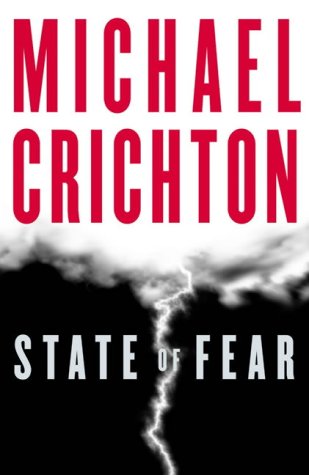
                • Cover of State of Fear
                  State of Fear

                  Michael Crichton · standalone novel · 2004

                  similar bythriller & suspensetenseour worldcontemporarypolitical intrigue

                  State of Fear is a 2004 techno-thriller novel by Michael Crichton, his fourteenth under his own name and twenty-fourth overall, in which eco-terrorists plot mass murder to publicize the danger of global warming.

                • Cover of Joe Ledger
                  Joe Ledger

                  series · 63 books · 2008

                  part of Night

                  similar bytensethriller & suspensecontemporaryour world+1 more

                  Jonathan Maberry's Joe Ledger series follows a former cop turned special operative for a black-ops unit fighting bioterrorism threats that routinely turn out to be supernatural or genetically monstrous, beginning with Patient Zero and its zombie-outbreak plot. Later books widen the threats to rogue AI, genetic supersoldiers, and other high-concept horrors, with numerous other authors contributing spin-off novellas and short fiction to the same continuity. The series sits within a wider connected universe of Maberry's horror-thriller fiction.

                • Cover of Digital Fortress
                  Digital Fortress

                  Dan Brown · standalone novel · 1998

                  similar bytensethriller & suspenseour worldcontemporarypolitical intrigue

                  Digital Fortress is a techno-thriller novel written by American author Dan Brown and published in 1998 by St. Martin's Press. The book explores the theme of government surveillance of electronically stored information on the private lives of citizens, and the possible civil liberties and ethical implications of using such technology.

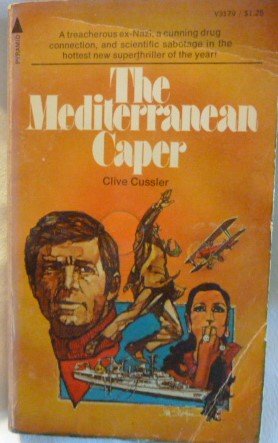
                • Cover of Dirk Pitt
                  Dirk Pitt

                  series · 12 books · 1973

                  completed

                  similar bytensethriller & suspensecontemporaryour world

                  Clive Cussler's Dirk Pitt novels follow the title character, a two-fisted marine engineer and de facto field agent for the fictional National Underwater and Marine Agency, through globe-spanning adventures mixing undersea salvage, historical mystery, and international conspiracy. The run collected here spans The Mediterranean Caper (1973) through Valhalla Rising (2001), the earlier stretch of a series Cussler continued for decades with later co-authors.

                • Cover of Robert Langdon
                  Robert Langdon

                  series · 6 books · 2000

                  similar bythriller & suspensetensecontemporary+1 more

                  The Robert Langdon novel series is named after Robert Langdon, the protagonist of the novels by American author Dan Brown. Langdon is portrayed as a Harvard University professor of religious iconology and symbology, a fictional field related to the study of historic symbols, which is not methodologically connected to the actual discipline of semiotics. Brown's novels that feature the lead character also include historical themes and Christianity as motifs, and as a result have generated controversy. Brown states on his website that his novels are not anti-Christian, and that he is on a "constant spiritual journey" himself.

                • Cover of Jack West, Jr.
                  Jack West, Jr.

                  series · 7 books · 2005

                  similar bythriller & suspenseour worldcontemporary+1 more

                  Matthew Reilly's Jack West Jr. series opens with Seven Ancient Wonders (2005), an action-adventure thriller sending Jack West Jr. on a globe-spanning hunt tied to the ancient wonders of the world. The series continues its countdown structure through The Six Sacred Stones and five further novels, ending with The One Impossible Labyrinth (2021).

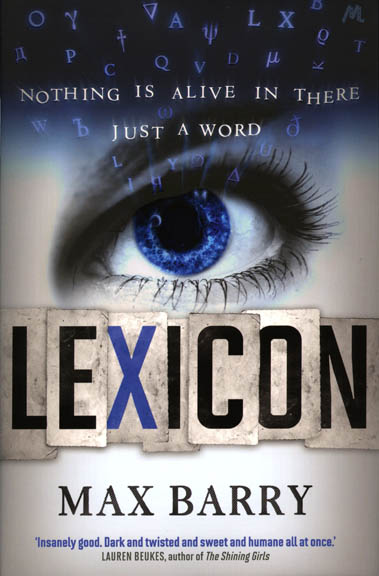
                • Cover of Lexicon
                  Lexicon

                  Max Barry · standalone novel · 2013

                  similar bythriller & suspensetenseour worldcontemporary+1 more

                  Lexicon is a novel written by Max Barry. Published in 2013, it was Barry's fifth novel, following Machine Man, published two years earlier.

                • Cover of Duke de Richleau
                  Duke de Richleau

                  series · 4 books · 1933

                  completed

                  similar bytensethriller & suspense+1 more

                  The Duke de Richleau novels follow Dennis Wheatley's aristocratic adventurer and occultist across four decades of twentieth-century intrigue, moving from a 1930s rescue thriller in The Forbidden Territory into Satanist set-pieces such as The Devil Rides Out and Strange Conflict, then a later case in Gateway to Hell. Wheatley wrote the books out of order over nearly forty years, but their internal chronology matches the order they were published in.

                • Cover of Tom Broadbent / Wyman Ford
                  Tom Broadbent / Wyman Ford

                  series · 6 books · 2003

                  similar bythriller & suspensetensecontemporaryour world

                  Douglas Jerome Preston is an American journalist and author. Although he is best known for his thrillers in collaboration with Lincoln Child, he has also written six solo novels, including the Wyman Ford series and a novel titled Jennie, which was made into a movie by Disney called The Jennie Project. Preston has authored a half-dozen nonfiction books on science and exploration and writes occasionally for The New Yorker, Smithsonian, and other magazines.

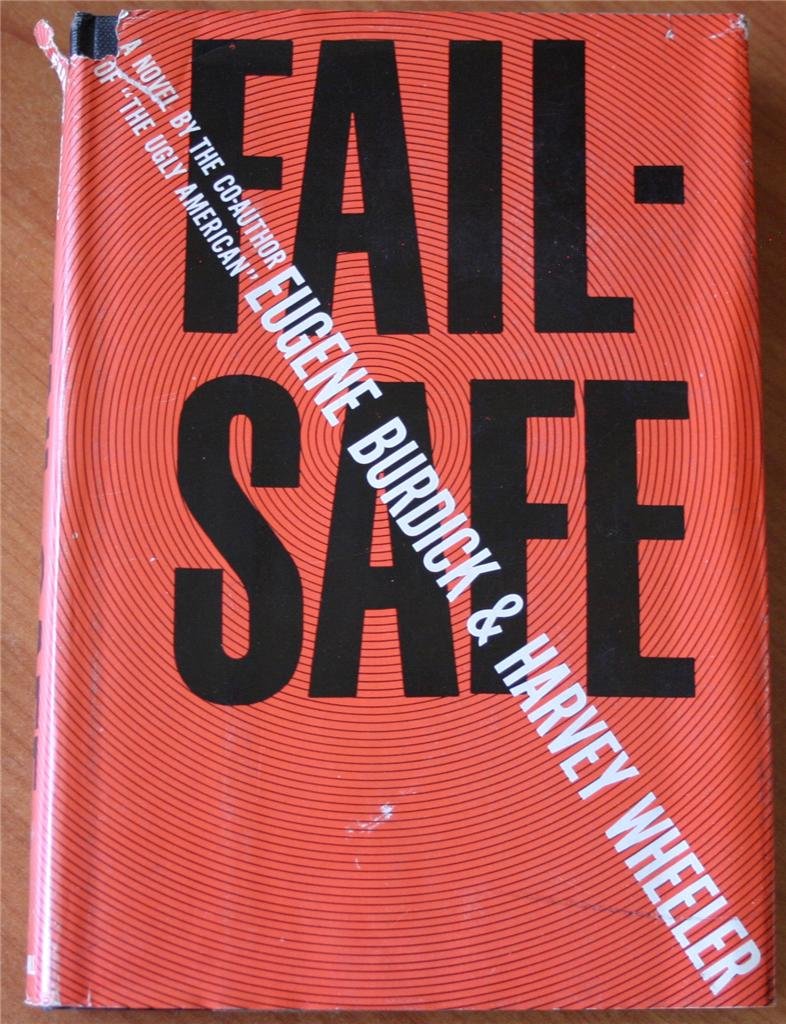
                • Cover of Fail-Safe
                  Fail-Safe

                  Harvey Wheeler & Eugene Burdick · standalone novel · 1962

                  similar bythriller & suspensetensewar+1 more

                  Fail-Safe is a bestselling American novel by Eugene Burdick and Harvey Wheeler. Expanded from Wheeler's short story "Abraham '59", it was initially serialized in three installments in the Saturday Evening Post on October 13, 20, and 27, 1962, during the Cuban Missile Crisis.

                • Cover of The Cure
                  The Cure

                  Douglas E. Richards · standalone novel · 2013

                  similar bythriller & suspensetenseour worldcontemporary+1 more

                  A young woman, Erin Palmer, witnesses a psychopath murder her parents and sister. The bloody trauma propels her into a scientific career. She is studying the microbiology of the psychopathic brain, and is on a quest to discover the DNA which engenders the cerebral disease. Teaming up with a powerful but eccentric billionaire, she at last isolates the deadly DNA and is on the verge of finding a cure. But things and people are not what they seem. Both the young man she thinks she loves and the tycoon who has befriended her have a sinister side she did not understand. Erin is ensnared in a global conspiracy which may culminate in humanity's utter destruction.

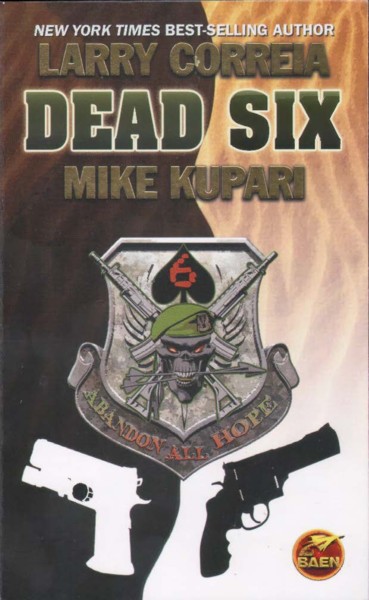
                • Cover of Dead Six
                  Dead Six

                  series · 7 books · 2011

                  similar bythriller & suspensetensecontemporary+3 more

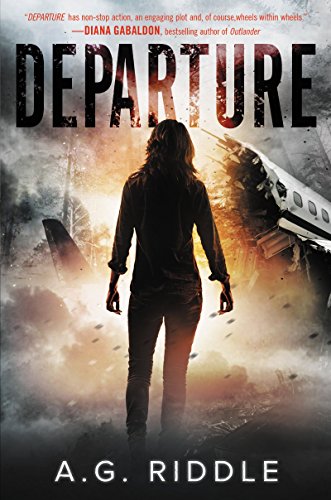
                • Cover of Departure
                  Departure

                  A. G. Riddle · standalone novel · 2014

                  similar bytensethriller & suspenseour worldcontemporarypolitical intrigue

                  "The world's past and future rests in the hands of five unwitting strangers in this definitive edition of A. G. Riddle's time-traveling, mind-bending speculative thriller. En route to London from New York, Flight 305 suddenly loses power and crash-lands in the English countryside, plunging a group of strangers into a mysterious adventure that will have repercussions for all of humankind.Struggling to stay alive, the survivors soon realize that the world they've crashed in is very different from the one they left. But where are they? Why are they here? And how will they get back home? Five passengers seem to hold clues about what's really going on: writer Harper Lane, venture capitalist Nick Stone, German genetic researcher Sabrina Schroeder, computer scientist Yul Tan, and Grayson Shaw, the son of a billionaire philanthropist.As more facts about the crash emerge, it becomes clear that some in this group know more than they're letting on--answers that will lead Harper and Nick to uncover a far-reaching conspiracy involving their own lives. As they begin to piece together the truth, they discover they have the power to change the future and the past--to save our world. or end it. A wildly inventive and propulsive adventure full of hairpin twists, Departure is a thrilling tale that weaves together power, ambition, fate, memory, and love, from a bold and visionary talent"--

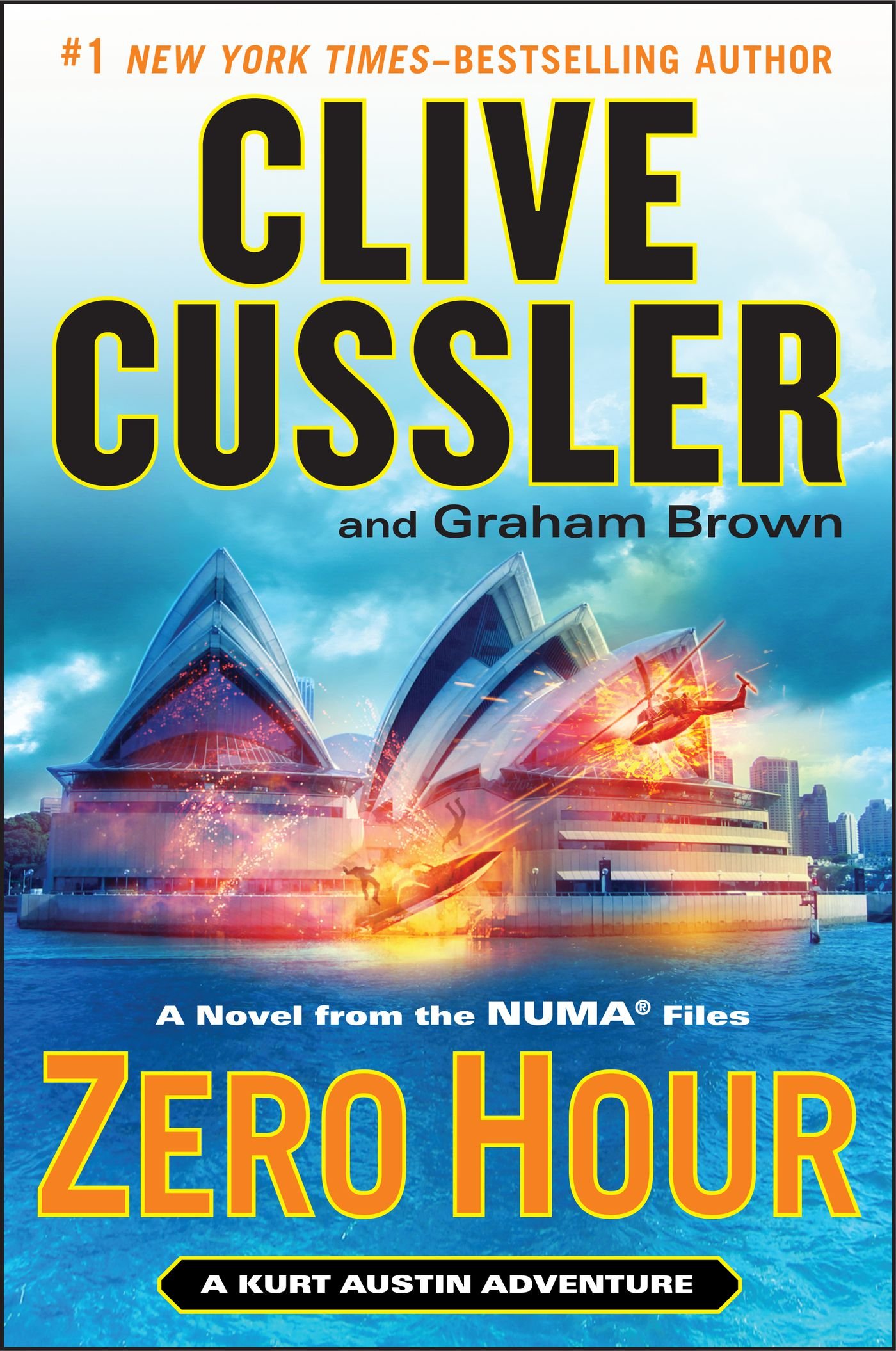
                • Cover of The NUMA Files
                  The NUMA Files

                  series · 6 books · 2004

                  similar bytensethriller & suspensecontemporaryour world+1 more

                  Clive Cussler's NUMA Files novels follow Kurt Austin, leader of the National Underwater and Marine Agency's Special Assignments Team, and his colleague Joe Zavala, through globe-spanning adventure-thrillers mixing action, exotic locations and speculative science. Lost City finds them investigating a life-extending enzyme discovered deep in the North Atlantic, and the string of deaths and disappearances surrounding its discovery. Zero Hour, Nighthawk and the following novels continue Austin's missions, later written with Graham Brown after original co-author Paul Kemprecos.

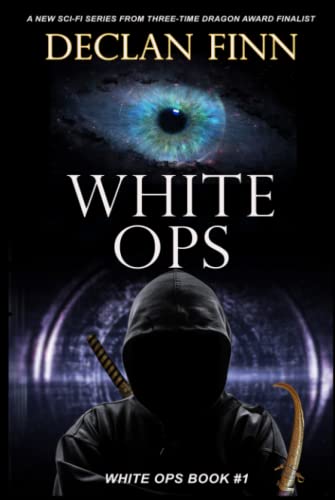
                • Cover of White Ops
                  White Ops

                  series · 5 books · 2022

                  similar bythriller & suspenseour world+1 more

                • Cover of Gregory Sallust
                  Gregory Sallust

                  series · 4 books · 1934

                  completed

                  similar bytensethriller & suspense+2 more

                  Dennis Wheatley's Gregory Sallust novels follow a resourceful, ruthless British secret agent operating against Nazi Germany, beginning with Black August's vision of a Britain collapsing into anarchy and continuing through wartime espionage across occupied Europe. The series, spanning the 1930s to the 1960s, mixes political thriller with Wheatley's taste for scheming villains and narrow escapes.

                • Cover of The Extinction Files
                  The Extinction Files

                  series · 2 books · 2017

                  similar bytensethriller & suspenseour worldcontemporary

                • Cover of Cotton Malone
                  Cotton Malone

                  series · 5 books · 2006

                  similar bythriller & suspensetensecontemporaryour world+1 more
                • Cover of Strangled Silence
                  Strangled Silence

                  Oisin McGann · standalone novel · 2008

                  similar bythriller & suspensetenseour worldcontemporarypolitical intrigue

                  Another brilliant story from the bestselling Oisin McGann, author of the critically acclaimed Small-Minded Giants and Ancient Appetites.When pretty, talented and very ambitious Amina Mir manages to land a newspaper work experience placement she thinks it might just be making coffee and following-up tame stories. But then, when by chance she's sent to interview Ivor MacMorris, a veteran of the war in Sinnostan who's just won millions on the lottery, but bizarrely hasn't spent a penny, things start to get interesting . . . and dangerous. Ivor thinks he's been made to forget what happened in Sinnostan. He believes false memories of how and why he lost an eye have been planted in his brain and that he's being followed by threatening faceless people. At first Amina thinks Ivor's suffering from some sort of post-traumatic stress disorder, but soon Ivor, conspiracy theorist Chi Sandwith and events persuade Amina that she could have stumbled into one of the biggest and most terrifying cover-ups ever.

                • Cover of The Doubt Factory
                  The Doubt Factory

                  Paolo Bacigalupi · standalone novel · 2014

                  similar bythriller & suspensetenseour worldcontemporarypolitical intrigue

                  The Doubt Factory is a novel by Paolo Bacigalupi, published on October 14, 2014, by Little, Brown for Young Readers. The novel chronicles the adventures of youths and young adults intent on exposing corporate malfeasance. The title describes the efforts of corporate public relations efforts to cast doubt on scientific findings in order to prolong the life of a product. The book has been characterized as didactic, "backed up with references to actual front groups, lawsuits, warning labels, and literature on the subject". In another review, Cory Doctorow praises the work as both a polemic and a novel.

                • Cover of Whiskey Tango Foxtrot
                  Whiskey Tango Foxtrot

                  David Shafer · standalone novel · 2014

                  similar bythriller & suspensetenseour worldcontemporarypolitical intrigue

                  Whiskey Tango Foxtrot is a 2014 debut novel by David Shafer.

                • Cover of Nina Wilde and Eddie Chase
                  Nina Wilde and Eddie Chase

                  series · 19 books · 2007

                  similar bythriller & suspensecontemporaryour world+1 more