Loreful
HomeDiscover
Search series, authors…⌘K
Loreful

Reading orders for SF/F series and shared universes — with your place kept in every one.

Explore

UniversesSeriesWorksAuthorsAtlas

Help

FAQAboutSite map

Account & legal

Sign inCreate accountPrivacyTerms

Data

Built on ISFDB, Wikipedia, Wikidata and Open Library. Curated reading orders carry their reasoning on the page; the rest follow publication order. Data sources & licenses

© Loreful · data: ISFDB · CC BY

More like Rowankind

anchored on:british isles

but

Mood

The mood the book leaves you in.

  • The reading experience is propelled by journeys, exploration, and physical risk; excitement and forward momentum dominate over dread or introspection.
  • Joy and loss are deliberately mixed; the resolution grants characters something real while taking something else away, leaving warmth and sorrow together.
  • The book demands work from the reader — dense prose, difficult structure, unfamiliar ideas, or morally uncomfortable material — as part of its intended effect.
  • Grim events, cruelty, or despair dominate the atmosphere, and the book does not soften them with comfort or comic relief.
  • The atmosphere is quietly unsettling — wrongness, unease, and the uncanny pervade the book without necessarily escalating into overt horror.
  • The book is built to move the reader; character feeling is foregrounded and major scenes aim at a strong emotional response.
  • Humor is a primary aim and the prose plays for laughs — comic situations, wit, or dialogue produce sustained comedy, not occasional levity.
  • The book insists that things can improve; effort and decency are shown to matter, and the arc bends toward better outcomes even through hardship.
  • The book teaches as it goes — real facts, history, science, or craft are conveyed in enough depth that learning is part of the reading experience.
  • The book is designed to uplift and motivate, presenting perseverance or achievement in a way that invites the reader to aspire or act.
  • The overall register is cheerful and easygoing; stakes are kept gentle and the book avoids dwelling on pain or dread.
  • Withheld information drives the experience; the book sustains enigmas and secrets the reader wants resolved, whatever its genre.
  • The book is contemplative and inward-looking, giving more weight to thought, memory, and meaning than to external events.
  • The book works as comfort reading — low tension, a soothing pace, and an atmosphere the reader can unwind in.
  • Grief, loss, or melancholy set the dominant register, and the book lets sorrow stand rather than resolving it into comfort.
  • Sustained suspense is the point; the book keeps the reader braced for what happens next through danger, pressure, or impending revelation.
  • Playful invention and charm define the register — fanciful conceits, light absurdity, and a narration that delights in its own oddity.

About

What the story runs on.

  • Stories in which extraterrestrial beings are central — as characters, cultures, or the object of the plot.
  • Stories centered on witches and the practice of witchcraft — covens, hedge magic, familiars, and the witch's place in her community.
  • Stories structured as a quest — a journey undertaken to find, deliver, or destroy something of great import.
  • Stories in which staying alive against nature, catastrophe, or scarcity is the central problem.
  • Stories of lovers kept apart by law, family, faith, or station, where the obstacle to love is the plot.
  • Stories in which a friendship — its making, testing, or loss — is the emotional center.
  • Stories of growing up — a young protagonist crossing from childhood into adult knowledge and responsibility.
  • Stories about who a character truly is — self-discovery, doubled lives, and the search for a self.
  • Stories in which a buried family truth — hidden parentage, crimes, or shames — surfaces and reorders the present.
  • Stories driven by maneuvering for power — factions, conspiracies, and statecraft conducted in shadow.
  • Stories in which war itself is the subject — combat, occupation, and what warfare does to soldiers and civilians.
  • Stories organized around investigating a killing — the case, the clues, and the pursuit of the killer, in any genre's clothing.

Shelf

Where it sits in the library.

    • Fiction built on magic or other supernatural elements that have no scientific explanation.
    • Secondary-world fantasy at large scale, where the fate of nations or the world turns on the protagonists' struggle.
    • Fantasy set in a recognizably modern city or contemporary world where the supernatural intrudes on everyday life.
    • Fantasy that blends in horror's atmosphere and imagery, keeping a fantastical frame around grim or frightening material.
    • Action-driven fantasy following warriors or rogues with personal stakes against sorcerous threats, rather than world-spanning conflicts.
    • Fantasy set in a real historical period or a close analogue of one, with magic woven into the era.
    • Fantasy in which protagonists cross from the ordinary world into another world through a portal or similar passage.
    • Fiction that retells or reworks a traditional fairy tale in a new form or setting.
    • Fantasy drawing directly on myths, legends, and folklore, retelling them or building on their figures and logic.
    • Fantasy of ghosts, vampires, shapeshifters, psychics, and similar phenomena, usually set in an otherwise ordinary world.
    • Fiction mixing science-fictional trappings with overtly magical or impossible elements in one setting.
    • Low-stakes fantasy emphasizing comfort, community, and everyday pleasures over conflict and peril.
    • Speculative fiction of pervasive moral ambiguity, violence, and cynicism that rejects heroic conventions — fantasy and SF alike.
      • Fiction that extrapolates from science and technology — future societies, space travel, or speculative inventions — within at least nominally natural laws.
      • Science fiction of interstellar scope — starships, galactic polities, and adventure across star systems.
      • Science fiction committed to scientific rigor, where technical plausibility constrains the story.
      • Science fiction centered on armed forces and warfare, told largely from a military point of view.
      • Science fiction of networked, corporate-dominated near futures, pairing high technology with social decay.
      • Science fiction styled on nineteenth-century steam-powered technology, often in a Victorian or pseudo-Victorian setting.
      • Fiction depicting an oppressive or catastrophic society, presented as a warning.
      • Fiction set after civilization's collapse, following survivors in the ruins of the old world.
      • Fiction in which characters move between past and future, and the mechanics or consequences of that travel drive the plot.
      • Fiction exploring a world where a historical event went differently and history diverged from ours.
      • Science fiction about humanity's first encounter and communication with an alien intelligence.
      • Science fiction in which extraterrestrial forces attack or occupy Earth and humanity resists.
      • Fiction whose primary aim is to frighten or unsettle the reader through dread, menace, or the monstrous.
      • Horror of vast, indifferent, incomprehensible entities before which humanity is insignificant, in the Lovecraft tradition.
      • Horror of decaying houses, buried family secrets, and oppressive atmosphere in the Gothic literary tradition.
      • Horror centered on hauntings and the returning dead.
      • Horror located in the mind — paranoia, obsession, and unreliable perception rather than external monsters.
      • Horror built around the reanimated dead and survival amid their outbreaks.
      • Horror defined by explicit, transgressive gore that refuses to cut away from violence.
      • Speculative fiction of the strange and uncanny that resists both natural explanation and standard genre categories.
      • Fiction organized around solving a crime or puzzle, typically following an investigator toward the identification of a culprit.
      • A puzzle-first mystery that lays out clues so the culprit's identity can be deduced before the reveal.
      • Crime fiction of moral ambiguity, fatalism, and hard-edged style, set among the corrupt and the doomed.
      • A mystery following the realistic routines of police work — forensics, interviews, and case-building.
      • A gentle mystery with an amateur sleuth, a small community, and violence kept off the page.
      • A mystery set in a past era, where the investigation works within that period's methods and society.
      • Fast-paced fiction driven by imminent danger, pursuit, or high-stakes conspiracy, built to sustain tension.
      • A thriller of espionage — agents, tradecraft, and intelligence services in conflict.
      • A thriller centered on lawyers and the courtroom, where litigation carries the suspense.
      • A thriller driven by detailed contemporary or near-future technology, often military or scientific.
      • A thriller whose tension comes from mental states and manipulation between characters rather than external action.
      • Fiction whose central plot is a romantic relationship and its development toward an emotionally satisfying resolution.
      • Romance in which one or both partners are supernatural beings, blending fantasy elements into the love story.
      • A fantasy-romance hybrid in which the romantic arc and the fantasy plot carry equal weight.
      • Romance set in a past era, with courtship shaped by the period's society and manners.
      • Romance set in the present day, without supernatural or historical elements.
      • Fiction set in a real past period, where the historical setting materially shapes characters and events.
        • General and literary fiction emphasizing prose style, character interiority, or formal ambition over genre plot conventions.
        • Fiction in a realistic world where magical events occur and are treated as ordinary, in the tradition of Latin American literature.
        • Fiction that ridicules people, institutions, or society in order to criticize them.
        • Fiction of dreamlike, irrational imagery and logic that breaks from realistic representation.
        • Fiction that plays with narrative convention through metafiction, fragmentation, and self-reference.
        • Fiction propelled by journeys, exploration, and physical peril, where action and survival carry the plot.
        • Adventure fiction of ships and seafaring — naval engagements, voyages, and life at sea.
        • Fiction of the American frontier West — gunmen, ranchers, and lawmen, typically in the late nineteenth century.
        • Fiction centered on soldiers, campaigns, and the experience of warfare, historical or imagined.
          • Fiction written primarily to amuse, using comedic situations, wit, or parody as its organizing principle.
            • Multi-generational fiction following a family or dynasty across decades, with inheritance and kinship as the through-line.
              • Fiction whose world runs on explicit game mechanics — levels, stats, and skills that characters can see and exploit.
                • Fiction about costumed or superpowered heroes and their conflicts with comparable villains.

                Practical

                How long a commitment, whether it stands alone, and whether it has finished.

                Tap a chip to ask for it · tap again to rule it out · once more to clear. Numbers show what would be left.

                • Cover of The Raven King
                  The Raven King

                  series · 13 books · 1996

                  similar bybritish isles19th centuryhistorical fantasy+1 more

                  Susanna Clarke's Jonathan Strange & Mr Norrell reintroduces magic to an alternate nineteenth-century England, centering on the prickly rivalry between the two title magicians as they revive a lost English tradition. The linked collection The Ladies of Grace Adieu, which includes the earlier story "Mr Simonelli, or the Fairy Widower," explores the same magical history from other corners of England and refers back to the legendary Raven King, said to have created English magic centuries before. The two books share a setting and mythology rather than a single sequential plot.

                • Cover of The Anubis Gates
                  The Anubis Gates

                  series · 3 books · 1983

                  similar bymysteriousbritish isles19th centuryfantasyhistorical fantasyadventurous

                  The Anubis Gates is a single time-travel fantasy novel by Tim Powers, following a present-day academic who takes part in a time-travel experiment and ends up stranded in early nineteenth-century London. It won the Philip K. Dick Award in 1983 and the Science Fiction Chronicle Award the following year.

                • Cover of Gemma Doyle
                  Gemma Doyle

                  series · 4 books · 2003

                  similar bybritish isles19th centuryfantasyhistorical fantasy+2 more

                  The Gemma Doyle Trilogy is a trilogy of fantasy novels by American writer Libba Bray. They are told from the perspective of Gemma Doyle, a girl in the late nineteenth century. The Gemma Doyle Trilogy consists of three books: A Great and Terrible Beauty, Rebel Angels, and The Sweet Far Thing.

                • Cover of The Last Binding
                  The Last Binding

                  series · 3 books · 2021

                  similar by19th centurybritish islesfantasyhistorical fantasy+3 more

                • Cover of Wolves Chronicles
                  Wolves Chronicles

                  series · 12 books · 1962

                  completed

                  similar by19th centurybritish islesadventurous+2 more

                  The Wolves Chronicles is Joan Aiken's long-running alternate-history series for young readers, set in a nineteenth-century England ruled by the Stuart dynasty and beset by wolves that have migrated across a Channel land-bridge. It opens with The Wolves of Willoughby Chase, in which two girls outwit a scheming governess sent to ruin them, and expands over twelve books into a sprawling saga of orphans, conspiracies, and journeys through a Britain quite unlike the real one. Aiken kept adding to the same timeline across more than four decades, including later prequels set before the first book.

                • Cover of List of 7
                  List of 7

                  series · 2 books · 1993

                  similar bymysteriousbritish isles19th century+2 more

                • Cover of Noctis Magicae
                  Noctis Magicae

                  series · 3 books · 2014

                  similar bybritish isles19th centurymagic schoolsfantasyhistorical fantasy+3 more

                • Cover of Elemental Masters
                  Elemental Masters

                  series · 59 books · 1995

                  similar by19th centuryfantasyhistorical fantasy+4 more

                  Mercedes Lackey's Elemental Masters series reimagines classic fairy tales in various historical settings, with mages who each command one of the four elements — fire, water, earth, or air. The opening novel, The Fire Rose, retells Beauty and the Beast around a fire mage trapped in a werewolf-like curse; later volumes retell other tales and, from Elemental Magic on, bring in numerous co-authors and short-story contributors across more than twenty books.

                • Cover of Stoker & Holmes
                  Stoker & Holmes

                  series · 5 books · 2013

                  similar bybritish isles19th century+3 more

                • Cover of The Invisible Library
                  The Invisible Library

                  series · 12 books · 2014

                  similar byfantasy+5 more

                  Genevieve Cogman's Invisible Library series follows Irene, an agent of an interdimensional Library that collects rare and dangerous books from across a multiverse of alternate worlds touched by varying degrees of magic and technology. Beginning with The Invisible Library (2014), the eight-book series continues through The Masked City and The Lost Plot on to The Untold Story (2021).

                • Cover of Checquy Files
                  Checquy Files

                  series · 4 books · 2012

                  similar bybritish islesfantasy+3 more

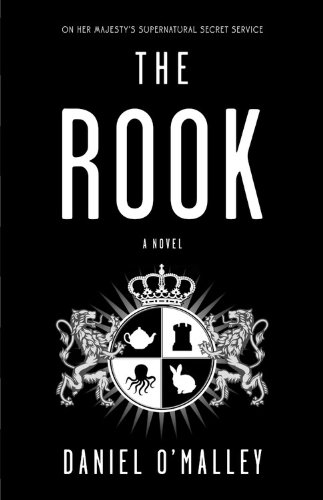
                  The Rook opens Daniel O'Malley's Checquy Files with Myfanwy Thomas waking up with no memory, surrounded by dead bodies and a letter from her former self explaining that she runs a secretive British agency defending the country from supernatural threats. She has to reconstruct her identity and hunt a traitor inside the organization while keeping up appearances at a job she can no longer remember how to do. The premise of paranormal bureaucracy and espionage continues across the rest of the Checquy novels.

                • Cover of The Extraordinary Adventures of the Athena Club
                  The Extraordinary Adventures of the Athena Club

                  series · 3 books · 2017

                  similar by19th centuryhistorical fantasybritish isles+4 more

                • Cover of Bartimaeus
                  Bartimaeus

                  series · 4 books · 2003

                  similar bypolitical intriguebritish islesfantasyadventurous+1 more

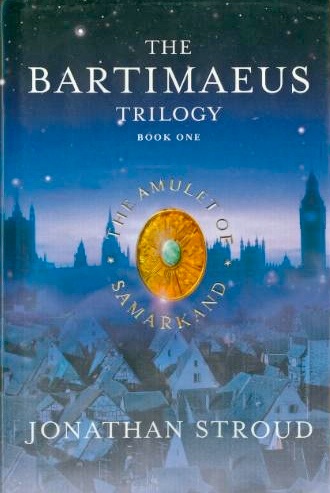
                  The Bartimaeus Sequence is a series of young adult novels of alternate history, fantasy and magic. It was written by British writer Jonathan Stroud and consists of a trilogy published from 2003 to 2005 and a prequel novel published in 2010. The story follows the career of a teenage magician Nathaniel and a five-thousand-year-old djinni Bartimaeus, whom he has summoned and nominally controls, through the alternate history of the peak of London's domination as a magical oligarchy.

                • Cover of Onyx Court
                  Onyx Court

                  series · 7 books · 2008

                  similar bybritish isleshistorical fantasy+3 more

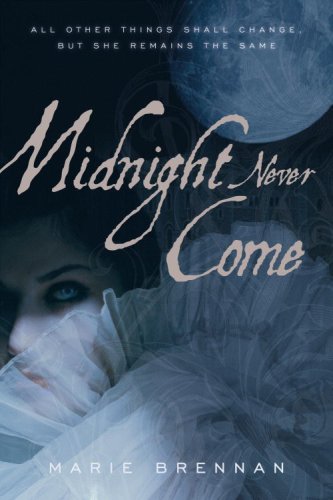
                  Marie Brennan's Onyx Court series is set in a faerie court hidden beneath London, ruled across the centuries by successive fae monarchs shadowing the human city above. It opens with Midnight Never Come, set in Elizabethan England under Elizabeth I's faerie counterpart Invidiana, and continues across later centuries through In Ashes Lie, A Star Shall Fall, and With Fate Conspire.

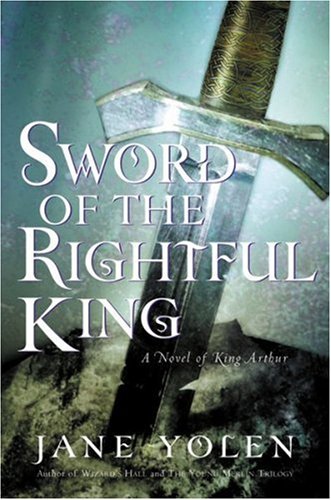
                • Cover of Sword of the Rightful King
                  Sword of the Rightful King

                  Jane Yolen · standalone novel · 2003

                  similar bybritish islespolitical intriguefantasyhistorical fantasyadventurous+1 more

                  "The newly crowned King Arthur has yet to win the support of the people. Merlin must do something before the king is betrayed, or murdered, or--worst of all--gets married..."

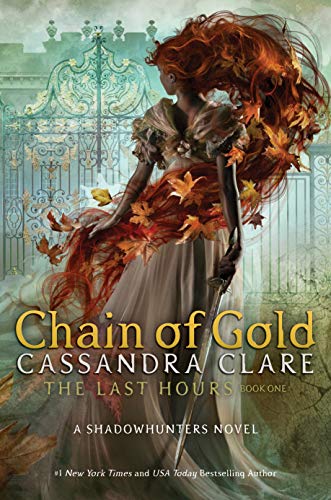
                • Cover of The Last Hours
                  The Last Hours

                  series · 4 books · 2019

                  part of The Mortal Instruments

                  similar bybritish isles+4 more

                  Cassandra Clare's The Last Hours opens with Chain of Gold, set in 1903 London among the Shadowhunters of the London Institute, part of the wider Shadowhunter Chronicles that includes The Mortal Instruments. Continuing the saga's tradition of chapter epigraphs drawn from Victorian and Edwardian poetry, the trilogy concludes across Chain of Iron and Chain of Thorns.

                • Cover of Ministry of Alchemy
                  Ministry of Alchemy

                  series · 5 books · 2016

                  similar bymysteriouspolitical intriguefantasyhistorical fantasyadventurous+1 more

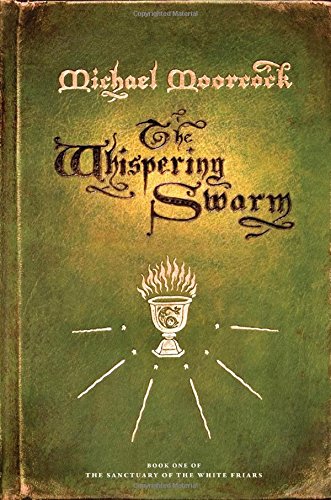
                • Cover of The Sanctuary of the White Friars
                  The Sanctuary of the White Friars

                  series · 2 books · 2015

                  similar bybritish islesfantasy+3 more

                  Michael Moorcock's Sanctuary of the White Friars opens with The Whispering Swarm, in which a monk named Friar Isidore draws a character named Michael into Alsacia, a hidden sanctuary tucked into the secret heart of London. The sequel, The Woods of Arcady, continues following that same character between the ordinary world and this concealed refuge. It's late-period Moorcock blending autobiographical framing with his long-running multiverse concerns.

                • Cover of Department of Unclassified Artefacts
                  Department of Unclassified Artefacts

                  series · 3 books · 2006

                  completed

                  similar by19th centurybritish isles+4 more

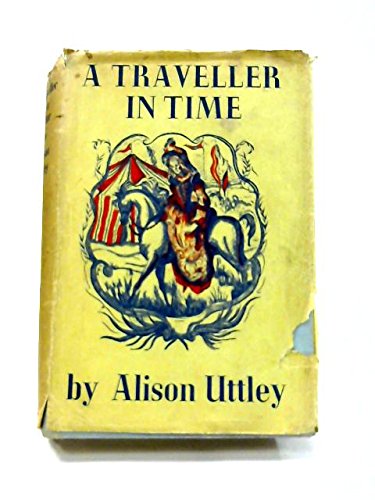
                • Cover of A Traveller in Time
                  A Traveller in Time

                  Alison Uttley · standalone novel · 1939

                  similar bymysteriousbritish islespolitical intriguefantasyhistorical fantasy

                  Timeslip story featuring the historical plot to free Mary Queen of Scots, or to murder, or both? Among more than 100 novels and collections, "Her most famous and successful novel for older children, A Traveller in Time (1939), is a fantasy based again on her rural childhood, concerning a local plot to murder Mary Queen of Scots in 1569 and a girl from the 20th century who uncontrollably Timeslips back 400 years to witness the tragedy." (underscore represents linked cross-reference) --SFE: Encyclopedia of Fantasy, biographical entry by Jo Fletcher "Based on the Babington Plot of Anthony Babington at Dethick, near her family home, this romance mixes dream and historical fact in a story about a 20th-century girl who is transported to the 16th century, becoming involved in a plot to free Mary, Queen of Scots from nearby Wingfield Manor." --Wikipedia, "Alison Uttley"

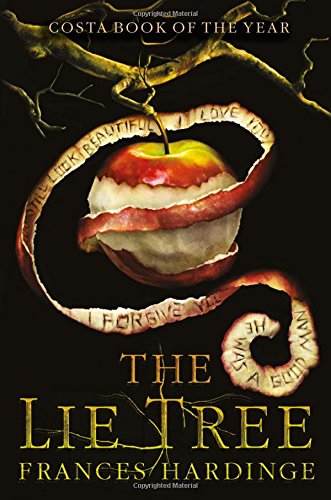
                • Cover of The Lie Tree
                  The Lie Tree

                  Frances Hardinge · standalone novel · 2015

                  similar bymysteriousbritish isles19th centuryfantasyhistorical fantasy

                  The Lie Tree is the seventh children's historical fantasy novel by Frances Hardinge, published in 2015 by Macmillan Publishers. The book won the 2015 Costa Book of the Year.

                • Cover of Kate and Cecelia Universe
                  Kate and Cecelia Universe

                  series · 4 books · 1988

                  similar by19th centuryfantasyhistorical fantasy+3 more

                • GE
                  Gas-Lit Empire Universe

                  series · 6 books · 2014

                  similar by19th century+4 more

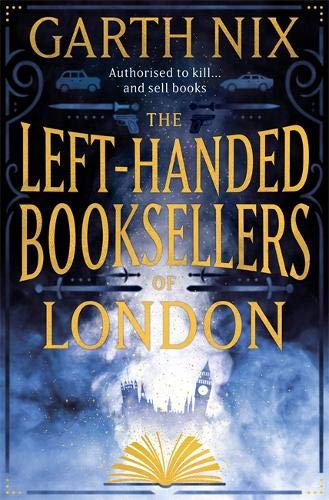
                • Cover of The Left-Handed Booksellers of London
                  The Left-Handed Booksellers of London

                  series · 2 books · 2020

                  similar bymysteriousbritish islesadventurous+2 more

                  Garth Nix's The Left-Handed Booksellers of London is set in a slightly alternate 1983 London, where Susan Arkshaw searches for the father she's never met. Her path crosses with Merlin, a left-handed bookseller — one of the fighting branch of an extended family of magical booksellers who police the mythic Old World where it intrudes on the modern one — who is pursuing his own hunt for the entity behind his mother's death. As their separate investigations tangle together, Susan's ordinary-seeming clues turn out to lead somewhere much stranger. The Sinister Booksellers of Bath continues their story.