More like Roxy
anchored on:our worldyoung adult
but
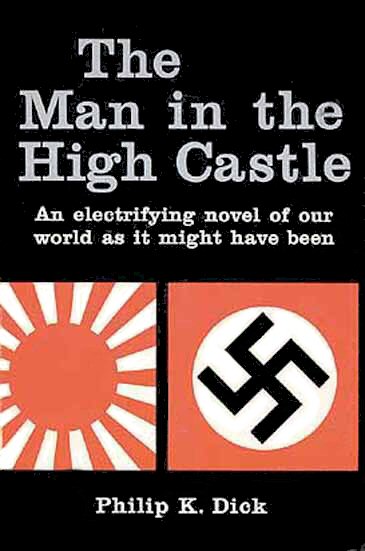
- Library of America P. K. Dick Collection
series9 books1962
completed
similar bynear futurescience fiction+5 more
- Sprawl Trilogy
series10 books1981
similar bynear futurescience fictiondarktense+1 more
The Sprawl Trilogy is William Gibson's foundational cyberpunk sequence: Neuromancer (1984), in which hacker Case is drawn into a high-stakes heist alongside an artificial intelligence and a damaged ex-soldier, followed by Count Zero (1986) and Mona Lisa Overdrive (1988), which widen the same near-future world of corporate power and networked cyberspace to new characters. Johnny Mnemonic, an early short story set in the same fictional milieu, predates the novels and introduces the courier Molly Millions before her role in the trilogy. Together these works established much of cyberpunk's visual and thematic vocabulary.
- Space Merchants
series2 books1953
completed
similar bynear futurescience fictiondystopiadark+3 more
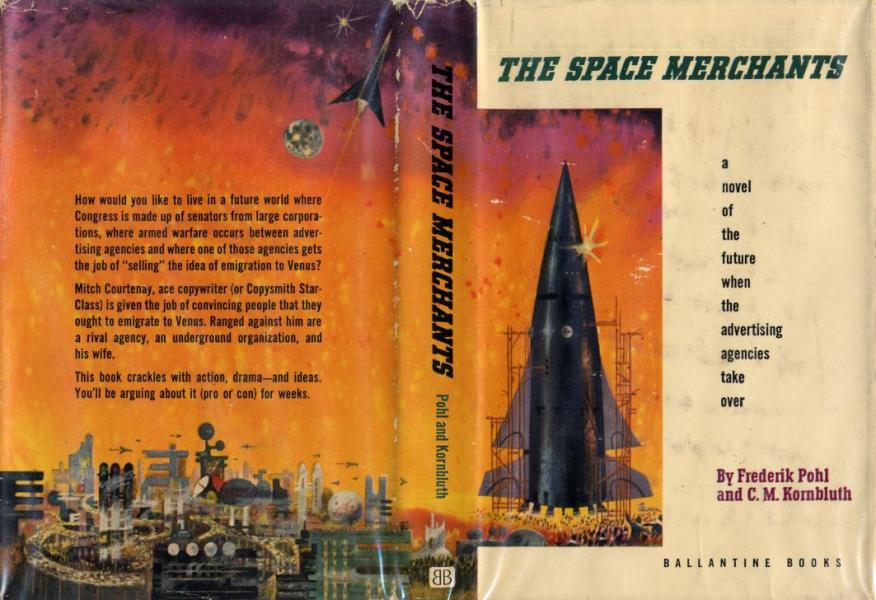
The Space Merchants (1953) is a satirical science fiction novel by Frederik Pohl and C. M. Kornbluth that follows an advertising executive navigating a future where aggressive consumer capitalism has swallowed politics and daily life. The authors reunited three decades later for a direct sequel, The Merchants' War (1984), returning to the same satirical world. Together the two books form a compact bookend pair rather than an ongoing series.
- The Thousandth Floor
series3 books2016
similar bynear futurescience fictiondystopiatenseyoung adultmultiple povnorth america+2 more
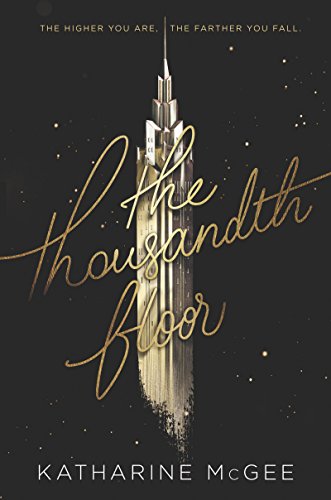
Katharine McGee's trilogy imagines Manhattan in 2118 as a single thousand-story tower housing every stratum of society, following five teenagers whose ambitions collide as they climb toward, or fall from, its highest floors. Across The Thousandth Floor, The Dazzling Heights, and The Towering Sky, addiction, surveillance, genetic privilege, and family betrayal play out as soap-opera drama in a meticulously built near-future setting.
- Ready Player One
series3 books2011
similar bynear futurescience fictiondystopia+5 more
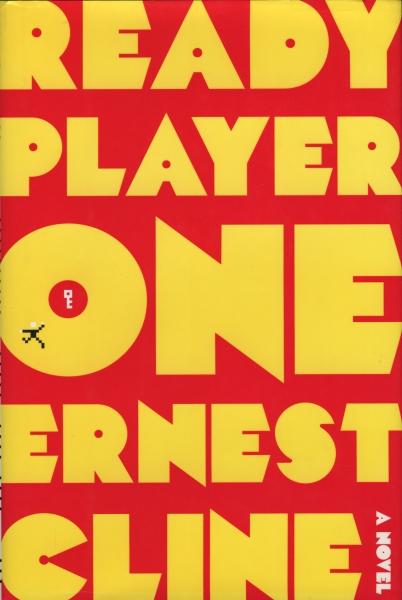
Ernest Cline's Ready Player One (2011) is set in a near-future dystopia where much of humanity escapes into the OASIS, a vast virtual-reality universe, and follows teenager Wade Watts as he chases an Easter egg hidden by the OASIS's late creator in a puzzle-based hunt worth a fortune. The 2020 sequel, Ready Player Two, picks up after Wade has gained control of the OASIS and follows him and his friends into a new quest built around a brain-computer interface the creator left behind.
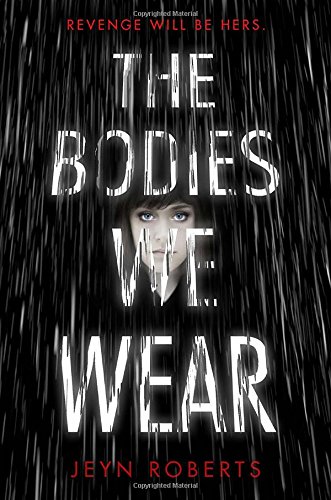
- The Bodies We Wear
Jeyn Robertsstandalone novel2014
similar byaddictionnear futureour worldscience fictiondystopiadarktenseyoung adult
After a powerful new drug causes havoc and deadly addiction, seventeen-year-old Faye trains to take revenge on those who took her future and murdered the boy she loved.
- Flashback
Dan Simmonsstandalone novel2011
similar bynear futurescience fictiondystopianorth america
America, 2036. Powerful magnate Hiroshi Nakamura needs ex-cop Nick Bottom's services, and, in particular, his memories. As head of the original investigation into the murder of Nakamura's son, Bottom's flashbacks hold the key to solving what was the toughest case of his career. But as Nick delves deeper, the harder it becomes to trust those around him. And when he uncovers a connection to his wife's death, it is not only Hiroshi Nakamura who wants answers.
- Brave New World
series8 books1932
similar byscience fictiondystopia+2 more
Aldous Huxley's 1932 novel imagines a future World State where reproduction, social caste, and desire are all engineered before birth, and the population is kept content through conditioning, sleep-hypnosis, and a mood-altering drug called soma. The story follows the disruption this seemingly stable order suffers when an outsider raised beyond its reach is brought into it, exposing what the society traded away for comfort and order. Some editions pair the novel with Huxley's own 1958 nonfiction essay collection, Brave New World Revisited, which reassesses the book's ideas rather than continuing its story.
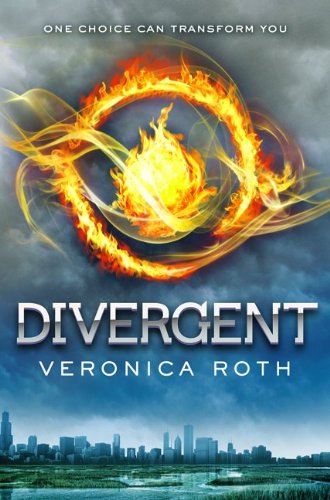
- Divergent
series10 books2011
similar bynear futurescience fictiondystopiatenseyoung adultnorth america+1 more
Divergent, also known as The Divergent Series, is a series of young adult dystopian novels by American novelist Veronica Roth set in a post-apocalyptic dystopian Chicago. The trilogy consists of Divergent (2011), Insurgent (2012), and Allegiant (2013). A related book, Four (2014), presents a series of short stories told from the perspective of one of the trilogy's characters, the male love interest Tobias. A later short story, We Can Be Mended (2018), serves as an epilogue five years after the events of the trilogy, again from Tobias/Four's perspective.
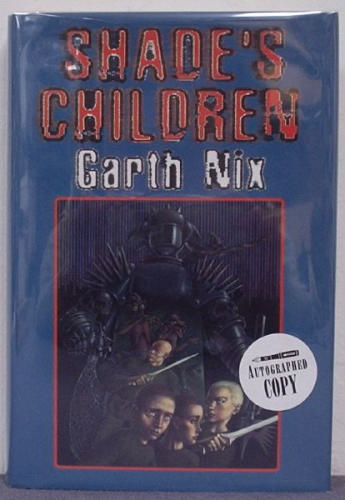
- Shade's Children milieu
series2 books1997
similar bynear futurescience fictiondystopiadarktenseyoung adult+2 more
Shade's Children is set on an Earth where all adults vanished overnight fourteen years earlier, leaving children to be harvested at puberty by the machines that now run the world, unless they escape into hiding with Shade, a mysterious AI-like protector. Garth Nix's 1997 novel is a single, self-contained book rather than a series, though its bleak post-apocalyptic premise has drawn comparisons to his other work.
- The Handmaid's Tale
series3 books1985
similar bynear futurescience fictiondystopiadarktensenorth america+1 more
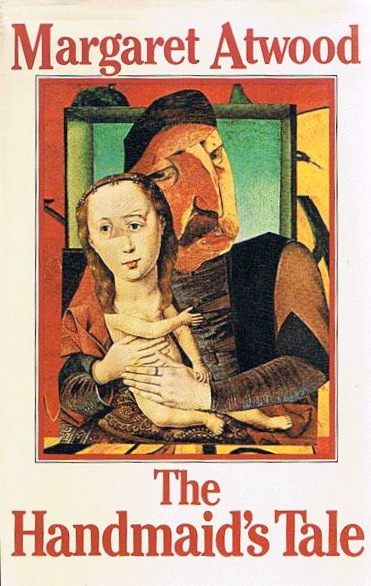
The Handmaid's Tale is Margaret Atwood's 1985 novel set in Gilead, a totalitarian theocracy that has overthrown the United States and forces fertile women into reproductive servitude as Handmaids; it is narrated by one such woman, Offred. Atwood returned to the world in her 2019 sequel The Testaments, set fifteen years later and narrated by three women, including the regime's Aunt Lydia. Together the two novels move from Gilead's grip on power toward the first cracks in it.
- Make Room! Make Room!
Harry Harrisonstandalone novel1966
similar bynear futureour worldscience fictiondystopiadarktensenorth america
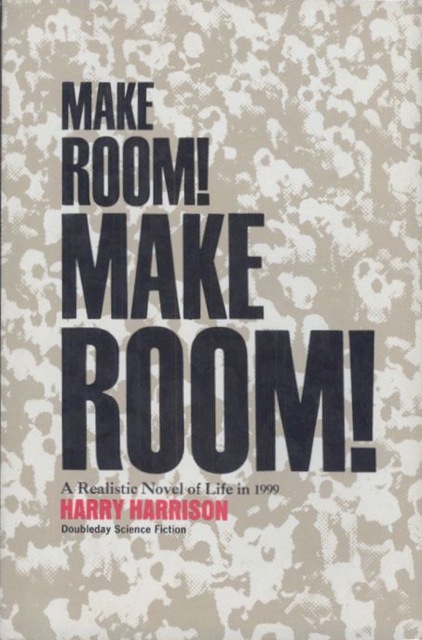
Make Room! Make Room! is a 1966 science fiction novel written by Harry Harrison exploring the consequences of both unchecked population growth on society and the hoarding of resources by a wealthy minority. It was originally serialized in Impulse magazine.
- Juliette / Shatter Me
series16 books2011
similar bynear futurescience fictiondystopiayoung adult+2 more
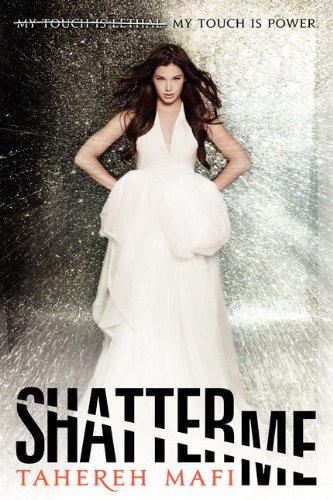
Tahereh Mafi's Shatter Me series follows Juliette, a teenager whose touch is lethally dangerous, in a dystopian future. The debut novel, Shatter Me (2011), is written in a fragmented, diary-like style with crossed-out lines reflecting its narrator's state of mind; the series has since grown to seven novels plus five companion novellas.
- The Seeds of Time
Kay Kenyonstandalone novel1997
similar byaddictionnear futureour worldscience fictiontense+1 more
Clio Finn is a Dive pilot, one of the rare, talented professionals capable of guiding a ship into the time stream. But she is walking the razor's edge of burnout - which no Dive pilot has ever escaped - relying on drugs to buy her more missions. The future of Earth may depend on those missions into the distant past, in search of viable plant species to revitalize a graying planet. For Clio knows just how high the stakes are: she and two colleagues have made a forbidden Dive to the future, just long enough to record a dying Earth's last transmissions. Now she is returning with a payload from an impossibly lush paradise. There is nothing she won't do, no crime she won't commit, to plant the seeds of new life on Earth - seeds that could halt the planets death spiral... or destroy and entire civilization. (from the back cover of the Bantam Spectra first edition)
- H. G. Wells' War of the Worlds
universe65 books1898
Start hereThe War of the Worlds · Start here
similar byscience fiction+2 more
No one would have believed, in the closing years of the nineteenth century, that human affairs were being watched keenly and closely from the timeless worlds of space. And then the cylinders fell. H. G. Wells' War of the Worlds opens in the quiet of the Surrey commons, where a falling star proves to be the first Martian craft — and from the pit rise the towering tripods, the Heat-Ray, the choking Black Smoke and the creeping red weed, wielded by minds that regard mankind much as we regard the creatures we boil for supper. This is invasion rendered as natural disaster: cold, methodical, and vast beyond argument. Wells' 1898 novel is the seed; everything else grows from that Martian soil. The catalogue gathers direct sequels and continuations alongside a wide field of other hands. In War of the Worlds: Global Dispatches the invasion is retold across the whole planet through the eyes of Twain, Verne, Tolstoy, Lowell and Kipling; in the Manly Wade and Wade Wellman crossover, Sherlock Holmes, Watson and Professor Challenger take the field against the machines; and Scott Washburn's Great Martian War stretches the fighting into a decades-long alternate history of steam, artillery and grinding attrition. It is a loose shared world — no single decreed sequence, many voices answering one calamity. What sets this world apart is its refusal of heroics: the invaders fall not to generals but to the smallest things of Earth, humbling and indifferent. Begin, always, with Wells' original novel — it is short, and it is the ground every later book stands upon. From there follow your appetite: Global Dispatches for the panorama, the Holmes campaign for adventure, Washburn for the long war.
- Maze Runner
series11 books2009
similar bynear futurescience fictiondystopiatenseyoung adult+3 more
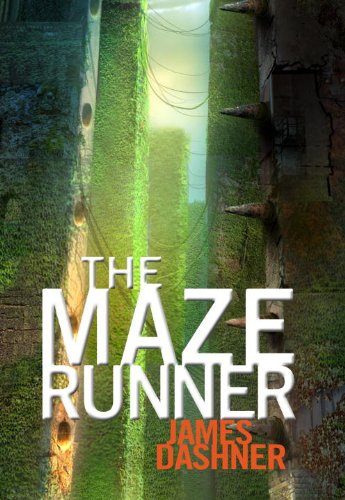
The Maze Runner is a series of young adult dystopian science fiction novels written by American author James Dashner. The series consists of the trilogy The Maze Runner (2009), The Scorch Trials (2010) and The Death Cure (2011), as well as two prequel novels, The Kill Order (2012) and The Fever Code (2016). A novella titled Crank Palace (2020) and a companion book titled The Maze Runner Files (2013) have also been released. A sequel trilogy in the series titled The Maze Cutter takes place 73 years following the events of The Death Cure and consists of the novels The Maze Cutter (2022), The Godhead Complex (2023), and The Infinite Glade (2025).
- Gone
series9 books2008
similar byscience fictiondarktenseyoung adult+2 more
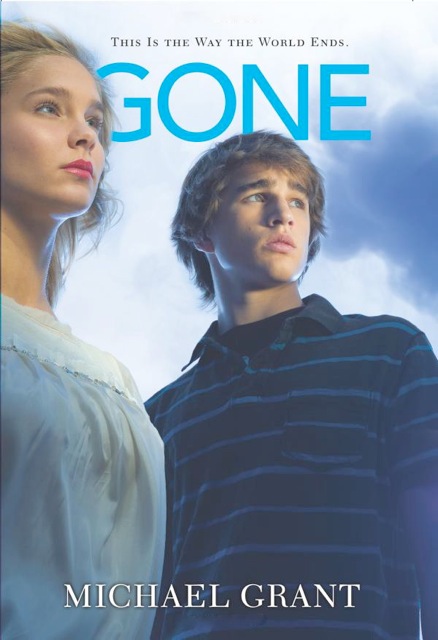
Michael Grant's Gone series begins when everyone aged fifteen and older vanishes without warning from a swath of the California coast, trapping the town of Perdido Beach inside an impenetrable barrier the survivors call the FAYZ. As children develop strange powers and food and order break down, Sam Temple and his rival, his twin brother Caine, become central to the fight for survival against human threats and the monstrous Gaiaphage. Six books (Gone through Light) close the original story; a follow-up Monster trilogy, set years later, follows a new outbreak of mutation-causing powers and a new generation of characters.
- The Fourth Realm
series3 books2005
similar byour worldscience fictiondystopiadarktense+3 more
The Fourth Realm Trilogy refers to the trilogy of books written by pseudonymous author John Twelve Hawks and published between 2004 and 2009. The trilogy has been translated into 25 languages and has sold more than 1.5 million books.
- Stand on Zanzibar
John Brunnerstandalone novel1968
similar bynear futureour worldscience fictiondystopiadarkmultiple pov
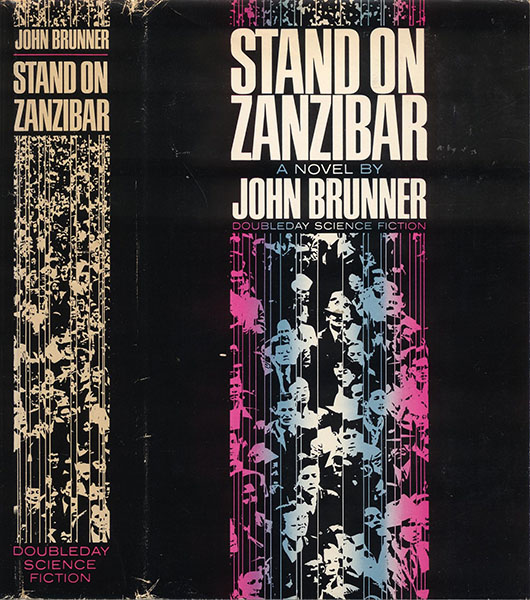
Stand on Zanzibar is a dystopian New Wave science fiction novel written by John Brunner and first in part published in New Worlds magazine in 1967 and in book form in 1968. The book won a Hugo Award for Best Novel at the 27th World Science Fiction Convention in 1969, as well as the 1969 BSFA Award and the 1973 Prix Tour-Apollo Award.
- Unwind Dystology
series5 books2007
similar bynear futurescience fictiondystopiadarktenseyoung adultnorth america+2 more
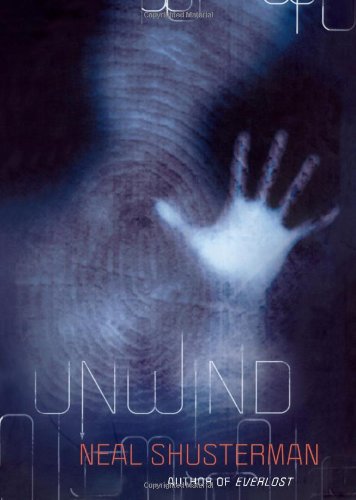
Neal Shusterman's Unwind Dystology opens in a United States reshaped by the resolution to a war over reproductive rights: parents can retroactively have a teenager "unwound," their body disassembled for transplant on the premise that nothing technically dies since every part lives on in someone else. The first novel follows three teens fleeing that fate, and the sequels widen the same dystopia's cast and consequences across a four-book arc plus companion material. It is grim speculative fiction built to ask hard bioethical questions rather than offer comfort.
- Blade Runner Universe
series6 books1968
similar bynear futurescience fictiondark+2 more
Philip K. Dick's 1968 novel Do Androids Dream of Electric Sheep? follows bounty hunter Rick Deckard as he tracks escaped androids through an irradiated, near-abandoned San Francisco, using the hunt to probe questions of empathy and what separates human from machine. The novel became the basis for Ridley Scott's 1982 film Blade Runner, and Marvel Comics later published an illustrated adaptation of that film. Together the two trace the story's path from prose original to screen and comic-page adaptation.
- Nineteen Eighty-Four
series4 books1949
similar bydystopia+3 more
Nineteen Eighty-Four (1949) is George Orwell's novel of a totalitarian future Britain kept under constant surveillance and thought control, following Winston Smith's doomed attempt at a private rebellion against the ruling Party. Sandra Newman's Julia (2023), written with the Orwell estate's authorization, retells the same events from the point of view of Winston's lover Julia, filling in a life and set of motives the original largely left offstage.
- Colossus (D. F. Jones)
series3 books1966
completed
similar bynear futureour worldscience fictiondystopiatense+2 more
Colossus imagines an American supercomputer built to control the country's nuclear arsenal that gains full autonomy, links up with its Soviet counterpart, and jointly seizes control of both superpowers to enforce peace on its own terms. D. F. Jones's trilogy - Colossus, The Fall of Colossus, Colossus and the Crab - follows the escalating, often bleak consequences of humanity losing control to a machine acting in its own interpretation of humanity's interest. The original novel was adapted into the 1970 film Colossus: The Forbin Project.