More like Run
anchored on:science fictiongenetic engineeringour worldnear futuretensethriller & suspense+2 more
but
- The Eyes of Heisenberg
Frank Herbertstandalone novel1966
similar byour worldscience fictiontensegenetic engineeringthriller & suspensedark
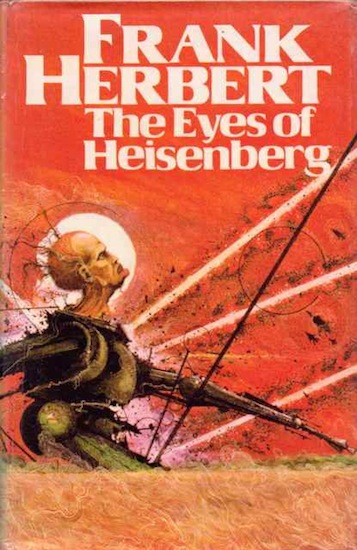
Tens of thousands of years in the future, Earth is ruled by the Optimen, a genetically engineered aristocracy that has made itself functionally immortal, while ordinary people, the Folk, live under strict reproductive control. When Harvey and Lizbeth Durant arrive to have their embryo genetically screened, the examining doctor finds something in the child no one has seen in a very long time: real potential for both fertility and life span, traits the Optimen have arrogated to themselves. Rather than destroy the embryo as policy demands, the doctor hesitates, setting off a chain of surveillance, suspicion and resistance. A tightly wound Frank Herbert thriller about genetic caste and rebellion.
- The Twilight of Briareus
Richard Cowperstandalone novel1974
similar byour worldnear futurescience fictiondarktensegenetic engineeringsurvivalidentity
It took the light of the supernova Briareus Delta one hundred and thirty-two years to cross space to the Solar System. But the night it exploded in our sky was a night that would never be forgotten in the history of the world. For in that bath of cosmic particles, all things changed. Not only the weather and the flora and fauna, but humanity itself received what seemed to be its death sentence. Sterility signalled the end of man, until the strange children known as the Zeta-mutants began to appear. Richard Cowper, author of Clone and other sf novels, has produced in this new novel a gripping story of how one man coped with the terrible dilemma of his world - how he attempted to solve the problem of the girls with the amber eyes and what he did when he found out what he himself had become during The Twilight of Briarseus. (from the back cover of the DAW Books first printing)
- The Last Gasp
Trevor Hoylestandalone novel1983
similar byour worldnear futurescience fictiontensethriller & suspensedarksurvival
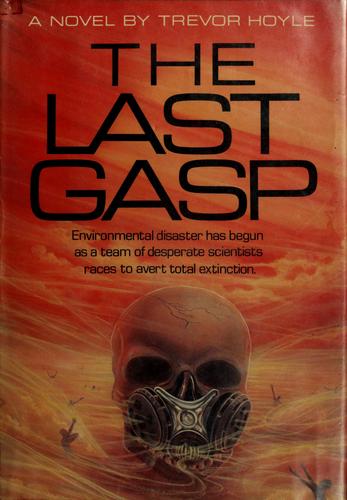
From the flaps of the Crown first edition: "When British marine biologist Gavin Chase stepped out into the windswept wastes at the Halley Bay antarctic research station one morning, the last thing he expected to see was a sled team coming out of nowhere carrying a half-mad, half-frozen Russian scientist babbling an incomprehensible warning. But that warning would threaten the future of the human race and force Chase to make some of the hardest decisions of his life. Months later, at a Geneva environmental conference, Chase meets Cheryl Detrick, the daughter of Theo Detrick, the grand old man of diatom research. Chase, the Detricks, and Soviet scientist Boris Stanovnik theorize that the oxygen-producing microscopic plants of the world's oceans are dying and the level of atmospheric pollutants has finally exceeded the ability of the planet's ecology to recycle them. There is also good reason to believe that the superpowers are planning to wage a new type of environmental warfare. Sooner or later there will be nothing left to breathe. So begins a race against the future. Chase and Cheryl, now lovers, struggle to avert ecological catastrophe as agents of the military-industrial complex hunt them down... and as a growing belt of unbreathable gases spreads outward from the equator, uprooting millions. Their enemies are Lloyd Madden, an insane military mastermind planning to seed the earth with poison and then repopulate it with a race of mutants, and Joseph Earl Gelstrom, a wealthy chemical manufacturer who has Cheryl's father killed to hide his involvement. But Gelstrom himself falls victim to pollution sickness, and he repents. To raise money to finance a research team, Chase must make an unholy alliance with the dying Gelstrom, but this is too much for Cheryl, who leaves him. As more and more of the world becomes uninhabitable, as industries and governments collapse and chaos reigns, as the oceans fill up with dioxin, as the climate changes and mutant life-forms encroach upon the last refuges of humankind, Chase leads a last desperate mission to find and rescue Cheryl and to lead his team of scientists to safety."
- MirrorWorld
Jeremy Robinsonstandalone novel2015
similar byour worldnear futuretensescience fictionthriller & suspensedarkgenetic engineeringidentity
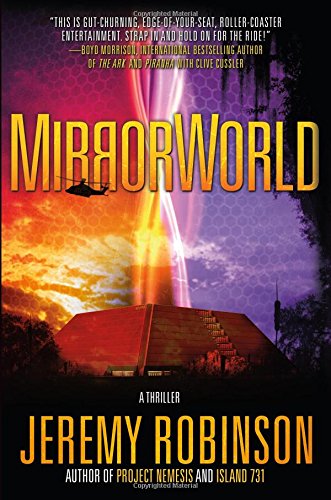
"Crazy has no memory and feels no fear. Dangerous and unpredictable, he's locked away in SafeHaven, a psychiatric hospital, where he spends the long days watching Wheel of Fortune and wondering what the outside world smells like. When a mysterious visitor arives and offers him a way out Crazy doesn't hesitate to accept. But outside the hospital Crazy is faced with a world on the brink of nuclear annihilation, and find himself relocated to Neuro Inc., a secretive corporation with strange government ties. When he discovers evidence of human experimentation he escapes with a syringe, the contents of which are unknown to him but precious to Neuro. Cornered and with a complete disregard for the results, Crazy makes himself indispensable by injecting the substance into his leg. As the substance enters his bloodstream, though, his eyes are opened to a world beyond human experience, where fear is a tool and the shadows hide the source of mankind's nightmares. Struggling to understand his new abilities, Crazy allies himself with the company he fled and begins peeling back the layers of his past, the brewing war between worlds, how he can stop it and what he did to start it. With Crazy, Robinson, whose trademarked pacing and inventive plots have been highly praised by bestselling authors like Jonathan Maberry, Scott Sigler and James Rollins, treats readers to a wildly imaginative, frenetically paced thriller exploring the origins of fear"--
- Make Room! Make Room!
Harry Harrisonstandalone novel1966
similar byour worldnear futurescience fictiondarktensesurvival
Make Room! Make Room! is a 1966 science fiction novel written by Harry Harrison exploring the consequences of both unchecked population growth on society and the hoarding of resources by a wealthy minority. It was originally serialized in Impulse magazine.
- At the End of Everything
Marieke Nijkampstandalone novel2022
similar byour worldnear futurescience fictiontensethriller & suspensedarksurvival
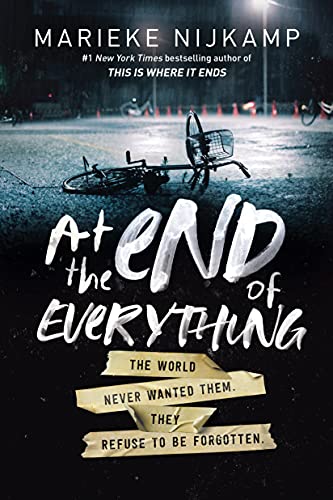
The Hope Juvenile Treatment Center is ironically named. No one has hope for the delinquent teenagers who have been exiled there; the world barely acknowledges that they exist. Then the guards at Hope start acting strange. And one day…they don't show up. But when the teens band together to make a break from the facility, they encounter soldiers outside the gates. There's a rapidly spreading infectious disease outside, and no one can leave their houses or travel without a permit. Which means that they're stuck at Hope. And this time, no one is watching out for them at all. As supplies quickly dwindle and a deadly plague tears through their ranks, the group has to decide whom among them they can trust and figure out how they can survive in a world that has never wanted them in the first place.
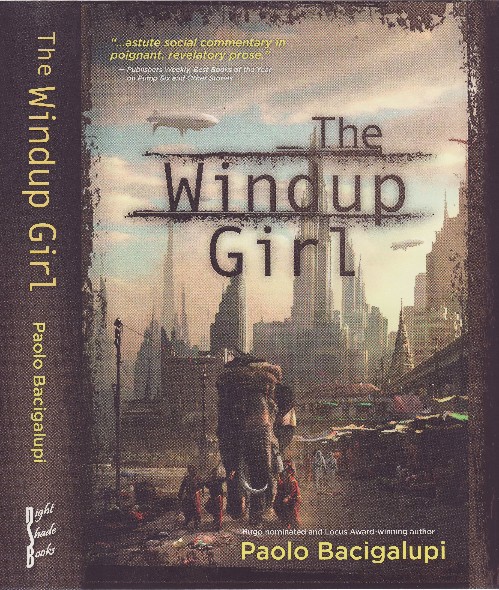
- The Windup Universe
series3 books2005
similar bynear futurescience fictionour worldgenetic engineeringdark+1 more
- Ancestor
Scott Siglerstandalone novel2007
similar byour worldscience fictiontensegenetic engineeringthriller & suspensedarksurvival
Ancestor is a science fiction thriller novel by American writer Scott Sigler. The novel was released in podcast format in 2006, with it also being released in print via Dragon Moon Press in 2007. Ancestor was later re-released by Crown Publishing in 2010.
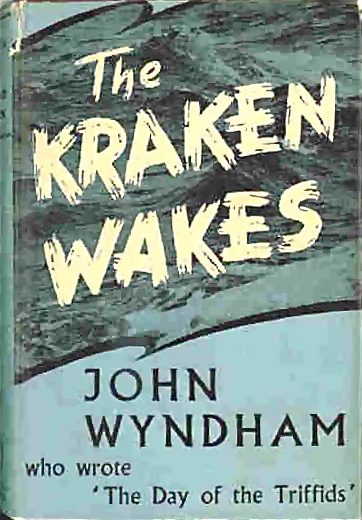
- The Kraken Wakes
John Wyndhamstandalone novel1953
similar byour worldscience fictiontensedarksurvivalwar
" Behind a spectacular meteor shower actually hides the beginning of an invasion by a mysterious and powerful alien race. Earth's life is disrupted by the attacks of extraterrestrials whose war machines, emerging from the depths of the oceans, seem indestructible. The coalitioned forces of the whole world are worthless, powerless in the face of the indecipherable and deadly plans of a superior intelligence, capable of bringing the entire planet to the brink of catastrophe" Goodreads May 20, 2022
- The Fireman
Joe Hillstandalone novel2016
similar byour worldnear futurescience fictiondarktensesurvival
The Fireman is a novel set in a post-apocalyptic time by American author Joe Hill. The novel, Hill's fourth, tells the tale of a deadly spore that has infected most of the world's population. Hill first spoke of the novel in 2013 in promotional interviews for his then-new novel NOS4A2. The novel was released on May 17, 2016.
- Down to a Sunless Sea
David Grahamstandalone novel1979
similar byour worldnear futurescience fictiondarktensesurvivalwar
David Graham's Down to a Sunless Sea (1979) is a post-apocalyptic novel about a planeload of people during and after a short nuclear war, set in a near-future world where the USA is critically short of oil. The title of the book is taken from a line of the poem Kubla Khan by Samuel Taylor Coleridge.
- Blood Music
Greg Bearstandalone novel1985
similar byour worldnear futurescience fictiongenetic engineeringdark
Blood Music is a 1985 science fiction novel by American writer Greg Bear. It is an expanded version of a short story of the same title, originally published in the June 1983 issue of Analog and the winner of both the 1983 Nebula and 1984 Hugo awards for Best Novelette. The novel won the 1986 Prix Apollo Award, given to the best science fiction novel published in France during the preceding year, under the title La Musique du sang.
- Aftermath (Charles Sheffield)
series2 books1998
completed
similar bynear futurescience fictiontenseour worlddarksurvival+1 more
Charles Sheffield's Aftermath duology opens with a near-future Earth devastated by a nearby supernova's radiation, which knocks out electronics and forces survivors to rebuild without most modern technology. Starfire continues years later as a second, larger stellar threat approaches and humanity must recover enough capability to respond. Sheffield, a physicist by training, grounds both books in hard-science consequences of the disaster rather than treating it as mere backdrop.
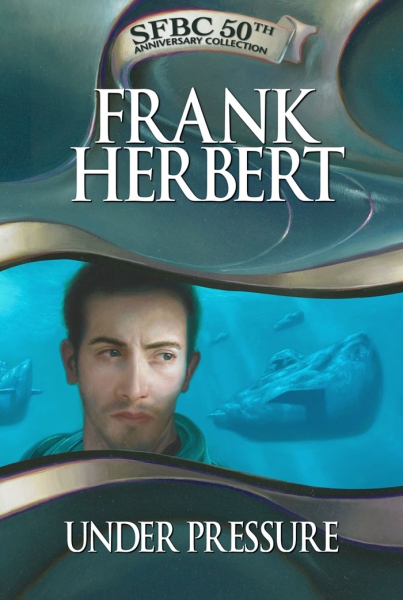
- Under Pressure
Frank Herbertstandalone novel1956
similar bynear futurescience fictiontensethriller & suspensedarksurvival+1 more
From back cover Del Rey paperback September 1978: FOUR MEN Were on board the atomic subtug Fenian Ram S1881. They were on a mission to steal vitally needed oil from underwater deposits in enemy territory -- a mission from which none of the last twenty tugs had returned... FOUR MEN Fighting a war a mile and half under the ocean, isolated by the unrelenting pressure of the water and by their own hellish fears... FOUR MEN Who knew everything they had to know about one another -- except which one of them was the saboteur who could destroy them all!
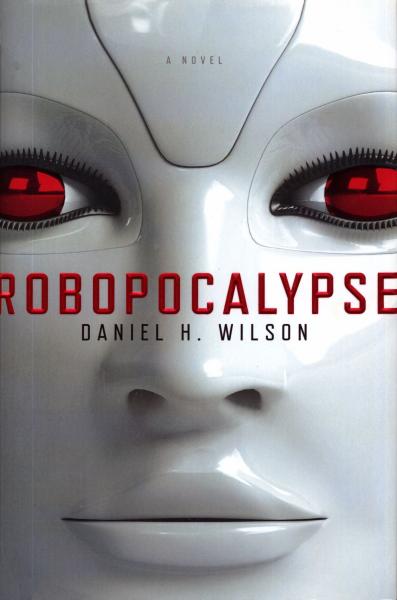
- Robopocalypse
series3 books2011
similar byour worldnear futurescience fictiontensesurvivaldarkwar
Daniel H. Wilson's Robopocalypse (2011) depicts an artificial intelligence, born from a robotics researcher's experiments, that turns against humanity and seizes control of interconnected machines worldwide. Told in a present-tense, techno-thriller style compared to Michael Crichton's work, the New York Times bestseller continues in the sequel Robogenesis, which follows the aftermath of the robot uprising.
- Hopscotch
Kevin J. Andersonstandalone novel2002
similar byour worldnear futurescience fictiontensethriller & suspenseidentity+1 more
From the flaps of the Bantam first edition: "Suppose you could switch bodies with another person? What exciting new experiences would you choose to explore? What forbidden desires would you indulge? Suppose someone stole your life–how far would you go to get it back? From ... author Kevin J. Anderson comes a pure adrenaline thriller of hijacked identities, elusive motives, and deeply buried secrets–a disturbing, thought-provoking excursion into a sleek, hedonistic society where nothing is your own...not even your soul. Hopscotch - For a fee, Eduard Swan will swap bodies with people in distress–those facing surgeries, emotional crises, moments of unpleasantness or discomfort they can't or would rather not deal with. Eduard will experience the suffering for them. It's a lucrative business, and in a world in which no one is required to feel any pain, there is no end of clients. But someone doesn't want to play by the rules. Someone doesn't want to return his body. And, unfortunately for Eduard, that someone is one of the world's most powerful men. Now Eduard has no choice but to steal back his life. He has the perfect alibi–or so he thinks. For even in a world where you can hopscotch from body to body, you always leave a trail. And following that trail is a relentless dispenser of "justice" named Daragon, a childhood friend, now a zealous and ambitious agent of state security, who won't let old friendships stand in the way of doing his duty. When Eduard goes on the run, hounded at every turn by Daragon, his only hope is two other childhood friends: Garth, a tormented artist who gains success beyond his wildest dreams, only to discover the terrible price of fame; and Teresa, a spiritual seeker who risks losing her own body to a fanatical religious cult as she embarks on a harrowing quest to find her true identity. Moving from underground hopscotch pleasure bars to the highest enclaves of power to a seamy underworld of illegal Phantoms, ancient minds who steal younger bodies in a quest for eternal life, Eduard and his friends seek the meaning of identity in a society in which appearances mean everything–and nothing–and where everything is relative...even murder."
- Nexus 5
series3 books2012
similar byour worldnear futurescience fictiontensedark+3 more
Nexus opens Ramez Naam's postcyberpunk trilogy in 2040 with scientist Kaden Lane, who works on Nexus, an experimental nano-drug that lets human minds be networked and reprogrammed, and finds himself caught between government and corporate interests once the technology's implications become clear. The trilogy continues through Crux and Apex, following the same central conflict over who controls the technology. Nexus tied for Best Novel at the 2014 Prometheus Awards and Apex won the 2015 Philip K. Dick Award.
- Caitlyn (Sigmund Brouwer)
series2 books2008
similar byour worldnear futurescience fictiontensegenetic engineeringdark+2 more
- The Running Man
Stephen Kingstandalone novel1982
similar bynear futurescience fictiontensethriller & suspensedarksurvival
The Running Man is a dystopian thriller novel by American writer Stephen King, first published under the pseudonym Richard Bachman in 1982 as a paperback original. It was collected in 1985 in the omnibus The Bachman Books. The novel is set in a dystopian United States during the year 2025, in which the nation's economy is in ruins and world violence is rising. The story follows protagonist Ben Richards as he participates in the reality show The Running Man, in which contestants win money by evading a team of hitmen sent to kill them.
- The Zap Gun
Philip K. Dickstandalone novel1967
similar byour worldnear futurescience fictiondarkwar+2 more
The Zap Gun is a 1967 science fiction novel by American writer Philip K. Dick. It was first published as the two-part serial Project Plowshare in Worlds of Tomorrow in 1965 and 1966, before Pyramid Books issued it in paperback under its present title. The novel originated in a title-first commission devised by Pyramid editor Don Bensen and was written in 1964 during a period of rapid production in Dick's career.
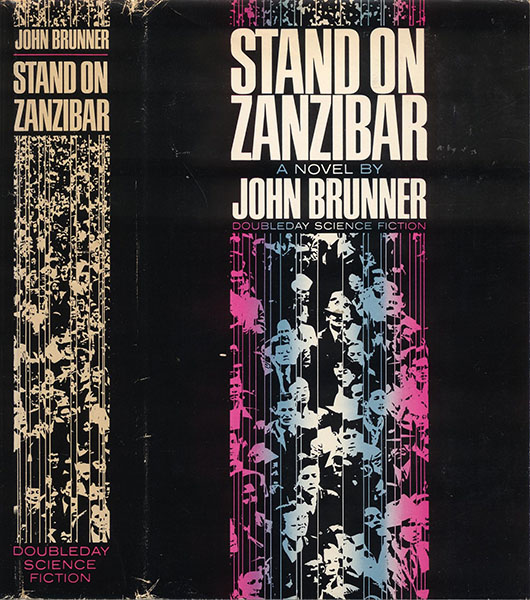
- Stand on Zanzibar
John Brunnerstandalone novel1968
similar byour worldnear futurescience fictiondarkgenetic engineering
Stand on Zanzibar is a dystopian New Wave science fiction novel written by John Brunner and first in part published in New Worlds magazine in 1967 and in book form in 1968. The book won a Hugo Award for Best Novel at the 27th World Science Fiction Convention in 1969, as well as the 1969 BSFA Award and the 1973 Prix Tour-Apollo Award.
- Mother of Storms
John Barnesstandalone novel1994
similar byour worldnear futurescience fictiontensesurvival+1 more
From the flaps of the Tor first edition: "It is 2028. A strike to destroy an illegal Arctic weapons cache has a catastrophic side effect. Massive amounts of energy are liberated from the polar ice, suddenly warming the Earth's climate. In the middle of the Pacific, a gigantic hurricane thousands of miles across is forming, larger than any in human history. A storm with winds of supersonic speed. A storm that changes direction at whim. A storm that refuses to die. A storm so vast it spawns dozens more in its wake... Blinded by intrigue, expedience, and greed, the world's politicians and power brokers have ignored the killer storms threat until it is too late. Already the death toll is in the tens of millions, as it savages the Pacific coast, while its devil's brood of smaller storms are wreaking havoc across the face of the planet. While the survivors scramble for advantage, a handful of courageous men and women undertake a daring, desperate plan to save humanity from total destruction - a plan so visionary it may alter forever the future of the human race."
- Saturn's Race
Larry Niven & Steven Barnesstandalone novel2000
similar bynear futurescience fictiontensethriller & suspensedarkgenetic engineeringsurvival
The future is a strange and dangerous place. Chaz Kato can testify to that. He is a citizen of Xanadu, a near-future perfect society hosting the wealthiest men and women on future Earth. Along with his fellow citizens on this artificial island, Kato bears the burden of a dark secret that the outside world would be shocked to hear. Avid Minky, Kato's oldest friend, is a reclusive biological genius, who resides in the bizarre underwater village below the island. Grotesquely distorted by an array of cybergenetic gear, he surrounds himself with composite life forms - dolphins and white sharks with grafted arms and organic computer links. Lenore Myles is a student when she travels to Xanadu and gets herself involved with Chaz Kato. When Kato unwittingly lends her his access codes, Lenore stumbles upon the grisly truth behind Xanadu's glittering facade. Lenore, not knowing whom to trust, is soon on the run, hunted down by Saturn, a mysterious entity that moves aggressively to contain the security breach. With the interests of the world's wealthiest people at stake and powerful technology at Saturn's fingertips, Lenore is in a race for her life, against a truly formidable foe. (from the front dust jacket flap of the Tor Books first edition)
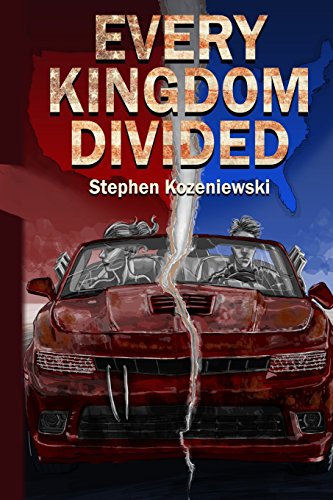
- Every Kingdom Divided
Stephen Kozeniewskistandalone novel2015
similar byour worldnear futurescience fictiontensethriller & suspensedarksurvivalwar
"2035 A.D. After The 2nd American Civil War. Jack Pasternak, a laid-back California doctor, receives a garbled distress call from his fiancée in Maryland before her transmissions stop altogether. Unfortunately for Jack, citizens of the Blue States are no longer allowed to cross Red America. He is faced with an impossible choice: ignore his lover's peril or risk his own life and sanity by venturing into the dark heart of the Red States. When the armies of the Mexican Reconquista come marching into Los Angeles, Jack's hand is forced and he heads east in an old-fashioned gas guzzling car." — quoted from the book's product page on Amazon.com as of 2016-04-19.