Loreful
HomeDiscover
Search series, authors…⌘K
Loreful

Reading orders for SF/F series and shared universes — with your place kept in every one.

Explore

UniversesSeriesWorksAuthorsAtlas

Help

FAQAboutSite map

Account & legal

Sign inCreate accountPrivacyTerms

Data

Built on ISFDB, Wikipedia, Wikidata and Open Library. Curated reading orders carry their reasoning on the page; the rest follow publication order. Data sources & licenses

© Loreful · data: ISFDB · CC BY

More like SA

but

Mood

The mood the book leaves you in.

  • The reading experience is propelled by journeys, exploration, and physical risk; excitement and forward momentum dominate over dread or introspection.
  • Joy and loss are deliberately mixed; the resolution grants characters something real while taking something else away, leaving warmth and sorrow together.
  • The book demands work from the reader — dense prose, difficult structure, unfamiliar ideas, or morally uncomfortable material — as part of its intended effect.
  • Grim events, cruelty, or despair dominate the atmosphere, and the book does not soften them with comfort or comic relief.
  • The atmosphere is quietly unsettling — wrongness, unease, and the uncanny pervade the book without necessarily escalating into overt horror.
  • The book is built to move the reader; character feeling is foregrounded and major scenes aim at a strong emotional response.
  • Humor is a primary aim and the prose plays for laughs — comic situations, wit, or dialogue produce sustained comedy, not occasional levity.
  • The book insists that things can improve; effort and decency are shown to matter, and the arc bends toward better outcomes even through hardship.
  • The book teaches as it goes — real facts, history, science, or craft are conveyed in enough depth that learning is part of the reading experience.
  • The overall register is cheerful and easygoing; stakes are kept gentle and the book avoids dwelling on pain or dread.
  • Withheld information drives the experience; the book sustains enigmas and secrets the reader wants resolved, whatever its genre.
  • The book is contemplative and inward-looking, giving more weight to thought, memory, and meaning than to external events.
  • Grief, loss, or melancholy set the dominant register, and the book lets sorrow stand rather than resolving it into comfort.
  • Sustained suspense is the point; the book keeps the reader braced for what happens next through danger, pressure, or impending revelation.
  • Playful invention and charm define the register — fanciful conceits, light absurdity, and a narration that delights in its own oddity.

About

What the story runs on.

  • Stories centered on vampires — blood-drinking undead — whether as predators, love interests, or protagonists.
  • Stories centered on werewolves and the curse or gift of transformation into a wolf.
  • Stories about beings who change form at will — skinwalkers, selkies, and other shape-changers beyond the werewolf.
  • Stories centered on witches and the practice of witchcraft — covens, hedge magic, familiars, and the witch's place in her community.
  • Stories in which demons or devils — infernal beings, their bargains, possessions, and hierarchies — drive the plot.
  • Stories about those who track and kill monsters for a living or a calling, and the cost of the trade.
  • Stories in which staying alive against nature, catastrophe, or scarcity is the central problem.
  • Stories of lovers kept apart by law, family, faith, or station, where the obstacle to love is the plot.
  • Romantic arcs that begin in genuine antagonism and turn, through conflict, into love.
  • Stories of growing up — a young protagonist crossing from childhood into adult knowledge and responsibility.
  • Stories about who a character truly is — self-discovery, doubled lives, and the search for a self.
  • Stories organized around investigating a killing — the case, the clues, and the pursuit of the killer, in any genre's clothing.

Shelf

Where it sits in the library.

    • Fiction built on magic or other supernatural elements that have no scientific explanation.
    • Secondary-world fantasy at large scale, where the fate of nations or the world turns on the protagonists' struggle.
    • Fantasy set in a recognizably modern city or contemporary world where the supernatural intrudes on everyday life.
    • Fantasy that blends in horror's atmosphere and imagery, keeping a fantastical frame around grim or frightening material.
    • Action-driven fantasy following warriors or rogues with personal stakes against sorcerous threats, rather than world-spanning conflicts.
    • Fantasy set in a real historical period or a close analogue of one, with magic woven into the era.
    • Fantasy in which protagonists cross from the ordinary world into another world through a portal or similar passage.
    • Fiction that retells or reworks a traditional fairy tale in a new form or setting.
    • Fantasy drawing directly on myths, legends, and folklore, retelling them or building on their figures and logic.
    • Fantasy of ghosts, vampires, shapeshifters, psychics, and similar phenomena, usually set in an otherwise ordinary world.
    • Fiction mixing science-fictional trappings with overtly magical or impossible elements in one setting.
    • Low-stakes fantasy emphasizing comfort, community, and everyday pleasures over conflict and peril.
    • Speculative fiction of pervasive moral ambiguity, violence, and cynicism that rejects heroic conventions — fantasy and SF alike.
      • Fiction that extrapolates from science and technology — future societies, space travel, or speculative inventions — within at least nominally natural laws.
      • Science fiction of interstellar scope — starships, galactic polities, and adventure across star systems.
      • Science fiction centered on armed forces and warfare, told largely from a military point of view.
      • Science fiction of networked, corporate-dominated near futures, pairing high technology with social decay.
      • Science fiction styled on nineteenth-century steam-powered technology, often in a Victorian or pseudo-Victorian setting.
      • Fiction depicting an oppressive or catastrophic society, presented as a warning.
      • Fiction set after civilization's collapse, following survivors in the ruins of the old world.
      • Fiction in which characters move between past and future, and the mechanics or consequences of that travel drive the plot.
      • Fiction exploring a world where a historical event went differently and history diverged from ours.
      • Science fiction about humanity's first encounter and communication with an alien intelligence.
      • Science fiction in which extraterrestrial forces attack or occupy Earth and humanity resists.
      • Fiction whose primary aim is to frighten or unsettle the reader through dread, menace, or the monstrous.
      • Horror of vast, indifferent, incomprehensible entities before which humanity is insignificant, in the Lovecraft tradition.
      • Horror of decaying houses, buried family secrets, and oppressive atmosphere in the Gothic literary tradition.
      • Horror centered on hauntings and the returning dead.
      • Horror located in the mind — paranoia, obsession, and unreliable perception rather than external monsters.
      • Horror built around the reanimated dead and survival amid their outbreaks.
      • Speculative fiction of the strange and uncanny that resists both natural explanation and standard genre categories.
      • Fiction organized around solving a crime or puzzle, typically following an investigator toward the identification of a culprit.
      • Crime fiction of moral ambiguity, fatalism, and hard-edged style, set among the corrupt and the doomed.
      • A mystery following the realistic routines of police work — forensics, interviews, and case-building.
      • A gentle mystery with an amateur sleuth, a small community, and violence kept off the page.
      • A mystery set in a past era, where the investigation works within that period's methods and society.
      • Fast-paced fiction driven by imminent danger, pursuit, or high-stakes conspiracy, built to sustain tension.
      • A thriller of espionage — agents, tradecraft, and intelligence services in conflict.
      • A thriller driven by detailed contemporary or near-future technology, often military or scientific.
      • Fiction whose central plot is a romantic relationship and its development toward an emotionally satisfying resolution.
      • Romance in which one or both partners are supernatural beings, blending fantasy elements into the love story.
      • A fantasy-romance hybrid in which the romantic arc and the fantasy plot carry equal weight.
      • Romance set in a past era, with courtship shaped by the period's society and manners.
      • Romance set in the present day, without supernatural or historical elements.
      • Fiction set in a real past period, where the historical setting materially shapes characters and events.
        • General and literary fiction emphasizing prose style, character interiority, or formal ambition over genre plot conventions.
        • Fiction that ridicules people, institutions, or society in order to criticize them.
        • Fiction propelled by journeys, exploration, and physical peril, where action and survival carry the plot.
        • Adventure fiction of ships and seafaring — naval engagements, voyages, and life at sea.
        • Fiction of the American frontier West — gunmen, ranchers, and lawmen, typically in the late nineteenth century.
        • Fiction centered on soldiers, campaigns, and the experience of warfare, historical or imagined.
          • Fiction written primarily to amuse, using comedic situations, wit, or parody as its organizing principle.
            • Fiction whose world runs on explicit game mechanics — levels, stats, and skills that characters can see and exploit.
              • Fiction about costumed or superpowered heroes and their conflicts with comparable villains.

              Practical

              How long a commitment, whether it stands alone, and whether it has finished.

              Tap a chip to ask for it · tap again to rule it out · once more to clear. Numbers show what would be left.

              • Cover of Otherworld (Kelley Armstrong)
                Otherworld (Kelley Armstrong)

                series · 100 books · 1996

                similar by+1 more

                Women of the Otherworld is Kelley Armstrong's long-running urban fantasy series about werewolves, witches, sorcerers, and other supernatural beings trying to pass as ordinary people in the contemporary world, told across thirteen novels plus assorted novellas published between 2001 and 2012. Each book tends to follow a different member of this hidden community while slowly building a shared, continuing world.

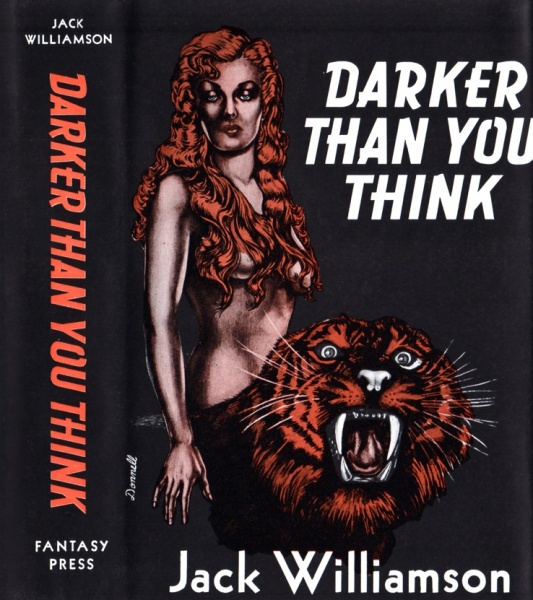
              • Cover of Darker Than You Think
                Darker Than You Think

                Jack Williamson · standalone novel · 1948

                similar by+1 more

                Darker Than You Think is a science fantasy and horror novel by American writer Jack Williamson. Originally a novelette, it was expanded into novel length and published by Fantasy Press in 1948. The short version was published in Unknown in 1940.

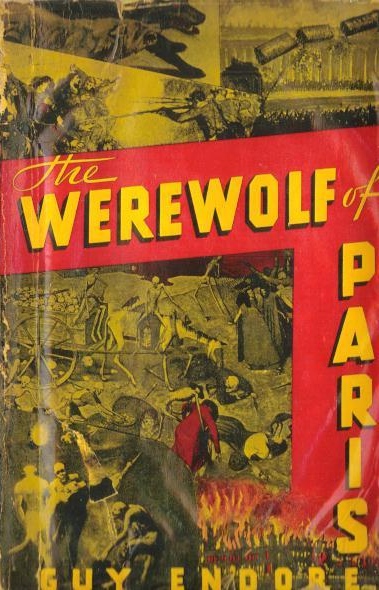
              • Cover of The Werewolf of Paris
                The Werewolf of Paris

                Guy Endore · standalone novel · 1933

                similar bywerewolves

                The Werewolf of Paris (1933) is a Gothic horror novel by American writer Guy Endore. The novel follows Bertrand Caillet, the eponymous werewolf, throughout the tumultuous events of the Franco-Prussian War and the Paris Commune of 1870–71. Some literature experts have compared this book with Dracula by Bram Stoker and they have identified it as the Dracula of werewolf fiction.

              • Cover of The Werewolf Principle
                The Werewolf Principle

                Clifford D. Simak · standalone novel · 1967

                similar by+1 more

                From the back cover of the first DAW printing: "Andrew Blake, found in a space capsule on a distant planet, was brought back to an unfamiliar Earth, where antigravity devices had replaced the wheel and houses talk and even fly! Yet nothing was as strange as Blake's own feelings. Tormented by eerie sensations and a loss of memory, he didn't know who he really was nor exactly where he came from. His destiny only began to grow frighteningly clear when he met a weird, tassel-eared creature who darkly hinted at the truth about Blake's origins. Slowly Blake became aware of the long hushed-up "Werewolf Principle," a scientific theory buried in the past, which held the key to Blake's own fate - and the future of the human race..."

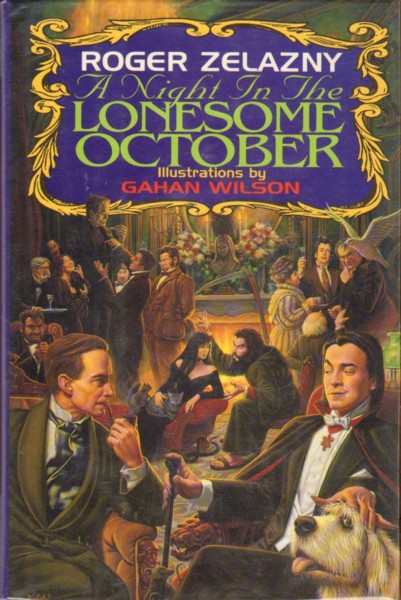
              • Cover of A Night in the Lonesome October
                A Night in the Lonesome October

                Roger Zelazny · standalone novel · 1993

                similar by+1 more

                A Night in the Lonesome October is a novel by American writer Roger Zelazny published in 1993, near the end of his life. It was his final book, and one of his five personal favorites.

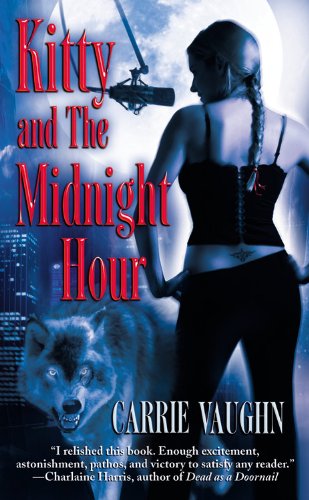
              • Cover of Kitty Norville
                Kitty Norville

                series · 62 books · 2001

                similar bywerewolves

                Kitty Norville is the main character of a series of novels by Carrie Vaughn. She is a werewolf who hosts a popular syndicated radio phone-in show based in Denver called "The Midnight Hour". The program focuses on supernatural issues, beings and creatures she encounters.

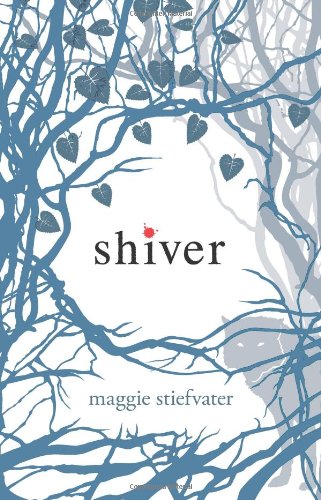
              • Cover of The Wolves of Mercy Falls
                The Wolves of Mercy Falls

                series · 4 books · 2009

                similar bywerewolves

                The Wolves of Mercy Falls is a series of four novels, located in the genres of romance, fantasy and young adult (YA) fiction, written by Maggie Stiefvater. Published by American multinational company Scholastic from between 2009 and 2014, the series consists of the titles Shiver, Linger, Forever and Sinner. Set in the fictional town of Mercy Falls, Stiefvater has stated that the real town of Ely in Minnesota would be its closest neighbouring destination, with the two towns sharing a similar climate.

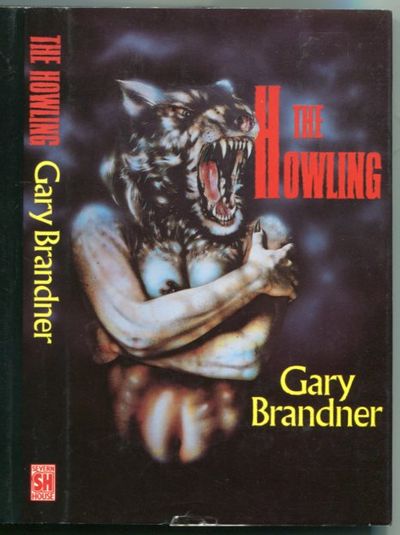
              • Cover of The Howling
                The Howling

                series · 3 books · 1977

                completed

                similar bywerewolves

                The Howling, Gary Brandner's 1977 novel, sets a woman recovering from trauma against a small California town that turns out to be sheltering a colony of werewolves. Brandner wrote two further novels under the same title banner, The Howling II and The Howling III, but by the author's own account they're only loosely connected sequels rather than a continuous story, and neither maps onto the better-known film series the first book inspired.

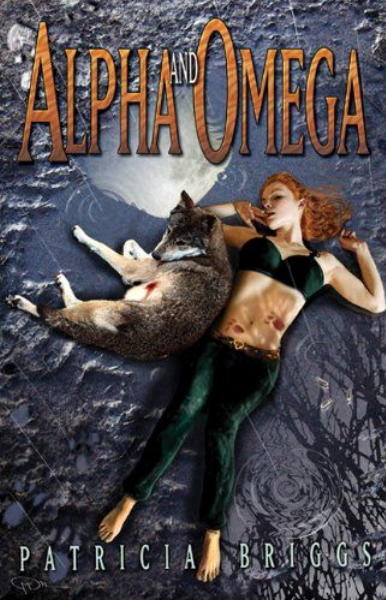
              • Cover of Alpha and Omega
                Alpha and Omega

                series · 15 books · 2007

                part of Mercy Thompson

                similar by+1 more

                Alpha and Omega follows Anna Latham, a rare and instinctively calming "Omega" werewolf rescued from an abusive pack, and Charles Cornick, the enforcer who polices North America's werewolves on his father's behalf, as their partnership becomes both a working relationship and a slow-building romance. Patricia Briggs runs the series alongside her Mercy Thompson books in the same shared world — the opening novella overlaps the events of Mercy's first book, Moon Called — before Cry Wolf and its sequels branch into their own cases.

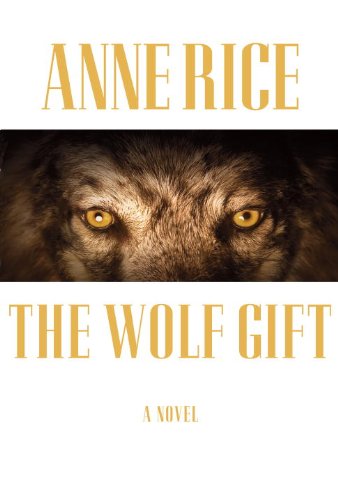
              • Cover of The Wolf Gift Chronicles
                The Wolf Gift Chronicles

                series · 2 books · 2012

                completed

                similar bywerewolves

                Anne Rice's Wolf Gift Chronicles follows Reuben Golding, a San Francisco journalist who becomes a werewolf after a violent attack and must evade police and forensic investigators while learning to control his new nature. The duology comprises The Wolf Gift (2012) and its sequel, The Wolves of Midwinter.

              • Cover of The Devils
                The Devils

                series · 1 book · 2025

                similar by+1 more

                Joe Abercrombie's The Devils (2025) opens a new grimdark fantasy series set in an alternate medieval Europe besieged by plague, famine, and monsters, following Brother Diaz as he's tasked by the Church with managing a squad of imprisoned monstrosities - a vampire, a werewolf, a cursed knight, a pirate, and others - for a mission nobody sane would volunteer for. Their job is to escort a former thief posing as a claimant to the throne of Troy safely to her coronation, through a landscape falling apart around them. It's Abercrombie's first work outside his First Law universe in a decade, pairing his usual morally compromised cast with a monster-squad premise.

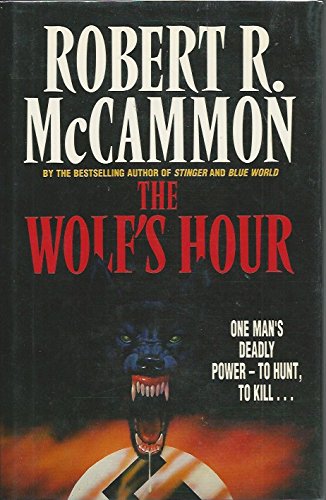
              • Cover of Michael Gallatin
                Michael Gallatin

                series · 8 books · 1989

                similar bywerewolves

                Robert R. McCammon's Michael Gallatin is a British intelligence agent working behind German lines in the Second World War who is secretly a werewolf, introduced in The Wolf's Hour on a mission to stop a Nazi superweapon. McCammon returned to the character decades later in The Hunter from the Woods, a set of interlinked stories filling in the years around the first book.

              • GU
                Guardians Universe

                series · 17 books · 2006

                similar bywerewolves

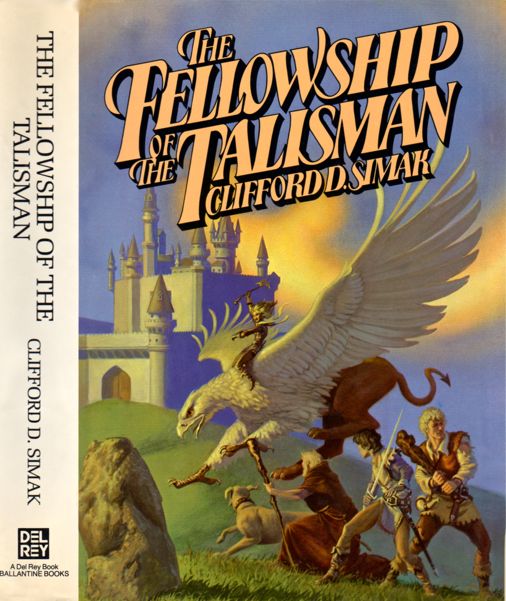
              • Cover of The Fellowship of the Talisman
                The Fellowship of the Talisman

                Clifford D. Simak · standalone novel · 1978

                similar by+1 more

                From the flaps of the Del Rey first edition: "Through a wilderness blighted by horror rode Duncan, son of the noble House of Standish. Astride his mighty war horse, he was pursuing a quest vital to the future of civilization. With him went a strange fellowship: a brawny man-at-arms, a banshee, a hermit, a ghost, a turncoat demon, a goblin and a witch. Opposing them came forces of supernatural malignancy. Aiding them was a girl with the blood of enchanters in her veins who was mounted on an ancient griffin. And all this takes place in England in the 1970s... But in the world of The Fellowship of the Talisman, the Dark Ages never ended. There had been no renaissance, no exploration of the lands across the sea; and men lived much as they did a thousand or more years ago. Some historians believed this situation was the result of the terror and devastation called the Evil, which broke out every five centuries, laying waste first to Macedonia, then to Iberia, and finally to a large part of England. Duncan Standish had been sent on a dangerous mission which could give humanity an instrument against this Evil and rekindle the spirit of mankind. It was through a land where the monstrous servants of the Evil held sway that Duncan and his oddly assorted followers had to pass. The ghost, though erratic, was an excellent spy; and Snoopy, the goblin, knew many of the enemy's weak points. And with the aid of an ancient sorcerer's talisman which seemed to guard Duncan and his band from peril, they were safe... for the moment."

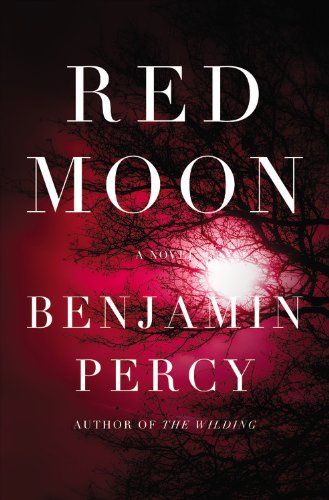
              • Cover of Red Moon
                Red Moon

                Benjamin Percy · standalone novel · 2013

                similar bywerewolves

                On the eve of the emergence of a new and unrecognizable world that will challenge the existence of humanity, a group of people begin to notice they are different from everyone else.

              • Cover of The Undying Monster
                The Undying Monster

                Jessie Douglas Kerruish · standalone novel · 1922

                similar by+1 more

              • Cover of Midnight
                Midnight

                Dean R. Koontz · standalone novel · 1989

                similar by+1 more

                A wealthy tech entrepreneur, intending to create superhumans by infecting them with nanotech to assist their physical and mental abilities, picks a California town as his secret pilot project, but things go terribly wrong.

              • Cover of Green Creek
                Green Creek

                series · 4 books · 2018

                similar by+1 more

              • Cover of Support Group
                Support Group

                series · 2 books · 2009

                similar by+1 more

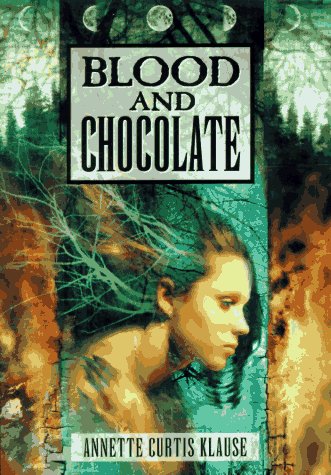
              • Cover of Blood and Chocolate
                Blood and Chocolate

                Annette Curtis Klause · standalone novel · 1997

                similar bywerewolves

                Blood and Chocolate is a 1997 paranormal romance novel for young adult readers by Annette Curtis Klause. It is set in the contemporary United States.

              • Cover of Prison Camp
                Prison Camp

                series · 3 books · 2020

                part of Black Dagger

                similar by+1 more

                Prison Camp is a three-book arc within J. R. Ward's Black Dagger Brotherhood, the long-running paranormal romance series about vampire warriors defending their race against soulless enemies called lessers. The Jackal, The Wolf, and The Viper follow different members of that same vampire society rather than opening a new setting. It sits within a Brotherhood franchise that has run continuously since 2005.

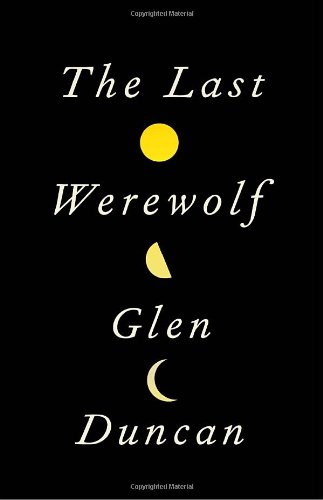
              • Cover of The Last Werewolf
                The Last Werewolf

                series · 3 books · 2011

                similar bywerewolves

              • NU
                Nightshade Universe

                series · 13 books · 2010

                similar by+1 more

              • Cover of Aden Stone
                Aden Stone

                series · 3 books · 2009

                similar by+1 more