Loreful
HomeDiscover
Search series, authors…⌘K
Loreful

Reading orders for SF/F series and shared universes — with your place kept in every one.

Explore

UniversesSeriesWorksAuthorsAtlas

Help

FAQAboutSite map

Account & legal

Sign inCreate accountPrivacyTerms

Data

Built on ISFDB, Wikipedia, Wikidata and Open Library. Curated reading orders carry their reasoning on the page; the rest follow publication order. Data sources & licenses

© Loreful · data: ISFDB · CC BY

More like Sailing, Through Program Management

but

Mood

The mood the book leaves you in.

  • The reading experience is propelled by journeys, exploration, and physical risk; excitement and forward momentum dominate over dread or introspection.
  • Joy and loss are deliberately mixed; the resolution grants characters something real while taking something else away, leaving warmth and sorrow together.
  • The book demands work from the reader — dense prose, difficult structure, unfamiliar ideas, or morally uncomfortable material — as part of its intended effect.
  • Grim events, cruelty, or despair dominate the atmosphere, and the book does not soften them with comfort or comic relief.
  • The atmosphere is quietly unsettling — wrongness, unease, and the uncanny pervade the book without necessarily escalating into overt horror.
  • The book is built to move the reader; character feeling is foregrounded and major scenes aim at a strong emotional response.
  • Humor is a primary aim and the prose plays for laughs — comic situations, wit, or dialogue produce sustained comedy, not occasional levity.
  • The book insists that things can improve; effort and decency are shown to matter, and the arc bends toward better outcomes even through hardship.
  • The book teaches as it goes — real facts, history, science, or craft are conveyed in enough depth that learning is part of the reading experience.
  • The overall register is cheerful and easygoing; stakes are kept gentle and the book avoids dwelling on pain or dread.
  • Withheld information drives the experience; the book sustains enigmas and secrets the reader wants resolved, whatever its genre.
  • The book is contemplative and inward-looking, giving more weight to thought, memory, and meaning than to external events.
  • Grief, loss, or melancholy set the dominant register, and the book lets sorrow stand rather than resolving it into comfort.
  • Sustained suspense is the point; the book keeps the reader braced for what happens next through danger, pressure, or impending revelation.
  • Playful invention and charm define the register — fanciful conceits, light absurdity, and a narration that delights in its own oddity.

About

What the story runs on.

  • Stories in which extraterrestrial beings are central — as characters, cultures, or the object of the plot.
  • Stories centered on vampires — blood-drinking undead — whether as predators, love interests, or protagonists.
  • Stories in which staying alive against nature, catastrophe, or scarcity is the central problem.
  • Stories of growing up — a young protagonist crossing from childhood into adult knowledge and responsibility.
  • Stories about who a character truly is — self-discovery, doubled lives, and the search for a self.
  • Stories about mental unraveling — descent into madness, delusion, and minds at war with themselves.
  • Stories about mourning — living through the death of a loved one and what loss does to the survivors.
  • Stories in which a buried family truth — hidden parentage, crimes, or shames — surfaces and reorders the present.
  • Stories driven by maneuvering for power — factions, conspiracies, and statecraft conducted in shadow.
  • Stories in which war itself is the subject — combat, occupation, and what warfare does to soldiers and civilians.
  • Stories about environmental breakdown — climate change, extinction, and civilization set against a failing biosphere.
  • Stories organized around investigating a killing — the case, the clues, and the pursuit of the killer, in any genre's clothing.

Shelf

Where it sits in the library.

    • Fiction built on magic or other supernatural elements that have no scientific explanation.
    • Secondary-world fantasy at large scale, where the fate of nations or the world turns on the protagonists' struggle.
    • Fantasy set in a recognizably modern city or contemporary world where the supernatural intrudes on everyday life.
    • Fantasy that blends in horror's atmosphere and imagery, keeping a fantastical frame around grim or frightening material.
    • Fantasy set in a real historical period or a close analogue of one, with magic woven into the era.
    • Fantasy in which protagonists cross from the ordinary world into another world through a portal or similar passage.
    • Fantasy drawing directly on myths, legends, and folklore, retelling them or building on their figures and logic.
    • Fantasy of ghosts, vampires, shapeshifters, psychics, and similar phenomena, usually set in an otherwise ordinary world.
    • Low-stakes fantasy emphasizing comfort, community, and everyday pleasures over conflict and peril.
    • Fiction that extrapolates from science and technology — future societies, space travel, or speculative inventions — within at least nominally natural laws.
    • Science fiction of interstellar scope — starships, galactic polities, and adventure across star systems.
    • Science fiction committed to scientific rigor, where technical plausibility constrains the story.
    • Science fiction centered on armed forces and warfare, told largely from a military point of view.
    • Science fiction of networked, corporate-dominated near futures, pairing high technology with social decay.
    • Science fiction styled on nineteenth-century steam-powered technology, often in a Victorian or pseudo-Victorian setting.
    • Fiction depicting an oppressive or catastrophic society, presented as a warning.
    • Fiction set after civilization's collapse, following survivors in the ruins of the old world.
    • Fiction in which characters move between past and future, and the mechanics or consequences of that travel drive the plot.
    • Fiction exploring a world where a historical event went differently and history diverged from ours.
    • Science fiction about humanity's first encounter and communication with an alien intelligence.
    • Fiction whose primary aim is to frighten or unsettle the reader through dread, menace, or the monstrous.
    • Horror of vast, indifferent, incomprehensible entities before which humanity is insignificant, in the Lovecraft tradition.
    • Horror of decaying houses, buried family secrets, and oppressive atmosphere in the Gothic literary tradition.
    • Horror centered on hauntings and the returning dead.
    • Horror located in the mind — paranoia, obsession, and unreliable perception rather than external monsters.
    • Horror built around the reanimated dead and survival amid their outbreaks.
    • Speculative fiction of the strange and uncanny that resists both natural explanation and standard genre categories.
    • Fiction organized around solving a crime or puzzle, typically following an investigator toward the identification of a culprit.
    • A mystery following the realistic routines of police work — forensics, interviews, and case-building.
    • A gentle mystery with an amateur sleuth, a small community, and violence kept off the page.
    • Fast-paced fiction driven by imminent danger, pursuit, or high-stakes conspiracy, built to sustain tension.
    • A thriller of espionage — agents, tradecraft, and intelligence services in conflict.
    • A thriller centered on lawyers and the courtroom, where litigation carries the suspense.
    • Fiction whose central plot is a romantic relationship and its development toward an emotionally satisfying resolution.
    • Romance in which one or both partners are supernatural beings, blending fantasy elements into the love story.
    • A fantasy-romance hybrid in which the romantic arc and the fantasy plot carry equal weight.
    • Romance set in a past era, with courtship shaped by the period's society and manners.
    • Fiction set in a real past period, where the historical setting materially shapes characters and events.
      • General and literary fiction emphasizing prose style, character interiority, or formal ambition over genre plot conventions.
      • Fiction that ridicules people, institutions, or society in order to criticize them.
      • Fiction of dreamlike, irrational imagery and logic that breaks from realistic representation.
      • Fiction propelled by journeys, exploration, and physical peril, where action and survival carry the plot.
      • Adventure fiction of ships and seafaring — naval engagements, voyages, and life at sea.
      • Fiction centered on soldiers, campaigns, and the experience of warfare, historical or imagined.
        • Fiction written primarily to amuse, using comedic situations, wit, or parody as its organizing principle.
          • Fiction about costumed or superpowered heroes and their conflicts with comparable villains.

          Practical

          How long a commitment, whether it stands alone, and whether it has finished.

          Tap a chip to ask for it · tap again to rule it out · once more to clear. Numbers show what would be left.

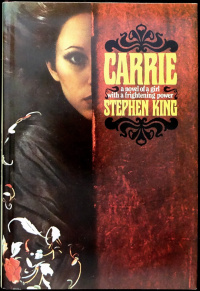
          • Cover of Carrie
            Carrie

            Stephen King · standalone novel · 1974

            similar byepistolary

            In one way or another, everybody abused Carrie. This sixteen-year-old misfit was forbidden everything that was young and fun by her fanatical mother. She was teased and taunted by her classmates, misunderstood by her teachers, and given up as hopeless by almost everyone. But Carrie had a secret: She possessed terrifying telekinetic powers that could make inanimate objects move, a lighted candle fall, or a door lock. Carrie could make all kinds of startling bizarre, and malevolent things happen. (WorldCat)

          • Cover of Flowers for Algernon
            Flowers for Algernon

            Daniel Keyes · standalone novel · 1966

            similar byepistolary

            A man with a low IQ becomes the subject of an experimental medical procedure which raises his IQ well over genius level.

          • Cover of The Lady of the Shroud
            The Lady of the Shroud

            Bram Stoker · standalone novel · 1909

            similar byepistolary

            Rupert Sent Leger inherits his eccentric uncle's fortune on one condition: he must spend a year living in the family's castle in the Blue Mountains, a small, embattled corner of the Balkan coast under threat from Turkish forces. Determined to earn the trust of his new neighbors, Rupert arms the local mountain people for their own defense, and soon finds his castle visited at night by a beautiful woman in a wet burial shroud, who claims sanctuary from the cold and offers no explanation of who, or what, she might be. Bram Stoker's follow-up to Dracula trades outright horror for Ruritanian romance and adventure, blending gothic atmosphere with political intrigue.

          • Cover of Earthseed
            Earthseed

            series · 7 books · 1993

            similar by+1 more

            Octavia E. Butler's Earthseed novels, Parable of the Sower and Parable of the Talents, follow Lauren Olamina as she survives the collapse of a climate-ravaged, near-future United States and founds a belief system built on the idea that "God is Change." The two-book series was left unfinished at Butler's death; a planned third novel, Parable of the Trickster, was never completed. Later graphic-novel adaptations retell the same two stories rather than continuing the narrative.

          • Cover of Time and Again
            Time and Again

            series · 2 books · 1970

            completed

            similar by+1 more

            Time and Again (1970) follows Si Morley, a commercial artist recruited into a secret government project that sends him back to Manhattan in 1882, where he falls for a woman named Julia while weighing whether he can, or should, alter the past; Jack Finney illustrates the story with period photographs and engravings. The sequel, From Time to Time (1995), continues Si's story with a further trip into the past.

          • Cover of Z for Zachariah
            Z for Zachariah

            Robert C. O'Brien · standalone novel · 1975

            similar byepistolary

            Sixteen-year-old Ann Burden, on an Amish family farm in an isolated valley, believes she is the only survivor of nuclear war and nerve gas. One day a man arrives in a "safe-suit" that he and others have recently developed.

          • Cover of Screwtape
            Screwtape

            series · 2 books · 1942

            completed

            similar byepistolary

            C.S. Lewis's Screwtape Letters (1942) is a Christian satirical novel told as 31 letters from a senior devil, Screwtape, coaching his inexperienced nephew Wormwood on how to corrupt the soul of an ordinary British man known only as 'the Patient.' Lewis added a slim sequel, Screwtape Proposes a Toast (1959), an after-dinner speech in which Screwtape skewers trends in modern education and society; the two are usually published together.

          • Cover of Among Others
            Among Others

            Jo Walton · standalone novel · 2011

            similar byepistolary

            Among Others is a 2011 fantasy novel written by Welsh-Canadian writer Jo Walton, published originally by Tor Books. It is published in the UK by Corsair. It won the Nebula Award for Best Novel of 2011, the 2012 Hugo Award for Best Novel and the 2012 British Fantasy Award.

          • Cover of Cloud Atlas
            Cloud Atlas

            David Mitchell · standalone novel · 2004

            similar byepistolary

            Cloud Atlas, published in 2004, is the third novel by British author David Mitchell. The book combines metafiction, historical fiction, contemporary fiction and science fiction, with interconnected nested stories in different writing styles that take the reader from the remote South Pacific in the 19th century to the island of Hawaii in a distant post-apocalyptic future. Its title references a piece of music by Toshi Ichiyanagi.

          • Cover of The Prestige
            The Prestige

            Christopher Priest · standalone novel · 1995

            similar byepistolary

            A magician called Borden (at least in private) writes his own version of his life as a magician. There's a lot of focus on a trick, where he seems to move across any width of stage in an instant, and on a feud with another magician, Angier. The account includes passages, where he can't decide what exactly to write, arguing with himself. 3 generations later a Borden (at least biologically) learns about his ancestor. He's also convinced, he somehow has a twin brother, who's happy about this development.

          • Cover of Henry Sturges
            Henry Sturges

            series · 2 books · 2010

            similar by+1 more

          • Cover of Some of Your Blood
            Some of Your Blood

            Theodore Sturgeon · standalone novel · 1961

            similar byepistolary

            Some of Your Blood is a short horror novel in epistolary form by American writer Theodore Sturgeon, first published in 1961.

          • Cover of The Themis Files
            The Themis Files

            series · 3 books · 2015

            similar byepistolary

            Sylvain Neuvel's Themis Files opens when a girl falls into a hole in South Dakota and lands on the palm of a giant metal hand buried underground; the trilogy picks up years later as she leads the team trying to determine what the hand is part of and why it's there. Sleeping Giants and its sequels are told almost entirely through interview transcripts conducted by an unnamed, evasive interrogator, giving the series a documentary, oral-history feel unusual for first-contact SF. The mystery escalates from an archaeological puzzle into a question of who else is looking for the same answer.

          • Cover of A Journal of the Plague Year
            A Journal of the Plague Year

            Daniel Defoe · standalone novel · 1722

            similar byepistolary

            A Journal of the Plague Year: Being Observations or Memorials, Of the most Remarkable Occurrences, As well Publick as Private, which happened in London During the last Great Visitation In 1665 is a novel by Daniel Defoe, first published in March 1722. It is an account of one man's experiences of the year 1665, in which the bubonic plague struck the city of London in what became known as the Great Plague of London, the last epidemic of plague in that city, as part of the larger, centuries-long second plague pandemic. The book is told somewhat chronologically, though without sections or chapter headings, and with frequent digressions and repetitions.

          • Cover of The Gum Thief
            The Gum Thief

            Douglas Coupland · standalone novel · 2007

            similar byepistolary

            The Gum Thief is Canadian author Douglas Coupland's twelfth novel. It was published on September 25, 2007 , by Random House Canada in Canada and Bloomsbury Publishing in the United States.

          • Cover of The Child Buyer
            The Child Buyer

            John Hersey · standalone novel · 1960

            similar byepistolary

            The Child Buyer is John Hersey's 1960 novel about a project to engineer super-intelligent persons for a project whose aim is never definitely stated. Told entirely in the form of minutes from a State Senate Standing Committee, it relates the story of the appearance and efforts of a mysterious stranger in the small town of Pequot, and the repercussions of his attempt to buy a boy, Barry Rudd.

          • Cover of The Wizard Knight
            The Wizard Knight

            series · 2 books · 2004

            completed

            similar byepistolary

            The Wizard Knight is a series of epistolary novels written by fantasy and science fiction author Gene Wolfe. It chronicles the journey of Able of the High Heart, an American boy transported to a magical world and supernaturally aged to adulthood. Able becomes a knight, and because of his connection with the magical and spiritual elements of the world around him is soon also dubbed a wizard.

          • Cover of Letters of Enchantment
            Letters of Enchantment

            series · 3 books · 2023

            similar by+1 more

            Letters of Enchantment is Rebecca Ross's romantic fantasy duology: Divine Rivals (2023) and Ruthless Vows, with the novella Wild Reverence set in the same world. It follows two rival young journalists who discover they can exchange letters across a supernatural means of communication, while a war between gods and mortals escalates around their city. The two novels form one continuous story.

          • Cover of The Historian
            The Historian

            Elizabeth Kostova · standalone novel · 2005

            similar byepistolary

            The Historian is the 2005 debut novel of American author Elizabeth Kostova. The plot blends the history and folklore of Vlad Țepeș and his fictional equivalent Count Dracula. Kostova's father told her stories about Dracula when she was a child, and later in life she was inspired to turn the experience into a novel. She worked on the book for ten years and then sold it within a few months to Little, Brown and Company, which bought it for US$2 million.

          • Cover of Star Colony
            Star Colony

            Keith Laumer · standalone novel · 1981

            similar byepistolary

            From the front flap of the St. Martin's Press first edition: "The History of Colmar in Three Volumes - Volume One: Star Colony This history is based on official Terran archives only recently released to scholars, as well as on letters and diaries of early settlers, supplemented by material from the Oral History Project initiated in honor of independent Colmar's Centennial celebrations in CY325 (AD2437). For the first time, the authentic course of events has been extracted and separated from its overlay of myth and folklore. Prepared by a distinguished board of editors under the leadership of our world's preeminent chronicler, the present history, designed especially for use in the schools through post-doctorate levels, will lay to rest for all time, it is earnestly hoped, the maze of conflicting legendary and mythical accounts of Early Times, which have heretofore clogged scholarly avenues of inquiry into Colmar's settlement, the origin of the curious dichotomy that has existed between our East and North Continents, and the events leading to Unification and, at last, to Independence itself."

          • Cover of Canopus in Argos: Archives
            Canopus in Argos: Archives

            series · 5 books · 1979

            completed

            similar by+1 more

            Canopus in Argos: Archives is a sequence of five science fiction novels by Nobel laureate author Doris Lessing, which portray a number of societies at different stages of development, over a great period of time. The focus is on accelerated evolution guided by advanced species for less advanced species and societies.

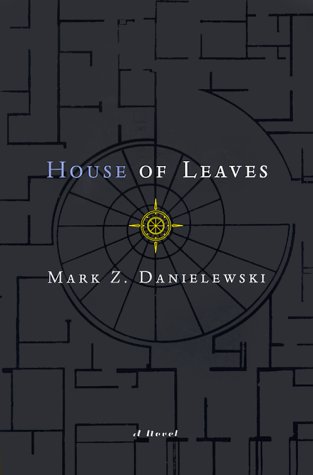
          • Cover of House of Leaves
            House of Leaves

            series · 2 books · 2000

            similar byepistolary

            House of Leaves is the debut novel by American author Mark Z. Danielewski, published in March 2000 by Pantheon Books. A bestseller, it has been translated into a number of languages, and is followed by a companion piece, The Whalestoe Letters.

          • Cover of Kate and Cecelia Universe
            Kate and Cecelia Universe

            series · 4 books · 1988

            similar by+1 more

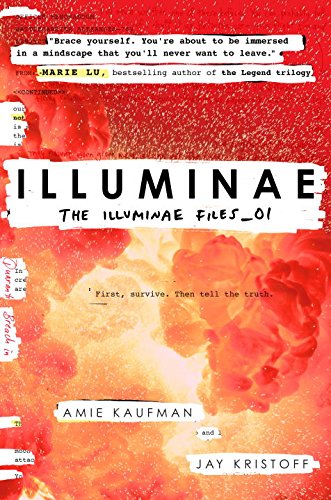
          • Cover of The Illuminae Files
            The Illuminae Files

            series · 4 books · 2015

            similar byepistolary