More like Salvaged
but
- Future History
series42 books1939
completed
similar byscience fiction+1 more
The Future History is a series of science fiction stories written by American author Robert A. Heinlein (1907–1988). It describes a projected future of the human race from the middle of the 20th century through the early 23rd century. The term Future History was coined by John W. Campbell Jr. in the February 1941 issue of Astounding Science Fiction. Campbell published an early draft of Heinlein's chart of the series in the May 1941 issue.
- Cities in Flight
series10 books1950
completed
similar byscience fiction
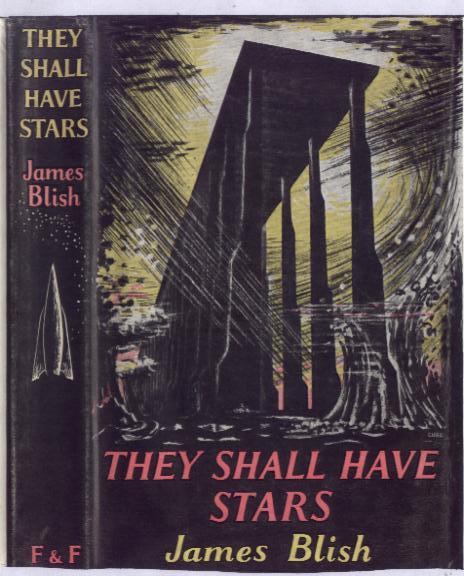
Cities in Flight is a four-volume series of science fiction novels and short stories by American writer James Blish, originally published between 1950 and 1962, which were first known collectively as the "Okie" novels. The series features entire cities that are able to fly through space using an anti-gravity device, the spindizzy. The stories cover roughly two thousand years, from the very near future to the end of the universe. One story, "Earthman, Come Home", won a Retro Hugo Award in 2004 for Best Novelette. Since 1970, the primary edition has been the omnibus volume first published in paperback by Avon Books. Over the years James Blish made many changes to these stories in response to points raised in letters from readers.
- Prelude to Space
Arthur C. Clarkestandalone novel1951
similar byscience fictionnear future+1 more
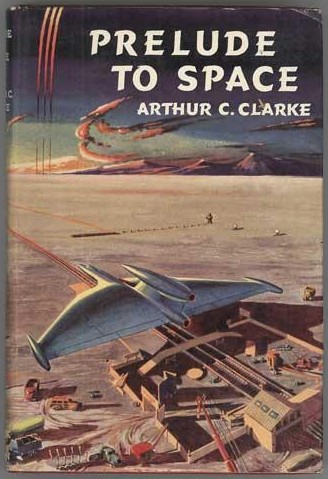
Prelude to Space is a science fiction novel written by British author Arthur C. Clarke in 1947. It appeared for the first time in 1951 as a paperback from World Editions Inc, as number three in its series of Galaxy novels. Sidgwick & Jackson published it in the UK in 1953, followed the next year by a United States hardcover edition from Gnome Press and a paperback from Ballantine Books.
- Rocket Ship Galileo
Robert A. Heinleinstandalone novel1947
similar byscience fictionnear future+1 more
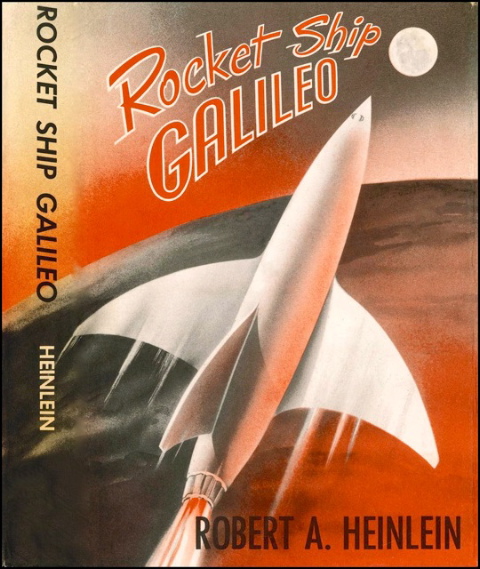
Three teenage boys do backyard experiments on powerful model rockets. An uncle who is an atomic engineer enlists them to make and fly the first rocket to the moon.
- Project Hail Mary
Andy Weirstandalone novel2021
similar byscience fictionspaceshipnear future
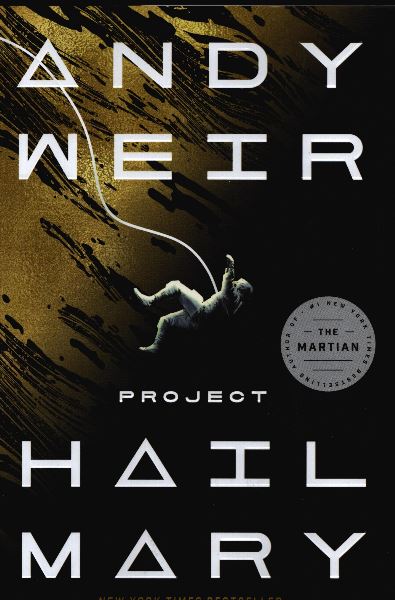
Project Hail Mary is a 2021 hard science fiction novel by American writer Andy Weir. It centers on science teacher and former biologist Ryland Grace, who wakes up aboard a spacecraft, afflicted with amnesia.
- Ender's Shadow
series5 books1999
part of Ender's Game Universe
similar byscience fiction
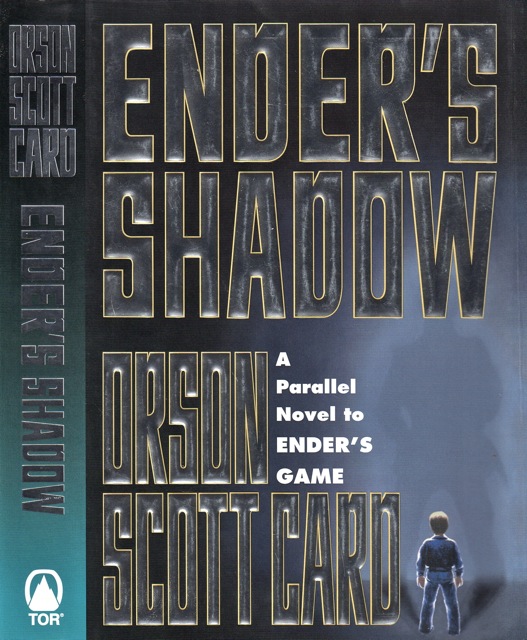
Orson Scott Card's Ender's Shadow retells the events of Ender's Game from the perspective of Bean, a physically stunted but ferociously intelligent street child recruited into the same Battle School program as Ender Wiggin. It launches the Shadow series, which follows Bean and other secondary Battle School characters into the political aftermath of the Formic Wars back on Earth, running parallel to and eventually past the timeline of Card's main Ender Quintet.
- Xenogenesis / Lilith's Brood
series4 books1987
completed
similar byscience fiction+2 more
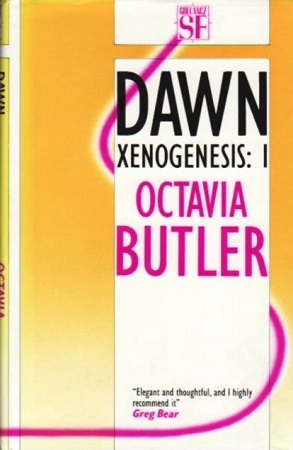
Lilith's Brood, previously known as the Xenogenesis Trilogy, is a collection of three science fiction works by Octavia E. Butler: Dawn, Adulthood Rites, and Imago.
- Flood
series6 books2008
similar byscience fictionnear future+1 more
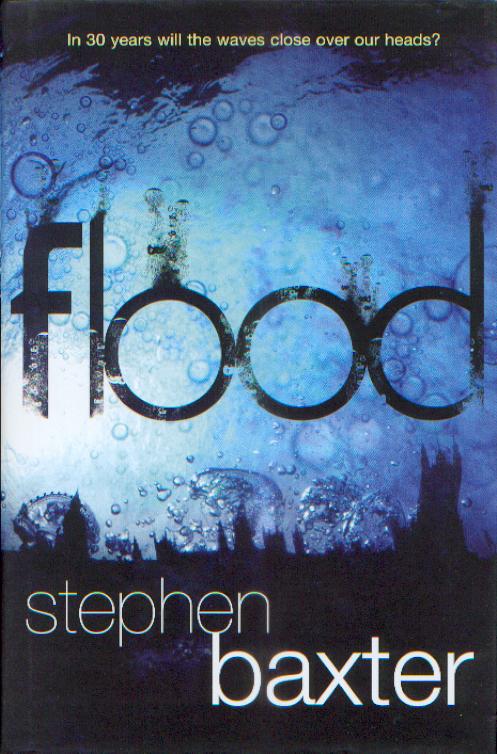
In Stephen Baxter's Flood, sudden seismic upheaval releases immense reservoirs of water trapped deep beneath Earth's crust, and sea levels begin climbing far faster than anyone can adapt to, forcing a handful of survivors to watch coastlines and then continents disappear. The 2009 sequel, Ark, follows a parallel thread of people who instead gamble everything on a desperate escape from the drowning planet. Together the two books trace roughly a half-century of civilizational collapse and reinvention as dry land runs out.
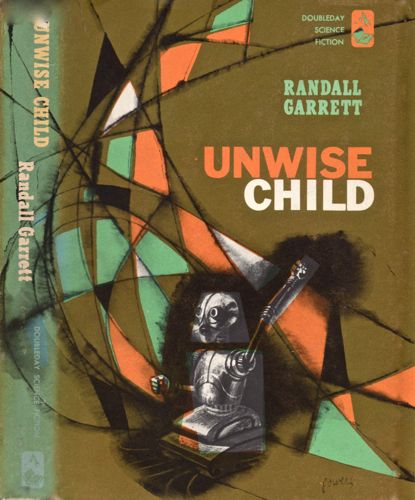
- Unwise Child
Randall Garrettstandalone novel1962
similar byscience fictionspaceshipnear future
"When a super-robot named Snookums discovers how to build his own superbombs, it becomes obvious that Earth is by no means the safest place for him to be. And so Dr. Fitzhugh, his designer, and Leda Crannon, a child psychologist acting as Snookums' nursemaid, agree to set up Operation Brainchild, a plan to transport the robot to a far distant planet. "... once into space, the Branchell becomes the scene of some frightening events—the medical officer is murdered, and Snookums appears to be the culprit. Mike the Angel indulges himself in a bit of sleuthing, and the facts he turns up lead to a most unusual climax." (From Project Gutenberg's version of the 1962 Doubleday edition, published 2007.)
- H. G. Wells' War of the Worlds
universe65 books1898
Start hereThe War of the Worlds · Start here
similar byscience fiction
No one would have believed, in the closing years of the nineteenth century, that human affairs were being watched keenly and closely from the timeless worlds of space. And then the cylinders fell. H. G. Wells' War of the Worlds opens in the quiet of the Surrey commons, where a falling star proves to be the first Martian craft — and from the pit rise the towering tripods, the Heat-Ray, the choking Black Smoke and the creeping red weed, wielded by minds that regard mankind much as we regard the creatures we boil for supper. This is invasion rendered as natural disaster: cold, methodical, and vast beyond argument. Wells' 1898 novel is the seed; everything else grows from that Martian soil. The catalogue gathers direct sequels and continuations alongside a wide field of other hands. In War of the Worlds: Global Dispatches the invasion is retold across the whole planet through the eyes of Twain, Verne, Tolstoy, Lowell and Kipling; in the Manly Wade and Wade Wellman crossover, Sherlock Holmes, Watson and Professor Challenger take the field against the machines; and Scott Washburn's Great Martian War stretches the fighting into a decades-long alternate history of steam, artillery and grinding attrition. It is a loose shared world — no single decreed sequence, many voices answering one calamity. What sets this world apart is its refusal of heroics: the invaders fall not to generals but to the smallest things of Earth, humbling and indifferent. Begin, always, with Wells' original novel — it is short, and it is the ground every later book stands upon. From there follow your appetite: Global Dispatches for the panorama, the Holmes campaign for adventure, Washburn for the long war.
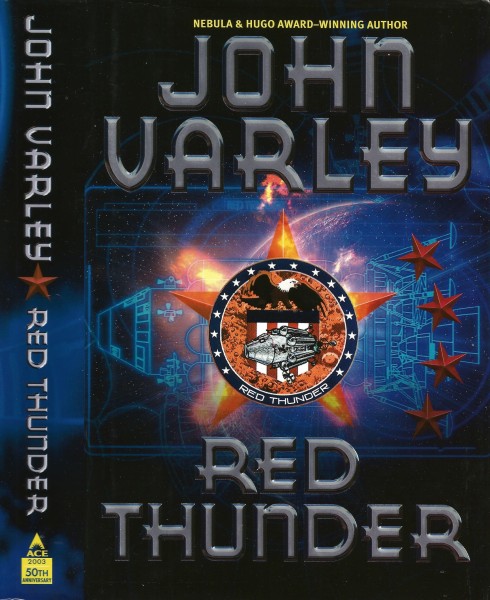
- Thunder and Lightning
series4 books2003
completed
similar byscience fictionnear future+1 more
John Varley's Thunder and Lightning books follow the Broussard family across two generations as a backyard fusion-power breakthrough turns an eccentric Florida inventor's homemade spacecraft into the opening move of an independent human expansion to Mars and beyond. Red Thunder and Red Lightning follow the first generation's improvised trip to Mars; Rolling Thunder and Dark Lightning pick up decades later with their descendants.
- Marooned
Martin Caidinstandalone novel1964
similar byscience fictionspaceshipnear future
Marooned is a 1964 science fiction thriller novel by American writer Martin Caidin, about a crewed spacecraft stranded in Earth orbit, oxygen running out, and only an experimental craft available to attempt a rescue. A film based on the novel led Caidin to prepare a revised version of it in 1968. The film was released in 1969, four months after the Apollo 11 mission, with the revised novel sold by book stores a few weeks earlier.
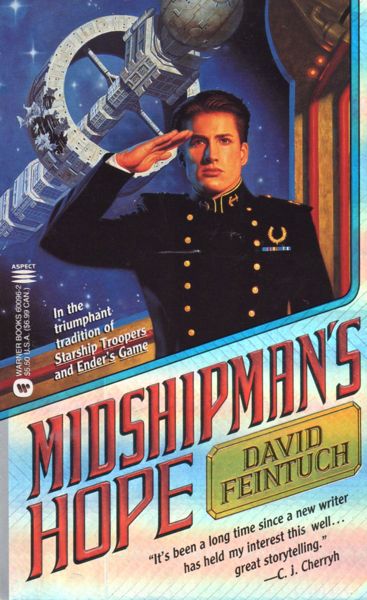
- Nicholas Seafort
series7 books1994
completed
similar byscience fiction+1 more
The Seafort Saga is a series of science fiction novels written by American author David Feintuch. The novels are set from the late 22nd century to the mid-23rd century and relate the adventures of Nicholas Seafort, an officer in the (fictional) UNNS| United Nations Naval Service. The series is a collection of personal accounts, usually from the perspective of Nicholas Seafort, describing Seafort's adventures, beginning as a lowly midshipman, to the elected leader of earth, and finally to the captain of the UNNS flagship Olympiad. Although most books in the series are told from a single perspective, usually Seafort's, Voices of Hope is a collection of accounts from several sources: Seafort's son, PT, the son of a friend of Seafort's, and a transient boy named Pook. Additionally, Children of Hope is narrated by Randy Carr, the son of a close friend of Seafort.
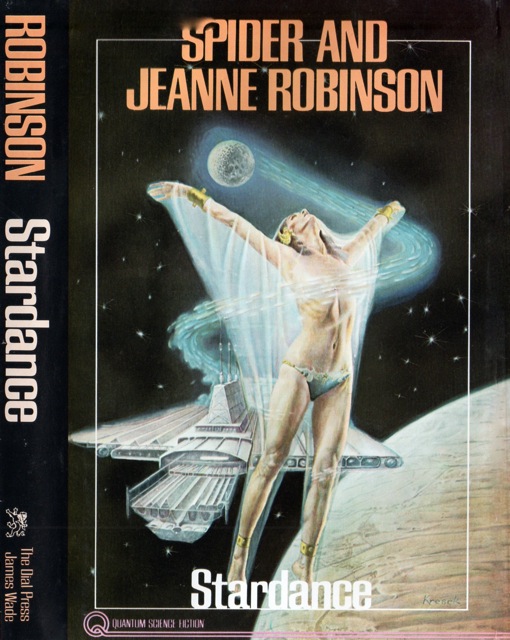
- Stardance
series5 books1977
similar byscience fiction+1 more
Stardance began as Spider Robinson and Jeanne Robinson's Hugo- and Nebula-winning novella before growing into a trilogy about the birth of dance choreographed for zero gravity, and the human and, later, alien audiences it reaches. Jeanne Robinson was herself a professional dancer, and the books carry that grounding into their depiction of movement as art once freed from gravity. The sequels, Starseed and Starmind, push the premise outward from one dancer's breakthrough into first-contact territory.
- Fahrenheit 451
series2 books1951
completed
similar byscience fictionnear future
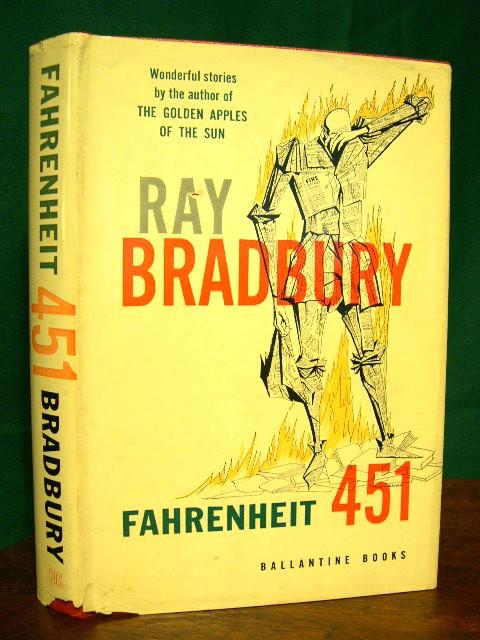
Fahrenheit 451 began life as "The Fireman," a novella Ray Bradbury published in 1951, which he then expanded into the full novel released in 1953 under its now-famous title. Set in a future where books are outlawed and firemen exist to burn them, it follows fireman Guy Montag as doubts about his job push him toward the very literature he's supposed to destroy. The novella and novel are one story's evolution rather than two separate books.
- Space Hostages
Nicholas Fiskstandalone novel1967
similar byscience fictionspaceshipnear future
After tricking nine children into coming aboard the space ship he hijacked, a British Lieutenant dies of radiation poisoning. As the children attempt to get the space craft back to earth, a power struggle develops among them over who will get credit should they succeed.
- Beyond Apollo
Barry N. Malzbergstandalone novel1972
similar byscience fictionspaceshipnear future
Beyond Apollo is a science fiction novel by American writer Barry N. Malzberg, first published in 1972 in a hardcover edition by Random House. Malzberg credits the inspiration for the novel to "I Have My Vigil", a 1969 short story by fellow science fiction writer Harry Harrison.
- Jenny Casey
series4 books2004
similar byscience fictionnear future+1 more
Elizabeth Bear's Jenny Casey trilogy opens with Hammered (2004), her debut novel, which won the Locus Award for Best First Novel. It continues across Scardown and Worldwired, completing the story of its title character across three volumes published through 2006.
- Stranger in a Strange Land
Robert A. Heinleinstandalone novel1961
similar byscience fictionnear future
Stranger in a Strange Land is a 1961 science fiction novel by the American author Robert A. Heinlein. It tells the story of Valentine Michael Smith, a human who comes to Earth in early adulthood after being born on the planet Mars and raised by Martians, and explores his interaction with and eventual transformation of Terran culture.
- All Judgment Fled
James Whitestandalone novel1968
similar byscience fictionnear future+1 more
From the front flap of the Rapp first edition: It is the spring of 1978 and a gigantic alien spaceship has entered the solar system and taken up an orbit some sixty million miles from the Sun. The Ship neither signals nor replies in any detectable fashion to signals directed towards it. Silently and, some think, implacably, it orbits like some tremendous battleship cruising off the coast of a tiny, backward island. Inevitably there are natives on the island whose curiosity outweighs their fear and six men in two tiny sophisticated dug-out canoes go out to satisfy their curiosity... All Judgment Fled is not another story about super heroes solving alien communications problems with the aid of super scientific and infallible translation devices. Instead it concerns the reactions of six very ordinary people to what is probably the most extraordinary situation of all - the first meeting with an extraterrestrial race.
- The Watch Below
James Whitestandalone novel1966
similar byscience fictionnear future+1 more
From the front flap of the Walker edition: "A tanker is sunk in the Atlantic. It comes to rest on a shelf of rock not far below the surface - somewhere. There are five survivors, two women and three men, one a doctor. The hold in which they have taken refuge is watertight and not too uncomfortable. There is plenty of food. Light, wather and oxygen are all available. They live. The world outside passes them by. In time the multiply. Deep in space the last remnants of a great people are in helpless flight from their dying planet. The Unthans are water-dwellers and their sun has grown too hot to support life. But the deep-freeze system, hastily designed to allow them to live until their destination has unexpected flaws. The crew must stay awake - and age. Time passes. They multiply. At last their destination approaches - Earth. In the tanker, generation has succeeded generation but now it seems that the end so long postponed is at hand. The food supply is nearly exhausted. The tanker walls are rusting. Already some compartments have been abandoned to the sea. The handful of survivors resign themselves resentfully to extinction. In the oblivious world above, all is confusion. The Unthans have landed - and have disappeared into the depths of the sea. How hostile are these mysterious invaders? What can be done to combat the threat they pose? Now is the moment of destiny for the tanker people. They alone, with their unique experience, can provide a bridge between the aliens and their own people who are in many ways so much more alien. The common experience of generations - will it prove enough to permit a working relationship between two races so utterly dissimilar?"