More like Saturn
anchored on:science fictionspace colonizationouter planets & moonsnear futurehard science fictionpolitical intrigue+1 more
but
- Red Moon
Kim Stanley Robinsonstandalone novel2018
similar bytensenear futurescience fictionspace colonizationhard science fictionpolitical intrigue
Red Moon is a 2018 science fiction novel by American novelist Kim Stanley Robinson. The novel is set in China and on the Moon. It was reviewed in several US media outlets with mixed reception.
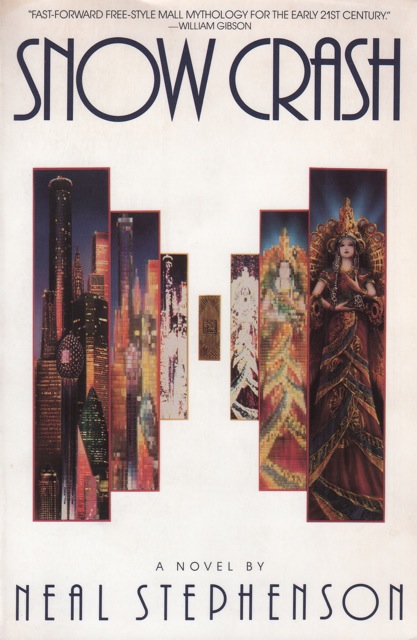
- Snow Crash
Neal Stephensonstandalone novel1992
similar bytensenear futurescience fictionpolitical intrigue+2 more
Snow Crash is a 1992 science fiction novel by Neal Stephenson. Like many of Stephenson's novels, its themes include history, linguistics, anthropology, archaeology, religion, computer science, politics, cryptography, memetics, and philosophy.
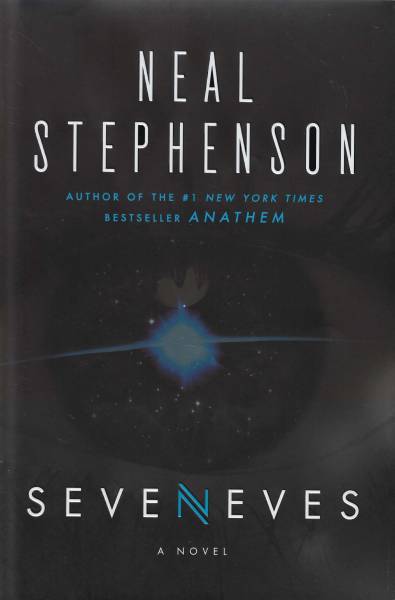
- Seveneves
Neal Stephensonstandalone novel2015
similar bytensenear futurescience fictionspace colonizationhard science fiction
Seveneves is a science fiction novel by Neal Stephenson published in 2015. The story tells of the desperate efforts to preserve Homo sapiens in the wake of apocalyptic events on Earth after the unexplained disintegration of the Moon and the remaking of human society as a space-based civilization after a severe genetic bottleneck.
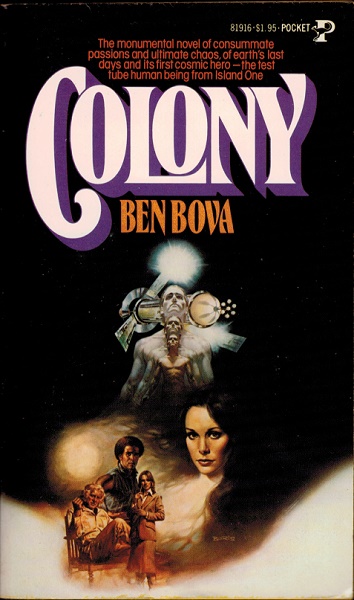
- Colony
Ben Bovastandalone novel1978
similar bytensenear futurescience fictionspace colonizationpolitical intrigue
Colony continues the story Ben Bova began in Millennium, following astronaut-turned-administrator Chet Kinsman years later as the head of an orbiting space habitat that has become Earth's only real refuge from a planet buckling under overpopulation, food shortages and unrest. Getting a place in the habitat is a matter of life and death for millions who will never be chosen, and as Earth's governments grow more desperate to control or dismantle the colony outright, Kinsman has to decide how far he'll go to protect the world he's built off-world. Bova later folded both novels together into the omnibus The Kinsman Saga. Part of Ben Bova's Chet Kinsman series.
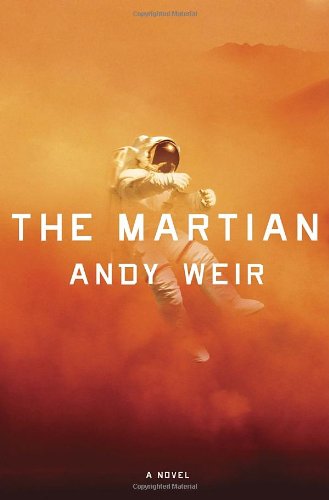
- The Martian
series2 books2012
similar bytensenear futurescience fictionhard science fiction
Andy Weir's novel The Martian, first self-published in 2011 before a commercial re-release, follows astronaut Mark Watney after he is stranded alone on Mars when his crew presumes him dead and departs. Using scientific improvisation and dark humor, Watney works to keep himself alive long enough for a rescue to reach him. It is a single, self-contained survival story.
- Man Plus
series2 books1976
similar bytensenear futurescience fictionspace colonization+1 more
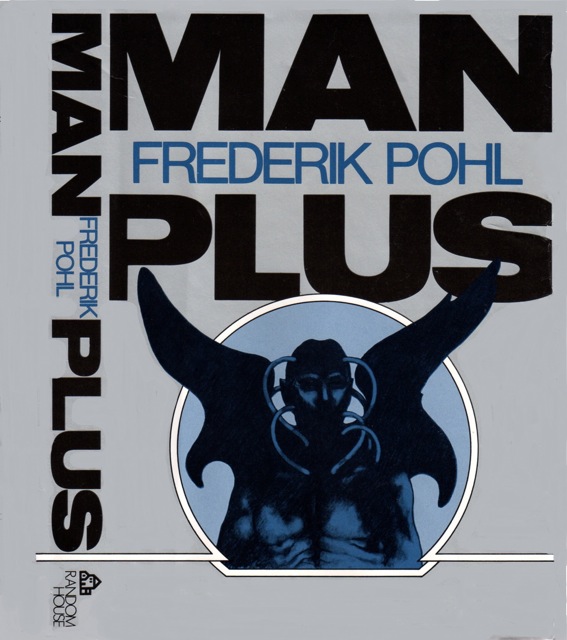
Frederik Pohl's Man Plus follows Roger Torraway, who is surgically and cybernetically rebuilt into a post-human organism able to survive unprotected on the Martian surface, as part of a crash program to colonize Mars ahead of a predicted global crisis. The 1976 novel, which won the Nebula Award, is a clinical, unsentimental look at what such a transformation costs a person's sense of self. Thomas T. Thomas wrote the sequel Mars Plus, continuing the story of the Martian colony years later.
- The Trikon Deception
Ben Bova & Bill Poguestandalone novel1992
similar bytensenear futurescience fictionhard science fictionspace colonization+1 more
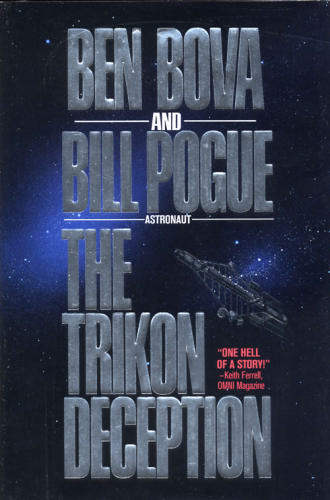
The Trikon is a shared industrial space laboratory that was built in orbit, designed as the only risk-free environment for genetic experiments too controversial or dangerous to be performed on Earth.
- The World Jones Made
Philip K. Dickstandalone novel1956
similar bytensenear futurescience fictionpolitical intrigue+2 more
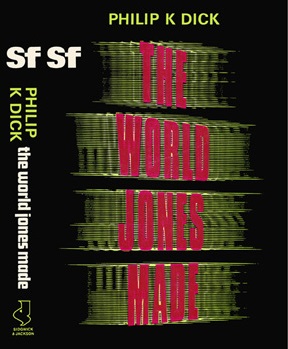
The World Jones Made is a 1956 science fiction novel by American writer Philip K. Dick, examining notions of precognition, humanity, and politics. It was first published by Ace Books as one half of Ace Double D-150, bound dos-à-dos with Agent of the Unknown by Margaret St. Clair.The story takes place after a nuclear war in which society is dominated by relativism, which rejects absolute truths and preaches tolerance as the highest principle. The mutant Floyd Jones, who can see into the future, plans to overthrow the system and colonise space. The story ends with the defeat of Jones, whose plans fail despite his ability to see the future due to the immutability of fate.
- A Fall of Moondust
Arthur C. Clarkestandalone novel1961
similar bytensenear futurescience fictionhard science fiction
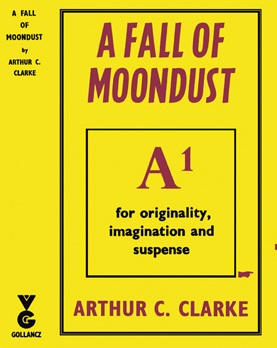
From the back cover of the Harbrace paperback: "The action of A Fall of Moondust takes place almost a century from now when tours on the moon are a common occurrence. One of the high points of each tour is a cruise around the Sea of Thirst, a body of volcanic dust, in a specially designed vessel called the Selene On a perfectly routine voyage one day the Selene suddenly disappears. How do you locate a small tourist "cruiser" buried beneath fifty feet of dust? If you find it, how do you rescue the passengers and crew? If you are on board, how do you feel and what do you do while brave men and expert technicians join forces in a race against time? Sustained excitement, lively humor, and an engaging cast of characters make this one of Arthur C. Clarke's most intriguing novels."
- The Handmaid's Tale
series3 books1985
similar bytensenear futurescience fictiontotalitarianism+1 more
The Handmaid's Tale is Margaret Atwood's 1985 novel set in Gilead, a totalitarian theocracy that has overthrown the United States and forces fertile women into reproductive servitude as Handmaids; it is narrated by one such woman, Offred. Atwood returned to the world in her 2019 sequel The Testaments, set fifteen years later and narrated by three women, including the regime's Aunt Lydia. Together the two novels move from Gilead's grip on power toward the first cracks in it.
- Artemis
Andy Weirstandalone novel2017
similar bytensenear futurescience fictionspace colonizationhard science fiction
Artemis is a 2017 science fiction novel by American writer Andy Weir. It takes place in the late 2080s in Artemis, the first and only city on the Moon. It follows the life of porter and smuggler Jasmine "Jazz" Bashara as she gets caught up in a conspiracy for control of the city. The book received mixed reviews from critics.
- Saturn Run
Ctein & John Sandfordstandalone novel2015
similar bytensenear futurescience fictionhard science fictionpolitical intrigueouter planets & moonsspaceship
"The year is 2066. A Caltech intern inadvertently notices an anomaly from a space telescope--something is approaching Saturn, and decelerating. Space objects don't decelerate. Spaceships do. A flurry of top-level government meetings produces the inescapable conclusion: Whatever built that ship is at least one hundred years ahead in hard and soft technology, and whoever can get their hands on it exclusively and bring it back will have an advantage so large, no other nation can compete. A conclusion the Chinese definitely agree with when they find out. The race is on, and a remarkable adventure begins..."--
- Adventures of Viktor & Julia
series2 books1999
similar bytensenear futurescience fictionhard science fiction+1 more
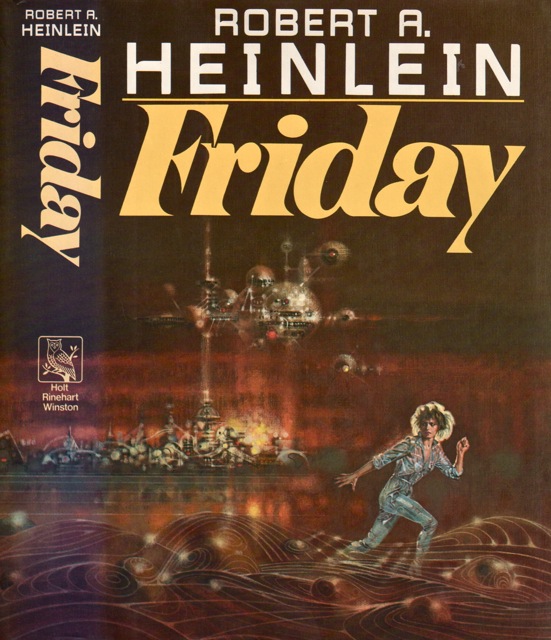
- Friday
Robert A. Heinleinstandalone novel1982
similar bytensenear futurescience fiction+2 more
Friday is a 1982 science fiction novel by American writer Robert A. Heinlein. It is the story of a female "artificial person", the eponymous Friday, genetically engineered to be stronger, faster, smarter, and generally better than normal humans. Artificial humans are widely resented, and much of the story deals with Friday's struggle both against prejudice and to conceal her enhanced attributes from other humans. The story is set in a Balkanized 21st century, in which the nations of the North American continent have been split up into a number of smaller states.
- The Children of Men
P. D. Jamesstandalone novel1992
similar bytensenear futurescience fictionpolitical intriguetotalitarianism
"The human race has become infertile, and under the despotic rule of Xan Lyppiatt, the Warden of England the old are despairing and the young cruel. Theo Faren, a cousin of the Warden, lives a solitary life in this ominous atmosphere. That is, until a chance encounter with a young woman leads him into contact with a group of dissenters. Suddenly his life is changed irrevocably, as he faces agonising choices which could affect the future of mankind." (pdjames.co.uk)
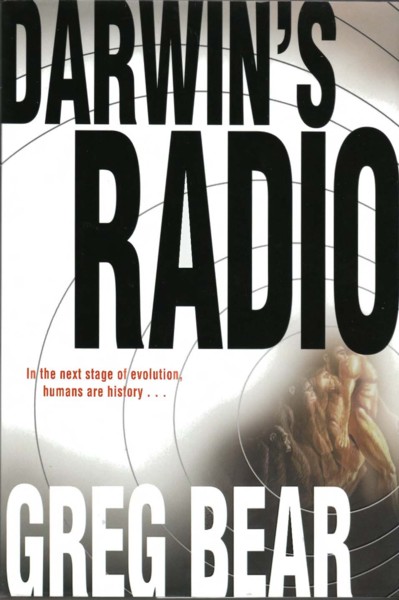
- Darwin
series2 books1999
completed
similar bytensenear futurescience fictionhard science fiction
Greg Bear's Darwin's Radio imagines a dormant retrovirus in human DNA activating worldwide, triggering an accelerated leap in human evolution that governments respond to as a plague. The 1999 novel won the Nebula Award; its sequel Darwin's Children follows the first generation of changed children as society decides what to do with them. Together they're speculative near-future science fiction grounded in genetics rather than space opera.
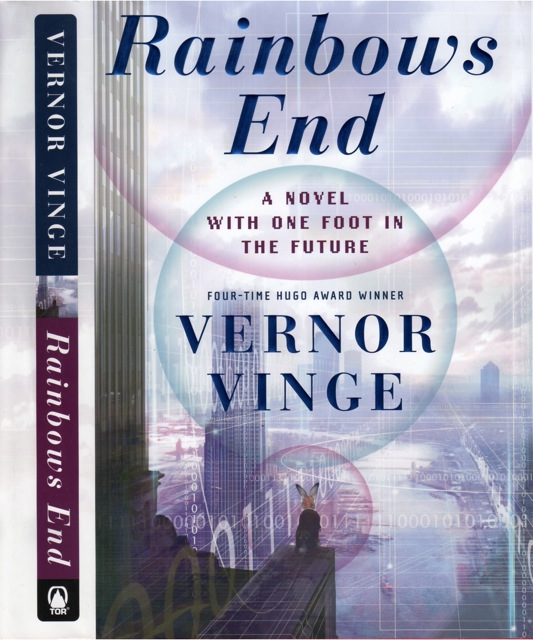
- Rainbows End
Vernor Vingestandalone novel2006
similar bytensenear futurescience fictionhard science fiction+2 more
A science-fiction thriller set in a place and time as exciting and strange as any far-future world: San Diego, California, 2025. Robert Gu is a recovering Alzheimer’s patient. The world that he remembers was much as we know it today. Now, as he regains his faculties through a cure developed during the years of his near-fatal decline, he discovers that the world has changed and so has his place in it. He was a world-renowned poet. Now he is seventy-five years old, though by a medical miracle he looks much younger, and he’s starting over, for the first time unsure of his poetic gifts. Living with his son’s family, he has no choice but to learn how to cope with a new information age in which the virtual and the real are a seamless continuum, layers of reality built on digital views seen by a single person or millions, depending on your choice. But the consensus reality of the digital world is available only if, like his thirteen-year-old granddaughter Miri, you know how to wear your wireless access—through nodes designed into smart clothes—and to see the digital context—through smart contact lenses. With knowledge comes risk. When Robert begins to re-train at Fairmont High, learning with other older people what is second nature to Miri and other teens at school, he unwittingly becomes part of a wide-ranging conspiracy to use technology as a tool for world domination. In a world where every computer chip has Homeland Security built-in, this conspiracy is something that baffles even the most sophisticated security analysts, including Robert’s son and daughter-in law, two top people in the U.S. military. And even Miri, in her attempts to protect her grandfather, may be entangled in the plot. As Robert becomes more deeply involved in conspiracy, he is shocked to learn of a radical change planned for the UCSD Geisel Library; all the books there, and worldwide, would cease to physically exist. He and his fellow re-trainees feel compelled to join protests against the change. With forces around the world converging on San Diego, both the conspiracy and the protest climax in a spectacular moment as unique and satisfying as it is unexpected.
- Rogue Moon
Algis Budrysstandalone novel1960
similar bytensenear futurescience fictionhard science fiction
A project to transport humans by matter transmission becomes the means to send explorers to the Moon when the US discovers an alien artifact on the dark side, but anyone who enters dies, so a hardened adventurer is given the job.
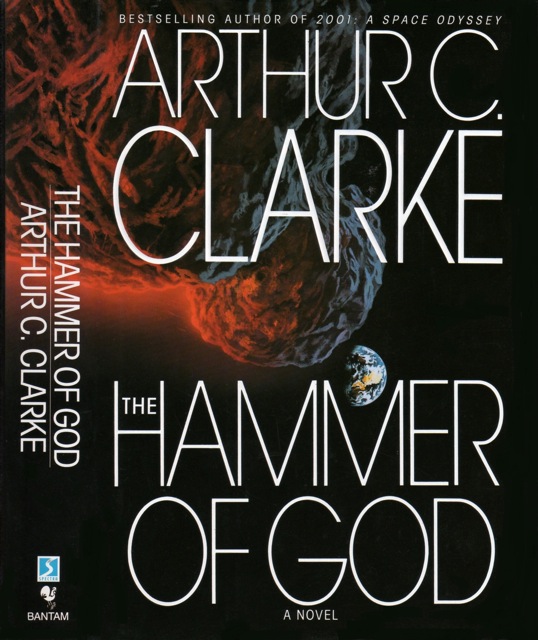
- The Hammer of God
Arthur C. Clarkestandalone novel1993
similar bytensenear futurescience fictionhard science fiction+1 more
The Hammer of God is a science fiction novel by Arthur C. Clarke originally published in 1993. Set in the year 2109, it deals with the discovery of an asteroid to be on course to collide with Earth and depicts the mission for deflecting the asteroid by using fusion thermal rockets.
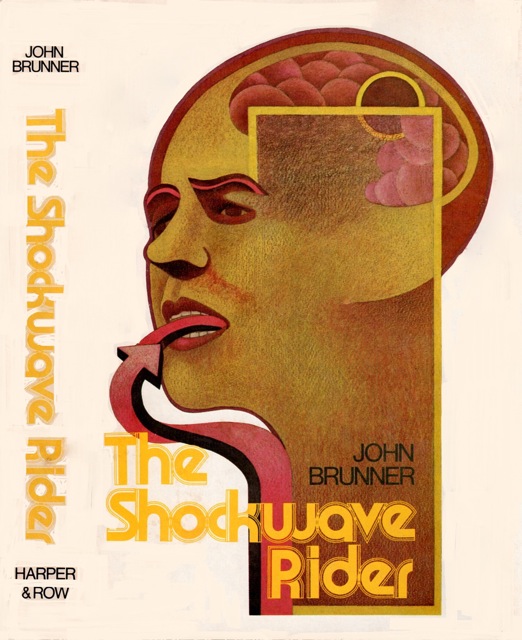
- The Shockwave Rider
John Brunnerstandalone novel1975
similar bytensenear futurescience fictiontotalitarianism+1 more
The Shockwave Rider is a science fiction novel by John Brunner, originally published in 1975. It is notable for its hero's use of computer hacking skills to escape pursuit in a dystopian future, and for the coining of the word "worm" to describe a program that propagates itself through a computer network. It also introduces the concept of a Delphi pool, perhaps derived from the RAND Corporation's Delphi method – a prediction market on world events which bears close resemblance to DARPA's controversial and cancelled Policy Analysis Market.
- The Lathe of Heaven
Ursula K. Le Guinstandalone novel1971
similar bytensenear futurescience fiction+1 more
The Lathe of Heaven is a 1971 science fiction novel by American writer Ursula K. Le Guin, first serialized in the American science fiction magazine Amazing Stories. It won the 1972 Locus Award for Best Novel and was a finalist for the 1971 Nebula Award for Best Novel and 1972 Hugo Award for Best Novel. Two television film adaptations were released: the PBS production, The Lathe of Heaven (1980), and Lathe of Heaven (2002), a remake produced by the A&E Network.
- Mother of Storms
John Barnesstandalone novel1994
similar bytensenear futurescience fictionpolitical intrigue+1 more
From the flaps of the Tor first edition: "It is 2028. A strike to destroy an illegal Arctic weapons cache has a catastrophic side effect. Massive amounts of energy are liberated from the polar ice, suddenly warming the Earth's climate. In the middle of the Pacific, a gigantic hurricane thousands of miles across is forming, larger than any in human history. A storm with winds of supersonic speed. A storm that changes direction at whim. A storm that refuses to die. A storm so vast it spawns dozens more in its wake... Blinded by intrigue, expedience, and greed, the world's politicians and power brokers have ignored the killer storms threat until it is too late. Already the death toll is in the tens of millions, as it savages the Pacific coast, while its devil's brood of smaller storms are wreaking havoc across the face of the planet. While the survivors scramble for advantage, a handful of courageous men and women undertake a daring, desperate plan to save humanity from total destruction - a plan so visionary it may alter forever the future of the human race."
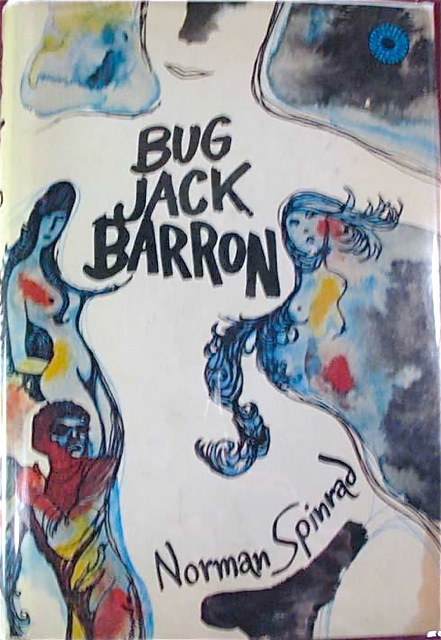
- Bug Jack Barron
Norman Spinradstandalone novel1969
similar bytensenear futurescience fictionpolitical intrigue
Bug Jack Barron is a 1969 science fiction novel by American writer Norman Spinrad, first serialized in the New Worlds magazine under the editorship of Michael Moorcock. It was nominated for the 1970 Hugo Award. The novel is notable for its lyrical style and unique use of cut-up phrases. In this regard, Spinrad has cited the influence of Beat writers William S. Burroughs, Allen Ginsberg, and Jack Kerouac.
- Endgame Enigma
James P. Hoganstandalone novel1987
similar bytensenear futurescience fictionpolitical intriguetotalitarianism+1 more
From back cover Bantam paperback November 1988: IT MIGHT BE A STEP BEYOND STAR WARS... AND ONE STEP CLOSER TO WORLD WAR III. It is the near future. With its power and influence waning, the Soviet Union has launched Valentina Tereshkova, a giant space station capable of housing 12,000 citizens, into orbit around the earth. But is the colossal off-world colony the peaceful Utopian experiment it's alleged to be? Or is it the last desperate weapon of a crumbling superpower bent on global domination? U.S. computer scientist Paula Bryce and agent Lew McCain are sent to learn the truth -- only to find themselves trapped in the station's awesome prison facility. With a brilliant and eccentric group of dissident inmates, Bryce and McCain seek to unlock from within the secret of the mysterious station. But how will they ever report their findings? In an international powder keg, even unconfirmed suspicions could force a terrifying first strike... while the only hope for mankind rests with two Americans trapped in a prison they can't possibly escape...