Loreful
HomeDiscover
Search series, authors…⌘K
Loreful

Reading orders for SF/F series and shared universes — with your place kept in every one.

Explore

UniversesSeriesWorksAuthorsAtlas

Help

FAQAboutSite map

Account & legal

Sign inCreate accountPrivacyTerms

Data

Built on ISFDB, Wikipedia, Wikidata and Open Library. Curated reading orders carry their reasoning on the page; the rest follow publication order. Data sources & licenses

© Loreful · data: ISFDB · CC BY

More like Saving Sky

anchored on:literary & generalnorth americanear futurecoming of agerace and racismemotional+1 more

but

Mood

The mood the book leaves you in.

  • The reading experience is propelled by journeys, exploration, and physical risk; excitement and forward momentum dominate over dread or introspection.
  • Joy and loss are deliberately mixed; the resolution grants characters something real while taking something else away, leaving warmth and sorrow together.
  • The book demands work from the reader — dense prose, difficult structure, unfamiliar ideas, or morally uncomfortable material — as part of its intended effect.
  • Grim events, cruelty, or despair dominate the atmosphere, and the book does not soften them with comfort or comic relief.
  • The atmosphere is quietly unsettling — wrongness, unease, and the uncanny pervade the book without necessarily escalating into overt horror.
  • The book is built to move the reader; character feeling is foregrounded and major scenes aim at a strong emotional response.
  • Humor is a primary aim and the prose plays for laughs — comic situations, wit, or dialogue produce sustained comedy, not occasional levity.
  • The book insists that things can improve; effort and decency are shown to matter, and the arc bends toward better outcomes even through hardship.
  • The book teaches as it goes — real facts, history, science, or craft are conveyed in enough depth that learning is part of the reading experience.
  • The book is designed to uplift and motivate, presenting perseverance or achievement in a way that invites the reader to aspire or act.
  • The overall register is cheerful and easygoing; stakes are kept gentle and the book avoids dwelling on pain or dread.
  • Withheld information drives the experience; the book sustains enigmas and secrets the reader wants resolved, whatever its genre.
  • The book is contemplative and inward-looking, giving more weight to thought, memory, and meaning than to external events.
  • The book works as comfort reading — low tension, a soothing pace, and an atmosphere the reader can unwind in.
  • Grief, loss, or melancholy set the dominant register, and the book lets sorrow stand rather than resolving it into comfort.
  • Sustained suspense is the point; the book keeps the reader braced for what happens next through danger, pressure, or impending revelation.
  • Playful invention and charm define the register — fanciful conceits, light absurdity, and a narration that delights in its own oddity.

About

What the story runs on.

  • Stories in which extraterrestrial beings are central — as characters, cultures, or the object of the plot.
  • Stories structured as a quest — a journey undertaken to find, deliver, or destroy something of great import.
  • Stories in which staying alive against nature, catastrophe, or scarcity is the central problem.
  • Stories of lovers kept apart by law, family, faith, or station, where the obstacle to love is the plot.
  • Stories in which a friendship — its making, testing, or loss — is the emotional center.
  • Stories of growing up — a young protagonist crossing from childhood into adult knowledge and responsibility.
  • Stories about who a character truly is — self-discovery, doubled lives, and the search for a self.
  • Stories about mourning — living through the death of a loved one and what loss does to the survivors.
  • Stories in which a buried family truth — hidden parentage, crimes, or shames — surfaces and reorders the present.
  • Stories driven by maneuvering for power — factions, conspiracies, and statecraft conducted in shadow.
  • Stories in which war itself is the subject — combat, occupation, and what warfare does to soldiers and civilians.
  • Stories organized around investigating a killing — the case, the clues, and the pursuit of the killer, in any genre's clothing.

Shelf

Where it sits in the library.

    • Fiction built on magic or other supernatural elements that have no scientific explanation.
    • Secondary-world fantasy at large scale, where the fate of nations or the world turns on the protagonists' struggle.
    • Fantasy set in a recognizably modern city or contemporary world where the supernatural intrudes on everyday life.
    • Fantasy that blends in horror's atmosphere and imagery, keeping a fantastical frame around grim or frightening material.
    • Action-driven fantasy following warriors or rogues with personal stakes against sorcerous threats, rather than world-spanning conflicts.
    • Fantasy set in a real historical period or a close analogue of one, with magic woven into the era.
    • Fantasy in which protagonists cross from the ordinary world into another world through a portal or similar passage.
    • Fiction that retells or reworks a traditional fairy tale in a new form or setting.
    • Fantasy drawing directly on myths, legends, and folklore, retelling them or building on their figures and logic.
    • Fantasy of ghosts, vampires, shapeshifters, psychics, and similar phenomena, usually set in an otherwise ordinary world.
    • Fiction mixing science-fictional trappings with overtly magical or impossible elements in one setting.
    • Low-stakes fantasy emphasizing comfort, community, and everyday pleasures over conflict and peril.
    • Speculative fiction of pervasive moral ambiguity, violence, and cynicism that rejects heroic conventions — fantasy and SF alike.
      • Fiction that extrapolates from science and technology — future societies, space travel, or speculative inventions — within at least nominally natural laws.
      • Science fiction of interstellar scope — starships, galactic polities, and adventure across star systems.
      • Science fiction committed to scientific rigor, where technical plausibility constrains the story.
      • Science fiction centered on armed forces and warfare, told largely from a military point of view.
      • Science fiction of networked, corporate-dominated near futures, pairing high technology with social decay.
      • Science fiction styled on nineteenth-century steam-powered technology, often in a Victorian or pseudo-Victorian setting.
      • Fiction depicting an oppressive or catastrophic society, presented as a warning.
      • Fiction set after civilization's collapse, following survivors in the ruins of the old world.
      • Fiction in which characters move between past and future, and the mechanics or consequences of that travel drive the plot.
      • Fiction exploring a world where a historical event went differently and history diverged from ours.
      • Science fiction about humanity's first encounter and communication with an alien intelligence.
      • Science fiction in which extraterrestrial forces attack or occupy Earth and humanity resists.
      • Fiction whose primary aim is to frighten or unsettle the reader through dread, menace, or the monstrous.
      • Horror of vast, indifferent, incomprehensible entities before which humanity is insignificant, in the Lovecraft tradition.
      • Horror of decaying houses, buried family secrets, and oppressive atmosphere in the Gothic literary tradition.
      • Horror centered on hauntings and the returning dead.
      • Horror located in the mind — paranoia, obsession, and unreliable perception rather than external monsters.
      • Horror built around the reanimated dead and survival amid their outbreaks.
      • Horror defined by explicit, transgressive gore that refuses to cut away from violence.
      • Speculative fiction of the strange and uncanny that resists both natural explanation and standard genre categories.
      • Fiction organized around solving a crime or puzzle, typically following an investigator toward the identification of a culprit.
      • A puzzle-first mystery that lays out clues so the culprit's identity can be deduced before the reveal.
      • Crime fiction of moral ambiguity, fatalism, and hard-edged style, set among the corrupt and the doomed.
      • A mystery following the realistic routines of police work — forensics, interviews, and case-building.
      • A gentle mystery with an amateur sleuth, a small community, and violence kept off the page.
      • A mystery set in a past era, where the investigation works within that period's methods and society.
      • Fast-paced fiction driven by imminent danger, pursuit, or high-stakes conspiracy, built to sustain tension.
      • A thriller of espionage — agents, tradecraft, and intelligence services in conflict.
      • A thriller centered on lawyers and the courtroom, where litigation carries the suspense.
      • A thriller driven by detailed contemporary or near-future technology, often military or scientific.
      • A thriller whose tension comes from mental states and manipulation between characters rather than external action.
      • Fiction whose central plot is a romantic relationship and its development toward an emotionally satisfying resolution.
      • Romance in which one or both partners are supernatural beings, blending fantasy elements into the love story.
      • A fantasy-romance hybrid in which the romantic arc and the fantasy plot carry equal weight.
      • Romance set in a past era, with courtship shaped by the period's society and manners.
      • Romance set in the present day, without supernatural or historical elements.
      • Fiction set in a real past period, where the historical setting materially shapes characters and events.
        • General and literary fiction emphasizing prose style, character interiority, or formal ambition over genre plot conventions.
        • Fiction in a realistic world where magical events occur and are treated as ordinary, in the tradition of Latin American literature.
        • Fiction that ridicules people, institutions, or society in order to criticize them.
        • Fiction of dreamlike, irrational imagery and logic that breaks from realistic representation.
        • Fiction that plays with narrative convention through metafiction, fragmentation, and self-reference.
        • Fiction propelled by journeys, exploration, and physical peril, where action and survival carry the plot.
        • Adventure fiction of ships and seafaring — naval engagements, voyages, and life at sea.
        • Fiction of the American frontier West — gunmen, ranchers, and lawmen, typically in the late nineteenth century.
        • Fiction centered on soldiers, campaigns, and the experience of warfare, historical or imagined.
          • Fiction written primarily to amuse, using comedic situations, wit, or parody as its organizing principle.
            • Multi-generational fiction following a family or dynasty across decades, with inheritance and kinship as the through-line.
              • Fiction whose world runs on explicit game mechanics — levels, stats, and skills that characters can see and exploit.
                • Fiction about costumed or superpowered heroes and their conflicts with comparable villains.

                Practical

                How long a commitment, whether it stands alone, and whether it has finished.

                Tap a chip to ask for it · tap again to rule it out · once more to clear. Numbers show what would be left.

                • Cover of Our Missing Hearts
                  Our Missing Hearts

                  Celeste Ng · standalone novel · 2022

                  similar byliterary & generalrace and racismnorth americanear futureemotionaltense

                  USA has added some new laws, cementing the fight against the unamerican and nonamerican. Bird is the son of a Chinese woman, and the wise course is never to ask any questions about where she went.

                • Cover of Flight
                  Flight

                  Sherman Alexie · standalone novel · 2007

                  similar byliterary & generalcoming of agerace and racismnorth americaemotional

                  Flight is a 2007 novel written by Sherman Alexie. It is written in the first-person, from the viewpoint of a Native American teenager who calls himself Zits. Zits is a foster child, having spent the majority of his life moving from one negative or abusive family experience to another. After running away from his most recent foster home, he is detained by police and put into jail. While in his cell, he meets a new friend, Justice, who introduces Zits to a new way of thinking. A new ideology of making white people pay for their historic treatment of Native Americans. Justice provides the weapons, sending Zits on a mass shooting in a downtown Seattle bank. Shot in the back of the head by security, Zits is suddenly transported to the past and thrust into the body of a stranger; this is the first of many similar incidents. The story confronts Zits' feelings of vulnerability as a misunderstood teenager, an orphan, and as a biracial person with Native American ancestry and how forgiveness across multiple generations is an inside job.

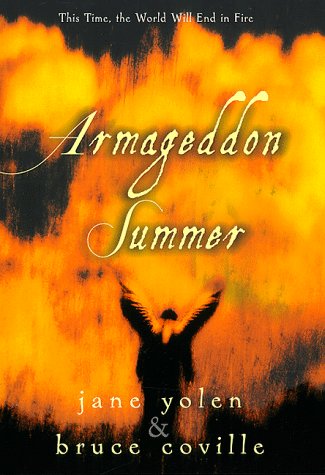
                • Cover of Armageddon Summer
                  Armageddon Summer

                  Jane Yolen & Bruce Coville · standalone novel · 1998

                  similar byliterary & generalcoming of agenorth americaemotionaltenseyoung adult

                  A 14 year old girl and a 16 year old boy meet when the cult to which their parents belong settles on top of a mountain in the Berkshires where they believe they will live through the Apocalypse.

                • Cover of Burning Up
                  Burning Up

                  Caroline B. Cooney · standalone novel · 1999

                  similar byliterary & generalcoming of agerace and racismnorth americaemotionalyoung adult

                  When a girl she had met at an innercity church is murdered, fifteen-year-old Macey channels her grief into a school project that leads her to uncover prejudice she had not imagined in her grandparents and their wealthy Connecticut community.

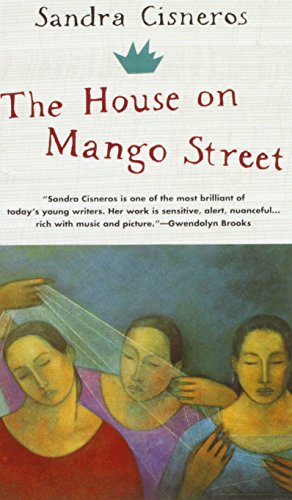
                • Cover of The House on Mango Street
                  The House on Mango Street

                  Sandra Cisneros · standalone novel · 1984

                  similar byliterary & generalcoming of agerace and racismnorth americaemotional

                  In a series of inter-connected vignettes, this is the story of a young girl growing up in the Hispanic quarter of Chicago. Contains magical realism.

                • Cover of Before I Fall
                  Before I Fall

                  series · 2 books · 2010

                  similar byliterary & generalcoming of agenorth americaemotionalyoung adult

                  Lauren Oliver's Before I Fall is a 2010 young-adult novel narrated by teenager Samantha Kingston, who is forced to relive the day of her death repeatedly over the course of a week. Attempting to understand why, Samantha tries different choices and actions each time through, some starkly out of character, as she reckons with her life and relationships. It was adapted into a 2017 film of the same name.

                • Cover of The Reformatory
                  The Reformatory

                  Tananarive Due · standalone novel · 2023

                  similar byliterary & generalcoming of agerace and racismnorth americaemotional

                  The Reformatory is a 2023 novel by Tananarive Due which combines elements of horror, historical fiction, and literary fiction. It is loosely based on the Dozier School for Boys and the atrocities committed there. The novel received critical acclaim, including a win for the 2024 Bram Stoker Award for Best Novel and 2024 World Fantasy Award for Best Novel.

                • Cover of Holes
                  Holes

                  Louis Sachar · standalone novel · 1998

                  similar byliterary & generalcoming of agerace and racismnorth america+1 more

                  Holes is a 1998 middle grade novel written by Louis Sachar and first published by Farrar, Straus and Giroux. The book centers on Stanley Yelnats IV, a young boy who is sent to Camp Green Lake, a correctional boot camp in a desert in Texas, after being wrongfully convicted of theft. The plot explores the history of the area and how the actions of several characters in the past have affected Stanley's life in the present. These interconnecting stories touch on themes such as labor, boyhood and masculinity, friendship, meaning of names, illiteracy, elements of fairy tales, and racism.

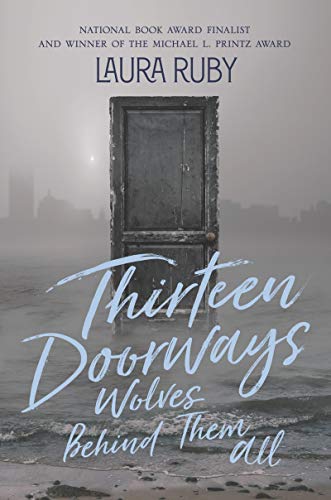
                • Cover of Thirteen Doorways, Wolves Behind Them All
                  Thirteen Doorways, Wolves Behind Them All

                  Laura Ruby · standalone novel · 2019

                  similar byliterary & generalcoming of agenorth americaemotionalyoung adult

                  Thirteen Doorways, Wolves Behind Them All is a young adult novel by Laura Ruby, published October 1, 2019, by Balzer + Bray.

                • Cover of My Life As an Ice Cream Sandwich
                  My Life As an Ice Cream Sandwich

                  Ibi Zoboi · standalone novel · 2019

                  similar byliterary & generalcoming of agerace and racismnorth americaemotional

                  Twelve-year-old Ebony-Grace Norfleet has lived with her beloved grandfather Jeremiah in Huntsville, Alabama ever since she was little. As one of the first black engineers to integrate NASA, Jeremiah has nurtured Ebony-Grace’s love for all things outer space and science fiction—especially Star Wars and Star Trek. But in the summer of 1984, when trouble arises with Jeremiah, it’s decided she’ll spend a few weeks with her father in Harlem. Harlem is an exciting and terrifying place for a sheltered girl from Hunstville, and Ebony-Grace’s first instinct is to retreat into her imagination. But soon 126th Street begins to reveal that it has more in common with her beloved sci-fi adventures than she ever thought possible, and by summer's end, Ebony-Grace discovers that Harlem has a place for a girl whose eyes are always on the stars.

                • Cover of Lord of the Flies
                  Lord of the Flies

                  William Golding · standalone novel · 1954

                  similar byliterary & generalcoming of agetenseyoung adult

                  Lord of the Flies is the 1954 debut novel of British author William Golding. The plot concerns a group of prepubescent British boys who are stranded on an uninhabited island and their disastrous attempts to govern themselves that lead to a descent into savagery. The novel's themes include morality, leadership, and the tension between civility and chaos.

                • Cover of Death-Cast
                  Death-Cast

                  series · 3 books · 2017

                  similar bynorth americanear futureemotionalyoung adult+3 more

                  They Both Die at the End is set in a world where a service called Death-Cast calls people on the morning of the day they will die, and follows two strangers who connect through an app built for exactly that situation, choosing to spend their last day together. Adam Silvera's novel became a viral hit years after its original release, later gaining a prequel and further entries exploring other characters within the same premise. The series stays within a single fixed speculative conceit rather than expanding into a wider plot.

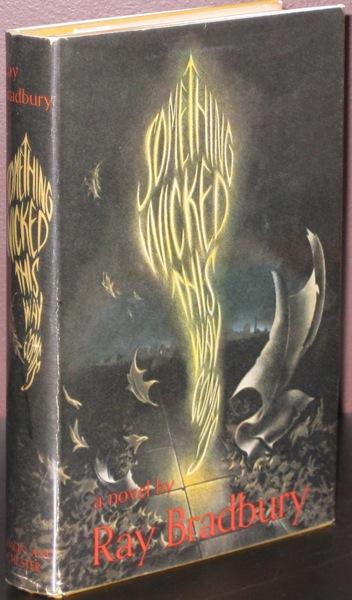
                • Cover of Green Town
                  Green Town

                  series · 31 books · 1946

                  completed

                  similar byliterary & generalcoming of agenorth america

                  Green Town gathers two of Ray Bradbury's loosely linked novels set in his fictionalized version of his childhood home of Waukegan, Illinois: the dark fantasy Something Wicked This Way Comes (1962), in which a sinister traveling carnival led by the mysterious Mr. Dark descends on a small town and preys on its residents' desires, and the later Farewell Summer (2006), which follows Douglas Spaulding through an autumn stand-off between the town's boys and its elders. Written more than four decades apart, the two novels share Bradbury's recurring setting and nostalgic, myth-making tone rather than a single continuous plot.

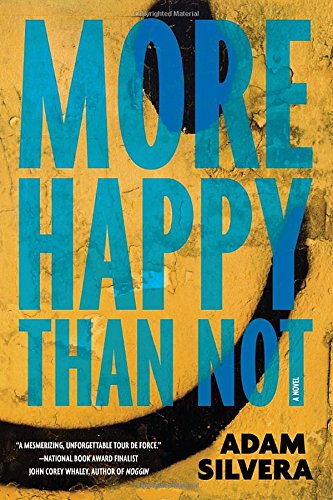
                • Cover of More Happy Than Not
                  More Happy Than Not

                  Adam Silvera · standalone novel · 2015

                  similar byliterary & generalnorth americanear futureemotionalyoung adult

                  When it first gets announced, the Leteo Institute's memory-alteration procedure seems too good to be true to Aaron Soto-miracle cure-alls don't tend to pop up in the Bronx projects. Aaron can't forget how he's grown up poor, how his friends all seem to shrug him off, and how his father committed suicide in their one bedroom apartment. He has the support of his patient girlfriend, if not necessarily his distant brother and overworked mother, but it's not enough. Then Thomas shows up. He doesn't mind Aaron's obsession over the Scorpius Hawthorne books and has a sweet movie set-up on his roof. There are nicknames. Aaron's not only able to be himself, but happiness feels easy with Thomas. The love Aaron discovers may cost him what's left of his life, but since Aaron can't suddenly stop being gay Leteo may be the only way out.

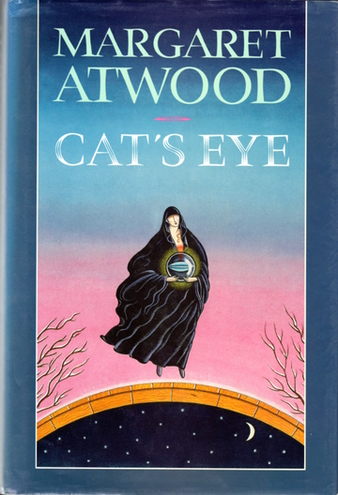
                • Cover of Cat's Eye
                  Cat's Eye

                  Margaret Atwood · standalone novel · 1988

                  similar byliterary & generalcoming of agenorth americaemotional

                  Cat's Eye is a 1988 novel by Canadian writer Margaret Atwood about fictional painter Elaine Risley, who vividly reflects on her childhood and teenage years. Her strongest memories are of Cordelia, who was the leader of a trio of girls who were both very cruel and very kind to her in ways that tint Elaine's perceptions of relationships and her world — not to mention her art — into her middle years. The novel unfolds in mid-20th century Canada, from World War II to the late 1980s, and includes a look at many of the cultural elements of that time period, including feminism and various modern art movements. The book was a finalist for the 1988 Governor General's Award and for the 1989 Booker Prize.

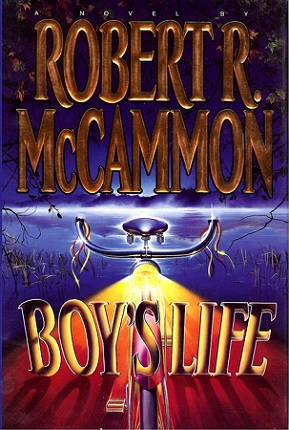
                • Cover of Boy's Life
                  Boy's Life

                  Robert R. McCammon · standalone novel · 1991

                  similar byliterary & generalcoming of agenorth americaemotional

                  Boy's Life is a 1991 novel by New York Times bestselling author Robert R. McCammon. It received the World Fantasy Award for Best Novel in 1992.

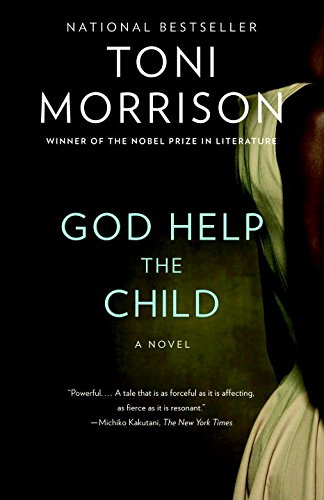
                • Cover of God Help the Child
                  God Help the Child

                  Toni Morrison · standalone novel · 2015

                  similar byliterary & generalcoming of agerace and racismnorth americaemotional

                  God Help the Child is the 11th and final novel by American writer Toni Morrison. News of the book, as well as the title and opening line, were released in December 2014. The novel's original title, preferred by Morrison herself, is The Wrath of Children.

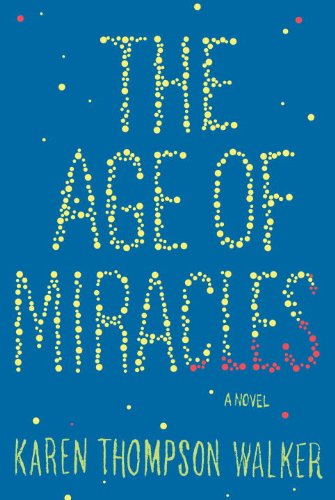
                • Cover of The Age of Miracles
                  The Age of Miracles

                  Karen Thompson Walker · standalone novel · 2012

                  similar byliterary & generalcoming of agenorth americanear future

                  The Age of Miracles is the debut novel by the American writer Karen Thompson Walker. It was published in June 2012 by Random House in the United States and Simon & Schuster in the United Kingdom. The book chronicles the fictional phenomenon of "slowing", in which one Earth day begins to stretch out and take longer and longer to complete. The novel received positive reviews and publishing deals totaling £1.12 million, and has been translated into a number of languages. The book was nominated as part of the Waterstones 11 literary award in 2012.

                • Cover of Z for Zachariah
                  Z for Zachariah

                  Robert C. O'Brien · standalone novel · 1975

                  similar bycoming of agenear futuretensenorth americayoung adult

                  Sixteen-year-old Ann Burden, on an Amish family farm in an isolated valley, believes she is the only survivor of nuclear war and nerve gas. One day a man arrives in a "safe-suit" that he and others have recently developed.

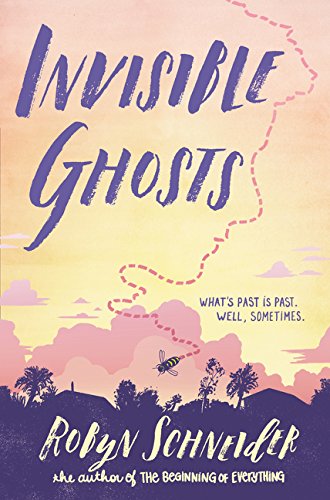
                • Cover of Invisible Ghosts
                  Invisible Ghosts

                  Robyn Schneider · standalone novel · 2018

                  similar byliterary & generalcoming of agenorth americaemotionalyoung adult

                  Rose Asher believes in ghosts. She should, since she has one for a best friend: Logan, her annoying, Netflix-addicted brother, who is forever stuck at fifteen. But Rose is growing up, and when an old friend moves back to Laguna Canyon and appears in her drama class, things get complicated. Jamie Aldridge is charming, confident, and a painful reminder of the life Rose has been missing out on since her brother's death. She watches as Jamie easily rejoins their former friends--a group of magnificently silly theater nerds--while she struggles to choose between the boy who makes her feel alive and the brother she isn't ready to lose.

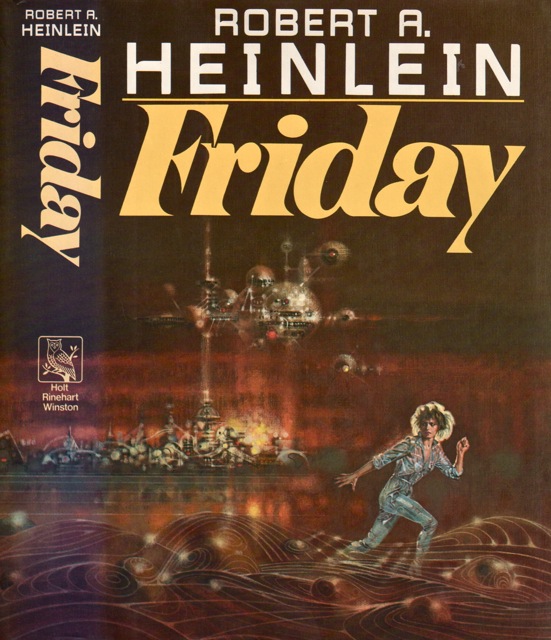
                • Cover of Friday
                  Friday

                  Robert A. Heinlein · standalone novel · 1982

                  similar byrace and racismnorth americanear futuretense

                  Friday is a 1982 science fiction novel by American writer Robert A. Heinlein. It is the story of a female "artificial person", the eponymous Friday, genetically engineered to be stronger, faster, smarter, and generally better than normal humans. Artificial humans are widely resented, and much of the story deals with Friday's struggle both against prejudice and to conceal her enhanced attributes from other humans. The story is set in a Balkanized 21st century, in which the nations of the North American continent have been split up into a number of smaller states.

                • Cover of Strays
                  Strays

                  Ron Koertge · standalone novel · 2007

                  similar byliterary & generalcoming of agenorth americaemotionalyoung adult

                  Recently orphaned, sixteen-year-old Ted O'Connor is sent to a foster home.

                • Cover of The Queen's Gambit
                  The Queen's Gambit

                  Walter Tevis · standalone novel · 1983

                  similar byliterary & generalcoming of agenorth americaemotional

                  The Queen's Gambit is a 1983 American novel by Walter Tevis, exploring the life of fictional female chess prodigy Beth Harmon. A bildungsroman, or coming-of-age story, it covers themes of adoption, feminism, chess, drug addiction and alcoholism. The book was adapted for the 2020 Netflix miniseries, The Queen's Gambit.

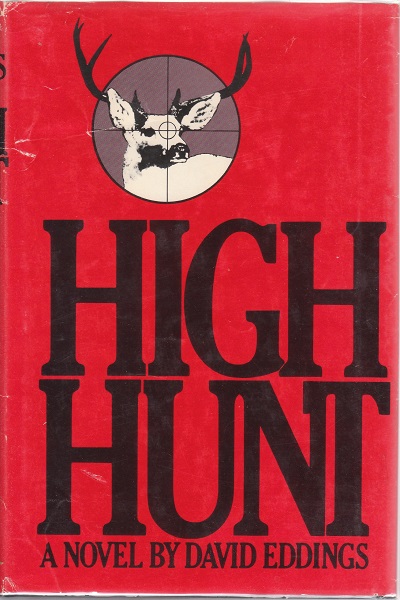
                • Cover of High Hunt
                  High Hunt

                  David Eddings · standalone novel · 1973

                  similar byliterary & generalcoming of agenorth americatense

                  High Hunt is the first published novel of David Eddings. It was first published in 1973 by G. P. Putnam's Sons, its copyright was renewed and it published in New York by HarperCollins in 1993, and then in 1994 by Del Rey Books. High Hunt is Eddings' first novel, written while he was serving jail time for a child abuse charge. High Hunt was one of only two "mainstream novels" he wrote during his career. While it is not fantasy, as are most of Eddings' other books, it still shares similarities with most of them as the book focuses on the main character maturing, falling in love, and overcoming personal tragedy. The story is written from the first person perspective though the eyes of Dan Alders, a soldier back from army duty in Germany and on a hunting trip with his estranged brother Jack and some "friends": Cal, Lou, and Stan. The theme of the returning soldier was also in Eddings' novel How Lovely are the Dead (1953) submitted as his undergraduate thesis at Reed College and later his own experience returning from service in Germany. During the hunt, tensions and old hatreds rise and escalate into open fighting. The story takes place in the Cascade Mountains, in Washington state, U.S.