Loreful
HomeDiscover
Search series, authors…⌘K
Loreful

Reading orders for SF/F series and shared universes — with your place kept in every one.

Explore

UniversesSeriesWorksAuthorsAtlas

Help

FAQAboutSite map

Account & legal

Sign inCreate accountPrivacyTerms

Data

Built on ISFDB, Wikipedia, Wikidata and Open Library. Curated reading orders carry their reasoning on the page; the rest follow publication order. Data sources & licenses

© Loreful · data: ISFDB · CC BY

More like Scandalous Risks

anchored on:literary & generalbritish islesmid 20th centuryfaith and religiongender and societyemotional+1 more

but

Mood

The mood the book leaves you in.

  • The reading experience is propelled by journeys, exploration, and physical risk; excitement and forward momentum dominate over dread or introspection.
  • Joy and loss are deliberately mixed; the resolution grants characters something real while taking something else away, leaving warmth and sorrow together.
  • The book demands work from the reader — dense prose, difficult structure, unfamiliar ideas, or morally uncomfortable material — as part of its intended effect.
  • Grim events, cruelty, or despair dominate the atmosphere, and the book does not soften them with comfort or comic relief.
  • The atmosphere is quietly unsettling — wrongness, unease, and the uncanny pervade the book without necessarily escalating into overt horror.
  • The book is built to move the reader; character feeling is foregrounded and major scenes aim at a strong emotional response.
  • Humor is a primary aim and the prose plays for laughs — comic situations, wit, or dialogue produce sustained comedy, not occasional levity.
  • The book insists that things can improve; effort and decency are shown to matter, and the arc bends toward better outcomes even through hardship.
  • The book teaches as it goes — real facts, history, science, or craft are conveyed in enough depth that learning is part of the reading experience.
  • The book is designed to uplift and motivate, presenting perseverance or achievement in a way that invites the reader to aspire or act.
  • The overall register is cheerful and easygoing; stakes are kept gentle and the book avoids dwelling on pain or dread.
  • Withheld information drives the experience; the book sustains enigmas and secrets the reader wants resolved, whatever its genre.
  • The book is contemplative and inward-looking, giving more weight to thought, memory, and meaning than to external events.
  • The book works as comfort reading — low tension, a soothing pace, and an atmosphere the reader can unwind in.
  • Grief, loss, or melancholy set the dominant register, and the book lets sorrow stand rather than resolving it into comfort.
  • Sustained suspense is the point; the book keeps the reader braced for what happens next through danger, pressure, or impending revelation.
  • Playful invention and charm define the register — fanciful conceits, light absurdity, and a narration that delights in its own oddity.

About

What the story runs on.

  • Stories in which extraterrestrial beings are central — as characters, cultures, or the object of the plot.
  • Stories structured as a quest — a journey undertaken to find, deliver, or destroy something of great import.
  • Stories in which staying alive against nature, catastrophe, or scarcity is the central problem.
  • Stories of lovers kept apart by law, family, faith, or station, where the obstacle to love is the plot.
  • Stories of growing up — a young protagonist crossing from childhood into adult knowledge and responsibility.
  • Stories about who a character truly is — self-discovery, doubled lives, and the search for a self.
  • Stories about mourning — living through the death of a loved one and what loss does to the survivors.
  • Stories in which belief, doubt, and religious life are the central subject, from crises of faith to life inside a religious community.
  • Stories in which a buried family truth — hidden parentage, crimes, or shames — surfaces and reorders the present.
  • Stories driven by maneuvering for power — factions, conspiracies, and statecraft conducted in shadow.
  • Stories in which war itself is the subject — combat, occupation, and what warfare does to soldiers and civilians.
  • Stories organized around investigating a killing — the case, the clues, and the pursuit of the killer, in any genre's clothing.

Shelf

Where it sits in the library.

    • Fiction built on magic or other supernatural elements that have no scientific explanation.
    • Secondary-world fantasy at large scale, where the fate of nations or the world turns on the protagonists' struggle.
    • Fantasy set in a recognizably modern city or contemporary world where the supernatural intrudes on everyday life.
    • Fantasy that blends in horror's atmosphere and imagery, keeping a fantastical frame around grim or frightening material.
    • Action-driven fantasy following warriors or rogues with personal stakes against sorcerous threats, rather than world-spanning conflicts.
    • Fantasy set in a real historical period or a close analogue of one, with magic woven into the era.
    • Fantasy in which protagonists cross from the ordinary world into another world through a portal or similar passage.
    • Fiction that retells or reworks a traditional fairy tale in a new form or setting.
    • Fantasy drawing directly on myths, legends, and folklore, retelling them or building on their figures and logic.
    • Fantasy of ghosts, vampires, shapeshifters, psychics, and similar phenomena, usually set in an otherwise ordinary world.
    • Fiction mixing science-fictional trappings with overtly magical or impossible elements in one setting.
    • Low-stakes fantasy emphasizing comfort, community, and everyday pleasures over conflict and peril.
    • Speculative fiction of pervasive moral ambiguity, violence, and cynicism that rejects heroic conventions — fantasy and SF alike.
      • Fiction that extrapolates from science and technology — future societies, space travel, or speculative inventions — within at least nominally natural laws.
      • Science fiction of interstellar scope — starships, galactic polities, and adventure across star systems.
      • Science fiction committed to scientific rigor, where technical plausibility constrains the story.
      • Science fiction centered on armed forces and warfare, told largely from a military point of view.
      • Science fiction of networked, corporate-dominated near futures, pairing high technology with social decay.
      • Science fiction styled on nineteenth-century steam-powered technology, often in a Victorian or pseudo-Victorian setting.
      • Fiction depicting an oppressive or catastrophic society, presented as a warning.
      • Fiction set after civilization's collapse, following survivors in the ruins of the old world.
      • Fiction in which characters move between past and future, and the mechanics or consequences of that travel drive the plot.
      • Fiction exploring a world where a historical event went differently and history diverged from ours.
      • Science fiction about humanity's first encounter and communication with an alien intelligence.
      • Science fiction in which extraterrestrial forces attack or occupy Earth and humanity resists.
      • Fiction whose primary aim is to frighten or unsettle the reader through dread, menace, or the monstrous.
      • Horror of vast, indifferent, incomprehensible entities before which humanity is insignificant, in the Lovecraft tradition.
      • Horror of decaying houses, buried family secrets, and oppressive atmosphere in the Gothic literary tradition.
      • Horror centered on hauntings and the returning dead.
      • Horror located in the mind — paranoia, obsession, and unreliable perception rather than external monsters.
      • Horror built around the reanimated dead and survival amid their outbreaks.
      • Horror defined by explicit, transgressive gore that refuses to cut away from violence.
      • Speculative fiction of the strange and uncanny that resists both natural explanation and standard genre categories.
      • Fiction organized around solving a crime or puzzle, typically following an investigator toward the identification of a culprit.
      • A puzzle-first mystery that lays out clues so the culprit's identity can be deduced before the reveal.
      • Crime fiction of moral ambiguity, fatalism, and hard-edged style, set among the corrupt and the doomed.
      • A mystery following the realistic routines of police work — forensics, interviews, and case-building.
      • A gentle mystery with an amateur sleuth, a small community, and violence kept off the page.
      • A mystery set in a past era, where the investigation works within that period's methods and society.
      • Fast-paced fiction driven by imminent danger, pursuit, or high-stakes conspiracy, built to sustain tension.
      • A thriller of espionage — agents, tradecraft, and intelligence services in conflict.
      • A thriller centered on lawyers and the courtroom, where litigation carries the suspense.
      • A thriller driven by detailed contemporary or near-future technology, often military or scientific.
      • A thriller whose tension comes from mental states and manipulation between characters rather than external action.
      • Fiction whose central plot is a romantic relationship and its development toward an emotionally satisfying resolution.
      • Romance in which one or both partners are supernatural beings, blending fantasy elements into the love story.
      • A fantasy-romance hybrid in which the romantic arc and the fantasy plot carry equal weight.
      • Romance set in a past era, with courtship shaped by the period's society and manners.
      • Romance set in the present day, without supernatural or historical elements.
      • Fiction set in a real past period, where the historical setting materially shapes characters and events.
        • General and literary fiction emphasizing prose style, character interiority, or formal ambition over genre plot conventions.
        • Fiction in a realistic world where magical events occur and are treated as ordinary, in the tradition of Latin American literature.
        • Fiction that ridicules people, institutions, or society in order to criticize them.
        • Fiction of dreamlike, irrational imagery and logic that breaks from realistic representation.
        • Fiction that plays with narrative convention through metafiction, fragmentation, and self-reference.
        • Fiction propelled by journeys, exploration, and physical peril, where action and survival carry the plot.
        • Adventure fiction of ships and seafaring — naval engagements, voyages, and life at sea.
        • Fiction of the American frontier West — gunmen, ranchers, and lawmen, typically in the late nineteenth century.
        • Fiction centered on soldiers, campaigns, and the experience of warfare, historical or imagined.
          • Fiction written primarily to amuse, using comedic situations, wit, or parody as its organizing principle.
            • Multi-generational fiction following a family or dynasty across decades, with inheritance and kinship as the through-line.
              • Fiction whose world runs on explicit game mechanics — levels, stats, and skills that characters can see and exploit.
                • Fiction about costumed or superpowered heroes and their conflicts with comparable villains.

                Practical

                How long a commitment, whether it stands alone, and whether it has finished.

                Tap a chip to ask for it · tap again to rule it out · once more to clear. Numbers show what would be left.

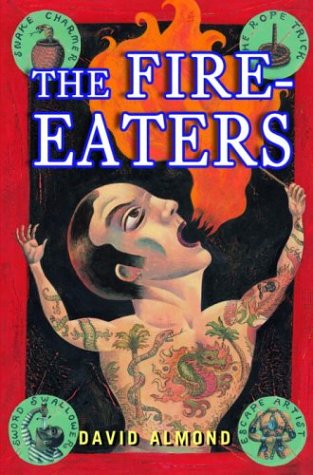
                • Cover of The Fire-Eaters
                  The Fire-Eaters

                  David Almond · standalone novel · 2003

                  similar byliterary & generalbritish islesmid 20th centuryemotionalreflective

                  The Fire-Eaters is a 2003 children's novel by David Almond.

                • Cover of Starbridge (Howatch)
                  Starbridge (Howatch)

                  series · 6 books · 1987

                  similar byliterary & generalbritish islesmid 20th centuryfaith and religion+2 more

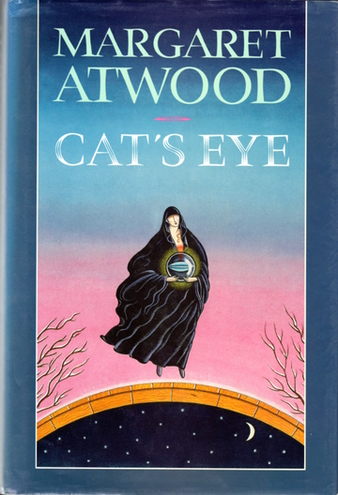
                • Cover of Cat's Eye
                  Cat's Eye

                  Margaret Atwood · standalone novel · 1988

                  similar byliterary & generalmid 20th centuryemotionalreflective+1 more

                  Cat's Eye is a 1988 novel by Canadian writer Margaret Atwood about fictional painter Elaine Risley, who vividly reflects on her childhood and teenage years. Her strongest memories are of Cordelia, who was the leader of a trio of girls who were both very cruel and very kind to her in ways that tint Elaine's perceptions of relationships and her world — not to mention her art — into her middle years. The novel unfolds in mid-20th century Canada, from World War II to the late 1980s, and includes a look at many of the cultural elements of that time period, including feminism and various modern art movements. The book was a finalist for the 1988 Governor General's Award and for the 1989 Booker Prize.

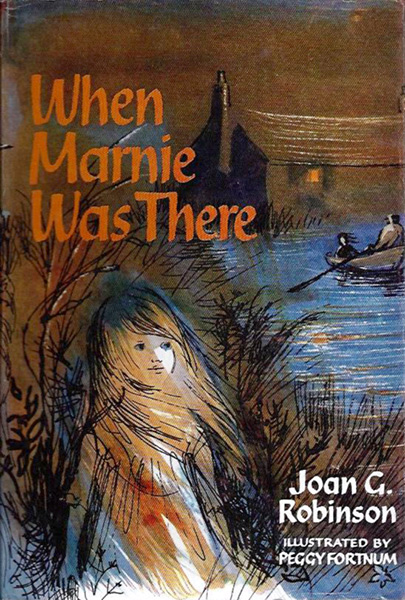
                • Cover of When Marnie Was There
                  When Marnie Was There

                  Joan G. Robinson · standalone novel · 1967

                  similar byliterary & generalbritish islesmid 20th centuryemotionalreflective

                  When Marnie Was There is a novel by British author Joan G. Robinson, first published in 1967 by Collins. The story follows Anna, a young girl who temporarily moves to Norfolk to heal after becoming ill. There she meets a mysterious and headstrong girl named Marnie who lives in a house overlooking the marshes. They develop a secretive relationship they come to cherish. The novel explores themes of alienation, loneliness, and forgiveness in childhood. It received highly positive reviews, praised for its intensity of natural imagery, balance of humour with difficult themes, and emotional weight. The story was adapted to television in 1971 and radio in 2006. In 2014, it was adapted by Studio Ghibli as an animated film of the same name.

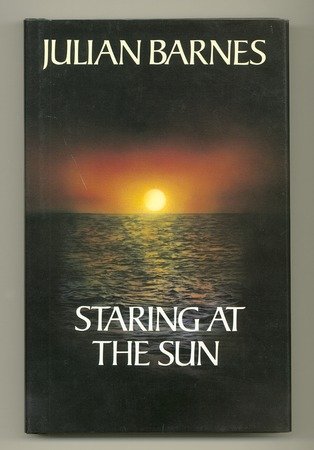
                • Cover of Staring at the Sun
                  Staring at the Sun

                  Julian Barnes · standalone novel · 1986

                  similar byliterary & generalmid 20th centuryemotionalreflectivebritish isles

                  Staring at The Sun is a 1986 novel by English writer Julian Barnes.

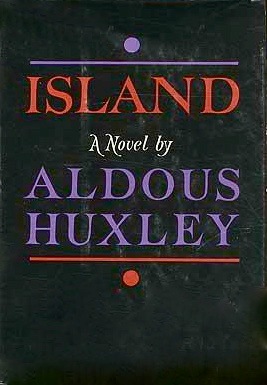
                • Cover of Island
                  Island

                  Aldous Huxley · standalone novel · 1962

                  similar byliterary & generalmid 20th centuryreflectivefaith and religion

                  Island is a 1962 utopian manifesto and novel by English writer Aldous Huxley, the author's final work before his death in 1963. Although it has a plot, the plot largely serves to further conceptual explorations rather than setting up and resolving conventional narrative tension.

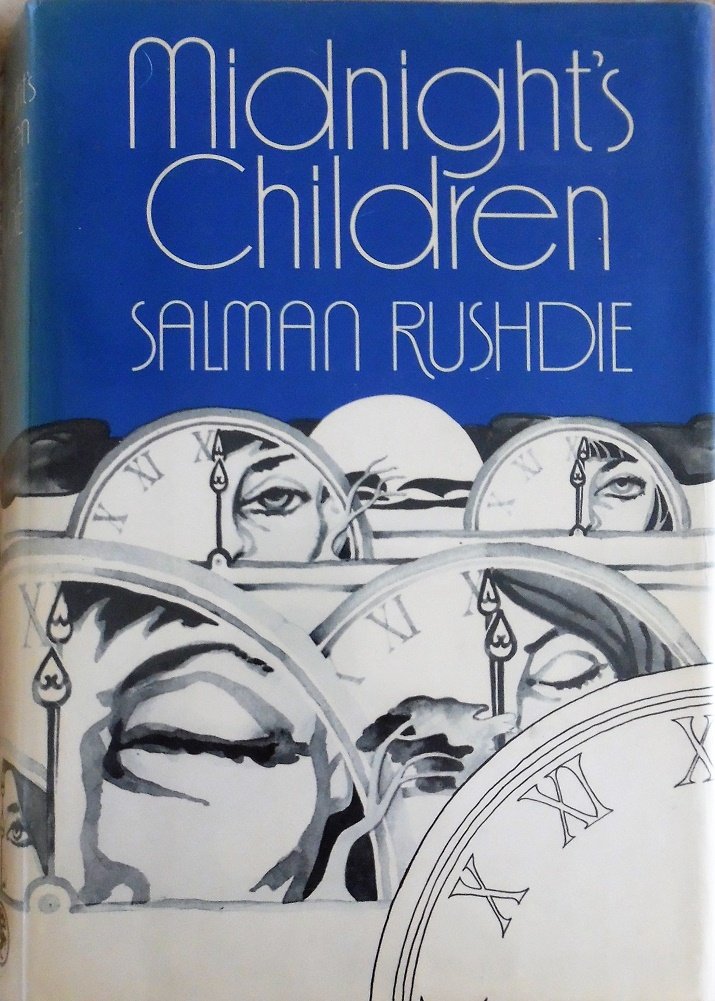
                • Cover of Midnight's Children
                  Midnight's Children

                  Salman Rushdie · standalone novel · 1980

                  similar byliterary & generalmid 20th centuryemotionalreflective

                  WorldCat: The life of a man born at the moment of India's independence becomes inextricably linked to that of his nation and is a whirlwind of disasters and triumphs that mirror modern India's course.

                • Cover of A Little Princess
                  A Little Princess

                  Frances Hodgson Burnett · standalone novel · 1905

                  similar byliterary & generalbritish islesemotionalclass conflict

                  A Little Princess is a work by British-American author Frances Hodgson Burnett, presented as a 1888 novella, a 1902 play and a 1905 children's novel. All three versions tell the story of Sara Crewe, a wealthy young girl and the prize student of a private London boarding school who is reduced to poverty and forced to endure the life of a servant under the school's cruel headmistress.

                • Cover of Utopia Avenue
                  Utopia Avenue

                  David Mitchell · standalone novel · 2020

                  similar byliterary & generalmid 20th centuryemotionalbritish isles+1 more

                  Utopia Avenue is a 2020 novel by David Mitchell. It is his eighth published novel, and his first since Slade House (2015). It was published by Sceptre on 14 July 2020. The novel tells the story of the fictional 1960s British psychedelic rock band Utopia Avenue.

                • Cover of Eliots of Damerosehay
                  Eliots of Damerosehay

                  series · 3 books · 1940

                  completed

                  similar byliterary & generalbritish isles+5 more

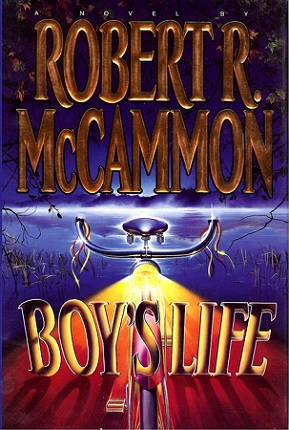
                • Cover of Boy's Life
                  Boy's Life

                  Robert R. McCammon · standalone novel · 1991

                  similar byliterary & generalmid 20th centuryemotionalreflective

                  Boy's Life is a 1991 novel by New York Times bestselling author Robert R. McCammon. It received the World Fantasy Award for Best Novel in 1992.

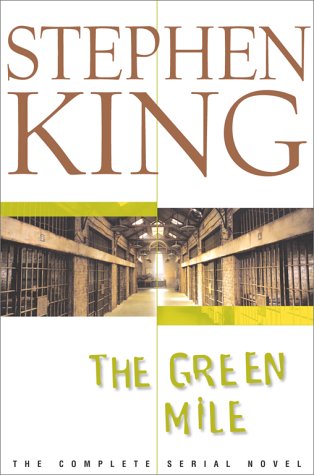
                • Cover of The Green Mile
                  The Green Mile

                  Stephen King · standalone novel · 1996

                  similar byliterary & generalmid 20th centuryemotional+1 more

                  The Green Mile is a 1996 serial novel by American writer Stephen King. It tells the story of death row supervisor Paul Edgecombe's encounter with John Coffey, an unusual inmate who displays inexplicable healing and empathetic abilities. The serial novel was released in six volumes before being republished as a single-volume work. The book is an example of magical realism. The subsequent film adaptation was a critical and commercial success. The Green Mile won the Bram Stoker Award for Best Novel in 1996. In 1997, The Green Mile was nominated as Best Novel for the British Fantasy Award and the Locus Award. In 2003 the book was listed on the BBC's The Big Read poll of the UK's "best-loved novel".

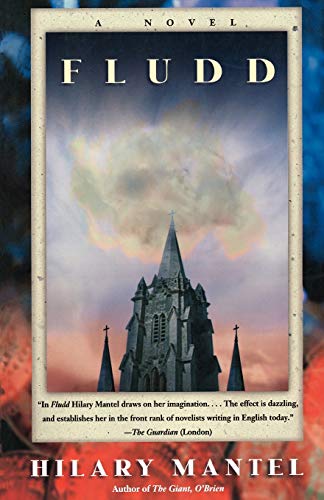
                • Cover of Fludd
                  Fludd

                  Hilary Mantel · standalone novel · 1989

                  similar byliterary & generalmid 20th centuryreflectivebritish islesfaith and religion

                  Fludd is a novel by Hilary Mantel. First published by Viking Press in 1989, it won the Winifred Holtby Memorial Prize that year.

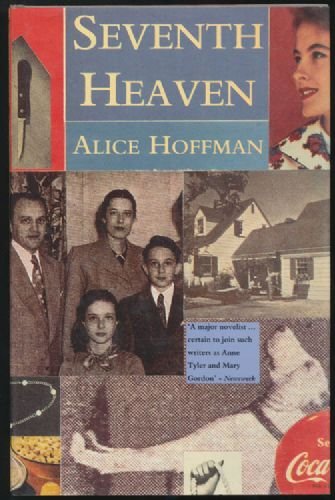
                • Cover of Seventh Heaven
                  Seventh Heaven

                  Alice Hoffman · standalone novel · 1990

                  similar byliterary & generalmid 20th centuryreflectivegender and society+1 more

                  Nora is ahead of her time. A single mother in 1950s suburbia, she's strong, sexy, passionate, and mysterious. Everyone in town is touched by her, and in the mirror of her magnetism, people see themselves as never before. With Nora's courageous image before them, they begin to ask themselves questions they had never asked--finding answers they had never dared to imagine....

                • EO
                  Eloisa: Or, a Series of Original Letters

                  Jean-Jacques Rousseau · standalone novel · 1761

                  similar byliterary & generalemotionalreflectivebritish islesforbidden loveclass conflict+1 more

                  The love between Julie d'Étange and her private teacher St Preux, made impossible because of their relative stations, leads to a dead-end. Julie eventually marries old M. de Wolmar, who acquaints them with his Utopian estate, characteristic of the Age of enlightenment.

                • Cover of Heaven Eyes
                  Heaven Eyes

                  David Almond · standalone novel · 2000

                  similar byliterary & generalbritish islesemotionalreflective

                  Heaven Eyes is a young adult novel by author David Almond. It was published in Great Britain by Hodder Children's Books in 2000 and by Delacorte Press in the United States in 2001. A paperback version was released in 2002 by Dell Laurel Leaf.

                • Cover of The Queen's Gambit
                  The Queen's Gambit

                  Walter Tevis · standalone novel · 1983

                  similar byliterary & generalmid 20th centuryemotionalgender and society

                  The Queen's Gambit is a 1983 American novel by Walter Tevis, exploring the life of fictional female chess prodigy Beth Harmon. A bildungsroman, or coming-of-age story, it covers themes of adoption, feminism, chess, drug addiction and alcoholism. The book was adapted for the 2020 Netflix miniseries, The Queen's Gambit.

                • Cover of Slaughterhouse-Five or the Children's Crusade: A Duty-Dance with Death
                  Slaughterhouse-Five or the Children's Crusade: A Duty-Dance with Death

                  Kurt Vonnegut & Jr. · standalone novel · 1969

                  similar byliterary & generalmid 20th centuryreflective

                  Vonnegut opens in his own voice, describing the twenty years it took him to face writing about surviving the firebombing of Dresden as a POW. He then hands the story to Billy Pilgrim, an awkward, fatalistic American chaplain's assistant swept into the Battle of the Bulge and captured by German forces alongside a soldier who dies blaming him for it. Imprisoned in a disused slaughterhouse in Dresden, Billy survives the firebombing that follows, and, we're told upfront, has also come 'unstuck in time,' living his life out of order, including a stretch on the alien world of Tralfamadore. Vonnegut's best-known novel folds war memoir into science fiction and black comedy.

                • Cover of Mother London
                  Mother London

                  Michael Moorcock · standalone novel · 1988

                  similar byliterary & generalbritish islesreflectivemid 20th century

                  Mother London is a novel by Michael Moorcock. Published in 1988, it was shortlisted for the Whitbread Prize. Although the city of London itself is perhaps the central character, it follows three outpatients from a mental hospital—a music hall artist, a reclusive writer and a woman just awoken from a long coma —who experience the history of the city from the Blitz to the late eighties through chaotic experience and sensory delusions. The novel is a non-chronological compilation of episodes, snippets and sidelines, rather than a single cohesive narrative. A piece in The Guardian called it 'a great, humane document'.

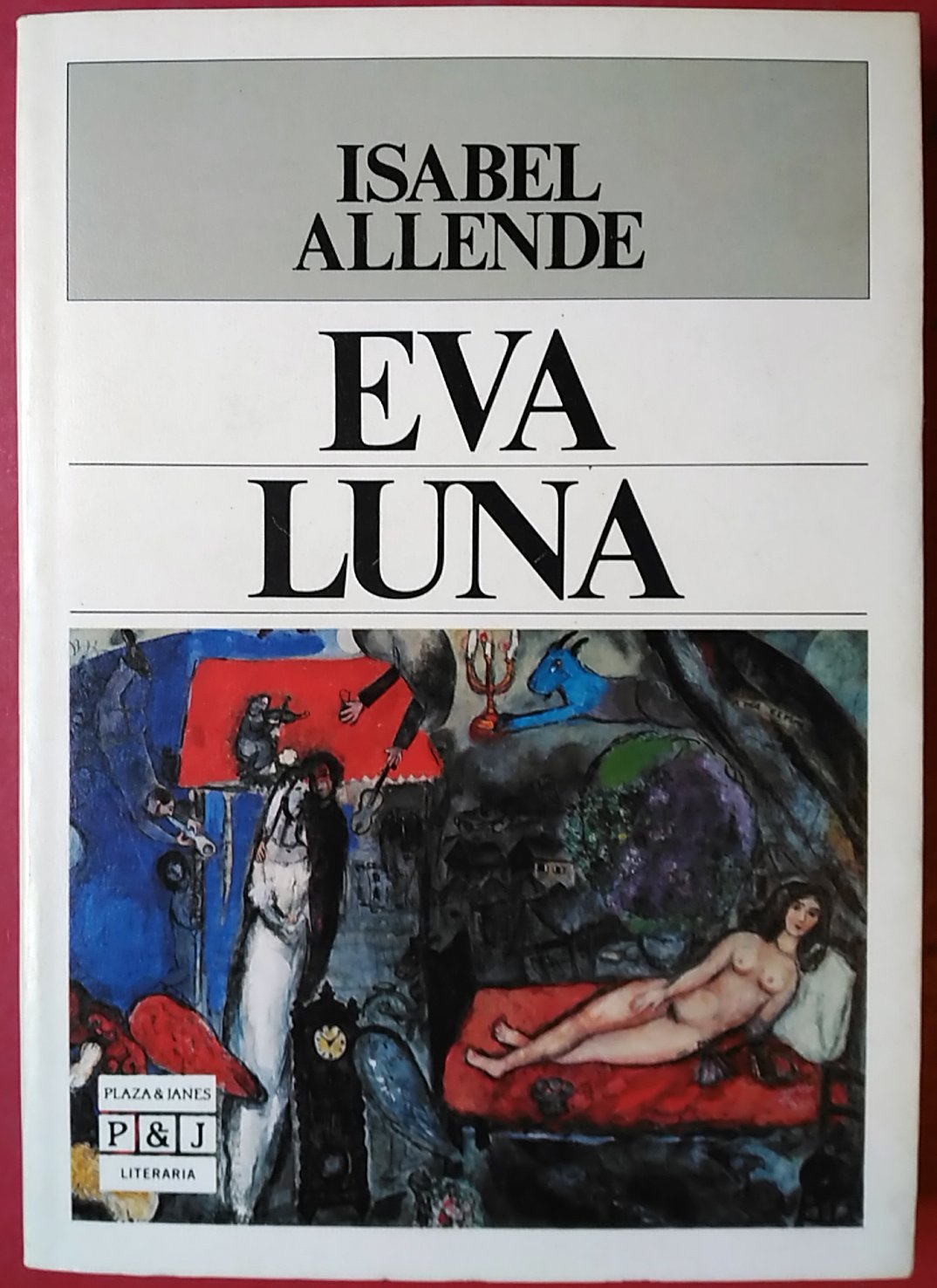
                • Cover of Eva Luna
                  Eva Luna

                  series · 2 books · 1987

                  similar byliterary & generalmid 20th centuryemotionalreflective+1 more

                • Cover of Trouble with Lichen
                  Trouble with Lichen

                  John Wyndham · standalone novel · 1960

                  similar bybritish islesmid 20th centuryreflectivegender and society

                  Biochemists Diana Brackley and Francis Saxover, working independently, both isolate a compound from a rare lichen that appears to dramatically slow the aging process. Francis quietly doses himself and his family and says nothing; Diana takes the opposite approach, opening exclusive beauty spas as cover to give the drug to well-connected women across Britain, reasoning that if longevity becomes known before women have a foothold, men will simply monopolize it as they have everything else. The secret can only hold so long, and the novel's tension builds toward the moment it gets out. A quietly subversive social science-fiction novel from John Wyndham.

                • Cover of Tono-Bungay
                  Tono-Bungay

                  H. G. Wells · standalone novel · 1909

                  similar byliterary & generalbritish islesreflectiveclass conflict

                  Tono-Bungay is a realist semiautobiographical novel written by H. G. Wells and first published in book form in 1909. It has been called "arguably his most artistic book". It had been serialised before book publication, both in the United States, in The Popular Magazine, beginning in the issue of September 1908, and in Britain, in The English Review, beginning in the magazine's first issue in December 1908.

                • Cover of The Irish Stories
                  The Irish Stories

                  series · 12 books · 1956

                  completed

                  similar byliterary & generalbritish islesmid 20th century+1 more

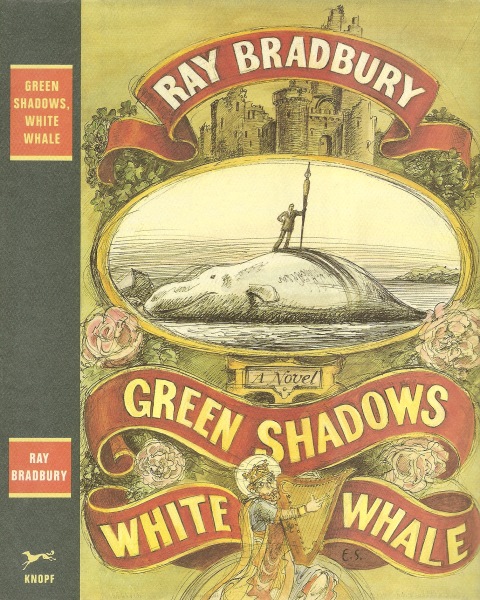
                  Green Shadows, White Whale is Ray Bradbury's fictionalized account of the months he spent in Ireland in 1953-54 writing the Moby-Dick screenplay for director John Huston, blending memoir with short stories and vignettes he wrote about the country over the following decades. It stands as a single novel rather than a multi-book series, gathering material Bradbury considered the culmination of thirty-five years of Ireland-inspired writing. The title plays on Peter Viertel's Huston-focused White Hunter, Black Heart.

                • Cover of Light Perpetual
                  Light Perpetual

                  Francis Spufford · standalone novel · 2021

                  similar byliterary & generalbritish islesmid 20th centuryemotionalreflective

                  The novel presents an alternate history of the possible lives of 5 children killed by a V2 rocket attack during WWII.