More like Scribblings
anchored on:science fictioncontemporaryfunny
but
- Crosstalk
Connie Willisstandalone novel2016
similar byfunnyscience fictionour worldcontemporary
Crosstalk is a science fiction novel by Connie Willis, published in 2016. It is a romantic comedy that explores the intersection of telephones and telepathy. In a similar situation to Bellwether and Passage, the main character, Briddey Flannigan, is part of a larger institution who gets caught up in series of escalating events. Additionally, Crosstalk like Bellwether and Passage feature themes of neuroscience, communication and technology.
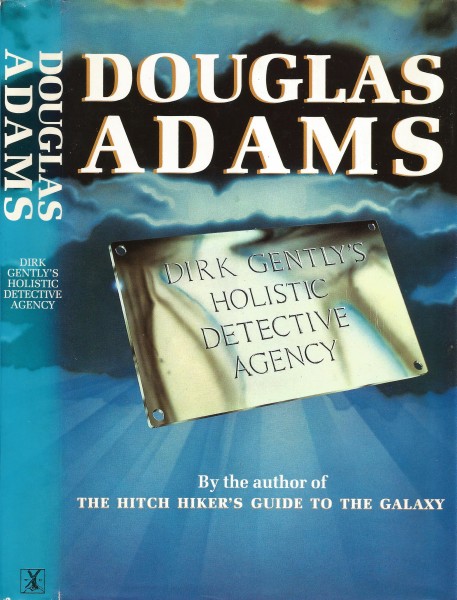
- Dirk Gently
series3 books1987
completed
part of The Hitchhiker's Guide to the Galaxy Universe
similar byfunnycontemporaryscience fiction+2 more
Dirk Gently's Holistic Detective Agency (1987) introduces Douglas Adams's eccentric investigator, whose approach treats all events and objects as ultimately connected however implausibly, as a case involving time travel, a ghost, and a Cambridge murder tangles into one plot. Adams completed one further full novel, The Long Dark Tea-Time of the Soul (1988), before his death; The Salmon of Doubt (2002) later collected his unfinished notes toward a third book alongside essays and other writing, rather than completing the story.
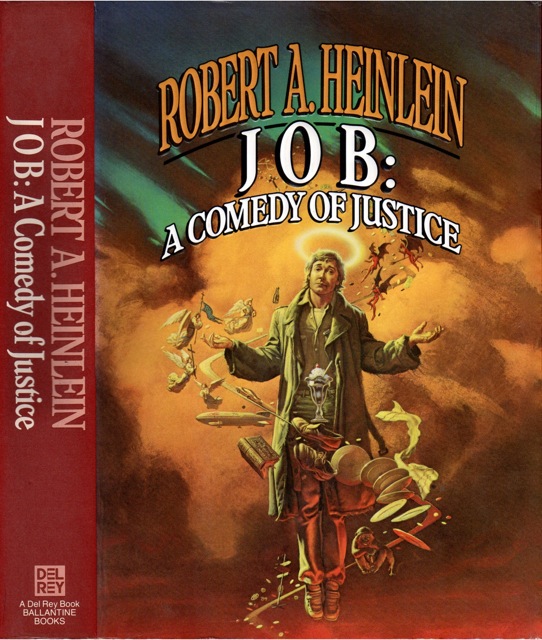
- Job: A Comedy of Justice
Robert A. Heinleinstandalone novel1984
similar byfunnyscience fictionour worldcontemporary
Job: A Comedy of Justice is a science fiction novel by American writer Robert A. Heinlein published in 1984. The title is a reference to the biblical Book of Job and James Branch Cabell's book Jurgen, A Comedy of Justice. It won the Locus Award for Best Fantasy Novel in 1985 and was nominated for the Nebula Award for Best Novel in 1984, and the Hugo Award for Best Novel in 1985.
- Martians, Go Home
Fredric Brownstandalone novel1955
similar byfunnyscience fictionour worldcontemporary
Martians, Go Home is a science fiction comic novel by American writer Fredric Brown, published in the magazine Astounding Science Fiction in September 1954 and later by E. P. Dutton in 1955. The novel concerns a writer who witnesses an alien invasion of Earth by boorish little green men from Mars.
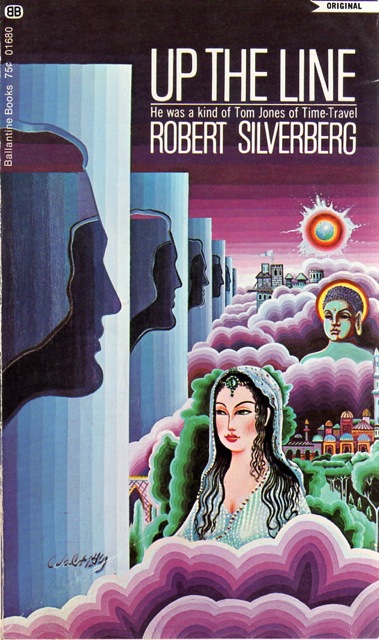
- Up the Line
Robert Silverbergstandalone novel1969
similar byfunnyscience fictionour worldtime travel
Up the Line (1969) is a time travel novel by American science fiction author Robert Silverberg. The plot revolves mainly around the paradoxes brought about by time travel and is considered an example of the more sexually-permissive era of late 1960s American science-fiction, a reflection of the counterculture of its day. It was nominated for a Nebula Award for Best Novel in 1969 and a Hugo Award for Best Novel in 1970 but lost to Ursula K. Le Guin's The Left Hand of Darkness both times.
- The Sirens of Titan
Kurt Vonnegut & Jr.standalone novel1959
similar byfunnyscience fiction+2 more
The Sirens of Titan is a comic science fiction novel by Kurt Vonnegut Jr., first published in 1959. His second novel, it involves issues of free will, omniscience, and the overall purpose of human history, with much of the story revolving around a Martian invasion of Earth.
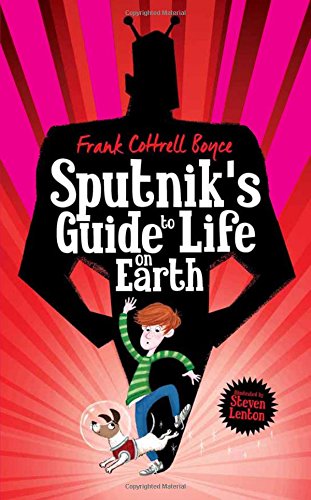
- Sputnik's Guide to Life on Earth
Frank Cottrell Boycestandalone novel2016
similar byfunnyscience fictionour worldcontemporary
Prez knows that the best way to keep track of things is to make a list. That's important when you have a grandfather who is constantly forgetting. And it's even more important when your grandfather can't care for you anymore and you have to go live with a foster family out in the country.
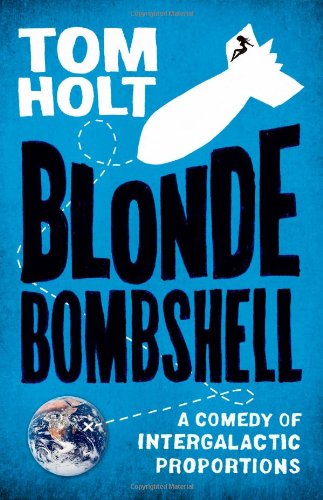
- Blonde Bombshell
Tom Holtstandalone novel2010
similar byfunnyscience fictionour worldcontemporary
Blonde Bombshell is a 2010 humorous science fiction novel by British writer Tom Holt.
- The Chronicles of St. Mary's
series46 books2013
similar byfunnyour worldscience fictioncontemporarytime travel
Jodi Taylor's Chronicles of St Mary's follows the disaster-prone historians of St Mary's Institute of Historical Research, who insist they don't 'time travel' but merely 'investigate major historical events in contemporary time' — usually while narrowly avoiding death and causing chaos. Beginning with Just One Damned Thing After Another, the comic time-travel series has grown to nineteen novels ranging across historical periods from the Cretaceous to the twentieth century.
- Gaudeamus
John Barnesstandalone novel2004
similar byfunnyscience fictioncontemporarytime travel+1 more
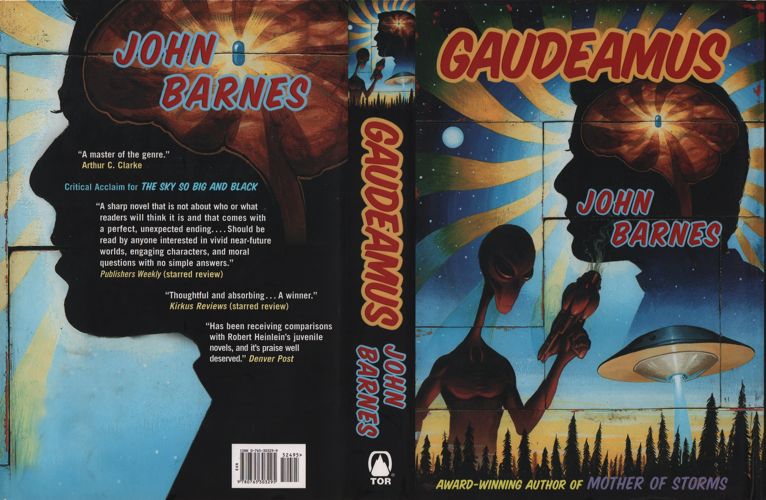
From the front flap of the Tor first edition: "The life of an award-winning novelist probably bears more resemblance to "normal" than most fans would want to believe. But every once in a, while, strange things are bound to erupt around those most equipped to document them... so imagine what renowned science fiction author John Barnes will do when he finds himself in one of the wildest, most rollicking hard-SF adventures to hit print in years. Barnes's college friend Travis Bismarck always brought back plenty of great stories from his job as an industrial spy. This time, over a few beer- and coffee-fueled chat sessions, Travis unravels s tale about his current case too tall for even an SF writer to believe: a Gaudeamus machine that bends physics in order to make possible both teleportation and time travel, and how it gets stolen - twice; a grad student-cum-prostitute who deals in telepathy-inducing drugs that let her "download" top-secret documents from her clients' brains; a romp through Colorado and New Mexico during which each episode and character is more bizarre than the last; and the internet meme that seems to tie it all together. Barnes' playful commentary on Travis's story and his own life as an SF writer and drama teacher, interspersed with their everyday interactions with a group of funny compelling friends, is related in a surprising and non-traditional narrative that blurs the line between fact, fiction, and metafiction."
- Soon I Will Be Invincible
Austin Grossmanstandalone novel2007
similar byfunnycontemporaryscience fiction+1 more
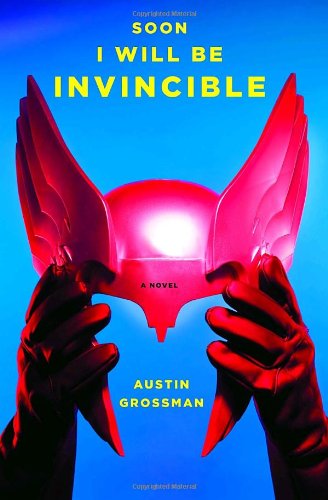
Soon I Will Be Invincible is a novel by Austin Grossman, published by Pantheon Books and released on June 5, 2007. The novel uses two alternating first person narratives—the first told from the point of view of Fatale, a female cyborg recruited by the superhero group The New Champions as they investigate the disappearance of a superhero named CoreFire. The other narrative is told from the point of view of Dr. Impossible, a supervillain possessing super-human strength and intellect who suffers from Malign Hypercognition Disorder. The plot follows Impossible's thirteenth attempt to take over the world after escaping from prison.
- What Entropy Means to Me
George Alec Effingerstandalone novel1972
similar byfunnyscience fictionour worldcontemporary
Doctor, watch out! As Dore stood by, he saw the Doctor backing slowly into the corner where he would meet his fate. Initially defending himself with a torch, the Doctor searched frantically for a new method of defense. The crimson mass is lunging forward using long, tentacle-like attachments: what is that thing? Slowly the subhuman blob comes in to focus, and Dore realizes . . . it's a colossal radish! This is a monster never before wrestled with; what are they going to do? After reading this vegetative tale, you won't look at your garden the same way again..
- The Green Gene
Peter Dickinsonstandalone novel1973
similar byfunnyscience fictionour worldcontemporary
Green is the color of my true love's skin. The Irish were having green-skinned babies, until they all were "wearing of the green" permanently! The Scots kept right up with them and turned green too! And the Welsh, being fellow Celtics, also became grass-colored! In all the world only one meek little Indian genius had tracked down the wild gene that was doing it. So they called him to the British Isles - and thereby upset the whole delicately balanced green-apple cart! (from the back cover of the DAW Books first printing)
- Emperor Mollusk Versus The Sinister Brain
A. Lee Martinezstandalone novel2012
similar byfunnyscience fictionour worldcontemporary
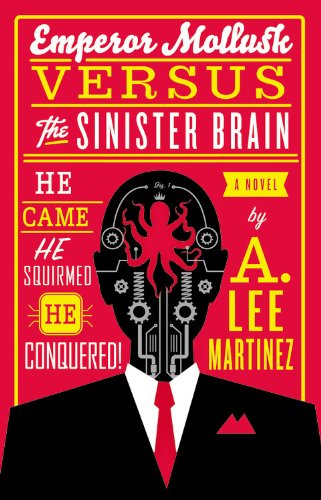
Emperor Mollusk, ex-warlord of Earth, comes out of retirement to save the planet from the sinister brain's control.
- Fluke, or, I Know Why the Winged Whale Sings
Christopher Moorestandalone novel2003
similar byfunnyscience fictionour worldcontemporary
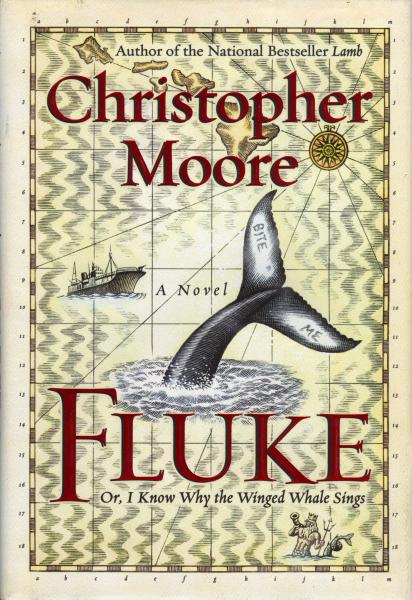
Fluke; or, I Know Why the Winged Whale Sings is a novel by American writer Christopher Moore. Published in 2003, it combines elements of science fiction with the author's own brand of social commentary and humor. A serious theme in the novel involves environmentalism, particularly that associated with whales; and the author's personal research-experience with marine biologists helped to inform much of the story.
- Hitchhiker's Guide to the Galaxy
series16 books1979
part of The Hitchhiker's Guide to the Galaxy Universe
similar byfunnyscience fiction+1 more
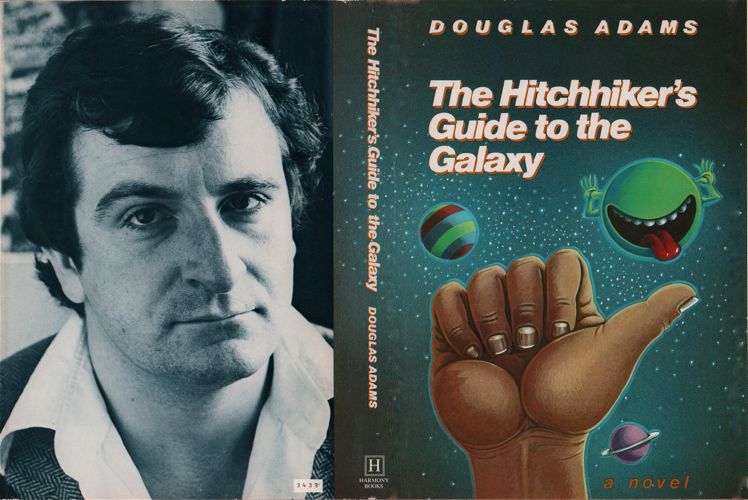
The Hitchhiker's Guide to the Galaxy is a comedy science fiction franchise created by Douglas Adams. Originally a radio sitcom broadcast over two series on BBC Radio 4 between 1978 and 1980, it was soon adapted to other formats, including both novels and comic books, a 1981 BBC television series, a 1984 text adventure game, stage shows and a 2005 feature film.
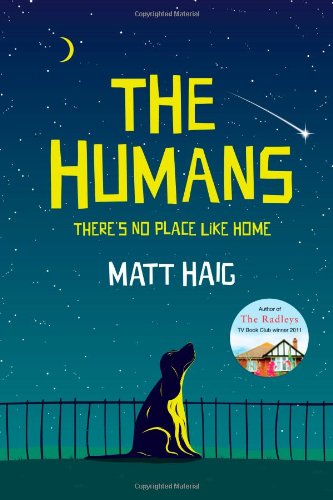
- The Humans
Matt Haigstandalone novel2013
similar byscience fictionour worldcontemporary+1 more
When an extraterrestrial arrives on Earth, his first impressions of humans are less than positive. Taking the form of Professor Andrew Martin at Cambridge University, the visitor is eager to complete his task and hurry back to his own utopian planet. Disgusted by the way humans look, what they eat, their capacity for murder and war, he is equally baffled by the concepts of love and family. But as time goes on, he starts to reconsider.
- Cat's Cradle
Kurt Vonnegut & Jr.standalone novel1963
similar byfunnyour worldscience fiction
Cat's Cradle is a satirical postmodern novel, with science fiction elements, by American writer Kurt Vonnegut. Vonnegut's fourth novel, it was first published on March 18, 1963, exploring and satirizing issues of science, technology, the purpose of religion, and the arms race, often through the use of morbid humor. The novel was nominated for the Hugo Award for Best Novel in 1964.