More like Scribes
but
- Mordant's Need
series2 books1986
similar byfantasysecondary worldpolitical intrigue+2 more
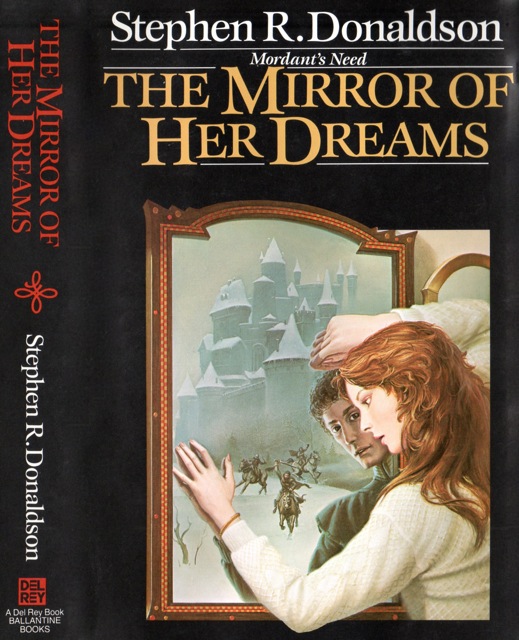
Mordant's Need is a fantasy two-part book series by American writer Stephen R. Donaldson, comprising the novels The Mirror of Her Dreams (1986) and A Man Rides Through (1987).
- Queen's Thief
series41 books1996
similar byfantasysecondary worldpolitical intrigue+2 more
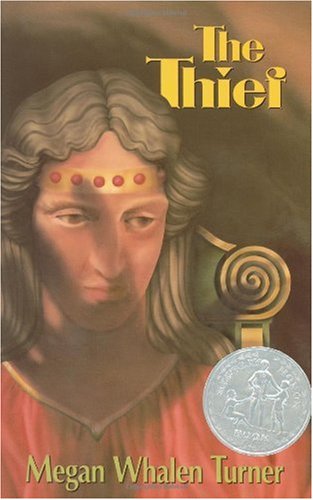
Queen's Thief begins with The Thief, in which a boastful, underestimated young thief is pulled from prison to steal a legendary stone for the king's scholar, only for the story to reveal by its end that its narrator has been playing a much longer game than the reader realized. Megan Whalen Turner's series expands from that single heist into court intrigue and small-scale warfare among a set of Mediterranean-flavored kingdoms, with later books often shifting whose perspective the reader trusts. It's known for close, deliberately withheld narration as much as its plotting.
- The Black Magician Trilogy
series3 books2001
part of Kyralia series
similar byfantasysecondary worldmagic schoolsepic fantasy+1 more
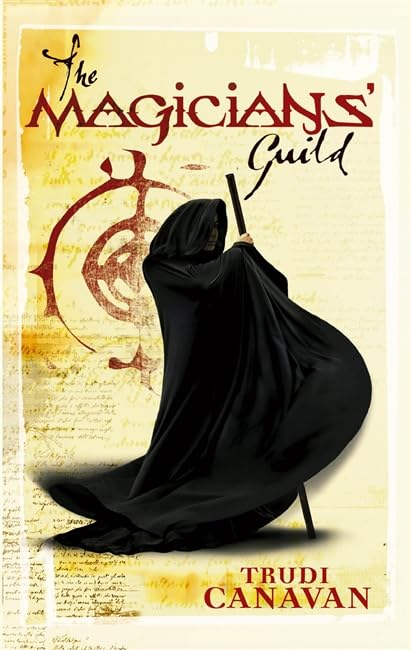
Trudi Canavan's Black Magician Trilogy (The Magicians' Guild, The Novice, The High Lord, 2001-2003) opens in the city of Imardin, where the ruling magicians' guild's annual purge of the slums goes wrong when a street girl named Sonea unknowingly shatters their protective shield with raw, untrained power. The guild must hunt her down and decide whether to control her or train her, and the trilogy follows Sonea's forced initiation into magical society and the guild's internal politics. It's Canavan's best-known trilogy and the founding story of her Kyralia setting.
- The Licanius Trilogy
series3 books2014
similar bysecondary worldpolitical intrigueepic fantasy+3 more
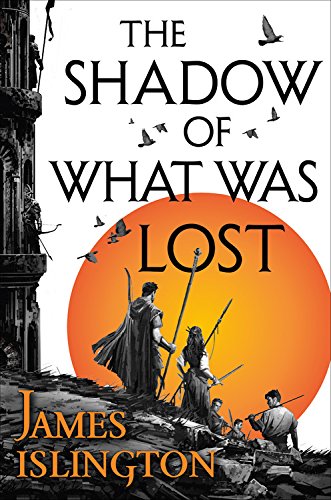
Twenty years after a war that toppled the god-like Augurs and stripped magic from the world, James Islington's Licanius Trilogy follows Davian, a young man bound by laws written to suppress the powers the Augurs once had, who discovers he can still reach forbidden abilities. His awakening coincides with the stirring of an ancient enemy and the appearance of an amnesiac stranger whose fate is bound to his. The three books trace how the old war's cover-up starts to unravel.
- Rithmatist
series1 book2013
similar bymysteriousfantasysecondary worldmagic schools+1 more
The Rithmatist series is a young adult fantasy series written by American author Brandon Sanderson. At least two books are planned in the series: The Rithmatist (2013) and a second volume, titled The Aztlanian, is planned.
- Lud-in-the-Mist
Hope Mirrleesstandalone novel1926
similar byfantasysecondary world+2 more
Lud-in-the-Mist (1926) is the third and final novel by the British writer Hope Mirrlees. It continues the author's exploration of the themes of Life and Art, by a method already described in the preface of her first novel, Madeleine: One of Love's Jansenists (1919): "to turn from time to time upon the action the fantastic limelight of eternity, with a sudden effect of unreality and the hint of a world within a world".
- The Library Trilogy
series4 books2023
similar byfantasysecondary worldepic fantasy+4 more
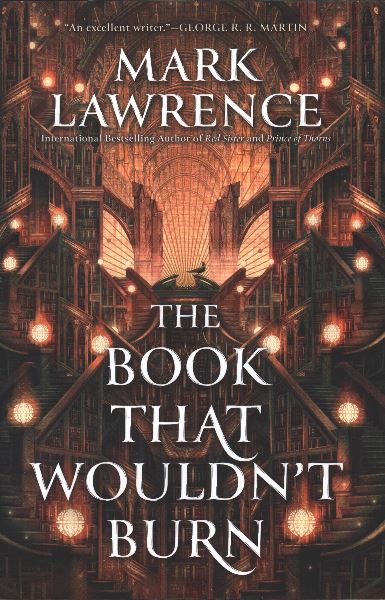
The Library Trilogy is Mark Lawrence's 2023-2025 fantasy sequence: The Book That Wouldn't Burn, The Book That Broke the World and The Book That Held Her Heart. It centers on an endless, reality-spanning library and the people who guard, exploit or seek to unravel it, carrying Lawrence's grimdark instincts into a more meta, books-about-books premise. It is a complete three-book arc, distinct from his earlier Broken Empire trilogy.
- The Kingkiller Chronicle
series8 books2002
similar byfantasysecondary world+2 more
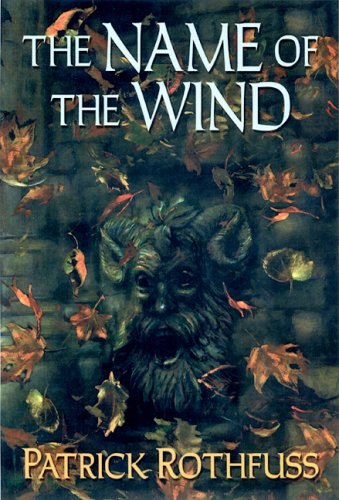
The Kingkiller Chronicle is a planned fantasy trilogy by the American writer Patrick Rothfuss. The first two books, The Name of the Wind and The Wise Man's Fear, were released in 2007 and 2011. The books released in the series have sold over 10 million copies.
- The Daevabad Trilogy
series5 books2017
similar byfantasysecondary worldpolitical intrigueepic fantasy
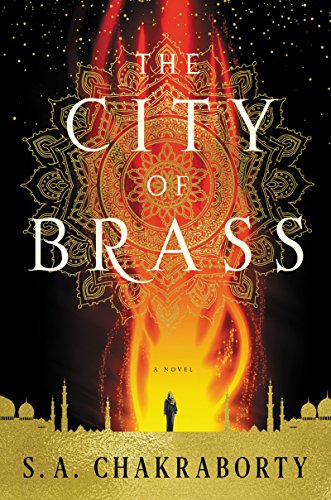
Nahri is a con artist and unlicensed healer working the streets of 18th-century Cairo who accidentally summons Dara, a formidable djinn warrior, during a fake exorcism gone wrong. He recognizes her as a lost heir of the Nahids, once-rulers of the djinn, and brings her to Daevabad, the hidden city her ancestors built, where old tribal and political conflicts are waiting to reignite. S. A. Chakraborty's Daevabad Trilogy follows Nahri through The City of Brass, The Kingdom of Copper, and The Empire of Gold as she's pulled into a fight over the city's throne and its buried history.
- Millennium's Rule
series4 books2014
similar bysecondary worldepic fantasy+2 more
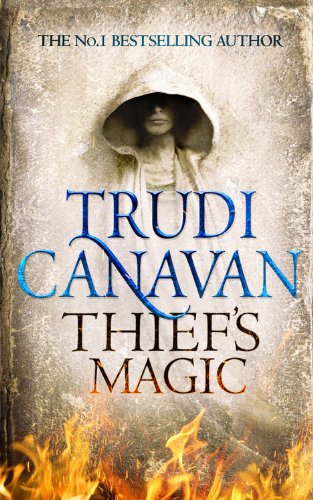
Millennium's Rule is set across multiple worlds that only certain travelers can cross between, opening with Tyen, an archaeology student who unearths a sentient, centuries-old book named Vella, and Rielle, a dyer's daughter hiding forbidden magical talent in a society ruled by priests who forbid it. Trudi Canavan follows both of them as their discoveries chip away at what their worlds have taught them about magic, history, and who holds power. The series runs Thief's Magic, Angel of Storms, and Successor's Promise.
- The Quest of the Riddle-Master
series3 books1976
completed
similar byfantasysecondary worldepic fantasy+2 more
Patricia A. McKillip's Riddle-Master trilogy follows Morgon, prince of the small island of Hed, whose discovery of three star-shaped birthmarks on his forehead draws him into a search for his own hidden identity and a confrontation with ancient, shape-shifting powers. Drawing on Celtic myth, the three books are prized for their lyrical prose and riddle-based magic, and are often cited among the best high fantasy of the 1970s.
- Ice Crown
Andre Nortonstandalone novel1970
similar by+3 more
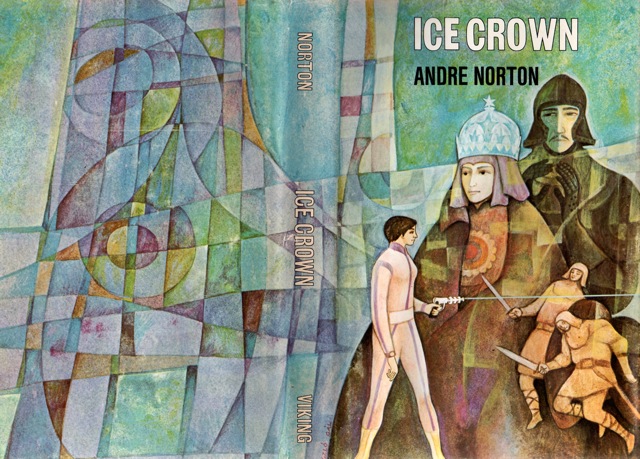
A closed planet is visited by a Survey team, which consists of a young lady, her handsome and totally loathsome cousin and their uncle. The reason the planet was closed was before they were overthrown, the empire rulers were experimenters on a large scale with humans. They would brain-wipe them and implant false memories of their own choosing, then place them on planets to follow the lifestyles selected for them. Such was the world the young lady and the other team members found and she was drawn to breaking regulations to save a princess, thus making her a target for he uncle and cousin's revenge. She is lucky the evil ones were overturned...but their mind controlling machines still functioned.
- Cosmere
universe54 books2005
Start hereThe Final Empire · Start here
similar byfantasysecondary worldepic fantasy+1 more
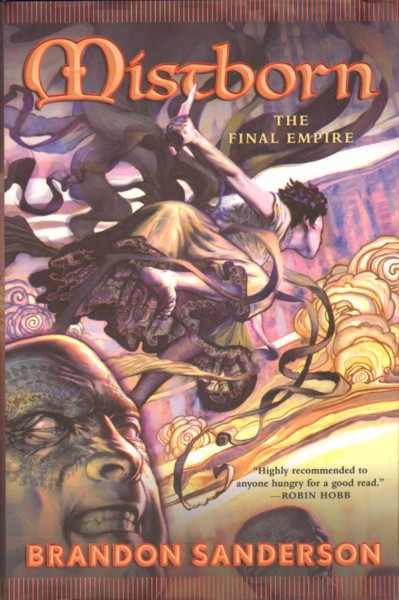
Before the worlds, there was Adonalsium, and then there was not. A god shattered into sixteen Shards of raw creative power, and those who seized them carried their fragments across the void to seed new planets, new peoples, new ways of working the impossible. The Cosmere is the one universe those Shards made: a scattering of worlds that seem, at first, to share nothing but a sky, until you notice the same law running quietly beneath each of them, and the same silent traveler passing through their margins. Every world keeps its own book and its own magic. On Scadrial, the Mistborn cycle burns metals into power: a self-contained trilogy of thieves and tyranny, followed by a second era that drags the same world into gunslinging early industry. On storm-battered Roshar, The Stormlight Archive raises its vast, ongoing epic around knights, spren, and oaths spoken aloud. Elsewhere stand the shorter keystones: Elantris, a city of fallen gods; Warbreaker, a tale of returned dead and living color; White Sand, told in graphic-novel form under the twin suns of Taldain. Threaded between them run the novellas, from Tress of the Emerald Sea and Yumi and the Nightmare Painter to The Sunlit Man and the pieces gathered in Arcanum Unbounded, where the hidden connections surface most plainly. All of it is the design of one hand, Brandon Sanderson, working a single pattern across two decades. What sets this universe apart is its faith in rules: magic here is a system, lawful and learnable, so discovery feels less like wonder handed down than like physics worked out. The cross-connections reward the patient reader, a symbol here, a name there, one immortal wanderer everywhere, but no book demands you have read another first. Newcomers do best entering through Mistborn: The Final Empire, the most self-contained doorway, or the standalone Elantris or Warbreaker; readers who prefer their epics vast can begin with The Way of Kings. The deeper links, and the novellas that expose them, wait for whenever you are ready to look.
- The Riftwar Universe
universe44 books1982
Start hereRiftwar Saga · Start here
similar byfantasysecondary worldepic fantasy+1 more
On the world of Midkemia a tear opens in the air itself, a rift hung between stars, and through it march the armies of an empire from another world entirely. So begins the chronicle Raymond E. Feist has kept for three decades: the tale of Pug, a castle kitchen boy apprenticed to a magician on the very day the invasion lands, and of Tomas, his friend, who inherits the armor and the ancient fury of a dead dragon-lord. Around these two the Riftwar Cycle turns, widening book by book from one besieged frontier keep into the whole history of a world of kingdoms, guilds, thieves' dens and mage-towers. The cycle runs to roughly thirty novels, gathered into arcs a newcomer can enter and finish on their own. The founding Riftwar Saga (Magician, Silverthorn, A Darkness at Sethanon) sets the board; the Serpentwar Saga, Krondor's Sons and the Conclave of Shadows carry the story down the generations; the Darkwar, Demonwar and Chaoswar sagas bring it toward its close. Crossing the rift to the rival world of Kelewan, Feist and Janny Wurts wrote the Empire trilogy, opening with Daughter of the Empire, a court intrigue told wholly from the invaders' side and for many the finest thing here. Shorter Legends of the Riftwar and the game-born Riftwar Legacy fill the corners; later still, Feist opens an altogether new world in the Firemane books. Feist writes fantasy in its most companionable key: apprentices who grow into archmages, tavern boys who become spies and dukes, a world you return to the way you return to an old inn. The mood is adventure before dread, friendship and rank and hard-won craft, wars that cost something, all of it rendered plainly and at a gallop. Begin where it began, with Magician, then follow the arcs in the order they were written, and the rift will carry you the rest of the way.
- The Last Descendants
series3 books2008
similar byfantasysecondary world+3 more
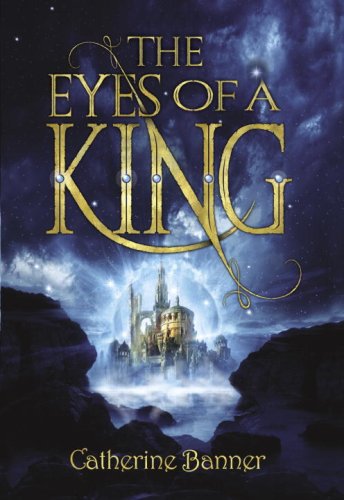
The Last Descendants is a series of fantasy novels for young adults written by British author Catherine Banner and published by Random House. The series started with a single book Catherine started writing when she was 14 years old and still a student. The first book, The Eyes of a King, became the first part of the series The Last Descendants. The second book, Voices in the Dark, was published in 2009. The third and last book, The Heart at War, was published in May 2015.
- Ile-Rien
series12 books1993
similar byfantasysecondary world+1 more
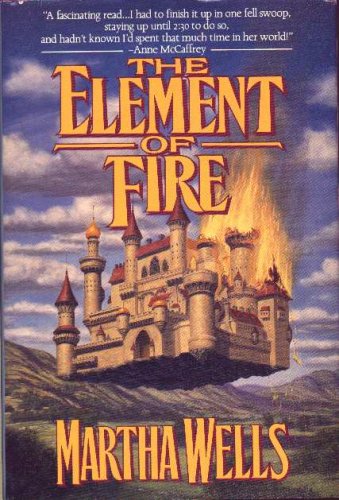
The Ile-Rien books are a series of fantasy novels by Martha Wells set in the fictional country of Ile-Rien. It is a centralized monarchy governed by the Fontainon dynasty, governing from their ornate capital of Vienne. It is also the home of the university-city of Lodun, a great center of learning, producing world-renowned scholars in medicine, law and sorcery. Its neighbors are the nations of Adera, Umberwald and Parscia, as well as Bisra, its long-standing enemy. Ile-Rien shares a coastline along the Western Ocean with Parscia.
- The Blue Star
Fletcher Prattstandalone novel1952
similar byfantasysecondary worldpolitical intrigue+1 more
The Blue Star is a fantasy novel by the American writer Fletcher Pratt, the second of his two major fantasies. It was first published by Twayne Publishers in 1952 in the fantasy anthology Witches Three, a volume that also included Fritz Leiber's Conjure Wife and James Blish's "There Shall Be No Darkness". Its first publication as a stand-alone novel was in paperback by Ballantine Books in May 1969, as the inaugural volume of the Ballantine Adult Fantasy series. The Ballantine edition included an introduction by Lin Carter; it was reprinted twice, in 1975 and 1981. It has also been translated into French, German, Italian and Spanish.
- A Song of Ice and Fire
series14 books1996
part of World of Ice and Fire
similar byfantasysecondary worldpolitical intrigueepic fantasy
A Song of Ice and Fire is a series of high fantasy novels by the American author George R. R. Martin. Martin began writing the first volume, A Game of Thrones, in 1991, and published it in 1996. Martin, who originally envisioned the series as a trilogy, has released five out of seven planned volumes. The most recent entry in the series, A Dance with Dragons, was published in 2011. Since then, Martin has been working on the sixth novel, titled The Winds of Winter. A seventh novel, A Dream of Spring, is planned to follow.
- His Dark Materials Universe
universe13 books1995
Start hereHis Dark Materials · Start here
similar byfantasy+3 more
In a world like ours and unlike it, every human soul walks outside the body in the shape of an animal — a daemon, who speaks, who cannot be lied to, and who settles into one fixed form only when childhood ends. This is the country of His Dark Materials: a company of parallel worlds across which an invisible dust of consciousness drifts down upon the waking mind; where a Church that calls itself the Magisterium would sooner sever a child's soul than let that Dust be understood; and where a golden instrument, the alethiometer, answers true questions for anyone with the patience to read it. Philip Pullman's design stands in two trilogies and a scatter of shorter tales. His Dark Materials — Northern Lights (published in America as The Golden Compass), The Subtle Knife, and The Amber Spyglass — carries Lyra Belacqua from the rooftops of a shadow Oxford across the borders between worlds. The Book of Dust returns to that same territory: La Belle Sauvage looks back to Lyra as an infant carried through a great flood, while The Secret Commonwealth follows her grown and less certain into adulthood, with a concluding volume closing the arc. Around them sit slim companion books — Lyra's Oxford, Once Upon a Time in the North, Serpentine — and Nicholas Wright's stage adaptation, made with Pullman's blessing. The register is grave and luminous at once, its title lifted from Milton and its quarrel drawn from Blake: a story that takes the side of curiosity, love, and the physical world against any authority that would forbid them. It reads as adventure — armoured bears, aeronauts, knife-cut windows between skies — yet reasons like philosophy. Begin with Northern Lights / The Golden Compass and read the first trilogy through before turning to The Book of Dust, which deepens everything the first has already made you feel.