Loreful
HomeDiscover
Search series, authors…⌘K
Loreful

Reading orders for SF/F series and shared universes — with your place kept in every one.

Explore

UniversesSeriesWorksAuthorsAtlas

Help

FAQAboutSite map

Account & legal

Sign inCreate accountPrivacyTerms

Data

Built on ISFDB, Wikipedia, Wikidata and Open Library. Curated reading orders carry their reasoning on the page; the rest follow publication order. Data sources & licenses

© Loreful · data: ISFDB · CC BY

More like Second Best

anchored on:mystery & detectiveour worldlate 20th centurywhodunitfriendshipmurder investigation+2 more

but

Mood

The mood the book leaves you in.

  • The reading experience is propelled by journeys, exploration, and physical risk; excitement and forward momentum dominate over dread or introspection.
  • Joy and loss are deliberately mixed; the resolution grants characters something real while taking something else away, leaving warmth and sorrow together.
  • The book demands work from the reader — dense prose, difficult structure, unfamiliar ideas, or morally uncomfortable material — as part of its intended effect.
  • Grim events, cruelty, or despair dominate the atmosphere, and the book does not soften them with comfort or comic relief.
  • The atmosphere is quietly unsettling — wrongness, unease, and the uncanny pervade the book without necessarily escalating into overt horror.
  • The book is built to move the reader; character feeling is foregrounded and major scenes aim at a strong emotional response.
  • Humor is a primary aim and the prose plays for laughs — comic situations, wit, or dialogue produce sustained comedy, not occasional levity.
  • The book insists that things can improve; effort and decency are shown to matter, and the arc bends toward better outcomes even through hardship.
  • The book teaches as it goes — real facts, history, science, or craft are conveyed in enough depth that learning is part of the reading experience.
  • The book is designed to uplift and motivate, presenting perseverance or achievement in a way that invites the reader to aspire or act.
  • The overall register is cheerful and easygoing; stakes are kept gentle and the book avoids dwelling on pain or dread.
  • Withheld information drives the experience; the book sustains enigmas and secrets the reader wants resolved, whatever its genre.
  • The book is contemplative and inward-looking, giving more weight to thought, memory, and meaning than to external events.
  • The book works as comfort reading — low tension, a soothing pace, and an atmosphere the reader can unwind in.
  • Grief, loss, or melancholy set the dominant register, and the book lets sorrow stand rather than resolving it into comfort.
  • Sustained suspense is the point; the book keeps the reader braced for what happens next through danger, pressure, or impending revelation.
  • Playful invention and charm define the register — fanciful conceits, light absurdity, and a narration that delights in its own oddity.

About

What the story runs on.

  • Stories in which extraterrestrial beings are central — as characters, cultures, or the object of the plot.
  • Stories structured as a quest — a journey undertaken to find, deliver, or destroy something of great import.
  • Stories in which staying alive against nature, catastrophe, or scarcity is the central problem.
  • Stories of lovers kept apart by law, family, faith, or station, where the obstacle to love is the plot.
  • Stories in which a friendship — its making, testing, or loss — is the emotional center.
  • Stories of growing up — a young protagonist crossing from childhood into adult knowledge and responsibility.
  • Stories about who a character truly is — self-discovery, doubled lives, and the search for a self.
  • Stories about mourning — living through the death of a loved one and what loss does to the survivors.
  • Stories in which a buried family truth — hidden parentage, crimes, or shames — surfaces and reorders the present.
  • Stories driven by maneuvering for power — factions, conspiracies, and statecraft conducted in shadow.
  • Stories in which war itself is the subject — combat, occupation, and what warfare does to soldiers and civilians.
  • Stories organized around investigating a killing — the case, the clues, and the pursuit of the killer, in any genre's clothing.

Shelf

Where it sits in the library.

    • Fiction built on magic or other supernatural elements that have no scientific explanation.
    • Secondary-world fantasy at large scale, where the fate of nations or the world turns on the protagonists' struggle.
    • Fantasy set in a recognizably modern city or contemporary world where the supernatural intrudes on everyday life.
    • Fantasy that blends in horror's atmosphere and imagery, keeping a fantastical frame around grim or frightening material.
    • Action-driven fantasy following warriors or rogues with personal stakes against sorcerous threats, rather than world-spanning conflicts.
    • Fantasy set in a real historical period or a close analogue of one, with magic woven into the era.
    • Fantasy in which protagonists cross from the ordinary world into another world through a portal or similar passage.
    • Fiction that retells or reworks a traditional fairy tale in a new form or setting.
    • Fantasy drawing directly on myths, legends, and folklore, retelling them or building on their figures and logic.
    • Fantasy of ghosts, vampires, shapeshifters, psychics, and similar phenomena, usually set in an otherwise ordinary world.
    • Fiction mixing science-fictional trappings with overtly magical or impossible elements in one setting.
    • Low-stakes fantasy emphasizing comfort, community, and everyday pleasures over conflict and peril.
    • Speculative fiction of pervasive moral ambiguity, violence, and cynicism that rejects heroic conventions — fantasy and SF alike.
      • Fiction that extrapolates from science and technology — future societies, space travel, or speculative inventions — within at least nominally natural laws.
      • Science fiction of interstellar scope — starships, galactic polities, and adventure across star systems.
      • Science fiction committed to scientific rigor, where technical plausibility constrains the story.
      • Science fiction centered on armed forces and warfare, told largely from a military point of view.
      • Science fiction of networked, corporate-dominated near futures, pairing high technology with social decay.
      • Science fiction styled on nineteenth-century steam-powered technology, often in a Victorian or pseudo-Victorian setting.
      • Fiction depicting an oppressive or catastrophic society, presented as a warning.
      • Fiction set after civilization's collapse, following survivors in the ruins of the old world.
      • Fiction in which characters move between past and future, and the mechanics or consequences of that travel drive the plot.
      • Fiction exploring a world where a historical event went differently and history diverged from ours.
      • Science fiction about humanity's first encounter and communication with an alien intelligence.
      • Science fiction in which extraterrestrial forces attack or occupy Earth and humanity resists.
      • Fiction whose primary aim is to frighten or unsettle the reader through dread, menace, or the monstrous.
      • Horror of vast, indifferent, incomprehensible entities before which humanity is insignificant, in the Lovecraft tradition.
      • Horror of decaying houses, buried family secrets, and oppressive atmosphere in the Gothic literary tradition.
      • Horror centered on hauntings and the returning dead.
      • Horror located in the mind — paranoia, obsession, and unreliable perception rather than external monsters.
      • Horror built around the reanimated dead and survival amid their outbreaks.
      • Horror defined by explicit, transgressive gore that refuses to cut away from violence.
      • Speculative fiction of the strange and uncanny that resists both natural explanation and standard genre categories.
      • Fiction organized around solving a crime or puzzle, typically following an investigator toward the identification of a culprit.
      • A puzzle-first mystery that lays out clues so the culprit's identity can be deduced before the reveal.
      • Crime fiction of moral ambiguity, fatalism, and hard-edged style, set among the corrupt and the doomed.
      • A mystery following the realistic routines of police work — forensics, interviews, and case-building.
      • A gentle mystery with an amateur sleuth, a small community, and violence kept off the page.
      • A mystery set in a past era, where the investigation works within that period's methods and society.
      • Fast-paced fiction driven by imminent danger, pursuit, or high-stakes conspiracy, built to sustain tension.
      • A thriller of espionage — agents, tradecraft, and intelligence services in conflict.
      • A thriller centered on lawyers and the courtroom, where litigation carries the suspense.
      • A thriller driven by detailed contemporary or near-future technology, often military or scientific.
      • A thriller whose tension comes from mental states and manipulation between characters rather than external action.
      • Fiction whose central plot is a romantic relationship and its development toward an emotionally satisfying resolution.
      • Romance in which one or both partners are supernatural beings, blending fantasy elements into the love story.
      • A fantasy-romance hybrid in which the romantic arc and the fantasy plot carry equal weight.
      • Romance set in a past era, with courtship shaped by the period's society and manners.
      • Romance set in the present day, without supernatural or historical elements.
      • Fiction set in a real past period, where the historical setting materially shapes characters and events.
        • General and literary fiction emphasizing prose style, character interiority, or formal ambition over genre plot conventions.
        • Fiction in a realistic world where magical events occur and are treated as ordinary, in the tradition of Latin American literature.
        • Fiction that ridicules people, institutions, or society in order to criticize them.
        • Fiction of dreamlike, irrational imagery and logic that breaks from realistic representation.
        • Fiction that plays with narrative convention through metafiction, fragmentation, and self-reference.
        • Fiction propelled by journeys, exploration, and physical peril, where action and survival carry the plot.
        • Adventure fiction of ships and seafaring — naval engagements, voyages, and life at sea.
        • Fiction of the American frontier West — gunmen, ranchers, and lawmen, typically in the late nineteenth century.
        • Fiction centered on soldiers, campaigns, and the experience of warfare, historical or imagined.
          • Fiction written primarily to amuse, using comedic situations, wit, or parody as its organizing principle.
            • Multi-generational fiction following a family or dynasty across decades, with inheritance and kinship as the through-line.
              • Fiction whose world runs on explicit game mechanics — levels, stats, and skills that characters can see and exploit.
                • Fiction about costumed or superpowered heroes and their conflicts with comparable villains.

                Practical

                How long a commitment, whether it stands alone, and whether it has finished.

                Tap a chip to ask for it · tap again to rule it out · once more to clear. Numbers show what would be left.

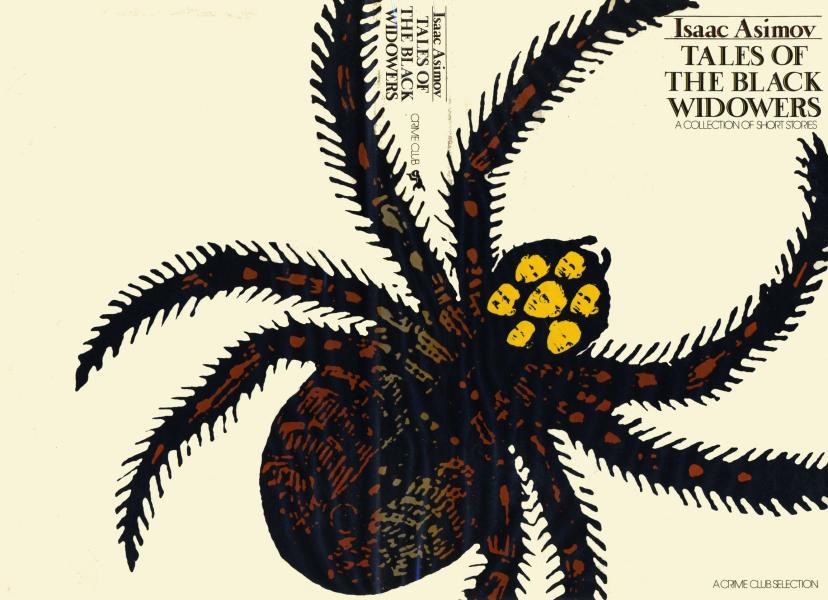
                • Cover of Black Widowers
                  Black Widowers

                  series · 77 books · 1972

                  similar bymysteriousmurder investigationmystery & detectivewhodunitour world+4 more

                  The Black Widowers is a fictional men-only dining club created by Isaac Asimov for a series of sixty-six mystery stories that he started writing in 1971. Most of the stories were first published in Ellery Queen's Mystery Magazine, though a few first appeared in Fantasy & Science Fiction, Isaac Asimov's Science Fiction Magazine, and the various book collections into which the stories were eventually gathered.

                • Cover of Black Dragon
                  Black Dragon

                  series · 2 books · 1983

                  similar bymysteriousfriendshipmystery & detectiveour worldnorth americabig city+1 more

                  R. A. MacAvoy's Tea with the Black Dragon pairs Martha Macnamara, a folk musician searching for her missing daughter, with Mayland Long, a courtly stranger who reveals himself to be a dragon living in human form, as they investigate a computer-fraud scheme in 1980s San Francisco. Its low-key blend of contemporary mystery and gentle fantasy proved popular enough to spawn a sequel, Twisting the Rope, following the same pair into a new case years later.

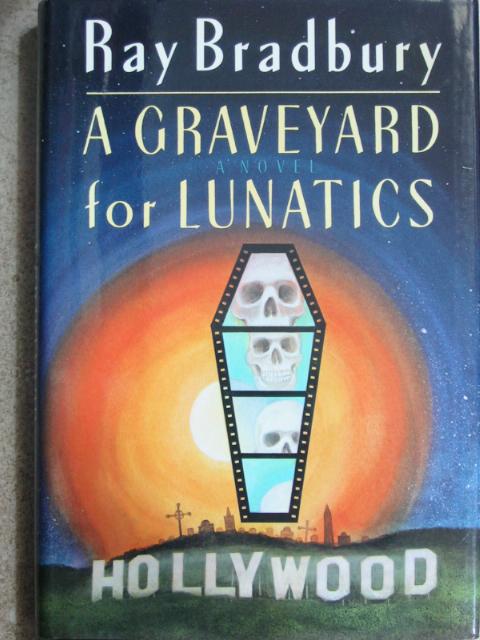
                • Cover of A Graveyard for Lunatics: Another Tale of Two Cities
                  A Graveyard for Lunatics: Another Tale of Two Cities

                  Ray Bradbury · standalone novel · 1990

                  similar bymysteriouslate 20th centurymurder investigationmystery & detectivenorth americabig city

                  A Graveyard for Lunatics: Another tale of two cities is a mystery novel by American writer Ray Bradbury, published in 1990. It is the second in a series of three mystery novels that Bradbury wrote featuring a fictionalized version of the author himself as the unnamed narrator.

                • Cover of Murder in the Gunroom
                  Murder in the Gunroom

                  H. Beam Piper · standalone novel · 1953

                  similar bymysteriousmurder investigationmystery & detectivewhodunitour worldnorth america

                  Jeff Rand, a private detective, is skeptical when he is employed by Gladys Fleming to evaluate her recently acquired gun collection, which happens to contain a dark secret. The more facts he uncovers, the more interesting the story becomes. Gun dealers, butlers, wives and cops all become suspects in the investigation of a mysterious death. The book is rich with detailed descriptions of the many different guns that star in this tale. This is the only murder-mystery written by Piper, who was mostly known for his science fiction novels.

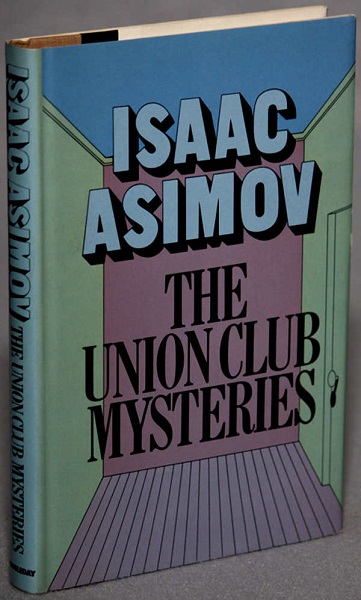
                • Cover of The Union Club Mysteries
                  The Union Club Mysteries

                  series · 34 books · 1980

                  completed

                  similar bymysteriousmurder investigationmystery & detectiveour world+3 more

                • Cover of Die Softly
                  Die Softly

                  Christopher Pike · standalone novel · 1991

                  similar bymysteriouslate 20th centurymurder investigationmystery & detectiveour worldnorth america

                  HE MAY HAVE PHOTOGRAPHED A MURDER. Herb just wanted to photograph the cheerleaders in the school showers. He planted his camera high in the corner where no one could see it, and rigged it to a special homemade timer. He did that Thursday night, and he hoped that by Friday night he would have an exciting roll of film to develop. But a girl dies Friday afternoon. On the surface it appears to be nothing more than a tragic car accident. But when Herb finally does collect his roll of film, he develops a picture that shows a shadowy figure sneaking up on the girl who has died -- sneaking up on her with a baseball bat. It makes Herb wonder if the girl was dead long before the car accident. But unfortunately for Herb, he doesn't wonder if the murderer knows he took the picture.

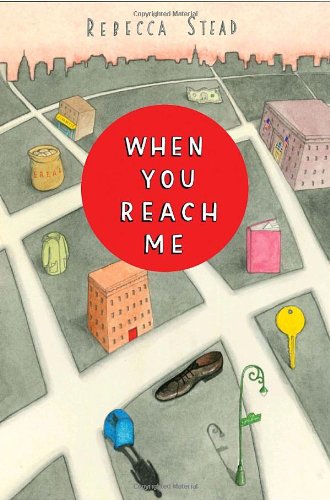
                • Cover of When You Reach Me
                  When You Reach Me

                  Rebecca Stead · standalone novel · 2009

                  similar bymysteriouslate 20th centuryfriendshipmystery & detectivenorth americabig city

                  As her mother prepares to be a contestant on the 1970s television game show, "The $20,000 Pyramid," a twelve-year-old New York City girl tries to make sense of a series of mysterious notes received from an anonymous source that seems to defy the laws of time and space.

                • Cover of Joyland
                  Joyland

                  Stephen King · standalone novel · 2013

                  similar bymysteriouslate 20th centurymurder investigationmystery & detectivenorth america

                  Joyland is a novel by American writer Stephen King, published in 2013 by Hard Case Crime. It is King's second book for the imprint, following The Colorado Kid (2005). The first edition was released only in paperback, with cover art created by Robert McGinnis and Glen Orbik. A limited hardcover edition followed a week later. The novel was nominated for the 2014 Edgar Award for Best Paperback Original.

                • Cover of The Dark and Deadly Pool
                  The Dark and Deadly Pool

                  Joan Lowery Nixon · standalone novel · 1987

                  similar bymysteriouslate 20th centurymurder investigationmystery & detectivenorth america

                  WorldCat: Sixteen-year-old Mary Elizabeth's summer job at an expensive health club turns out to be more exciting than she bargained for when a series of mysterious events culminate in murder.

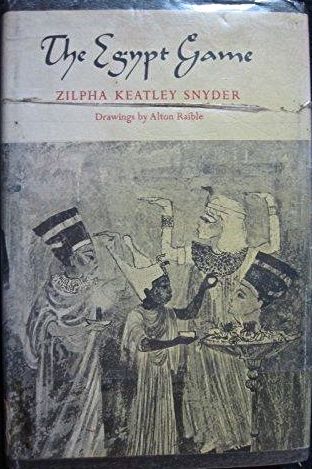
                • Cover of The Egypt Gamers
                  The Egypt Gamers

                  series · 1 book · 1967

                  similar bymysteriousfriendshipmurder investigationmystery & detectivenorth america

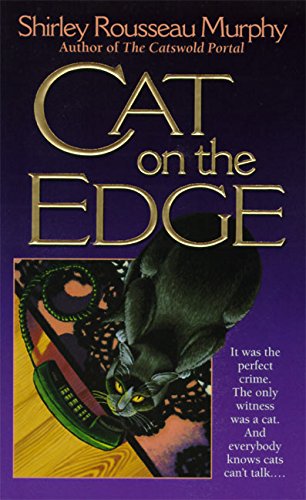
                • Cover of Joe Grey
                  Joe Grey

                  series · 22 books · 1996

                  completed

                  similar bymurder investigationmystery & detectivenorth america+3 more

                • Cover of Murder at the ABA
                  Murder at the ABA

                  Isaac Asimov · standalone novel · 1976

                  similar bymysteriousmurder investigationmystery & detectivewhodunitnorth america+1 more

                  Murder at the ABA (1976) is a mystery novel by American writer Isaac Asimov, following the adventures of a writer and amateur detective named Darius Just, whom Asimov modeled on his friend Harlan Ellison. While attending a convention of the American Booksellers Association, Just discovers the dead body of a friend and protégé. Convinced that the death was due to murder, but unable to convince the police, Just decides to investigate on his own.

                • Cover of The Burning Court
                  The Burning Court

                  John Dickson Carr · standalone novel · 1937

                  similar bymysteriousmurder investigationmystery & detectivewhodunit+1 more

                  The Burning Court (1937) is a famous locked room mystery by John Dickson Carr. However, it contains neither Gideon Fell nor Henry Merrivale, Carr's two major detectives. It was published in the United States, and was highly controversial upon its first printing, due to its unorthodox ending. Today, it is hailed as Carr's best non-series novel.

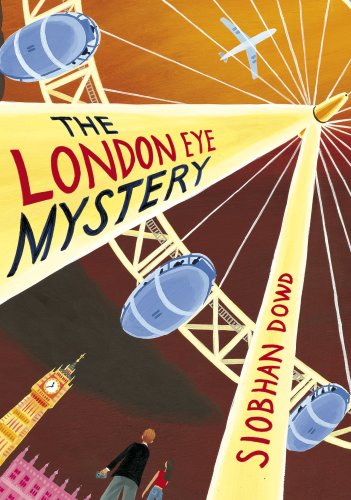
                • Cover of The London Eye Mystery
                  The London Eye Mystery

                  Siobhan Dowd · standalone novel · 2007

                  similar bymysteriousfriendshipmystery & detectivewhodunitbig city

                  The London Eye Mystery is a 2007 children's mystery novel by English author Siobhan Dowd. It tells the story of how Ted, a boy with Asperger syndrome, and his sister Kat solve the mystery of how their cousin, Salim, seemingly vanishes from inside a sealed capsule on the London Eye. In 2017, Robin Stevens published a sequel, The Guggenheim Mystery.

                • Cover of The Cat Who...
                  The Cat Who...

                  series · 32 books · 1966

                  completed

                  similar bymurder investigationmystery & detectivelate 20th centurylightheartednorth america+1 more

                  The Cat Who... is a series of twenty-nine mystery novels and three related collections by Lilian Jackson Braun and published by G. P. Putnam's Sons, featuring a reporter named Jim Qwilleran and his Siamese cats, Kao K'o-Kung and Yum Yum. The first was written in 1966, with two more following in 1967 and 1968. The fourth appeared eighteen years later, after which at least one new novel was published every year until 2007. A thirtieth novel, originally announced for 2008, was postponed indefinitely by its publisher and then canceled after the author's death in 2011. It remains unpublished.

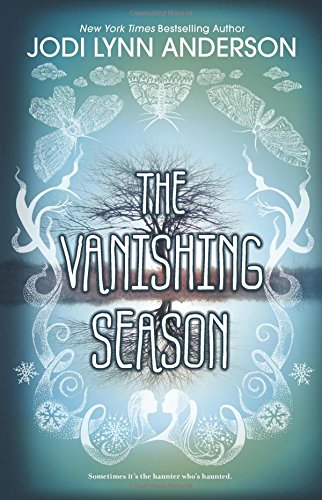
                • Cover of The Vanishing Season
                  The Vanishing Season

                  Jodi Lynn Anderson · standalone novel · 2014

                  similar bymysteriousfriendshipmurder investigationmystery & detectivenorth america

                  For Maggie Larsen, the town of Gill Creek is only a stopgap before college and freedom. Until she meets Pauline and Liam. What starts as an uneventful year suddenly changes. Someone is killing teenaged girls, and the town reels from the tragedy.

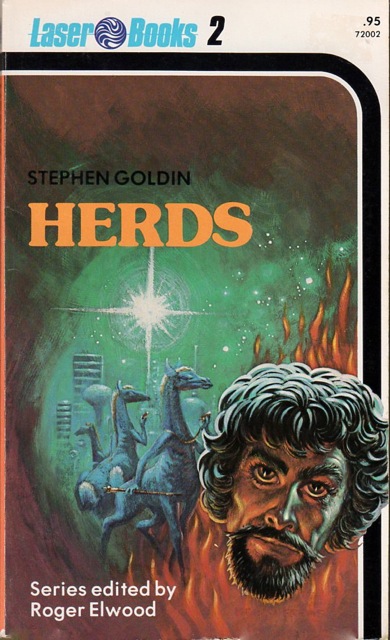
                • Cover of Herds
                  Herds

                  Stephen Goldin · standalone novel · 1975

                  similar bymysteriouslate 20th centurymurder investigationmystery & detectivenorth america

                  The wife of a powerful figure in California is found brutally murdered in the couple's lonely mountain retreat. Wesley Stoneham made certain that all the evidence concerning the murderer of his wife pointed to a nearby hippie community. He had three goals in mind: to get rid of his wife, to drive out the hippie commune and to enhance his own power in the state. He was at the point of achieving them all when Garnna, from the peaceful planet of Zartic finally made contact with Debby, a hippie from the commune, who had problems of her own. Then Stoneham's troubles began. (from the back cover of the Laser Books first edition)

                • Cover of More Bitter Than Death
                  More Bitter Than Death

                  Kate Wilhelm · standalone novel · 1963

                  similar bymysteriousmurder investigationmystery & detectivewhodunitour worldnorth america

                  A murder mystery set on Charles Isle, southernmost island of the Hatteras group, where the body of a 16-year old girl is found in the sand dunes after a hurricane.

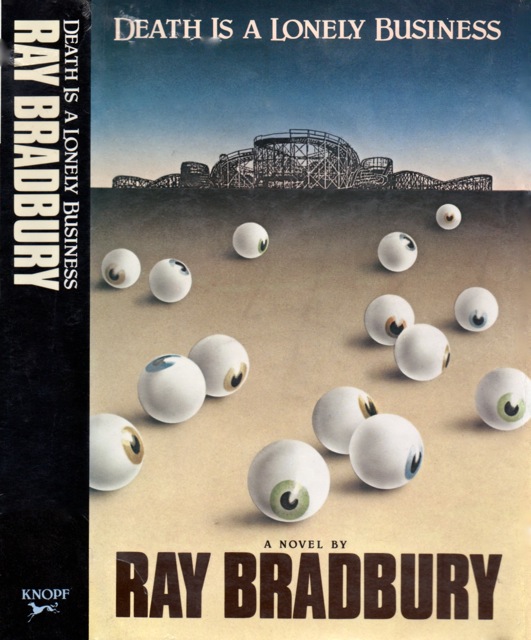
                • Cover of Death Is a Lonely Business
                  Death Is a Lonely Business

                  Ray Bradbury · standalone novel · 1985

                  similar bymysteriousmurder investigationmystery & detectivenorth americabig city

                  Death Is a Lonely Business is a mystery novel by American writer Ray Bradbury, published in 1985. The story, set in 1949, is about a series of murders that happen in Venice, California, then a declining seaside community in Los Angeles where Bradbury lived from 1942 to 1950. The main character and narrator is a sensitive, modest writer, with a girlfriend studying in Mexico City. In the course of the story he meets Elmo Crumley, a detective who helps him solve the mystery behind all the semi-murders occurring among a series of eccentric characters in the forgotten town.

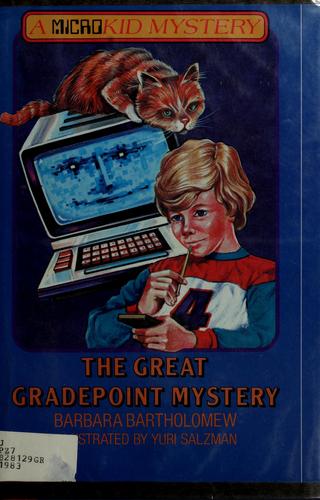
                • Cover of Microkid Mystery
                  Microkid Mystery

                  series · 4 books · 1983

                  similar bymysteriouslate 20th centurymystery & detectivefriendshipnorth america+1 more

                • Cover of Spirit Seeker
                  Spirit Seeker

                  Joan Lowery Nixon · standalone novel · 1995

                  similar bymysteriousfriendshipmurder investigationmystery & detectivenorth america

                  "Holly Campbell's life has suddenly become a newspaper headline nightmare. Her friend Cody's parents have just been found murdered, and Cody is the prime suspect. Even Holly's father, the police detective in charge of the investigation, thinks Cody is guilty. Holly knows she must help her friend. Will a mysterious psychic help her solve the case and prove Cody's innocence?" — quoted from the third paperback printing's back cover.

                • Cover of Grim Reaper mysteries
                  Grim Reaper mysteries

                  series · 5 books · 2009

                  similar bymysteriousmurder investigationmystery & detectivenorth america

                  After a bad car accident, Casey Maldonado hits the road and finds herself unable to shake an unwelcome companion: Death itself, which won't take her but won't leave her alone either. Judy Clemens's Grim Reaper mysteries follow Casey as her wandering keeps landing her in small towns hiding real crimes, starting with a struggling Ohio farm community where a supposed suicide looks more like a cover-up. It's amateur-sleuth mystery with a wry supernatural conceit rather than straight horror.

                • Cover of The Colorado Kid
                  The Colorado Kid

                  Stephen King · standalone novel · 2005

                  similar bymysteriousmurder investigationmystery & detectivenorth america

                  The Colorado Kid is a mystery novel by American writer Stephen King, published by the Hard Case Crime imprint in 2005. The book was initially issued in one paperback-only edition by the specialty crime and mystery publishing house. King's next novel for Hard Case Crime was Joyland, which was published in June 2013. Hard Case Crime reissued The Colorado Kid in an illustrated paperback edition in May 2019.

                • Cover of The Armageddon Rag
                  The Armageddon Rag

                  George R. R. Martin · standalone novel · 1983

                  similar bylate 20th centurymurder investigationmystery & detectivenorth america+1 more

                  The Armageddon Rag is a 1983 mystery/fantasy novel by American author George R. R. Martin, first co-published in hardcover by both Poseidon Press and The Nemo Press. The novel contains subdued and hidden fantasy elements and is structured in the form of a murder mystery; it is also a meditation on the rock music era of the 1960s and what became of both by the mid-1980s. The novel contains a detailed account of the history and repertoire of its imaginary rock band, including concert setlists and album track timings. Each of the novel's chapter headings open with actual famous rock lyrics, whose meanings resonate throughout that chapter.