Loreful
HomeDiscover
Search series, authors…⌘K
Loreful

Reading orders for SF/F series and shared universes — with your place kept in every one.

Explore

UniversesSeriesWorksAuthorsAtlas

Help

FAQAboutSite map

Account & legal

Sign inCreate accountPrivacyTerms

Data

Built on ISFDB, Wikipedia, Wikidata and Open Library. Curated reading orders carry their reasoning on the page; the rest follow publication order. Data sources & licenses

© Loreful · data: ISFDB · CC BY

More like Second Going

but

Mood

The mood the book leaves you in.

  • The reading experience is propelled by journeys, exploration, and physical risk; excitement and forward momentum dominate over dread or introspection.
  • Joy and loss are deliberately mixed; the resolution grants characters something real while taking something else away, leaving warmth and sorrow together.
  • The book demands work from the reader — dense prose, difficult structure, unfamiliar ideas, or morally uncomfortable material — as part of its intended effect.
  • Grim events, cruelty, or despair dominate the atmosphere, and the book does not soften them with comfort or comic relief.
  • The atmosphere is quietly unsettling — wrongness, unease, and the uncanny pervade the book without necessarily escalating into overt horror.
  • The book is built to move the reader; character feeling is foregrounded and major scenes aim at a strong emotional response.
  • Humor is a primary aim and the prose plays for laughs — comic situations, wit, or dialogue produce sustained comedy, not occasional levity.
  • The book insists that things can improve; effort and decency are shown to matter, and the arc bends toward better outcomes even through hardship.
  • The book teaches as it goes — real facts, history, science, or craft are conveyed in enough depth that learning is part of the reading experience.
  • The book is designed to uplift and motivate, presenting perseverance or achievement in a way that invites the reader to aspire or act.
  • The overall register is cheerful and easygoing; stakes are kept gentle and the book avoids dwelling on pain or dread.
  • Withheld information drives the experience; the book sustains enigmas and secrets the reader wants resolved, whatever its genre.
  • The book is contemplative and inward-looking, giving more weight to thought, memory, and meaning than to external events.
  • The book works as comfort reading — low tension, a soothing pace, and an atmosphere the reader can unwind in.
  • Grief, loss, or melancholy set the dominant register, and the book lets sorrow stand rather than resolving it into comfort.
  • Sustained suspense is the point; the book keeps the reader braced for what happens next through danger, pressure, or impending revelation.
  • Playful invention and charm define the register — fanciful conceits, light absurdity, and a narration that delights in its own oddity.

About

What the story runs on.

  • Stories in which a machine intelligence — an AI, computer mind, or sentient program — is a central character or the story's driving problem.
  • Stories in which extraterrestrial beings are central — as characters, cultures, or the object of the plot.
  • Stories about venturing into space to explore — survey missions, astronauts, and the frontier of the unknown beyond Earth.
  • Stories in which gods and deities act as characters — walking the world, meddling in mortal lives, or dying.
  • Stories structured as a quest — a journey undertaken to find, deliver, or destroy something of great import.
  • Stories in which staying alive against nature, catastrophe, or scarcity is the central problem.
  • Stories of growing up — a young protagonist crossing from childhood into adult knowledge and responsibility.
  • Stories about who a character truly is — self-discovery, doubled lives, and the search for a self.
  • Stories in which belief, doubt, and religious life are the central subject, from crises of faith to life inside a religious community.
  • Stories driven by maneuvering for power — factions, conspiracies, and statecraft conducted in shadow.
  • Stories about rising against rulers — uprisings, resistance movements, and revolutions and their aftermaths.
  • Stories in which war itself is the subject — combat, occupation, and what warfare does to soldiers and civilians.

Shelf

Where it sits in the library.

    • Fiction built on magic or other supernatural elements that have no scientific explanation.
    • Secondary-world fantasy at large scale, where the fate of nations or the world turns on the protagonists' struggle.
    • Fantasy set in a recognizably modern city or contemporary world where the supernatural intrudes on everyday life.
    • Fantasy that blends in horror's atmosphere and imagery, keeping a fantastical frame around grim or frightening material.
    • Action-driven fantasy following warriors or rogues with personal stakes against sorcerous threats, rather than world-spanning conflicts.
    • Fantasy set in a real historical period or a close analogue of one, with magic woven into the era.
    • Fantasy in which protagonists cross from the ordinary world into another world through a portal or similar passage.
    • Fiction that retells or reworks a traditional fairy tale in a new form or setting.
    • Fantasy drawing directly on myths, legends, and folklore, retelling them or building on their figures and logic.
    • Fantasy of ghosts, vampires, shapeshifters, psychics, and similar phenomena, usually set in an otherwise ordinary world.
    • Fiction mixing science-fictional trappings with overtly magical or impossible elements in one setting.
    • Low-stakes fantasy emphasizing comfort, community, and everyday pleasures over conflict and peril.
    • Speculative fiction of pervasive moral ambiguity, violence, and cynicism that rejects heroic conventions — fantasy and SF alike.
      • Fiction that extrapolates from science and technology — future societies, space travel, or speculative inventions — within at least nominally natural laws.
      • Science fiction of interstellar scope — starships, galactic polities, and adventure across star systems.
      • Science fiction committed to scientific rigor, where technical plausibility constrains the story.
      • Science fiction centered on armed forces and warfare, told largely from a military point of view.
      • Science fiction of networked, corporate-dominated near futures, pairing high technology with social decay.
      • Science fiction styled on nineteenth-century steam-powered technology, often in a Victorian or pseudo-Victorian setting.
      • Fiction depicting an oppressive or catastrophic society, presented as a warning.
      • Fiction set after civilization's collapse, following survivors in the ruins of the old world.
      • Fiction in which characters move between past and future, and the mechanics or consequences of that travel drive the plot.
      • Fiction exploring a world where a historical event went differently and history diverged from ours.
      • Science fiction about humanity's first encounter and communication with an alien intelligence.
      • Science fiction in which extraterrestrial forces attack or occupy Earth and humanity resists.
      • Fiction whose primary aim is to frighten or unsettle the reader through dread, menace, or the monstrous.
      • Horror of vast, indifferent, incomprehensible entities before which humanity is insignificant, in the Lovecraft tradition.
      • Horror of decaying houses, buried family secrets, and oppressive atmosphere in the Gothic literary tradition.
      • Horror centered on hauntings and the returning dead.
      • Horror located in the mind — paranoia, obsession, and unreliable perception rather than external monsters.
      • Horror built around the reanimated dead and survival amid their outbreaks.
      • Horror defined by explicit, transgressive gore that refuses to cut away from violence.
      • Speculative fiction of the strange and uncanny that resists both natural explanation and standard genre categories.
      • Fiction organized around solving a crime or puzzle, typically following an investigator toward the identification of a culprit.
      • A puzzle-first mystery that lays out clues so the culprit's identity can be deduced before the reveal.
      • Crime fiction of moral ambiguity, fatalism, and hard-edged style, set among the corrupt and the doomed.
      • A mystery following the realistic routines of police work — forensics, interviews, and case-building.
      • A gentle mystery with an amateur sleuth, a small community, and violence kept off the page.
      • A mystery set in a past era, where the investigation works within that period's methods and society.
      • Fast-paced fiction driven by imminent danger, pursuit, or high-stakes conspiracy, built to sustain tension.
      • A thriller of espionage — agents, tradecraft, and intelligence services in conflict.
      • A thriller centered on lawyers and the courtroom, where litigation carries the suspense.
      • A thriller driven by detailed contemporary or near-future technology, often military or scientific.
      • A thriller whose tension comes from mental states and manipulation between characters rather than external action.
      • Fiction whose central plot is a romantic relationship and its development toward an emotionally satisfying resolution.
      • Romance in which one or both partners are supernatural beings, blending fantasy elements into the love story.
      • A fantasy-romance hybrid in which the romantic arc and the fantasy plot carry equal weight.
      • Romance set in a past era, with courtship shaped by the period's society and manners.
      • Romance set in the present day, without supernatural or historical elements.
      • Fiction set in a real past period, where the historical setting materially shapes characters and events.
        • General and literary fiction emphasizing prose style, character interiority, or formal ambition over genre plot conventions.
        • Fiction in a realistic world where magical events occur and are treated as ordinary, in the tradition of Latin American literature.
        • Fiction that ridicules people, institutions, or society in order to criticize them.
        • Fiction of dreamlike, irrational imagery and logic that breaks from realistic representation.
        • Fiction that plays with narrative convention through metafiction, fragmentation, and self-reference.
        • Fiction propelled by journeys, exploration, and physical peril, where action and survival carry the plot.
        • Adventure fiction of ships and seafaring — naval engagements, voyages, and life at sea.
        • Fiction of the American frontier West — gunmen, ranchers, and lawmen, typically in the late nineteenth century.
        • Fiction centered on soldiers, campaigns, and the experience of warfare, historical or imagined.
          • Fiction written primarily to amuse, using comedic situations, wit, or parody as its organizing principle.
            • Multi-generational fiction following a family or dynasty across decades, with inheritance and kinship as the through-line.
              • Fiction whose world runs on explicit game mechanics — levels, stats, and skills that characters can see and exploit.
                • Fiction about costumed or superpowered heroes and their conflicts with comparable villains.

                Practical

                How long a commitment, whether it stands alone, and whether it has finished.

                Tap a chip to ask for it · tap again to rule it out · once more to clear. Numbers show what would be left.

                • Cover of Stranger in a Strange Land
                  Stranger in a Strange Land

                  Robert A. Heinlein · standalone novel · 1961

                  similar byfirst contactnear futurealiensfaith and religion+1 more

                  Stranger in a Strange Land is a 1961 science fiction novel by the American author Robert A. Heinlein. It tells the story of Valentine Michael Smith, a human who comes to Earth in early adulthood after being born on the planet Mars and raised by Martians, and explores his interaction with and eventual transformation of Terran culture.

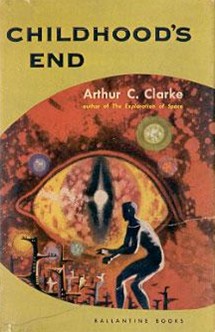
                • Cover of Childhood's End
                  Childhood's End

                  Arthur C. Clarke · standalone novel · 1953

                  similar byfirst contactnear futurealiens

                  Childhood's End is a 1953 science fiction novel by the British author Arthur C. Clarke. The story follows a peaceful alien invasion of Earth by mysterious Overlords, whose arrival begins decades of apparent utopia under indirect alien rule, at the cost of human identity and culture.

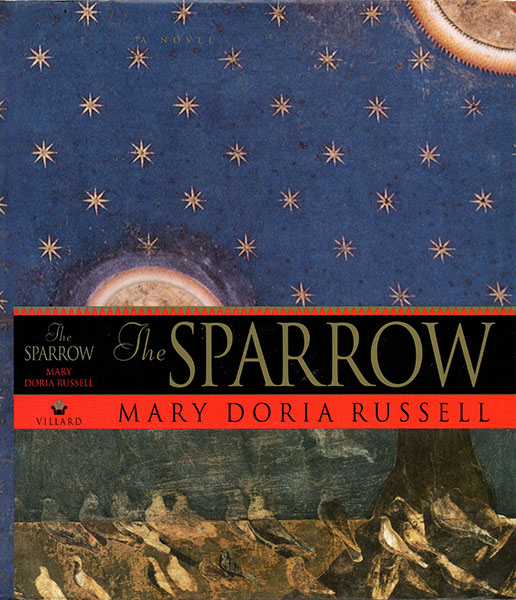
                • Cover of Sparrow
                  Sparrow

                  series · 2 books · 1996

                  similar byfirst contactnear futurealiensfaith and religion

                  Mary Doria Russell's The Sparrow (1996) follows a Jesuit-led mission to the planet Rakhat after radio signals from Alpha Centauri reveal it hosts intelligent life, alternating between the expedition and the traumatized return of its sole survivor, Father Emilio Sandoz, as he tries to explain what happened. The sequel Children of God (1998) follows Sandoz back to Rakhat and continues working out the theological and political fallout of first contact between humans and the planet's two native species.

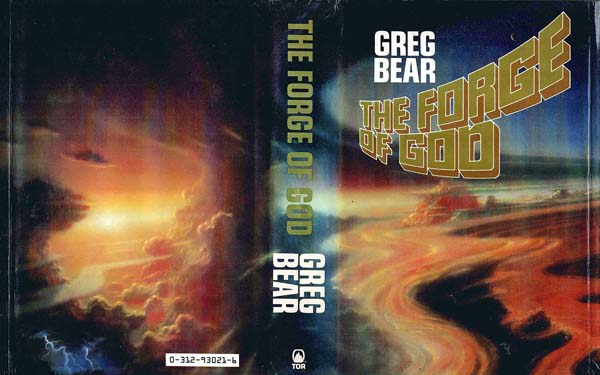
                • Cover of Forge of God
                  Forge of God

                  series · 2 books · 1987

                  completed

                  similar byaliens+2 more

                  The Forge of God (1987) is Greg Bear's science fiction novel about Earth's discovery that it is the target of an incomprehensible, overwhelming alien attack, following scientists and ordinary people as they try to understand what is destroying the planet. Its 1992 sequel, Anvil of Stars, follows a group of young survivors sent on a mission of interstellar retaliation, continuing directly from the first book's ending.

                • Cover of The Lathe of Heaven
                  The Lathe of Heaven

                  Ursula K. Le Guin · standalone novel · 1971

                  similar bynear future+2 more

                  The Lathe of Heaven is a 1971 science fiction novel by American writer Ursula K. Le Guin, first serialized in the American science fiction magazine Amazing Stories. It won the 1972 Locus Award for Best Novel and was a finalist for the 1971 Nebula Award for Best Novel and 1972 Hugo Award for Best Novel. Two television film adaptations were released: the PBS production, The Lathe of Heaven (1980), and Lathe of Heaven (2002), a remake produced by the A&E Network.

                • Cover of Dragon's Egg
                  Dragon's Egg

                  series · 3 books · 1980

                  completed

                  similar byfirst contactaliens+1 more

                  Robert L. Forward's Dragon's Egg (1980) follows first contact with the cheela, intelligent beings the size of sesame seeds living on the surface of a neutron star, where crushing gravity and fast-moving physics let them evolve from primitive agriculture to advanced technology in about a month of Earth time while human observers watch from orbit. The sequel Starquake (1985) follows the cheela's own development of space travel and a catastrophic starquake that devastates their neutron-star home, alongside the continuing story of the human crew observing them.

                • Cover of Have Space Suit - Will Travel
                  Have Space Suit - Will Travel

                  Robert A. Heinlein · standalone novel · 1958

                  similar bynear futurealiens+1 more

                  From the back cover of the Del Rey 9th printing: "Skyjacked - Everything happened at once. One minute Kip Russell was walking about in his own backyard, testing out an old space suit and dreaming about going to the moon - and the next he was out cold and the captive of an insidious space pirate. The whole thing seemed like a very bad dream until he discovered he wasn't the only prisoner on board. Then the reality of the situation became inescapable. He - along with the daughter of a world-renowned scientist and a beautiful creature from an alien planet - had been skyjacked by a monstrous extraterrestrial and they were on their way to the Moon... a journey toward a fate worse than death!"

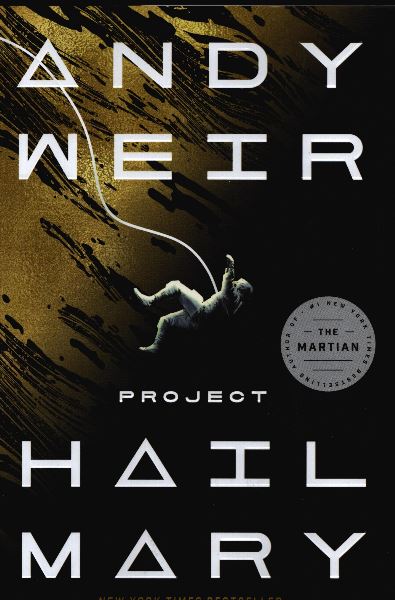
                • Cover of Project Hail Mary
                  Project Hail Mary

                  Andy Weir · standalone novel · 2021

                  similar byfirst contactnear futurealiens

                  Project Hail Mary is a 2021 hard science fiction novel by American writer Andy Weir. It centers on science teacher and former biologist Ryland Grace, who wakes up aboard a spacecraft, afflicted with amnesia.

                • Cover of The Book of Strange New Things
                  The Book of Strange New Things

                  Michel Faber · standalone novel · 2014

                  similar byfirst contactnear futurealiensfaith and religion

                  The Book of Strange New Things is a 2014 science fiction novel by Dutch-born author Michel Faber. The work was first published in the United Kingdom on October 6, 2014, and concerns an English pastor who is sent to the planet of Oasis to teach its reclusive native inhabitants about Christianity.

                • Cover of Xenogenesis / Lilith's Brood
                  Xenogenesis / Lilith's Brood

                  series · 4 books · 1987

                  completed

                  similar byfirst contactaliens+1 more

                  Lilith's Brood, previously known as the Xenogenesis Trilogy, is a collection of three science fiction works by Octavia E. Butler: Dawn, Adulthood Rites, and Imago.

                • Cover of The Star Beast
                  The Star Beast

                  Robert A. Heinlein · standalone novel · 1954

                  similar byfirst contactnear futurealiens

                  A talking alien pet has grown to the size of a small dinosaur. She repeatedly gets her teenage owner in trouble whenever she leaves the backyard, but he continues to care for her, as did his father and grandfather before him. When an alien delegation lands on Earth and demands custody, he fights to protect her.

                • Cover of Voyagers (Ben Bova)
                  Voyagers (Ben Bova)

                  series · 4 books · 1981

                  completed

                  similar byfirst contactnear future+1 more

                  Ben Bova's Voyagers trilogy (Voyagers, 1981; Voyagers II: The Alien Within, 1982; Voyagers III: Star Brothers, 1990) is a space-opera romance built around first contact: a starship crewed by technologically advanced aliens approaches Earth, and the human response entangles politics, cross-species relationships, and advanced alien technology like biochips passed on to the human characters.

                • Cover of The Last Theorem
                  The Last Theorem

                  Arthur C. Clarke & Frederik Pohl · standalone novel · 2008

                  similar byfirst contactnear futurealiens

                  The Last Theorem is a 2008 science fiction novel by Arthur C. Clarke and Frederik Pohl. It was first published in the United Kingdom by HarperVoyager in July 2008, and in the United States by Del Rey Books in August 2008. The book is about a young Sri Lankan mathematician who finds a short proof of Fermat's Last Theorem, while an alien invasion of Earth is in progress.

                • Cover of The World Jones Made
                  The World Jones Made

                  Philip K. Dick · standalone novel · 1956

                  similar bynear future+2 more

                  The World Jones Made is a 1956 science fiction novel by American writer Philip K. Dick, examining notions of precognition, humanity, and politics. It was first published by Ace Books as one half of Ace Double D-150, bound dos-à-dos with Agent of the Unknown by Margaret St. Clair.The story takes place after a nuclear war in which society is dominated by relativism, which rejects absolute truths and preaches tolerance as the highest principle. The mutant Floyd Jones, who can see into the future, plans to overthrow the system and colonise space. The story ends with the defeat of Jones, whose plans fail despite his ability to see the future due to the immutability of fate.

                • Cover of Cradle
                  Cradle

                  Arthur C. Clarke & Gentry Lee · standalone novel · 1988

                  similar byfirst contactnear futurealiens

                  Cradle is a 1988 science fiction novel by Arthur C. Clarke and Gentry Lee. The premise of the novel is the contact between a few humans from the Miami area in 1994 and the super robots of a damaged space ship submerged off the Florida coast. Telecommunication advances such as videotelephones and highly efficient underwater scanning equipment used in the story bridge from the everyday, real-life aspects of the setting toward the near future, bespeaking technological progress.

                • Cover of Blindsight / Firefall
                  Blindsight / Firefall

                  series · 3 books · 2006

                  similar byfirst contactaliens+1 more

                  Blindsight sends a crew of radically modified posthumans (including a resurrected, genetically restored vampire) out to the Oort cloud after humanity detects an alien signal, only to make contact with something intelligent, wildly capable, and possibly not conscious at all — a first-contact story built around the question of whether self-awareness is actually useful. Peter Watts's Echopraxia is a same-timeframe "sidequel" rather than a direct sequel, following different characters through the fallout of the same first-contact event.

                • Cover of The Winds of Altair
                  The Winds of Altair

                  Ben Bova · standalone novel · 1973

                  similar byfirst contactnear futurealiens

                  From back cover Tor trade paperback May 1983: MORALITY VS. SURVIVAL... Even before the human scientists arrived at the sixth planet of Altair they knew they had their work cut out for them. Star probes had long before informed them that Altair VI had flourishing ecology with one very tough beast at the top of the food chain, a beast that would have to be dealt with before the human colony ships arrived. What they didn't know was that the beast was not only tough, it was as smart as a man -- and that the only human capable of real communication with the wolfcats of Altair would want to become one...

                • Cover of Heart Stars
                  Heart Stars

                  series · 2 books · 1961

                  completed

                  similar byaliens+2 more

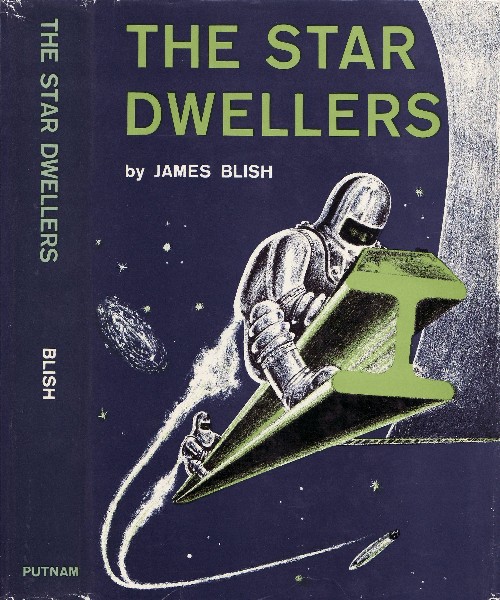
                  James Blish's The Star Dwellers and its sequel Mission to the Heart Stars are juvenile science-fiction novels following a young protagonist drawn into an early human first-contact mission with an alien intelligence, used as an entry point into bigger ideas about communication and diplomacy for teenage readers. The two books form a self-contained pair rather than an ongoing series, and sit alongside Blish's better-known adult work like Cities in Flight. Little else about their plot is well documented outside the books themselves.

                • Cover of The Listeners
                  The Listeners

                  series · 7 books · 1968

                  completed

                  similar byfirst contactnear futurealiens

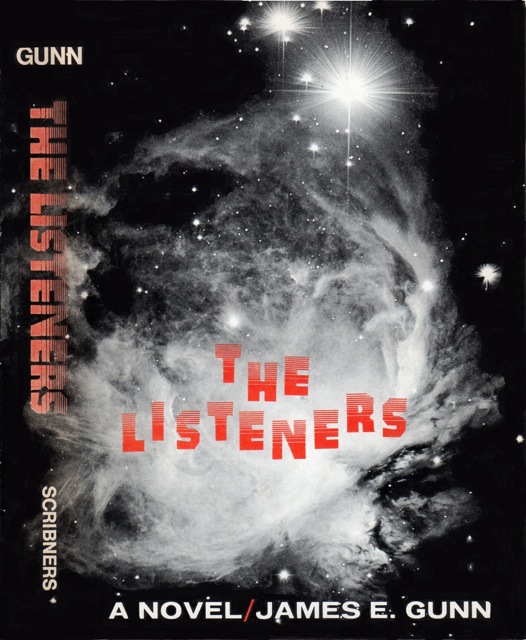
                  The Listeners is James E. Gunn's 1972 science fiction novel about a decades-spanning project searching for a signal from another civilization, and the toll that long, uncertain listening takes on the scientists and their families across generations. Structured as a linked sequence of episodes and documents rather than one continuous plot, it follows the project's staff more than any single hero. It stands as a single novel rather than a multi-book series.

                • Cover of The Lotus Caves
                  The Lotus Caves

                  John Christopher · standalone novel · 1969

                  similar bynear futurealiens+1 more

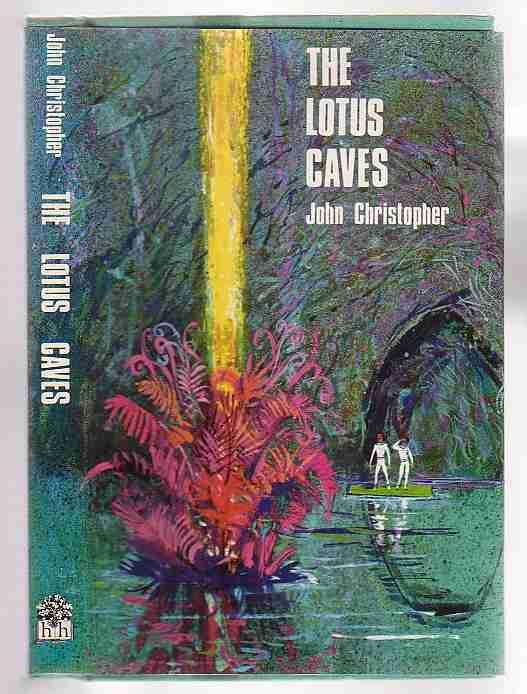
                  Two boys living in a moon colony find an unrestricted buggy, allowing them to travel beyond their usual boundary. The find the journal of a missing early colonist, and it leads them to discover a hidden cave system containing a powerful, intelligent and apparently friendly alien.

                • Cover of Kingdoms of the Wall
                  Kingdoms of the Wall

                  Robert Silverberg · standalone novel · 1992

                  similar byaliensgods+2 more

                  Kingdoms of the Wall is a 1992 science fiction novel by American writer Robert Silverberg. It is set on a faraway planet inhabited by an alien race and in an undefined future. Its subject is the perpetual communal quest for knowledge in the face of hardship and wonders, which through the revelation of an unexpected and devastating truth results in the deconstruction and slaying of gods.

                • Cover of The Wailing Asteroid
                  The Wailing Asteroid

                  Murray Leinster · standalone novel · 1960

                  similar byfirst contactnear futurealiens

                  The Wailing Asteroid is a science-fiction novel written by Murray Leinster and first published in 1960 by Avon Books. It presents the theme of the lone inventor who saves Earth from cosmic danger and introduces humanity to an unknown civilization. The novel was adapted for film by John Brunner as The Terrornauts in 1967.

                • Cover of The Themis Files
                  The Themis Files

                  series · 3 books · 2015

                  similar byaliens+2 more

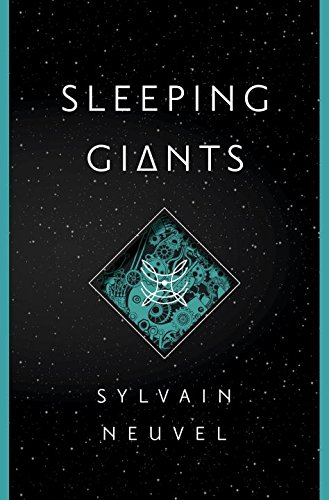
                  Sylvain Neuvel's Themis Files opens when a girl falls into a hole in South Dakota and lands on the palm of a giant metal hand buried underground; the trilogy picks up years later as she leads the team trying to determine what the hand is part of and why it's there. Sleeping Giants and its sequels are told almost entirely through interview transcripts conducted by an unnamed, evasive interrogator, giving the series a documentary, oral-history feel unusual for first-contact SF. The mystery escalates from an archaeological puzzle into a question of who else is looking for the same answer.

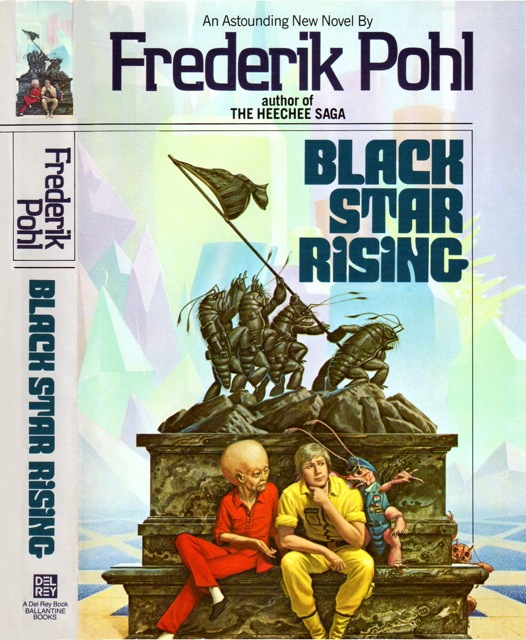
                • Cover of Black Star Rising
                  Black Star Rising

                  Frederik Pohl · standalone novel · 1985

                  similar byfirst contactnear futurealiens

                  Black Star Rising, published in 1986, is a dystopian science fiction novel by American author Frederik Pohl. It is about a post-nuclear war future in which a conquered United States becomes a Chinese farming colony. The main character is an American who the Chinese send to meet a race of warlike aliens who come to Earth.