More like Sentients
anchored on:science fictionour world
but
- H. G. Wells' War of the Worlds
universe65 books1898
Start hereThe War of the Worlds · Start here
similar byscience fiction+3 more
No one would have believed, in the closing years of the nineteenth century, that human affairs were being watched keenly and closely from the timeless worlds of space. And then the cylinders fell. H. G. Wells' War of the Worlds opens in the quiet of the Surrey commons, where a falling star proves to be the first Martian craft — and from the pit rise the towering tripods, the Heat-Ray, the choking Black Smoke and the creeping red weed, wielded by minds that regard mankind much as we regard the creatures we boil for supper. This is invasion rendered as natural disaster: cold, methodical, and vast beyond argument. Wells' 1898 novel is the seed; everything else grows from that Martian soil. The catalogue gathers direct sequels and continuations alongside a wide field of other hands. In War of the Worlds: Global Dispatches the invasion is retold across the whole planet through the eyes of Twain, Verne, Tolstoy, Lowell and Kipling; in the Manly Wade and Wade Wellman crossover, Sherlock Holmes, Watson and Professor Challenger take the field against the machines; and Scott Washburn's Great Martian War stretches the fighting into a decades-long alternate history of steam, artillery and grinding attrition. It is a loose shared world — no single decreed sequence, many voices answering one calamity. What sets this world apart is its refusal of heroics: the invaders fall not to generals but to the smallest things of Earth, humbling and indifferent. Begin, always, with Wells' original novel — it is short, and it is the ground every later book stands upon. From there follow your appetite: Global Dispatches for the panorama, the Holmes campaign for adventure, Washburn for the long war.
- Patternist
series6 books1976
completed
similar byscience fictiondark+5 more
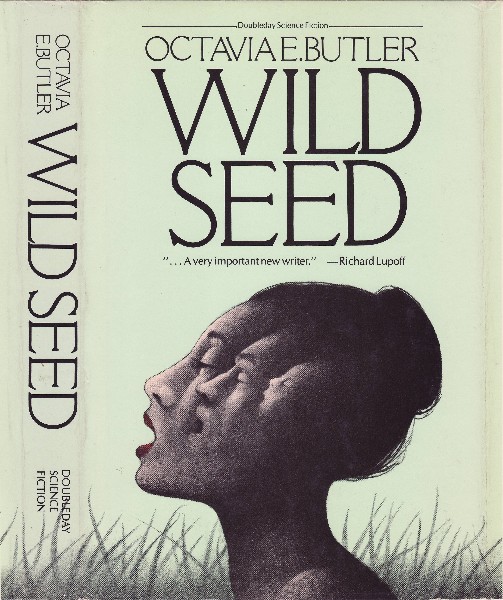
The Patternist series is a group of science fiction novels by Octavia E. Butler that detail a secret history continuing from the Ancient Egyptian period to the far future that involves telepathic mind control and an extraterrestrial plague. A profile of Butler in Black Women in America notes that the themes of the series include "racial and gender-based animosity, the ethical implications of biological engineering, the question of what it means to be human, ethical and unethical uses of power, and how the assumption of power changes people."
- Forge of God
series2 books1987
completed
similar byscience fictiondarkalienssurvivaltense+3 more
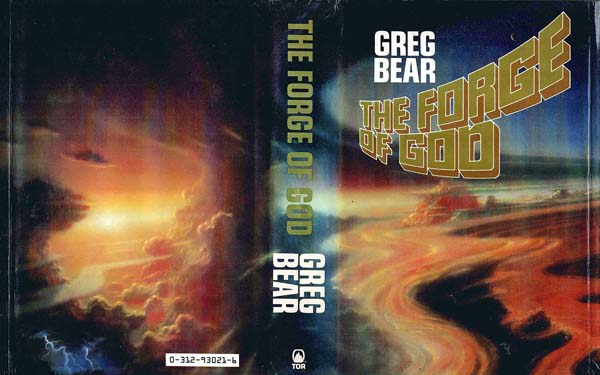
The Forge of God (1987) is Greg Bear's science fiction novel about Earth's discovery that it is the target of an incomprehensible, overwhelming alien attack, following scientists and ordinary people as they try to understand what is destroying the planet. Its 1992 sequel, Anvil of Stars, follows a group of young survivors sent on a mission of interstellar retaliation, continuing directly from the first book's ending.
- The Kraken Wakes
John Wyndhamstandalone novel1953
similar byscience fictiondarkalienssurvivalour worldtensepost-apocalyptic
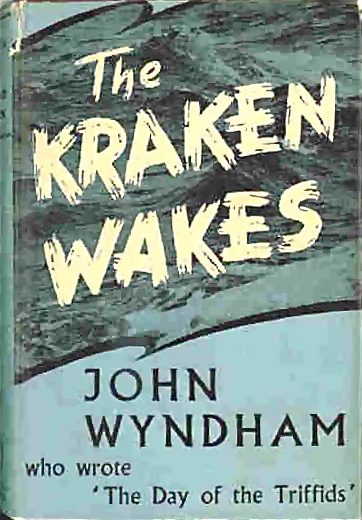
" Behind a spectacular meteor shower actually hides the beginning of an invasion by a mysterious and powerful alien race. Earth's life is disrupted by the attacks of extraterrestrials whose war machines, emerging from the depths of the oceans, seem indestructible. The coalitioned forces of the whole world are worthless, powerless in the face of the indecipherable and deadly plans of a superior intelligence, capable of bringing the entire planet to the brink of catastrophe" Goodreads May 20, 2022
- Forever War
series10 books1972
similar byscience fiction+2 more
Joe Haldeman's The Forever War (1974) follows a soldier conscripted into a centuries-long interstellar war against the alien Taurans, using relativistic space travel so that months spent in transit correspond to years or decades passing back on Earth. Haldeman later returned to the same conflict in Forever Peace (1997), a thematically connected but separate story, and Forever Free (1999), a direct sequel set years after the original war's end. The first novel won the Hugo, Nebula, and Locus awards and is considered a foundational work of military science fiction.
- The 5th Wave
series4 books2013
similar byscience fictiondarkalienssurvivalnear futuretensepost-apocalypticnorth america
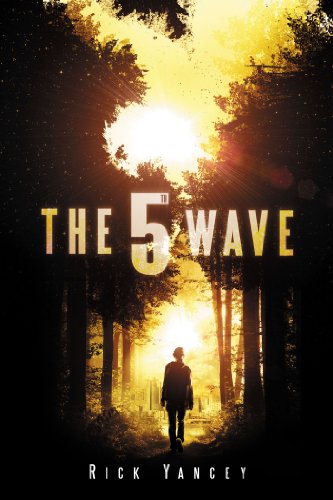
Rick Yancey's The 5th Wave opens after a series of escalating alien attacks has already devastated Earth's population and infrastructure, following sixteen-year-old survivor Cassie Sullivan as she searches for her younger brother while trying to work out who, among the remaining humans, can still be trusted. The trilogy is young-adult science fiction that treats its alien-invasion premise as a survival and paranoia story more than a war story.
- Tripods
series4 books1967
completed
similar byscience fictionaliensnear futureour worldtensepost-apocalyptic+1 more
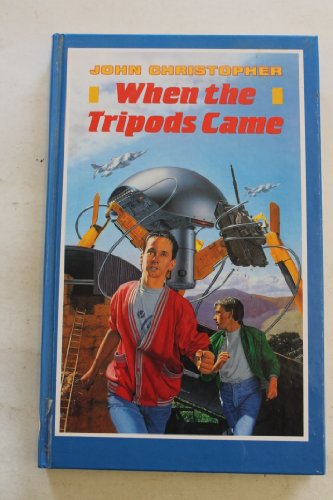
The Tripods is a series of young adult science fiction novels by John Christopher. The series takes place in a post-apocalyptic world where humanity is enslaved by "Tripods"—gigantic three-legged walking machines piloted by an alien race later identified as the "Masters". The first two books were the basis of a science fiction TV series, produced in the United Kingdom in the 1980s.
- NASA Trilogy
series4 books1996
similar byscience fictiontense+6 more
The NASA Trilogy consists of three hard science fiction novels written by British science fiction author Stephen Baxter. They were published from 1996 to 1998. These books explore the possibilities of the American space program if the circumstances had been different. They have generally darker tones than his other books and are critical of NASA. They consist of:
- This Is the Way the World Ends
James Morrowstandalone novel1986
similar byscience fictiondarksurvivalnear futureour worldpost-apocalyptic+1 more
This Is the Way the World Ends is a post-apocalyptic novel by American writer James K. Morrow, published in 1986.
- The Andromeda Strain
series2 books1969
similar byscience fictionsurvivaltense+3 more
Michael Crichton's 1969 novel The Andromeda Strain follows a team of scientists racing to contain a lethal extraterrestrial microorganism that crash-lands in Arizona, told in the clinical, document-driven style that helped establish the techno-thriller genre. Daniel H. Wilson's authorized 2019 sequel The Andromeda Evolution revisits the same threat five decades later. Together the two books form a two-part outbreak story separated by a fifty-year gap in publication.
- The Ganymede Takeover
Philip K. Dick & Ray Nelsonstandalone novel1967
similar byscience fictiondarkaliensnear futureour worldtense+1 more
The Ganymede Takeover is a 1967 science fiction novel by American writers Philip K. Dick and Ray Nelson. It is an alien invasion novel, and similar to Dick's earlier solo novel The Game-Players of Titan.
- Gone
series9 books2008
similar byscience fictiondarksurvivaltense+3 more
Michael Grant's Gone series begins when everyone aged fifteen and older vanishes without warning from a swath of the California coast, trapping the town of Perdido Beach inside an impenetrable barrier the survivors call the FAYZ. As children develop strange powers and food and order break down, Sam Temple and his rival, his twin brother Caine, become central to the fight for survival against human threats and the monstrous Gaiaphage. Six books (Gone through Light) close the original story; a follow-up Monster trilogy, set years later, follows a new outbreak of mutation-causing powers and a new generation of characters.
- Library of America P. K. Dick Collection
series9 books1962
completed
similar byscience fictionnear future+3 more
- Ocean / Galactic Center
series12 books1972
similar byscience fictionaliens+4 more
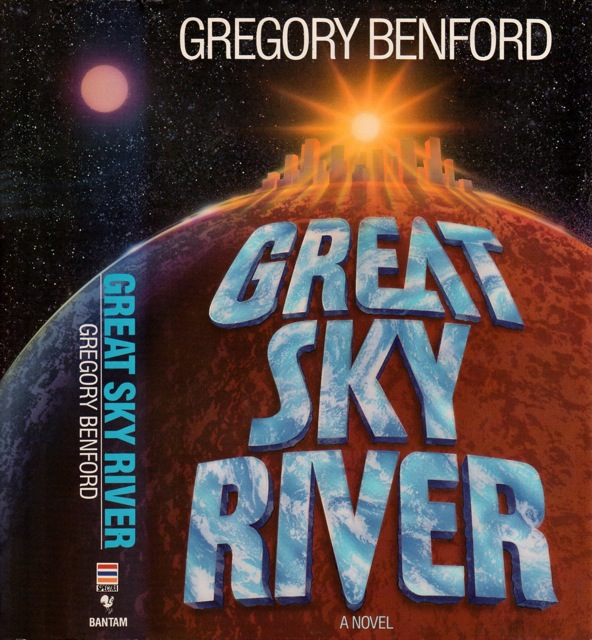
The Galactic Center Saga is a series of books by author Gregory Benford detailing a galactic war between mechanical and biological life.In the Ocean of Night (1977) — 1977 Nebula Award nominee, 1978 Locus Award nominee Across the Sea of Suns (1984) Great Sky River (1987) — 1988 Nebula Nominee Tides of Light (1989) — 1990 Locus Award nominee Furious Gulf (1994) Sailing Bright Eternity (1996) "A Hunger for the Infinite" a novella published in the anthology Far Horizons
- Make Room! Make Room!
Harry Harrisonstandalone novel1966
similar byscience fictiondarksurvivalnear futureour worldtensenorth america
Make Room! Make Room! is a 1966 science fiction novel written by Harry Harrison exploring the consequences of both unchecked population growth on society and the hoarding of resources by a wealthy minority. It was originally serialized in Impulse magazine.
- War Against the Chtorr
series7 books1983
similar byscience fictiondarkalienssurvivalnear futuretensepost-apocalypticnorth america+1 more
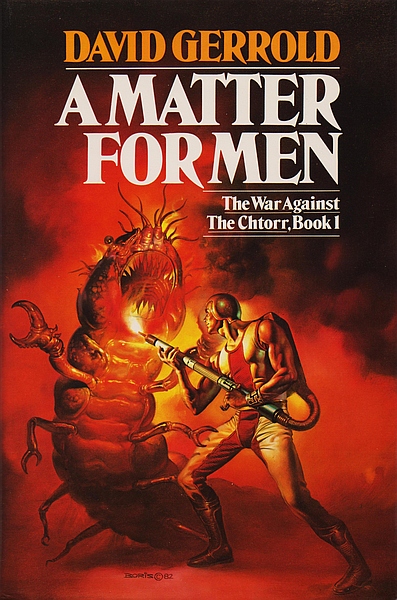
The War Against the Chtorr is a series of science fiction novels by American writer David Gerrold. The Chtorr series was originally planned as a trilogy, but as the story became more intricate, Gerrold realized that three books would not be enough for him to tell the entire story. For a time, he was uncertain how many books there would be in the end but plans on seven. As of 2022, four books have been completed. As of 2017, a fifth and sixth were in the works, 24 years after the publication of the fourth book.
- Xenogenesis / Lilith's Brood
series4 books1987
completed
similar byscience fictionaliens+5 more
Lilith's Brood, previously known as the Xenogenesis Trilogy, is a collection of three science fiction works by Octavia E. Butler: Dawn, Adulthood Rites, and Imago.
- Rogue Moon
Algis Budrysstandalone novel1960
similar byscience fictionalienssurvivalnear futuretense+1 more
A project to transport humans by matter transmission becomes the means to send explorers to the Moon when the US discovers an alien artifact on the dark side, but anyone who enters dies, so a hardened adventurer is given the job.
- The Fireman
Joe Hillstandalone novel2016
similar byscience fictiondarksurvivalnear futureour worldtensepost-apocalypticnorth america
The Fireman is a novel set in a post-apocalyptic time by American author Joe Hill. The novel, Hill's fourth, tells the tale of a deadly spore that has infected most of the world's population. Hill first spoke of the novel in 2013 in promotional interviews for his then-new novel NOS4A2. The novel was released on May 17, 2016.
- The Genocides
Thomas M. Dischstandalone novel1965
similar byscience fictiondarkalienssurvivalnear futureour worldpost-apocalyptic
The Genocides is a 1965 science fiction novel by American writer Thomas M. Disch, first published by Berkley Books as a Berkley Medallion paperback. It was Disch's first novel and was nominated for the Nebula Award for Best Novel for 1965.
- Sleepwalker's World
Gordon R. Dicksonstandalone novel1971
similar byscience fictionsurvivalnear futureour worldtense+2 more
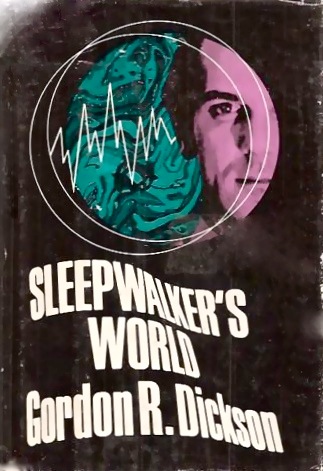
Shafts driven deep into the Earth's hot core utilized that buried energy to run the world's power station. That broadcast energy alone kept the food factories running. Without those factories and that power, the hungry overpopulated planet could not survive. But the cost was high, for the power broadcasts had a terrifying side-effect. While they were on, the human race was unable to stay awake. Among the rare few with immunity to the sleep compulsion was the astronaut Rafe Arnoul Harald, one of six who had been training on the Moon for the first star voyage. But now, unless humanity could conquer the dark power that was using the sleep phenomenon to paralyze society, that flight might never be made. To defeat the unknown masters of the sleeping world, Rafe had only the help of a crippled girl, a wolf with a very special ability, and the unique talents of his own mind and body. (from the first page of the DAW Books first paperback edition)
- The Triffids
series3 books1951
similar byscience fictiondarksurvivalour worldpost-apocalyptic+1 more
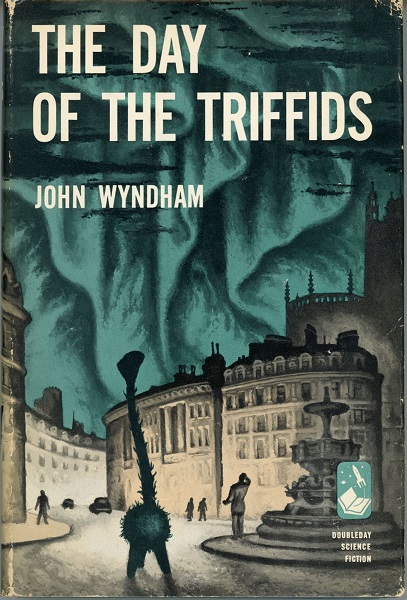
John Wyndham's The Day of the Triffids (1951) opens with a meteor-shower-like event that leaves most of Britain's population blind, throwing civilization into collapse just as triffids, an aggressive and mobile species of poisonous plant, become free to hunt the helpless survivors. Simon Clark's authorized sequel The Night of the Triffids (2001) picks up a generation later, narrated by the original protagonist's son as he confronts a new triffid-dominated world, and John Whitbourn's The Age of the Triffids extends the shared setting further still. Together the three novels form a loose post-apocalyptic trilogy built on Wyndham's original premise rather than a tightly plotted single story.
- Mother of Storms
John Barnesstandalone novel1994
similar byscience fictionsurvivalnear futureour worldtensepost-apocalyptic+2 more
From the flaps of the Tor first edition: "It is 2028. A strike to destroy an illegal Arctic weapons cache has a catastrophic side effect. Massive amounts of energy are liberated from the polar ice, suddenly warming the Earth's climate. In the middle of the Pacific, a gigantic hurricane thousands of miles across is forming, larger than any in human history. A storm with winds of supersonic speed. A storm that changes direction at whim. A storm that refuses to die. A storm so vast it spawns dozens more in its wake... Blinded by intrigue, expedience, and greed, the world's politicians and power brokers have ignored the killer storms threat until it is too late. Already the death toll is in the tens of millions, as it savages the Pacific coast, while its devil's brood of smaller storms are wreaking havoc across the face of the planet. While the survivors scramble for advantage, a handful of courageous men and women undertake a daring, desperate plan to save humanity from total destruction - a plan so visionary it may alter forever the future of the human race."
- The Vampire Earth
series12 books2003
similar byscience fictiondarktensepost-apocalypticnorth america+4 more
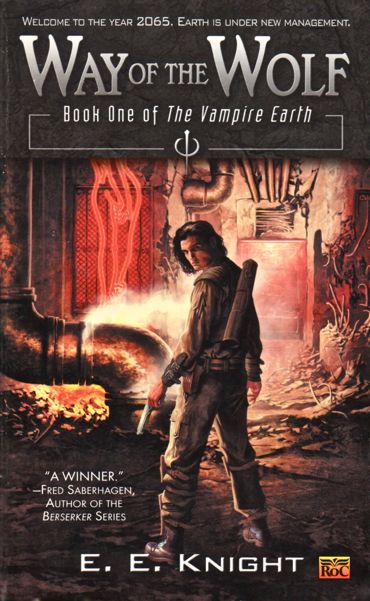
Vampire Earth is a series of science fiction/dark fantasy novels by American writer E. E. Knight.