Loreful
HomeDiscover
Search series, authors…⌘K
Loreful

Reading orders for SF/F series and shared universes — with your place kept in every one.

Explore

UniversesSeriesWorksAuthorsAtlas

Help

FAQAboutSite map

Account & legal

Sign inCreate accountPrivacyTerms

Data

Built on ISFDB, Wikipedia, Wikidata and Open Library. Curated reading orders carry their reasoning on the page; the rest follow publication order. Data sources & licenses

© Loreful · data: ISFDB · CC BY

More like Separation Two

anchored on:thriller & suspense

but

Mood

The mood the book leaves you in.

  • The reading experience is propelled by journeys, exploration, and physical risk; excitement and forward momentum dominate over dread or introspection.
  • Joy and loss are deliberately mixed; the resolution grants characters something real while taking something else away, leaving warmth and sorrow together.
  • The book demands work from the reader — dense prose, difficult structure, unfamiliar ideas, or morally uncomfortable material — as part of its intended effect.
  • Grim events, cruelty, or despair dominate the atmosphere, and the book does not soften them with comfort or comic relief.
  • The atmosphere is quietly unsettling — wrongness, unease, and the uncanny pervade the book without necessarily escalating into overt horror.
  • The book is built to move the reader; character feeling is foregrounded and major scenes aim at a strong emotional response.
  • Humor is a primary aim and the prose plays for laughs — comic situations, wit, or dialogue produce sustained comedy, not occasional levity.
  • The book insists that things can improve; effort and decency are shown to matter, and the arc bends toward better outcomes even through hardship.
  • The book teaches as it goes — real facts, history, science, or craft are conveyed in enough depth that learning is part of the reading experience.
  • The book is designed to uplift and motivate, presenting perseverance or achievement in a way that invites the reader to aspire or act.
  • The overall register is cheerful and easygoing; stakes are kept gentle and the book avoids dwelling on pain or dread.
  • Withheld information drives the experience; the book sustains enigmas and secrets the reader wants resolved, whatever its genre.
  • The book is contemplative and inward-looking, giving more weight to thought, memory, and meaning than to external events.
  • The book works as comfort reading — low tension, a soothing pace, and an atmosphere the reader can unwind in.
  • Grief, loss, or melancholy set the dominant register, and the book lets sorrow stand rather than resolving it into comfort.
  • Sustained suspense is the point; the book keeps the reader braced for what happens next through danger, pressure, or impending revelation.
  • Playful invention and charm define the register — fanciful conceits, light absurdity, and a narration that delights in its own oddity.

About

What the story runs on.

  • Stories in which extraterrestrial beings are central — as characters, cultures, or the object of the plot.
  • Stories structured as a quest — a journey undertaken to find, deliver, or destroy something of great import.
  • Stories in which staying alive against nature, catastrophe, or scarcity is the central problem.
  • Stories of lovers kept apart by law, family, faith, or station, where the obstacle to love is the plot.
  • Stories in which a friendship — its making, testing, or loss — is the emotional center.
  • Stories of growing up — a young protagonist crossing from childhood into adult knowledge and responsibility.
  • Stories about who a character truly is — self-discovery, doubled lives, and the search for a self.
  • Stories about mourning — living through the death of a loved one and what loss does to the survivors.
  • Stories in which a buried family truth — hidden parentage, crimes, or shames — surfaces and reorders the present.
  • Stories driven by maneuvering for power — factions, conspiracies, and statecraft conducted in shadow.
  • Stories in which war itself is the subject — combat, occupation, and what warfare does to soldiers and civilians.
  • Stories organized around investigating a killing — the case, the clues, and the pursuit of the killer, in any genre's clothing.

Shelf

Where it sits in the library.

    • Fiction built on magic or other supernatural elements that have no scientific explanation.
    • Secondary-world fantasy at large scale, where the fate of nations or the world turns on the protagonists' struggle.
    • Fantasy set in a recognizably modern city or contemporary world where the supernatural intrudes on everyday life.
    • Fantasy that blends in horror's atmosphere and imagery, keeping a fantastical frame around grim or frightening material.
    • Action-driven fantasy following warriors or rogues with personal stakes against sorcerous threats, rather than world-spanning conflicts.
    • Fantasy set in a real historical period or a close analogue of one, with magic woven into the era.
    • Fantasy in which protagonists cross from the ordinary world into another world through a portal or similar passage.
    • Fiction that retells or reworks a traditional fairy tale in a new form or setting.
    • Fantasy drawing directly on myths, legends, and folklore, retelling them or building on their figures and logic.
    • Fantasy of ghosts, vampires, shapeshifters, psychics, and similar phenomena, usually set in an otherwise ordinary world.
    • Fiction mixing science-fictional trappings with overtly magical or impossible elements in one setting.
    • Low-stakes fantasy emphasizing comfort, community, and everyday pleasures over conflict and peril.
    • Speculative fiction of pervasive moral ambiguity, violence, and cynicism that rejects heroic conventions — fantasy and SF alike.
      • Fiction that extrapolates from science and technology — future societies, space travel, or speculative inventions — within at least nominally natural laws.
      • Science fiction of interstellar scope — starships, galactic polities, and adventure across star systems.
      • Science fiction committed to scientific rigor, where technical plausibility constrains the story.
      • Science fiction centered on armed forces and warfare, told largely from a military point of view.
      • Science fiction of networked, corporate-dominated near futures, pairing high technology with social decay.
      • Science fiction styled on nineteenth-century steam-powered technology, often in a Victorian or pseudo-Victorian setting.
      • Fiction depicting an oppressive or catastrophic society, presented as a warning.
      • Fiction set after civilization's collapse, following survivors in the ruins of the old world.
      • Fiction in which characters move between past and future, and the mechanics or consequences of that travel drive the plot.
      • Fiction exploring a world where a historical event went differently and history diverged from ours.
      • Science fiction about humanity's first encounter and communication with an alien intelligence.
      • Science fiction in which extraterrestrial forces attack or occupy Earth and humanity resists.
      • Fiction whose primary aim is to frighten or unsettle the reader through dread, menace, or the monstrous.
      • Horror of vast, indifferent, incomprehensible entities before which humanity is insignificant, in the Lovecraft tradition.
      • Horror of decaying houses, buried family secrets, and oppressive atmosphere in the Gothic literary tradition.
      • Horror centered on hauntings and the returning dead.
      • Horror located in the mind — paranoia, obsession, and unreliable perception rather than external monsters.
      • Horror built around the reanimated dead and survival amid their outbreaks.
      • Horror defined by explicit, transgressive gore that refuses to cut away from violence.
      • Speculative fiction of the strange and uncanny that resists both natural explanation and standard genre categories.
      • Fiction organized around solving a crime or puzzle, typically following an investigator toward the identification of a culprit.
      • A puzzle-first mystery that lays out clues so the culprit's identity can be deduced before the reveal.
      • Crime fiction of moral ambiguity, fatalism, and hard-edged style, set among the corrupt and the doomed.
      • A mystery following the realistic routines of police work — forensics, interviews, and case-building.
      • A gentle mystery with an amateur sleuth, a small community, and violence kept off the page.
      • A mystery set in a past era, where the investigation works within that period's methods and society.
      • Fast-paced fiction driven by imminent danger, pursuit, or high-stakes conspiracy, built to sustain tension.
      • A thriller of espionage — agents, tradecraft, and intelligence services in conflict.
      • A thriller centered on lawyers and the courtroom, where litigation carries the suspense.
      • A thriller driven by detailed contemporary or near-future technology, often military or scientific.
      • A thriller whose tension comes from mental states and manipulation between characters rather than external action.
      • Fiction whose central plot is a romantic relationship and its development toward an emotionally satisfying resolution.
      • Romance in which one or both partners are supernatural beings, blending fantasy elements into the love story.
      • A fantasy-romance hybrid in which the romantic arc and the fantasy plot carry equal weight.
      • Romance set in a past era, with courtship shaped by the period's society and manners.
      • Romance set in the present day, without supernatural or historical elements.
      • Fiction set in a real past period, where the historical setting materially shapes characters and events.
        • General and literary fiction emphasizing prose style, character interiority, or formal ambition over genre plot conventions.
        • Fiction in a realistic world where magical events occur and are treated as ordinary, in the tradition of Latin American literature.
        • Fiction that ridicules people, institutions, or society in order to criticize them.
        • Fiction of dreamlike, irrational imagery and logic that breaks from realistic representation.
        • Fiction that plays with narrative convention through metafiction, fragmentation, and self-reference.
        • Fiction propelled by journeys, exploration, and physical peril, where action and survival carry the plot.
        • Adventure fiction of ships and seafaring — naval engagements, voyages, and life at sea.
        • Fiction of the American frontier West — gunmen, ranchers, and lawmen, typically in the late nineteenth century.
        • Fiction centered on soldiers, campaigns, and the experience of warfare, historical or imagined.
          • Fiction written primarily to amuse, using comedic situations, wit, or parody as its organizing principle.
            • Multi-generational fiction following a family or dynasty across decades, with inheritance and kinship as the through-line.
              • Fiction whose world runs on explicit game mechanics — levels, stats, and skills that characters can see and exploit.
                • Fiction about costumed or superpowered heroes and their conflicts with comparable villains.

                Practical

                How long a commitment, whether it stands alone, and whether it has finished.

                Tap a chip to ask for it · tap again to rule it out · once more to clear. Numbers show what would be left.

                • Cover of Robert Langdon
                  Robert Langdon

                  series · 6 books · 2000

                  similar bythriller & suspensetense+1 more

                  The Robert Langdon novel series is named after Robert Langdon, the protagonist of the novels by American author Dan Brown. Langdon is portrayed as a Harvard University professor of religious iconology and symbology, a fictional field related to the study of historic symbols, which is not methodologically connected to the actual discipline of semiotics. Brown's novels that feature the lead character also include historical themes and Christianity as motifs, and as a result have generated controversy. Brown states on his website that his novels are not anti-Christian, and that he is on a "constant spiritual journey" himself.

                • Cover of Christopher Family Chronicles
                  Christopher Family Chronicles

                  series · 8 books · 1973

                  completed

                  similar bypolitical intriguethriller & suspensetense+2 more

                • Cover of Deception Point
                  Deception Point

                  Dan Brown · standalone novel · 2001

                  similar bypolitical intriguethriller & suspensetenseour world

                  Deception Point is a 2001 mystery-thriller novel by American author Dan Brown. It is Brown's third novel. It was published by Simon & Schuster.

                • Cover of Digital Fortress
                  Digital Fortress

                  Dan Brown · standalone novel · 1998

                  similar bypolitical intriguethriller & suspensetenseour world

                  Digital Fortress is a techno-thriller novel written by American author Dan Brown and published in 1998 by St. Martin's Press. The book explores the theme of government surveillance of electronically stored information on the private lives of citizens, and the possible civil liberties and ethical implications of using such technology.

                • Cover of Catacombs
                  Catacombs

                  John Farris · standalone novel · 1981

                  similar bypolitical intriguethriller & suspensetenseour worldlate 20th century

                  Americans agents, Soviets agents and an archeaological team investigate the catacombs of an ancient advanced civilization in Africa.

                • Cover of The Last Day
                  The Last Day

                  Glenn Kleier · standalone novel · 1997

                  similar bythriller & suspensetenseour worldlate 20th century+1 more

                  From the flaps of the Warner Books first printing: "The final week of 1999 draws to a close. Billions prepare for the inevitable letdown. Billions more hold their breath. Will the wild fantasies of New Age zealots be realized and the world we know end? Will the dawn of a new era be marked by profound occurrences? Or will it be just one more New Year's day? Suddenly and terrifyingly, everyone's question is answered. On Christmas Eve, fiery destruction rains down on a secret scientific installation in the Negev desert. Then at midnight on New Year's Eve, a beautiful young woman appears, displaying a strange and awesome gift. The extraordinary powers of this ethereal creature foster both jubilation and alarm. Drawn into the most intimate bond of all is Jon Feldman, seasoned TV correspondent. An inveterate skeptic, Feldman finds himself caught in the woman's spell even as others argue that she is a Trojan Horse, come to wreck devastation on humanity. Forced to confront his deepest fears as he simultaneously probes a conspiracy at the outermost limits of bioengineering, Felman will find what he seeks - in a single heartbeat that could end his life and that will forever alter his very being."

                • Cover of Blade Runner Universe
                  Blade Runner Universe

                  series · 6 books · 1968

                  similar by+3 more

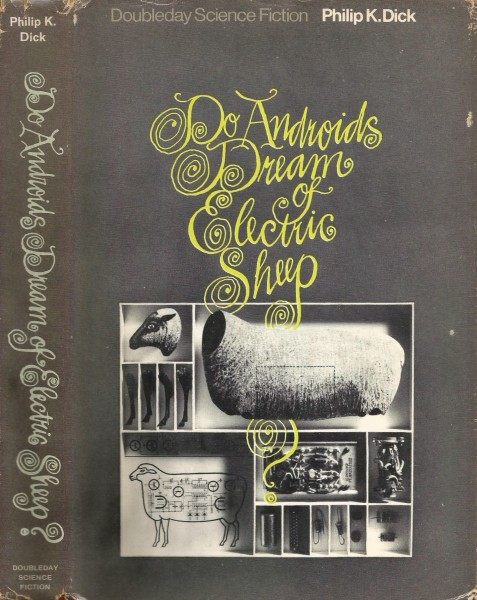
                  Philip K. Dick's 1968 novel Do Androids Dream of Electric Sheep? follows bounty hunter Rick Deckard as he tracks escaped androids through an irradiated, near-abandoned San Francisco, using the hunt to probe questions of empathy and what separates human from machine. The novel became the basis for Ridley Scott's 1982 film Blade Runner, and Marvel Comics later published an illustrated adaptation of that film. Together the two trace the story's path from prose original to screen and comic-page adaptation.

                • Cover of The Montglane Service
                  The Montglane Service

                  series · 2 books · 1989

                  similar bypolitical intriguethriller & suspensetense+1 more

                • Cover of The Blue Ant Trilogy
                  The Blue Ant Trilogy

                  series · 3 books · 2003

                  similar bythriller & suspense+3 more

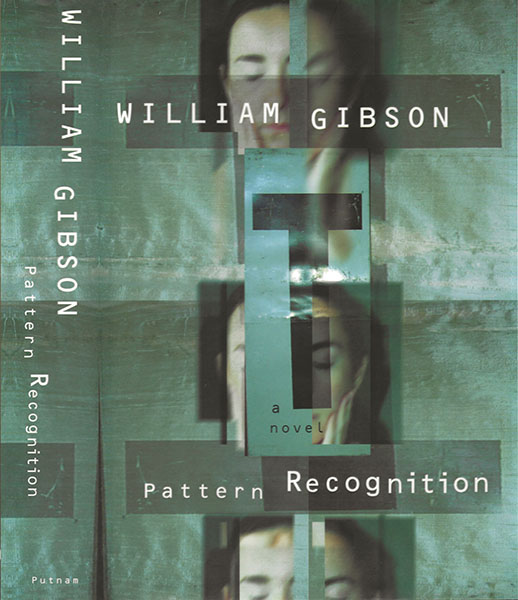
                  Hubertus Bigend is a fictional character appearing in the third trilogy of novels of science fiction and literary author William Gibson. Bigend is the antihero of Gibson's Pattern Recognition (2003), Spook Country (2007) and Zero History (2010). In an interview Gibson says "I've always had a sense of Bigend as someone who presents himself as though he knows what's going on, but who in fact doesn't. It's just my sense of the subtext of the character: he's bullshitting himself, at the same time as he's bullshitting all of us."

                • Cover of State of Fear
                  State of Fear

                  Michael Crichton · standalone novel · 2004

                  similar bypolitical intriguethriller & suspensetenseour world

                  State of Fear is a 2004 techno-thriller novel by Michael Crichton, his fourteenth under his own name and twenty-fourth overall, in which eco-terrorists plot mass murder to publicize the danger of global warming.

                • Cover of Running Dog
                  Running Dog

                  Don DeLillo · standalone novel · 1978

                  similar bythriller & suspensetenseour worldlate 20th century+1 more

                  Running Dog is a 1978 novel by Don DeLillo. The book concerns Moll Robbins, a reporter for the eponymous magazine – a fictional underground, once-radical magazine which satirizes Rolling Stone – whose investigation into the suspicious activities of a member of the U.S. Senate uncover the possible existence of a pornographic film of Adolf Hitler, purportedly filmed in his bunker in the climactic days of Berlin's fall. As Robbins digs deeper into the film's existence and whereabouts, more and more individuals become obsessed with finding it, including underground art collectors and the Mafia, leading to a surreal and violent series of events.

                • Cover of The QE2 Is Missing
                  The QE2 Is Missing

                  Harry Harrison · standalone novel · 1980

                  similar bypolitical intriguethriller & suspensetenseour worldlate 20th century

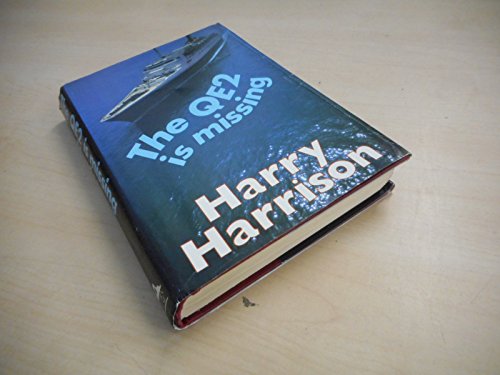
                  A political thriller about South American politics, Nazis and arms dealers set on a cruise ship.

                • Cover of Dirk Pitt
                  Dirk Pitt

                  series · 12 books · 1973

                  completed

                  similar bythriller & suspensetenseour world

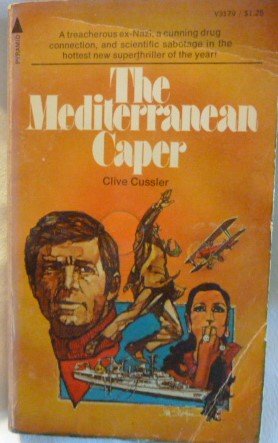
                  Clive Cussler's Dirk Pitt novels follow the title character, a two-fisted marine engineer and de facto field agent for the fictional National Underwater and Marine Agency, through globe-spanning adventures mixing undersea salvage, historical mystery, and international conspiracy. The run collected here spans The Mediterranean Caper (1973) through Valhalla Rising (2001), the earlier stretch of a series Cussler continued for decades with later co-authors.

                • Cover of Galactic Milieu
                  Galactic Milieu

                  series · 10 books · 1981

                  completed

                  similar bytense+2 more

                  Galactic Milieu is a series of science fiction novels by Julian May. It is linked to her previously published series, the Saga of Pliocene Exile; and through the fantastical device of time-travel, acts as both a prequel and a sequel to this earlier series. The "Galactic Milieu" of the title is an interplanetary federation, and Earth's membership of it is a central plot concern.

                • Cover of Departure
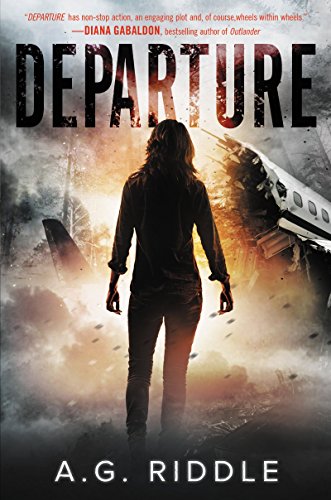
                  Departure

                  A. G. Riddle · standalone novel · 2014

                  similar bypolitical intriguethriller & suspensetenseour world

                  "The world's past and future rests in the hands of five unwitting strangers in this definitive edition of A. G. Riddle's time-traveling, mind-bending speculative thriller. En route to London from New York, Flight 305 suddenly loses power and crash-lands in the English countryside, plunging a group of strangers into a mysterious adventure that will have repercussions for all of humankind.Struggling to stay alive, the survivors soon realize that the world they've crashed in is very different from the one they left. But where are they? Why are they here? And how will they get back home? Five passengers seem to hold clues about what's really going on: writer Harper Lane, venture capitalist Nick Stone, German genetic researcher Sabrina Schroeder, computer scientist Yul Tan, and Grayson Shaw, the son of a billionaire philanthropist.As more facts about the crash emerge, it becomes clear that some in this group know more than they're letting on--answers that will lead Harper and Nick to uncover a far-reaching conspiracy involving their own lives. As they begin to piece together the truth, they discover they have the power to change the future and the past--to save our world. or end it. A wildly inventive and propulsive adventure full of hairpin twists, Departure is a thrilling tale that weaves together power, ambition, fate, memory, and love, from a bold and visionary talent"--

                • Cover of Quantum Night
                  Quantum Night

                  Robert J. Sawyer · standalone novel · 2016

                  similar bythriller & suspensetenseour world+1 more

                  Quantum Night is a 2016 science-fiction thriller novel written by Canadian novelist Robert J. Sawyer. Set in 2020, the book touches on themes of quantum physics, psychology, current politics and ethics.

                • Cover of Cotton Malone
                  Cotton Malone

                  series · 5 books · 2006

                  similar bythriller & suspensetenseour world+1 more

                • Cover of Carrion Comfort
                  Carrion Comfort

                  Dan Simmons · standalone novel · 1989

                  similar bytenseour worldlate 20th century+1 more

                  Carrion Comfort is a science fiction/horror novel by American writer Dan Simmons, published in 1989 in hardcover by Dark Harvest and in 1990 in paperback by Warner Books. It won the Bram Stoker Award, the Locus Poll Award for Best Horror Novel, and the August Derleth Award for Best Novel. It is based on a novelette of the same title, published in 1983 in the magazine Omni. The first half of the novelette makes up chapter 1 of the novel, while the second half forms chapter 3.

                • Cover of Patrick McLanahan
                  Patrick McLanahan

                  series · 3 books · 1989

                  similar bytenseour world+3 more

                • Cover of The Last Gasp
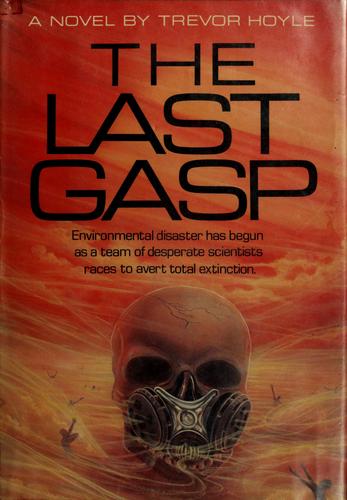
                  The Last Gasp

                  Trevor Hoyle · standalone novel · 1983

                  similar bythriller & suspensetenseour world+1 more

                  From the flaps of the Crown first edition: "When British marine biologist Gavin Chase stepped out into the windswept wastes at the Halley Bay antarctic research station one morning, the last thing he expected to see was a sled team coming out of nowhere carrying a half-mad, half-frozen Russian scientist babbling an incomprehensible warning. But that warning would threaten the future of the human race and force Chase to make some of the hardest decisions of his life. Months later, at a Geneva environmental conference, Chase meets Cheryl Detrick, the daughter of Theo Detrick, the grand old man of diatom research. Chase, the Detricks, and Soviet scientist Boris Stanovnik theorize that the oxygen-producing microscopic plants of the world's oceans are dying and the level of atmospheric pollutants has finally exceeded the ability of the planet's ecology to recycle them. There is also good reason to believe that the superpowers are planning to wage a new type of environmental warfare. Sooner or later there will be nothing left to breathe. So begins a race against the future. Chase and Cheryl, now lovers, struggle to avert ecological catastrophe as agents of the military-industrial complex hunt them down... and as a growing belt of unbreathable gases spreads outward from the equator, uprooting millions. Their enemies are Lloyd Madden, an insane military mastermind planning to seed the earth with poison and then repopulate it with a race of mutants, and Joseph Earl Gelstrom, a wealthy chemical manufacturer who has Cheryl's father killed to hide his involvement. But Gelstrom himself falls victim to pollution sickness, and he repents. To raise money to finance a research team, Chase must make an unholy alliance with the dying Gelstrom, but this is too much for Cheryl, who leaves him. As more and more of the world becomes uninhabitable, as industries and governments collapse and chaos reigns, as the oceans fill up with dioxin, as the climate changes and mutant life-forms encroach upon the last refuges of humankind, Chase leads a last desperate mission to find and rescue Cheryl and to lead his team of scientists to safety."

                • Cover of Duke de Richleau
                  Duke de Richleau

                  series · 4 books · 1933

                  completed

                  similar bytensethriller & suspense+1 more

                  The Duke de Richleau novels follow Dennis Wheatley's aristocratic adventurer and occultist across four decades of twentieth-century intrigue, moving from a 1930s rescue thriller in The Forbidden Territory into Satanist set-pieces such as The Devil Rides Out and Strange Conflict, then a later case in Gateway to Hell. Wheatley wrote the books out of order over nearly forty years, but their internal chronology matches the order they were published in.

                • Cover of Laurent Michaelmas
                  Laurent Michaelmas

                  series · 3 books · 1975

                  completed

                  similar bytensethriller & suspenseour world+1 more

                  Algis Budrys' Michaelmas is a science-fiction novel about Laurent Michaelmas, a globally trusted television newsman who secretly steers world events from behind the scenes with the help of Domino, an artificial intelligence only he controls. Budrys frames Michaelmas as a hidden protector keeping a fragile near-future world from chaos, blurring the line between reporting the news and making it. It stands as a single novel, not part of a longer series.

                • Cover of The President's Vampire / Nathaniel Cade
                  The President's Vampire / Nathaniel Cade

                  series · 4 books · 2010

                  similar bypolitical intriguethriller & suspensetense+1 more

                • Cover of Aerosystems Unlimited
                  Aerosystems Unlimited

                  series · 3 books · 1989

                  completed

                  similar bythriller & suspenselate 20th century+3 more