Loreful
HomeDiscover
Search series, authors…⌘K
Loreful

Reading orders for SF/F series and shared universes — with your place kept in every one.

Explore

UniversesSeriesWorksAuthorsAtlas

Help

FAQAboutSite map

Account & legal

Sign inCreate accountPrivacyTerms

Data

Built on ISFDB, Wikipedia, Wikidata and Open Library. Curated reading orders carry their reasoning on the page; the rest follow publication order. Data sources & licenses

© Loreful · data: ISFDB · CC BY

More like Several Perceptions

anchored on:literary & generalbritish islesmid 20th centuryidentityreflective

but

Mood

The mood the book leaves you in.

  • The reading experience is propelled by journeys, exploration, and physical risk; excitement and forward momentum dominate over dread or introspection.
  • Joy and loss are deliberately mixed; the resolution grants characters something real while taking something else away, leaving warmth and sorrow together.
  • The book demands work from the reader — dense prose, difficult structure, unfamiliar ideas, or morally uncomfortable material — as part of its intended effect.
  • Grim events, cruelty, or despair dominate the atmosphere, and the book does not soften them with comfort or comic relief.
  • The atmosphere is quietly unsettling — wrongness, unease, and the uncanny pervade the book without necessarily escalating into overt horror.
  • The book is built to move the reader; character feeling is foregrounded and major scenes aim at a strong emotional response.
  • Humor is a primary aim and the prose plays for laughs — comic situations, wit, or dialogue produce sustained comedy, not occasional levity.
  • The book insists that things can improve; effort and decency are shown to matter, and the arc bends toward better outcomes even through hardship.
  • The book teaches as it goes — real facts, history, science, or craft are conveyed in enough depth that learning is part of the reading experience.
  • The book is designed to uplift and motivate, presenting perseverance or achievement in a way that invites the reader to aspire or act.
  • The overall register is cheerful and easygoing; stakes are kept gentle and the book avoids dwelling on pain or dread.
  • Withheld information drives the experience; the book sustains enigmas and secrets the reader wants resolved, whatever its genre.
  • The book is contemplative and inward-looking, giving more weight to thought, memory, and meaning than to external events.
  • The book works as comfort reading — low tension, a soothing pace, and an atmosphere the reader can unwind in.
  • Grief, loss, or melancholy set the dominant register, and the book lets sorrow stand rather than resolving it into comfort.
  • Sustained suspense is the point; the book keeps the reader braced for what happens next through danger, pressure, or impending revelation.
  • Playful invention and charm define the register — fanciful conceits, light absurdity, and a narration that delights in its own oddity.

About

What the story runs on.

  • Stories in which extraterrestrial beings are central — as characters, cultures, or the object of the plot.
  • Stories structured as a quest — a journey undertaken to find, deliver, or destroy something of great import.
  • Stories in which staying alive against nature, catastrophe, or scarcity is the central problem.
  • Stories of lovers kept apart by law, family, faith, or station, where the obstacle to love is the plot.
  • Stories of growing up — a young protagonist crossing from childhood into adult knowledge and responsibility.
  • Stories about who a character truly is — self-discovery, doubled lives, and the search for a self.
  • Stories about mental unraveling — descent into madness, delusion, and minds at war with themselves.
  • Stories about mourning — living through the death of a loved one and what loss does to the survivors.
  • Stories in which a buried family truth — hidden parentage, crimes, or shames — surfaces and reorders the present.
  • Stories driven by maneuvering for power — factions, conspiracies, and statecraft conducted in shadow.
  • Stories in which war itself is the subject — combat, occupation, and what warfare does to soldiers and civilians.
  • Stories organized around investigating a killing — the case, the clues, and the pursuit of the killer, in any genre's clothing.

Shelf

Where it sits in the library.

    • Fiction built on magic or other supernatural elements that have no scientific explanation.
    • Secondary-world fantasy at large scale, where the fate of nations or the world turns on the protagonists' struggle.
    • Fantasy set in a recognizably modern city or contemporary world where the supernatural intrudes on everyday life.
    • Fantasy that blends in horror's atmosphere and imagery, keeping a fantastical frame around grim or frightening material.
    • Action-driven fantasy following warriors or rogues with personal stakes against sorcerous threats, rather than world-spanning conflicts.
    • Fantasy set in a real historical period or a close analogue of one, with magic woven into the era.
    • Fantasy in which protagonists cross from the ordinary world into another world through a portal or similar passage.
    • Fiction that retells or reworks a traditional fairy tale in a new form or setting.
    • Fantasy drawing directly on myths, legends, and folklore, retelling them or building on their figures and logic.
    • Fantasy of ghosts, vampires, shapeshifters, psychics, and similar phenomena, usually set in an otherwise ordinary world.
    • Fiction mixing science-fictional trappings with overtly magical or impossible elements in one setting.
    • Low-stakes fantasy emphasizing comfort, community, and everyday pleasures over conflict and peril.
    • Speculative fiction of pervasive moral ambiguity, violence, and cynicism that rejects heroic conventions — fantasy and SF alike.
      • Fiction that extrapolates from science and technology — future societies, space travel, or speculative inventions — within at least nominally natural laws.
      • Science fiction of interstellar scope — starships, galactic polities, and adventure across star systems.
      • Science fiction committed to scientific rigor, where technical plausibility constrains the story.
      • Science fiction centered on armed forces and warfare, told largely from a military point of view.
      • Science fiction of networked, corporate-dominated near futures, pairing high technology with social decay.
      • Science fiction styled on nineteenth-century steam-powered technology, often in a Victorian or pseudo-Victorian setting.
      • Fiction depicting an oppressive or catastrophic society, presented as a warning.
      • Fiction set after civilization's collapse, following survivors in the ruins of the old world.
      • Fiction in which characters move between past and future, and the mechanics or consequences of that travel drive the plot.
      • Fiction exploring a world where a historical event went differently and history diverged from ours.
      • Science fiction about humanity's first encounter and communication with an alien intelligence.
      • Science fiction in which extraterrestrial forces attack or occupy Earth and humanity resists.
      • Fiction whose primary aim is to frighten or unsettle the reader through dread, menace, or the monstrous.
      • Horror of vast, indifferent, incomprehensible entities before which humanity is insignificant, in the Lovecraft tradition.
      • Horror of decaying houses, buried family secrets, and oppressive atmosphere in the Gothic literary tradition.
      • Horror centered on hauntings and the returning dead.
      • Horror located in the mind — paranoia, obsession, and unreliable perception rather than external monsters.
      • Horror built around the reanimated dead and survival amid their outbreaks.
      • Horror defined by explicit, transgressive gore that refuses to cut away from violence.
      • Speculative fiction of the strange and uncanny that resists both natural explanation and standard genre categories.
      • Fiction organized around solving a crime or puzzle, typically following an investigator toward the identification of a culprit.
      • A puzzle-first mystery that lays out clues so the culprit's identity can be deduced before the reveal.
      • Crime fiction of moral ambiguity, fatalism, and hard-edged style, set among the corrupt and the doomed.
      • A mystery following the realistic routines of police work — forensics, interviews, and case-building.
      • A gentle mystery with an amateur sleuth, a small community, and violence kept off the page.
      • A mystery set in a past era, where the investigation works within that period's methods and society.
      • Fast-paced fiction driven by imminent danger, pursuit, or high-stakes conspiracy, built to sustain tension.
      • A thriller of espionage — agents, tradecraft, and intelligence services in conflict.
      • A thriller centered on lawyers and the courtroom, where litigation carries the suspense.
      • A thriller driven by detailed contemporary or near-future technology, often military or scientific.
      • A thriller whose tension comes from mental states and manipulation between characters rather than external action.
      • Fiction whose central plot is a romantic relationship and its development toward an emotionally satisfying resolution.
      • Romance in which one or both partners are supernatural beings, blending fantasy elements into the love story.
      • A fantasy-romance hybrid in which the romantic arc and the fantasy plot carry equal weight.
      • Romance set in a past era, with courtship shaped by the period's society and manners.
      • Romance set in the present day, without supernatural or historical elements.
      • Fiction set in a real past period, where the historical setting materially shapes characters and events.
        • General and literary fiction emphasizing prose style, character interiority, or formal ambition over genre plot conventions.
        • Fiction in a realistic world where magical events occur and are treated as ordinary, in the tradition of Latin American literature.
        • Fiction that ridicules people, institutions, or society in order to criticize them.
        • Fiction of dreamlike, irrational imagery and logic that breaks from realistic representation.
        • Fiction that plays with narrative convention through metafiction, fragmentation, and self-reference.
        • Fiction propelled by journeys, exploration, and physical peril, where action and survival carry the plot.
        • Adventure fiction of ships and seafaring — naval engagements, voyages, and life at sea.
        • Fiction of the American frontier West — gunmen, ranchers, and lawmen, typically in the late nineteenth century.
        • Fiction centered on soldiers, campaigns, and the experience of warfare, historical or imagined.
          • Fiction written primarily to amuse, using comedic situations, wit, or parody as its organizing principle.
            • Multi-generational fiction following a family or dynasty across decades, with inheritance and kinship as the through-line.
              • Fiction whose world runs on explicit game mechanics — levels, stats, and skills that characters can see and exploit.
                • Fiction about costumed or superpowered heroes and their conflicts with comparable villains.

                Practical

                How long a commitment, whether it stands alone, and whether it has finished.

                Tap a chip to ask for it · tap again to rule it out · once more to clear. Numbers show what would be left.

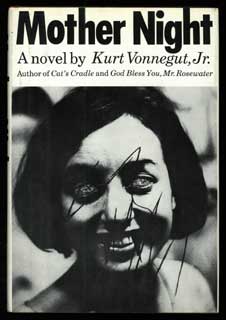
                • Cover of Mother Night
                  Mother Night

                  Kurt Vonnegut & Jr. · standalone novel · 1962

                  similar byliterary & generalreflectiveidentitymid 20th century

                  Howard W. Campbell Jr., an American playwright who grew up in Germany, writes his memoirs from an Israeli prison cell awaiting trial for war crimes. As the Nazis rose to power, Campbell stayed on, married a German actress, and was recruited by an American agent to serve as a double agent, broadcasting Nazi propaganda over the radio while secretly passing coded intelligence to the Allies. The catch, as Campbell tells it, is that he became one of the war's most effective propagandists in the process, whatever his loyalties. Kurt Vonnegut's darkest novel asks what a person becomes when the mask he wears for a cause is indistinguishable from his face.

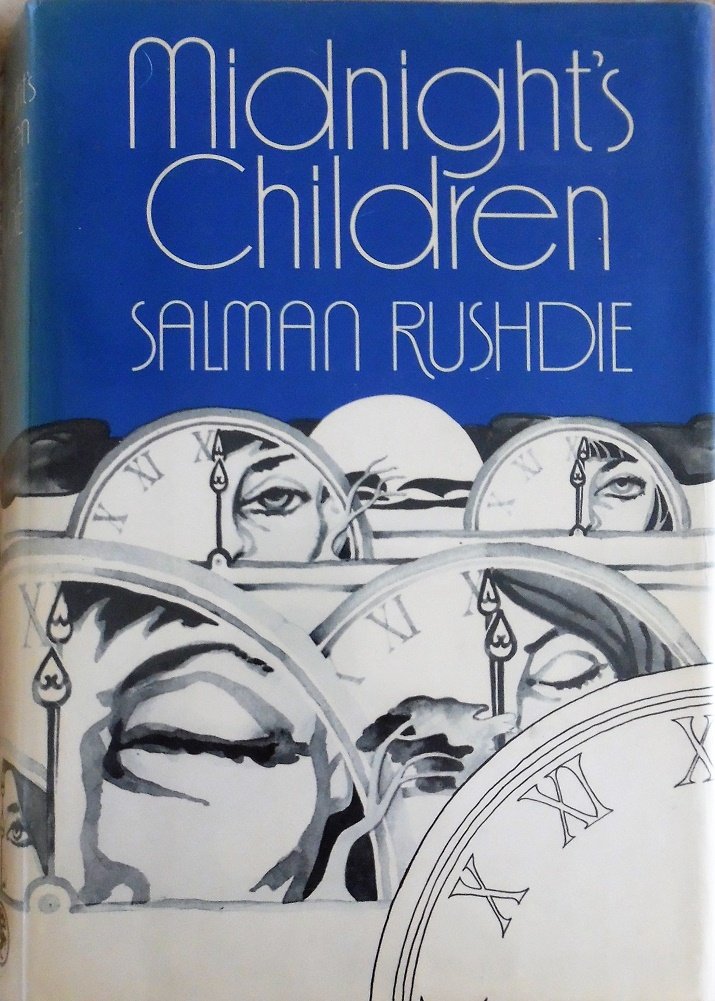
                • Cover of Midnight's Children
                  Midnight's Children

                  Salman Rushdie · standalone novel · 1980

                  similar byliterary & generalreflectiveidentitymid 20th century

                  WorldCat: The life of a man born at the moment of India's independence becomes inextricably linked to that of his nation and is a whirlwind of disasters and triumphs that mirror modern India's course.

                • Cover of Deptford Trilogy
                  Deptford Trilogy

                  series · 3 books · 1970

                  completed

                  similar byliterary & generalreflectiveidentitymid 20th century+2 more

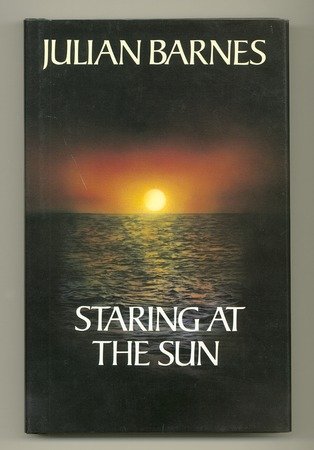
                • Cover of Staring at the Sun
                  Staring at the Sun

                  Julian Barnes · standalone novel · 1986

                  similar byliterary & generalreflectiveidentitymid 20th centurybritish isles

                  Staring at The Sun is a 1986 novel by English writer Julian Barnes.

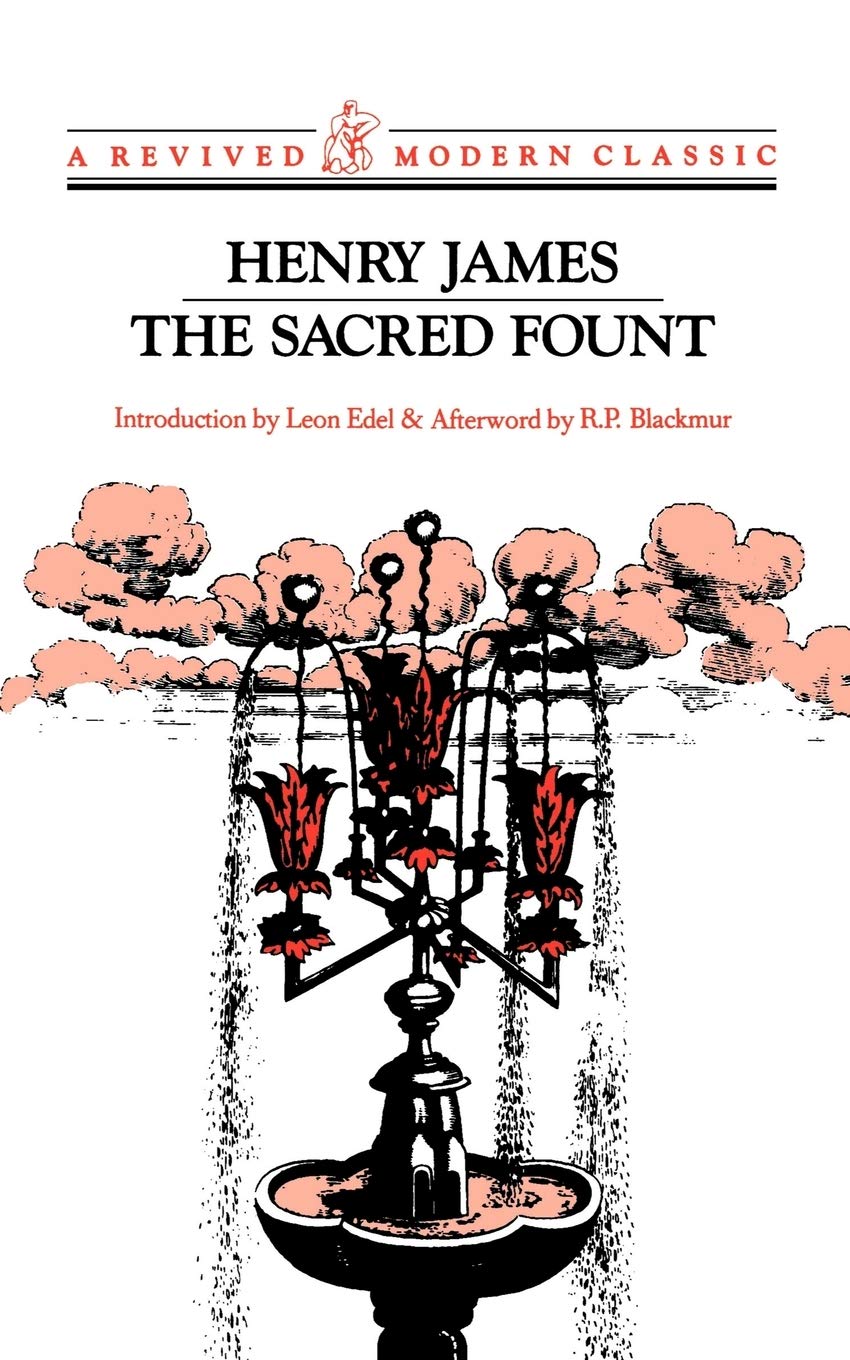
                • Cover of The Sacred Fount
                  The Sacred Fount

                  Henry James · standalone novel · 1901

                  similar byliterary & generalreflectiveidentitybritish islesmadness

                  The Sacred Fount (1901) has for its scene a weekend party at the great English country house Newmarch. Here James leads the reader down a bizarre garden path. The Sacred Fount--his only novel to employ a first-person narrator--places us in the hands of an obsessive novelist (never named and never described, but perhaps familiar), who detects alarming changes in his acquaintances. A woman known for her élan vital has lost her poise, a dull man is charming; a friend is suddenly aged, a plain woman sparkles. Where one improves, another seems to suffer. With "plunges of insight," "as noiseless and guarded as if I were trapping a bird," the narrator stalks his fellow guests through the weekend, avidly trying to make sense of what he comes to believe are actual exchanges of life force. "The Sacred Fount," as R.P. Blackmur noted, "is the mystery of the power that passes amnong us, depleting or restoring us, in friendship, in love, even in more public relations... [Here] is the beautiful, the critical job of making that mystery manifest."

                • Cover of Freddie Montgomery
                  Freddie Montgomery

                  series · 1 book · 1989

                  similar byliterary & generalreflectiveidentitymadnessbritish isles

                • Cover of The Love Child
                  The Love Child

                  Edith Olivier · standalone novel · 1927

                  similar byliterary & generalreflectiveidentitybritish islesmadness

                  Amazon: At thirty-two, her mother dead, Agatha Bodenham finds herself quite alone. She summons back to life the only friend she ever knew, Clarissa, the dream companion of her childhood. At first Clarissa comes by night, and then by day, gathering substance in the warmth of Agatha's obsessive love until it seems that others too can see her. See, but not touch, for Agatha has made her love child for herself alone. No man may approach her elfin creation of perfect beauty. If he does, the love which summoned her can spirit her away

                • Cover of The Edible Woman
                  The Edible Woman

                  Margaret Atwood · standalone novel · 1969

                  similar byliterary & generalreflectiveidentity+1 more

                  The Edible Woman is the first published novel by Canadian writer Margaret Atwood, published in 1969. It is the story of a young woman, Marian, whose sane, structured, consumer-oriented world starts to slip out of focus. Following her engagement, Marian feels her body and her self are becoming separated. Marian begins endowing food with human qualities that cause her to identify with it, and finds herself unable to eat, repelled by metaphorical cannibalism. In a foreword written in 1979 for the Virago edition of the novel, Atwood described it as a protofeminist rather than feminist work.

                • Cover of Concrete Island
                  Concrete Island

                  J. G. Ballard · standalone novel · 1974

                  similar byliterary & generalreflectiveidentitybritish isles

                  Architect Robert Maitland crashes his car onto a stretch of wasteland trapped between three converging motorways -- visible from thousands of cars, reachable by none of them. Injured and unable to climb back to the road, Maitland adapts to life on what he starts calling the Island, scavenging food thrown from car windows, and discovers he isn't alone: a runaway sex worker hiding in a bunker, and a brain-damaged former circus acrobat, both long past expecting rescue. What begins as a survival story turns into a question of whether Maitland even wants to leave. A J. G. Ballard novel of urban isolation, grouped with Crash and High-Rise.

                • Cover of Mother London
                  Mother London

                  Michael Moorcock · standalone novel · 1988

                  similar byliterary & generalreflectivebritish islesmid 20th centurymadness

                  Mother London is a novel by Michael Moorcock. Published in 1988, it was shortlisted for the Whitbread Prize. Although the city of London itself is perhaps the central character, it follows three outpatients from a mental hospital—a music hall artist, a reclusive writer and a woman just awoken from a long coma —who experience the history of the city from the Blitz to the late eighties through chaotic experience and sensory delusions. The novel is a non-chronological compilation of episodes, snippets and sidelines, rather than a single cohesive narrative. A piece in The Guardian called it 'a great, humane document'.

                • Cover of Island
                  Island

                  Aldous Huxley · standalone novel · 1962

                  similar byliterary & generalreflectivemid 20th century+1 more

                  Island is a 1962 utopian manifesto and novel by English writer Aldous Huxley, the author's final work before his death in 1963. Although it has a plot, the plot largely serves to further conceptual explorations rather than setting up and resolving conventional narrative tension.

                • Cover of In Milton Lumky Territory
                  In Milton Lumky Territory

                  Philip K. Dick · standalone novel · 1985

                  similar byliterary & generalreflectiveidentitymid 20th century

                  In Milton Lumky Territory is a realist, non-science fiction novel authored by Philip K. Dick. Originally written in 1958, but rejected by prospective publishers, this book was eventually published posthumously in 1985 by Dragon Press. It was published in two editions. Fifty copies were bound in quarter leather and included a signature from one of the author's canceled checks but were not jacketed. Nine hundred fifty copies were published with a cloth binding and included a dust jacket. It was reprinted in paperback in 2006.

                • Cover of Orlando: A Biography
                  Orlando: A Biography

                  Virginia Woolf · standalone novel · 1928

                  similar byliterary & generalreflectiveidentitybritish isles

                  Orlando: A Biography is a novel by Virginia Woolf, first published on 11 October 1928, inspired by the tumultuous family history of the aristocratic poet and novelist Vita Sackville-West, Woolf's lover and close friend. It is a history of English literature in satiric form. The book describes the adventures of a poet who changes from man to woman and lives for centuries, meeting the key figures of English literary history. Considered a feminist classic, the book has been written about extensively by scholars of women's writing and gender and transgender studies.

                • Cover of Fludd
                  Fludd

                  Hilary Mantel · standalone novel · 1989

                  similar byliterary & generalreflectiveidentitymid 20th centurybritish isles

                  Fludd is a novel by Hilary Mantel. First published by Viking Press in 1989, it won the Winifred Holtby Memorial Prize that year.

                • Cover of Lost
                  Lost

                  Gregory Maguire · standalone novel · 2001

                  similar byliterary & generalreflectiveidentitybritish isles

                  Lost is a 2001 novel by American author Gregory Maguire. Unlike many of Maguire's other adult novels, Lost is set in the real world. The novel's concept is that the protagonist is a distant relative of the man who inspired Charles Dickens' character of Ebenezer Scrooge.

                • Cover of The History of Mr. Polly
                  The History of Mr. Polly

                  H. G. Wells · standalone novel · 1910

                  similar byliterary & generalreflectiveidentitybritish isles

                  The History of Mr. Polly is a 1910 comic novel by H. G. Wells.

                • Cover of Voices from the Street
                  Voices from the Street

                  Philip K. Dick · standalone novel · 2007

                  similar byliterary & generalidentitymid 20th centurymadness+1 more

                  A young salesman in a San Francisco radio and electronics store in 1952 feels a vague dissatisfaction with his job, his wife, and newborn son, wishing for better things. He encounters religious revivalists, Nazi magazine editors, socialists, and spirited women, but rather than provide an answer they just exacerbate his emotional pain, and he finally has a complete emotional breakdown.

                • Cover of Puttering About in a Small Land
                  Puttering About in a Small Land

                  Philip K. Dick · standalone novel · 1985

                  similar byliterary & generalreflectiveidentitymid 20th century

                  Puttering About in a Small Land is an early non-science fiction novel by American science fiction author Philip K. Dick. It was written sometime in 1957, but remained unpublished until it was released posthumously in 1985.

                • Cover of The Lion of Boaz-Jachin and Jachin-Boaz
                  The Lion of Boaz-Jachin and Jachin-Boaz

                  Russell Hoban · standalone novel · 1973

                  similar byliterary & generalreflectiveidentitybritish isles

                  The Lion of Boaz-Jachin and Jachin-Boaz is a novel by American writer Russell Hoban published in 1973, and was his first book for adult readers. The novel is set in an unspecified location in the Middle East, and was written when Hoban lived in London, and was initially published by British publisher Jonathan Cape. Initially appearing to be written as a kind of fable, Boaz-Jachin and Jachin-Boaz are a father and son, both map-makers; the narrative then places both father and son in contemporary London.

                • Cover of Surfacing
                  Surfacing

                  Margaret Atwood · standalone novel · 1972

                  similar byliterary & generalreflectiveidentitymid 20th century

                  Surfacing is a novel by Canadian author Margaret Atwood. Published by McClelland and Stewart in 1972, it was her second novel. Surfacing has been described by commentators as a companion novel to Atwood's collection of poems, Power Politics, which was written the previous year and deals with complementary issues.

                • Cover of Heaven Eyes
                  Heaven Eyes

                  David Almond · standalone novel · 2000

                  similar byliterary & generalreflectiveidentitybritish isles

                  Heaven Eyes is a young adult novel by author David Almond. It was published in Great Britain by Hodder Children's Books in 2000 and by Delacorte Press in the United States in 2001. A paperback version was released in 2002 by Dell Laurel Leaf.

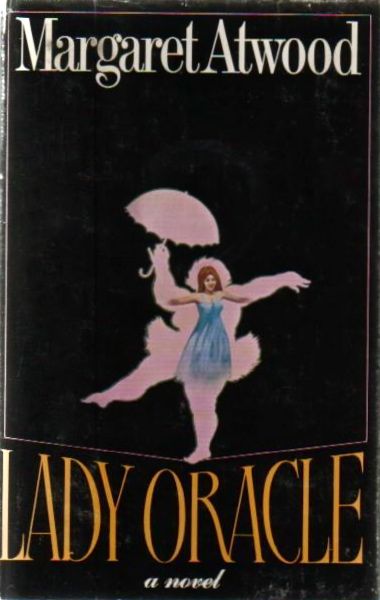
                • Cover of Lady Oracle
                  Lady Oracle

                  Margaret Atwood · standalone novel · 1976

                  similar byliterary & generalreflectiveidentitymid 20th century

                  Lady Oracle is a novel by Margaret Atwood that parodies Gothic romances and fairy tales. It was first published by McClelland and Stewart in 1976.

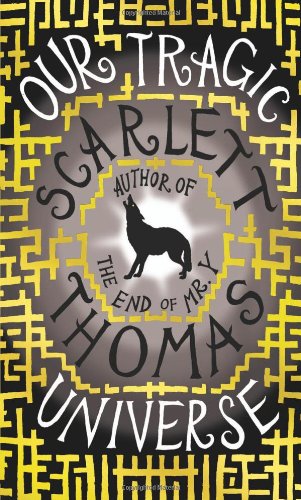
                • Cover of Our Tragic Universe
                  Our Tragic Universe

                  Scarlett Thomas · standalone novel · 2010

                  similar byliterary & generalreflectiveidentitybritish isles

                  'I was reading about the end of the universe when I got a text message from my friend Libby . . .' If Kelsey Newman's theory about the end of time is true, we are all going to live forever. But for Meg – locked in a dead-end relationship and with a deadline long-gone for a book that she can't write – this thought fills her with dread. Meg is lost in a labyrinth of her own devising. But could there be an important connection between a wild beast living on Dartmoor, a ship in a bottle, the science of time, a knitting pattern for the shape of the universe and the Cottingley Fairies? Or is her life just one long chain of coincidences? Smart, entrancing and buzzing with big ideas, Our Tragic Universe is a book about how relationships are created and destroyed, and how a story might just save your life.

                • Cover of Mary and the Giant
                  Mary and the Giant

                  Philip K. Dick · standalone novel · 1987

                  similar byliterary & generalreflectiveidentitymid 20th century

                  Mary and the Giant is an early, non-science fiction novel written by Philip K. Dick in the years between 1953 and 1955, but not published until 1987.