More like Shadow Child
anchored on:horrornorth americacontemporarypsychological horrorgrief and lossdark+1 more
but
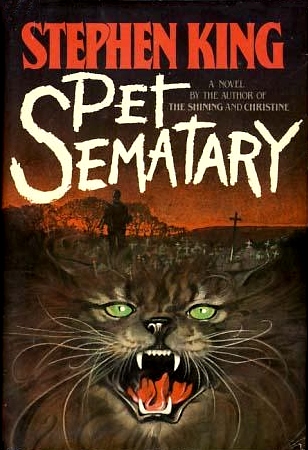
- Pet Sematary
Stephen Kingstandalone novel1983
similar bygrief and lossnorth americacontemporaryhorrordarkeerie
Pet Sematary is a 1983 horror novel by American writer Stephen King. It tells the story of a family moving to Maine and settling closer to a pet cemetery in the woods, which is home to a terrifying force that brings death and sorrow. The novel was nominated for a World Fantasy Award for Best Novel in 1984, and adapted into two films: one in 1989 and another in 2019 as well as several spinoffs.
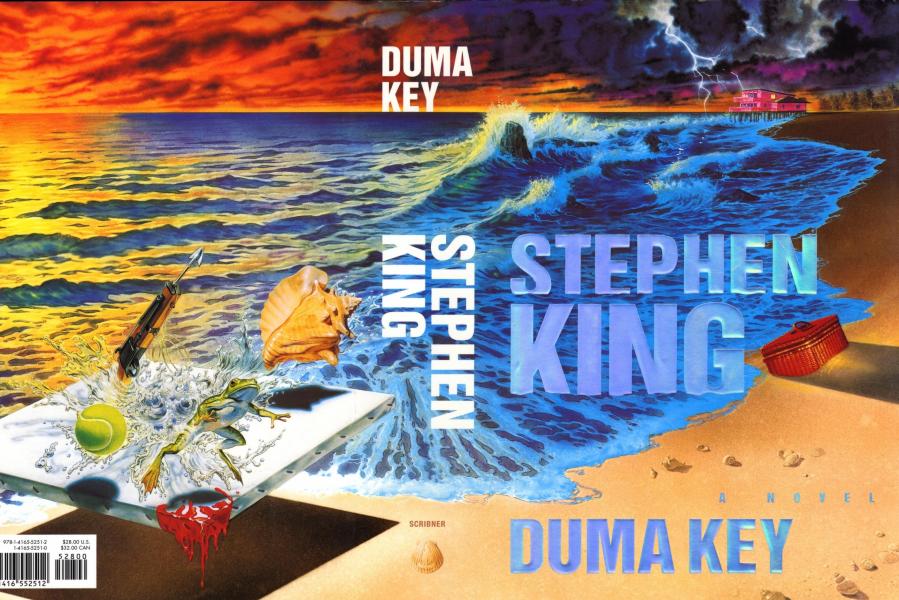
- Duma Key
Stephen Kingstandalone novel2008
similar bygrief and lossnorth americacontemporaryhorroreeriepsychological horror+1 more
A workplace accident crushes Edgar Freemantle's truck, costs him his right arm, and leaves him with brain damage that scrambles his speech and memory -- severe enough that his marriage doesn't survive. On his psychologist's advice, Edgar relocates alone to a beach house on Duma Key, a quiet stretch of Florida's Gulf coast, taking up sketching as therapy, hiring a local student as an assistant and befriending an elderly heiress with dementia and her caretaker. But the drawings that pour out of him start showing things he has no way of knowing -- secrets about the people he loves, and the island itself. A standalone novel by Stephen King.
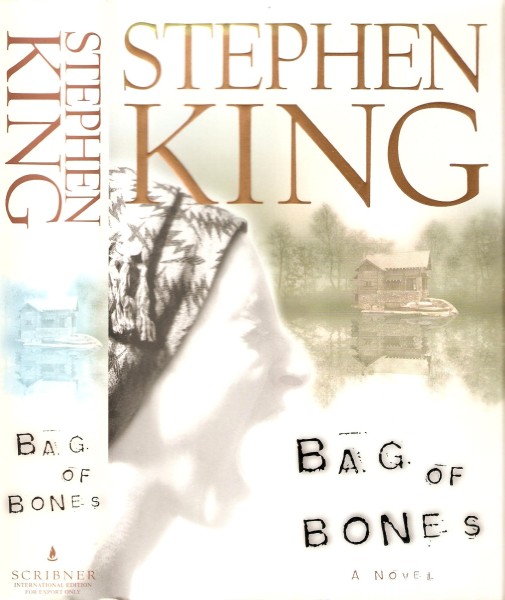
- Bag of Bones
Stephen Kingstandalone novel1998
similar bygrief and lossnorth americacontemporaryhorrordarkmadness
Bag of Bones is a 1998 horror novel by American writer Stephen King. It focuses on an author who suffers severe writer's block and delusions at an isolated lake house four years after the death of his wife. It won the 1999 Bram Stoker Award for Best Novel, the 1999 British Fantasy Award for Best Novel, and the 1999 Locus Award for Best Dark Fantasy/Horror Novel.
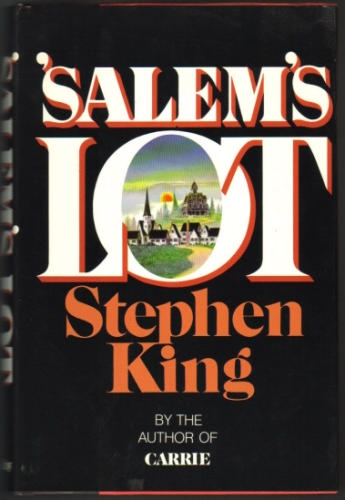
- Jerusalem's Lot
series3 books1975
similar bygrief and losscontemporaryhorrordarknorth americaeerie
Stephen King's 1975 novel 'Salem's Lot follows writer Ben Mears as he returns to his childhood town of Jerusalem's Lot, Maine, only to discover that its residents are being turned into vampires by a newly arrived stranger. It transplants Gothic vampire horror into a small New England community, tracking that community's collapse under a supernatural siege. It is a single, self-contained novel.
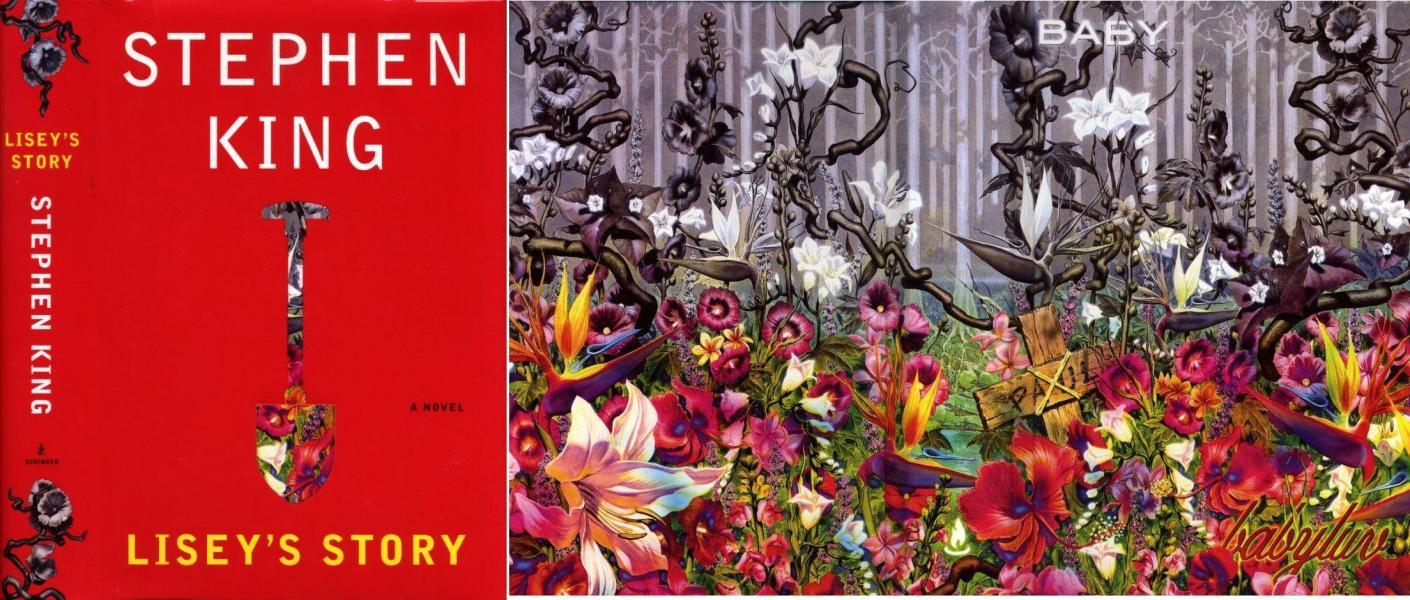
- Lisey's Story
Stephen Kingstandalone novel2006
similar bygrief and losscontemporaryhorroreerienorth americapsychological horror+1 more
When the widow of a successful author is targeted by a psychopath, she must make use of the ability to shift to a parallel world, which she learned from her husband.
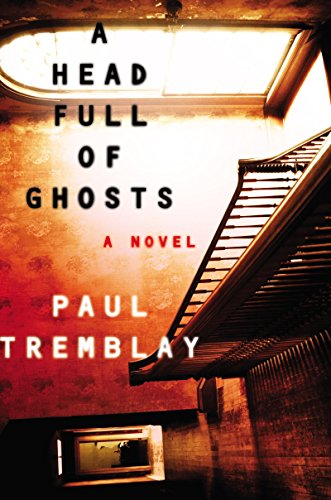
- A Head Full of Ghosts
Paul Tremblaystandalone novel2015
similar bynorth americacontemporaryhorrordarkeeriemadnesspsychological horror+1 more
A Head Full of Ghosts is a 2015 horror novel by American writer Paul Tremblay. The plot involves a Massachusetts family under financial and emotional strain while their fourteen-year-old daughter, Marjorie Barrett, exhibits signs of severe mental illness. The Barretts come to believe she is possessed by a demon, and her behavior is publicized when the family stars in a reality TV show. Marjorie's younger sister, Merry Barrett, relays the experiences of her childhood fifteen years later. Themes include elements of Catholic exorcism and reality television exploitation.
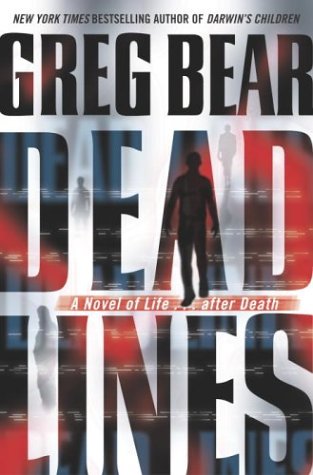
- Dead Lines
Greg Bearstandalone novel2004
similar bygrief and losscontemporaryhorrordarkeerienorth americamadness
From the flaps of the Ballantine first edition: "For the last two years, Peter Russell has mourned the death of one of his twin daughters - who was just ten when she was murdered. Recent news of his best friend's fatal heart attack has now come as another devastating blow. Divorced, despondent, and going nowhere in his career, Peter fears his life is circling the drain. Then Trans comes along. The brainchild of an upstart telecom company, Trans is (as its name suggests) a transcendent marvel, a sleek, handheld interpersonal communication device capable of flawless operation anywhere in the world, at any time. "A cell phone, but not" - transmitting with crystal clarity across a newly discovered, never-utilized bandwidth... and poised to spark a new-technology revolution. When its creators offer Peter a position on their team, it should be a golden opportunity for him. If only he wasn't seemingly going mad. Everywhere Peter turns, inexplicable apparitions are walking before him or reaching out in torment. After a chilling encounter with his own lost child he begins to grasp the terrifying truth: Trans is a Pandora's box that has tapped into a frequency not of this world... but of the next. And now, via this open channel to oblivion, the dead have gained access to the living. For Peter, and for humankind, a long shadowy night of the soul has descended, bringing with it the stuff of a horrifying nightmare from which they may never awaken."
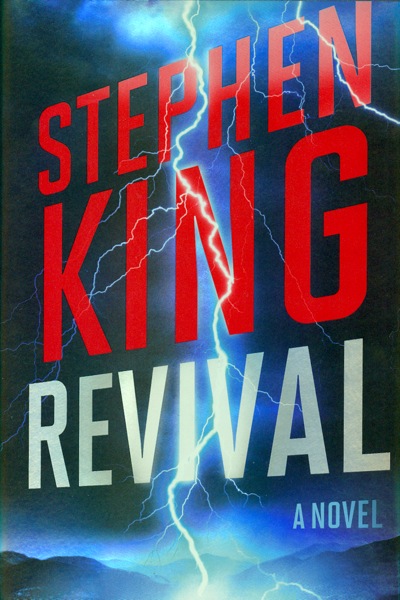
- Revival
Stephen Kingstandalone novel2014
similar bynorth americacontemporaryhorrordarkeeriemadness+1 more
The protagonist details how his life keeps intersecting with that of the man he first met as the pastor of his church in childhood, whose experiments with electricity lead to mastery of a cosmic power which he uses to help people, until his obsession leads to physical and spiritual disaster for all.
- Insomnia
Stephen Kingstandalone novel1994
similar bygrief and lossnorth americacontemporaryhorroreeriemadness
When an elderly widower in Maine finds himself with sleep maintenance insomnia, awakening early every morning, this state of exhaustion allows him to perceive a higher state of reality, where he learns of an impending disaster which will shake not just the Earthly reality. but all the higher realities, and which he has been recruited to prevent.
- The Book of Accidents
Chuck Wendigstandalone novel2021
similar bygrief and lossnorth americacontemporaryhorrordarkeerie+1 more
Long ago, Nathan lived in a house in the country with his abusive father—and has never told his family what happened there. Long ago, Maddie was a little girl making dolls in her bedroom when she saw something she shouldn’t have—and is trying to remember that lost trauma by making haunting sculptures. Long ago, something sinister, something hungry, walked in the tunnels and the mountains and the coal mines of their hometown in rural Pennsylvania. Now, Nate and Maddie Graves are married, and they have moved back to their hometown with their son, Oliver. And now what happened long ago is happening again . . . and it is happening to Oliver. He meets a strange boy who becomes his best friend, a boy with secrets of his own and a taste for dark magic. This dark magic puts them at the heart of a battle of good versus evil and a fight for the soul of the family—and perhaps for all of the world. But the Graves family has a secret weapon in this battle: their love for one another.
- Homebody
Orson Scott Cardstandalone novel1998
similar bygrief and lossnorth americacontemporaryhorrordarkeeriemadness
Homebody (1998) is a horror novel by American writer Orson Scott Card. It takes place in modern-day America.
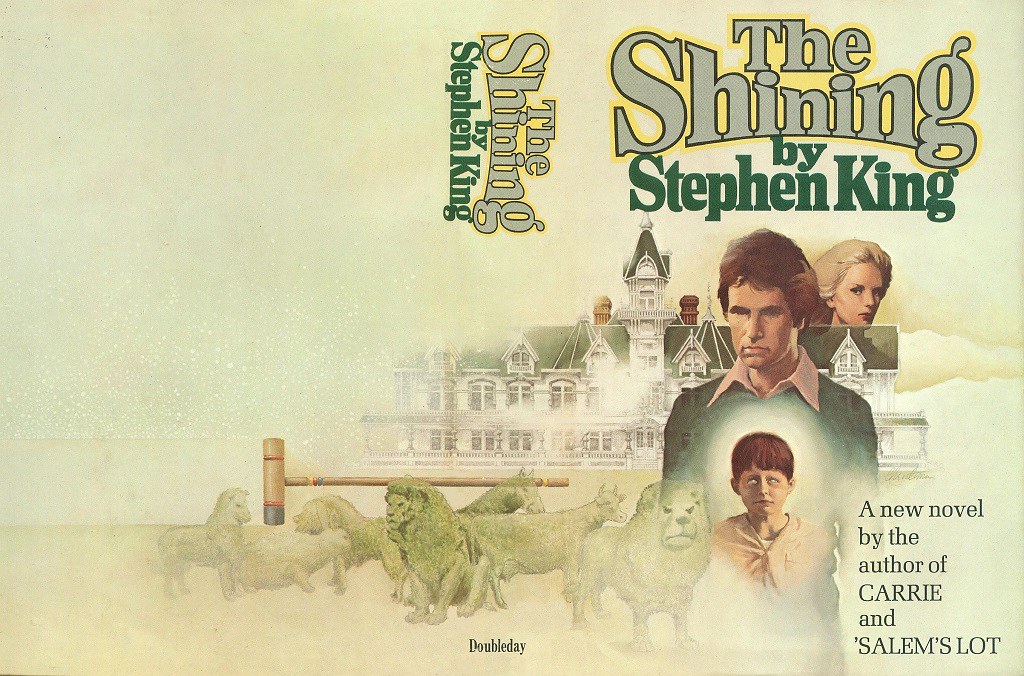
- The Shining
series5 books1977
similar bynorth americahorrorcontemporarydark+2 more
Stephen King's 1977 novel The Shining follows the Torrance family as winter caretakers of the isolated, malevolent Overlook Hotel, where father Jack is gradually consumed by the hotel's influence while his young son Danny's psychic "shining" draws its attention. Doctor Sleep (2013) picks up the story decades later, following Danny as an adult still marked by that childhood ordeal. Together the two form a horror duology spanning nearly forty years of real-world publication.
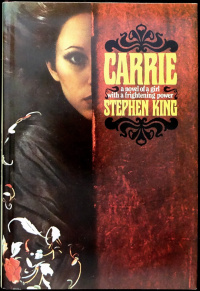
- Carrie
Stephen Kingstandalone novel1974
similar bycontemporaryhorrornorth americadarkpsychological horror+1 more
In one way or another, everybody abused Carrie. This sixteen-year-old misfit was forbidden everything that was young and fun by her fanatical mother. She was teased and taunted by her classmates, misunderstood by her teachers, and given up as hopeless by almost everyone. But Carrie had a secret: She possessed terrifying telekinetic powers that could make inanimate objects move, a lighted candle fall, or a door lock. Carrie could make all kinds of startling bizarre, and malevolent things happen. (WorldCat)
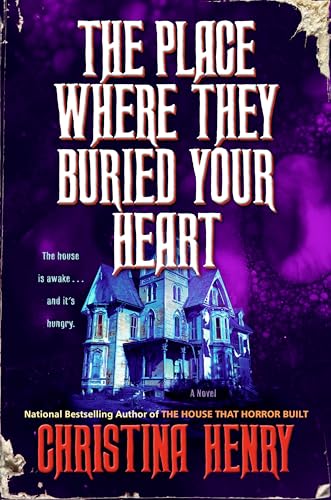
- The Place Where They Buried Your Heart
Christina Henrystandalone novel2025
similar bygrief and lossnorth americacontemporaryhorrordarkeerie+1 more
On an otherwise ordinary street in Chicago, there is a house. An abandoned house where, once upon a time, terrible things happened. The children who live on this block are told by their parents to stay away from that house. But of course, children don’t listen. Children think it’s fun to be scared, to dare each other to go inside. Jessie Campanelli did what many older sisters do and dared her little brother Paul. But unlike all the other kids who went inside that abandoned house, Paul didn’t return. His two friends, Jake and Richie, said that the house ate Paul. Of course adults didn’t believe that. Adults never believe what kids say. They thought someone kidnapped Paul, or otherwise hurt him. They thought Paul had disappeared in a way that was ordinary, explainable. The disappearance of her little brother broke Jessie’s family apart in ways that would never be repaired. Jessie grew up, had a child of her own, kept living on the same street where the house that ate her brother sat, crouched and waiting. And darkness seemed to spread out from that house, a darkness that was alive—alive and hungry.
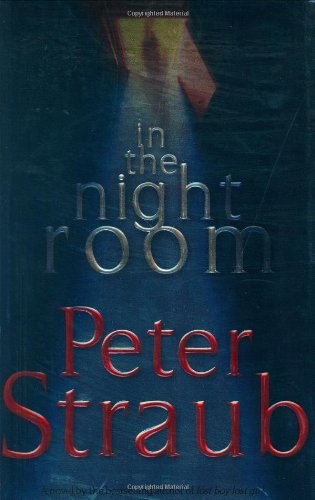
- In the Night Room
Peter Straubstandalone novel2004
similar bygrief and losscontemporaryhorrordarknorth americamadnesspsychological horror
In the Night Room is a 2004 horror-thriller novel by American author Peter Straub, a sequel to his 2003 book Lost Boy, Lost Girl. The work was first published in hardback on October 26, 2004, through Random House and it won the 2004 Bram Stoker Award for Novel. Straub encountered some difficulties while writing In the Night Room and had written several different passages for the work before growing bored with each version before writing it using the same technique he used for its predecessor in which he "reached down inside the book and turned it inside out."
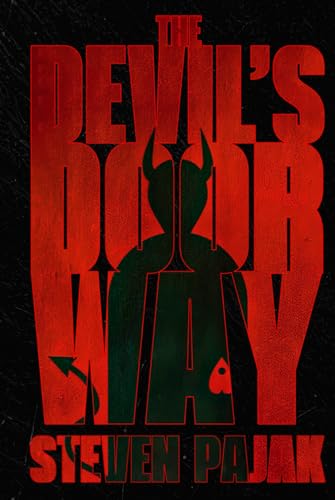
- The Devil's Doorway
Steven Pajakstandalone novel2024
similar bygrief and lossnorth americacontemporaryhorrordarkeeriepsychological horror+1 more
● "Kate Emerson returns to her childhood home in Chicago after her father's sudden stroke, only to awaken a malevolent force lurking within his unfinished painting. As the entity grows stronger, feeding off Kate's grief and despair, she must delve into the artwork's sinister history and confront the encroaching darkness that threatens to consume her." ― quoted from this book's Amazon product page as of 2024-08-20.
- Mister Magic
Kiersten Whitestandalone novel2023
similar bycontemporaryhorrordarkeerienorth americamadnesspsychological horror+1 more
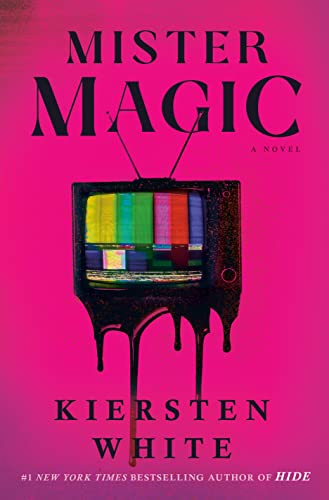
Mister Magic is a 2023 horror novel by American writer Kiersten White. Published by Del Rey, the novel centers upon the five survivors of a children's television series that got cancelled due to a tragic accident.
- The Red Tree
Caitlín R. Kiernanstandalone novel2009
similar bygrief and lossnorth americacontemporaryhorrordarkeeriemadnesspsychological horror
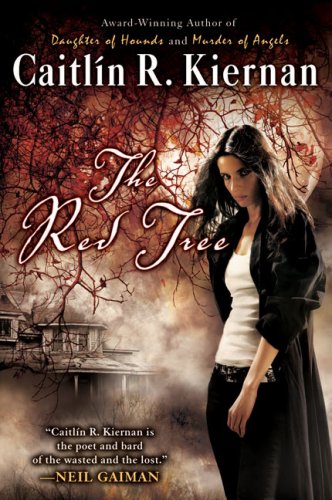
Sarah Crowe left Atlanta, and the remnants of a tumultuous relationship, to live alone in an old house in rural Rhode Island. Within its walls she discovers an unfinished manuscript written by the house's former tenant—a parapsychologist obsessed with the ancient oak growing on a desolate corner of the property. And as the gnarled tree takes root in her imagination, Sarah risks her health and her sanity to unearth a revelation planted centuries ago…
- The Between
Tananarive Duestandalone novel1995
similar bynorth americacontemporaryhorrordarkeeriemadnesspsychological horror
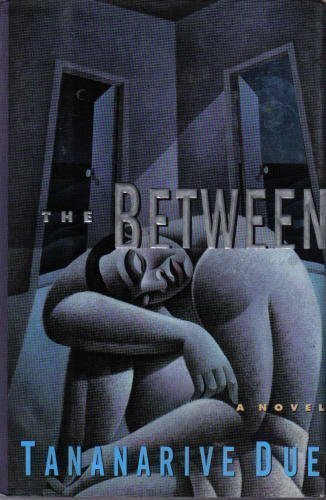
The Between is a 1995 horror novel by Tananarive Due and her debut novel. It follows a middle-class African-American husband and father who has lived with the belief that he cheated death as a child. When his family becomes the target of racist threats, he suffers a psychological breakdown intertwined with supernatural elements that blur the boundary between reality and death. It was nominated for the 1996 Bram Stoker Award.
- If You Could See Me Now
Peter Straubstandalone novel1976
similar bygrief and losscontemporaryhorrordarkeerienorth america
If You Could See Me Now is a horror novel by American author Peter Straub. It is his third novel and his second work of gothic or supernatural fiction. The book was published by Jonathan Cape in June 1977 – the same London publisher who published Julia in 1976. Coward, McCann & Geoghegan published an American edition also in June 1977.
- Spawn
Shaun Hutsonstandalone novel1983
similar bygrief and losscontemporaryhorrordarkeeriemadnesspsychological horror
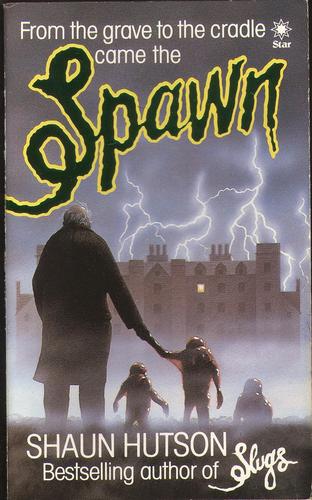
A burn victim, who accidentally caused the death by fire of his infant brother, begins work at a hospital where his assignments include disposing of aborted fetuses. His subsequent deterioration coincides with the escape of a homicidal maniac from a nearby prison.
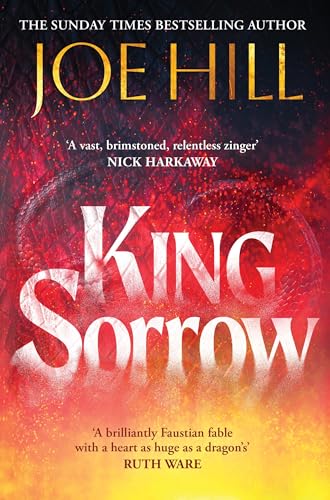
- King Sorrow
Joe Hillstandalone novel2025
similar bygrief and losscontemporaryhorrordarkeerienorth america
King Sorrow is a 2025 horror novel by American author Joe Hill, published by William Morrow and Company. Hill's first novel in nine years, it received positive reviews.
- November Mourns
Tom Piccirillistandalone novel2005
similar bygrief and lossnorth americacontemporaryhorrordarkeeriemadnesspsychological horror
Two years ago Shad Jenkins went to prison for assaulting his sister's attacker. Now he has returned to the southern mountain town of Moon Run Hollow, only to find that Megan is dead. No one knows how she died--or why she was found on Gospel Trail Road, a dirt path leading up to the gorge high above the Chatalaha River, where victims of yellow fever were once brought to die. Navigating a world filled with abnormal children and clandestine snake handlers, one that is slowly being poisoned by illegal moonshine, Shad must pierce the townsfolk's superstitions and terrible secrets to find out the truth about his sister's death. But the Blood Dreams he's suffered from since childhood have taken on an eerie urgency, revealing to Shad the nightmarish form of an unseen adversary. Plagued by the wraiths that haunt the hollow, Shad finds himself increasingly unsure of his own sanity as he begins to piece together what may have happened to his sister--and who exactly his enemy is....From the Paperback edition.
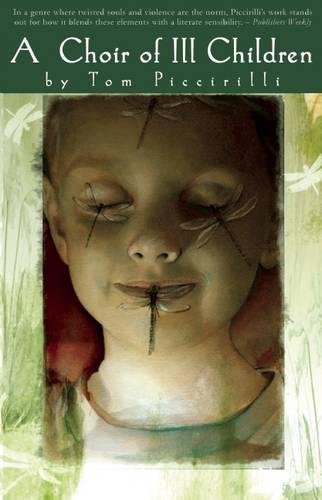
- A Choir of Ill Children
Tom Piccirillistandalone novel2003
similar bygrief and lossnorth americacontemporaryhorrordarkeerie+1 more
This lyrical tale of evil, loss, and redemption is a stunning addition to the Southern gothic tradition of Flannery O'Connor and Harry Crews.A Choir of Ill Children is the startling story of Kingdom Come, a decaying, swamp backwater that draws the lost, ill-fated, and damned. Since his mother's disappearance and his father's suicide, Thomas has cared for his three brothers--conjoined triplets with separate bodies but one shared brain--and the town's only industry, the Mill.Because of his family's prominence, Thomas is feared and respected by the superstitious swamp folk. Granny witches cast hexes while Thomas's childhood sweetheart drifts through his life like a vengeful ghost and his best friend, a reverend suffering from the power of tongues, is overcome with this curse as he tries to warn of impending menace. All Thomas learns is that "the carnival is coming."Torn by responsibility and rage, Thomas must face his tormented past as well as the mysterious forces surging toward the town he loves and despises.From the Paperback edition.