More like Shadow Code
anchored on:superherocontemporaryscience fiction
but
- Renegades (Marissa Meyer)
series3 books2017
similar bysuperheroidentitytensescience fictionour worldyoung adult+3 more
Renegades is set in Gatlon City after a civil war between the superheroic Renegades and the villainous Anarchists, and follows Nova, a young woman with the power to put people to sleep by touch, as she infiltrates the Renegades as a spy for her uncle's Anarchists and falls for Adrian, the adopted son of the Renegades' leaders. Marissa Meyer's trilogy, continuing through Archenemies and Supernova, plays the two factions' history against the leads' divided loyalties; Meyer has said she doesn't plan to extend the series further.
- WWW Trilogy
series3 books2009
similar bycontemporaryscience fictionour worldnorth americaartificial intelligence+3 more
The WWW Trilogy is a trilogy of science-fiction novels by Canadian science fiction author Robert J. Sawyer. The first book, Wake, was originally serialized in four parts in Analog Science Fiction and Fact from November 2008 to March 2009, published in book form through Ace on April 7, 2009, and was followed by the second book, Watch, on April 6, 2010. Wonder was published in 2011.
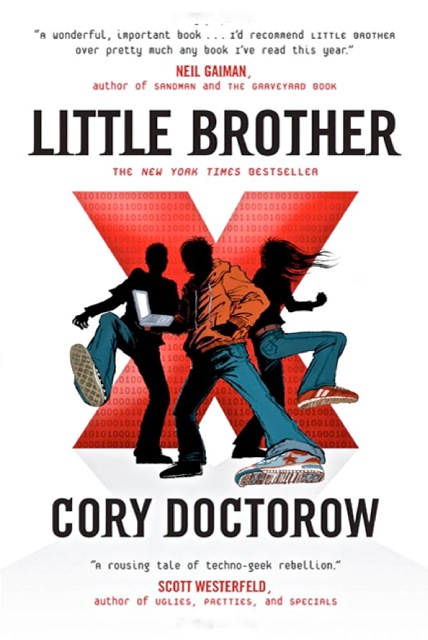
- Little Brother
series7 books2008
similar bysurveillancetensecontemporaryscience fictionnorth america+2 more
Cory Doctorow's Little Brother follows Marcus, a San Francisco teenager who builds a covert mesh network, the Xnet, to organize resistance after the Department of Homeland Security uses a terrorist attack as pretext for mass surveillance and civil-rights violations. Homeland continues Marcus's fight years later, and Attack Surface completes the trilogy; a companion story, 'Lawful Interception,' and other short pieces extend the same near-future world. Throughout, the series doubles as a working explanation of the surveillance and cryptography tools its characters use.
- Airhead
series3 books2008
similar bycontemporaryidentityscience fictionnorth americayoung adult+2 more
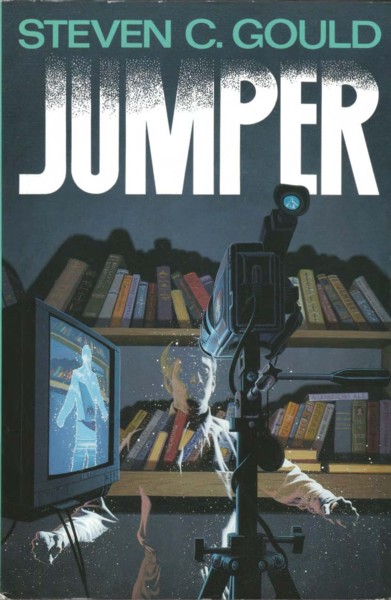
- Jumper
series6 books1992
similar bycontemporaryadventuroustensescience fiction+4 more
Jumper follows David Rice, a teenager who discovers he can teleport anywhere he's been and uses the power to escape an abusive home, only to find that ability alone doesn't solve the harder problems of finding his absent mother, building an honest relationship, or staying off the radar of people who'd exploit him. Steven Gould's series continues across Reflex, Impulse, and Exo, later following his and his wife's daughter as a second-generation jumper. A 2008 film loosely adapted the first novel.
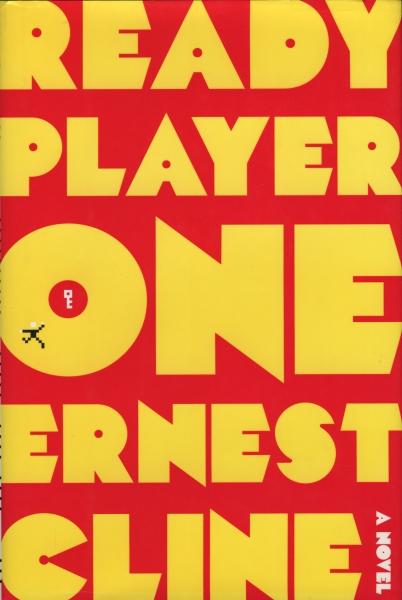
- Ready Player One
series3 books2011
similar byadventurousscience fiction+5 more
Ernest Cline's Ready Player One (2011) is set in a near-future dystopia where much of humanity escapes into the OASIS, a vast virtual-reality universe, and follows teenager Wade Watts as he chases an Easter egg hidden by the OASIS's late creator in a puzzle-based hunt worth a fortune. The 2020 sequel, Ready Player Two, picks up after Wade has gained control of the OASIS and follows him and his friends into a new quest built around a brain-computer interface the creator left behind.
- Kairos
series11 books1962
completed
similar byscience fictionyoung adult+3 more
The Time Quintet is a science fantasy series of five young adult novels written by American author Madeleine L'Engle and made up of A Wrinkle in Time (1962), A Wind in the Door (1973), A Swiftly Tilting Planet (1978), Many Waters (1986), and An Acceptable Time (1989).
- Southern Reach Trilogy
series4 books2014
similar bycontemporaryscience fictionour world+4 more
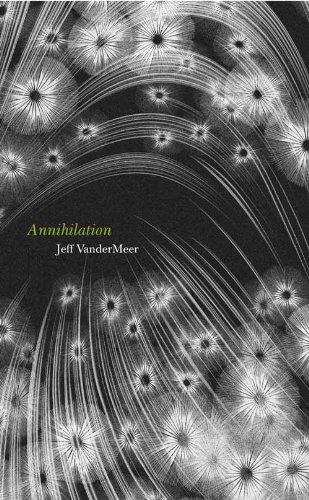
The Southern Reach Series is a series of novels by the American author Jeff VanderMeer first published in 2014—Annihilation, Authority, Acceptance, and Absolution. The series takes its name from the secret agency that is central to the plot. In 2013, Paramount Pictures bought the movie rights for the series, and a film adaptation of Annihilation was made with Alex Garland as writer-director. The film was released in 2018. The most recent book in the series, Absolution, was released on 22 October 2024.
- Divergent
series10 books2011
similar byidentitytensescience fictionnorth americayoung adult
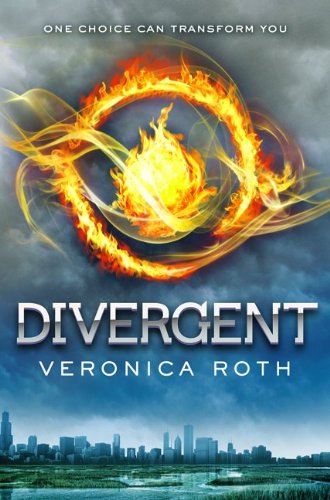
Divergent, also known as The Divergent Series, is a series of young adult dystopian novels by American novelist Veronica Roth set in a post-apocalyptic dystopian Chicago. The trilogy consists of Divergent (2011), Insurgent (2012), and Allegiant (2013). A related book, Four (2014), presents a series of short stories told from the perspective of one of the trilogy's characters, the male love interest Tobias. A later short story, We Can Be Mended (2018), serves as an epilogue five years after the events of the trilogy, again from Tobias/Four's perspective.
- The Missing
series10 books2008
similar byidentitycontemporaryscience fictionnorth americayoung adult+3 more
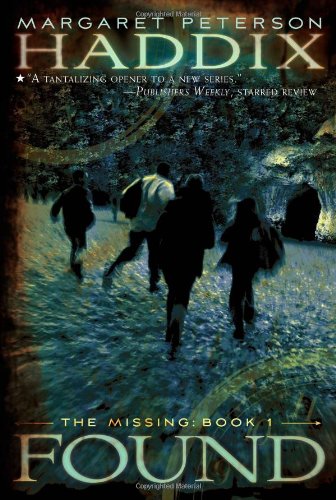
The Missing is a series of fictional young-adult novels written by Margaret Peterson Haddix. It tells the story of famous children from history stolen by futuristic time travelers from their place in time and accidentally sent to the 21st century as babies. They are then adopted by families in the 21st century. Because Jonah is one of the stolen children, he, along with his non-adopted sister Katherine, must help return the missing kids to their rightful places in history and fix time before it is destroyed. The first book in the series, Found, was published on April 22, 2008. The series continued with book titles Sent, Sabotaged, Torn, Caught, Risked, and Revealed. The eighth and final book, Redeemed, was released on September 8, 2015. There are also two ebook short stories, Sought and Rescued . Haddix originally intended the series to consist of only seven books. However, she stated that she had trouble closing out the series in seven books; leading to her decision to write Redeemed.
- Marvel Universe
universe492 books1967
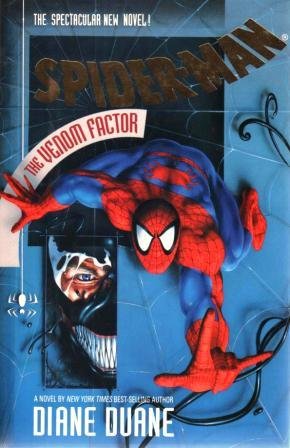
Start hereThe Venom Factor · Start here
similar bysuperherocontemporary+2 more
Look up. Somewhere over the rooftops a kid in red-and-blue is swinging late to a job he can't afford to lose, an old soldier is arguing with a billionaire in a flying suit, and a team of the hunted are teaching frightened children how not to hate. This is the world outside your window with the volume turned up — the Marvel Universe, the four-color continuity of the comics rendered in prose, where the fantastic wears a human face and the rent still comes due at the end of the month. The shelf runs wide and it runs deep. These are tie-in novels, decades of them across several publishing eras, sorted by the hero on the spine: Spider-Man and the X-Men carry the heaviest shelves, with Iron Man, Captain America, the Avengers, the Hulk, Doctor Strange, Black Panther, and the Guardians of the Galaxy holding their own ground. Prose hands who know the material — Peter David, Greg Cox, Keith R. A. DeCandido, Christopher Golden, Alex Irvine, among many others — trade off across single-character adventures, shared crossovers, and thick original anthologies that hand a dozen writers a single hero for an afternoon. Continuity is generous rather than strict: threads connect, the city is always the same city, but each book largely stands on its own two feet. What sets this world apart is the person under the mask — the power is the easy part; the marriage, the grief, the guilt, the bad day at work are the story. Newcomers shouldn't hunt for a first volume, because there isn't one. Start with the hero you already love: a Spider-Man or X-Men novel is the natural front door, and the multi-author anthologies are a fast way to sample many voices at once. Pull a thread that speaks to you and follow it in; the rest of the world is always right next door.
- Reckoners
series6 books2013
similar byadventuroustensesuperheroscience fictionnorth americayoung adult+1 more
The Reckoners is a series of young adult superhero novels written by American author Brandon Sanderson. The series consists of Steelheart (2013), Firefight (2015), Calamity (2016) and Lux (2021). The series depicts a post-apocalyptic world in which the appearance of an orbiting cosmic phenomenon known as Calamity has given random people superhuman powers in apparent defiance of known physical laws, turning them into "Epics". These Epics prey upon or enslave the rest of humanity, causing the collapse of traditional governments. One young man orphaned by a High Epic joins a group that is killing Epics.
- Richard Forthrast
series2 books2011
similar byscience fictionour worldnorth america+4 more
Neal Stephenson's Richard 'Dodge' Forthrast novels open with Reamde, a globe-spanning thriller that starts when ransomware inside an MMORPG economy pulls Richard's extended family into a real-world hostage crisis involving hackers, jihadists and Russian mobsters. The sequel Fall; or, Dodge in Hell shifts registers entirely, following Richard's digitally preserved mind after death into an afterlife simulation built from his scanned brain. The two books share a protagonist and family but differ sharply in genre and scale.
- The Blue Ant Trilogy
series3 books2003
similar bycontemporarysurveillancescience fiction+3 more
Hubertus Bigend is a fictional character appearing in the third trilogy of novels of science fiction and literary author William Gibson. Bigend is the antihero of Gibson's Pattern Recognition (2003), Spook Country (2007) and Zero History (2010). In an interview Gibson says "I've always had a sense of Bigend as someone who presents himself as though he knows what's going on, but who in fact doesn't. It's just my sense of the subtext of the character: he's bullshitting himself, at the same time as he's bullshitting all of us."
- The Heroic Adventures of Kate
series3 books1990
similar bycontemporaryadventurousour world+4 more
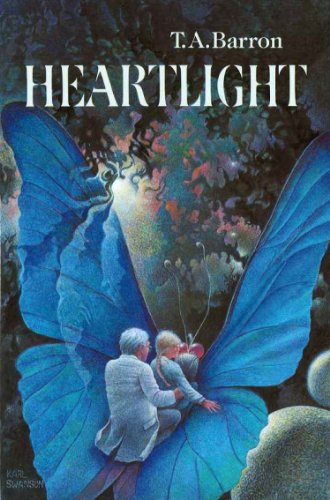
T. A. Barron links three standalone novels around a resourceful girl named Kate confronting environmental threats through fantastical means. In Heartlight, Kate and her inventor grandfather race across space to save a dying sun; in The Ancient One, she travels five centuries into the past to defend an old-growth forest from the destructive creature Gashra. The Merlin Effect completes the loosely connected set, published together as the omnibus The Heartlight Saga.
- We Could Be Heroes
Mike Chenstandalone novel2021
similar bycontemporarysuperheroidentityscience fictionour world+2 more
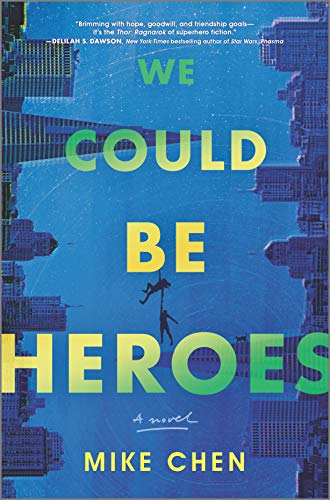
"An extraordinary and emotional adventure about unlikely friends and the power of choosing who you want to be... Jamie woke up in an empty apartment with no memory and only a few clues to his identity, but with the ability to read and erase other people's memories - a power he uses to hold up banks to buy coffee, cat food and books. Zoe is also searching for her past, and using her abilities of speed and strength... to deliver fast food. And she'll occasionally put on a cool suit and beat up bad guys, if she feels like it. When the archrivals meet in a memory-loss support group, they realize the only way to reveal their hidden pasts might be through each other. As they uncover an ongoing threat, suddenly much more is at stake than their fragile friendship. With countless people at risk, Zoe and Jamie will have to recognize that sometimes being a hero starts with trusting someone else - and yourself."--Publisher.
- DC Universe
universe542 books1942
Start hereIt's Superman! · Start here
similar bycontemporarysuperhero+1 more
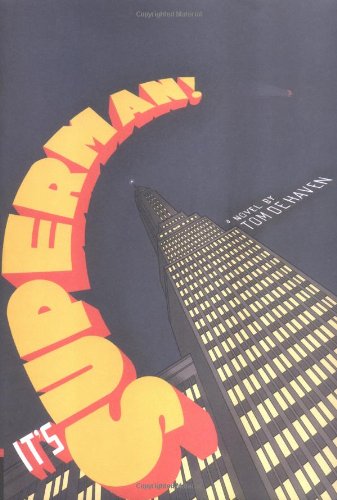
Above Metropolis a figure holds the sun at his back; across the bay, Gotham keeps its secrets in the dark. The DC Universe is the modern world's pantheon — a shared mythology where gods wear capes and cities have consciences, raised up across generations by hundreds of hands. It began as four-color comics, but it long ago outgrew the panel: here it lives in prose, where the same familiar heroes are given room to think, to grieve, and to be afraid. What this catalog holds is the book side of that mythology. There are original novels and novelizations orbiting the great figures — Batman and the noir of Gotham, Superman and the bright promise of Metropolis, Wonder Woman and her older, sterner gods — and the team-ups where they stand together as the Justice League. Younger readers get Smallville, the story of a farm boy before the cape, in both middle-grade and older editions, while a run of movie adaptations translates the screen back to the page. Set a little apart, at the universe's shadowed edge, is Neil Gaiman's Sandman — a literary dream-cycle about the lord of stories himself, as much folklore and myth as superheroics. Expect sprawl, and expect reinvention: this is a world its many authors have torn down and rebuilt more than once. The pleasure is the collision of registers — aspirational, sunlit heroism against street-level crime and real tragedy, archetypes as old as legend wearing very new clothes. There is no single thread to pull first; you enter by the door of whichever hero calls to you. Come for grim detective work through Batman and Gotham, for hope and wonder through Superman, or for something stranger and quieter through Sandman, which nearly stands on its own. Publication order is a fine default, but the honest truth is that any of these figures is a beginning.
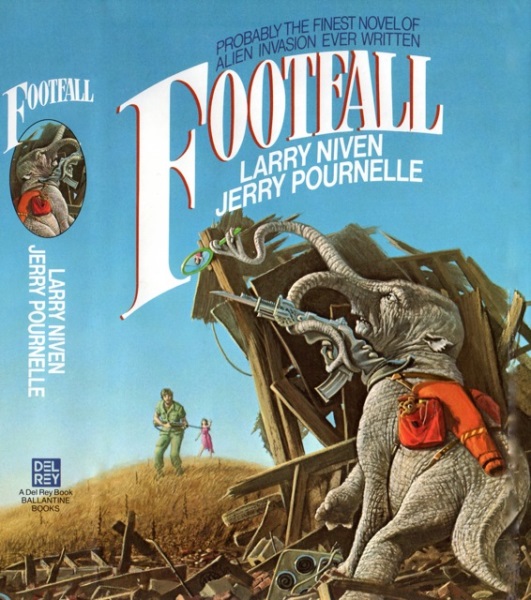
- Footfall
Larry Niven & Jerry Pournellestandalone novel1985
similar bycontemporarytensescience fictionour worldnorth america+1 more
When aliens travel to Earth from Alpha Centauri, differences between alien and human psychology result in an unprovoked invasion, and the resulting resistance results in the aliens' use of a devastating weapon.
- The Merchant Princes
series14 books2004
similar bycontemporarytensescience fictionour world+1 more
The Merchant Princes is a science fantasy and alternate history series of nine novels by British writer Charles Stross. In the series, there exist a number of parallel worlds, all of which are on the same geographical Earth but with different societies at different points of development. Members of a certain bloodline can travel between these worlds along with their immediate possessions. The series largely follows Miriam Beckstein, a technology journalist raised in a familiar "normal" Earth, who discovers she was born in a parallel world and is a member of this bloodline. She quickly becomes entangled in political maneuvering and assassination plots with her estranged family. Miriam uses modern technology and investigative journalism to attempt to stay a step ahead.