More like Shadow Fall
anchored on:science fictionsurvivalfar futureyoung adultspace operadystopia+5 more
but
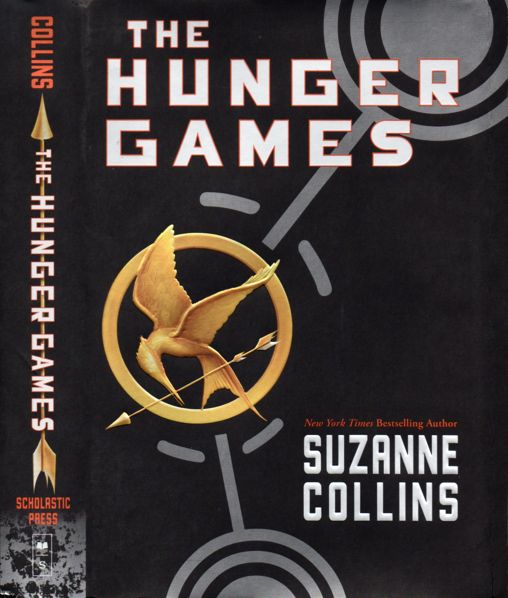
- The Hunger Games
series3 books2008
part of The Hunger Games Universe
similar byfar futuredarktensescience fictionrebellion and revolutionsurvivalyoung adultdystopia+1 more
The Hunger Games is a series of young adult dystopian novels written by American author Suzanne Collins. The series consists of a trilogy that follows teenage protagonist Katniss Everdeen, as well as two prequels. The Hunger Games universe is a dystopia set in Panem, a post-apocalyptic North American country consisting of the wealthy Capitol and 12 districts in varying states of poverty. As punishment for rebellion, the Capitol hosts an annual battle royale competition called The Hunger Games. Each of the 12 districts must send two children between the ages of 12 and 18 to participate, and the last surviving child is dubbed the victor.
- The Hunger Games Universe
universe5 books2008
Start hereThe Hunger Games · Start here
similar byfar futuredarktensescience fictionrebellion and revolutionsurvivalyoung adultdystopia+2 more
Panem, they call it now — a nation raised on the drowned bones of North America, a glittering Capitol ringed by twelve districts it once starved into obedience. Every year the Capitol collects its debt in children: two tributes from each district, drawn by lottery, dropped into an engineered arena, and made to kill one another on live television while the whole country is required to watch. This is the Hunger Games — entertainment, punishment, and government at once. Suzanne Collins tells it in a compact, unified body of work. The founding trilogy — The Hunger Games, Catching Fire, and Mockingjay — follows Katniss Everdeen, a girl from the coal-mining District 12 who volunteers in her sister's place and becomes something the Capitol never scripted. Two prequels reach back into the same machinery: The Ballad of Songbirds and Snakes traces a young Coriolanus Snow long before he is President, and Sunrise on the Reaping returns to District 12 a generation ahead of Katniss. Begin with the trilogy, in order — it is Katniss's voice, close and present-tense, that makes Panem breathe, and the prequels land hardest once you know how her story ends. Beneath the spectacle sits one steady, uncomfortable question: who profits when we agree to look away.
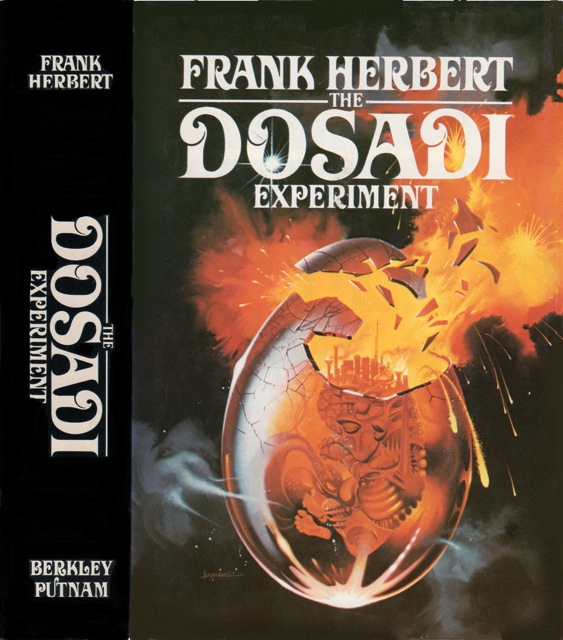
- The Dosadi Experiment
Frank Herbertstandalone novel1977
similar byfar futuretensescience fictionsurvivalpolitical intrigueother star systemsspace opera+2 more
From the flaps of the Berkley Putnam first edition: "In his first new work of science fiction since the best-selling Children of Dune, Frank Herbert returns to his world of Whipping Star, and involves Jorj X. McKie, Saboteur Extraordinary, in a new intrigue. In Whipping Star, McKie discovered that some of the stars in the universe are actually intelligent, super-powerful beings, and was able to befriend one of them, the star Alcyone - affectionately known as Fannie Mae. As The Dosadi Experiment opens, McKie is assigned to investigate the planet Dosadi, which is isolated from the rest of the galaxy by a "god-wall," a barrier set up by one of the intelligent stars. Dosadi is rumored to be an experimental planet, and the experimenters are the froglike Gowachin, whose culture is founded upon a strange legal system in which McKie is the only human ever trained. He learns that humans and Gowachin have been placed on Dosadi, without their consent, for an experiment that could last centuries: an experiment in extreme overcrowding. But this monstrous plot is apparently out of control, and it seems the Gowachin may be prepared to destroy Dosadi rather than expose its secret, thus breaking the peace among the races, and starting the first interstellar war. But this is just the beginning. When McKie finally reaches Dosadi he discovers that the Dosadis have taken control of their own evolution and produced a competitive, highly evolved elite, of both humans and Gowachin, who have been able to extrapolate the existence of a universe beyond the god-wall and hate whoever has imprisoned them like this. They plan to break out and avenge themselves on the galaxy."
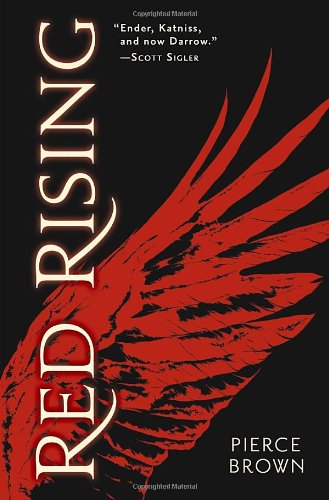
- Red Rising
series13 books2014
similar byfar futuretensedarkscience fictionrebellion and revolutiondystopiaspace opera+2 more
Pierce Brown's Red Rising follows Darrow, a lowborn 'Red' miner on a colonized Mars who discovers his caste's suffering is a lie sustained by the ruling Gold elite, and infiltrates their ranks to destroy the system from within. The series expands from a single-protagonist revenge story into a sprawling multi-book war across the solar system, eventually following an ensemble cast beyond Darrow alone, and combines Roman-inspired factional politics with brutal, competition-driven action set pieces.
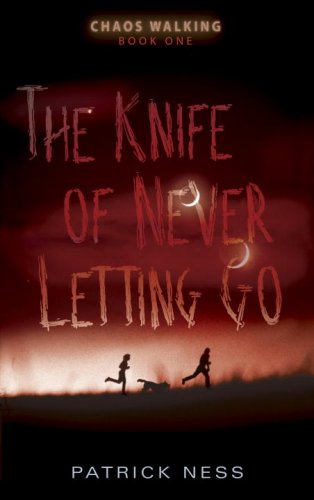
- Chaos Walking
series5 books2008
similar byfar futuretensedarkscience fictionother star systemsdystopiayoung adult+3 more
Chaos Walking is a young adult science fiction series written by American-British novelist Patrick Ness. It is set in a dystopian world where all living creatures can hear each other's thoughts in a stream of images, words, and sounds called Noise. The series is named after a line in the first book: "The Noise is a man unfiltered, and without a filter, a man is just chaos walking." The series consists of a trilogy of novels and three short stories.
- Dune Universe
universe78 books1963
Start hereDune · Start here
similar byfar futurescience fictionpolitical intrigueother star systemsspace opera+2 more
Arrakis. Dune. The desert planet, where empire runs on a single substance: the spice melange, which folds space, prolongs life, and unlocks prescience, and which exists nowhere else in the known universe. Frank Herbert's saga is a meditation dressed as an adventure — feudal houses and a secret sisterhood, engineered messiahs and the patient ecology of a world without water, all turning on the terrible gravity of who commands the spice. It reads like scripture and schemes like a war room, ten thousand years hence, among people who have outlawed the thinking machine and made instruments of themselves instead. At its heart stand Herbert's original six — Dune, Dune Messiah, Children of Dune, God Emperor of Dune, Heretics of Dune, Chapterhouse: Dune — a single deepening arc across millennia, arguing the whole way between prophecy and free will. Around that spine his son Brian Herbert and Kevin J. Anderson have raised a vast prequel architecture: Prelude to Dune, tracing the great houses a generation before Paul; Legends of Dune, reaching back to the crusade that broke the machines; the Schools of Dune cycle on the founding of Bene Gesserit, Mentat, and Navigator; the Caladan Trilogy and Heroes of Dune filling years the originals left in shadow. Many hands, dozens of volumes, one desert. What sets Dune apart is its refusal of the simple: religion is manufactured, heroes are hazards, and the sand itself — worm, water, ecology — acts as a political power. Begin where the universe did, with Frank Herbert's Dune (1965), and read the original six in order; you need nothing else to feel the full weight. The prequels are a country to explore afterward, taken by era. Beginnings are delicate times.
- Dune
series20 books1963
part of Dune Universe
similar byfar futurescience fictionpolitical intrigueother star systemsspace opera+2 more
Frank Herbert's Dune Chronicles opens with 1965's Dune, set on the desert planet Arrakis where House Atreides takes control of the only source of the vital spice melange and young Paul Atreides is pulled into a struggle over its politics and religion. Herbert carried the story forward across five further novels — Dune Messiah, Children of Dune, God Emperor of Dune, Heretics of Dune, and Chapterhouse: Dune — following Paul's line over the following millennia, before Brian Herbert and Kevin J. Anderson later extended the saga. Many other editions of these six novels are omnibus and box-set repackagings rather than separate stories.
- When the Sleeper Wakes
H. G. Wellsstandalone novel1899
similar byfar futuredarktensescience fictionpolitical intriguerebellion and revolutiondystopia
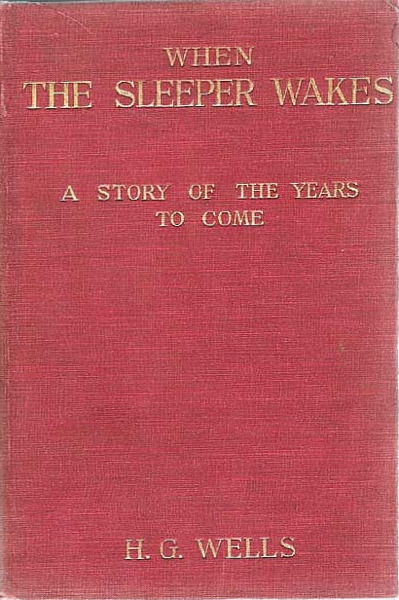
Graham, an insomniac Englishman in 1890s London, takes a course of sleep-inducing drugs and falls into a coma that lasts two centuries. He wakes in the year 2100 to find his investments have compounded, through a ruling body called the White Council, into effective ownership of most of the world's wealth and power, making him, on paper, humanity's master, and in practice, its prisoner, held under guard while the Council governs in his name. A rebel faction led by a man named Ostrog frees him, hoping to use his symbolic authority to spark an uprising against the Council. An early H. G. Wells dystopia about inherited power and manufactured consent.
- The Sardonyx Net
Elizabeth A. Lynnstandalone novel1981
similar byfar futuredarktensescience fictionpolitical intriguerebellion and revolutionother star systemsspace opera
From the flaps of the Putnam first edition: "The Sardonyx Net, also known as the Yago Net: a vast starship owned and operated by the Family Yago, captained by Zed Yago. It visits all planets in the Sardonyx Sector of space, picking up special cargo - convicted felons who will serve our their terms as dorazine-drugged slaves to the wealthy land and factory owners on the planet Chabad. But often their ordeal begins even before the are sold, for Zed Yago is a man with a taste for sadism. The slave trade is the most lucrative business on Chabad. It is controlled totally by the Family Yago, headed by Zed's older sister Rhani, who is the only woman Zed has truly loved. Rhani is a shrewd businesswoman with only one weakness: a heart as compassionate as her brother's is perverse. While the authorities of the Sector's other planets look away, the Families of Chabad purchase dorazine from representatives of a secret, unlocatable source known as The Pharmacy, and use it to keep their slave-based economy healthy. Not one protests, for Chabad's illegal and inhumane activities keep prisons empty, criminals under control, and Chabad's valuable exports flowing. Despite constant underground revolutionary activity, the situation has maintained. But he long-lived stability of this sanctioned trade in illegal drugs and human beings is now threatened by two unexpected events: a worsening shortage of dorazine which is sparking more rebellion, and the arrival of Starcaptain Dana Ikoro. Dana, as drug smuggler, is captured by the Net and delivered from Zed's hands to Rhani. He is to be her bodyguard, but becomes much more. Against this incredible background, Lynn tells an irresistible story of adventure, intrigue, revolution and romance. It is a story of people snared in a net of warring passions, a net which will prove to be even stronger than the power of the Sardonyx Net."
- Shadow Fall
series3 books2016
similar bytensefar futurerebellion and revolutionsurvivaldystopiascience fictionyoung adult+4 more
- The Status Civilization
Robert Sheckleystandalone novel1960
similar byfar futuredarktensescience fictionsurvivalother star systemsdystopia
"Will Barrent had no memory of his crime ... but he found himself shipped across space to a brutal prison-planet. On Omega, his only chance to advance himself -- and stay alive -- is to commit an endless series of violent crimes. The average inmate's life expectancy from time of arrival is three years. Can Barrett survive, escape, and return to Earth to clear his name?" - From the cover of the 2007 Wildside paperback edition.
- Company Wars
series7 books1981
part of Alliance-Union Universe
similar byfar futuretensescience fictionpolitical intriguespace opera+2 more
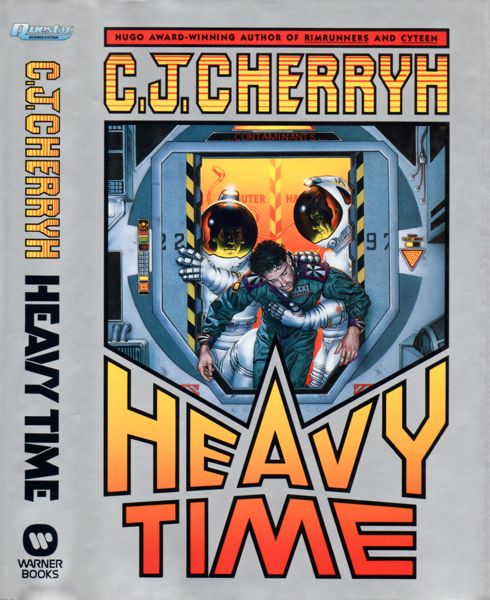
Company Wars gathers the novels C. J. Cherryh set during the breakaway conflict between Earth's colonial Company and the newly independent Union, within her wider Alliance-Union future history. Anchored by the Hugo Award-winning Downbelow Station, the books follow different ships, stations, and crews caught on either side, from merchanter traders to military spacers, rather than a single continuing cast. Read in any order, they build up a picture of the political and economic pressure that reshapes Cherryh's larger Alliance-Union universe.
- Storm Thief
Chris Woodingstandalone novel2006
similar byfar futuresurvivaldarktensescience fictionrebellion and revolutionyoung adultdystopia
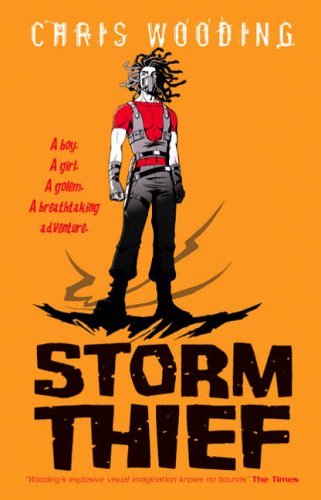
Storm Thief is a 2006 dystopian science-fiction novel written by Chris Wooding and published by Scholastic Books. It also has elements of the Gothic, tech-punk, and alternate history genres. It is set on a futuristic island-city known as Orokos, which is plagued by deadly "probability storms." It features a group of outcasts on the run, a mysterious artifact, a golem with a shadowed past, an underground resistance movement, a corrupt government, the downfall of two civilizations, and a seabird. The novel displays a number of literary themes, including fate, free will, and redemption. It received recognition as a 2007 Best Book for Young Adults from the American Library Association.
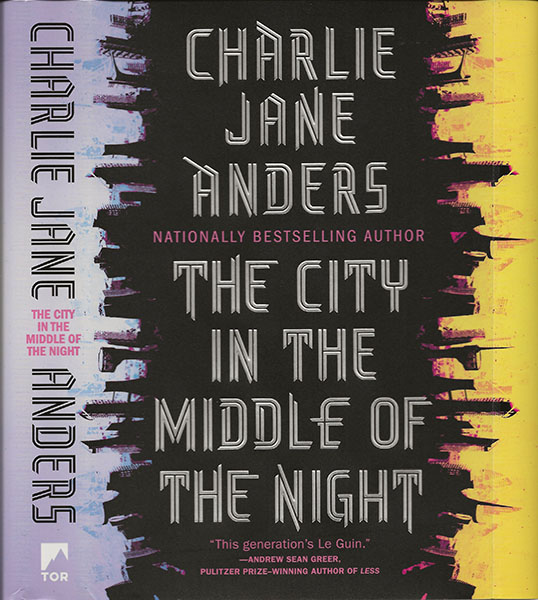
- The City in the Middle of the Night
Charlie Jane Andersstandalone novel2019
similar byfar futuredarktensescience fictionsurvivalother star systemsdystopia+1 more
The City In the Middle of the Night is a 2019 climate-fiction novel by Charlie Jane Anders. It is set on a tidally locked planet, where human life, surrounded by hostile alien life, is mostly divided between two archetypically different urban sites. The main story focuses on two characters whose actions take them outside of the cities.
- The Kindom Trilogy
series3 books2023
similar byfar futuredarktensescience fictionpolitical intriguerebellion and revolutionother star systemsspace opera
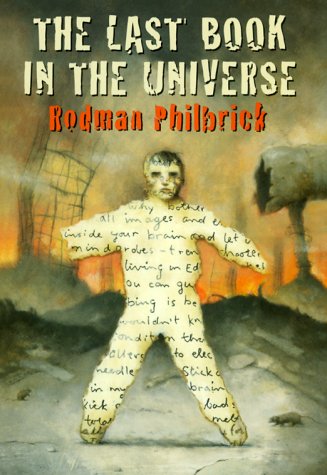
- The Last Book in the Universe
Rodman Philbrickstandalone novel2000
similar byfar futuredarktensescience fictionsurvivalyoung adultfirst persondystopia
The Last Book in the Universe is a 2000 post-apocalyptic science fiction novel by Rodman Philbrick. Set in a cyberpunk dystopia, its protagonist and narrator is a teenage boy named Spaz who has epilepsy.
- Tunnel in the Sky
Robert A. Heinleinstandalone novel1955
similar byfar futuresurvivaltensescience fictionyoung adultother star systems
As the final test of a survivalist/explorer class, teenagers are dumped on an alien planet to use their skills while awaiting pickup. But something has gone wrong, and they find they are on their own.
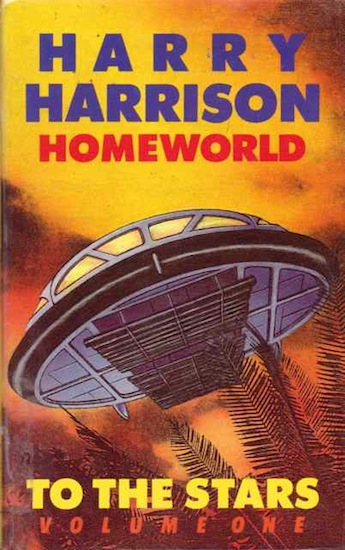
- To the Stars (Harrison)
series3 books1980
completed
similar bytensefar futurescience fictionrebellion and revolutionother star systemsdystopia+4 more
The To the Stars trilogy is a series of science fiction novels by Harry Harrison, first published in 1980 (Homeworld) and 1981. The three books were re-published in an omnibus edition in 1981.
- Crash
Guy Haleystandalone novel2013
similar byfar futuredarktensescience fictionsurvivalother star systemsspace operadystopia+2 more
"The 0.01% have decided Earth is history. Dariusz is an engineer whose career ended years ago: now, a man he's never met sits in a bar that doesn't exist and offers him a fresh start-- at a price. Cassandra-- 'Sand, ' to her friends-- is a space pilot, who itches to get her hands on the controls and actually fly a ship rather than watch computers do it for her. The 'Pointers'-- the elite 0.01% who control virtually all wealth-- have seen the limitations of a plundered Earth and set their eyes on the stars. And now Dariusz and Sand, and a half-million ambitious men and women just like them, are sent out to extend the Pointers' and the Market's influence across the galaxy. But the colony fleet is sabotaged and the ESS Adam Mickiewicz crashes, on an alien planet where one hemisphere is seared by perpetual daylight and the other shrouded in eternal night. The castaways have the chance to create society from scratch-- but the hostile planet-- or their own leaders-- may destroy them before they can even begin"--Page 4 of cover.
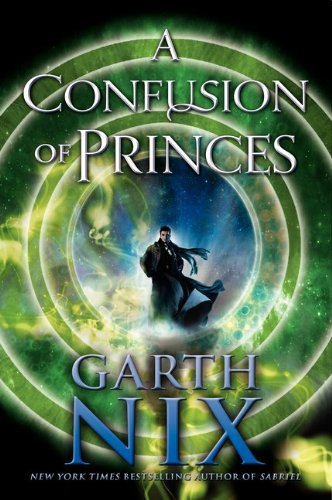
- Imperial Galaxy
series2 books2012
similar byfar futurescience fictionpolitical intrigueyoung adultother star systemsfirst personspace opera+1 more
Prince Khemri has spent his life as one of ten thousand princes bred and trained by a sprawling galactic empire, expecting eventual rule -- until he learns just how disposable princes actually are, and how routinely they're assassinated by their own siblings. Garth Nix's A Confusion of Princes follows Khemri through the empire's ruthless military, its secret intelligence service, and a deadly, decades-long competition to determine who might one day take the throne. It's a single, self-contained space opera rather than an ongoing series.
- Takeshi Kovacs
series3 books2002
similar byfar futuredarktensescience fictionother star systems+3 more
Takeshi Kovacs is a former elite soldier turned freelance troubleshooter in a future where human consciousness can be digitized and transferred between bodies, or sleeves, making death an inconvenience for those who can afford new ones. Richard Morgan's trilogy - Altered Carbon, Broken Angels, Woken Furies - moves Kovacs through noir-inflected mysteries on different worlds, using the resleeving premise to interrogate class, violence, and what, if anything, survives a person's original body. It became the basis for a Netflix series.
- This Gilded Abyss
series1 book2023
similar byfar futuresurvivaldarktensescience fictionother star systemsfirst person
- An Unkindness of Ghosts
Rivers Solomonstandalone novel2017
similar byfar futuredarktensescience fictionrebellion and revolutionfirst persondystopia+1 more
An Unkindness of Ghosts is a 2017 science fiction novel by Rivers Solomon, exploring the conjunction between structural racism and generation ships. Solomon's first book, it was published by Akashic Books.
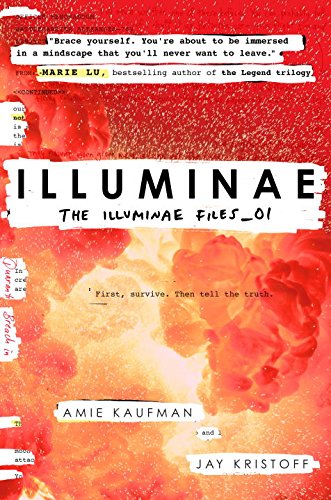
- The Illuminae Files
series4 books2015
similar byfar futuretensescience fictionsurvivalyoung adultspace opera+1 more