More like Shadow Killer
anchored on:science fictionnear futurecyberpunkbig city
but
- Sprawl Trilogy
series10 books1981
similar bynear futurebig cityscience fictiondarktensecyberpunk
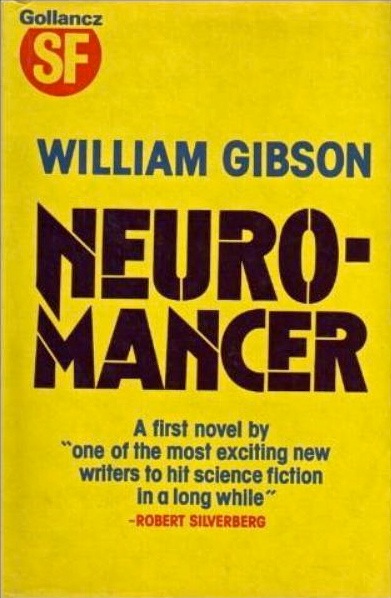
The Sprawl Trilogy is William Gibson's foundational cyberpunk sequence: Neuromancer (1984), in which hacker Case is drawn into a high-stakes heist alongside an artificial intelligence and a damaged ex-soldier, followed by Count Zero (1986) and Mona Lisa Overdrive (1988), which widen the same near-future world of corporate power and networked cyberspace to new characters. Johnny Mnemonic, an early short story set in the same fictional milieu, predates the novels and introduces the courier Molly Millions before her role in the trilogy. Together these works established much of cyberpunk's visual and thematic vocabulary.
- Blade Runner Universe
series6 books1968
similar bynear futurebig cityscience fictiondarkcyberpunk+1 more
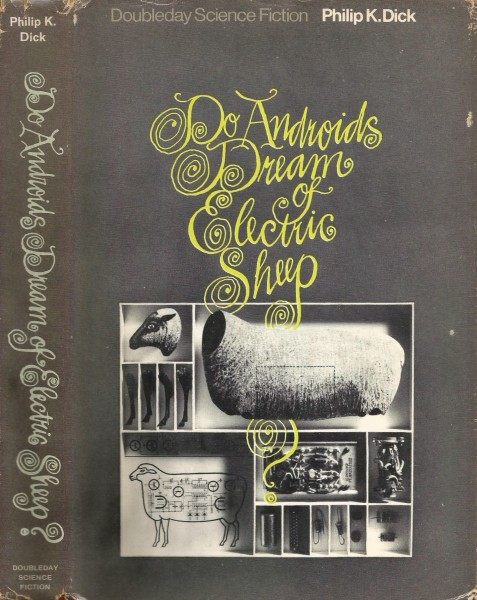
Philip K. Dick's 1968 novel Do Androids Dream of Electric Sheep? follows bounty hunter Rick Deckard as he tracks escaped androids through an irradiated, near-abandoned San Francisco, using the hunt to probe questions of empathy and what separates human from machine. The novel became the basis for Ridley Scott's 1982 film Blade Runner, and Marvel Comics later published an illustrated adaptation of that film. Together the two trace the story's path from prose original to screen and comic-page adaptation.
- The World Jones Made
Philip K. Dickstandalone novel1956
similar bynear futurescience fictiondarktense+1 more
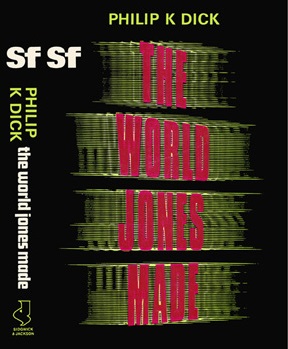
The World Jones Made is a 1956 science fiction novel by American writer Philip K. Dick, examining notions of precognition, humanity, and politics. It was first published by Ace Books as one half of Ace Double D-150, bound dos-à-dos with Agent of the Unknown by Margaret St. Clair.The story takes place after a nuclear war in which society is dominated by relativism, which rejects absolute truths and preaches tolerance as the highest principle. The mutant Floyd Jones, who can see into the future, plans to overthrow the system and colonise space. The story ends with the defeat of Jones, whose plans fail despite his ability to see the future due to the immutability of fate.
- Sakura: Intellectual Property
Paul Genesse, Patrick M. Tracy & Zachary Hillstandalone novel2019
similar byassassinsnear futurebig cityscience fictiontensecyberpunk+1 more
In the cyber-future of Japan, an android heavy-metal musician is hacked and has to fight against being turned into an assassin by a shadowy association who look to control the world.
- The Shockwave Rider
John Brunnerstandalone novel1975
similar bynear futurebig cityscience fictiondarktensecyberpunk
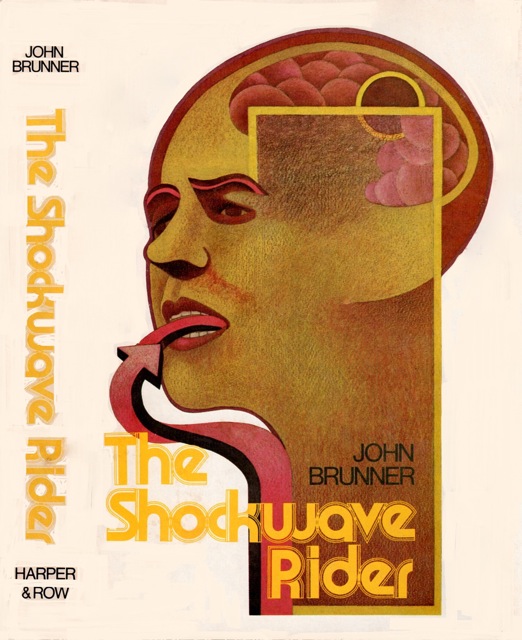
The Shockwave Rider is a science fiction novel by John Brunner, originally published in 1975. It is notable for its hero's use of computer hacking skills to escape pursuit in a dystopian future, and for the coining of the word "worm" to describe a program that propagates itself through a computer network. It also introduces the concept of a Delphi pool, perhaps derived from the RAND Corporation's Delphi method – a prediction market on world events which bears close resemblance to DARPA's controversial and cancelled Policy Analysis Market.
- Legend (Marie Lu)
series5 books2011
similar bytensenear futurescience fiction
Marie Lu's Legend follows two teenagers from opposite ends of a divided, war-torn future society — one a celebrated young military prodigy, the other a hunted fugitive — whose paths collide and gradually complicate what each believed about the system that shaped them. The story continues through Prodigy and Champion, with a fourth book, Rebel, added years after the original trilogy closed; Lu has cited the film Les Misérables among her inspirations for its shape.
- Bridge Trilogy
series4 books1990
similar bynear futurebig cityscience fictioncyberpunk+2 more
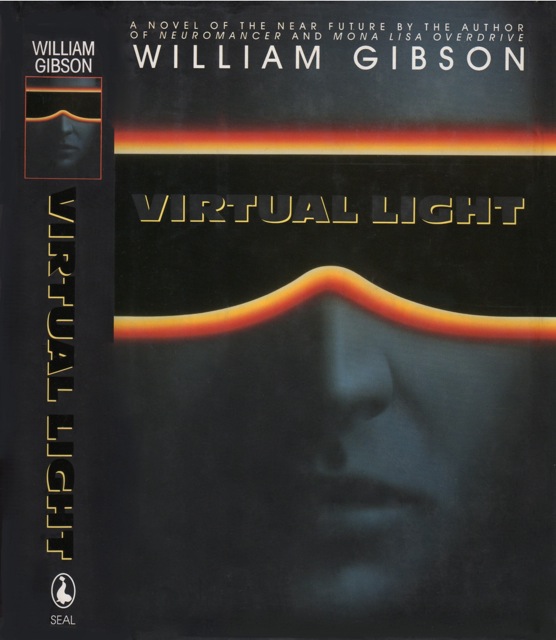
The Bridge trilogy is a series of novels by William Gibson, his second after the successful Sprawl trilogy. The trilogy comprises the novels Virtual Light (1993), Idoru (1996) and All Tomorrow's Parties (1999). A short story, "Skinner's Room", was originally composed for Visionary San Francisco, a 1990 museum exhibition exploring the future of San Francisco.
- The Supernaturalist
Eoin Colferstandalone novel2004
similar bynear futurebig cityscience fictiondarktensecyberpunk
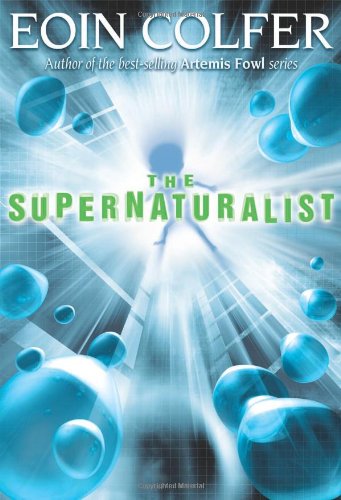
The Supernaturalist is a science fiction cyberpunk novel by Irish author Eoin Colfer. The book was influenced by film noir and other predecessors of the cyberpunk science fiction movement. Colfer has outlined plans for a sequel, Avernus.
- Budayeen
series13 books1973
completed
similar bynear futurebig cityscience fictiondarkcyberpunk+1 more
George Alec Effinger's Budayeen sequence reimagines the French Quarter of New Orleans as a 22nd-century red-light district in a future Middle Eastern city, where body modification has gone electronic: cybernetic 'moddies' and 'daddies' let people plug in new personalities and skills at will. Its hero, hustler-turned-investigator Marid Audran, works the Budayeen's back alleys across the novels When Gravity Fails, A Fire in the Sun, and The Exile Kiss. Budayeen Nights, published after Effinger's death, gathers his shorter fiction set in the same neon-lit quarter.
- Avery Cates
series22 books2007
similar bynear futurescience fictiondarktensecyberpunk+1 more
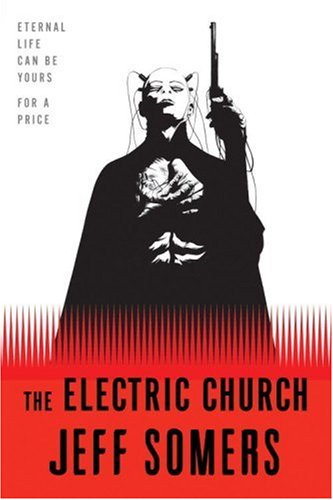
Avery Cates is set in a collapsed future New York ruled by a corrupt, cybernetically augmented security state, following a gun-for-hire navigating the city's violent underworld and its growing rebellion against System Security Force control. Jeff Somers' cyberpunk series, beginning with The Electric Church, follows Cates through escalating jobs and betrayals across six novels.
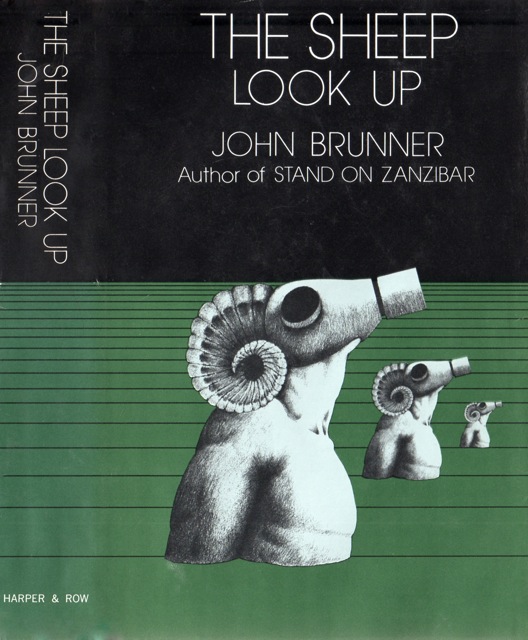
- The Sheep Look Up
John Brunnerstandalone novel1972
similar bynear futurebig cityscience fictiondark+1 more
The Sheep Look Up is a 1972 dystopian science fiction novel by British author John Brunner, dealing with the deterioration of the environment in the United States. It was nominated for the 1972 Nebula Award for Best Novel.
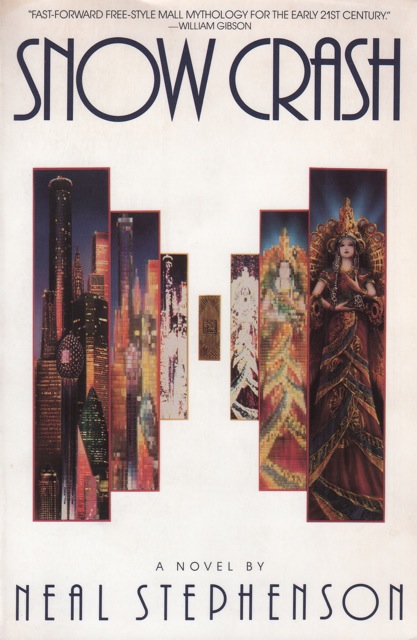
- Snow Crash
Neal Stephensonstandalone novel1992
similar bynear futurebig cityscience fictiontensecyberpunk
Snow Crash is a 1992 science fiction novel by Neal Stephenson. Like many of Stephenson's novels, its themes include history, linguistics, anthropology, archaeology, religion, computer science, politics, cryptography, memetics, and philosophy.
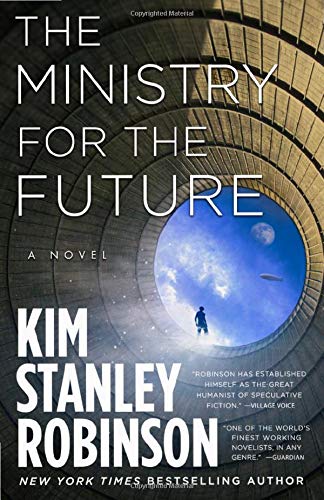
- The Ministry for the Future
Kim Stanley Robinsonstandalone novel2020
similar bynear futurescience fiction+2 more
The Ministry for the Future is a climate fiction novel by American science fiction writer Kim Stanley Robinson, published in 2020. Set in the near future, the novel follows a subsidiary body, established under the Paris Agreement, whose mission is to act as an advocate for the world's future generations of citizens as if their rights were as valid as the present generation's. While the ministry pursues various ambitious projects, the effects of climate change are determined to be the most consequential. The plot primarily follows Mary Murphy, the head of the titular Ministry for the Future, and Frank May, an American aid worker traumatized by experiencing a deadly heat wave in India. Many chapters are devoted to other characters' accounts of future events, as well as their ideas about ecology, economics, and other subjects.
- Make Room! Make Room!
Harry Harrisonstandalone novel1966
similar bynear futurebig cityscience fictiondarktense
Make Room! Make Room! is a 1966 science fiction novel written by Harry Harrison exploring the consequences of both unchecked population growth on society and the hoarding of resources by a wealthy minority. It was originally serialized in Impulse magazine.
- Moxyland
Lauren Beukesstandalone novel2008
similar bynear futurebig citydarktensescience fictioncyberpunk
Moxyland is a cyberpunk dystopian novel written by South African author, Lauren Beukes. The book was published in 2008.
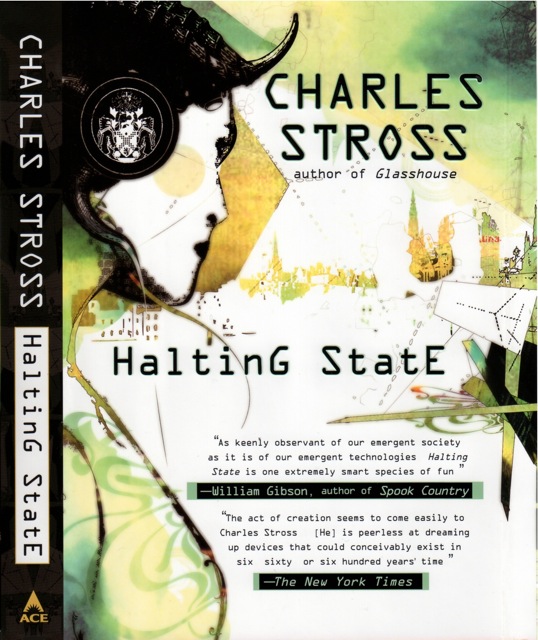
- Halting State
series2 books2007
similar bynear futurescience fictiontensecyberpunk+2 more
Charles Stross's Halting State opens as a near-future police procedural: a bank robbery inside a massively multiplayer online game turns out to mask a much larger cybercrime, investigated through shifting narrators using augmented-reality glasses and always-on networks. Its loose sequel, Rule 34, follows an Edinburgh police officer investigating a string of deaths linked by nothing but an obscure internet meme, in the same near-future Scotland. Both are standalone technothrillers connected by setting and tone rather than a continuing plot.
- Resurrection, Inc.
Kevin J. Andersonstandalone novel1988
similar bynear futurebig cityscience fictiondarktensecyberpunk
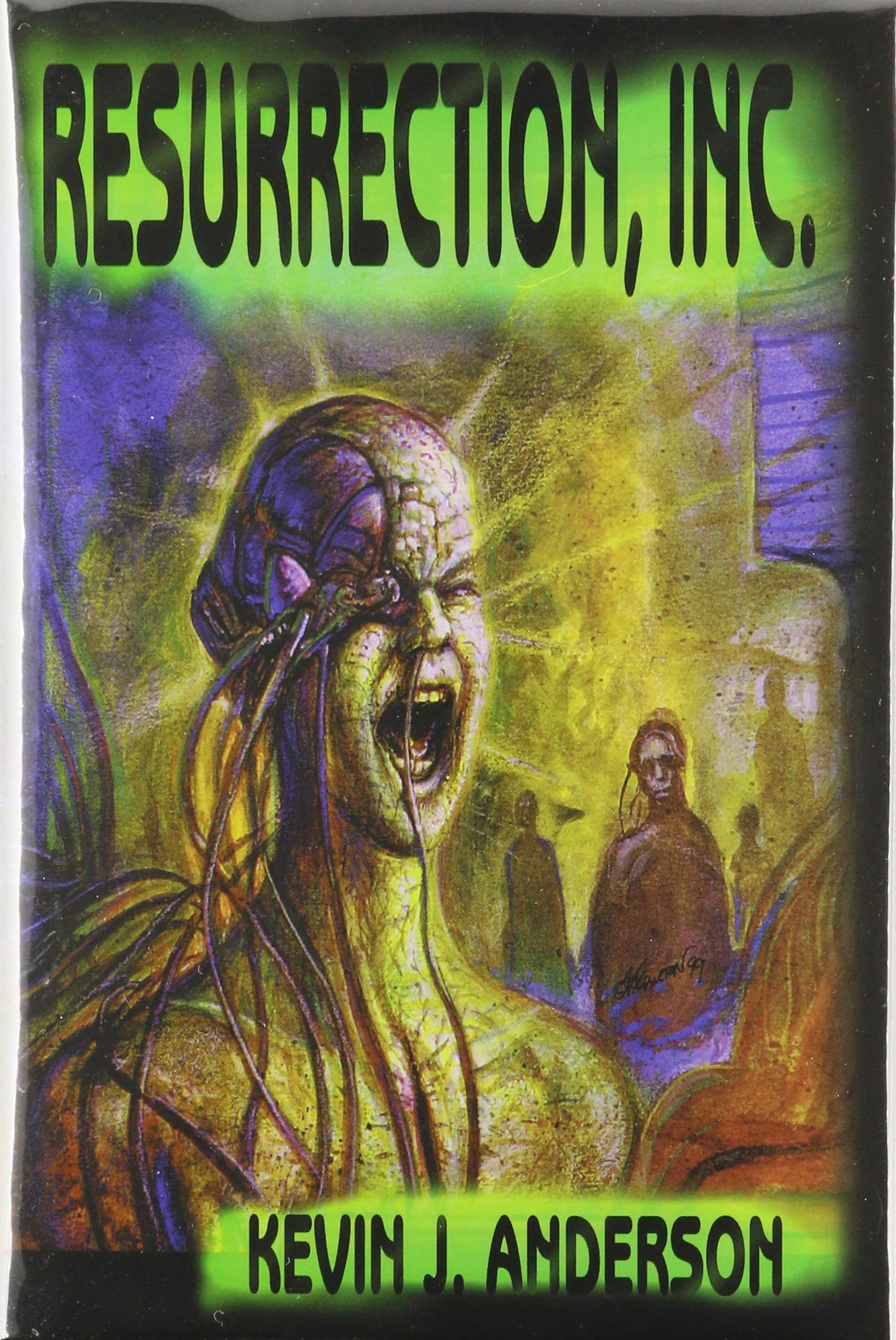
It is the future--and the dead walk the streets, resurrected by technology to become servants to the living. Resurrection, Inc. found a profitable way to do it: a microprocessor brain, a synthetic heart, artificial blood--and anyone with money could buy a Servant with no mind of its own, trained to obey any command. But for every Servant created a living worker was out of a job, and suddenly the profits of Resurrection, Inc. became everyone else's loss. Some take to rioting in the streets, their rampages ruthlessly ended by heavily armed Enforcers, eager for the kill. Others join the ever-growing cult of Neo-Satanism, seeking Heaven in the depths of Hell. Only one man tries to save the world. His name is Danal, and he is the last hope of the living. He is dead, but he remembers everything.
- 88
Michael R. Fletcherstandalone novel2013
similar byassassinsnear futurescience fictiondarktensecyberpunk+1 more
"The dream of Artificial Intelligence is dead and the human mind is now the ultimate processing machine. Demand is high, but few are willing to sacrifice their lives to become computers. Black-market creches, struggling to meet the ever-increasing demand, deal in the harvested brains of stolen children. But there is a digital snake in that fractally modelled garden; some brains make better computers than others. 88, a brilliant autistic girl, has been genetically engineered and raised from birth to serve one purpose: become a human computer. Plagued by memories of a mother she never knew and a desire for freedom she barely understands, she sets herself against those who would be her masters. Unfortunately for 88, the Cuntrera-Caruana Mafia clan have other plans for her. Griffin Dickinson, a Special Investigator for the North American Trade Union, has been tasked with shutting down the black market creches. Joined by Nadia, a state-sanctioned reporter and Abdul, the depressed ghost of a dead Marine inhabiting a combat chassis, Griffin is drawn deep into the shady underbelly of the brain trade. Every lead brings him one step closer to an age-old truth: corruption runs deep. An army of dead children, brainwashed for loyalty and housed in state of the art military chassis, stand between Griffin and the answers he seeks. But one in particular, Archaeidae, a 14-year old Mafia assassin obsessed with Miyamoto Musashi, Sun Tzu, and Machiavelli, is truly worthy of fear. Archaeidae is the period at the end of a death sentence"--Back cover.