More like Shadow Leader
but
- Dune
series20 books1963
part of Dune Universe
similar byscience fiction+2 more
Frank Herbert's Dune Chronicles opens with 1965's Dune, set on the desert planet Arrakis where House Atreides takes control of the only source of the vital spice melange and young Paul Atreides is pulled into a struggle over its politics and religion. Herbert carried the story forward across five further novels — Dune Messiah, Children of Dune, God Emperor of Dune, Heretics of Dune, and Chapterhouse: Dune — following Paul's line over the following millennia, before Brian Herbert and Kevin J. Anderson later extended the saga. Many other editions of these six novels are omnibus and box-set repackagings rather than separate stories.
- Eternal Champion
series6 books1962
part of Moorcock's Multiverse
similar bysecondary worldadventurous
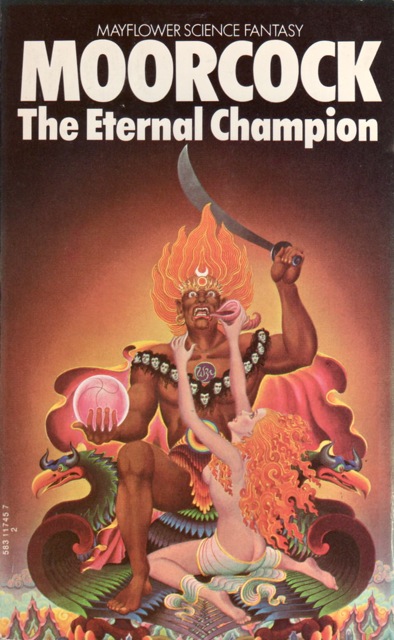
The Eternal Champion introduces Erekosë, a modern man drawn out of his own life to become a warrior fated to fight across many worlds and identities — the seed of Michael Moorcock's whole multiverse concept, in which the same doomed hero recurs under different names. First published as a 1962 novella and expanded to a novel in 1970, it heads a trilogy completed by Phoenix in Obsidian and The Dragon in the Sword; within the wider moorcocks-multiverse this is the sequence that names and anchors the Eternal Champion idea itself.
- Pathfinder Trilogy
series3 books2010
similar byscience fictionsecondary worldadventurous+1 more
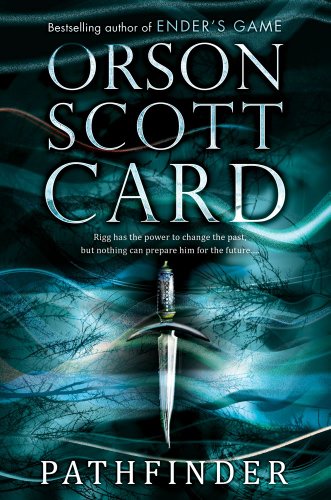
The Pathfinder series is a completed series of novels by Orson Scott Card that is notable for its unusual fusion of the themes of science fiction and fantasy, with some elements of historical fiction. One significant aspect of the Pathfinder series is its uniquely complex but well documented set of time travel rules.
- Dune Universe
universe78 books1963
Start hereDune · Start here
similar byscience fiction+1 more
Arrakis. Dune. The desert planet, where empire runs on a single substance: the spice melange, which folds space, prolongs life, and unlocks prescience, and which exists nowhere else in the known universe. Frank Herbert's saga is a meditation dressed as an adventure — feudal houses and a secret sisterhood, engineered messiahs and the patient ecology of a world without water, all turning on the terrible gravity of who commands the spice. It reads like scripture and schemes like a war room, ten thousand years hence, among people who have outlawed the thinking machine and made instruments of themselves instead. At its heart stand Herbert's original six — Dune, Dune Messiah, Children of Dune, God Emperor of Dune, Heretics of Dune, Chapterhouse: Dune — a single deepening arc across millennia, arguing the whole way between prophecy and free will. Around that spine his son Brian Herbert and Kevin J. Anderson have raised a vast prequel architecture: Prelude to Dune, tracing the great houses a generation before Paul; Legends of Dune, reaching back to the crusade that broke the machines; the Schools of Dune cycle on the founding of Bene Gesserit, Mentat, and Navigator; the Caladan Trilogy and Heroes of Dune filling years the originals left in shadow. Many hands, dozens of volumes, one desert. What sets Dune apart is its refusal of the simple: religion is manufactured, heroes are hazards, and the sand itself — worm, water, ecology — acts as a political power. Begin where the universe did, with Frank Herbert's Dune (1965), and read the original six in order; you need nothing else to feel the full weight. The prequels are a country to explore afterward, taken by era. Beginnings are delicate times.
- Legends of Saint Camber
series3 books1976
part of Deryni
similar bysecondary worldtense+1 more
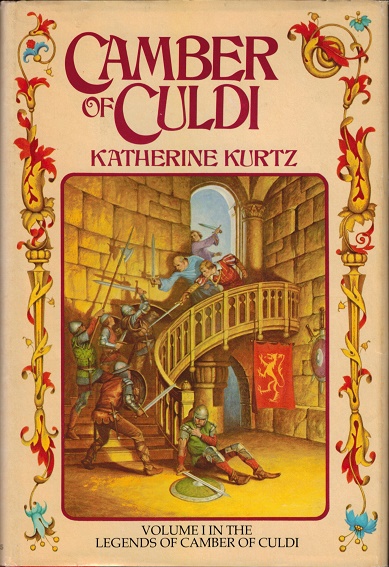
Legends of Saint Camber tells the story of Camber MacRorie, a Deryni lord who helps restore a persecuted human dynasty to the throne of Gwynedd and is venerated as a saint after his death, at a cost the trilogy gradually reveals. Camber of Culdi, Saint Camber, and Camber the Heretic were published as the fourth Deryni novel onward but are set two centuries before Katherine Kurtz's original Chronicles of the Deryni trilogy. They lay the groundwork - persecution of Deryni magic-users - that shapes the political and religious world of everything published earlier in reading order.
- The Tribe (Ambelin Kwaymullina)
series3 books2012
similar bypsychic powersscience fictionsecondary worldtense+1 more
- The Broken Earth
series5 books2014
similar bysecondary world+3 more
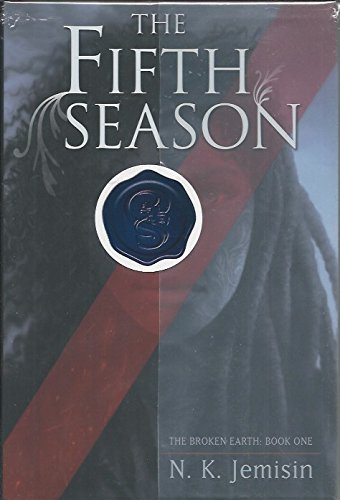
N. K. Jemisin's Broken Earth trilogy is set on the Stillness, a single supercontinent wracked every few centuries by civilization-ending climate catastrophes called Fifth Seasons. It follows orogenes, people born with the power to move earth and quell earthquakes, who are trained and controlled by the state even as they are feared and despised. The Fifth Season, the opening volume, traces three women revealed to be the same person at different stages of her life, setting up the two sequels that follow her search for her daughter after an orogene shatters the continent.
- The Chrysalids
John Wyndhamstandalone novel1955
similar bypsychic powersscience fictionsecondary worldtense
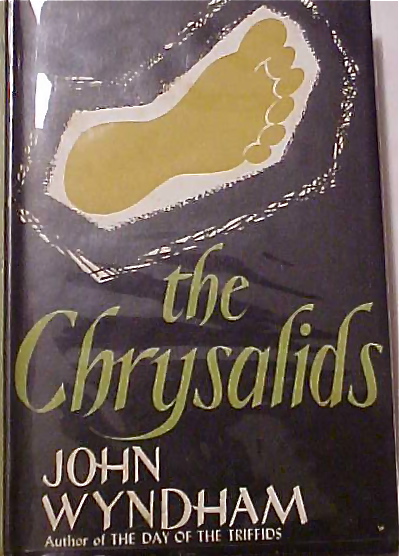
The Chrysalids is a science fiction novel by British writer John Wyndham, first published in 1955 by Michael Joseph. It is the least typical of Wyndham's major novels, but regarded by some as his best. An early manuscript version was entitled Time for a Change.
- The Obernewtyn Chronicles
series9 books1987
similar bypsychic powersscience fictionsecondary world+2 more
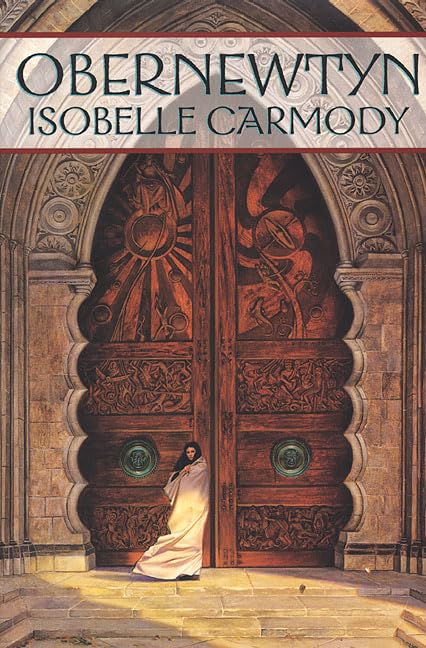
The Obernewtyn Chronicles is a series of science fiction and fantasy novels by Australian author Isobelle Carmody. The series has a post apocalyptic setting and depicts a world long after its destruction by a global nuclear holocaust.
- Tower and the Hive
series7 books1959
completed
part of The Talents
similar bypsychic powersscience fiction+2 more
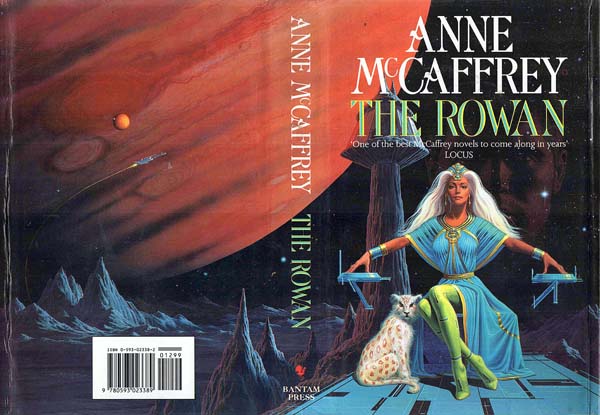
The Tower and the Hive series opens with The Rowan (1990), following an isolated but powerful telepath who is drawn out of her loneliness by a psychic call for help from a distant Talent facing an alien threat. Anne McCaffrey continued the story across four more novels, Damia, Damia's Children, Lyon's Pride, and the concluding The Tower and the Hive (1999), following later generations of a telepathic family staffing the Prime Towers that give a starfaring human civilization instant communication. The series is set later in the same Talents universe as McCaffrey's earlier Pegasus books.
- Kairos
series11 books1962
completed
similar byscience fiction+1 more
The Time Quintet is a science fantasy series of five young adult novels written by American author Madeleine L'Engle and made up of A Wrinkle in Time (1962), A Wind in the Door (1973), A Swiftly Tilting Planet (1978), Many Waters (1986), and An Acceptable Time (1989).
- His Dark Materials Universe
universe13 books1995
Start hereHis Dark Materials · Start here
similar byadventurous+1 more
In a world like ours and unlike it, every human soul walks outside the body in the shape of an animal — a daemon, who speaks, who cannot be lied to, and who settles into one fixed form only when childhood ends. This is the country of His Dark Materials: a company of parallel worlds across which an invisible dust of consciousness drifts down upon the waking mind; where a Church that calls itself the Magisterium would sooner sever a child's soul than let that Dust be understood; and where a golden instrument, the alethiometer, answers true questions for anyone with the patience to read it. Philip Pullman's design stands in two trilogies and a scatter of shorter tales. His Dark Materials — Northern Lights (published in America as The Golden Compass), The Subtle Knife, and The Amber Spyglass — carries Lyra Belacqua from the rooftops of a shadow Oxford across the borders between worlds. The Book of Dust returns to that same territory: La Belle Sauvage looks back to Lyra as an infant carried through a great flood, while The Secret Commonwealth follows her grown and less certain into adulthood, with a concluding volume closing the arc. Around them sit slim companion books — Lyra's Oxford, Once Upon a Time in the North, Serpentine — and Nicholas Wright's stage adaptation, made with Pullman's blessing. The register is grave and luminous at once, its title lifted from Milton and its quarrel drawn from Blake: a story that takes the side of curiosity, love, and the physical world against any authority that would forbid them. It reads as adventure — armoured bears, aeronauts, knife-cut windows between skies — yet reasons like philosophy. Begin with Northern Lights / The Golden Compass and read the first trilogy through before turning to The Book of Dust, which deepens everything the first has already made you feel.
- Stephen King multiverse
universe46 books1967
Start hereThe Gunslinger · Start here
similar by+2 more
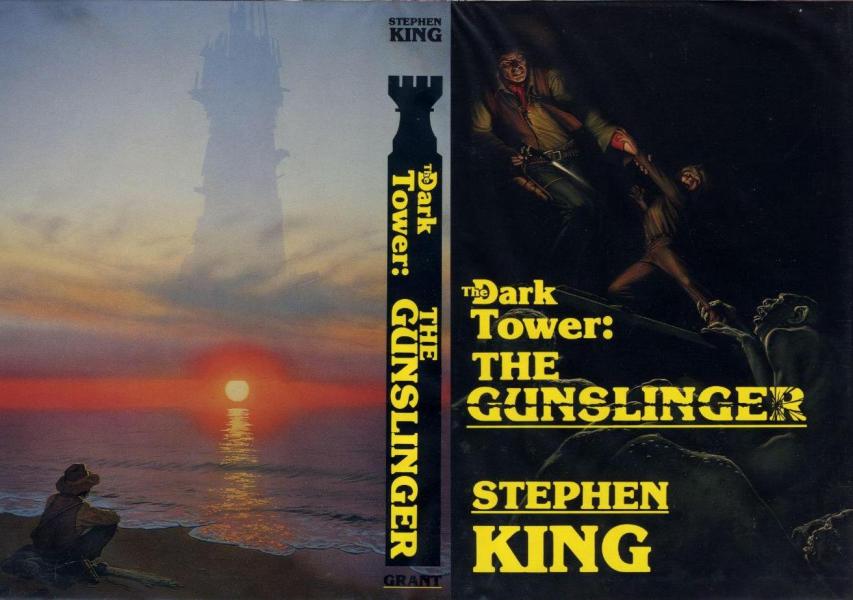
The man in black fled across the desert, and the gunslinger followed. So begins the long walk of Roland Deschain, last of an order of knight-errant pistoleers, across a land that has "moved on" — where the compass points drift, dead machines rot toward sentience, and the weave of what's real wears thin. His quest is the Dark Tower itself: a spire standing at the hub of every world that exists, the linchpin that holds all of them back from ruin. Roland's road runs eight volumes, from The Gunslinger through the closing Dark Tower, with the later, interleaved tale The Wind Through the Keyhole folding a story-within-a-story back into his youth. Along the way he draws a ka-tet — a fellowship bound by fate, not choosing — through doorways between worlds: a heroin-shackled New Yorker, a woman of two minds, a boy who dies twice. The Tower is also the secret axle around which the wider shelf of King's work turns; threads from The Stand, 'Salem's Lot and beyond wind quietly toward it. Expect a mongrel of Western, high fantasy, horror and decayed science fiction, told in a dusty, incantatory dialect all its own — ka, thankee-sai, the world that has moved on. This is King at his most mythic and most personal, a decades-spanning circle that rewards a patient reader. Begin at the beginning: The Gunslinger, then walk forward in publication order. There are other worlds than these — but this door opens first.
- His Dark Materials
series8 books1995
part of His Dark Materials Universe
similar byadventurous+2 more
His Dark Materials is a trilogy of fantasy novels by Philip Pullman consisting of Northern Lights, The Subtle Knife (1997), and The Amber Spyglass (2000). It follows the coming of age of two children, Lyra Belacqua and Will Parry, as they wander through a series of parallel universes. The novels have won a number of awards, including the Carnegie Medal in 1995 for Northern Lights and the 2001 Whitbread Book of the Year for The Amber Spyglass. In 2003, the trilogy was ranked third on the BBC's The Big Read poll.