Loreful
HomeDiscover
Search series, authors…⌘K
Loreful

Reading orders for SF/F series and shared universes — with your place kept in every one.

Explore

UniversesSeriesWorksAuthorsAtlas

Help

FAQAboutSite map

Account & legal

Sign inCreate accountPrivacyTerms

Data

Built on ISFDB, Wikipedia, Wikidata and Open Library. Curated reading orders carry their reasoning on the page; the rest follow publication order. Data sources & licenses

© Loreful · data: ISFDB · CC BY

More like Shadow Ticket

anchored on:mystery & detectiveearly 20th centurymysteriousmurder investigationeurope

but

Mood

The mood the book leaves you in.

  • The reading experience is propelled by journeys, exploration, and physical risk; excitement and forward momentum dominate over dread or introspection.
  • Joy and loss are deliberately mixed; the resolution grants characters something real while taking something else away, leaving warmth and sorrow together.
  • The book demands work from the reader — dense prose, difficult structure, unfamiliar ideas, or morally uncomfortable material — as part of its intended effect.
  • Grim events, cruelty, or despair dominate the atmosphere, and the book does not soften them with comfort or comic relief.
  • The atmosphere is quietly unsettling — wrongness, unease, and the uncanny pervade the book without necessarily escalating into overt horror.
  • The book is built to move the reader; character feeling is foregrounded and major scenes aim at a strong emotional response.
  • Humor is a primary aim and the prose plays for laughs — comic situations, wit, or dialogue produce sustained comedy, not occasional levity.
  • The book insists that things can improve; effort and decency are shown to matter, and the arc bends toward better outcomes even through hardship.
  • The book teaches as it goes — real facts, history, science, or craft are conveyed in enough depth that learning is part of the reading experience.
  • The book is designed to uplift and motivate, presenting perseverance or achievement in a way that invites the reader to aspire or act.
  • The overall register is cheerful and easygoing; stakes are kept gentle and the book avoids dwelling on pain or dread.
  • Withheld information drives the experience; the book sustains enigmas and secrets the reader wants resolved, whatever its genre.
  • The book is contemplative and inward-looking, giving more weight to thought, memory, and meaning than to external events.
  • The book works as comfort reading — low tension, a soothing pace, and an atmosphere the reader can unwind in.
  • Grief, loss, or melancholy set the dominant register, and the book lets sorrow stand rather than resolving it into comfort.
  • Sustained suspense is the point; the book keeps the reader braced for what happens next through danger, pressure, or impending revelation.
  • Playful invention and charm define the register — fanciful conceits, light absurdity, and a narration that delights in its own oddity.

About

What the story runs on.

  • Stories in which extraterrestrial beings are central — as characters, cultures, or the object of the plot.
  • Stories structured as a quest — a journey undertaken to find, deliver, or destroy something of great import.
  • Stories in which staying alive against nature, catastrophe, or scarcity is the central problem.
  • Stories of lovers kept apart by law, family, faith, or station, where the obstacle to love is the plot.
  • Stories in which a friendship — its making, testing, or loss — is the emotional center.
  • Stories of growing up — a young protagonist crossing from childhood into adult knowledge and responsibility.
  • Stories about who a character truly is — self-discovery, doubled lives, and the search for a self.
  • Stories about mourning — living through the death of a loved one and what loss does to the survivors.
  • Stories in which a buried family truth — hidden parentage, crimes, or shames — surfaces and reorders the present.
  • Stories driven by maneuvering for power — factions, conspiracies, and statecraft conducted in shadow.
  • Stories in which war itself is the subject — combat, occupation, and what warfare does to soldiers and civilians.
  • Stories organized around investigating a killing — the case, the clues, and the pursuit of the killer, in any genre's clothing.

Shelf

Where it sits in the library.

    • Fiction built on magic or other supernatural elements that have no scientific explanation.
    • Secondary-world fantasy at large scale, where the fate of nations or the world turns on the protagonists' struggle.
    • Fantasy set in a recognizably modern city or contemporary world where the supernatural intrudes on everyday life.
    • Fantasy that blends in horror's atmosphere and imagery, keeping a fantastical frame around grim or frightening material.
    • Action-driven fantasy following warriors or rogues with personal stakes against sorcerous threats, rather than world-spanning conflicts.
    • Fantasy set in a real historical period or a close analogue of one, with magic woven into the era.
    • Fantasy in which protagonists cross from the ordinary world into another world through a portal or similar passage.
    • Fiction that retells or reworks a traditional fairy tale in a new form or setting.
    • Fantasy drawing directly on myths, legends, and folklore, retelling them or building on their figures and logic.
    • Fantasy of ghosts, vampires, shapeshifters, psychics, and similar phenomena, usually set in an otherwise ordinary world.
    • Fiction mixing science-fictional trappings with overtly magical or impossible elements in one setting.
    • Low-stakes fantasy emphasizing comfort, community, and everyday pleasures over conflict and peril.
    • Speculative fiction of pervasive moral ambiguity, violence, and cynicism that rejects heroic conventions — fantasy and SF alike.
      • Fiction that extrapolates from science and technology — future societies, space travel, or speculative inventions — within at least nominally natural laws.
      • Science fiction of interstellar scope — starships, galactic polities, and adventure across star systems.
      • Science fiction committed to scientific rigor, where technical plausibility constrains the story.
      • Science fiction centered on armed forces and warfare, told largely from a military point of view.
      • Science fiction of networked, corporate-dominated near futures, pairing high technology with social decay.
      • Science fiction styled on nineteenth-century steam-powered technology, often in a Victorian or pseudo-Victorian setting.
      • Fiction depicting an oppressive or catastrophic society, presented as a warning.
      • Fiction set after civilization's collapse, following survivors in the ruins of the old world.
      • Fiction in which characters move between past and future, and the mechanics or consequences of that travel drive the plot.
      • Fiction exploring a world where a historical event went differently and history diverged from ours.
      • Science fiction about humanity's first encounter and communication with an alien intelligence.
      • Science fiction in which extraterrestrial forces attack or occupy Earth and humanity resists.
      • Fiction whose primary aim is to frighten or unsettle the reader through dread, menace, or the monstrous.
      • Horror of vast, indifferent, incomprehensible entities before which humanity is insignificant, in the Lovecraft tradition.
      • Horror of decaying houses, buried family secrets, and oppressive atmosphere in the Gothic literary tradition.
      • Horror centered on hauntings and the returning dead.
      • Horror located in the mind — paranoia, obsession, and unreliable perception rather than external monsters.
      • Horror built around the reanimated dead and survival amid their outbreaks.
      • Horror defined by explicit, transgressive gore that refuses to cut away from violence.
      • Speculative fiction of the strange and uncanny that resists both natural explanation and standard genre categories.
      • Fiction organized around solving a crime or puzzle, typically following an investigator toward the identification of a culprit.
      • A puzzle-first mystery that lays out clues so the culprit's identity can be deduced before the reveal.
      • Crime fiction of moral ambiguity, fatalism, and hard-edged style, set among the corrupt and the doomed.
      • A mystery following the realistic routines of police work — forensics, interviews, and case-building.
      • A gentle mystery with an amateur sleuth, a small community, and violence kept off the page.
      • A mystery set in a past era, where the investigation works within that period's methods and society.
      • Fast-paced fiction driven by imminent danger, pursuit, or high-stakes conspiracy, built to sustain tension.
      • A thriller of espionage — agents, tradecraft, and intelligence services in conflict.
      • A thriller centered on lawyers and the courtroom, where litigation carries the suspense.
      • A thriller driven by detailed contemporary or near-future technology, often military or scientific.
      • A thriller whose tension comes from mental states and manipulation between characters rather than external action.
      • Fiction whose central plot is a romantic relationship and its development toward an emotionally satisfying resolution.
      • Romance in which one or both partners are supernatural beings, blending fantasy elements into the love story.
      • A fantasy-romance hybrid in which the romantic arc and the fantasy plot carry equal weight.
      • Romance set in a past era, with courtship shaped by the period's society and manners.
      • Romance set in the present day, without supernatural or historical elements.
      • Fiction set in a real past period, where the historical setting materially shapes characters and events.
        • General and literary fiction emphasizing prose style, character interiority, or formal ambition over genre plot conventions.
        • Fiction in a realistic world where magical events occur and are treated as ordinary, in the tradition of Latin American literature.
        • Fiction that ridicules people, institutions, or society in order to criticize them.
        • Fiction of dreamlike, irrational imagery and logic that breaks from realistic representation.
        • Fiction that plays with narrative convention through metafiction, fragmentation, and self-reference.
        • Fiction propelled by journeys, exploration, and physical peril, where action and survival carry the plot.
        • Adventure fiction of ships and seafaring — naval engagements, voyages, and life at sea.
        • Fiction of the American frontier West — gunmen, ranchers, and lawmen, typically in the late nineteenth century.
        • Fiction centered on soldiers, campaigns, and the experience of warfare, historical or imagined.
          • Fiction written primarily to amuse, using comedic situations, wit, or parody as its organizing principle.
            • Multi-generational fiction following a family or dynasty across decades, with inheritance and kinship as the through-line.
              • Fiction whose world runs on explicit game mechanics — levels, stats, and skills that characters can see and exploit.
                • Fiction about costumed or superpowered heroes and their conflicts with comparable villains.

                Practical

                How long a commitment, whether it stands alone, and whether it has finished.

                Tap a chip to ask for it · tap again to rule it out · once more to clear. Numbers show what would be left.

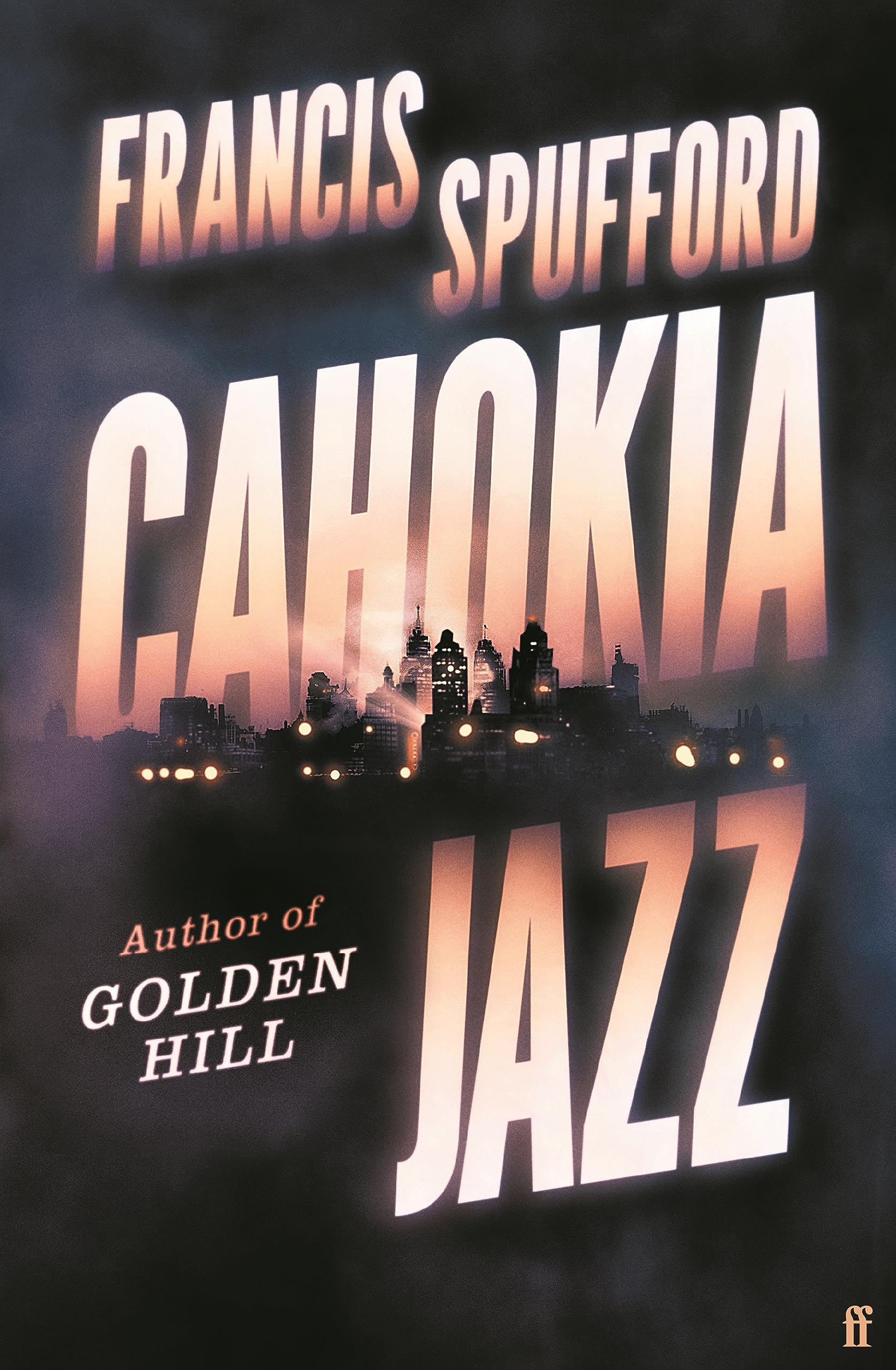
                • Cover of Cahokia Jazz
                  Cahokia Jazz

                  Francis Spufford · standalone novel · 2023

                  similar bymystery & detectivemurder investigationmysteriousearly 20th centurypolitical intriguenorth america

                  Cahokia Jazz is an alternate-history detective novel by Francis Spufford released in Great Britain in 2023 and the United States in 2024.

                • Cover of The Burning Court
                  The Burning Court

                  John Dickson Carr · standalone novel · 1937

                  similar bymystery & detectivemysteriousmurder investigationearly 20th century+1 more

                  The Burning Court (1937) is a famous locked room mystery by John Dickson Carr. However, it contains neither Gideon Fell nor Henry Merrivale, Carr's two major detectives. It was published in the United States, and was highly controversial upon its first printing, due to its unorthodox ending. Today, it is hailed as Carr's best non-series novel.

                • Cover of The City & the City
                  The City & the City

                  China Miéville · standalone novel · 2009

                  similar bymystery & detectivemysteriousmurder investigationpolitical intrigue

                  Inspector Tyador Borlú must travel to Ul Qoma to search for answers in the murder of a woman found in the city of Besźel. (Source: OCLC record)

                • Cover of The Colorado Kid
                  The Colorado Kid

                  Stephen King · standalone novel · 2005

                  similar bymystery & detectivemysteriousmurder investigationnorth america

                  The Colorado Kid is a mystery novel by American writer Stephen King, published by the Hard Case Crime imprint in 2005. The book was initially issued in one paperback-only edition by the specialty crime and mystery publishing house. King's next novel for Hard Case Crime was Joyland, which was published in June 2013. Hard Case Crime reissued The Colorado Kid in an illustrated paperback edition in May 2019.

                • Cover of Harley Quin
                  Harley Quin

                  series · 13 books · 1924

                  completed

                  similar bymystery & detectivemysteriousmurder investigationearly 20th century

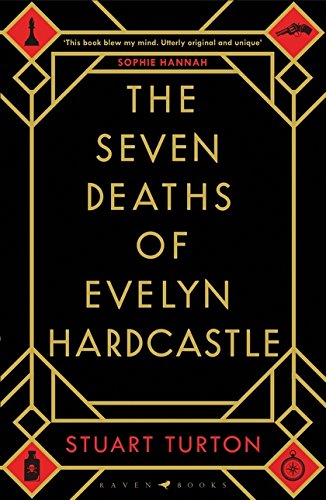
                • Cover of The Seven Deaths of Evelyn Hardcastle
                  The Seven Deaths of Evelyn Hardcastle

                  Stuart Turton · standalone novel · 2018

                  similar bymystery & detectivemysteriousmurder investigationearly 20th century

                  The Seven Deaths of Evelyn Hardcastle is a novel by Stuart Turton which won the Best First Novel prize in the 2018 Costa Book Awards and reached number one on The Saturday Times Bestseller list.

                • Cover of The Peculiarities
                  The Peculiarities

                  David Liss · standalone novel · 2021

                  similar bymysteriousmurder investigationmystery & detectiveearly 20th centurypolitical intrigue

                  All of his life, Thomas Thresher has been free of obligation and responsibility, but that is over now. He is a twenty-three-year-old man whose best days are behind him. Thomas's older brother Walter has trapped him in a tedious clerical job at the family bank in London, and Thomas is expected to wed a wealthy young woman in whom he has no interest. But Thomas has more serious problems than those of a disaffected young man. There are irregularities at the bank he cannot explain. His childhood friend has mysteriously turned up dead. Worse, a verdant skin malady has infected him: leaves have begun sprouting on his skin. Thomas must conclude that it is due to the long-rumored Peculiarities. London's famous grey fog has been concealing a rash of unnatural afflictions--and worse, the murderous Elegants. As Thomas grows leafier, the conspiracies surrounding him become more apparent. He cannot determine whom to trust: his own family; his banking co-workers and superiors; the beautiful widow of his companion; the woman he is to marry. Or perhaps a lycanthropic medium; the members of a secret occult society...or even Aleister Crowley.

                • Cover of Robert Langdon
                  Robert Langdon

                  series · 6 books · 2000

                  similar bymystery & detectivemysteriouseurope+2 more

                  The Robert Langdon novel series is named after Robert Langdon, the protagonist of the novels by American author Dan Brown. Langdon is portrayed as a Harvard University professor of religious iconology and symbology, a fictional field related to the study of historic symbols, which is not methodologically connected to the actual discipline of semiotics. Brown's novels that feature the lead character also include historical themes and Christianity as motifs, and as a result have generated controversy. Brown states on his website that his novels are not anti-Christian, and that he is on a "constant spiritual journey" himself.

                • Cover of Darkness at Pemberley
                  Darkness at Pemberley

                  T. H. White · standalone novel · 1932

                  similar bymystery & detectivemysteriousmurder investigationearly 20th century

                  Intellectual stimulation (an ingenious locked-room puzzle) and a plot with plenty of action give Inspector Buller of Scotland Yard plenty of exercise both in Cambridge and at a mysterious country house, Pemberley.

                • Cover of Moris Klaw
                  Moris Klaw

                  series · 11 books · 1913

                  completed

                  similar bymystery & detectivemysteriousmurder investigationearly 20th century

                • Cover of Nevermore
                  Nevermore

                  William Hjortsberg · standalone novel · 1994

                  similar bymystery & detectivemurder investigationmysteriousearly 20th centurynorth america

                  Nevermore is a 1994 historical mystery novel by American author William Hjortsberg. In the novel, Harry Houdini joins forces with Arthur Conan Doyle to solve a series of murders, which eerily re-enact the stories of Edgar Allan Poe.

                • Cover of The Devil in Velvet
                  The Devil in Velvet

                  John Dickson Carr · standalone novel · 1951

                  similar bymystery & detectivemurder investigationmysteriouseurope

                  The Devil in Velvet, first published in 1951, is a detective story by American writer John Dickson Carr. This novel is both a mystery and a historical novel, with elements of the supernatural.

                • Cover of The Game-Players of Titan
                  The Game-Players of Titan

                  Philip K. Dick · standalone novel · 1963

                  similar bymurder investigationmystery & detectivemysteriousnorth america+1 more

                  In a depopulated, mostly sterile America, land, marriages and social standing are all wagered on Bluff, a high-stakes game administered by the vugs, gelatinous, gambling-obsessed aliens from Titan who rule Earth without ever quite occupying it. Pete Garden's bipolar disorder threatens his standing among the game's players even as his new wife becomes pregnant, a near-miraculous event in this exhausted world, and his attraction to a telepath complicates things further. When a fellow player turns up dead, Pete finds himself a suspect in a mystery tangled up with induced amnesia and vug politics he barely understands. Philip K. Dick's 1963 novel.

                • Cover of The Haunted Bookshop
                  The Haunted Bookshop

                  Christopher Morley · standalone novel · 1919

                  similar bymystery & detectivemurder investigationearly 20th century+1 more

                  The Haunted Bookshop is a 1919 novel by Christopher Morley, now in the public domain in the United States. It has remained a popular representative of the "bibliomystery," a mystery story set in the world of books.

                • Cover of The Golden
                  The Golden

                  Lucius Shepard · standalone novel · 1993

                  similar bymurder investigationmystery & detectivemysteriouseurope+1 more

                  Deviating from traditional tales that feature lonely vampires who prowl through human society in search of victims or solace, this account of vampires flourishing in their own "inhuman society" takes place in the year 1860, when their centuries-long breeding experiments have finally produced "The Golden," a mortal whose blood is perfect and powerful. Mobilized by the news of this discovery, aristocratic vampire clans arrive at the looming Castle Banat, where they plan to partake of the sublime blood. To their shock, the guests find that The Golden, a young girl, has been brutally murdered and her blood already drained. The story also follows the Inspector Michael Beheim—a recent vampire—assigned to track down the killer. Recounted in full 19th-century literary style with gothic elements and foreshadowing, the inspector navigates his way through the vampire world and the crime therein.

                • Cover of A Graveyard for Lunatics: Another Tale of Two Cities
                  A Graveyard for Lunatics: Another Tale of Two Cities

                  Ray Bradbury · standalone novel · 1990

                  similar bymystery & detectivemysteriousmurder investigationnorth america

                  A Graveyard for Lunatics: Another tale of two cities is a mystery novel by American writer Ray Bradbury, published in 1990. It is the second in a series of three mystery novels that Bradbury wrote featuring a fictionalized version of the author himself as the unnamed narrator.

                • Cover of Fire, Burn!
                  Fire, Burn!

                  John Dickson Carr · standalone novel · 1957

                  similar bymystery & detectivemysteriousmurder investigation

                  Fire, Burn! is a 1957 historical mystery novel by John Dickson Carr. Carr considered this one of his best impossible crime novels.

                • Cover of Deception Point
                  Deception Point

                  Dan Brown · standalone novel · 2001

                  similar bymurder investigationmystery & detectivemysteriouspolitical intrigue

                  Deception Point is a 2001 mystery-thriller novel by American author Dan Brown. It is Brown's third novel. It was published by Simon & Schuster.

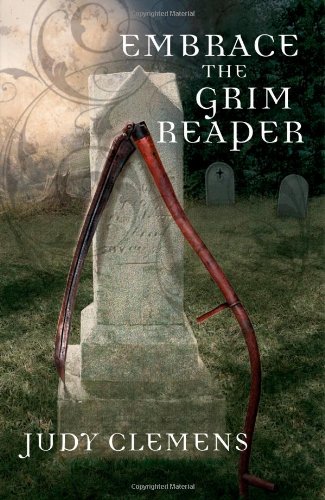
                • Cover of Grim Reaper mysteries
                  Grim Reaper mysteries

                  series · 5 books · 2009

                  similar bymystery & detectivemurder investigationmysteriousnorth america

                  After a bad car accident, Casey Maldonado hits the road and finds herself unable to shake an unwelcome companion: Death itself, which won't take her but won't leave her alone either. Judy Clemens's Grim Reaper mysteries follow Casey as her wandering keeps landing her in small towns hiding real crimes, starting with a struggling Ohio farm community where a supposed suicide looks more like a cover-up. It's amateur-sleuth mystery with a wry supernatural conceit rather than straight horror.

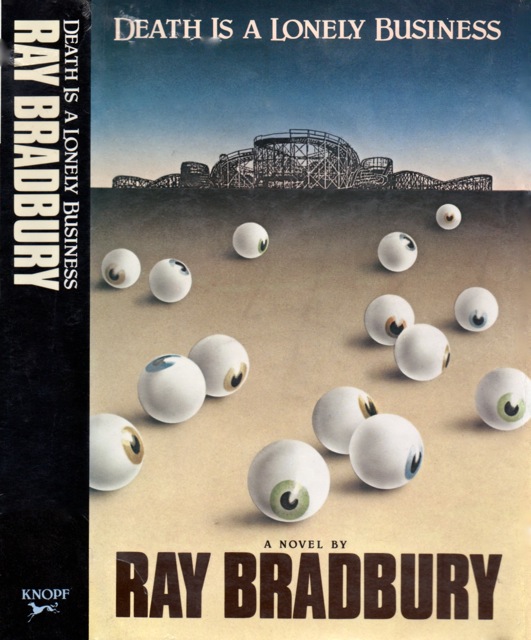
                • Cover of Death Is a Lonely Business
                  Death Is a Lonely Business

                  Ray Bradbury · standalone novel · 1985

                  similar bymystery & detectivemurder investigationmysteriousnorth america

                  Death Is a Lonely Business is a mystery novel by American writer Ray Bradbury, published in 1985. The story, set in 1949, is about a series of murders that happen in Venice, California, then a declining seaside community in Los Angeles where Bradbury lived from 1942 to 1950. The main character and narrator is a sensitive, modest writer, with a girlfriend studying in Mexico City. In the course of the story he meets Elmo Crumley, a detective who helps him solve the mystery behind all the semi-murders occurring among a series of eccentric characters in the forgotten town.

                • Cover of Murder in the Gunroom
                  Murder in the Gunroom

                  H. Beam Piper · standalone novel · 1953

                  similar bymystery & detectivemysteriousmurder investigationnorth america

                  Jeff Rand, a private detective, is skeptical when he is employed by Gladys Fleming to evaluate her recently acquired gun collection, which happens to contain a dark secret. The more facts he uncovers, the more interesting the story becomes. Gun dealers, butlers, wives and cops all become suspects in the investigation of a mysterious death. The book is rich with detailed descriptions of the many different guns that star in this tale. This is the only murder-mystery written by Piper, who was mostly known for his science fiction novels.

                • Cover of The Waterworks
                  The Waterworks

                  E. L. Doctorow · standalone novel · 1994

                  similar bymurder investigationmystery & detectivemysteriousnorth america+1 more

                  The Waterworks (1994) is a book by American writer E. L. Doctorow. It was his eighth published novel.

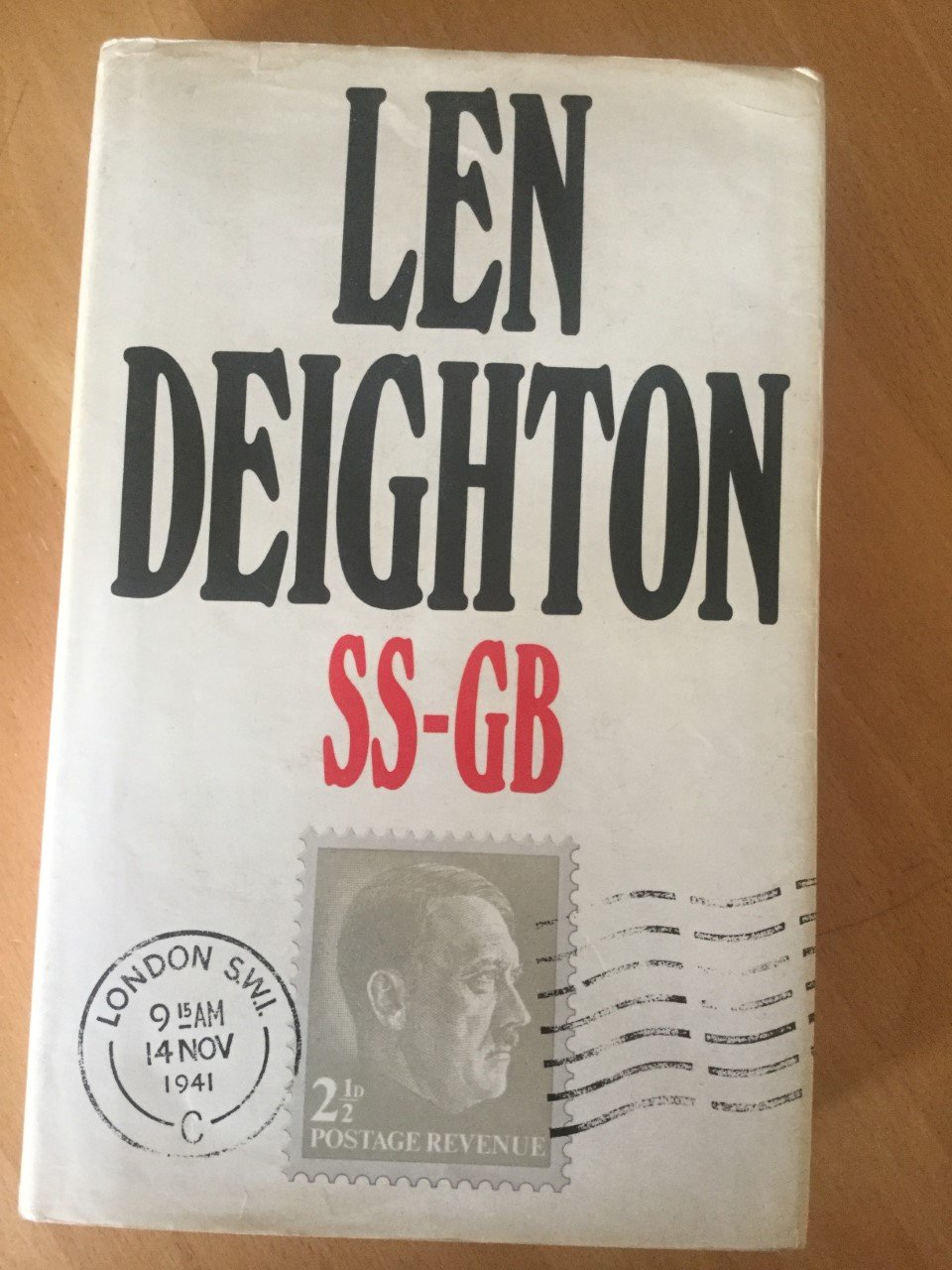
                • Cover of SS-GB
                  SS-GB

                  Len Deighton · standalone novel · 1978

                  similar bymurder investigationmystery & detectiveearly 20th centurypolitical intrigue

                  It's November 1941 in a Britain that lost the war: Operation Sea Lion succeeded, Churchill was executed, and the King is a prisoner in his own Tower of London. Detective Superintendent Douglas Archer, still working homicide for the Metropolitan Police under German occupation, catches what looks like a routine case, a well-dressed man murdered above an antiques shop, until the body's oddities point toward something far more dangerous than burglary gone wrong. Archer's investigation collides with occupation politics, the British resistance, and rival factions of the SS and the German Army, each wanting the case to go a different way. Len Deighton's alternate-history spy thriller.

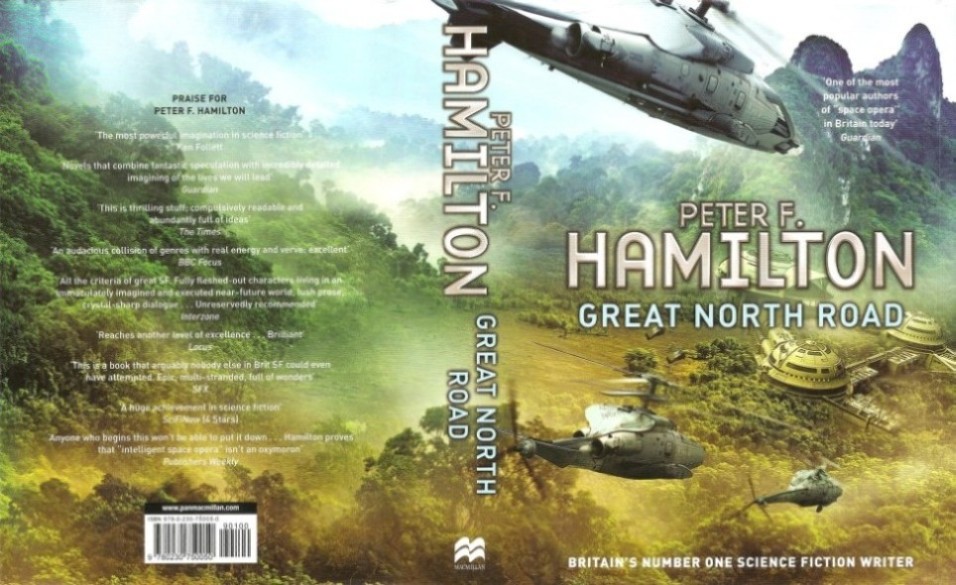
                • Cover of Great North Road
                  Great North Road

                  Peter F. Hamilton · standalone novel · 2012

                  similar bymurder investigationmystery & detectivemysterious+1 more

                  Great North Road is a science fiction novel by Peter F. Hamilton. It was first published in 2012 by Macmillan. Jonathan Wright of SFX magazine said, "Peter F Hamilton’s latest novel may be a standalone tale, but it’s a thuddingly imposing 1,100 pages in length. Not that it seems that way when you’re reading it. Balancing a multi-stranded plot, different exotic locales and a huge cast of characters, Hamilton plunges us straight into a murder mystery set in a near-future Newcastle, a city now adjacent to a portal to another world, the tropical St Libra."