Loreful
HomeDiscover
Search series, authors…⌘K
Loreful

Reading orders for SF/F series and shared universes — with your place kept in every one.

Explore

UniversesSeriesWorksAuthorsAtlas

Help

FAQAboutSite map

Account & legal

Sign inCreate accountPrivacyTerms

Data

Built on ISFDB, Wikipedia, Wikidata and Open Library. Curated reading orders carry their reasoning on the page; the rest follow publication order. Data sources & licenses

© Loreful · data: ISFDB · CC BY

More like Shadowboxer

but

Mood

The mood the book leaves you in.

  • The reading experience is propelled by journeys, exploration, and physical risk; excitement and forward momentum dominate over dread or introspection.
  • Joy and loss are deliberately mixed; the resolution grants characters something real while taking something else away, leaving warmth and sorrow together.
  • The book demands work from the reader — dense prose, difficult structure, unfamiliar ideas, or morally uncomfortable material — as part of its intended effect.
  • Grim events, cruelty, or despair dominate the atmosphere, and the book does not soften them with comfort or comic relief.
  • The atmosphere is quietly unsettling — wrongness, unease, and the uncanny pervade the book without necessarily escalating into overt horror.
  • The book is built to move the reader; character feeling is foregrounded and major scenes aim at a strong emotional response.
  • Humor is a primary aim and the prose plays for laughs — comic situations, wit, or dialogue produce sustained comedy, not occasional levity.
  • The book insists that things can improve; effort and decency are shown to matter, and the arc bends toward better outcomes even through hardship.
  • The book teaches as it goes — real facts, history, science, or craft are conveyed in enough depth that learning is part of the reading experience.
  • The book is designed to uplift and motivate, presenting perseverance or achievement in a way that invites the reader to aspire or act.
  • The overall register is cheerful and easygoing; stakes are kept gentle and the book avoids dwelling on pain or dread.
  • Withheld information drives the experience; the book sustains enigmas and secrets the reader wants resolved, whatever its genre.
  • The book is contemplative and inward-looking, giving more weight to thought, memory, and meaning than to external events.
  • The book works as comfort reading — low tension, a soothing pace, and an atmosphere the reader can unwind in.
  • Grief, loss, or melancholy set the dominant register, and the book lets sorrow stand rather than resolving it into comfort.
  • Sustained suspense is the point; the book keeps the reader braced for what happens next through danger, pressure, or impending revelation.
  • Playful invention and charm define the register — fanciful conceits, light absurdity, and a narration that delights in its own oddity.

About

What the story runs on.

  • Stories in which extraterrestrial beings are central — as characters, cultures, or the object of the plot.
  • Stories about venturing into space to explore — survey missions, astronauts, and the frontier of the unknown beyond Earth.
  • Stories structured as a quest — a journey undertaken to find, deliver, or destroy something of great import.
  • Stories in which staying alive against nature, catastrophe, or scarcity is the central problem.
  • Stories of lovers kept apart by law, family, faith, or station, where the obstacle to love is the plot.
  • Stories in which a friendship — its making, testing, or loss — is the emotional center.
  • Stories of growing up — a young protagonist crossing from childhood into adult knowledge and responsibility.
  • Stories about who a character truly is — self-discovery, doubled lives, and the search for a self.
  • Stories driven by maneuvering for power — factions, conspiracies, and statecraft conducted in shadow.
  • Stories about rising against rulers — uprisings, resistance movements, and revolutions and their aftermaths.
  • Stories in which war itself is the subject — combat, occupation, and what warfare does to soldiers and civilians.
  • Stories organized around investigating a killing — the case, the clues, and the pursuit of the killer, in any genre's clothing.

Shelf

Where it sits in the library.

    • Fiction built on magic or other supernatural elements that have no scientific explanation.
    • Secondary-world fantasy at large scale, where the fate of nations or the world turns on the protagonists' struggle.
    • Fantasy set in a recognizably modern city or contemporary world where the supernatural intrudes on everyday life.
    • Fantasy that blends in horror's atmosphere and imagery, keeping a fantastical frame around grim or frightening material.
    • Action-driven fantasy following warriors or rogues with personal stakes against sorcerous threats, rather than world-spanning conflicts.
    • Fantasy set in a real historical period or a close analogue of one, with magic woven into the era.
    • Fantasy in which protagonists cross from the ordinary world into another world through a portal or similar passage.
    • Fiction that retells or reworks a traditional fairy tale in a new form or setting.
    • Fantasy drawing directly on myths, legends, and folklore, retelling them or building on their figures and logic.
    • Fantasy of ghosts, vampires, shapeshifters, psychics, and similar phenomena, usually set in an otherwise ordinary world.
    • Fiction mixing science-fictional trappings with overtly magical or impossible elements in one setting.
    • Low-stakes fantasy emphasizing comfort, community, and everyday pleasures over conflict and peril.
    • Speculative fiction of pervasive moral ambiguity, violence, and cynicism that rejects heroic conventions — fantasy and SF alike.
      • Fiction that extrapolates from science and technology — future societies, space travel, or speculative inventions — within at least nominally natural laws.
      • Science fiction of interstellar scope — starships, galactic polities, and adventure across star systems.
      • Science fiction committed to scientific rigor, where technical plausibility constrains the story.
      • Science fiction centered on armed forces and warfare, told largely from a military point of view.
      • Science fiction of networked, corporate-dominated near futures, pairing high technology with social decay.
      • Science fiction styled on nineteenth-century steam-powered technology, often in a Victorian or pseudo-Victorian setting.
      • Fiction depicting an oppressive or catastrophic society, presented as a warning.
      • Fiction set after civilization's collapse, following survivors in the ruins of the old world.
      • Fiction in which characters move between past and future, and the mechanics or consequences of that travel drive the plot.
      • Fiction exploring a world where a historical event went differently and history diverged from ours.
      • Science fiction about humanity's first encounter and communication with an alien intelligence.
      • Science fiction in which extraterrestrial forces attack or occupy Earth and humanity resists.
      • Fiction whose primary aim is to frighten or unsettle the reader through dread, menace, or the monstrous.
      • Horror of vast, indifferent, incomprehensible entities before which humanity is insignificant, in the Lovecraft tradition.
      • Horror of decaying houses, buried family secrets, and oppressive atmosphere in the Gothic literary tradition.
      • Horror centered on hauntings and the returning dead.
      • Horror located in the mind — paranoia, obsession, and unreliable perception rather than external monsters.
      • Horror built around the reanimated dead and survival amid their outbreaks.
      • Horror defined by explicit, transgressive gore that refuses to cut away from violence.
      • Speculative fiction of the strange and uncanny that resists both natural explanation and standard genre categories.
      • Fiction organized around solving a crime or puzzle, typically following an investigator toward the identification of a culprit.
      • A puzzle-first mystery that lays out clues so the culprit's identity can be deduced before the reveal.
      • Crime fiction of moral ambiguity, fatalism, and hard-edged style, set among the corrupt and the doomed.
      • A mystery following the realistic routines of police work — forensics, interviews, and case-building.
      • A gentle mystery with an amateur sleuth, a small community, and violence kept off the page.
      • A mystery set in a past era, where the investigation works within that period's methods and society.
      • Fast-paced fiction driven by imminent danger, pursuit, or high-stakes conspiracy, built to sustain tension.
      • A thriller of espionage — agents, tradecraft, and intelligence services in conflict.
      • A thriller centered on lawyers and the courtroom, where litigation carries the suspense.
      • A thriller driven by detailed contemporary or near-future technology, often military or scientific.
      • A thriller whose tension comes from mental states and manipulation between characters rather than external action.
      • Fiction whose central plot is a romantic relationship and its development toward an emotionally satisfying resolution.
      • Romance in which one or both partners are supernatural beings, blending fantasy elements into the love story.
      • A fantasy-romance hybrid in which the romantic arc and the fantasy plot carry equal weight.
      • Romance set in a past era, with courtship shaped by the period's society and manners.
      • Romance set in the present day, without supernatural or historical elements.
      • Fiction set in a real past period, where the historical setting materially shapes characters and events.
        • General and literary fiction emphasizing prose style, character interiority, or formal ambition over genre plot conventions.
        • Fiction in a realistic world where magical events occur and are treated as ordinary, in the tradition of Latin American literature.
        • Fiction that ridicules people, institutions, or society in order to criticize them.
        • Fiction of dreamlike, irrational imagery and logic that breaks from realistic representation.
        • Fiction that plays with narrative convention through metafiction, fragmentation, and self-reference.
        • Fiction propelled by journeys, exploration, and physical peril, where action and survival carry the plot.
        • Adventure fiction of ships and seafaring — naval engagements, voyages, and life at sea.
        • Fiction of the American frontier West — gunmen, ranchers, and lawmen, typically in the late nineteenth century.
        • Fiction centered on soldiers, campaigns, and the experience of warfare, historical or imagined.
          • Fiction written primarily to amuse, using comedic situations, wit, or parody as its organizing principle.
            • Multi-generational fiction following a family or dynasty across decades, with inheritance and kinship as the through-line.
              • Fiction whose world runs on explicit game mechanics — levels, stats, and skills that characters can see and exploit.
                • Fiction about costumed or superpowered heroes and their conflicts with comparable villains.

                Practical

                How long a commitment, whether it stands alone, and whether it has finished.

                Tap a chip to ask for it · tap again to rule it out · once more to clear. Numbers show what would be left.

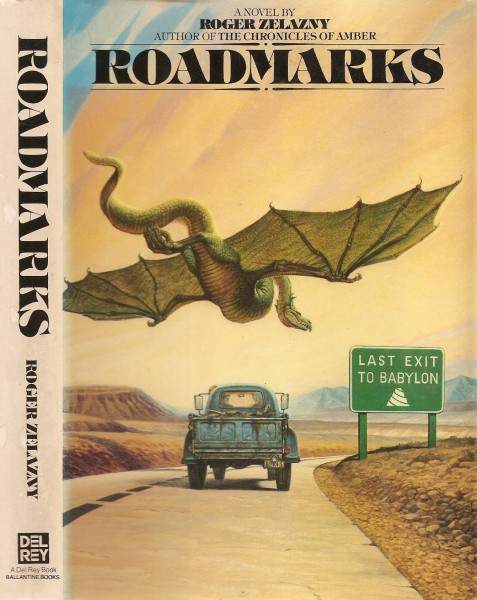
                • Cover of Roadmarks
                  Roadmarks

                  Roger Zelazny · standalone novel · 1979

                  similar byscience fiction+2 more

                  Roadmarks is a science fantasy novel by American author Roger Zelazny, written during the late 1970s and published in 1979.

                • DU
                  Deepgate Universe

                  series · 5 books · 2006

                  similar by+3 more

                • Cover of Nova
                  Nova

                  Samuel R. Delany · standalone novel · 1968

                  similar byscience fiction+1 more

                  Nоva is a science fiction novel by American writer Samuel R. Delany published in 1968. The plot concerns the spaceship captain Lorq Von Ray's search for a nova, which will produce the essential power source Illyrion, and his vendetta with the Red family, who seek to kill him. Nominally space opera, it explores the politics and culture of a future where cyborg technology is universal, yet making major decisions can involve using tarot cards. It has strong mythological overtones, relating to both the Grail Quest and Jason's quest for the Golden Fleece.

                • Cover of City of Nightmares
                  City of Nightmares

                  series · 2 books · 2023

                  similar by+3 more

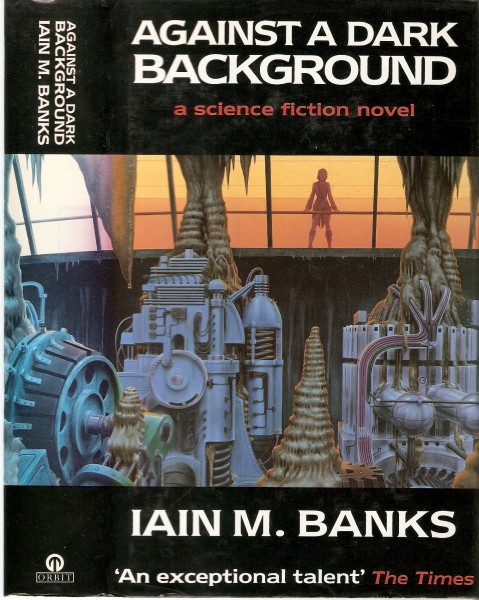
                • Cover of Against a Dark Background
                  Against a Dark Background

                  Iain M. Banks · standalone novel · 1993

                  similar byscience fiction+1 more

                  The daughter of an impoverished noble house and her squad of soldiers become thieves of antiquities; long after their retirement and separation she must assemble them again in order to find and steal the most powerful weapon ever created, or pay with her life.

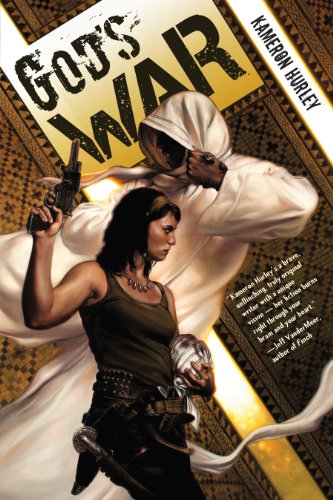
                • Cover of Bel Dame Apocrypha
                  Bel Dame Apocrypha

                  series · 11 books · 2011

                  similar byscience fiction+1 more

                  Kameron Hurley's God's War opens the Bel Dame Apocrypha on a ravaged, contaminated planet where a centuries-old holy war grinds on, fought by mercenaries, magicians and conscripted soldiers. Nyx, a former government assassin, takes on a dangerous job brokering a deal between her government and an alien gene pirate — one that could end the war, if it doesn't kill her first. Infidel and Rapture continue Nyx's story, with further novellas extending the same world.

                • Cover of Solar Lottery
                  Solar Lottery

                  Philip K. Dick · standalone novel · 1955

                  similar byassassinsscience fiction

                  Solar Lottery is a 1955 science fiction novel by American writer Philip K. Dick. It was his first published novel and contains many of the themes present in his later work. It was also published in altered form in the UK as World of Chance. The main story is about a man named Ted Benteley who lives in a strange world, dominated by percentages and the lottery. Lotteries are used to choose the next leader as well as a new assassin, whose job is to try to kill the leader or "Quizmaster". Everybody in society has the opportunity to be selected as a leader or an assassin. Benteley unexpectedly gets chosen to be a member of the committee trying to assassinate the new Quizmaster and he must decide what he is going to do.

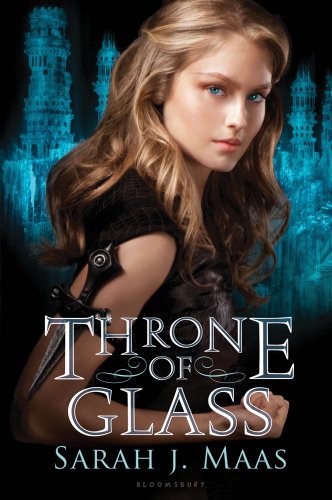
                • Cover of Throne of Glass
                  Throne of Glass

                  series · 15 books · 2012

                  similar by+2 more

                  Throne of Glass is a epic fantasy novel series by American author Sarah J. Maas, beginning with the entry of the same name, released on August 2, 2012. The story follows the journey of Celaena Sardothien, a teenage assassin in a corrupt kingdom with a tyrannical ruler, the King of Adarlan. As the story progresses, Celaena forms unexpected bonds and uncovers a conspiracy amidst her adventures. The series concluded with the eighth book in October 2018.

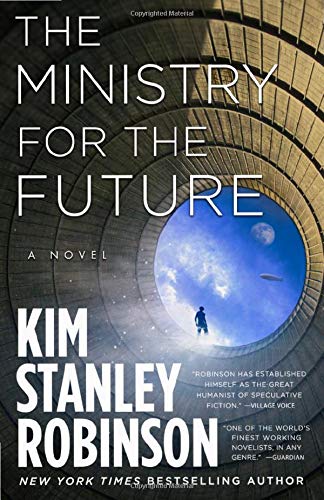
                • Cover of The Ministry for the Future
                  The Ministry for the Future

                  Kim Stanley Robinson · standalone novel · 2020

                  similar byscience fiction+1 more

                  The Ministry for the Future is a climate fiction novel by American science fiction writer Kim Stanley Robinson, published in 2020. Set in the near future, the novel follows a subsidiary body, established under the Paris Agreement, whose mission is to act as an advocate for the world's future generations of citizens as if their rights were as valid as the present generation's. While the ministry pursues various ambitious projects, the effects of climate change are determined to be the most consequential. The plot primarily follows Mary Murphy, the head of the titular Ministry for the Future, and Frank May, an American aid worker traumatized by experiencing a deadly heat wave in India. Many chapters are devoted to other characters' accounts of future events, as well as their ideas about ecology, economics, and other subjects.

                • Cover of Elemental Assassin
                  Elemental Assassin

                  series · 28 books · 2010

                  similar byurban fantasy+1 more

                • Cover of The World Jones Made
                  The World Jones Made

                  Philip K. Dick · standalone novel · 1956

                  similar byscience fiction+1 more

                  The World Jones Made is a 1956 science fiction novel by American writer Philip K. Dick, examining notions of precognition, humanity, and politics. It was first published by Ace Books as one half of Ace Double D-150, bound dos-à-dos with Agent of the Unknown by Margaret St. Clair.The story takes place after a nuclear war in which society is dominated by relativism, which rejects absolute truths and preaches tolerance as the highest principle. The mutant Floyd Jones, who can see into the future, plans to overthrow the system and colonise space. The story ends with the defeat of Jones, whose plans fail despite his ability to see the future due to the immutability of fate.

                • Cover of Shaede Assassin
                  Shaede Assassin

                  series · 8 books · 2011

                  similar by+3 more

                • Cover of Songs of the Seraphim
                  Songs of the Seraphim

                  series · 2 books · 2009

                  completed

                  similar byassassinsfantasy

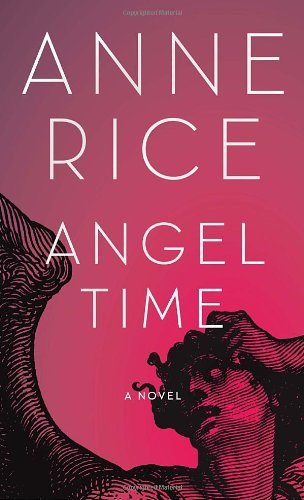
                  Angel Time introduces Toby O'Dare, a contract killer given a chance at redemption when an angel recruits him to intervene in a medieval crisis, sending him back through history rather than forward. Anne Rice's Songs of the Seraphim continues with a second book, Of Love and Evil, following the same reluctant assassin-turned-angelic-agent into another past errand; the series stayed short, with no further volumes.

                • Cover of The Acts of Caine
                  The Acts of Caine

                  series · 4 books · 1998

                  similar byfantasy+2 more

                • Cover of Wyrms
                  Wyrms

                  Orson Scott Card · standalone novel · 1987

                  similar byscience fiction+1 more

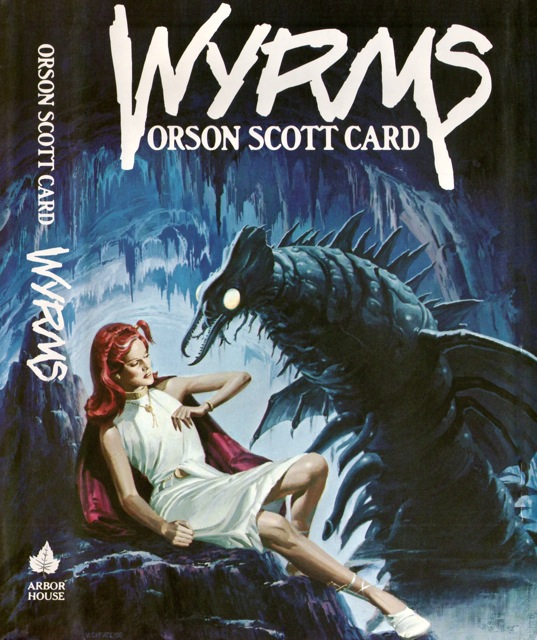
                  Wyrms (1987) is a science fiction novel by American writer Orson Scott Card. The story examines desire, wisdom, and human will. Card describes a version of the tri-partite soul, similar to that articulated by Plato in the Republic.

                • Cover of Triggers
                  Triggers

                  Robert J. Sawyer · standalone novel · 2012

                  similar byscience fiction+1 more

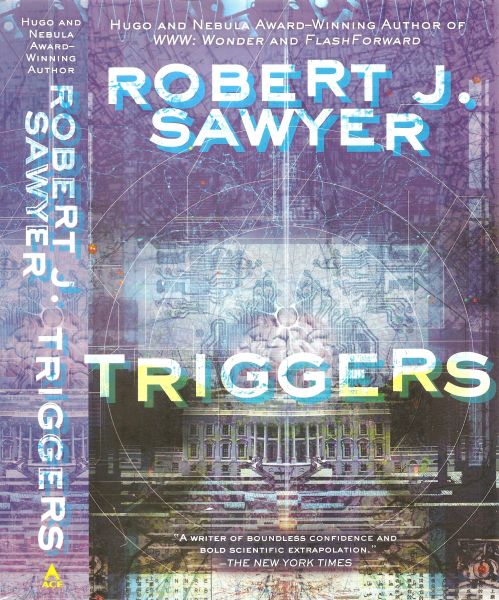
                  Triggers is a science fiction novel by Canadian writer Robert J. Sawyer. It was originally serialized in Analog.

                • Cover of Dragaeran Empire
                  Dragaeran Empire

                  series · 27 books · 1983

                  similar byfantasy+1 more

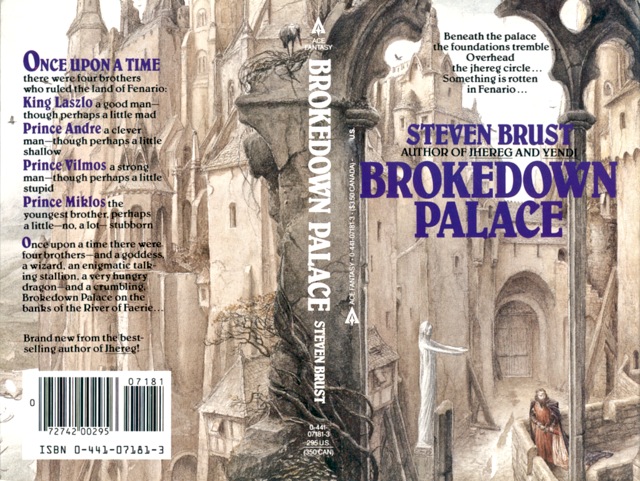
                  Brokedown Palace is Steven Brust's standalone novel set outside his main Vlad Taltos series but within the same Dragaera world, following four brothers in the human kingdom of Fenario after one of them, a volatile king, gravely wounds another. Brust weaves in interspersed folklore chapters drawing on Hungarian tradition, using the family's crumbling castle as a recurring symbol for both a body and a disintegrating kingdom. The Baron of Magister Valley is a later, separate standalone entry in the same wider Dragaera setting rather than a direct sequel.

                • Cover of The Witch's Child
                  The Witch's Child

                  series · 3 books · 2016

                  similar byfantasy+2 more

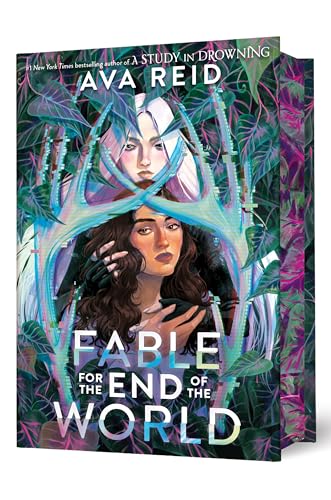
                • Cover of Fable for the End of the World
                  Fable for the End of the World

                  Ava Reid · standalone novel · 2025

                  similar by+2 more

                • Cover of 11/22/63
                  11/22/63

                  Stephen King · standalone novel · 2011

                  similar byassassinsscience fiction

                  11/22/63 is a novel by American author Stephen King about a time traveler who attempts to prevent the assassination of United States President John F. Kennedy, which occurred on November 22, 1963. It is the 60th book published by Stephen King, his 49th novel, and the 42nd under his own name. The novel required considerable research to accurately portray the late 1950s and early 1960s. King commented on the amount of research it required, saying, "I've never tried to write anything like this before. It was really strange at first, like breaking in a new pair of shoes."

                • Cover of Fatality
                  Fatality

                  series · 3 books · 2021

                  similar byscience fiction+2 more

                • Cover of The Ancestor
                  The Ancestor

                  series · 4 books · 2017

                  similar byfantasy+1 more

                  The Book of the Ancestor trilogy is a series of three fantasy novels by Mark Lawrence. It comprises Red Sister (2017), Grey Sister (2018), and Holy Sister (2019). The three novels tell the story of Nona Grey, a peasant girl with mystical abilities. Red Sister was nominated for the 2018 David Gemmell Awards for Fantasy.

                • Cover of Jill Conrad
                  Jill Conrad

                  series · 3 books · 2011

                  similar by+2 more

                • Cover of The Inheritors' Cycle
                  The Inheritors' Cycle

                  series · 2 books · 2008

                  similar byfantasy+1 more