Loreful
HomeDiscover
Search series, authors…⌘K
Loreful

Reading orders for SF/F series and shared universes — with your place kept in every one.

Explore

UniversesSeriesWorksAuthorsAtlas

Help

FAQAboutSite map

Account & legal

Sign inCreate accountPrivacyTerms

Data

Built on ISFDB, Wikipedia, Wikidata and Open Library. Curated reading orders carry their reasoning on the page; the rest follow publication order. Data sources & licenses

© Loreful · data: ISFDB · CC BY

More like Shadowmaster

anchored on:paranormal romancevampiresnorth americanear futureurban fantasyenemies to lovers+2 more

but

Mood

The mood the book leaves you in.

  • The reading experience is propelled by journeys, exploration, and physical risk; excitement and forward momentum dominate over dread or introspection.
  • Joy and loss are deliberately mixed; the resolution grants characters something real while taking something else away, leaving warmth and sorrow together.
  • The book demands work from the reader — dense prose, difficult structure, unfamiliar ideas, or morally uncomfortable material — as part of its intended effect.
  • Grim events, cruelty, or despair dominate the atmosphere, and the book does not soften them with comfort or comic relief.
  • The atmosphere is quietly unsettling — wrongness, unease, and the uncanny pervade the book without necessarily escalating into overt horror.
  • The book is built to move the reader; character feeling is foregrounded and major scenes aim at a strong emotional response.
  • Humor is a primary aim and the prose plays for laughs — comic situations, wit, or dialogue produce sustained comedy, not occasional levity.
  • The book insists that things can improve; effort and decency are shown to matter, and the arc bends toward better outcomes even through hardship.
  • The book teaches as it goes — real facts, history, science, or craft are conveyed in enough depth that learning is part of the reading experience.
  • The book is designed to uplift and motivate, presenting perseverance or achievement in a way that invites the reader to aspire or act.
  • The overall register is cheerful and easygoing; stakes are kept gentle and the book avoids dwelling on pain or dread.
  • Withheld information drives the experience; the book sustains enigmas and secrets the reader wants resolved, whatever its genre.
  • The book is contemplative and inward-looking, giving more weight to thought, memory, and meaning than to external events.
  • The book works as comfort reading — low tension, a soothing pace, and an atmosphere the reader can unwind in.
  • Grief, loss, or melancholy set the dominant register, and the book lets sorrow stand rather than resolving it into comfort.
  • Sustained suspense is the point; the book keeps the reader braced for what happens next through danger, pressure, or impending revelation.
  • Playful invention and charm define the register — fanciful conceits, light absurdity, and a narration that delights in its own oddity.

About

What the story runs on.

  • Stories in which extraterrestrial beings are central — as characters, cultures, or the object of the plot.
  • Stories structured as a quest — a journey undertaken to find, deliver, or destroy something of great import.
  • Stories in which staying alive against nature, catastrophe, or scarcity is the central problem.
  • Stories of lovers kept apart by law, family, faith, or station, where the obstacle to love is the plot.
  • Stories in which a friendship — its making, testing, or loss — is the emotional center.
  • Stories of growing up — a young protagonist crossing from childhood into adult knowledge and responsibility.
  • Stories about who a character truly is — self-discovery, doubled lives, and the search for a self.
  • Stories about mourning — living through the death of a loved one and what loss does to the survivors.
  • Stories in which a buried family truth — hidden parentage, crimes, or shames — surfaces and reorders the present.
  • Stories driven by maneuvering for power — factions, conspiracies, and statecraft conducted in shadow.
  • Stories in which war itself is the subject — combat, occupation, and what warfare does to soldiers and civilians.
  • Stories organized around investigating a killing — the case, the clues, and the pursuit of the killer, in any genre's clothing.

Shelf

Where it sits in the library.

    • Fiction built on magic or other supernatural elements that have no scientific explanation.
    • Secondary-world fantasy at large scale, where the fate of nations or the world turns on the protagonists' struggle.
    • Fantasy set in a recognizably modern city or contemporary world where the supernatural intrudes on everyday life.
    • Fantasy that blends in horror's atmosphere and imagery, keeping a fantastical frame around grim or frightening material.
    • Action-driven fantasy following warriors or rogues with personal stakes against sorcerous threats, rather than world-spanning conflicts.
    • Fantasy set in a real historical period or a close analogue of one, with magic woven into the era.
    • Fantasy in which protagonists cross from the ordinary world into another world through a portal or similar passage.
    • Fiction that retells or reworks a traditional fairy tale in a new form or setting.
    • Fantasy drawing directly on myths, legends, and folklore, retelling them or building on their figures and logic.
    • Fantasy of ghosts, vampires, shapeshifters, psychics, and similar phenomena, usually set in an otherwise ordinary world.
    • Fiction mixing science-fictional trappings with overtly magical or impossible elements in one setting.
    • Low-stakes fantasy emphasizing comfort, community, and everyday pleasures over conflict and peril.
    • Speculative fiction of pervasive moral ambiguity, violence, and cynicism that rejects heroic conventions — fantasy and SF alike.
      • Fiction that extrapolates from science and technology — future societies, space travel, or speculative inventions — within at least nominally natural laws.
      • Science fiction of interstellar scope — starships, galactic polities, and adventure across star systems.
      • Science fiction committed to scientific rigor, where technical plausibility constrains the story.
      • Science fiction centered on armed forces and warfare, told largely from a military point of view.
      • Science fiction of networked, corporate-dominated near futures, pairing high technology with social decay.
      • Science fiction styled on nineteenth-century steam-powered technology, often in a Victorian or pseudo-Victorian setting.
      • Fiction depicting an oppressive or catastrophic society, presented as a warning.
      • Fiction set after civilization's collapse, following survivors in the ruins of the old world.
      • Fiction in which characters move between past and future, and the mechanics or consequences of that travel drive the plot.
      • Fiction exploring a world where a historical event went differently and history diverged from ours.
      • Science fiction about humanity's first encounter and communication with an alien intelligence.
      • Science fiction in which extraterrestrial forces attack or occupy Earth and humanity resists.
      • Fiction whose primary aim is to frighten or unsettle the reader through dread, menace, or the monstrous.
      • Horror of vast, indifferent, incomprehensible entities before which humanity is insignificant, in the Lovecraft tradition.
      • Horror of decaying houses, buried family secrets, and oppressive atmosphere in the Gothic literary tradition.
      • Horror centered on hauntings and the returning dead.
      • Horror located in the mind — paranoia, obsession, and unreliable perception rather than external monsters.
      • Horror built around the reanimated dead and survival amid their outbreaks.
      • Horror defined by explicit, transgressive gore that refuses to cut away from violence.
      • Speculative fiction of the strange and uncanny that resists both natural explanation and standard genre categories.
      • Fiction organized around solving a crime or puzzle, typically following an investigator toward the identification of a culprit.
      • A puzzle-first mystery that lays out clues so the culprit's identity can be deduced before the reveal.
      • Crime fiction of moral ambiguity, fatalism, and hard-edged style, set among the corrupt and the doomed.
      • A mystery following the realistic routines of police work — forensics, interviews, and case-building.
      • A gentle mystery with an amateur sleuth, a small community, and violence kept off the page.
      • A mystery set in a past era, where the investigation works within that period's methods and society.
      • Fast-paced fiction driven by imminent danger, pursuit, or high-stakes conspiracy, built to sustain tension.
      • A thriller of espionage — agents, tradecraft, and intelligence services in conflict.
      • A thriller centered on lawyers and the courtroom, where litigation carries the suspense.
      • A thriller driven by detailed contemporary or near-future technology, often military or scientific.
      • A thriller whose tension comes from mental states and manipulation between characters rather than external action.
      • Fiction whose central plot is a romantic relationship and its development toward an emotionally satisfying resolution.
      • Romance in which one or both partners are supernatural beings, blending fantasy elements into the love story.
      • A fantasy-romance hybrid in which the romantic arc and the fantasy plot carry equal weight.
      • Romance set in a past era, with courtship shaped by the period's society and manners.
      • Romance set in the present day, without supernatural or historical elements.
      • Fiction set in a real past period, where the historical setting materially shapes characters and events.
        • General and literary fiction emphasizing prose style, character interiority, or formal ambition over genre plot conventions.
        • Fiction in a realistic world where magical events occur and are treated as ordinary, in the tradition of Latin American literature.
        • Fiction that ridicules people, institutions, or society in order to criticize them.
        • Fiction of dreamlike, irrational imagery and logic that breaks from realistic representation.
        • Fiction that plays with narrative convention through metafiction, fragmentation, and self-reference.
        • Fiction propelled by journeys, exploration, and physical peril, where action and survival carry the plot.
        • Adventure fiction of ships and seafaring — naval engagements, voyages, and life at sea.
        • Fiction of the American frontier West — gunmen, ranchers, and lawmen, typically in the late nineteenth century.
        • Fiction centered on soldiers, campaigns, and the experience of warfare, historical or imagined.
          • Fiction written primarily to amuse, using comedic situations, wit, or parody as its organizing principle.
            • Multi-generational fiction following a family or dynasty across decades, with inheritance and kinship as the through-line.
              • Fiction whose world runs on explicit game mechanics — levels, stats, and skills that characters can see and exploit.
                • Fiction about costumed or superpowered heroes and their conflicts with comparable villains.

                Practical

                How long a commitment, whether it stands alone, and whether it has finished.

                Tap a chip to ask for it · tap again to rule it out · once more to clear. Numbers show what would be left.

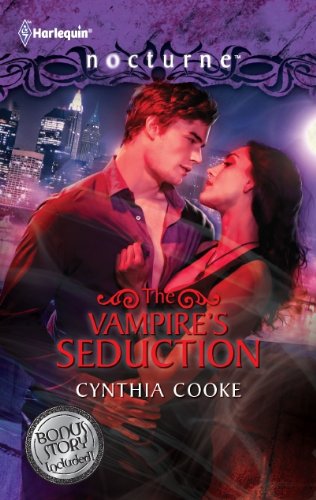
                • Cover of The Vampire's Seduction
                  The Vampire's Seduction

                  Cynthia Cooke · standalone novel · 2011

                  similar bytenseparanormal romancevampiresurban fantasynorth americaenemies to loversemotionalbig city

                  Finding out she was a witch had upended Mari Saguna's staid life, but being thrown into a war between dark, otherworldly creatures in New York City surpassed the surreal. Her coven battled a clan of vampires...and caught in the middle were Mari and one vampire hell-bent on rescuing his kidnapped brethren. No spells could protect her from Nicholai, the potent, mysterious seducer. No potions could assuage the longing he'd awakened in her. In his lair, Mari wasn't sure she wanted protection...until she discovered Nicholai's dark intention. Could she believe the enemy she'd come to love meant to destroy her? And would it matter when Nicholai discovered she -- and her blood -- were her coven's secret weapon?

                • CV
                  Chicagoland Vampires Universe

                  series · 25 books · 2009

                  similar byurban fantasyvampiresparanormal romancenorth americabig city+2 more

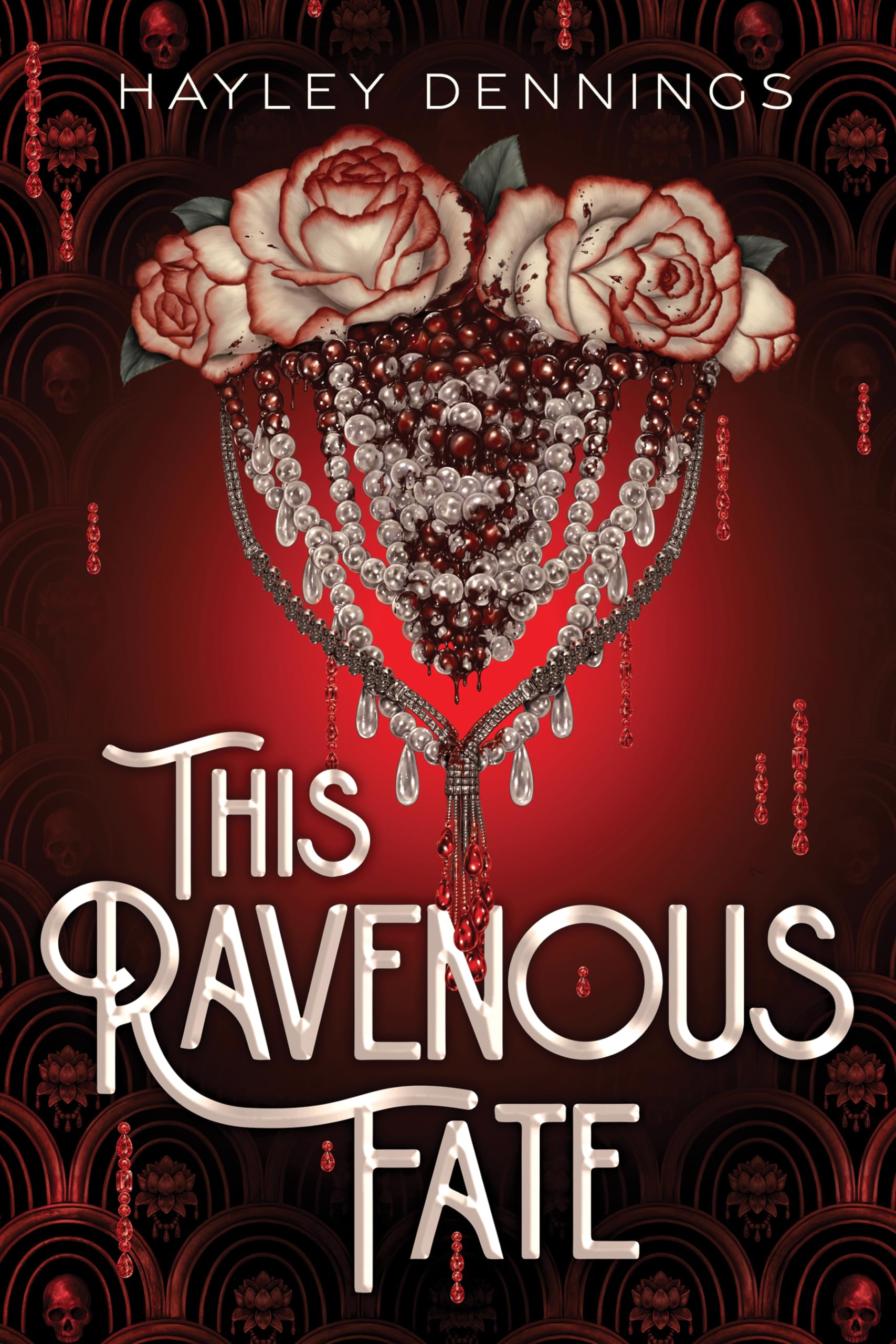
                • Cover of This Ravenous Fate
                  This Ravenous Fate

                  series · 2 books · 2024

                  similar bytensevampiresparanormal romancenorth americaenemies to loversbig city

                • VA
                  Vampire Academy Universe

                  series · 19 books · 2007

                  similar byparanormal romancevampires+4 more

                • Cover of Meena Harper
                  Meena Harper

                  series · 2 books · 2010

                  similar byparanormal romancevampiresurban fantasynorth americabig city+1 more

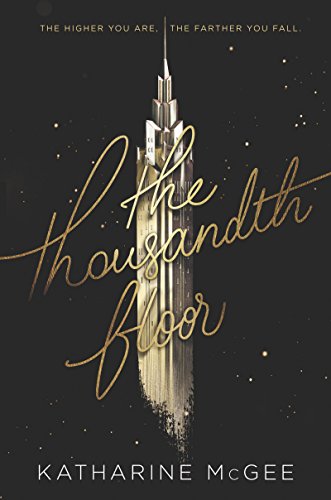
                • Cover of The Thousandth Floor
                  The Thousandth Floor

                  series · 3 books · 2016

                  similar bytensenear futurenorth americabig city+2 more

                  Katharine McGee's trilogy imagines Manhattan in 2118 as a single thousand-story tower housing every stratum of society, following five teenagers whose ambitions collide as they climb toward, or fall from, its highest floors. Across The Thousandth Floor, The Dazzling Heights, and The Towering Sky, addiction, surveillance, genetic privilege, and family betrayal play out as soap-opera drama in a meticulously built near-future setting.

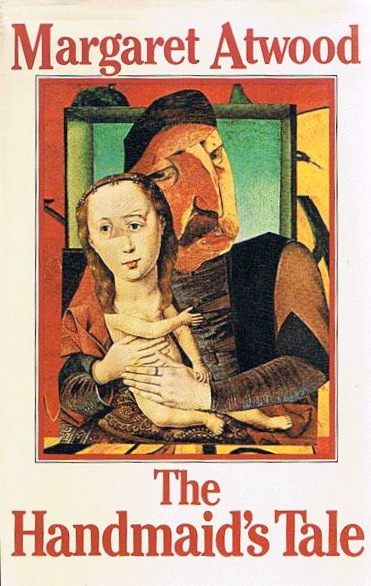
                • Cover of The Handmaid's Tale
                  The Handmaid's Tale

                  series · 3 books · 1985

                  similar bytensenear futurenorth america+1 more

                  The Handmaid's Tale is Margaret Atwood's 1985 novel set in Gilead, a totalitarian theocracy that has overthrown the United States and forces fertile women into reproductive servitude as Handmaids; it is narrated by one such woman, Offred. Atwood returned to the world in her 2019 sequel The Testaments, set fifteen years later and narrated by three women, including the regime's Aunt Lydia. Together the two novels move from Gilead's grip on power toward the first cracks in it.

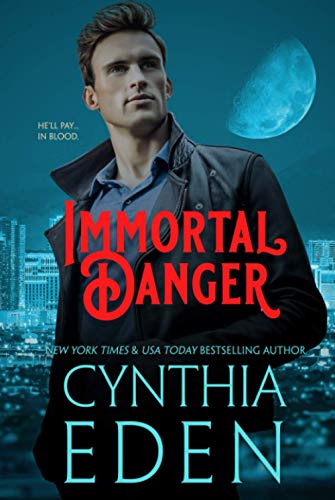
                • Cover of Immortal Danger
                  Immortal Danger

                  Cynthia Eden · standalone novel · 2009

                  similar bytenseparanormal romancevampiresenemies to loversnorth america+1 more

                  Being Bullet Proof Sucks—LiterallyOnce, Maya Black was a kick-ass cop patrolling the streets of L.A. She still keeps the city safe, but nowadays her bad guys of choice include demons, werewolves, and assorted nocturnal scum. Something Maya knows a thing or two about. She’s a vampire—and not thrilled about it. Payback meet bitch.Adam Brody hopes Maya is as dangerous as they say she is. He needs her to help rescue his niece Cammie from a ruthless band of vamps, and he’s willing to pay—in blood. Trusting her is another matter. Adam has never met a vampire who doesn’t lie. Then again, he’s never met anyone like Maya, who fills him with a desperate need that ignites into explosive, no-holds-barred encounters… “Highly sensual and definitely dangerous.” —Shannon McKenna on Hotter After Midnight

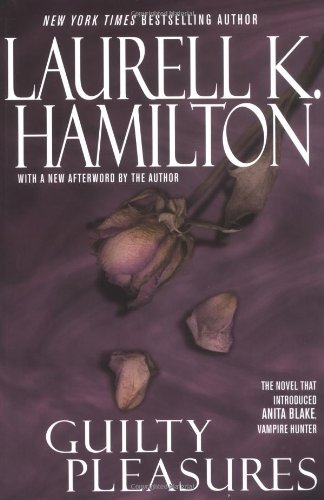
                • Cover of Anita Blake
                  Anita Blake

                  series · 42 books · 1993

                  similar bytensevampiresurban fantasynorth america+1 more

                  Anita Blake: Vampire Hunter is a series of urban fantasy novels, short stories, and comic books by Laurell K. Hamilton. The books have sold more than six million copies; many have made The New York Times Best Seller list.

                • Cover of Night Huntress World
                  Night Huntress World

                  series · 2 books · 2010

                  part of Night Huntress

                  similar byparanormal romancevampires+5 more

                • Cover of Meredith Gentry
                  Meredith Gentry

                  series · 10 books · 2000

                  similar byurban fantasyparanormal romancepolitical intrigue+3 more

                  The Merry Gentry series is a series of urban fantasy novels by New York Times bestselling author Laurell K. Hamilton. The series is told through the lens of the titular character Meredith "Merry" Gentry, a faerie princess turned private investigator in a world where faeries exist and are known to the general public. The first book in the series, A Kiss of Shadows, was released by Del Rey on October 3, 2000. There are currently nine books in the series.

                • Cover of The Passage
                  The Passage

                  series · 3 books · 2010

                  similar bytensenear futurenorth americavampires

                  The Passage is a novel series by Justin Cronin. There are three published books in the series. The film rights were acquired by Fox Entertainment Group in 2007 for adaptation into a film trilogy, but after 12 years of development and planning, it was changed to a television series, which premiered in January 2019 and was canceled after the first season.

                • Cover of The Dark Artifices
                  The Dark Artifices

                  series · 4 books · 2016

                  part of The Mortal Instruments

                  similar byurban fantasynorth americaemotionalbig city+3 more

                  The Dark Artifices is a trilogy written by Cassandra Clare. The series is chronologically the fourth series in The Shadowhunter Chronicles and a sequel to The Mortal Instruments. It is set in Los Angeles. The series consists of three books: Lady Midnight, Lord of Shadows and Queen of Air and Darkness, in that particular order. Centered around the protagonist, Emma Carstairs, the series follows her journey as a Shadowhunter at the Los Angeles Institute, and her life with her best-friend and parabatai, Julian Blackthorn, and his family. The series is about a sacred bond of "parabatai", two bonded Shadowhunters, and it is more valuable than any bond in this world. This bond makes the two more powerful and strong, but there is only one drawback - it is forbidden to fall in love with your parabatai. It so happens that Emma and Julian, two parabatai, have fallen in love. The Dark Artifices is a trilogy about their struggle against their enemies and how the two protagonists deal with their forbidden love and the resulting consequences. The series is told from the point-of-view of the various different characters in the story.

                • Cover of Rainbows End
                  Rainbows End

                  Vernor Vinge · standalone novel · 2006

                  similar bytensenear futurenorth americabig city+1 more

                  A science-fiction thriller set in a place and time as exciting and strange as any far-future world: San Diego, California, 2025. Robert Gu is a recovering Alzheimer’s patient. The world that he remembers was much as we know it today. Now, as he regains his faculties through a cure developed during the years of his near-fatal decline, he discovers that the world has changed and so has his place in it. He was a world-renowned poet. Now he is seventy-five years old, though by a medical miracle he looks much younger, and he’s starting over, for the first time unsure of his poetic gifts. Living with his son’s family, he has no choice but to learn how to cope with a new information age in which the virtual and the real are a seamless continuum, layers of reality built on digital views seen by a single person or millions, depending on your choice. But the consensus reality of the digital world is available only if, like his thirteen-year-old granddaughter Miri, you know how to wear your wireless access—through nodes designed into smart clothes—and to see the digital context—through smart contact lenses. With knowledge comes risk. When Robert begins to re-train at Fairmont High, learning with other older people what is second nature to Miri and other teens at school, he unwittingly becomes part of a wide-ranging conspiracy to use technology as a tool for world domination. In a world where every computer chip has Homeland Security built-in, this conspiracy is something that baffles even the most sophisticated security analysts, including Robert’s son and daughter-in law, two top people in the U.S. military. And even Miri, in her attempts to protect her grandfather, may be entangled in the plot. As Robert becomes more deeply involved in conspiracy, he is shocked to learn of a radical change planned for the UCSD Geisel Library; all the books there, and worldwide, would cease to physically exist. He and his fellow re-trainees feel compelled to join protests against the change. With forces around the world converging on San Diego, both the conspiracy and the protest climax in a spectacular moment as unique and satisfying as it is unexpected.

                • Cover of Oath of Fealty
                  Oath of Fealty

                  Larry Niven & Jerry Pournelle · standalone novel · 1981

                  similar bytensenear futurenorth americabig city

                  Oath of Fealty is a 1981 novel by American writers Larry Niven and Jerry Pournelle, published originally by Phantasia Press, then by Timescape Books, with numerous reprints. Set in the near future, it involves an arcology, a large inhabited structure, called Todos Santos, which rises above a crime-ridden Los Angeles, California, but has little beyond casual contact with the city. The novel popularized the phrase "think of it as evolution in action", which occurs elsewhere in Niven's books. The novel anticipated the building of the Los Angeles subway. It was included in David Pringle's book Science Fiction: The 100 Best Novels.

                • Cover of The Shockwave Rider
                  The Shockwave Rider

                  John Brunner · standalone novel · 1975

                  similar bytensenear futurenorth americabig city

                  The Shockwave Rider is a science fiction novel by John Brunner, originally published in 1975. It is notable for its hero's use of computer hacking skills to escape pursuit in a dystopian future, and for the coining of the word "worm" to describe a program that propagates itself through a computer network. It also introduces the concept of a Delphi pool, perhaps derived from the RAND Corporation's Delphi method – a prediction market on world events which bears close resemblance to DARPA's controversial and cancelled Policy Analysis Market.

                • Cover of Entity / Vamptown
                  Entity / Vamptown

                  series · 5 books · 2013

                  completed

                  similar byparanormal romancevampiresnorth americabig city+4 more

                • Cover of Friday
                  Friday

                  Robert A. Heinlein · standalone novel · 1982

                  similar bytensenear futurenorth america+1 more

                  Friday is a 1982 science fiction novel by American writer Robert A. Heinlein. It is the story of a female "artificial person", the eponymous Friday, genetically engineered to be stronger, faster, smarter, and generally better than normal humans. Artificial humans are widely resented, and much of the story deals with Friday's struggle both against prejudice and to conceal her enhanced attributes from other humans. The story is set in a Balkanized 21st century, in which the nations of the North American continent have been split up into a number of smaller states.

                • Cover of Snow Crash
                  Snow Crash

                  Neal Stephenson · standalone novel · 1992

                  similar bytensenear futurebig citypolitical intrigue

                  Snow Crash is a 1992 science fiction novel by Neal Stephenson. Like many of Stephenson's novels, its themes include history, linguistics, anthropology, archaeology, religion, computer science, politics, cryptography, memetics, and philosophy.

                • Cover of Blood Red
                  Blood Red

                  Heather Graham · standalone novel · 2007

                  similar bytensevampiresparanormal romancenorth americabig city

                  When a fortune-teller shows bridesmaid Lauren Crow an omen of her gruesome death, she and her friends laugh it off as cheesy theatrics--until women begin disappearing in the night.Even as the streets become more dangerous, Lauren finds herself lusting after a man who is himself dangerous--and quite possibly crazy. Mark Davidson prowls the city by night armed with crosses and holy water, in search of vampires, whose existence, he insists, is real. He is as irresistibly drawn to Lauren as she is to him, and not only because she's the image of his murdered fiancee. But Mark's frightening obsession with finding his lover's killer merely hides a bitter vendetta that cuts deeper than grief over a lost love. As Lauren wrestles with desire and disbelief, sinister shadows lengthen over New Orleans, threatening her friends and foretelling a battle that may spell the end of the city's uneasy truce between the living and the undead.

                • Cover of The Secret Vampire Society
                  The Secret Vampire Society

                  series · 4 books · 2009

                  similar bytenseparanormal romancevampiresurban fantasyemotional

                • Cover of In the Company of Vampires
                  In the Company of Vampires

                  series · 3 books · 2013

                  part of Beautiful Creatures

                  similar byparanormal romancevampiresenemies to lovers+3 more

                • Cover of The President's Vampire / Nathaniel Cade
                  The President's Vampire / Nathaniel Cade

                  series · 4 books · 2010

                  similar bytensevampiresurban fantasynorth americapolitical intrigue+1 more

                • Cover of The Night Prince
                  The Night Prince

                  series · 5 books · 2011

                  part of Night Huntress

                  similar byparanormal romancevampirestenseemotional+1 more