More like Shadow's End
anchored on:science fiction
but
- Dune
series20 books1963
part of Dune Universe
similar byscience fictionother star systemsfar future+1 more
Frank Herbert's Dune Chronicles opens with 1965's Dune, set on the desert planet Arrakis where House Atreides takes control of the only source of the vital spice melange and young Paul Atreides is pulled into a struggle over its politics and religion. Herbert carried the story forward across five further novels — Dune Messiah, Children of Dune, God Emperor of Dune, Heretics of Dune, and Chapterhouse: Dune — following Paul's line over the following millennia, before Brian Herbert and Kevin J. Anderson later extended the saga. Many other editions of these six novels are omnibus and box-set repackagings rather than separate stories.
- Dune Universe
universe78 books1963
Start hereDune · Start here
similar byscience fictionother star systemsfar future+1 more
Arrakis. Dune. The desert planet, where empire runs on a single substance: the spice melange, which folds space, prolongs life, and unlocks prescience, and which exists nowhere else in the known universe. Frank Herbert's saga is a meditation dressed as an adventure — feudal houses and a secret sisterhood, engineered messiahs and the patient ecology of a world without water, all turning on the terrible gravity of who commands the spice. It reads like scripture and schemes like a war room, ten thousand years hence, among people who have outlawed the thinking machine and made instruments of themselves instead. At its heart stand Herbert's original six — Dune, Dune Messiah, Children of Dune, God Emperor of Dune, Heretics of Dune, Chapterhouse: Dune — a single deepening arc across millennia, arguing the whole way between prophecy and free will. Around that spine his son Brian Herbert and Kevin J. Anderson have raised a vast prequel architecture: Prelude to Dune, tracing the great houses a generation before Paul; Legends of Dune, reaching back to the crusade that broke the machines; the Schools of Dune cycle on the founding of Bene Gesserit, Mentat, and Navigator; the Caladan Trilogy and Heroes of Dune filling years the originals left in shadow. Many hands, dozens of volumes, one desert. What sets Dune apart is its refusal of the simple: religion is manufactured, heroes are hazards, and the sand itself — worm, water, ecology — acts as a political power. Begin where the universe did, with Frank Herbert's Dune (1965), and read the original six in order; you need nothing else to feel the full weight. The prequels are a country to explore afterward, taken by era. Beginnings are delicate times.
- Forge of God
series2 books1987
completed
similar byscience fictiondark+2 more
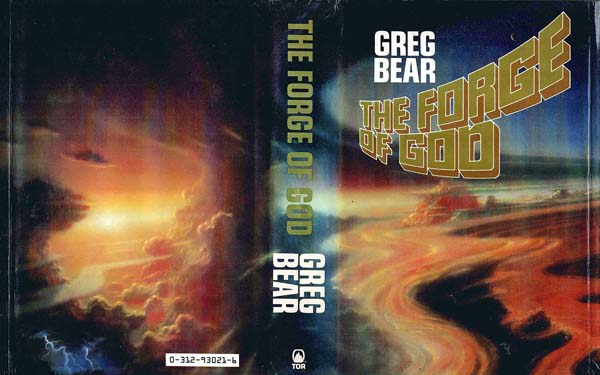
The Forge of God (1987) is Greg Bear's science fiction novel about Earth's discovery that it is the target of an incomprehensible, overwhelming alien attack, following scientists and ordinary people as they try to understand what is destroying the planet. Its 1992 sequel, Anvil of Stars, follows a group of young survivors sent on a mission of interstellar retaliation, continuing directly from the first book's ending.
- Thousand Worlds
series24 books1971
similar byscience fictionother star systemsfar future+1 more
George R.R. Martin's Thousand Worlds is a loose future-history setting he used for several of his 1970s-80s stories and novels, encompassing human interstellar colonization and encounters with older, stranger civilizations. Dying of the Light, A Song for Lya and the novella Nightflyers are among its best-known entries, sharing background rather than continuing characters or plot.
- Marjorie Westriding
series3 books1989
completed
similar byscience fictionother star systemsfar future+2 more
Sheri S. Tepper's Arbai Trilogy opens with Grass (1989), in which investigator Marjorie Westriding is sent to the planet Grass to learn why its aristocratic settlers, obsessed with hunting using native and unsettlingly intelligent fauna, appear immune to a plague devastating the rest of human space. Raising the Stones and Sideshow carry the trilogy's ideas forward across roughly a thousand years and more of the same future history, with Marjorie's legacy and the extinct alien Arbai continuing to shape events.
- Flood
series6 books2008
similar byecological collapsescience fiction+2 more
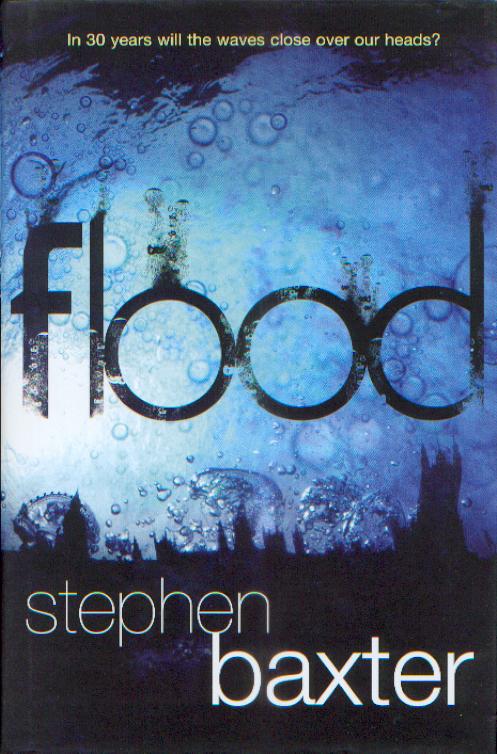
In Stephen Baxter's Flood, sudden seismic upheaval releases immense reservoirs of water trapped deep beneath Earth's crust, and sea levels begin climbing far faster than anyone can adapt to, forcing a handful of survivors to watch coastlines and then continents disappear. The 2009 sequel, Ark, follows a parallel thread of people who instead gamble everything on a desperate escape from the drowning planet. Together the two books trace roughly a half-century of civilizational collapse and reinvention as dry land runs out.
- Saint Leibowitz
series6 books1955
completed
similar byscience fictionfar future+1 more
Walter M. Miller Jr.'s A Canticle for Leibowitz (1959), assembled from three novellas he had published earlier in the decade, follows the monks of a Catholic monastery in the post-nuclear American Southwest as they preserve fragments of scientific knowledge across centuries, watching civilization slowly rebuild itself and edge back toward the mistakes that destroyed it. Miller's posthumous sequel, Saint Leibowitz and the Wild Horse Woman, completed by Terry Bisson from his notes after his death and published in 1997, returns to the same abbey and its world decades later. Together the two novels form a sparse, decades-spanning series about memory, faith, and the cycles of civilization.
- Bloom
Wil McCarthystandalone novel1998
similar byecological collapsescience fictionother star systemsfar future+1 more
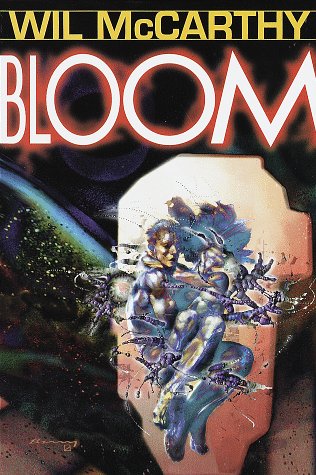
Bloom, written in 1998, is the fifth science fiction novel written by Wil McCarthy. It was first released as a hardcover in September 1998. Almost a year later, in August 1999, its first mass market edition was published. An ebook reprint was published in 2011.
- The City in the Middle of the Night
Charlie Jane Andersstandalone novel2019
similar byecological collapsescience fictiondarkother star systemsfar future
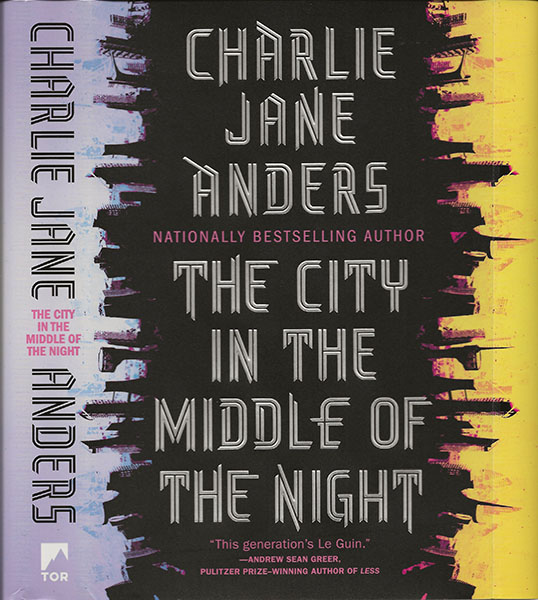
The City In the Middle of the Night is a 2019 climate-fiction novel by Charlie Jane Anders. It is set on a tidally locked planet, where human life, surrounded by hostile alien life, is mostly divided between two archetypically different urban sites. The main story focuses on two characters whose actions take them outside of the cities.
- The Margarets
Sheri S. Tepperstandalone novel2007
similar byecological collapsescience fictiondarkother star systemsfar future
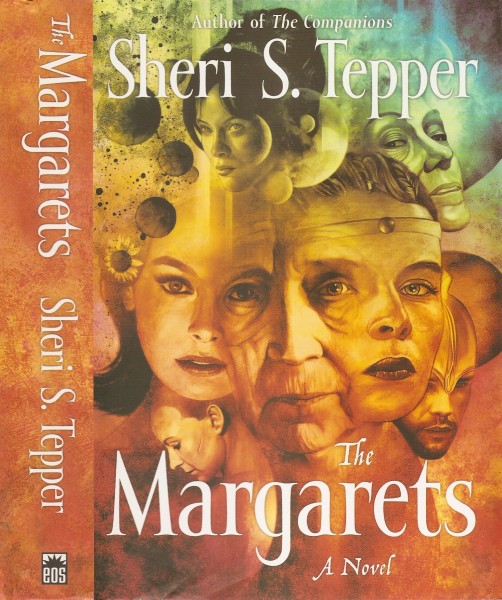
The Margarets marks the long-awaited return of one of the most respected authors in the sf community; a writer who has earned accolades and the admiration of every true aficionado of bold, brilliant, risk-taking speculative fiction. Sheri S. Tepper dazzles yet again with a powerful tale of ingenious survival and strange destiny.The only human child living in a human work colony on the Martian satellite Phobos, little Margaret Bain has devised a system for keeping the suffocating demons of boredom and loneliness at bay: She invents six imaginary companions, each an extension of her own personality, to play with. When the unproductive Phobos project is shut down, and after Margaret is forced to return to Earth with her parents, the child's other selves are lost to her. But they are not gone. Left behind, each one flourishes—refining its own persona, acquiring its own history—before ultimately dispersing to far-flung destinations throughout the universe.On a near-barren homeworld denuded by thoughtless-ness and chemistry, Margaret grows to adulthood and marries, despite the seemingly utter hopelessness of humanity's future. The Earth is so impoverished that its inhabitants must import water and other basic necessities of life—trading the only viable product the planet has left to offer . . . slaves. The time will come when Margaret must leave this world as well, expelled as part of a desperate survival plan millennia in the making—an astonishing scheme that will require her to gather together the many Margarets who are now scattered throughout the galaxy. The creator of the Margarets must now bring all her selves home . . . or watch her race perish.
- Six Moon Dance
Sheri S. Tepperstandalone novel1998
similar byecological collapsescience fictiondarkother star systemsfar future
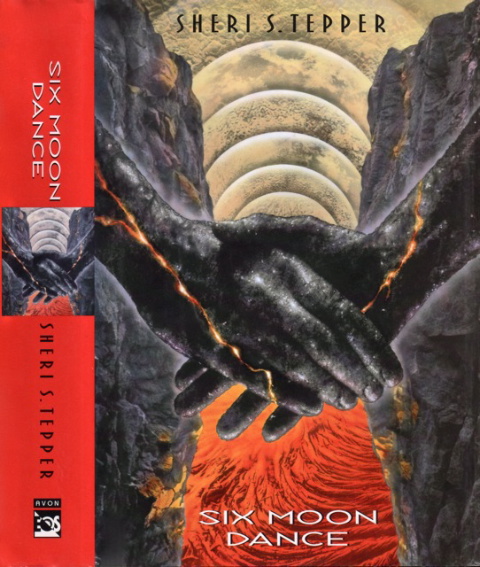
It was many years ago that humans came and settled the world of Newholme-cruelly bending the planet to their will; setting down roots and raising up cities and farms and a grand temple to their goddess.But now the ground itself is shaking with ever-increasing violence. And the Great Questioner, official arbiter of the Council of Worlds, has come to this isolated orb to investigate rumors of a terrible secret that lies buried deep within Newholme's past--a past that is not dead, not completely. And it will fall to Mouche, a beautiful youth of uncommon cleverness and spirit, to save his imperiled home by dicovering and embracing that which makes him unique among humans. For every living thing on newholme is doomed, unless Mouche can appease something dark and terrible that is coiled within...and surrender to the mysterious ecstatic revelry taht results when the six moons join.
- Hungry City Chronicles / Mortal Engines
series5 books2001
part of Mortal Engines Universe
similar byscience fictionfar future+1 more
The Mortal Engines Quartet, also known as the Predator Cities Quartet, is a series of epic young adult science fiction novels by the English novelist and illustrator Philip Reeve. He began the first volume of the series, Mortal Engines, in the 1980s, and it was published in 2001. Reeve then published three further novels, Predator's Gold (2003), Infernal Devices (2005), and A Darkling Plain (2006).
- Hive
series5 books1969
completed
similar byscience fictionfar future+2 more
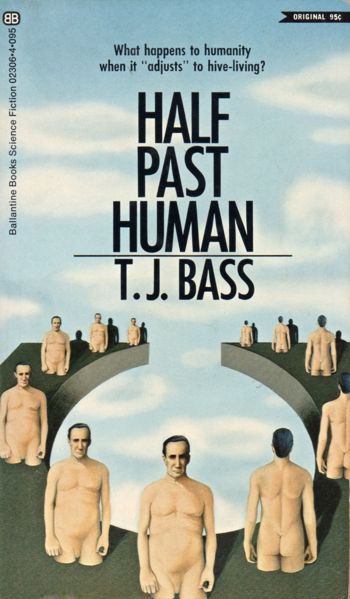
T. J. Bass's Hive novels imagine a grim, wildly overpopulated far-future Earth run by a vast hive-mind bureaucracy that treats most of humanity as disposable. Half Past Human, fixed up from two earlier stories, follows outcasts living outside the Hive's control; The Godwhale continues the setting generations later around a resurrected cyborg whale-ship.
- Riddley Walker
Russell Hobanstandalone novel1980
similar byscience fictiondarkfar future+1 more
WorldCat: Composed in an English which has never been spoken and laced with a storytelling tradition that predates the written word, RIDDLEY WALKER is the world waiting for us at the bitter end of the nuclear road. It is desolate, dangerous and harrowing, and a modern masterpiece.
- The Triffids
series3 books1951
similar bydarkscience fiction+1 more
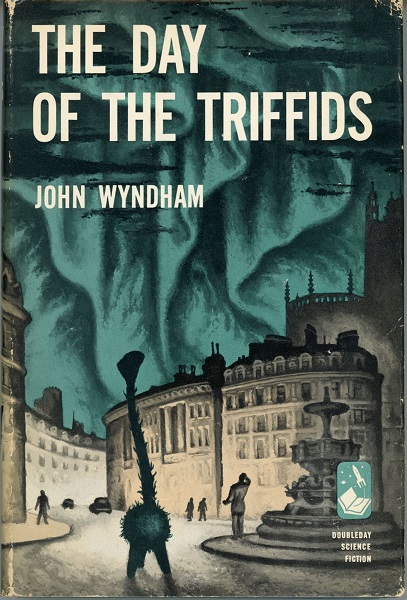
John Wyndham's The Day of the Triffids (1951) opens with a meteor-shower-like event that leaves most of Britain's population blind, throwing civilization into collapse just as triffids, an aggressive and mobile species of poisonous plant, become free to hunt the helpless survivors. Simon Clark's authorized sequel The Night of the Triffids (2001) picks up a generation later, narrated by the original protagonist's son as he confronts a new triffid-dominated world, and John Whitbourn's The Age of the Triffids extends the shared setting further still. Together the three novels form a loose post-apocalyptic trilogy built on Wyndham's original premise rather than a tightly plotted single story.
- Hothouse
series6 books1961
completed
similar byscience fictionfar future+2 more
Hothouse is set so far in Earth's future that the sun has nearly stopped and a single vast banyan tree has swallowed most of the land, leaving a shrunken, primitive humanity struggling to survive among giant plants and insects that have taken over ecological niches animals once filled. Brian Aldiss fixed up five linked novelettes, originally serialized in 1961, into this novel; the abridged US edition appeared as The Long Afternoon of Earth, with the full text not reaching American readers until 1976. It's cited as one of the defining 'dying Earth' science fantasies.
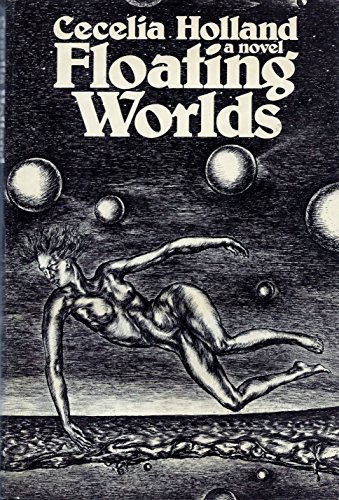
- Floating Worlds
Cecelia Hollandstandalone novel1976
similar byecological collapsescience fictionfar future+1 more
2000 years in the future, runaway pollution has made the Earth uninhabitable except in giant biodomes. The society is an anarchy, with disputes mediated through the Machiavellian Committee for the Revolution. Mars, Venus and the Moon support flourishing colonies of various political stripes. On the fringes of the solar system, in the Gas Planets, a strange, new, violent kind of human has evolved.In this unstable system the anarchist Paula Mendoza, an agent of the Committee, works to make peace, and ultimately protect her people, in a catastrophic clash of worlds that destroys the order she knows.
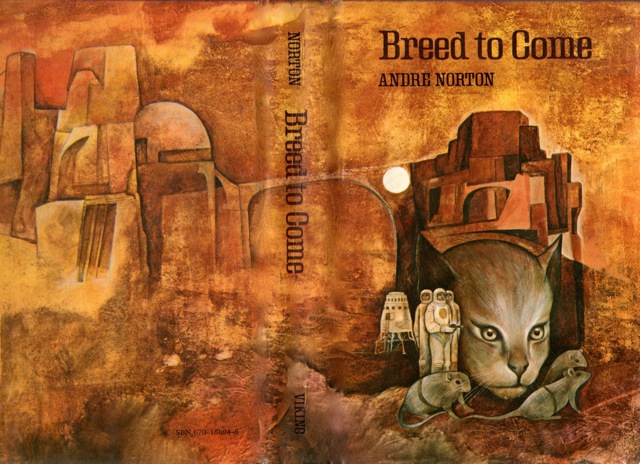
- Breed to Come
Andre Nortonstandalone novel1972
similar byscience fiction+1 more
"When desperate measures failed to control what men had begun and could not stop, they fled their polluted planet, leaving behind an epidemic virus born of experimentation. Yet unlike men, whom the disease could destroy, the animals of the planet thrived. Each generation was more forceful and intelligent than the last. In the ruins of what was once a university complex, a vast band of cats, more highly evolved than those on the outside, sought to master the works of men. And they learned that the demons (as men were called) were not legendary but real. Then one day a spaceship landed..." from Goodreads.com
- Jem
Frederik Pohlstandalone novel1979
similar byscience fictionother star systems+1 more
The discovery of another habitable world might spell salvation to the three (Food Bloc, Fuel Bloc & People Bloc) bitterly competing power blocs of the war torn & resource-starved 21st century. But when their representatives arrive on Jem, with its three intelligent species, they discover instead the perfect situation into which to export their rivalries. Subtitled, with savage irony, 'The Making of a Utopia', Jem is one of Frederik Pohl's most powerful novels.
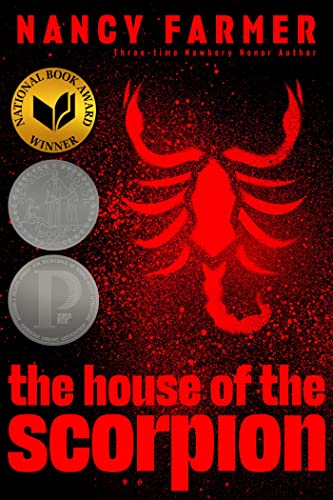
- The House of the Scorpion
series2 books2002
similar byscience fictiondark+2 more
Matt is a clone of El Patron, the ancient drug lord who rules Opium, a narco-state carved out of the border between the U.S. and a future Mexico, created and raised solely to supply spare organs for the man he was copied from. Nancy Farmer's The House of the Scorpion follows Matt's growing awareness of what he is and what's expected of him, and his fight to be treated as human once El Patron dies. The sequel, The Lord of Opium, picks up with Matt unexpectedly left in charge of the whole corrupt nation.
- Time Salvager
series2 books2015
similar byecological collapsescience fictionother star systemsfar future+1 more
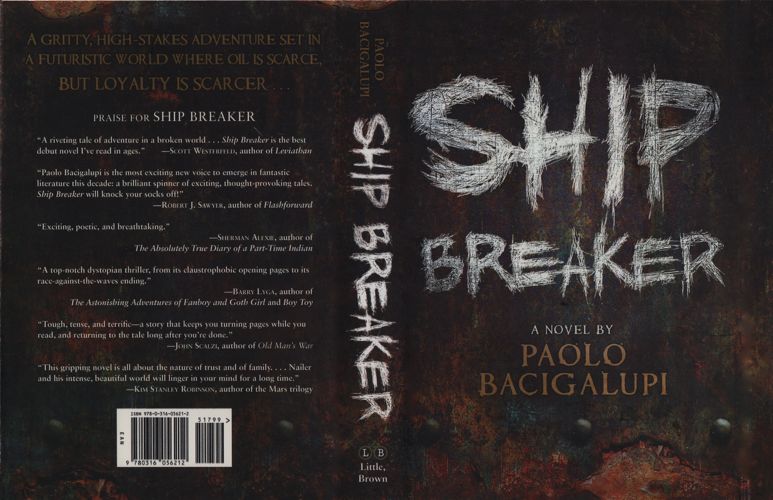
- Ship Breaker
series3 books2010
similar byscience fictiondark+2 more
Nailer works a light-crew scavenging copper wire and scrap from beached oil tankers on a Gulf Coast reshaped by rising seas and vanished order, until a wrecked clipper ship washes ashore carrying a half-drowned girl from the wealthy world he'll never belong to. Paolo Bacigalupi's Ship Breaker follows Nailer as helping her pulls him out of his abusive father's orbit and into a much larger, more dangerous game involving her family's fortune. The sequels The Drowned Cities and Tool of War widen the same flooded, resource-scavenging future to new characters and coastlines.