More like Silver Fire
anchored on:science fictiongenetic engineeringour worldhard science fictionchallenging
but
- Blood Music
Greg Bearstandalone novel1985
similar bygenetic engineeringour worldnear futurescience fictionhard science fiction+1 more
Blood Music is a 1985 science fiction novel by American writer Greg Bear. It is an expanded version of a short story of the same title, originally published in the June 1983 issue of Analog and the winner of both the 1983 Nebula and 1984 Hugo awards for Best Novelette. The novel won the 1986 Prix Apollo Award, given to the best science fiction novel published in France during the preceding year, under the title La Musique du sang.
- Stand on Zanzibar
John Brunnerstandalone novel1968
similar bygenetic engineeringchallengingour worldnear futurescience fiction
Stand on Zanzibar is a dystopian New Wave science fiction novel written by John Brunner and first in part published in New Worlds magazine in 1967 and in book form in 1968. The book won a Hugo Award for Best Novel at the 27th World Science Fiction Convention in 1969, as well as the 1969 BSFA Award and the 1973 Prix Tour-Apollo Award.
- The Speed of Dark
Elizabeth Moonstandalone novel2002
similar bygenetic engineeringour worldnear futurescience fictionreflectivefirst person
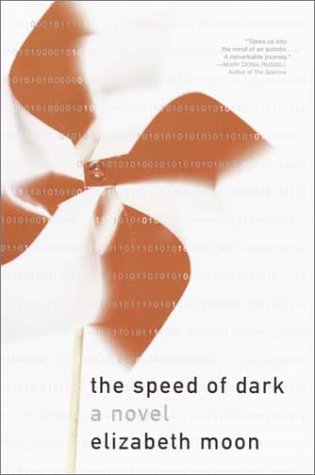
From the Penguin Random House website In the near future, disease will be a condition of the past. Most genetic defects will be removed at birth; the remaining during infancy. Lou Arrendale, a high-functioning autistic adult, is a member of the lost generation, born at the wrong time to reap the rewards of medical science. He lives a low-key, independent life. But then he is offered a chance to try a brand-new experimental "cure" for his condition. With this treatment Lou would think and act and be just like everyone else. But if he was suddenly free of autism, would he still be himself? Would he still love the same classical music — with its complications and resolutions? Would he still see the same colors and patterns in the world—shades and hues that others cannot see? Most important, would he still love Marjory, a woman who may never be able to reciprocate his feelings? Now Lou must decide if he should submit to a surgery that might completely change the way he views the world ... and the very essence of who he is.
- Stronger, Faster, and More Beautiful
Arwen Elys Daytonstandalone novel2018
similar bygenetic engineeringchallengingour worldnear futurescience fictionhard science fiction
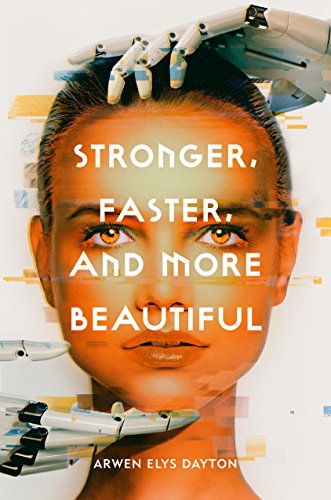
Stronger, Faster and More Beautiful is a 2018 science fiction novel by Arwen Elys Dayton. It explores the ethical question of how far humans will go in their pursuit of physical perfection. It was well received critically, with Tom Shippey of the Wall Street Journal citing it as one of the best science fiction novels of 2018, and has won a number of awards.
- Seveneves
Neal Stephensonstandalone novel2015
similar bygenetic engineeringchallengingnear futurescience fictionhard science fictionour world
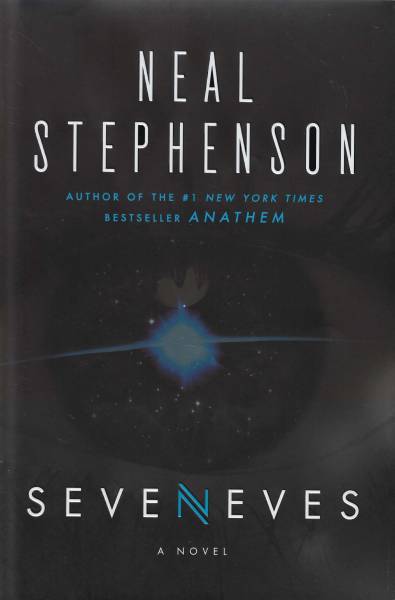
Seveneves is a science fiction novel by Neal Stephenson published in 2015. The story tells of the desperate efforts to preserve Homo sapiens in the wake of apocalyptic events on Earth after the unexplained disintegration of the Moon and the remaking of human society as a space-based civilization after a severe genetic bottleneck.
- Darwin
series2 books1999
completed
similar bygenetic engineeringnear futurescience fictionhard science fiction+1 more
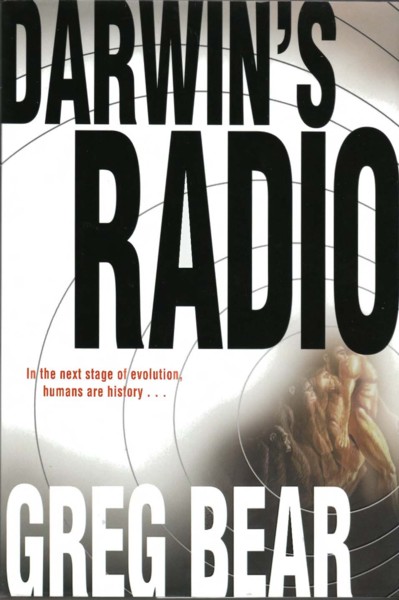
Greg Bear's Darwin's Radio imagines a dormant retrovirus in human DNA activating worldwide, triggering an accelerated leap in human evolution that governments respond to as a plague. The 1999 novel won the Nebula Award; its sequel Darwin's Children follows the first generation of changed children as society decides what to do with them. Together they're speculative near-future science fiction grounded in genetics rather than space opera.
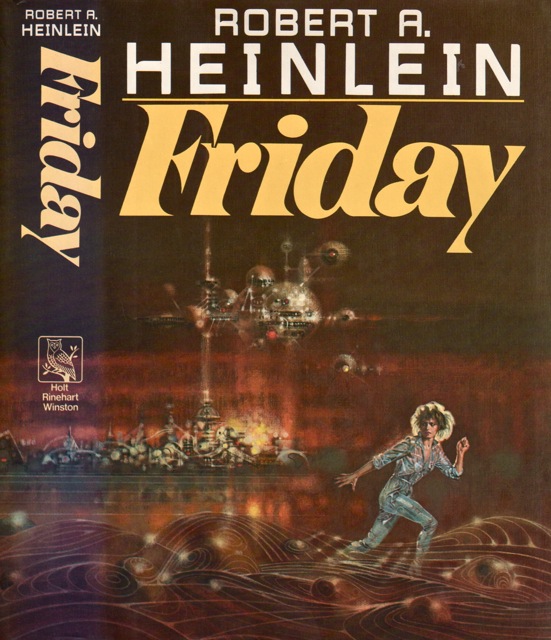
- Friday
Robert A. Heinleinstandalone novel1982
similar bygenetic engineeringnear futurescience fictionfirst person+1 more
Friday is a 1982 science fiction novel by American writer Robert A. Heinlein. It is the story of a female "artificial person", the eponymous Friday, genetically engineered to be stronger, faster, smarter, and generally better than normal humans. Artificial humans are widely resented, and much of the story deals with Friday's struggle both against prejudice and to conceal her enhanced attributes from other humans. The story is set in a Balkanized 21st century, in which the nations of the North American continent have been split up into a number of smaller states.
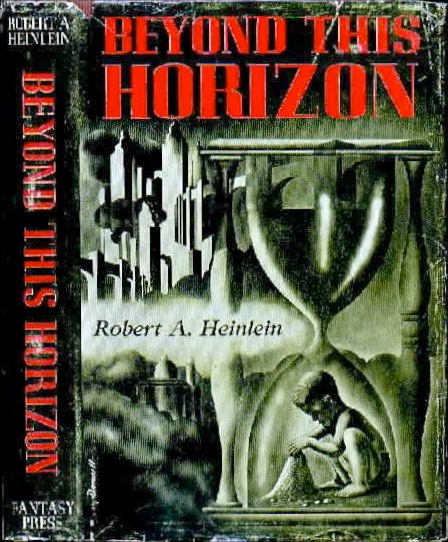
- Beyond This Horizon
Robert A. Heinleinstandalone novel1948
similar bygenetic engineeringour worldscience fictionreflective
From the front flap of a 2001 Baen reprint: "Utopia has been achieved. For centuries, disease, hunger, poverty, and war have been things found only in the history tapes. And applied genetics has given men and women the bodies of athletes and a lifespan of over a century. They should all have been very happy... But Hamilton Felix is bored. And he is the culmination of a star line, each of his last thirty ancestors chosen for superior genes. Hamilton is, as far as genetics can produce one, the ultimate man. And this ultimate man can see no reason why the human race should survive, and has no intention of continuing the pointless comedy. However, Hamilton's life is about to become less boring. A secret cabal of revolutionaries who find utopia not just boring, but desperately in need of leaders who know just What Needs to be Done, are planning to revolt and put themselves in charge. Knowing of Hamilton's disenchantment with the modern world, they have recruited him to join their Glorious Revolution. Big mistake! The revolutionaries are about to find out that recruiting a superman was definitely not a good idea..."
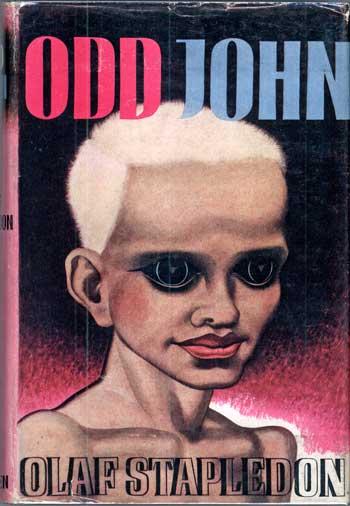
- Odd John
Olaf Stapledonstandalone novel1935
similar bygenetic engineeringchallengingour worldscience fictionreflective
Odd John: A Story Between Jest and Earnest is a 1935 science fiction novel by the British author Olaf Stapledon. The novel explores the theme of the Übermensch (superman) in the character of John Wainwright, whose supernormal human mentality inevitably leads to conflict with normal human society and to the destruction of the utopian colony founded by John and other superhumans.
- Wired (Douglas E. Richards)
series2 books2012
similar bygenetic engineeringnear futurescience fictionour world+1 more
Wired opens Douglas E. Richards's two-book techno-thriller about genetic engineer Kira Miller, whose discovery of a way to unlock temporary savant-level intelligence turns her into both a scientific breakthrough and a fugitive, and David Desh, the former special-forces operative sent to track her down. The story escalates from a bioterror investigation into a fight over the future of engineered human cognition, continuing directly into the 2012 sequel Amped. Richards, primarily a science-fiction and thriller writer, built both books into New York Times and USA Today bestsellers rather than a longer franchise.
- Stranger in a Strange Land
Robert A. Heinleinstandalone novel1961
similar bynear futurescience fictionchallengingreflectiveour world
Stranger in a Strange Land is a 1961 science fiction novel by the American author Robert A. Heinlein. It tells the story of Valentine Michael Smith, a human who comes to Earth in early adulthood after being born on the planet Mars and raised by Martians, and explores his interaction with and eventual transformation of Terran culture.
- A Clockwork Orange
series4 books1962
completed
similar bynear futurescience fictionchallengingour worldfirst person
Anthony Burgess's 1962 novel is narrated by Alex, a teenage gang leader in a near-future Britain gripped by a youth subculture of extreme violence, recounting his crimes in Nadsat, an invented slang blending English with Russian-derived words. After his crimes catch up with him, Alex is made the subject of a controversial state program meant to forcibly reform his behavior, and the novel uses his ordeal to question whether imposed goodness is worth the loss of free will. It is a standalone novel.
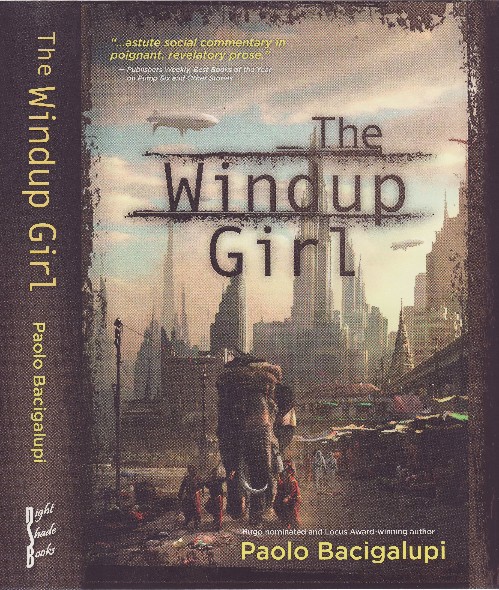
- The Windup Universe
series3 books2005
similar bygenetic engineeringnear futurescience fictionour world
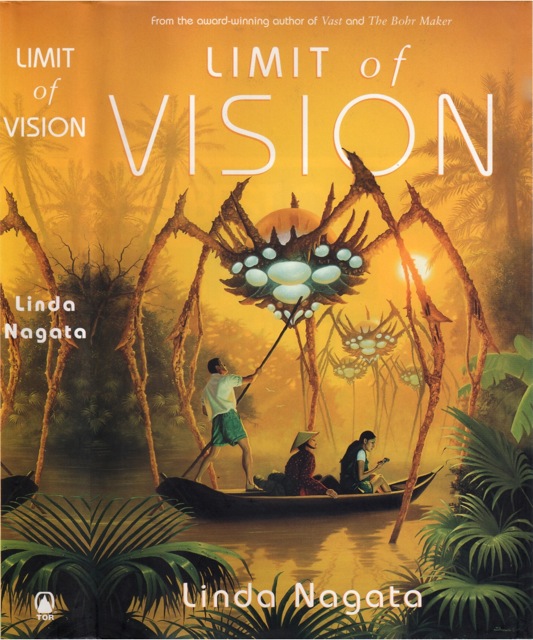
- Limit of Vision
Linda Nagatastandalone novel2001
similar bygenetic engineeringour worldnear futurescience fiction+1 more
Limit of Vision is a 2001 science fiction book by American writer Linda Nagata. Like many of Nagata's novels, it contains themes of nanotechnology and genetic engineering, as well as government and corporate corruption, in this case as suppressors of positive and liberating transhumanizing technology.
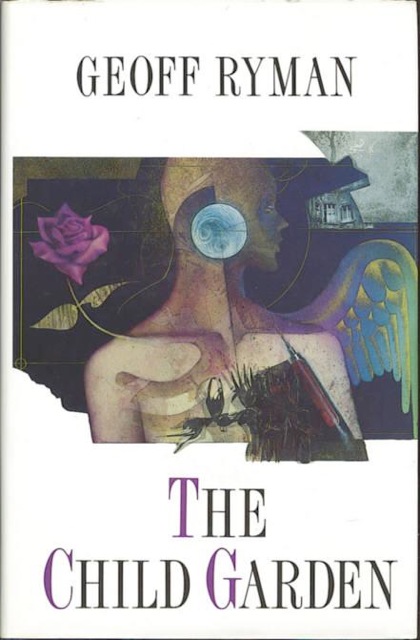
- The Child Garden
Geoff Rymanstandalone novel1989
similar bygenetic engineeringour worldnear futurescience fiction
The Child Garden is a 1989 science fiction novel by Canadian writer Geoff Ryman.
- Sleepless
series5 books1991
similar bygenetic engineeringnear futurescience fiction+1 more
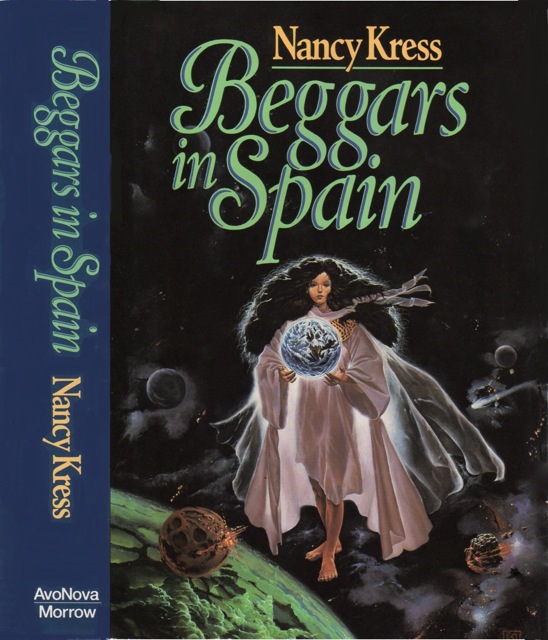
Genetic engineering produces a small class of 'Sleepless' children who never need to sleep and grow up smarter, healthier, and more capable than everyone else, and Nancy Kress's Beggars in Spain follows one of them, Leisha Camden, as ordinary 'Sleepers' come to resent and fear what the Sleepless represent. The novel uses the divide to ask hard questions about what a society owes people it considers unproductive, and what the gifted owe everyone else. Beggars and Choosers and Beggars Ride carry the same conflict forward across the following decades as the Sleepless gain real power.
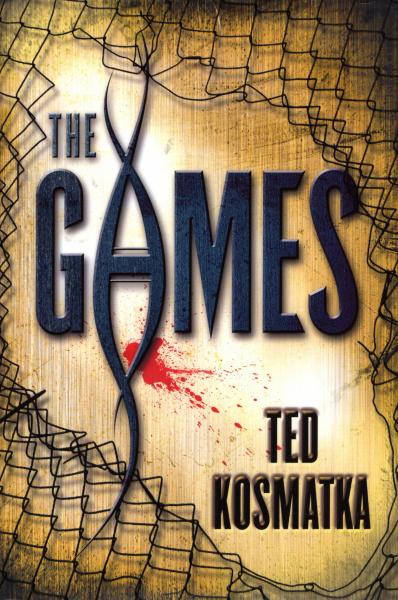
- The Games
Ted Kosmatkastandalone novel2012
similar bygenetic engineeringnear futurescience fictionour worldhard science fiction
The Games is a 2012 science fiction novel by Ted Kosmatka, exploring the effects of advances in artificial intelligence and genetics on sport. It was a finalist for the 2013 Locus Award for Best First Novel.
- Frontera
series2 books2011
similar bygenetic engineeringour worldnear futurescience fictionhard science fiction
- The Light of Other Days
Arthur C. Clarke & Stephen Baxterstandalone novel2000
similar bychallengingour worldnear futurescience fiction+1 more
An industrialist devises a technique to use tiny wormholes as light pipes to enable viewing of any event anywhere; and subsequently it becomes possible to use them to view any event in the past as well. The effects on society are enormous.
- The Martian
series2 books2012
similar bynear futurescience fictionhard science fictionour worldfirst person
Andy Weir's novel The Martian, first self-published in 2011 before a commercial re-release, follows astronaut Mark Watney after he is stranded alone on Mars when his crew presumes him dead and departs. Using scientific improvisation and dark humor, Watney works to keep himself alive long enough for a rescue to reach him. It is a single, self-contained survival story.
- Manifold
series8 books1997
similar bynear futurescience fictionchallenginghard science fiction+1 more
Manifold: Time, Manifold: Space, and Manifold: Origin follow overlapping characters through three mutually exclusive answers to the Fermi Paradox - why we appear to be alone in the universe - each book taking one answer seriously enough to build an entire future history around it. Stephen Baxter designed the trilogy to be read in any order, since it plays out across a multiverse rather than a single continuous timeline.
- Camp Concentration
Thomas M. Dischstandalone novel1968
similar bygenetic engineeringchallengingour worldscience fiction
Camp Concentration is a science fiction novel by American writer Thomas M. Disch. It was first serialized in four parts in New Worlds from July to October 1967 and was published in book form in the United Kingdom in 1968, followed by a first U.S. edition in 1969.
- Brain Child
George Turnerstandalone novel1991
similar bygenetic engineeringour worldnear futurescience fiction
From the rear flap of the William Morrow first edition: Now, in Brain Child, Turner has created an intense novel of murder and science that sounds the great themes of human identity and the nature of intelligence. Set a few decades in the future, he tells the story of a man searching for his roots and, through layers of discovery, the story of a complex and astounding scientific experiment. David Chance has been raised in an orphanage and, now an adult, finds that he is the child of a man genetically altered before birth by a group of scientists experimenting in increasing human intelligence and creativity. But his father is dead. He pursues the search for the true nature of his father and, through it, the true nature of the experiments and the survivors of the final disaster that ended them. Chance exposes his roots and find them entangled in horror, deceit, vengeance, and perverse scientific illumination. Peace and self-knowledge are achieved only at great risk and terrible cost.
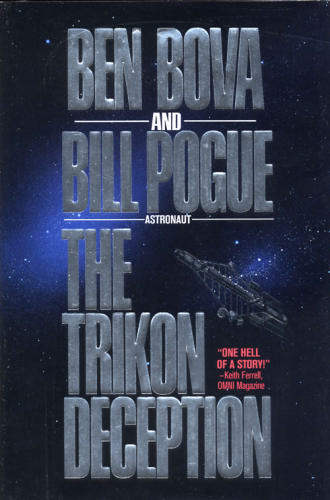
- The Trikon Deception
Ben Bova & Bill Poguestandalone novel1992
similar bygenetic engineeringnear futurescience fictionhard science fiction
The Trikon is a shared industrial space laboratory that was built in orbit, designed as the only risk-free environment for genetic experiments too controversial or dangerous to be performed on Earth.