More like Silver Master
anchored on:paranormal romancepsychic powersother star systemsfar futureromancemagical artifacts
but
- Finders Keepers
Linnea Sinclairstandalone novel2001
similar byfar futureother star systemsromanceenemies to lovers+1 more
From the back cover of the Bantam paperback: "Independent trader Trilby Elliot is making some not-quite-legal modifications to her starfreighter, when an unexpected visitor falls out of space. Literally. He's crashed onto the uninhabited planet of Avanar in a crippled 'Sko fighter - the last place you'd expect to find a Zafharin military officer because the 'Sko and the Zafharin have been at war as long as Trilby can remember. Rhis Vanur is your typically arrogant Zafharin. But to Trilby's surprise, he doesn't look down on her or her slapdash ship. Still, Trilby's learned the hard way that even though she found Rhis, she can't keep him. She's just a low-budget jump jockey as far as men like him are concerned. She's not falling for his offer to help... until Port Rumor reports her best friend missing and Trilby learns that the 'Sko are hunting both her and Rhis. Now they're in it together for better, for worse-or till death blasts them to oblivion...."
- LySanTer (Future Fantasy Romance)
series3 books1990
completed
similar byother star systemsfar futureromance+3 more
- The Man in the Maze
Robert Silverbergstandalone novel1969
similar byother star systemsfar futurepsychic powers
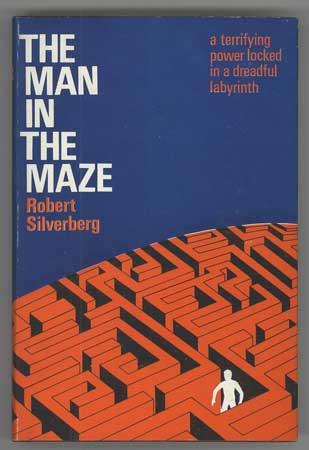
The Man in the Maze is a science fiction novel by American writer Robert Silverberg, originally serialized in the magazine Worlds of If in April and May 1968, and published in bookstores the following year. It tells the tale of a man rendered incapable of interacting normally with other human beings by his uncontrollable psychic abilities. The novel is inspired by Sophocles' play Philoctetes, with the roles of Odysseus, Neoptolemus and Philoctetes played by Boardman, Rawlins, and Muller, respectively.
- Tower and the Hive
series7 books1959
completed
part of The Talents
similar byfar futurepsychic powersother star systems
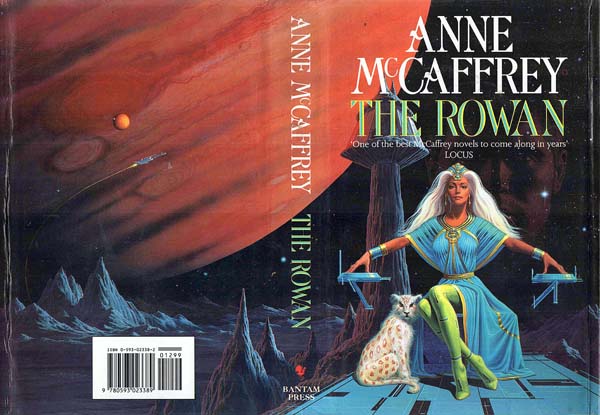
The Tower and the Hive series opens with The Rowan (1990), following an isolated but powerful telepath who is drawn out of her loneliness by a psychic call for help from a distant Talent facing an alien threat. Anne McCaffrey continued the story across four more novels, Damia, Damia's Children, Lyon's Pride, and the concluding The Tower and the Hive (1999), following later generations of a telepathic family staffing the Prime Towers that give a starfaring human civilization instant communication. The series is set later in the same Talents universe as McCaffrey's earlier Pegasus books.
- Dune
series20 books1963
part of Dune Universe
similar byfar futureother star systems+1 more
Frank Herbert's Dune Chronicles opens with 1965's Dune, set on the desert planet Arrakis where House Atreides takes control of the only source of the vital spice melange and young Paul Atreides is pulled into a struggle over its politics and religion. Herbert carried the story forward across five further novels — Dune Messiah, Children of Dune, God Emperor of Dune, Heretics of Dune, and Chapterhouse: Dune — following Paul's line over the following millennia, before Brian Herbert and Kevin J. Anderson later extended the saga. Many other editions of these six novels are omnibus and box-set repackagings rather than separate stories.
- Pip & Flinx
series18 books1972
part of Humanx Commonwealth
similar byfar futureother star systems+1 more
The Pip & Flinx novels follow Flinx, a young man with an unusual, mysterious origin, and his ever-present animal companion Pip, across Alan Dean Foster's Humanx Commonwealth setting. Beginning with The Tar-Aiym Krang (1972) — chronologically the second entry, since Foster later filled in Flinx's earlier life — the series grew to fifteen novels published between 1972 and 2017, mixing planetary adventure with a slowly unfolding personal mystery.
- Argeneau Family
series39 books2003
similar byparanormal romance+2 more
Lynsay Sands's long-running paranormal romance series follows the Argeneau family of vampires as different members find human partners across dozens of standalone-but-linked romances. An early entry, Single White Vampire, follows a romance-line editor determined to get a reclusive vampire author to a genre convention, only to discover his 'novels' are literal memoirs of his own vampire life.
- Against a Dark Background
Iain M. Banksstandalone novel1993
similar byother star systemsfar futuremagical artifacts
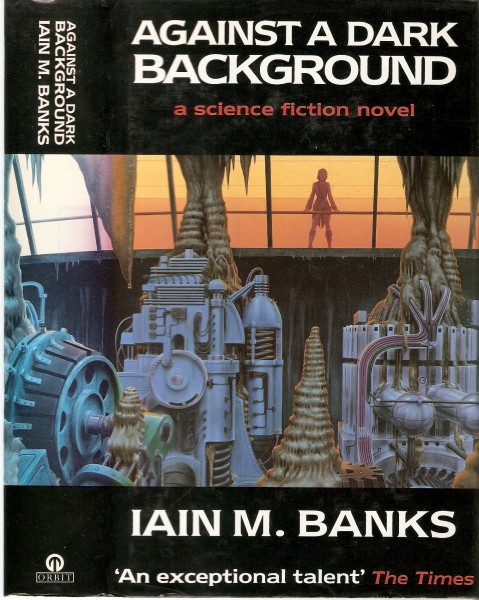
The daughter of an impoverished noble house and her squad of soldiers become thieves of antiquities; long after their retirement and separation she must assemble them again in order to find and steal the most powerful weapon ever created, or pay with her life.
- The Eternal Frontiers
James H. Schmitzstandalone novel1973
similar byfar futureother star systems+1 more
- Double Dating with the Dead
Karen Kelleystandalone novel2007
similar byparanormal romancepsychic powersenemies to lovers+1 more
HANDS OFF MY ASTRAL PLANE!Psychic Selena James is having the kind of week that makes her happy to talk to the dead. First, famously skeptical (and sinfully sexy) writer, Trent Sanders, called her delusional on TV. Next, her outraged mother publicly challenged him to spend two weeks with Selena at the haunted Garvey Hotel. Now, if Selena can’t prove ghosts exist, she’ll answer to Trent’s private wager: one night in his bed. It doesn’t take any psychic abilities to know Trent could satisfy a woman’s every fantasy. And she may find out very soon, if the two sex-starved ghosts in residence have their way…Trent Sanders doesn’t believe in anything he can’t see, taste, or touch, and what he sees right now he would definitely enjoying tasting and touching. Selena James might be a bit kooky, but she’s also blessed with a body that could certainly raise the dead, if not talk to them. She’s even got a wicked sense of humor, like when she pinched his butt and insisted it wasn’t her, but one of the “ghosts.” Riiiiiight. But as things move from “haunted” to extremely hot, Trent’s starting to believe the paranormal is a one-way—make that four-way—ticket to paradise…
- The Witling
Vernor Vingestandalone novel1976
similar byother star systemsfar futurepsychic powers
The Witling is a 1976 science fiction novel by American writer Vernor Vinge, about the planet Giri, whose humanoid inhabitants, the Azhiri, are able to teleport. This ability varies from person to person: those without the talent at all are called witlings and are the lowest class of person in Azhiri society.
- Strings
Dave Duncanstandalone novel1990
similar byother star systemsfar futurepsychic powers
Alya has an almost magical talent. Her hunches are never wrong. The scientists of planet 4-I want to use her talent and promise her a spot on the next offworld colonization team in return for her assessment of the potential of the latest worlds they've discovered. But Alya meets Cedric, the grandson of the brilliant and tyrannical director of 4-I and she begins to doubt her own intuition.Cedric has dreamed of becoming a scout and exploring new worlds and when he meets Alya he is more determined than ever to leave 4-I, with her. His grandmother needs him on 4-I, though, because she has schemes afoot to protect her planet and to cover up a murder and she does not intend to let him go. However, she has underestimated her grandson—and the young woman whose intuition is so strong and whose destiny is linked to Cedric's.
- Dune Universe
universe78 books1963
Start hereDune · Start here
similar byfar futureother star systems
Arrakis. Dune. The desert planet, where empire runs on a single substance: the spice melange, which folds space, prolongs life, and unlocks prescience, and which exists nowhere else in the known universe. Frank Herbert's saga is a meditation dressed as an adventure — feudal houses and a secret sisterhood, engineered messiahs and the patient ecology of a world without water, all turning on the terrible gravity of who commands the spice. It reads like scripture and schemes like a war room, ten thousand years hence, among people who have outlawed the thinking machine and made instruments of themselves instead. At its heart stand Herbert's original six — Dune, Dune Messiah, Children of Dune, God Emperor of Dune, Heretics of Dune, Chapterhouse: Dune — a single deepening arc across millennia, arguing the whole way between prophecy and free will. Around that spine his son Brian Herbert and Kevin J. Anderson have raised a vast prequel architecture: Prelude to Dune, tracing the great houses a generation before Paul; Legends of Dune, reaching back to the crusade that broke the machines; the Schools of Dune cycle on the founding of Bene Gesserit, Mentat, and Navigator; the Caladan Trilogy and Heroes of Dune filling years the originals left in shadow. Many hands, dozens of volumes, one desert. What sets Dune apart is its refusal of the simple: religion is manufactured, heroes are hazards, and the sand itself — worm, water, ecology — acts as a political power. Begin where the universe did, with Frank Herbert's Dune (1965), and read the original six in order; you need nothing else to feel the full weight. The prequels are a country to explore afterward, taken by era. Beginnings are delicate times.
- Hoka
series33 books1951
completed
similar byfar futureother star systems
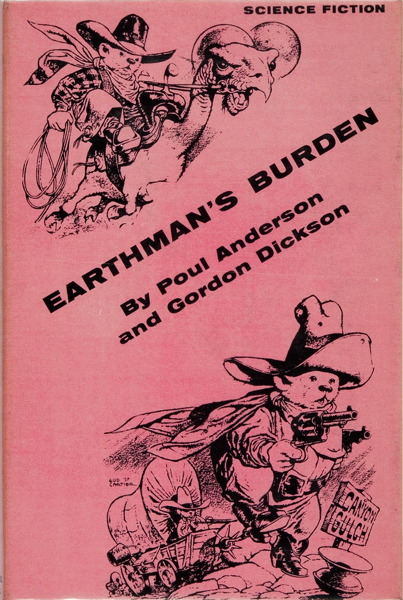
Poul Anderson and Gordon R. Dickson's Hoka stories follow the Hokas, a teddy-bear-like alien race who enthusiastically role-play human genres and history, to comic effect. Beginning with the linked collection Earthman's Burden (1957) and its sequel Hoka!, the stories and the novel Star Prince Charlie were later gathered into omnibus editions such as Hoka! Hoka! Hoka! and The Sound & the Furry.