More like Sky Coyote
anchored on:science fictiontime travelimmortalityadventurous
but
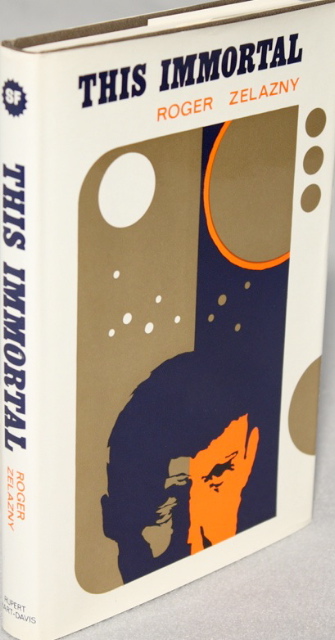
- This Immortal
series2 books1966
similar byimmortalityadventurousscience fictioncolonialismreflective
This Immortal is a single science fiction novel by Roger Zelazny, expanded from his 1965 serial ...And Call Me Conrad. In a depopulated future Earth largely toured by an alien race, its long-lived, secretive protagonist Conrad Nomikos is assigned to guide and protect a visiting alien across the ruins of Greece and Egypt, uncovering old grudges and assassination plots along the way. The novel shared the 1966 Hugo Award for Best Novel with Frank Herbert's Dune.
- Timeliner
Charles Eric Mainestandalone novel1955
similar byimmortalityadventurousscience fictiontime travel
From the flaps of the Rinehart first printing: "All the laboratory animals used to test the dimensional quadrature device had perished. But Dr. Hugh Macklin was determined to run a low-power test with himself as subject, unaware that one of his associates - and his own wife - had arranged to kill him during the experiment. Seconds after the switch had "accidentally" been thrown to full power, Macklin found himself eighty years in the future with a new body and name - on the moon! It wasn't until he arrived at a point many thousands of years in the future - after several hair-raising adventures - that Macklin encountered a civilization advanced enough to tell him what he was, what had happened. He had become one of the ten or so Timeliners of the universe, a "psychotemporal parasite," whom death could not destroy but only send farther into the future to take over someone else's identity. In all of Macklin's adventures over millennia, there was the "fatal affinity" for the woman who most resembled his wife, Lydia. Ultimately, time being a curve and not a straight progression, he finds himself in the most fantastic possible position, listening to the story of his own murder!"
- The City and the Stars
Arthur C. Clarkestandalone novel1956
similar byimmortalityscience fictionreflective
The City and the Stars is a science fiction novel by British writer Arthur C. Clarke, published in 1956. This novel is a complete rewrite of Clarke's earlier Against the Fall of Night, his first novel, which had been published in Startling Stories magazine in 1948 after being rejected by the editor of Astounding Science-Fiction, according to the author.
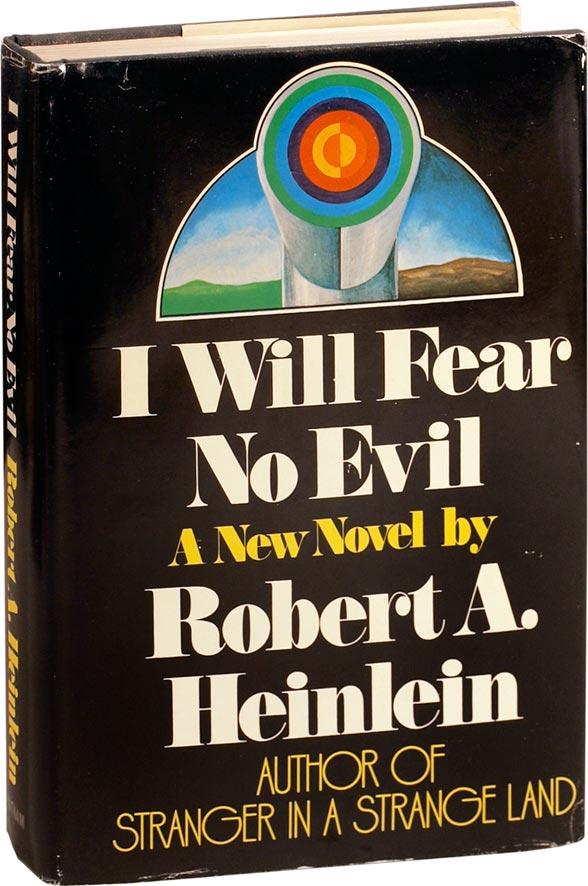
- I Will Fear No Evil
Robert A. Heinleinstandalone novel1970
similar byimmortalityscience fictionreflective
I Will Fear No Evil is a science fiction novel by American writer Robert A. Heinlein, originally serialised in Galaxy and published in hardcover in 1970. The title is taken from Psalm 23:4.
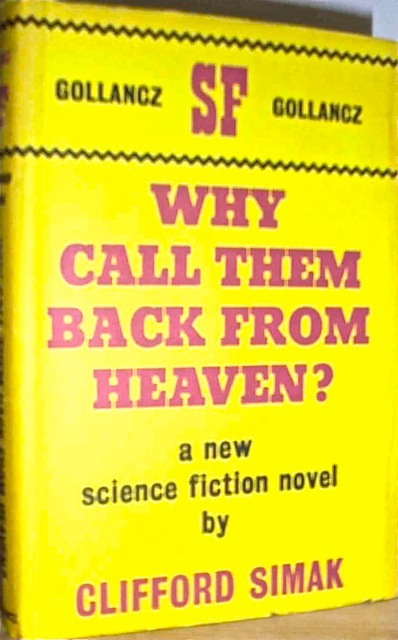
- Why Call Them Back from Heaven?
Clifford D. Simakstandalone novel1967
similar byimmortalityscience fictionreflective+1 more
Why Call them Back From Heaven? is a 1967 science fiction novel by American writer Clifford D. Simak. It was the initial volume in the Ace Science Fiction Specials line.
- The World of Tiers
series9 books1965
similar byimmortalityscience fictionadventurous
The World of Tiers is a series of science fiction novels by American writer Philip José Farmer. They are set within a series of artificially constructed universes, created and ruled by decadent beings who are genetically identical to humans, but regard themselves as superior, and are the inheritors of an advanced technology they no longer understand. This technology enables the "Lords" to create novel lifeforms, and also to prevent aging or disease, making them effectively immortal. Their technology also allows them to create small artificial universes, and the planets and stars within them, and modify the physical laws to create unusual or interesting phenomena within these universes. Instantaneous travel within and between these universes is achieved by the use of "gates" which seem to function as teleportation devices, or as a means of creating wormholes between different regions of spacetime.
- The Door Into Summer
Robert A. Heinleinstandalone novel1957
similar byadventurousscience fictiontime travel
From the first page of the Signet 6th printing: "An electronics engineer invents a wizard robot... only to find himself shanghaied by his ruthless partner and his gold-digging fiancee. The crafty pair forces him to submit to the "long sleep" - suspended animation for thirty years. But when he wakes up in the year 2000 A.D. the inventor makes a startling discovery. He learns that it is possible now to twist time forwards or backwards. And so he returns to the past bent on a mission... of revenge."
- The Computer Connection
Alfred Besterstandalone novel1975
similar byimmortalityadventurousscience fiction
The Computer Connection is a science fiction novel by American writer Alfred Bester. It was originally published as a serial in Analog Science Fiction magazine in November and December 1974, and in January 1975 under the title The Indian Giver; the novel appeared in book form in 1975. Some editions use the title Extro. The novel was nominated for the Nebula Award for Best Novel in 1975 and the Hugo Award for Best Novel in 1976.
- Trouble with Lichen
John Wyndhamstandalone novel1960
similar byimmortalityscience fictionreflective
Biochemists Diana Brackley and Francis Saxover, working independently, both isolate a compound from a rare lichen that appears to dramatically slow the aging process. Francis quietly doses himself and his family and says nothing; Diana takes the opposite approach, opening exclusive beauty spas as cover to give the drug to well-connected women across Britain, reasoning that if longevity becomes known before women have a foothold, men will simply monopolize it as they have everything else. The secret can only hold so long, and the novel's tension builds toward the moment it gets out. A quietly subversive social science-fiction novel from John Wyndham.
- Company (Kage Baker)
series41 books1997
completed
part of Company
similar byscience fictiontime travel+2 more
Kage Baker's Company novels imagine a secretive 24th-century corporation, Dr. Zeus Incorporated, that recruits children throughout history and remakes them into immortal cyborg operatives who quietly harvest art, biological specimens, and lost treasures for the future. The saga follows operatives such as the botanist Mendoza across centuries of missions, building toward the unexplained blackout in the corporation's own records after the year 2355. Later volumes, some completed with Kathleen Bartholomew after Baker's death, close out the operatives' long, involuntary service.
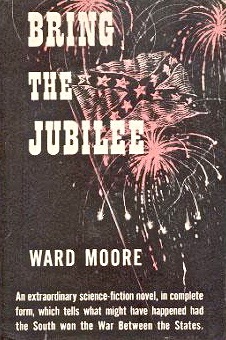
- Bring the Jubilee
Ward Moorestandalone novel1953
similar byscience fictiontime travelreflective+1 more
From the flaps of the Farrar, Straus and Young first edition: ""Although I am writing this in the year 1877, I was not born until 1921." So Hodge Backmaker begins his story of the harsh and curious world he lived in, a world in which the South won the Civil War and the all-powerful Confederacy dominated the poor and backward North; a North that had neither a transcontinental railroad, and where television was undreamed of. Like most Northerners, Hodge was poor - but he had ambition. A printer's handyman in 1938, he had since become an eminent historian. Hodge's special interest was the American past, when the States had been united and had seemed to be on the brink of prosperity and technical progress. And then he was offered an opportunity no historian could resist - he could go back in time. Hodge chsoe to return to a certain field near Gettysburg on a day in July, 1863... Bring the Jubilee is a novel of curious events, of adventures and reflection, of passions and comment. It at time Hodge's world, its horse-carriages and gas-lights, minibles and tinugraphs and the Great Emperors' War of 1914 faintly resembles our own, it is perhaps, because that world might well become a reality: on the battlefield of Gettysburg there is a small hill called Little Round Top. One July morning in 1863 the Confederate Army made the tactical error of not occupying this hill. It was a mistake that cost them victory in a battle which - in the view of many historians - was the turning point of the Civil War."
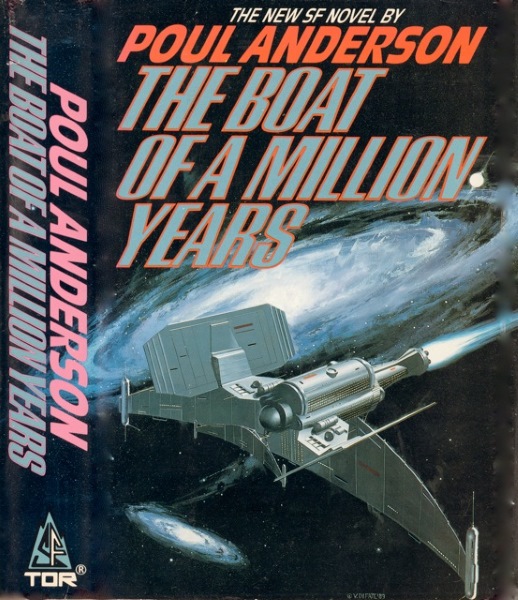
- The Boat of a Million Years
Poul Andersonstandalone novel1989
similar byimmortalityscience fictionreflective
The Boat of a Million Years is a science fiction novel by American writer Poul Anderson, first published in 1989 and nominated for the Nebula Award for Best Novel that same year. It was also nominated for the Hugo Award for Best Novel and the Prometheus Award in 1990.
- The Star of Life
Edmond Hamiltonstandalone novel1959
similar byimmortalityadventurousscience fiction
Kirk Hammond is frozen in space and then enters the Earth 10,000 years in the future. He encounters three species of mankind: humankind who make up most of the galaxy, the Vramen who never die because they live on the restricted planet whose sun is the Star of Life. Mankind wants desperately to enjoy eternal life too, but the Vramen will not allow it.
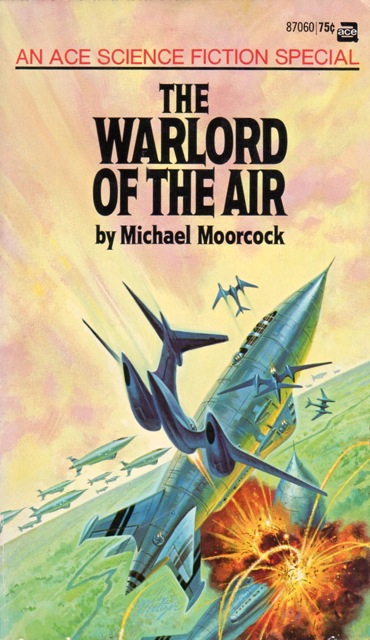
- Oswald Bastable
series5 books1971
part of Moorcock's Multiverse
similar byadventurousscience fiction+1 more
Oswald Bastable follows an Edwardian-era British soldier flung into a series of alternate futures where the First World War never happened, opening with The Warlord of the Air (1971). Across the trilogy he drifts between rival empires and airship wars, an early and influential example of what would later be called steampunk. Michael Moorcock's A Nomad of the Time Streams trilogy sits within his wider multiverse of linked worlds and recurring avatars of the Eternal Champion.
- Time Trap
Nicholas Fiskstandalone novel1976
similar byimmortalityadventurousscience fiction
"Dano was a hopeful, a Teen, with a skimmer that could do 100 mph and all the sports gear in the Catalogue, but it was not enough. He wanted to get out of Homebody Unit 362 and be responsible for his own life, and perhaps Uncle Lipton, with his secret long-life drug, Xtend, might have the answer." - From the back cover of the 1987 Penguin edition, via Google Books.
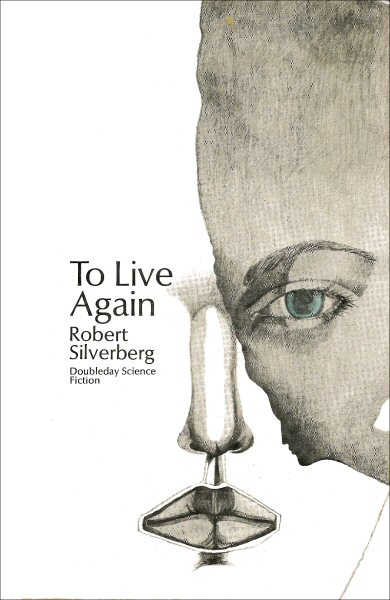
- To Live Again
Robert Silverbergstandalone novel1969
similar byimmortalityscience fictionreflective
In a future where the very rich can have their personalities recorded before death and then implanted into a living host to share, or dominate, that person's mind and body, owning a recorded soul becomes the ultimate status symbol among the powerful. The practice carries real risk: a strong enough recorded personality can overwhelm its host entirely, a fate the novel calls going dybbuk. Robert Silverberg builds a society around this trade in secondhand immortality, and the people who profit, or don't survive, dealing in it. A standalone novel from Silverberg's prolific late-1960s run.
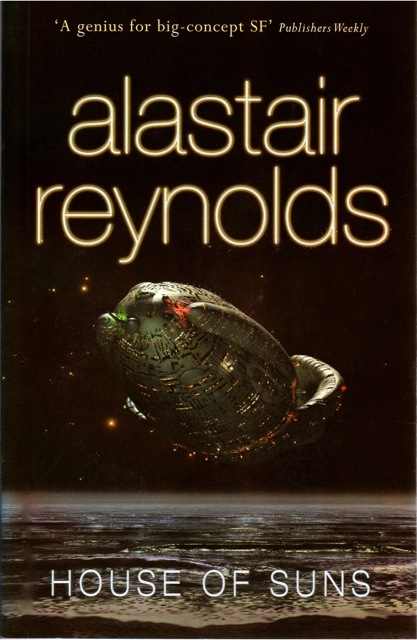
- House of Suns
series3 books2005
similar byscience fiction+3 more
House of Suns follows Campion and Purslane, two of a thousand identical clones ("shatterlings") of a single ancient woman who have spent six million years touring the galaxy independently between reunions, when an attack on their latest gathering forces them into a chase spanning tens of thousands of light-years and uncovers a hidden genocide from Earth's deep past. Alastair Reynolds set the novel in the same loose future history as his earlier novella Thousandth Night, reusing some characters without trying to keep the two stories in strict continuity.
- Timeline
Michael Crichtonstandalone novel1999
similar byadventurousscience fictiontime travel
Timeline is a science fiction novel by American writer Michael Crichton, his twelfth under his own name and twenty-second overall, published in November 1999. It tells the story of a group of history students who travel to 14th-century France to rescue their professor. The book follows in Crichton's long history of combining science, technical details, and action in his books, this time addressing quantum and multiverse theory.
- The Goblin Reservation
Clifford D. Simakstandalone novel1968
similar byadventurousscience fictiontime travel
The Goblin Reservation is a 1968 science fiction novel by American writer Clifford D. Simak, featuring an educated Neanderthal, a biomechanical sabertooth tiger, aliens that move about on wheels, a man who time-travels using an unreliable device implanted in his brain, meeting a ghost, trolls, banshees, goblins, a dragon and even Shakespeare himself. The Goblin Reservation was a Hugo Award nominee in 1969 and was originally serialized in Galaxy Science Fiction magazine.
- Pastwatch
series2 books1996
similar byscience fictioncolonialismtime travelreflective
Pastwatch: The Redemption of Christopher Columbus (1996) is a science fiction novel by American writer Orson Scott Card, the first in a proposed Pastwatch series. The book's focus is the life and activities of explorer Christopher Columbus. Much of the action deals with a group of scientists from the future who travel back to the 15th century in order to change the pattern of European contact with the Americas. These alternate with chapters describing Columbus' career and his efforts to obtain backing to his project of travelling across the ocean - much of which can be considered as historical fiction.
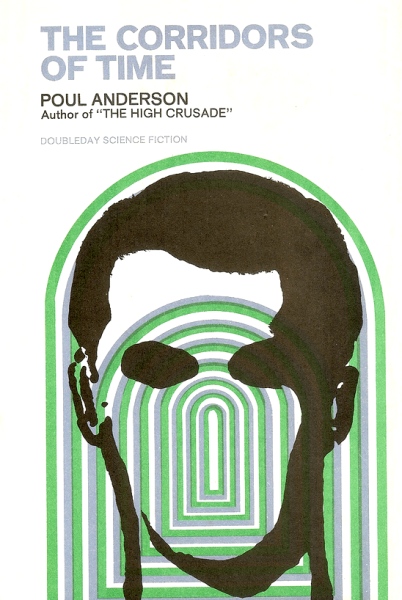
- The Corridors of Time
Poul Andersonstandalone novel1965
similar byadventurousscience fictiontime travel
The Corridors of Time is a science fiction novel by the American writer Poul Anderson that was first published in 1965 as a serial in Amazing Stories, and as a book by Doubleday.
- Ringworld
series5 books1970
part of Known Space
similar byadventurousscience fiction
The Ringworld series is a series of science fiction novels written by American author Larry Niven. It is part of his Known Space series of stories. Its backdrop is the Ringworld, a giant artifact 3 million times the surface area of Earth circling a star. The series is composed of four standalone science fiction novels, the original award-winning book and its three sequels:1970: Ringworld 1979: The Ringworld Engineers 1996: The Ringworld Throne 2004: Ringworld's Children
- Childhood's End
Arthur C. Clarkestandalone novel1953
similar byscience fictionreflective+1 more
Childhood's End is a 1953 science fiction novel by the British author Arthur C. Clarke. The story follows a peaceful alien invasion of Earth by mysterious Overlords, whose arrival begins decades of apparent utopia under indirect alien rule, at the cost of human identity and culture.