Loreful
HomeDiscover
Search series, authors…⌘K
Loreful

Reading orders for SF/F series and shared universes — with your place kept in every one.

Explore

UniversesSeriesWorksAuthorsAtlas

Help

FAQAboutSite map

Account & legal

Sign inCreate accountPrivacyTerms

Data

Built on ISFDB, Wikipedia, Wikidata and Open Library. Curated reading orders carry their reasoning on the page; the rest follow publication order. Data sources & licenses

© Loreful · data: ISFDB · CC BY

More like Slow Learner

anchored on:literary & generalnorth americamid 20th centurychallengingidentityreflective+1 more

but

Mood

The mood the book leaves you in.

  • The reading experience is propelled by journeys, exploration, and physical risk; excitement and forward momentum dominate over dread or introspection.
  • Joy and loss are deliberately mixed; the resolution grants characters something real while taking something else away, leaving warmth and sorrow together.
  • The book demands work from the reader — dense prose, difficult structure, unfamiliar ideas, or morally uncomfortable material — as part of its intended effect.
  • Grim events, cruelty, or despair dominate the atmosphere, and the book does not soften them with comfort or comic relief.
  • The atmosphere is quietly unsettling — wrongness, unease, and the uncanny pervade the book without necessarily escalating into overt horror.
  • The book is built to move the reader; character feeling is foregrounded and major scenes aim at a strong emotional response.
  • Humor is a primary aim and the prose plays for laughs — comic situations, wit, or dialogue produce sustained comedy, not occasional levity.
  • The book insists that things can improve; effort and decency are shown to matter, and the arc bends toward better outcomes even through hardship.
  • The book teaches as it goes — real facts, history, science, or craft are conveyed in enough depth that learning is part of the reading experience.
  • The book is designed to uplift and motivate, presenting perseverance or achievement in a way that invites the reader to aspire or act.
  • The overall register is cheerful and easygoing; stakes are kept gentle and the book avoids dwelling on pain or dread.
  • Withheld information drives the experience; the book sustains enigmas and secrets the reader wants resolved, whatever its genre.
  • The book is contemplative and inward-looking, giving more weight to thought, memory, and meaning than to external events.
  • The book works as comfort reading — low tension, a soothing pace, and an atmosphere the reader can unwind in.
  • Grief, loss, or melancholy set the dominant register, and the book lets sorrow stand rather than resolving it into comfort.
  • Sustained suspense is the point; the book keeps the reader braced for what happens next through danger, pressure, or impending revelation.
  • Playful invention and charm define the register — fanciful conceits, light absurdity, and a narration that delights in its own oddity.

About

What the story runs on.

  • Stories in which extraterrestrial beings are central — as characters, cultures, or the object of the plot.
  • Stories about venturing into space to explore — survey missions, astronauts, and the frontier of the unknown beyond Earth.
  • Stories structured as a quest — a journey undertaken to find, deliver, or destroy something of great import.
  • Stories in which staying alive against nature, catastrophe, or scarcity is the central problem.
  • Stories in which a friendship — its making, testing, or loss — is the emotional center.
  • Stories of growing up — a young protagonist crossing from childhood into adult knowledge and responsibility.
  • Stories about who a character truly is — self-discovery, doubled lives, and the search for a self.
  • Stories about mourning — living through the death of a loved one and what loss does to the survivors.
  • Stories in which a buried family truth — hidden parentage, crimes, or shames — surfaces and reorders the present.
  • Stories driven by maneuvering for power — factions, conspiracies, and statecraft conducted in shadow.
  • Stories in which war itself is the subject — combat, occupation, and what warfare does to soldiers and civilians.
  • Stories organized around investigating a killing — the case, the clues, and the pursuit of the killer, in any genre's clothing.

Shelf

Where it sits in the library.

    • Fiction built on magic or other supernatural elements that have no scientific explanation.
    • Secondary-world fantasy at large scale, where the fate of nations or the world turns on the protagonists' struggle.
    • Fantasy set in a recognizably modern city or contemporary world where the supernatural intrudes on everyday life.
    • Fantasy that blends in horror's atmosphere and imagery, keeping a fantastical frame around grim or frightening material.
    • Action-driven fantasy following warriors or rogues with personal stakes against sorcerous threats, rather than world-spanning conflicts.
    • Fantasy set in a real historical period or a close analogue of one, with magic woven into the era.
    • Fantasy in which protagonists cross from the ordinary world into another world through a portal or similar passage.
    • Fiction that retells or reworks a traditional fairy tale in a new form or setting.
    • Fantasy drawing directly on myths, legends, and folklore, retelling them or building on their figures and logic.
    • Fantasy of ghosts, vampires, shapeshifters, psychics, and similar phenomena, usually set in an otherwise ordinary world.
    • Fiction mixing science-fictional trappings with overtly magical or impossible elements in one setting.
    • Low-stakes fantasy emphasizing comfort, community, and everyday pleasures over conflict and peril.
    • Speculative fiction of pervasive moral ambiguity, violence, and cynicism that rejects heroic conventions — fantasy and SF alike.
      • Fiction that extrapolates from science and technology — future societies, space travel, or speculative inventions — within at least nominally natural laws.
      • Science fiction of interstellar scope — starships, galactic polities, and adventure across star systems.
      • Science fiction committed to scientific rigor, where technical plausibility constrains the story.
      • Science fiction centered on armed forces and warfare, told largely from a military point of view.
      • Science fiction of networked, corporate-dominated near futures, pairing high technology with social decay.
      • Science fiction styled on nineteenth-century steam-powered technology, often in a Victorian or pseudo-Victorian setting.
      • Fiction depicting an oppressive or catastrophic society, presented as a warning.
      • Fiction set after civilization's collapse, following survivors in the ruins of the old world.
      • Fiction in which characters move between past and future, and the mechanics or consequences of that travel drive the plot.
      • Fiction exploring a world where a historical event went differently and history diverged from ours.
      • Science fiction about humanity's first encounter and communication with an alien intelligence.
      • Science fiction in which extraterrestrial forces attack or occupy Earth and humanity resists.
      • Fiction whose primary aim is to frighten or unsettle the reader through dread, menace, or the monstrous.
      • Horror of vast, indifferent, incomprehensible entities before which humanity is insignificant, in the Lovecraft tradition.
      • Horror of decaying houses, buried family secrets, and oppressive atmosphere in the Gothic literary tradition.
      • Horror centered on hauntings and the returning dead.
      • Horror located in the mind — paranoia, obsession, and unreliable perception rather than external monsters.
      • Horror built around the reanimated dead and survival amid their outbreaks.
      • Horror defined by explicit, transgressive gore that refuses to cut away from violence.
      • Speculative fiction of the strange and uncanny that resists both natural explanation and standard genre categories.
      • Fiction organized around solving a crime or puzzle, typically following an investigator toward the identification of a culprit.
      • A puzzle-first mystery that lays out clues so the culprit's identity can be deduced before the reveal.
      • Crime fiction of moral ambiguity, fatalism, and hard-edged style, set among the corrupt and the doomed.
      • A mystery following the realistic routines of police work — forensics, interviews, and case-building.
      • A gentle mystery with an amateur sleuth, a small community, and violence kept off the page.
      • A mystery set in a past era, where the investigation works within that period's methods and society.
      • Fast-paced fiction driven by imminent danger, pursuit, or high-stakes conspiracy, built to sustain tension.
      • A thriller of espionage — agents, tradecraft, and intelligence services in conflict.
      • A thriller centered on lawyers and the courtroom, where litigation carries the suspense.
      • A thriller driven by detailed contemporary or near-future technology, often military or scientific.
      • A thriller whose tension comes from mental states and manipulation between characters rather than external action.
      • Fiction whose central plot is a romantic relationship and its development toward an emotionally satisfying resolution.
      • Romance in which one or both partners are supernatural beings, blending fantasy elements into the love story.
      • A fantasy-romance hybrid in which the romantic arc and the fantasy plot carry equal weight.
      • Romance set in a past era, with courtship shaped by the period's society and manners.
      • Romance set in the present day, without supernatural or historical elements.
      • Fiction set in a real past period, where the historical setting materially shapes characters and events.
        • General and literary fiction emphasizing prose style, character interiority, or formal ambition over genre plot conventions.
        • Fiction in a realistic world where magical events occur and are treated as ordinary, in the tradition of Latin American literature.
        • Fiction that ridicules people, institutions, or society in order to criticize them.
        • Fiction of dreamlike, irrational imagery and logic that breaks from realistic representation.
        • Fiction that plays with narrative convention through metafiction, fragmentation, and self-reference.
        • Fiction propelled by journeys, exploration, and physical peril, where action and survival carry the plot.
        • Adventure fiction of ships and seafaring — naval engagements, voyages, and life at sea.
        • Fiction of the American frontier West — gunmen, ranchers, and lawmen, typically in the late nineteenth century.
        • Fiction centered on soldiers, campaigns, and the experience of warfare, historical or imagined.
          • Fiction written primarily to amuse, using comedic situations, wit, or parody as its organizing principle.
            • Multi-generational fiction following a family or dynasty across decades, with inheritance and kinship as the through-line.
              • Fiction whose world runs on explicit game mechanics — levels, stats, and skills that characters can see and exploit.
                • Fiction about costumed or superpowered heroes and their conflicts with comparable villains.

                Practical

                How long a commitment, whether it stands alone, and whether it has finished.

                Tap a chip to ask for it · tap again to rule it out · once more to clear. Numbers show what would be left.

                • Cover of In Milton Lumky Territory
                  In Milton Lumky Territory

                  Philip K. Dick · standalone novel · 1985

                  similar byidentityliterary & generalnorth americamid 20th centurylonelinessreflective

                  In Milton Lumky Territory is a realist, non-science fiction novel authored by Philip K. Dick. Originally written in 1958, but rejected by prospective publishers, this book was eventually published posthumously in 1985 by Dragon Press. It was published in two editions. Fifty copies were bound in quarter leather and included a signature from one of the author's canceled checks but were not jacketed. Nine hundred fifty copies were published with a cloth binding and included a dust jacket. It was reprinted in paperback in 2006.

                • Cover of Puttering About in a Small Land
                  Puttering About in a Small Land

                  Philip K. Dick · standalone novel · 1985

                  similar byidentityliterary & generalnorth americamid 20th centuryreflective+1 more

                  Puttering About in a Small Land is an early non-science fiction novel by American science fiction author Philip K. Dick. It was written sometime in 1957, but remained unpublished until it was released posthumously in 1985.

                • Cover of Dhalgren
                  Dhalgren

                  Samuel R. Delany · standalone novel · 1975

                  similar byidentitychallengingliterary & generalnorth americalonelinessscience fiction

                  Dhalgren is a 1975 science fiction novel by American writer Samuel R. Delany. It features an extended trip to and through Bellona, a fictional city in the American Midwest cut off from the rest of the world by an unknown catastrophe. It is number 33 on the 20th Century's Greatest Hits: 100 English-Language Books of Fiction list.

                • Cover of Surfacing
                  Surfacing

                  Margaret Atwood · standalone novel · 1972

                  similar byidentityliterary & generalnorth americamid 20th centuryreflective+1 more

                  Surfacing is a novel by Canadian author Margaret Atwood. Published by McClelland and Stewart in 1972, it was her second novel. Surfacing has been described by commentators as a companion novel to Atwood's collection of poems, Power Politics, which was written the previous year and deals with complementary issues.

                • Cover of The Broken Bubble
                  The Broken Bubble

                  Philip K. Dick · standalone novel · 1988

                  similar byidentityliterary & generalnorth americamid 20th centuryreflective+1 more

                  The Broken Bubble is an early mainstream novel by American science fiction writer Philip K. Dick. It was written around 1956 under the longer title The Broken Bubble of Thisbe Holt but was rejected for publication in the 1950s, as were all of Dick's "straight" (non-SF) novels at the time. It was published in hardcover posthumously with a shortened title in 1988.

                • Cover of Voices from the Street
                  Voices from the Street

                  Philip K. Dick · standalone novel · 2007

                  similar byidentityliterary & generalnorth americamid 20th century+2 more

                  A young salesman in a San Francisco radio and electronics store in 1952 feels a vague dissatisfaction with his job, his wife, and newborn son, wishing for better things. He encounters religious revivalists, Nazi magazine editors, socialists, and spirited women, but rather than provide an answer they just exacerbate his emotional pain, and he finally has a complete emotional breakdown.

                • Cover of Seventh Heaven
                  Seventh Heaven

                  Alice Hoffman · standalone novel · 1990

                  similar byidentityliterary & generalnorth americamid 20th centuryreflective+1 more

                  Nora is ahead of her time. A single mother in 1950s suburbia, she's strong, sexy, passionate, and mysterious. Everyone in town is touched by her, and in the mirror of her magnetism, people see themselves as never before. With Nora's courageous image before them, they begin to ask themselves questions they had never asked--finding answers they had never dared to imagine....

                • Cover of Underworld
                  Underworld

                  Don DeLillo · standalone novel · 1997

                  similar byidentityliterary & generalnorth americamid 20th centurychallengingreflective

                  Underworld is a 1997 novel by American writer Don DeLillo. The novel is centered on the efforts of Nick Shay, a waste management executive who grew up in the Bronx, to trace the history of the baseball that won the New York Giants the pennant in 1951, and encompasses numerous subplots drawn from American history in the second half of the twentieth century. Described as both postmodernist and a reaction to postmodernism, it examines themes of nuclear proliferation, waste, and the contribution of individual lives to the course of history.

                • Cover of Island
                  Island

                  Aldous Huxley · standalone novel · 1962

                  similar byliterary & generalmid 20th centurychallengingreflective+2 more

                  Island is a 1962 utopian manifesto and novel by English writer Aldous Huxley, the author's final work before his death in 1963. Although it has a plot, the plot largely serves to further conceptual explorations rather than setting up and resolving conventional narrative tension.

                • Cover of Stranger in a Strange Land
                  Stranger in a Strange Land

                  Robert A. Heinlein · standalone novel · 1961

                  similar byidentitynorth americareflectivechallengingscience fiction

                  Stranger in a Strange Land is a 1961 science fiction novel by the American author Robert A. Heinlein. It tells the story of Valentine Michael Smith, a human who comes to Earth in early adulthood after being born on the planet Mars and raised by Martians, and explores his interaction with and eventual transformation of Terran culture.

                • Cover of V.
                  V.

                  Thomas Pynchon · standalone novel · 1963

                  similar byidentityliterary & generalmid 20th centurychallengingnorth america

                  V. is a satirical postmodern novel and the debut novel of Thomas Pynchon, published on March 18, 1963. It describes the exploits of a discharged U.S. Navy sailor named Benny Profane, his reconnection in New York with a group of pseudo-bohemian artists and hangers-on known as the Whole Sick Crew, and the quest of an aging traveler named Herbert Stencil to identify and locate the mysterious entity he knows only as "V." It was nominated for a National Book Award.

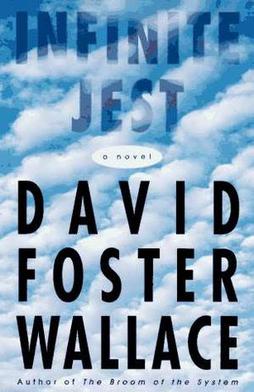
                • Cover of Infinite Jest
                  Infinite Jest

                  David Foster Wallace · standalone novel · 1996

                  similar byidentityliterary & generalnorth americachallenging+2 more

                  Infinite Jest is a 1996 novel by American writer David Foster Wallace. Often considered Wallace’s magnum opus, the book has been categorized as an encyclopedic novel due to its unconventional narrative structure and hundreds of extensive endnotes, some with footnotes of their own.

                • Cover of The Shrinking Man
                  The Shrinking Man

                  Richard Matheson · standalone novel · 1956

                  similar byidentitymid 20th centurynorth americalonelinessscience fiction+1 more

                  The Shrinking Man is a science fiction novel by American writer Richard Matheson, published in 1956. The novel was retitled The Incredible Shrinking Man in some later editions.

                • Cover of Black Oxen
                  Black Oxen

                  Gertrude Atherton · standalone novel · 1923

                  similar byidentityliterary & generalnorth americareflective+1 more

                  "... Black Oxen was written in a burst of mental energy after Gertrude Atherton herself received an experimental anti-aging treatment; the introduction and appendices to this edition explore parallels between Atherton's medical treatment and that of her rejuvenated protagonist, as well as provide selections from other contemporary writings on aging, science, and the role of women in the 1920s. ..." --description of the 2012 Broadview ed. at Amazon 2019-09-05 (read in full, {{ASIN|1554810256}}

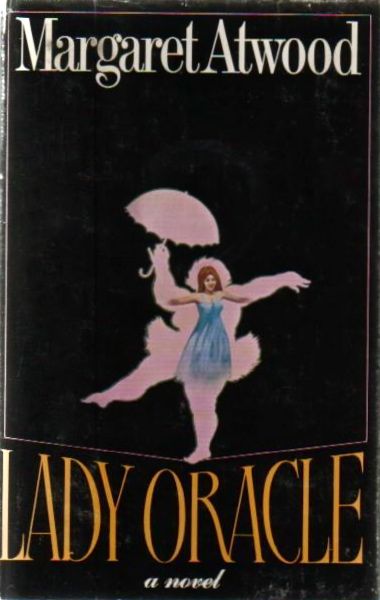
                • Cover of Lady Oracle
                  Lady Oracle

                  Margaret Atwood · standalone novel · 1976

                  similar byidentityliterary & generalnorth americamid 20th centuryreflective

                  Lady Oracle is a novel by Margaret Atwood that parodies Gothic romances and fairy tales. It was first published by McClelland and Stewart in 1976.

                • Cover of The Crying of Lot 49
                  The Crying of Lot 49

                  Thomas Pynchon · standalone novel · 1966

                  similar byliterary & generalnorth americamid 20th century+2 more

                  The Crying of Lot 49 is a novel by the American author Thomas Pynchon. It was published by J. B. Lippincott & Co. on April 27, 1966. The shortest of Pynchon's novels, the plot follows Oedipa Maas, a young Californian woman who begins to embrace a conspiracy theory as she possibly unearths a centuries-old feud between two mail distribution companies. One of these companies, Thurn and Taxis, actually existed; operating from 1806 to 1867, Thurn and Taxis was the first private firm to distribute postal mail. Like most of Pynchon's writing, The Crying of Lot 49 is often described as postmodernist literature. Time magazine included the book in its list of the 100 best English-language novels from 1923 to 2005.

                • Cover of The Gum Thief
                  The Gum Thief

                  Douglas Coupland · standalone novel · 2007

                  similar byidentityliterary & generalnorth americalonelinessreflective

                  The Gum Thief is Canadian author Douglas Coupland's twelfth novel. It was published on September 25, 2007 , by Random House Canada in Canada and Bloomsbury Publishing in the United States.

                • Cover of Mary and the Giant
                  Mary and the Giant

                  Philip K. Dick · standalone novel · 1987

                  similar byidentityliterary & generalnorth americamid 20th centuryreflective

                  Mary and the Giant is an early, non-science fiction novel written by Philip K. Dick in the years between 1953 and 1955, but not published until 1987.

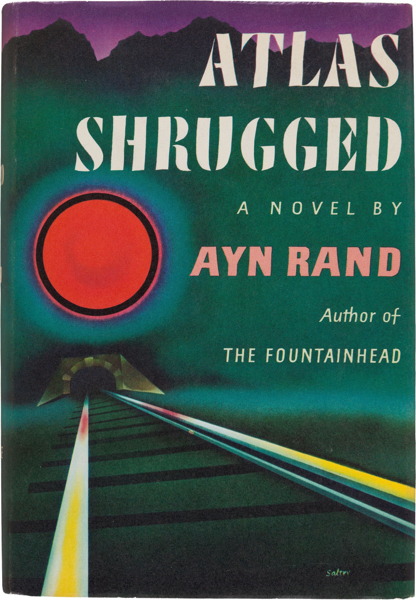
                • Cover of Atlas Shrugged
                  Atlas Shrugged

                  Ayn Rand · standalone novel · 1957

                  similar bynorth americamid 20th centurychallengingscience fiction+2 more

                  Atlas Shrugged is a 1957 novel by Ayn Rand. It is her longest novel, the fourth and final one published during her lifetime, and the one she considered her magnum opus in the realm of fiction writing. She described the theme of Atlas Shrugged as "the role of man's mind in existence" and it includes elements of science fiction, mystery, and romance. The book explores a number of philosophical themes from which Rand would subsequently develop Objectivism, including reason, property rights, individualism, rational egoism, and laissez-faire capitalism and depicts what Rand saw as the evil of altruism and governmental coercion. Of Rand's works of fiction, it contains her most extensive statement of her philosophical system.

                • Cover of The Moviegoer
                  The Moviegoer

                  Walker Percy · standalone novel · 1961

                  similar byidentityliterary & generalnorth americamid 20th centurylonelinessreflective

                  The Moviegoer is the debut novel by Walker Percy, first published in the United States by Alfred A. Knopf in 1961. It won the U.S. National Book Award. Time included the novel in its "Time 100 Best English-language Novels from 1923 to 2005". In 1998, the Modern Library ranked The Moviegoer sixtieth on its list of the hundred best English-language novels of the twentieth century. It is published in the UK by Methuen.

                • Cover of Hangsaman
                  Hangsaman

                  Shirley Jackson · standalone novel · 1951

                  similar byidentitynorth americamid 20th centuryliterary & generalloneliness

                  Hangsaman is a 1951 gothic novel by American author Shirley Jackson. The second of Jackson's published novels, Hangsaman is a bildungsroman centering on lonely college freshman Natalie Waite, who descends into madness after enrolling in a liberal arts college.

                • Cover of Junky
                  Junky

                  William S. Burroughs · standalone novel · 1953

                  similar byliterary & generalmid 20th centurynorth americalonelinessreflective+1 more

                  A semi-autobiographical account, narrated in a matter-of-fact manner, of the author’s life as a drug addict. The story ranges from the backstreets of New York to a drug rehabilitation hospital in Kentucky, the bars of New Orleans and on to Mexico, recounting the difficulties of obtaining drugs, financial problems and homosexual encounters. Burroughs significantly stretched the boundaries of publishable material with his debut novel.

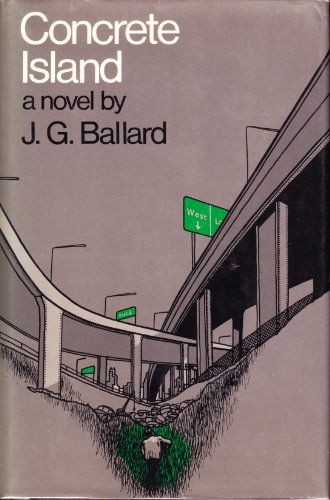
                • Cover of Concrete Island
                  Concrete Island

                  J. G. Ballard · standalone novel · 1974

                  similar byidentityliterary & generallonelinesschallengingreflective

                  Architect Robert Maitland crashes his car onto a stretch of wasteland trapped between three converging motorways -- visible from thousands of cars, reachable by none of them. Injured and unable to climb back to the road, Maitland adapts to life on what he starts calling the Island, scavenging food thrown from car windows, and discovers he isn't alone: a runaway sex worker hiding in a bunker, and a brain-damaged former circus acrobat, both long past expecting rescue. What begins as a survival story turns into a question of whether Maitland even wants to leave. A J. G. Ballard novel of urban isolation, grouped with Crash and High-Rise.

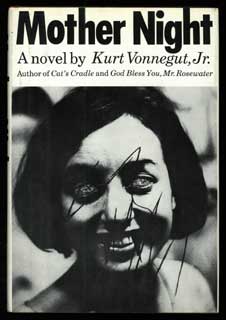
                • Cover of Mother Night
                  Mother Night

                  Kurt Vonnegut & Jr. · standalone novel · 1962

                  similar byidentityliterary & generalmid 20th centuryreflective

                  Howard W. Campbell Jr., an American playwright who grew up in Germany, writes his memoirs from an Israeli prison cell awaiting trial for war crimes. As the Nazis rose to power, Campbell stayed on, married a German actress, and was recruited by an American agent to serve as a double agent, broadcasting Nazi propaganda over the radio while secretly passing coded intelligence to the Allies. The catch, as Campbell tells it, is that he became one of the war's most effective propagandists in the process, whatever his loyalties. Kurt Vonnegut's darkest novel asks what a person becomes when the mask he wears for a cause is indistinguishable from his face.