Loreful
HomeDiscover
Search series, authors…⌘K
Loreful

Reading orders for SF/F series and shared universes — with your place kept in every one.

Explore

UniversesSeriesWorksAuthorsAtlas

Help

FAQAboutSite map

Account & legal

Sign inCreate accountPrivacyTerms

Data

Built on ISFDB, Wikipedia, Wikidata and Open Library. Curated reading orders carry their reasoning on the page; the rest follow publication order. Data sources & licenses

© Loreful · data: ISFDB · CC BY

More like Smart Dog

anchored on:science fictionour worldcontemporarymiddle gradeartificial intelligencefriendship+2 more

but

Mood

The mood the book leaves you in.

  • The reading experience is propelled by journeys, exploration, and physical risk; excitement and forward momentum dominate over dread or introspection.
  • Joy and loss are deliberately mixed; the resolution grants characters something real while taking something else away, leaving warmth and sorrow together.
  • The book demands work from the reader — dense prose, difficult structure, unfamiliar ideas, or morally uncomfortable material — as part of its intended effect.
  • Grim events, cruelty, or despair dominate the atmosphere, and the book does not soften them with comfort or comic relief.
  • The atmosphere is quietly unsettling — wrongness, unease, and the uncanny pervade the book without necessarily escalating into overt horror.
  • The book is built to move the reader; character feeling is foregrounded and major scenes aim at a strong emotional response.
  • Humor is a primary aim and the prose plays for laughs — comic situations, wit, or dialogue produce sustained comedy, not occasional levity.
  • The book insists that things can improve; effort and decency are shown to matter, and the arc bends toward better outcomes even through hardship.
  • The book teaches as it goes — real facts, history, science, or craft are conveyed in enough depth that learning is part of the reading experience.
  • The book is designed to uplift and motivate, presenting perseverance or achievement in a way that invites the reader to aspire or act.
  • The overall register is cheerful and easygoing; stakes are kept gentle and the book avoids dwelling on pain or dread.
  • Withheld information drives the experience; the book sustains enigmas and secrets the reader wants resolved, whatever its genre.
  • The book is contemplative and inward-looking, giving more weight to thought, memory, and meaning than to external events.
  • The book works as comfort reading — low tension, a soothing pace, and an atmosphere the reader can unwind in.
  • Grief, loss, or melancholy set the dominant register, and the book lets sorrow stand rather than resolving it into comfort.
  • Sustained suspense is the point; the book keeps the reader braced for what happens next through danger, pressure, or impending revelation.
  • Playful invention and charm define the register — fanciful conceits, light absurdity, and a narration that delights in its own oddity.

About

What the story runs on.

  • Stories in which extraterrestrial beings are central — as characters, cultures, or the object of the plot.
  • Stories structured as a quest — a journey undertaken to find, deliver, or destroy something of great import.
  • Stories in which staying alive against nature, catastrophe, or scarcity is the central problem.
  • Stories of lovers kept apart by law, family, faith, or station, where the obstacle to love is the plot.
  • Stories in which a friendship — its making, testing, or loss — is the emotional center.
  • Stories of growing up — a young protagonist crossing from childhood into adult knowledge and responsibility.
  • Stories about who a character truly is — self-discovery, doubled lives, and the search for a self.
  • Stories about mourning — living through the death of a loved one and what loss does to the survivors.
  • Stories in which a buried family truth — hidden parentage, crimes, or shames — surfaces and reorders the present.
  • Stories driven by maneuvering for power — factions, conspiracies, and statecraft conducted in shadow.
  • Stories in which war itself is the subject — combat, occupation, and what warfare does to soldiers and civilians.
  • Stories organized around investigating a killing — the case, the clues, and the pursuit of the killer, in any genre's clothing.

Shelf

Where it sits in the library.

    • Fiction built on magic or other supernatural elements that have no scientific explanation.
    • Secondary-world fantasy at large scale, where the fate of nations or the world turns on the protagonists' struggle.
    • Fantasy set in a recognizably modern city or contemporary world where the supernatural intrudes on everyday life.
    • Fantasy that blends in horror's atmosphere and imagery, keeping a fantastical frame around grim or frightening material.
    • Action-driven fantasy following warriors or rogues with personal stakes against sorcerous threats, rather than world-spanning conflicts.
    • Fantasy set in a real historical period or a close analogue of one, with magic woven into the era.
    • Fantasy in which protagonists cross from the ordinary world into another world through a portal or similar passage.
    • Fiction that retells or reworks a traditional fairy tale in a new form or setting.
    • Fantasy drawing directly on myths, legends, and folklore, retelling them or building on their figures and logic.
    • Fantasy of ghosts, vampires, shapeshifters, psychics, and similar phenomena, usually set in an otherwise ordinary world.
    • Fiction mixing science-fictional trappings with overtly magical or impossible elements in one setting.
    • Low-stakes fantasy emphasizing comfort, community, and everyday pleasures over conflict and peril.
    • Speculative fiction of pervasive moral ambiguity, violence, and cynicism that rejects heroic conventions — fantasy and SF alike.
      • Fiction that extrapolates from science and technology — future societies, space travel, or speculative inventions — within at least nominally natural laws.
      • Science fiction of interstellar scope — starships, galactic polities, and adventure across star systems.
      • Science fiction committed to scientific rigor, where technical plausibility constrains the story.
      • Science fiction centered on armed forces and warfare, told largely from a military point of view.
      • Science fiction of networked, corporate-dominated near futures, pairing high technology with social decay.
      • Science fiction styled on nineteenth-century steam-powered technology, often in a Victorian or pseudo-Victorian setting.
      • Fiction depicting an oppressive or catastrophic society, presented as a warning.
      • Fiction set after civilization's collapse, following survivors in the ruins of the old world.
      • Fiction in which characters move between past and future, and the mechanics or consequences of that travel drive the plot.
      • Fiction exploring a world where a historical event went differently and history diverged from ours.
      • Science fiction about humanity's first encounter and communication with an alien intelligence.
      • Science fiction in which extraterrestrial forces attack or occupy Earth and humanity resists.
      • Fiction whose primary aim is to frighten or unsettle the reader through dread, menace, or the monstrous.
      • Horror of vast, indifferent, incomprehensible entities before which humanity is insignificant, in the Lovecraft tradition.
      • Horror of decaying houses, buried family secrets, and oppressive atmosphere in the Gothic literary tradition.
      • Horror centered on hauntings and the returning dead.
      • Horror located in the mind — paranoia, obsession, and unreliable perception rather than external monsters.
      • Horror built around the reanimated dead and survival amid their outbreaks.
      • Horror defined by explicit, transgressive gore that refuses to cut away from violence.
      • Speculative fiction of the strange and uncanny that resists both natural explanation and standard genre categories.
      • Fiction organized around solving a crime or puzzle, typically following an investigator toward the identification of a culprit.
      • A puzzle-first mystery that lays out clues so the culprit's identity can be deduced before the reveal.
      • Crime fiction of moral ambiguity, fatalism, and hard-edged style, set among the corrupt and the doomed.
      • A mystery following the realistic routines of police work — forensics, interviews, and case-building.
      • A gentle mystery with an amateur sleuth, a small community, and violence kept off the page.
      • A mystery set in a past era, where the investigation works within that period's methods and society.
      • Fast-paced fiction driven by imminent danger, pursuit, or high-stakes conspiracy, built to sustain tension.
      • A thriller of espionage — agents, tradecraft, and intelligence services in conflict.
      • A thriller centered on lawyers and the courtroom, where litigation carries the suspense.
      • A thriller driven by detailed contemporary or near-future technology, often military or scientific.
      • A thriller whose tension comes from mental states and manipulation between characters rather than external action.
      • Fiction whose central plot is a romantic relationship and its development toward an emotionally satisfying resolution.
      • Romance in which one or both partners are supernatural beings, blending fantasy elements into the love story.
      • A fantasy-romance hybrid in which the romantic arc and the fantasy plot carry equal weight.
      • Romance set in a past era, with courtship shaped by the period's society and manners.
      • Romance set in the present day, without supernatural or historical elements.
      • Fiction set in a real past period, where the historical setting materially shapes characters and events.
        • General and literary fiction emphasizing prose style, character interiority, or formal ambition over genre plot conventions.
        • Fiction in a realistic world where magical events occur and are treated as ordinary, in the tradition of Latin American literature.
        • Fiction that ridicules people, institutions, or society in order to criticize them.
        • Fiction of dreamlike, irrational imagery and logic that breaks from realistic representation.
        • Fiction that plays with narrative convention through metafiction, fragmentation, and self-reference.
        • Fiction propelled by journeys, exploration, and physical peril, where action and survival carry the plot.
        • Adventure fiction of ships and seafaring — naval engagements, voyages, and life at sea.
        • Fiction of the American frontier West — gunmen, ranchers, and lawmen, typically in the late nineteenth century.
        • Fiction centered on soldiers, campaigns, and the experience of warfare, historical or imagined.
          • Fiction written primarily to amuse, using comedic situations, wit, or parody as its organizing principle.
            • Multi-generational fiction following a family or dynasty across decades, with inheritance and kinship as the through-line.
              • Fiction whose world runs on explicit game mechanics — levels, stats, and skills that characters can see and exploit.
                • Fiction about costumed or superpowered heroes and their conflicts with comparable villains.

                Practical

                How long a commitment, whether it stands alone, and whether it has finished.

                Tap a chip to ask for it · tap again to rule it out · once more to clear. Numbers show what would be left.

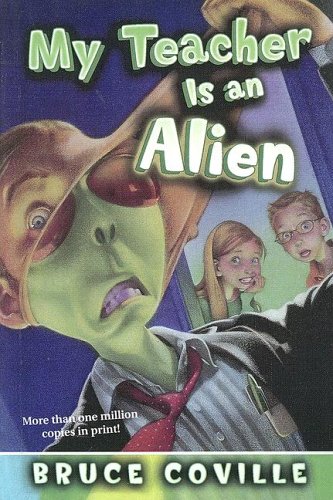
                • Cover of My Teacher Is an Alien
                  My Teacher Is an Alien

                  series · 4 books · 1989

                  similar byscience fictionadventurouscontemporarymiddle grade+4 more

                  My Teacher Is an Alien is a four-book science fiction children's book series authored by Bruce Coville. The titles include:My Teacher Is an Alien (1989) My Teacher Fried My Brains (1991) My Teacher Glows in the Dark (1991) My Teacher Flunked the Planet (1992)

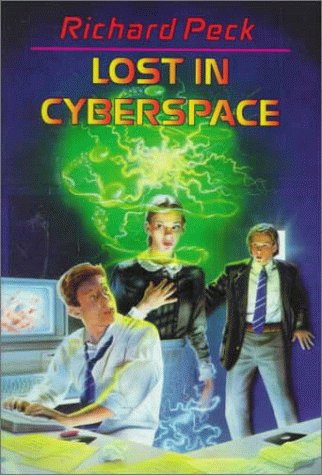
                • Cover of Lost in Cyberspace
                  Lost in Cyberspace

                  series · 2 books · 1995

                  completed

                  similar byscience fictioncontemporaryfriendshiplightheartedmiddle gradecoming of age+3 more

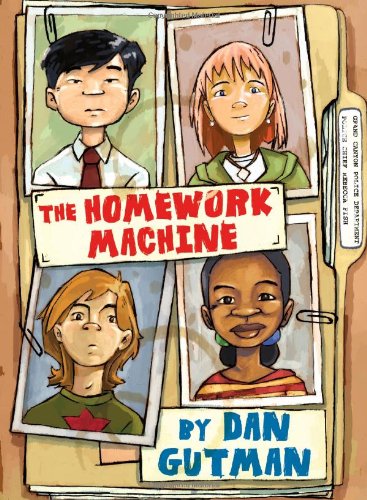
                • Cover of The Homework Machine
                  The Homework Machine

                  series · 2 books · 2006

                  similar byscience fictioncontemporaryartificial intelligencefriendshipmiddle gradenorth america+2 more

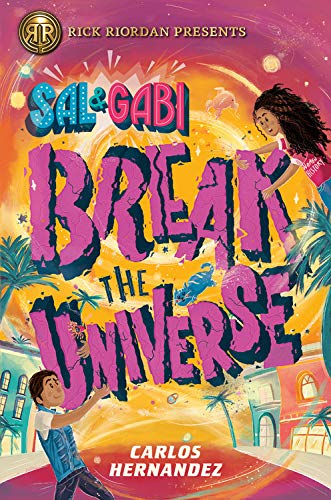
                • Cover of Sal and Gabi
                  Sal and Gabi

                  series · 2 books · 2019

                  similar byscience fictionadventurouscontemporaryfriendshipmiddle gradecoming of agenorth america+1 more

                • Cover of WWW Trilogy
                  WWW Trilogy

                  series · 3 books · 2009

                  similar byscience fictioncontemporaryartificial intelligenceour worldnorth america+2 more

                  The WWW Trilogy is a trilogy of science-fiction novels by Canadian science fiction author Robert J. Sawyer. The first book, Wake, was originally serialized in four parts in Analog Science Fiction and Fact from November 2008 to March 2009, published in book form through Ace on April 7, 2009, and was followed by the second book, Watch, on April 6, 2010. Wonder was published in 2011.

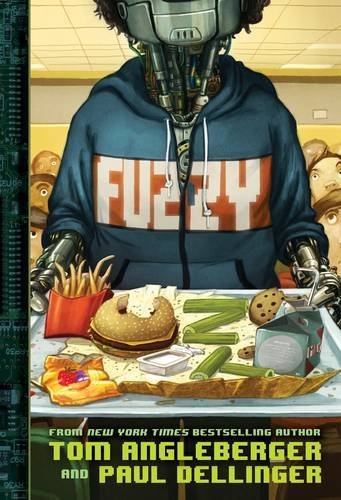
                • Cover of Fuzzy
                  Fuzzy

                  Paul Dellinger & Tom Angleberger · standalone novel · 2016

                  similar byscience fictioncontemporaryartificial intelligencefriendshipour worldmiddle gradecoming of age+1 more

                  When Max--Maxine Zealster--befriends her new robot classmate Fuzzy, part of Vanguard One Middle School's new Robot Integration Program, she helps him learn everything he needs to know about surviving middle school--the good, the bad, and the really, really, ugly. Little do they know that surviving sixth grade is going to become a true matter of life and death, because Vanguard has an evil presence at its heart: a digital student evaluation system named BARBARA that might be taking its mission to shape the perfect student to extremes!

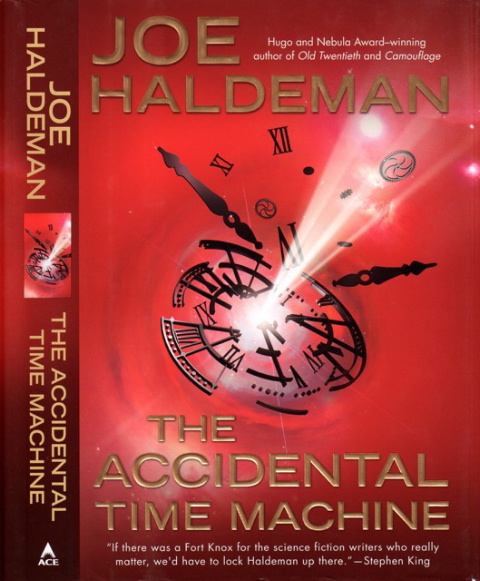
                • Cover of The Accidental Time Machine
                  The Accidental Time Machine

                  Joe Haldeman · standalone novel · 2007

                  similar byscience fictionadventurouscontemporaryour worldnorth america+1 more

                  "Grad-school dropout Matt Fuller is toiling as a lowly research assistant at MIT when, while measuring subtle quantum forces that relate to time changes in gravity and electromagnetic force, his calibrator turns into a time machine. With a dead-end job and a girlfriend who has left him for another man, Matt has nothing to lose taking a time machine trip himself - or so he thinks."

                • Cover of The Accelerati Trilogy
                  The Accelerati Trilogy

                  series · 3 books · 2014

                  similar byscience fictionadventurouscontemporaryour worldnorth americamiddle grade+2 more

                • Cover of Honey, I Shrunk the Kids
                  Honey, I Shrunk the Kids

                  Elizabeth Faucher · standalone novel · 1989

                  similar byscience fictionadventurouscontemporaryfriendshipour worldmiddle gradenorth america+1 more

                  Four friends must make their way back across a suddenly jungle-like backyard, after having been shrunk to the size of quarters.

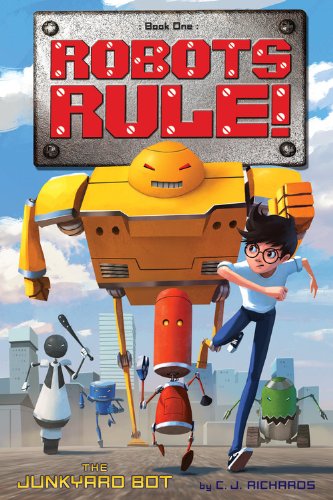
                • Cover of Robots Rule!
                  Robots Rule!

                  series · 3 books · 2014

                  similar byscience fictionadventurousfriendshipcontemporaryour worldmiddle grade+1 more

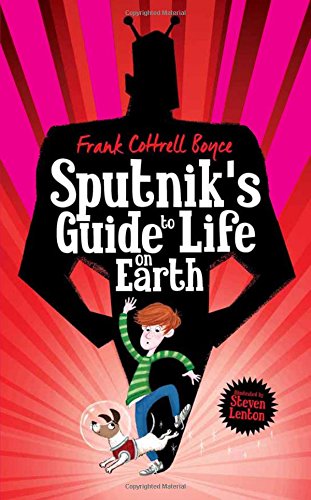
                • Cover of Sputnik's Guide to Life on Earth
                  Sputnik's Guide to Life on Earth

                  Frank Cottrell Boyce · standalone novel · 2016

                  similar byscience fictioncontemporaryfriendshipour worldmiddle grade+1 more

                  Prez knows that the best way to keep track of things is to make a list. That's important when you have a grandfather who is constantly forgetting. And it's even more important when your grandfather can't care for you anymore and you have to go live with a foster family out in the country.

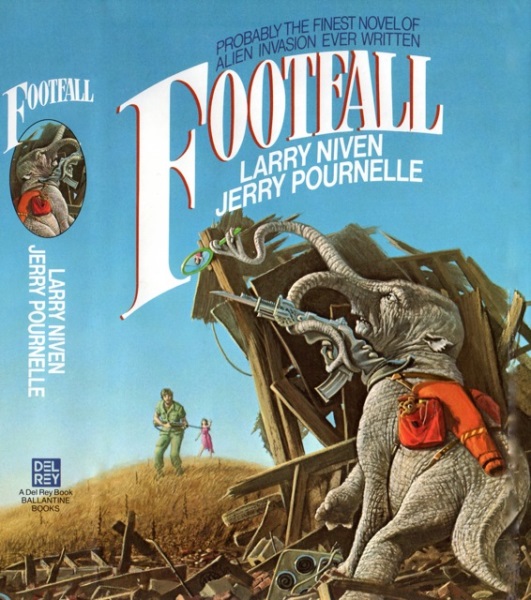
                • Cover of Footfall
                  Footfall

                  Larry Niven & Jerry Pournelle · standalone novel · 1985

                  similar byscience fictioncontemporaryour worldnorth america+1 more

                  When aliens travel to Earth from Alpha Centauri, differences between alien and human psychology result in an unprovoked invasion, and the resulting resistance results in the aliens' use of a devastating weapon.

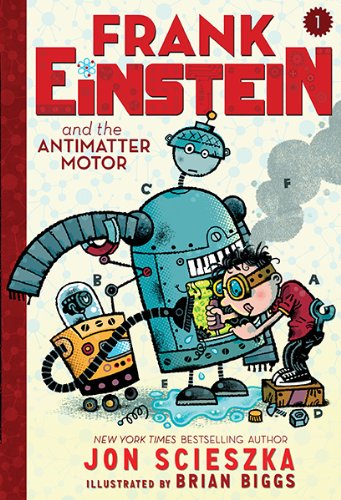
                • Cover of Frank Einstein
                  Frank Einstein

                  series · 11 books · 2014

                  similar byscience fictioncontemporaryartificial intelligencemiddle grade+4 more

                • Cover of The CyberSkunk Files
                  The CyberSkunk Files

                  series · 2 books · 2011

                  similar byscience fictionadventurouscontemporarymiddle gradecoming of age+3 more

                • Cover of Attack of the 50 Foot Wallflower
                  Attack of the 50 Foot Wallflower

                  Christian McKay Heidicker · standalone novel · 2018

                  similar byscience fictionadventurouscontemporaryour worldmiddle gradenorth america+1 more

                  Phoebe Lane is a lightning rod for monsters. She and her mom are forced to flee flesh-eating plants, blobs from outer space, and radioactive ants. They survive thanks to Phoebe s dad an invisible titan, whose giant eyes warn them where the next monster attack will take place.

                • Cover of Crosstalk
                  Crosstalk

                  Connie Willis · standalone novel · 2016

                  similar byscience fictioncontemporaryfriendshipour worldnorth america

                  Crosstalk is a science fiction novel by Connie Willis, published in 2016. It is a romantic comedy that explores the intersection of telephones and telepathy. In a similar situation to Bellwether and Passage, the main character, Briddey Flannigan, is part of a larger institution who gets caught up in series of escalating events. Additionally, Crosstalk like Bellwether and Passage feature themes of neuroscience, communication and technology.

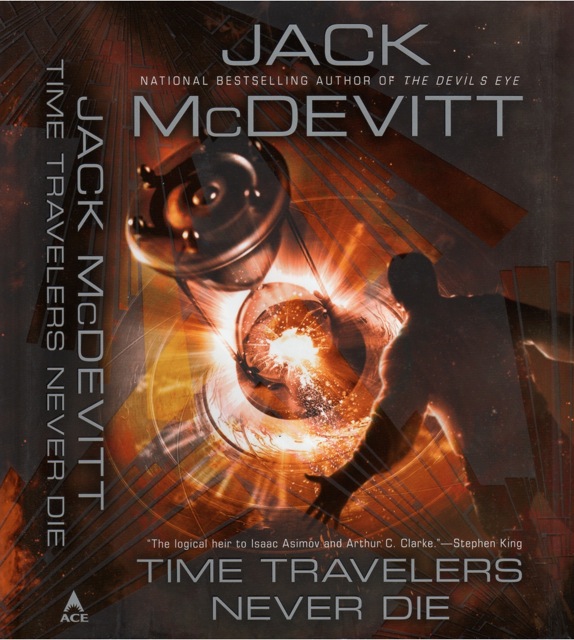
                • Cover of Time Travelers Never Die
                  Time Travelers Never Die

                  series · 2 books · 1996

                  similar byscience fictioncontemporaryour world+2 more

                  Time Travelers Never Die started life as a Jack McDevitt novella in the mid-1990s (Hugo- and Nebula-nominated) before he expanded it into a full novel over a decade later; the novella and novel are two forms of the same story rather than a sequel. It follows a small circle of people who gain access to working time travel and use it to step into the past, in McDevitt's characteristic register of curious, history-minded science fiction.

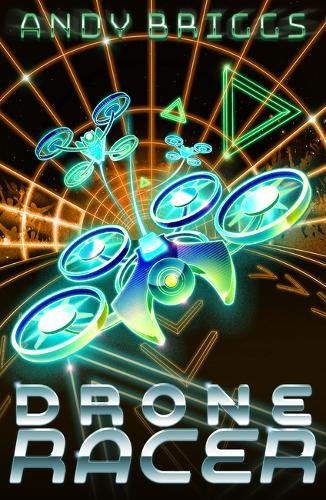
                • Cover of Drone Racer
                  Drone Racer

                  Andy Briggs · standalone novel · 2018

                  similar byscience fictionadventurouscontemporaryfriendshipour worldmiddle grade

                  Carson and his friends can't believe their luck: they've found a drone at the local scrapyard. And it's fast. Really fast. But there's a lot more to this drone than meets the eye, and someone wants it back. They'll stop at nothing to get it. How can three kids protect their star racer?

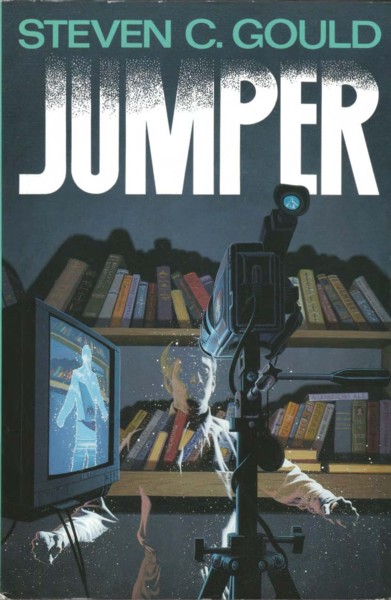
                • Cover of Jumper
                  Jumper

                  series · 6 books · 1992

                  similar byscience fictionadventurouscontemporary+3 more

                  Jumper follows David Rice, a teenager who discovers he can teleport anywhere he's been and uses the power to escape an abusive home, only to find that ability alone doesn't solve the harder problems of finding his absent mother, building an honest relationship, or staying off the radar of people who'd exploit him. Steven Gould's series continues across Reflex, Impulse, and Exo, later following his and his wife's daughter as a second-generation jumper. A 2008 film loosely adapted the first novel.

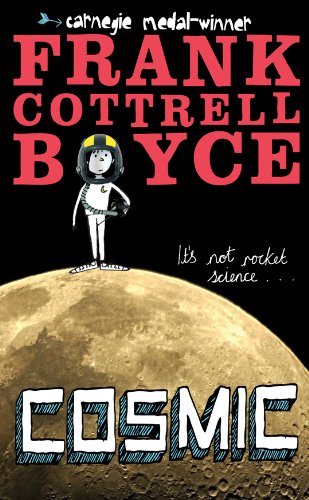
                • Cover of Cosmic
                  Cosmic

                  Frank Cottrell Boyce · standalone novel · 2008

                  similar byscience fictionadventurouscontemporarymiddle gradecoming of age

                  Super-sized, eleven-year-old Liam makes a giant leap for boy-kind by competing with a group of adults for the chance to go into space.

                • Cover of An Absolutely Remarkable Thing / The Carls
                  An Absolutely Remarkable Thing / The Carls

                  series · 2 books · 2018

                  similar byscience fictioncontemporaryadventurousour worldnorth america+1 more

                • Cover of Alien Agent
                  Alien Agent

                  series · 6 books · 2008

                  similar byscience fictionadventurouscontemporarymiddle gradeour world+1 more

                • Cover of Tip and J. Lo
                  Tip and J. Lo

                  series · 2 books · 2007

                  similar byscience fictioncontemporaryadventurousnorth america+3 more

                • Cover of The Questor Tapes
                  The Questor Tapes

                  D. C. Fontana · standalone novel · 1974

                  similar byscience fictionadventurouscontemporaryartificial intelligenceour worldnorth america

                  On back cover: "The gripping story of an artificial man ... a fast-paced adventure moving from the Los Angeles freeways to the bustling London metropolis ... and on to the distant peaks of Mount Ararat for a spectacular climax!"