Loreful
HomeDiscover
Search series, authors…⌘K
Loreful

Reading orders for SF/F series and shared universes — with your place kept in every one.

Explore

UniversesSeriesWorksAuthorsAtlas

Help

FAQAboutSite map

Account & legal

Sign inCreate accountPrivacyTerms

Data

Built on ISFDB, Wikipedia, Wikidata and Open Library. Curated reading orders carry their reasoning on the page; the rest follow publication order. Data sources & licenses

© Loreful · data: ISFDB · CC BY

More like Smokescreen

anchored on:thriller & suspenseour worldcontemporaryscience fictionidentitytense

but

Mood

The mood the book leaves you in.

  • The reading experience is propelled by journeys, exploration, and physical risk; excitement and forward momentum dominate over dread or introspection.
  • Joy and loss are deliberately mixed; the resolution grants characters something real while taking something else away, leaving warmth and sorrow together.
  • The book demands work from the reader — dense prose, difficult structure, unfamiliar ideas, or morally uncomfortable material — as part of its intended effect.
  • Grim events, cruelty, or despair dominate the atmosphere, and the book does not soften them with comfort or comic relief.
  • The atmosphere is quietly unsettling — wrongness, unease, and the uncanny pervade the book without necessarily escalating into overt horror.
  • The book is built to move the reader; character feeling is foregrounded and major scenes aim at a strong emotional response.
  • Humor is a primary aim and the prose plays for laughs — comic situations, wit, or dialogue produce sustained comedy, not occasional levity.
  • The book insists that things can improve; effort and decency are shown to matter, and the arc bends toward better outcomes even through hardship.
  • The book teaches as it goes — real facts, history, science, or craft are conveyed in enough depth that learning is part of the reading experience.
  • The book is designed to uplift and motivate, presenting perseverance or achievement in a way that invites the reader to aspire or act.
  • The overall register is cheerful and easygoing; stakes are kept gentle and the book avoids dwelling on pain or dread.
  • Withheld information drives the experience; the book sustains enigmas and secrets the reader wants resolved, whatever its genre.
  • The book is contemplative and inward-looking, giving more weight to thought, memory, and meaning than to external events.
  • The book works as comfort reading — low tension, a soothing pace, and an atmosphere the reader can unwind in.
  • Grief, loss, or melancholy set the dominant register, and the book lets sorrow stand rather than resolving it into comfort.
  • Sustained suspense is the point; the book keeps the reader braced for what happens next through danger, pressure, or impending revelation.
  • Playful invention and charm define the register — fanciful conceits, light absurdity, and a narration that delights in its own oddity.

About

What the story runs on.

  • Stories in which extraterrestrial beings are central — as characters, cultures, or the object of the plot.
  • Stories structured as a quest — a journey undertaken to find, deliver, or destroy something of great import.
  • Stories in which staying alive against nature, catastrophe, or scarcity is the central problem.
  • Stories of lovers kept apart by law, family, faith, or station, where the obstacle to love is the plot.
  • Stories in which a friendship — its making, testing, or loss — is the emotional center.
  • Stories of growing up — a young protagonist crossing from childhood into adult knowledge and responsibility.
  • Stories about who a character truly is — self-discovery, doubled lives, and the search for a self.
  • Stories about mourning — living through the death of a loved one and what loss does to the survivors.
  • Stories in which a buried family truth — hidden parentage, crimes, or shames — surfaces and reorders the present.
  • Stories driven by maneuvering for power — factions, conspiracies, and statecraft conducted in shadow.
  • Stories in which war itself is the subject — combat, occupation, and what warfare does to soldiers and civilians.
  • Stories organized around investigating a killing — the case, the clues, and the pursuit of the killer, in any genre's clothing.

Shelf

Where it sits in the library.

    • Fiction built on magic or other supernatural elements that have no scientific explanation.
    • Secondary-world fantasy at large scale, where the fate of nations or the world turns on the protagonists' struggle.
    • Fantasy set in a recognizably modern city or contemporary world where the supernatural intrudes on everyday life.
    • Fantasy that blends in horror's atmosphere and imagery, keeping a fantastical frame around grim or frightening material.
    • Action-driven fantasy following warriors or rogues with personal stakes against sorcerous threats, rather than world-spanning conflicts.
    • Fantasy set in a real historical period or a close analogue of one, with magic woven into the era.
    • Fantasy in which protagonists cross from the ordinary world into another world through a portal or similar passage.
    • Fiction that retells or reworks a traditional fairy tale in a new form or setting.
    • Fantasy drawing directly on myths, legends, and folklore, retelling them or building on their figures and logic.
    • Fantasy of ghosts, vampires, shapeshifters, psychics, and similar phenomena, usually set in an otherwise ordinary world.
    • Fiction mixing science-fictional trappings with overtly magical or impossible elements in one setting.
    • Low-stakes fantasy emphasizing comfort, community, and everyday pleasures over conflict and peril.
    • Speculative fiction of pervasive moral ambiguity, violence, and cynicism that rejects heroic conventions — fantasy and SF alike.
      • Fiction that extrapolates from science and technology — future societies, space travel, or speculative inventions — within at least nominally natural laws.
      • Science fiction of interstellar scope — starships, galactic polities, and adventure across star systems.
      • Science fiction committed to scientific rigor, where technical plausibility constrains the story.
      • Science fiction centered on armed forces and warfare, told largely from a military point of view.
      • Science fiction of networked, corporate-dominated near futures, pairing high technology with social decay.
      • Science fiction styled on nineteenth-century steam-powered technology, often in a Victorian or pseudo-Victorian setting.
      • Fiction depicting an oppressive or catastrophic society, presented as a warning.
      • Fiction set after civilization's collapse, following survivors in the ruins of the old world.
      • Fiction in which characters move between past and future, and the mechanics or consequences of that travel drive the plot.
      • Fiction exploring a world where a historical event went differently and history diverged from ours.
      • Science fiction about humanity's first encounter and communication with an alien intelligence.
      • Science fiction in which extraterrestrial forces attack or occupy Earth and humanity resists.
      • Fiction whose primary aim is to frighten or unsettle the reader through dread, menace, or the monstrous.
      • Horror of vast, indifferent, incomprehensible entities before which humanity is insignificant, in the Lovecraft tradition.
      • Horror of decaying houses, buried family secrets, and oppressive atmosphere in the Gothic literary tradition.
      • Horror centered on hauntings and the returning dead.
      • Horror located in the mind — paranoia, obsession, and unreliable perception rather than external monsters.
      • Horror built around the reanimated dead and survival amid their outbreaks.
      • Horror defined by explicit, transgressive gore that refuses to cut away from violence.
      • Speculative fiction of the strange and uncanny that resists both natural explanation and standard genre categories.
      • Fiction organized around solving a crime or puzzle, typically following an investigator toward the identification of a culprit.
      • A puzzle-first mystery that lays out clues so the culprit's identity can be deduced before the reveal.
      • Crime fiction of moral ambiguity, fatalism, and hard-edged style, set among the corrupt and the doomed.
      • A mystery following the realistic routines of police work — forensics, interviews, and case-building.
      • A gentle mystery with an amateur sleuth, a small community, and violence kept off the page.
      • A mystery set in a past era, where the investigation works within that period's methods and society.
      • Fast-paced fiction driven by imminent danger, pursuit, or high-stakes conspiracy, built to sustain tension.
      • A thriller of espionage — agents, tradecraft, and intelligence services in conflict.
      • A thriller centered on lawyers and the courtroom, where litigation carries the suspense.
      • A thriller driven by detailed contemporary or near-future technology, often military or scientific.
      • A thriller whose tension comes from mental states and manipulation between characters rather than external action.
      • Fiction whose central plot is a romantic relationship and its development toward an emotionally satisfying resolution.
      • Romance in which one or both partners are supernatural beings, blending fantasy elements into the love story.
      • A fantasy-romance hybrid in which the romantic arc and the fantasy plot carry equal weight.
      • Romance set in a past era, with courtship shaped by the period's society and manners.
      • Romance set in the present day, without supernatural or historical elements.
      • Fiction set in a real past period, where the historical setting materially shapes characters and events.
        • General and literary fiction emphasizing prose style, character interiority, or formal ambition over genre plot conventions.
        • Fiction in a realistic world where magical events occur and are treated as ordinary, in the tradition of Latin American literature.
        • Fiction that ridicules people, institutions, or society in order to criticize them.
        • Fiction of dreamlike, irrational imagery and logic that breaks from realistic representation.
        • Fiction that plays with narrative convention through metafiction, fragmentation, and self-reference.
        • Fiction propelled by journeys, exploration, and physical peril, where action and survival carry the plot.
        • Adventure fiction of ships and seafaring — naval engagements, voyages, and life at sea.
        • Fiction of the American frontier West — gunmen, ranchers, and lawmen, typically in the late nineteenth century.
        • Fiction centered on soldiers, campaigns, and the experience of warfare, historical or imagined.
          • Fiction written primarily to amuse, using comedic situations, wit, or parody as its organizing principle.
            • Multi-generational fiction following a family or dynasty across decades, with inheritance and kinship as the through-line.
              • Fiction whose world runs on explicit game mechanics — levels, stats, and skills that characters can see and exploit.
                • Fiction about costumed or superpowered heroes and their conflicts with comparable villains.

                Practical

                How long a commitment, whether it stands alone, and whether it has finished.

                Tap a chip to ask for it · tap again to rule it out · once more to clear. Numbers show what would be left.

                • Cover of Dark Matter
                  Dark Matter

                  Blake Crouch · standalone novel · 2016

                  similar bytenseidentityour worldcontemporaryscience fictionthriller & suspense

                  Jason Dessen, college physics professor, husband and father, is kidnapped and taken to a parallel universe where his counterpart had dedicated his life to inventing a method of traveling between an infinity of parallel universes.

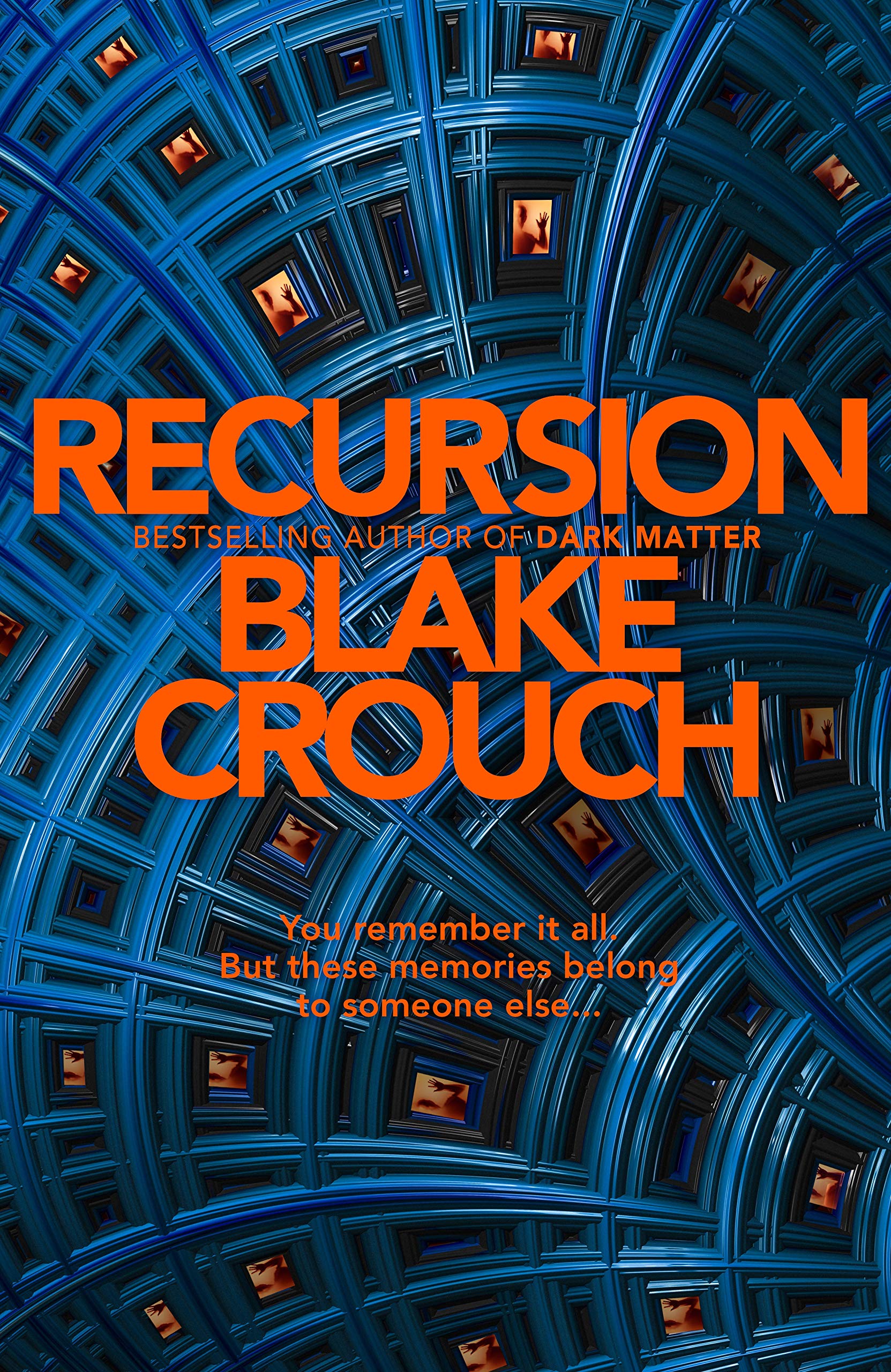
                • Cover of Recursion
                  Recursion

                  Blake Crouch · standalone novel · 2019

                  similar bytenseidentityour worldcontemporarythriller & suspensescience fiction

                  Recursion is a thriller science fiction novel by American writer Blake Crouch, first published in the United States in June 2019 by the Crown Publishing Group, a subsidiary of Penguin Random House. The novel explores themes of memory, identity, and time.

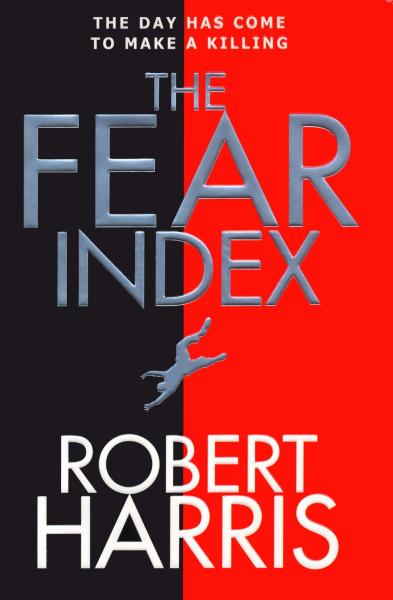
                • Cover of The Fear Index
                  The Fear Index

                  Robert Harris · standalone novel · 2011

                  similar bytenseour worldcontemporarythriller & suspenseartificial intelligencescience fiction

                  A computer designed for stock trading becomes sentient.

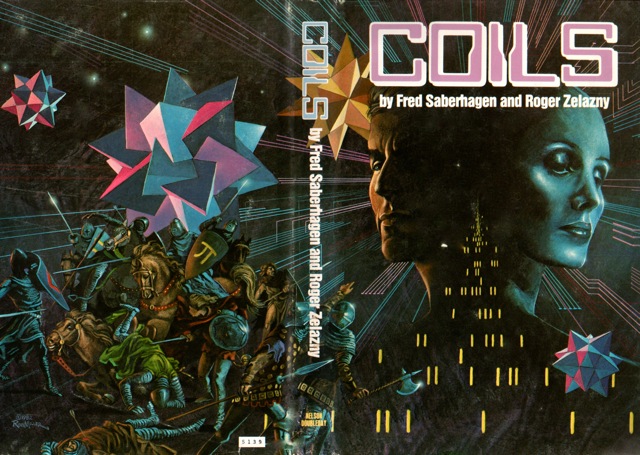
                • Cover of Coils
                  Coils

                  Roger Zelazny & Fred Saberhagen · standalone novel · 1982

                  similar bytenseidentityour worldcontemporaryscience fiction+1 more

                  A man discovers that his memories of childhood are false, and when he begins to investigate his psychiatrist is murdered and his girlfriend is kidnapped. As his actual past begins to return to his memory, he realizes that he has the ability to mentally connect to computer circuitry, an ability he used to use for illegal advantage for the corporation which employed him, along with a small group of others with paranormal powers. He concludes that the corporation is behind all this and sets out to find and rescue his girlfriend while the corporation pursues him.

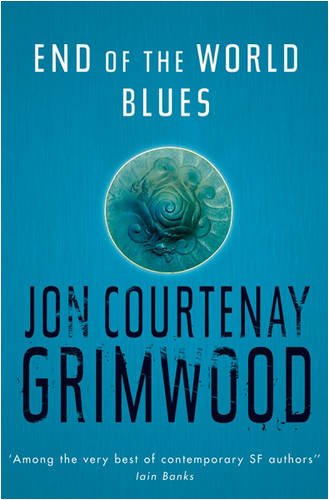
                • Cover of End of the World Blues
                  End of the World Blues

                  Jon Courtenay Grimwood · standalone novel · 2006

                  similar bytenseidentityour worldcontemporaryscience fictionthriller & suspense

                  "Kit Nouveau didn't escape himself when he fled to Japan. Now running a biker bar in the Roppongi district of Tokyo, he's also sleeping with the wife of a High Yakusa ganglord. All things considered, being held up at gunpoint isn't a complete shock. The pale girl in the red cloak appearing from nowhere and punching an ivory spike into his attacker's head on the other hand." "Nijie has stolen fifteen million dollars, she's on the run, she's just killed a man and she has a cat who knows more than it should. It's a lot to deal with when you haven't even left school." "But Nijie is also Lady Neku, and in a sentient castle at the end of the world Lady Neku otherwise known as Baroness Nawa-no-ukiyo. Countess High Strange and chatelaine of Schlass Omga realizes that Kit has stolen some of her memories. What happens to a man who finally realises he can't outrun himself? Kit Nouveau is about to find out."--BOOK JACKET. "Kit Nouveau figured he'd already come to the end of the world. An Iraqi war veteran, expatriate, and part owner of Pirate Mary's, the best Irish bar in Tokyo, Kit had settled down to await the inevitable with barely a whimper. It wasn't exactly how Kit thought he'd end up, and he was right." "It's going to end up a lot worse." "A teenage runaway with fifteen million dollars in stolen cash and a taste for cosplay is about to save Kit's life in a lethal swirl of scarlet and bridal lace. Lady Neku, a.k.a. Countess of High Strange, has her own dangerous destiny to fulfill and it's mysteriously connected to Kit's ravaged past. Now Kit's only hope for redemption is to save an ex-girlfriend he tragically failed once before. But everyone says it's already too late. And she's left behind only one ominous clue: her suicide note."--BOOK JACKET.

                • Cover of WWW Trilogy
                  WWW Trilogy

                  series · 3 books · 2009

                  similar byour worldcontemporaryartificial intelligencescience fiction+2 more

                  The WWW Trilogy is a trilogy of science-fiction novels by Canadian science fiction author Robert J. Sawyer. The first book, Wake, was originally serialized in four parts in Analog Science Fiction and Fact from November 2008 to March 2009, published in book form through Ace on April 7, 2009, and was followed by the second book, Watch, on April 6, 2010. Wonder was published in 2011.

                • Cover of In the Night Room
                  In the Night Room

                  Peter Straub · standalone novel · 2004

                  similar bytenseidentityour worldcontemporarythriller & suspense

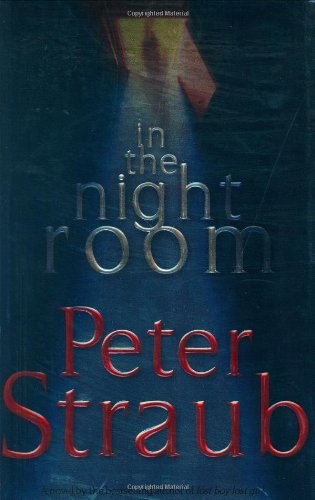
                  In the Night Room is a 2004 horror-thriller novel by American author Peter Straub, a sequel to his 2003 book Lost Boy, Lost Girl. The work was first published in hardback on October 26, 2004, through Random House and it won the 2004 Bram Stoker Award for Novel. Straub encountered some difficulties while writing In the Night Room and had written several different passages for the work before growing bored with each version before writing it using the same technique he used for its predecessor in which he "reached down inside the book and turned it inside out."

                • Cover of Departure
                  Departure

                  A. G. Riddle · standalone novel · 2014

                  similar bytenseour worldcontemporaryscience fictionthriller & suspense+1 more

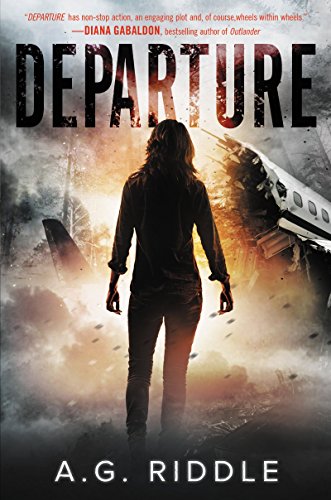
                  "The world's past and future rests in the hands of five unwitting strangers in this definitive edition of A. G. Riddle's time-traveling, mind-bending speculative thriller. En route to London from New York, Flight 305 suddenly loses power and crash-lands in the English countryside, plunging a group of strangers into a mysterious adventure that will have repercussions for all of humankind.Struggling to stay alive, the survivors soon realize that the world they've crashed in is very different from the one they left. But where are they? Why are they here? And how will they get back home? Five passengers seem to hold clues about what's really going on: writer Harper Lane, venture capitalist Nick Stone, German genetic researcher Sabrina Schroeder, computer scientist Yul Tan, and Grayson Shaw, the son of a billionaire philanthropist.As more facts about the crash emerge, it becomes clear that some in this group know more than they're letting on--answers that will lead Harper and Nick to uncover a far-reaching conspiracy involving their own lives. As they begin to piece together the truth, they discover they have the power to change the future and the past--to save our world. or end it. A wildly inventive and propulsive adventure full of hairpin twists, Departure is a thrilling tale that weaves together power, ambition, fate, memory, and love, from a bold and visionary talent"--

                • Cover of Dissolution
                  Dissolution

                  Nicholas Binge · standalone novel · 2025

                  similar bytenseour worldcontemporaryscience fictionthriller & suspense+1 more

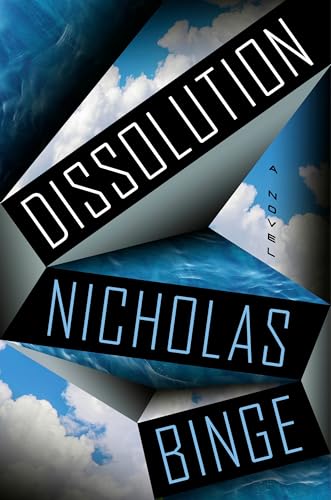
                  Dissolution is a 2025 science fiction novel by Nicholas Binge, published in the UK by Harper Voyager, and in the US by Riverhead Books. It is published or forthcoming in multiple languages, including Spanish, German, Hungarian, and Arabic. The novel tells the story of Margaret (Maggie) Webb, who discovers that her husband Stanley’s Alzheimer’s is a false cover for the fact that his memories are being purposefully erased to keep something he did in his past hidden. The book alternates between Maggie and Stanley’s perspectives as they move through multiple decades of their relationship.

                • Cover of Feedback
                  Feedback

                  D. L. Richardson · standalone novel · 2012

                  similar bytenseidentityour worldcontemporaryscience fictionthriller & suspense

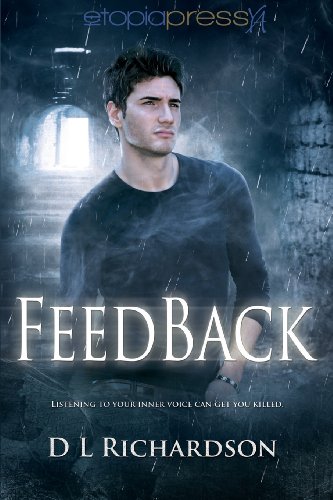
                  ● "Three teenagers have one thing in common: they're kidnapped two weeks after receiving life-saving organ transplants. Their abductor is a man who believes the memories of the host are retained in the organs. Extracting these memories is just the beginning. Something else is awakening inside their minds. If they trust this voice they might save the world. But it might also get them killed." ― paraphrased from this book's product page on Amazon.com as of 2024-04-03.

                • Cover of Frozen Fire
                  Frozen Fire

                  Tim Bowler · standalone novel · 2006

                  similar bytenseidentityour worldcontemporarythriller & suspense

                  Frozen Fire is a philosophical thriller about the nature of reality by Tim Bowler. The novel was first published in 2006. It introduces a mysterious boy who wants to escape his unhappy life through suicide, and a fifteen-year-old girl who only wants her brother back from wherever he has disappeared to. Frozen Fire has won several awards.

                • Cover of Deception Point
                  Deception Point

                  Dan Brown · standalone novel · 2001

                  similar bytenseour worldcontemporarythriller & suspense+1 more

                  Deception Point is a 2001 mystery-thriller novel by American author Dan Brown. It is Brown's third novel. It was published by Simon & Schuster.

                • Cover of The Last Universe
                  The Last Universe

                  William Sleator · standalone novel · 2005

                  similar bytenseidentityour worldcontemporaryscience fictionthriller & suspense

                  Sleator is at his sci-fi best with this quantum thriller, now available in paperbackIn this gothic, sci-fi thriller from a master storyteller, Susan and her wheelchair-bound brother, Gary, discover a mysterious maze in the vast gardens of their isolated home. Planted by a scientist uncle who disappeared long ago, the maze offers seemingly endless routes and choices. The teenagers discover that each turn they take alters their world in some way. Sickly Gary sees a chance to change his fate; Susan sees that they may both be lost forever.

                • Cover of Strangers
                  Strangers

                  Dean R. Koontz · standalone novel · 1986

                  similar bytenseidentityour worldcontemporary+1 more

                  Strangers is a horror novel written by Dean Koontz, released in 1986.

                • Cover of Tom Broadbent / Wyman Ford
                  Tom Broadbent / Wyman Ford

                  series · 6 books · 2003

                  similar bytensecontemporarythriller & suspenseour worldscience fiction+1 more

                  Douglas Jerome Preston is an American journalist and author. Although he is best known for his thrillers in collaboration with Lincoln Child, he has also written six solo novels, including the Wyman Ford series and a novel titled Jennie, which was made into a movie by Disney called The Jennie Project. Preston has authored a half-dozen nonfiction books on science and exploration and writes occasionally for The New Yorker, Smithsonian, and other magazines.

                • Cover of All This and More
                  All This and More

                  Peng Shepherd · standalone novel · 2024

                  similar bytenseidentityour worldcontemporaryscience fiction

                  A game show uses a technology that allows contestants to revise their past lives to change their present ones.

                • Cover of The Duplicate
                  The Duplicate

                  William Sleator · standalone novel · 1988

                  similar bytenseidentityour worldcontemporaryscience fiction

                  "Sixteen-year-old David, finding a strange machine that creates replicas of living organisms, duplicates himself and suffers the horrible consequences when the duplicate turns against him." --summary, WorldCat library record {{OCLC|855408448}}

                • Cover of Evil Genius (Catherine Jinks)
                  Evil Genius (Catherine Jinks)

                  series · 3 books · 2005

                  similar bytenseour worldcontemporaryscience fiction+3 more

                • Cover of The Terminal Man
                  The Terminal Man

                  Michael Crichton · standalone novel · 1972

                  similar bytensecontemporaryartificial intelligencescience fictionthriller & suspense

                  The Terminal Man is a novel by American writer Michael Crichton. It is his second novel under his own name, his 12th overall, and is about the dangers of mind control. It was published in April 1972 and also serialized in Playboy in March, April, and May 1972. In 1974, it was made into a film of the same name.

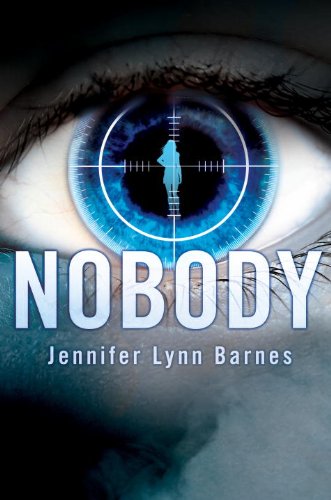
                • Cover of Nobody
                  Nobody

                  Jennifer Lynn Barnes · standalone novel · 2013

                  similar bytenseidentityour worldcontemporaryscience fictionthriller & suspense

                  Fifteen-year-old Claire Ryan has always felt invisible, always lived beyond people's notice, which causes trouble when she instantly connects with seventeen-year-old Nix, who really can become invisible and has been sent to assassinate her.

                • Cover of Quantum Night
                  Quantum Night

                  Robert J. Sawyer · standalone novel · 2016

                  similar bytenseour worldartificial intelligencescience fictionthriller & suspense+1 more

                  Quantum Night is a 2016 science-fiction thriller novel written by Canadian novelist Robert J. Sawyer. Set in 2020, the book touches on themes of quantum physics, psychology, current politics and ethics.

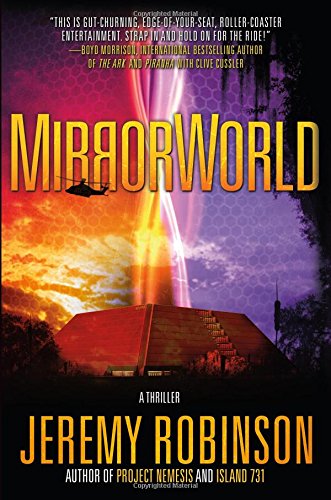
                • Cover of MirrorWorld
                  MirrorWorld

                  Jeremy Robinson · standalone novel · 2015

                  similar bytenseidentityour worldthriller & suspensescience fiction

                  "Crazy has no memory and feels no fear. Dangerous and unpredictable, he's locked away in SafeHaven, a psychiatric hospital, where he spends the long days watching Wheel of Fortune and wondering what the outside world smells like. When a mysterious visitor arives and offers him a way out Crazy doesn't hesitate to accept. But outside the hospital Crazy is faced with a world on the brink of nuclear annihilation, and find himself relocated to Neuro Inc., a secretive corporation with strange government ties. When he discovers evidence of human experimentation he escapes with a syringe, the contents of which are unknown to him but precious to Neuro. Cornered and with a complete disregard for the results, Crazy makes himself indispensable by injecting the substance into his leg. As the substance enters his bloodstream, though, his eyes are opened to a world beyond human experience, where fear is a tool and the shadows hide the source of mankind's nightmares. Struggling to understand his new abilities, Crazy allies himself with the company he fled and begins peeling back the layers of his past, the brewing war between worlds, how he can stop it and what he did to start it. With Crazy, Robinson, whose trademarked pacing and inventive plots have been highly praised by bestselling authors like Jonathan Maberry, Scott Sigler and James Rollins, treats readers to a wildly imaginative, frenetically paced thriller exploring the origins of fear"--

                • Cover of Cas Russell / Russell's Attic
                  Cas Russell / Russell's Attic

                  series · 5 books · 2014

                  similar bytenseidentityour worldscience fictionthriller & suspense+1 more

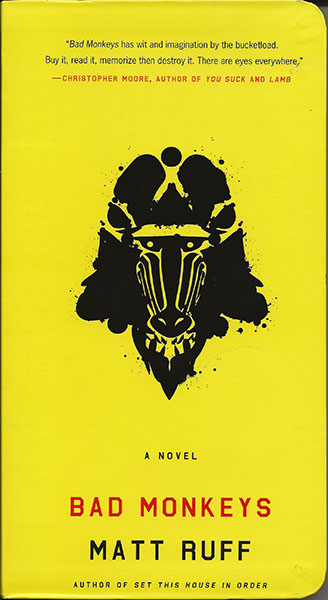
                • Cover of Bad Monkeys
                  Bad Monkeys

                  Matt Ruff · standalone novel · 2007

                  similar bytenseidentitycontemporarythriller & suspense+1 more

                  Bad Monkeys is a 2007 psychological thriller novel by American author Matt Ruff. It received mixed reviews in national media, but was subsequently optioned for film.