More like Smuggler
anchored on:secondary worldsword and sorcery
but
- Darwath
series7 books1982
similar bydarksecondary worldfantasy+1 more
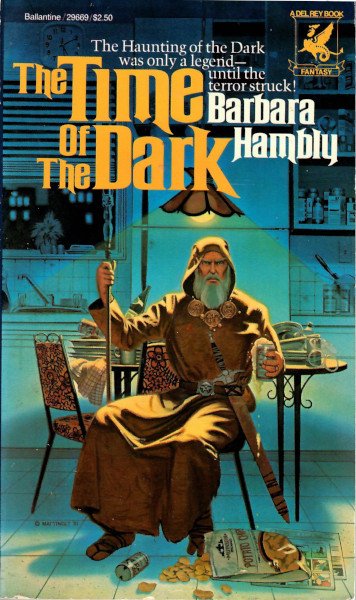
Darwath begins with two modern-day Californians pulled through a portal into a dying medieval world under siege from the Dark, shape-shifting monsters that hunt by night and are driving civilization underground. The Time of the Dark, The Walls of Air, and The Armies of Daylight make up the original trilogy; Barbara Hambly returned to the same characters decades later in Mother of Winter and Icefalcon's Quest. It's portal fantasy built around practical, unglamorous survival rather than chosen-one heroics.
- Demon Cycle
series10 books2008
part of The Demon Cycle
similar bysecondary worldfantasy+2 more
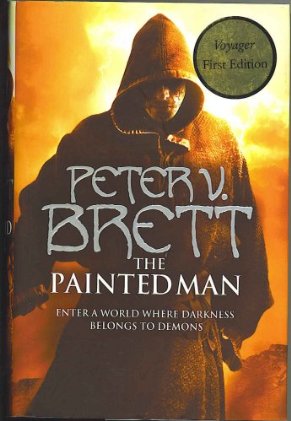
Peter V. Brett's Demon Cycle is set in a world where nightly demon attacks have driven humanity behind protective magical wards, following several point-of-view characters, including Arlen Bales and Leesha Paper, who each search for ways to fight back after centuries of retreat. The core story runs across five novels plus companion novellas.
- Gor
series41 books1966
similar bydarksword and sorcerysecondary world+1 more
Gor is the fictional setting for a series of sword and planet novels written by philosophy professor John Lange, writing as John Norman. The setting was first described in the 1966 novel Tarnsman of Gor. The series is inspired by science fantasy pulp fiction works by Edgar Rice Burroughs, such as the Barsoom series. It also includes erotica and philosophical content. The Gor series repeatedly depicts men abducting and physically and sexually brutalizing women, who grow to enjoy their submissive state. According to The Encyclopedia of Science Fiction, Norman's "sexual philosophy" is "widely detested", but the books have inspired a Gorean subculture.
- Knight's Wyrd
Debra Doyle & James D. Macdonaldstandalone novel1992
similar bysword and sorcerysecondary worldadventurousfantasy+1 more
Will Odosson sets out on a series of dangerous adventures after a wizard predicts that he will meet death before a year has passed.
- The Broken Earth
series5 books2014
similar bysurvivaldarksecondary worldfantasy
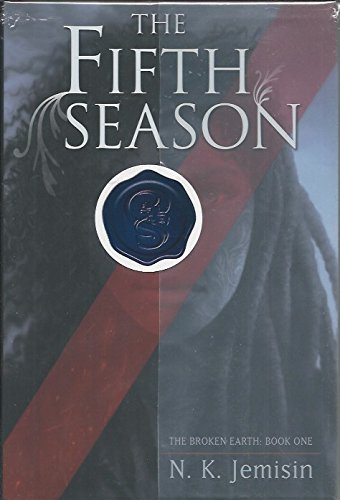
N. K. Jemisin's Broken Earth trilogy is set on the Stillness, a single supercontinent wracked every few centuries by civilization-ending climate catastrophes called Fifth Seasons. It follows orogenes, people born with the power to move earth and quell earthquakes, who are trained and controlled by the state even as they are feared and despised. The Fifth Season, the opening volume, traces three women revealed to be the same person at different stages of her life, setting up the two sequels that follow her search for her daughter after an orogene shatters the continent.
- Flightless Falcon
Mickey Zucker Reichertstandalone novel2000
similar bysurvivalsword and sorcerysecondary worldadventurousfantasy
From the flaps of the DAW first edition: "Set in a land of scattered rival cities, this is the story of a poignant and dangerous quest, the tale of a man manipulated into a mission against his will in the hopes of regaining the only thing of importance in his life - his family. Tamison had been a miner until the cave-in which killed his brother and father, and left him trapped behind a wall of rubble, cut off from light and life for what seemed like eternity. When he was finally rescued, Tamison was so traumatized by the experience that he was left with a paralyzing fear of venturing underground. With the passing years and the growth of his new family, Tamison was willing to turn his hand to any trade that would feed his wife and children. But in a realm where guilds ruled - and where his own guild could no longer support him - Tamison became more and more desperate as even jobs for unskilled guildless laborers became impossible to obtain. Eventually Tamison was forced to what once would have been unimaginable to him. But he had no other choice. Either he must steal food of see his family starve. Caught in the act, Tamison is sentenced to a chain gang. And when he was finally released, he discovered that his family had vanished. Searching for them, Tamison became so despondent that when a guard named Dallan claimed to know of their fate he was only too ready to listen. And when Dallan said that he, too, had had someone taken by the same villains, Tamison agreed to join forces with him. But before setting out on their quest, Tamison visited a fortune-teller, hoping to be told that his mission would prove successful. Instead of learning about his own destiny, Tamison found himself acquiring a new alley as Rifkah, the fortune-teller, suddenly discovered a pressing need to leave the city. Together the three set out for the rival trading town where Dallan was certain the people they sought were being held. Tamison's initial search had led him into an encounter with a thief, who now seemed determined to attach himself to their group, and the unlikely foursome soon concocted a daring plan to break into the seemingly impenetrable city. Yet even if they succeeded in this venture it might well prove their doom, for gaining entrance to the town did not mean that they would find what they sought - or survive to win free of the place again!"
- The Sight
series2 books2001
similar bydarksecondary worldfantasy+2 more
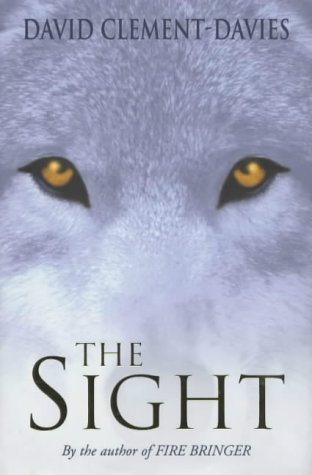
David Clement-Davies' The Sight follows Larka, a white wolf born with a rare prophetic power, within a pack shadowed by a curse laid by the embittered lone wolf Morgra. Larka's parents Huttser and Palla, and her adoptive brother Kar, share in the weight of a prophecy that marks her as central to the pack's fate. The sequel, Fell, continues the story of these wolves.
- Shadow
Dave Duncanstandalone novel1987
similar bysword and sorcerysecondary worldadventurousfantasy+1 more
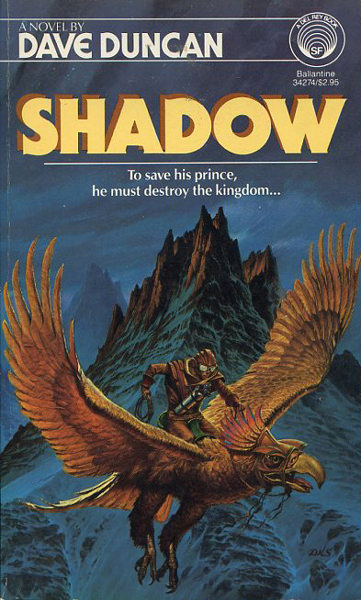
Sald Harl would like nothing more than to soar on the wings of his noble eagle, but his youthful rides in the sky are cut short by an appointment to guard the prince. Sald watches his dreams of flight fade with his name and independence as he takes over his bodyguard duties. During a perilous journey to the edges of the kingdom a dark secret comes to life. Now the great Prince Shadow is accused of treason and Sald must orchestrate a desperate plan of escape or he will lose the one thing he has been ordered to defend. The only option of freedom in sight is a dangerous flight that no one has ever survived. Once again Sald may feel the freedom of souring though the air unchained from the shackles of servitude.
- Conan Universe
series205 books1932
part of Hyborian Age
similar bysword and sorcerysecondary worldadventurousfantasy
The Conan books are sword and sorcery fantasies featuring the character of Conan the Cimmerian originally created by Robert E. Howard. Written by numerous authors and issued by numerous publishers, they include both novels and short stories, the latter assembled in various combinations over the years by the several publishers. The character has proven durably popular, resulting in Conan stories being produced after Howard's death by such later writers as Poul Anderson, Leonard Carpenter, Lin Carter, L. Sprague de Camp, Roland J. Green, John C. Hocking, Robert Jordan, Sean A. Moore, Björn Nyberg, Andrew J. Offutt, Steve Perry, John Maddox Roberts, Harry Turtledove, and Karl Edward Wagner. Some of these writers finished incomplete Conan manuscripts by Howard, or rewrote Howard stories which originally featured different characters. Most post-Howard Conan stories, however, are completely original works. In total, more than fifty novels and dozens of short stories featuring the Conan character have been written by authors other than Howard. This article describes and discusses notable book editions of the Conan stories.
- Malazan Book of the Fallen
series20 books1999
part of Malazan
similar bydarksecondary worldfantasy+1 more
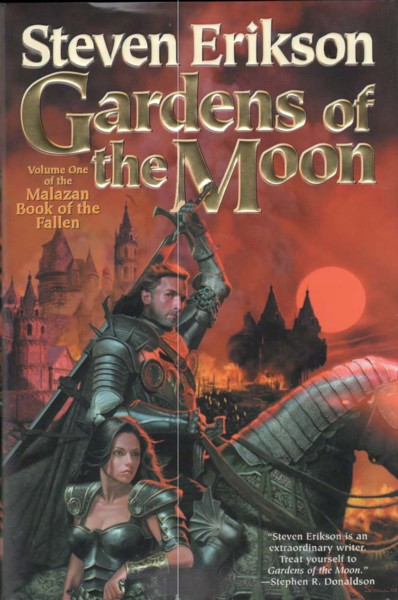
The Malazan Book of the Fallen is a series of epic fantasy novels written by the Canadian author Steven Erikson. The series, published by Bantam Books in the U.K. and Tor Books in the U.S., consists of ten volumes, beginning with Gardens of the Moon (1999) and concluding with The Crippled God (2011). Erikson's series presents the narratives of a large cast of characters spanning thousands of years across multiple continents.
- The Drenai Saga
series15 books1984
completed
similar bysecondary worldadventurousfantasy+2 more
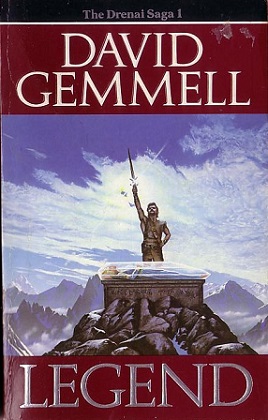
David Andrew Gemmell was a British author of heroic fantasy, best known for his debut novel, Legend. A former journalist and newspaper editor, Gemmell had his first work of fiction published in 1984. He went on to write over thirty novels. Gemmell's works display violence, yet also explore themes of honour, loyalty and redemption. There is always a strong heroic theme but nearly always the heroes are flawed in some way. With over one million copies sold, his work continues to sell worldwide.
- Brak the Barbarian
series16 books1963
completed
similar bysword and sorcerysecondary worldadventurousfantasy+1 more
John Jakes's Brak the Barbarian follows his own wandering barbarian swordsman, Brak, through sword-and-sorcery adventures modeled on the pulp tradition of the 1930s and '40s but original to Jakes rather than adapted from an earlier author. The character's stories were published across several collections and short novels from the 1960s into 1980.
- The Demon Cycle
universe18 books2008
Start hereDemon Cycle · Start here
similar bysecondary world+3 more
When the sun goes down, the ground breathes out murder. Mist seeps up from the Core, hardens into flame and rock and wind given teeth, and the only thing between a sleeping family and the corelings is a ring of wards — glyphs scratched in the dust that hold as long as the lines stay unbroken. Miss one stroke and you are meat by morning. This is Peter V. Brett's world: a humanity three centuries into a losing siege, huddled in the dark, waiting on a Deliverer half of them no longer believe will come. The Demon Cycle runs five volumes — The Warded Man (published in Britain as The Painted Man), The Desert Spear, The Daylight War, The Skull Throne, and The Core — following a messenger who tattoos the lost combat-wards into his own skin, a healer, a fiddler whose music turns demons aside, and a desert warlord who claims the prophecy for himself. Around them sit shorter works (Brayan's Gold, Messenger's Legacy, Barren), and beyond them the ongoing Nightfall Saga — The Desert Prince, The Hidden Queen — carrying the next generation into a war their parents did not finish. At its heart is a quarrel over faith and fire: the mannered Free Cities against fanatic, sand-hard Krasia, two would-be saviors who cannot both be right, and a lost art of war-magic that could turn prey into hunters. Begin with The Warded Man and read straight through in publication order; the novellas keep, for later, once the dark is under your skin.
- The Scholomance
series3 books2020
similar bysurvivaldarksecondary worldfantasy
The Scholomance Trilogy is a series of three fantasy novels written by American author Naomi Novik. The books follow the adventures of Galadriel "El" Higgins during and after attending a dangerous and magical boarding school for wizards named after the magic school Scholomance from Romanian folklore.
- The Tide Child Trilogy
series3 books2019
similar bydarksecondary worldfantasy+2 more
The Tide Child trilogy is a series of fantasy novels by R. J. Barker. It comprises The Bone Ships (2019), Call of the Bone Ships (2020), and The Bone Ship's Wake (2021). The first book in the trilogy won the 2020 British Fantasy Award for Best Novel.
- Corum
series6 books1971
part of Moorcock's Multiverse
similar bysecondary worldadventurousfantasy+2 more
- The Prison Healer
series3 books2021
similar bysecondary worldfantasy+2 more
Lynette Noni's YA trilogy follows Kiva Meridan, a teenage healer imprisoned in the brutal death camp of Zalindov, who is forced to stand trial by combat in another prisoner's place when a mysterious rebel movement upends the prison's order. The Prison Healer, The Gilded Cage, and The Blood Traitor follow Kiva out of the prison and into a wider conflict over the kingdom's throne, testing where her loyalties actually lie. It sits in the current wave of grim, trial-driven YA fantasy.
- The Bone World Trilogy
series3 books2007
similar bysurvivaldarksecondary world+1 more
The Bone World Trilogy is a trilogy for young adults by Irish author Peadar Ó Guilín. The series has elements of science fiction and fantasy.
- Kane
series25 books1970
completed
similar bysword and sorcerydarksecondary worldfantasy+1 more
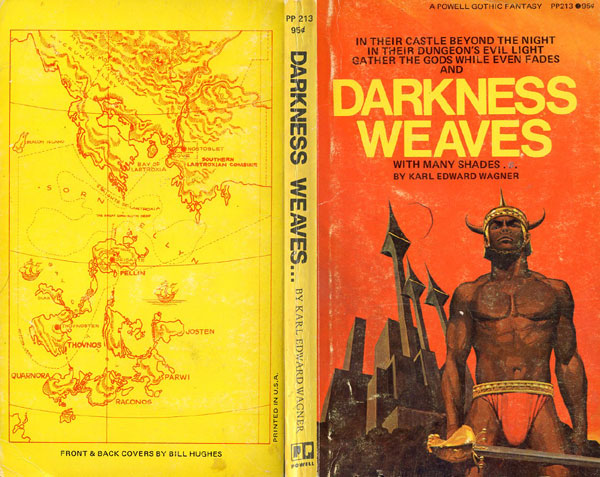
Kane is a fictional character created by American author Karl Edward Wagner, who is the protagonist of three novels and about 20 short stories published between 1970 and 1985. Most Kane tales are sword and sorcery with strong elements of gothic horror and set in a grim, pre-medieval world which is nonetheless ancient and rich in history. In some of Wagner's later stories, Kane appears in the present day—for example, as a drug dealer in "Lacunae" and as a somewhat suspect publishing magnate in "At First Just Ghostly".
- The Courier's Daughter Trilogy
series3 books2012
similar bysurvivalsecondary world+2 more
The Courier's Daughter Trilogy is C. J. Redwine's YA fantasy series: Defiance (2012), Deception and Deliverance. Set in a walled, post-collapse city ruled by rigid survival laws, it follows a young woman searching for her missing father against the city's authorities and the monstrous forces beyond its walls. The trilogy follows one continuous search and its fallout across all three books.
- The Crescent Moon Kingdoms
series1 book2012
similar bysword and sorcerysecondary worldadventurousfantasy+1 more
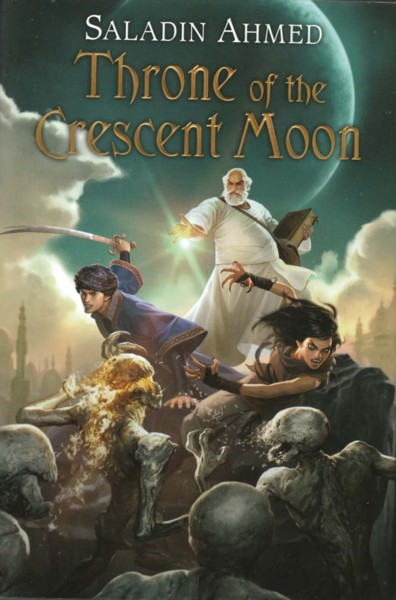
Saladin Ahmed's The Crescent Moon Kingdoms opens with Throne of the Crescent Moon, set in a realm of djenn and ghuls where a power struggle between an iron-fisted Khalif and a mysterious master thief called the Falcon Prince erupts alongside a series of brutal, supernatural murders. A handful of reluctant heroes must uncover the truth behind the killings before the kingdom tears itself apart.
- The Swordbearer
Glen Cookstandalone novel1982
similar bysword and sorcerysecondary worldadventurousfantasy+1 more
The Swordbearer is a 1982 novel written by Glen Cook.
- The Hush
Skye Melki-Wegnerstandalone novel2015
similar bysurvivaldarksecondary worldfantasy+1 more
"Chester has been traveling from village to village, searching for his kidnapped father. One night while fiddling to earn a few coins, he accidentally connects to the Song, the music that fuels every aspect of the world. It's illegal to interact with the Song - only a licensed Songshaper may bend music to his woll - and when Chester is caught, he's sentenced to death. But just before the axe is about to fall, someone in the crowd - a member of the infamous Nightfall gang stages a daring rescue, whisking Chester into the Hush, a shadowy nightmare mirror-world where Music can be deadly and Echoes can kill." --